
 English
  Italian
  French
  German
  Spanish
  Arabic
 Lunch bags are changing faster than many buyers expect. The old formula—a rectangular insulated box, short handle, foil lining, and front logo—is still useful, but it no longer covers every market. Office workers want something they can carry with work clothes. Parents want easier cleaning. Retail brands want a Lunch Bag that feels like part of a lifestyle collection rather than a separate food container.
I’m Evan, and I have worked with bags and custom manufacturing for more than 15 years. What interests me about 2027 is not one new shape or one fashionable color. The bigger shift is how several familiar ideas are being combined: better insulation, cleaner interiors, softer everyday styling, smarter organization, easier carrying, and more responsible material choices.
If you are planning a Custom Lunch Bag collection for 2027, those details matter much more than chasing a shape simply because it looks new.
1. What Will Define Lunch Bag Trends in 2027?
The strongest Lunch Bag direction going into 2027 is lifestyle integration. People do not always want to carry a work bag plus a lunch box plus a bottle. They want fewer items, and they want those items to look like they belong together.
You can already see this change in adult lunch products. Structured totes, handbag-inspired lunch carriers, crossbody straps, softer quilted shells, clean solid colors, and concealed insulation are becoming more visible. Current independent product testing also places more attention on organization, cleanability, temperature retention, and adult-friendly styling rather than insulation alone.
Function is moving in the same direction. Wide openings make containers easier to load. Separate pockets stop keys and phones from touching food. Removable straps improve carrying. Leak-resistant linings reduce cleaning problems. Foldable structures solve storage issues after lunch.
The core idea is quite simple: the Lunch Bag is becoming a small everyday carry product with food-storage functions built inside it.
That changes how buyers should develop products. Shape, insulation, lining, zipper position, opening size, handles, and pockets need to be planned as one system instead of being selected one by one.
2. Top 7 Lunch Bag Styles Trending in 2027
1. Insulated Tote Lunch Bags
Insulated tote designs should remain one of the safest directions for office, commuting, promotional, and lifestyle markets.
Their strength comes from familiarity. Users already understand the tote shape, so very little explanation is needed. Insulation can be hidden between the outer shell and lining, leaving the exterior clean enough to resemble an everyday carry bag.
The development decision is usually about structure. Thin foam creates a softer tote that folds easily. Thicker foam and reinforced bottom panels make the bag stand upright and protect containers better. Taller designs work well with bottles, while wider bases suit meal-prep boxes.
Branding also works naturally on a tote. Screen printing, embroidery, woven labels, rubber patches, and small metal logos can all be used without making the product look too promotional.
Buyers developing this style can also look at the construction logic used in custom tote bags, especially when deciding handle length, body proportion, reinforcement, and logo placement.
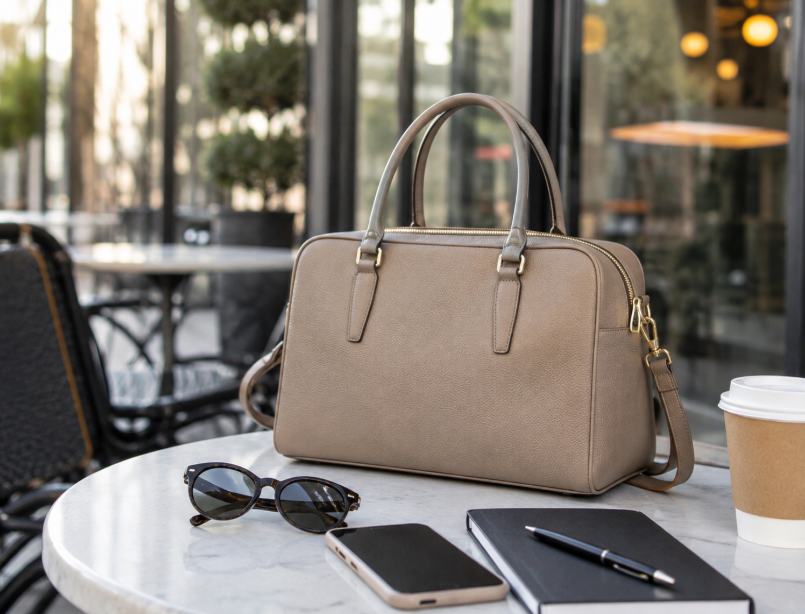
2. Handbag-Style Lunch Bags
This is one of the more interesting opportunities for 2027.
The idea is not to turn a handbag into a cooler. The better approach is to borrow the visual language of handbags while keeping the internal structure suitable for food.
Think cleaner silhouettes, controlled curves, top handles, detachable shoulder straps, hidden zipper openings, structured side panels, matte hardware, tonal trims, and quieter branding. Current adult lunch-bag selections already include products designed to pass visually as handbags, showing that this direction has moved beyond a niche concept.
Construction needs more care than it appears. Heavy foam can make a fashionable silhouette look bulky. Very soft foam may collapse around food containers. Hardware also adds weight, and elaborate internal seams create places where crumbs or liquids can collect.
I would keep the exterior visually simple and put the technical work inside. That balance gives a Custom Lunch Bag a stronger retail identity without losing daily usability.
3. Compact Bento Lunch Bags
Bento containers have changed the dimensions buyers need to think about.
Traditional lunch bags were often designed around sandwiches, cans, or loose containers. Bento boxes are flatter and wider. If the bag dimensions do not match them, buyers end up with wasted vertical space or containers sitting at an angle.
Compact Bento Lunch Bags work well for students, smaller office meals, portion-controlled food, and consumers who place the lunch bag inside another backpack or tote.
The important measurement is the usable internal dimension after insulation is installed. A 25 mm foam and lining structure can noticeably reduce the space available around a rigid bento box.
You should request sample fitting with the actual container size whenever possible. Paper dimensions alone do not show how easily a box passes through the zipper opening.
4. Lunch Backpack Bags
Hands-free carrying makes lunch backpacks useful for students, commuters, cyclists, short trips, and outdoor users.
The product becomes more interesting when the food compartment is integrated intelligently. A lower insulated section can hold containers while an upper dry section carries napkins, snacks, small personal items, or work accessories.
Load balance matters here. Heavy bottles placed far away from the back panel make the backpack pull backward. Soft food can also be crushed when the upper compartment is heavily loaded.
Shoulder strap construction, back-panel padding, bottle pocket position, and base reinforcement should be reviewed together. Buyers developing a more technical version can borrow many structural ideas from custom backpack manufacturing, then adapt the internal system around food storage.
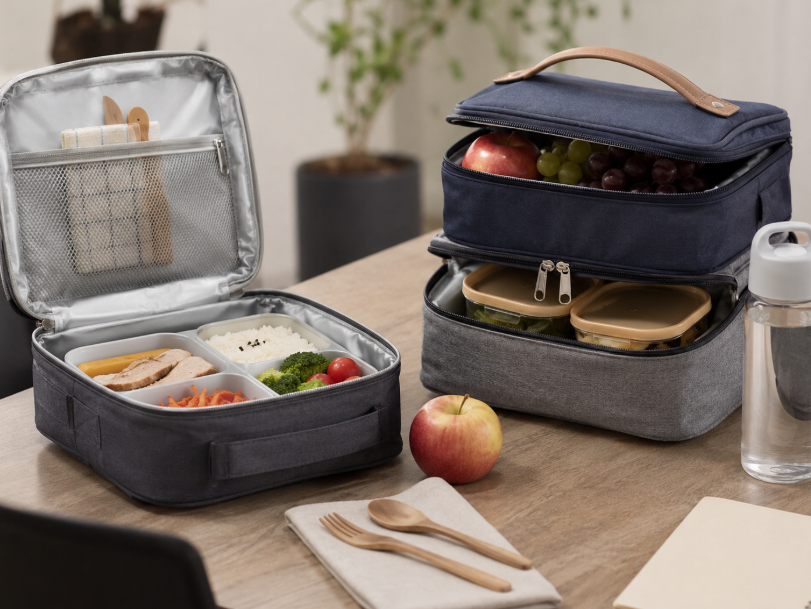
5. Dual-Compartment Lunch Bags
Dual-compartment designs answer a very ordinary problem: not everything inside a lunch bag should be stacked together.
A lower section can hold containers while the upper section carries fruit, snacks, utensils, or softer food. Some designs use the separation to reduce pressure on food; others create different storage zones for better organization.
The divider construction deserves attention. A weak divider collapses once the top section becomes heavy. An excessively rigid divider adds material and shipping volume.
Zipper access also affects the experience. Users should be able to reach one section without turning the entire bag sideways or removing everything from another compartment.
This style fits meal-prep, school, outdoor, fitness, and larger office lunch programs particularly well.
6. Foldable and Freezable Lunch Bags
Foldability is no longer only about making a cheap soft cooler smaller.
Some mature products now combine folding structures with cooling gel integrated into the walls. The bag can be frozen as one unit, reducing the internal space normally occupied by separate ice packs. PackIt currently markets this type of foldable, gel-lined construction as a complete cooling system.
That does not mean every brand should copy a gel-wall structure. It shows where consumer expectations are moving: less setup, less loose equipment, and easier storage after use.
A simpler Custom Lunch Bag can respond to the same need through thinner insulation, collapsible side panels, flexible bases, removable inserts, or flat-folding closures.
The trade-off is structure. Every fold line becomes an area that must survive repeated bending, so lining adhesion, seam placement, edge binding, and foam recovery need to be checked carefully during sampling.
7. Sustainable RPET and Canvas Lunch Bags
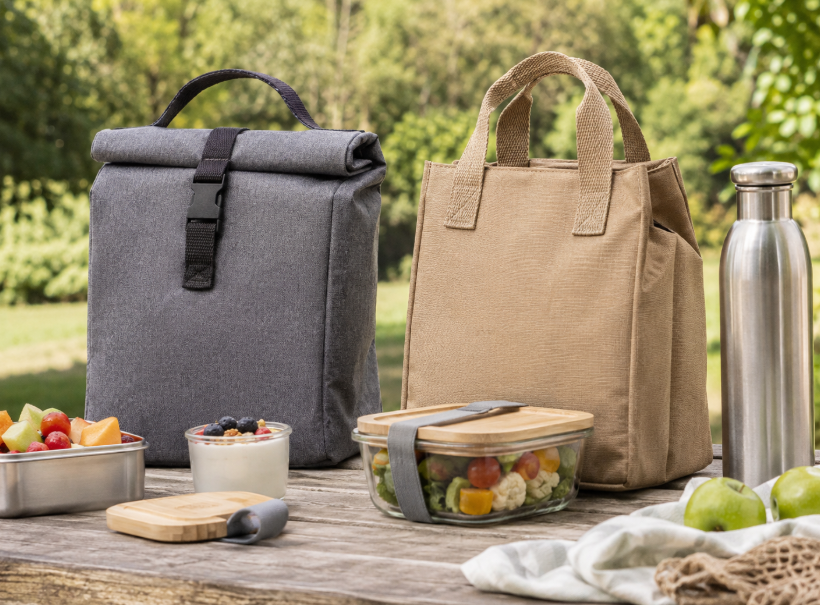
Sustainable material development will continue to influence 2027 collections, especially in corporate programs, lifestyle brands, reusable-product ranges, and promotional projects.
RPET works well when buyers want the familiar performance of polyester with recycled-material positioning. Canvas offers a different look: warmer, more natural, and well suited to embroidery, screen printing, patches, and minimal branding.
Material claims need documentation. If recycled content forms part of your product claim, ask suppliers what can actually be traced rather than accepting the word “recycled” on a fabric swatch. The Global Recycled Standard information published by Textile Exchange explains how recycled materials and chain of custody are addressed under GRS.
| 2027 Lunch Bag Style | Strongest Market Fit | Development Priority |
|---|---|---|
| Insulated Tote | Office, retail, promotions | Carry comfort and clean styling |
| Handbag-Style | Lifestyle and women’s retail | Shape, hardware and hidden insulation |
| Compact Bento | School and office | Internal dimensions and opening size |
| Lunch Backpack | Commuting and outdoor | Load balance and strap comfort |
| Dual-Compartment | Meal prep and school | Divider strength and organization |
| Foldable/Freezable | Commuting and family use | Cooling structure and repeated folding |
| RPET/Canvas | Corporate and sustainable collections | Material traceability and branding |
3. Materials and Insulation Features Shaping 2027 Lunch Bags
Recycled and Eco-Friendly Outer Fabrics
Material selection should start with the intended product position.
RPET polyester is useful when a brand needs lightweight durability and recycled-content options. Canvas gives a more natural appearance but behaves differently around stains and moisture. Recycled nylon can suit more technical products, depending on fabric availability and the required specification.
Buyers who need a deeper comparison of shell materials, insulation, linings, coatings, and decoration methods can use our Best Materials for Custom Lunch Bags guide rather than trying to solve every material question inside a trend article.
Easy-Clean and Leak-Resistant Linings
The lining is one place where users notice poor development very quickly.
A lining may look waterproof on a swatch and still leak through needle holes or seam joins. Corners can also trap food residue when the lining contains too many small stitched panels.
Smooth PEVA, coated films, TPU-based constructions, and similar wipe-clean surfaces are often considered depending on the product specification. Material safety requirements should be confirmed for the intended market and product use. Buyers who require textile testing may also review frameworks such as OEKO-TEX STANDARD 100, which addresses testing of textile components for harmful substances.
Certification should never be assumed from the material name alone. Ask for the applicable documentation when your program requires it.
Lightweight Multi-Layer Insulation
More foam does not automatically produce a better Lunch Bag.
Insulation works together with lining, outer fabric, seams, zipper construction, bag volume, food temperature, cold sources, and ambient conditions. A thick bag with a poorly closing zipper may perform worse than a carefully built lighter structure.
USDA guidance recommends insulated lunch boxes or bags and cold sources when carrying perishable foods, which is a useful reminder that a bag is one part of a complete cold-storage system.
When reviewing samples, I prefer controlled temperature testing rather than accepting a vague “keeps cold for X hours” statement. Use the same food or container load, same cold sources, same room conditions, and the same measuring points across samples.
Our guide to customizing insulated lunch bags goes deeper into the relationship between the shell, insulation, lining, structure, and specification.
4. Which Lunch Bag Styles Work Best for Different Markets?
One style rarely performs equally well in every channel.
| Target Market | Suitable Direction | What Buyers Should Prioritize |
|---|---|---|
| Office & Commuting | Tote, handbag-style, compact bento | Appearance, portability, easy cleaning |
| School & Kids | Bento, dual-compartment | Simple opening, durable handles, cleaning |
| Outdoor & Travel | Backpack, larger insulated bag | Carry comfort, water resistance, insulation |
| Corporate Gifts | Insulated tote, RPET bag | Branding area, repeatable production |
| Retail & Lifestyle | Handbag-style, premium tote | Distinctive shape, trims, finishing |
Office users often have access to refrigerators, so a huge cooler structure may become unnecessary weight. Their buying decision may lean more heavily toward appearance, container fit, and easy carrying.
School projects need a different mindset. Zippers should be easy to operate. Handles need repeated pull resistance. Interiors should have fewer areas where crumbs collect.
Outdoor designs face longer carrying periods and rougher surfaces. Reinforced bottoms, stronger webbing, bottle pockets, and better insulation become more useful.
Corporate projects usually benefit from a simpler construction with a clean logo area. Retail brands have more reason to spend development effort on silhouette, custom trims, interior layout, and recognizable details.
5. Custom Features Buyers Should Consider for 2027 Collections
Features should solve a use problem. Adding every available pocket usually produces a heavier and more complicated Lunch Bag without creating a better product.
Wide zipper openings are worth considering when rigid containers must move in and out daily. Bottle pockets help when the main compartment should remain dry and organized. Adjustable shoulder straps suit commuters, while detachable straps give retail products more flexibility.
Removable base inserts can improve structure during use and make cleaning easier. Internal mesh pockets can hold cutlery or cold packs, though their seam positions should not create difficult cleaning areas. Dual zipper pullers help wider openings work more smoothly.
Logo placement deserves the same level of thought. Large prints fit promotional totes. Small embroidery or woven labels can suit lifestyle products. Metal hardware can work on handbag-style designs but may be unnecessary on school or mass promotional programs.
Zippers also deserve proper specification rather than being treated as a small accessory. Frequent daily opening puts repeated stress on the slider, tape, stops, and seam around the zipper. Brands can review technical fastening options through YKK’s fastening product resources when setting zipper expectations for higher-use products.
6. How to Choose the Right Trending Lunch Bag for Your Brand
Start with your user before selecting the style.
Who will carry it? Where will they take it? What container must fit inside? How long will food normally travel? Will the bag sit inside another backpack, or will it be carried as the main bag?
Capacity comes next. Give your factory real container dimensions rather than asking for “small,” “medium,” or “large.” Include bottles and ice packs in the calculation. Remember that finished internal dimensions are smaller than the outer dimensions once foam and lining are added.
Decide whether the bag should be soft or structured. Soft construction folds and ships efficiently. Structured designs protect containers better and usually look more premium, but they take more space.
Material claims should match your market positioning. RPET can make sense for a recycled-material collection. Canvas may suit a natural lifestyle concept. Polyester or Oxford remains practical when durability, color consistency, and straightforward maintenance matter more.
The sample stage is where you should stop looking only at appearance. Load the bag. Carry it. Open it repeatedly. Put real containers inside. Wipe the lining. Test the zipper around corners. Check whether bottles pull the bag out of balance. Look at the base after several hours with weight inside.
If you are developing a new program rather than buying an existing stock shape, a Custom Lunch Bag manufacturer should be able to review these points before bulk production, not after problems appear.
Lunch bags are one part of a broader shift toward practical everyday carry. Our 2027 bag trends guide covers the styles, materials, and features influencing other categories.
7. Which Lunch Bag Trends Are Worth Developing in 2027?
The strongest choice depends on what your brand already sells.
Office and lifestyle brands have a good reason to explore handbag-style bags and insulated totes. These products fit naturally beside work accessories and everyday bags.
School and children’s collections are better served by compact bento and dual-compartment formats. Easy opening, washable interiors, container fit, and durability should take priority over decorative complexity.
Outdoor brands can move toward backpack formats or larger insulated bags with more secure carrying systems. Bottle storage, reinforced bottoms, stronger straps, and accessible pockets create more value here.
Sustainability-focused brands can explore RPET and canvas, but the product claim needs to be supported by the actual material and supply-chain documentation.
Promotional buyers do not always need the newest structure. A well-made insulated tote with a generous branding area can still be the smarter product because it is easy to understand, useful across a broad audience, and easier to repeat in future campaigns.
The pattern I would watch most closely is the move away from the isolated “lunch box” look. The winning 2027 Lunch Bag is more likely to feel connected to the user’s work bag, school system, outdoor gear, or lifestyle collection.
Conclusion
Lunch Bag trends in 2027 are less about inventing unusual shapes and more about improving the relationship between appearance and daily use.
Insulated totes bring familiarity. Handbag-style designs make adult lunch products easier to integrate into everyday life. Bento bags improve container fit. Backpack and dual-compartment structures solve carrying and organization problems. Foldable designs reduce storage space. RPET and canvas give brands additional material directions when the sourcing and product claims are handled correctly.
I have spent more than 15 years working in bag development and manufacturing. Our team is based in Huadu, Guangzhou, China, with our own factory and an established network of production and material partners around the local bag supply chain. We support OEM and ODM development across lunch bags and other custom bag categories.
If you are developing a Custom Lunch Bag collection for 2027, you can leave your phone number, WhatsApp details, reference images, dimensions, or product requirements through our website. We will be happy to review the project, discuss what is practical to manufacture, and see whether we can build the right product together.
FAQs About Lunch Bag Trends and Custom Lunch Bags
What insulation thickness should I specify for a Custom Lunch Bag?
Do not select foam thickness by itself. The correct structure depends on bag volume, outer fabric, lining, zipper construction, expected carrying time, and whether cold packs will be used. During sampling, compare complete bag constructions under the same temperature and loading conditions. Thermal testing gives you much more useful information than choosing foam based only on millimeters.
How should I test whether a Lunch Bag is leak resistant?
Fill the finished sample with a controlled amount of water or use wet test materials based on your inspection procedure, then check the lining seams, corners, zipper area, and bottom after a defined period. Remember that a waterproof lining fabric does not automatically create a waterproof finished bag because sewing needles create holes and seam joins can become leakage points.
Should I use RPET for every sustainable Lunch Bag collection?
No. RPET works well for many projects, but your decision should consider appearance, hand feel, required durability, printing method, availability, and documentation. If recycled content is part of your marketing claim, ask the supplier what supporting material certificates or transaction documentation can be provided for your program.
How do I choose the correct size for a Bento Lunch Bag?
Measure the actual bento box, including lid clips, handles, and any protruding parts. Add space for removal, ice packs, cutlery, and small food items. Give the factory the required usable internal dimensions rather than only the external bag size. The zipper opening should also be tested because a container may fit inside the cavity but still be difficult to pass through the opening.
What should buyers inspect on a Lunch Bag pre-production sample?
Check finished measurements, container fit, zipper operation, strap attachment strength, seam quality, lining cleanliness, insulation position, base stability, pocket access, logo placement, and real carrying comfort. Repeat opening and loading several times. Inspect the areas around zipper ends, handles, corners, binding, and lining seams because these points usually receive more stress during daily use.
Which 2027 Lunch Bag style is safest for a new retail collection?
An insulated tote is usually one of the more adaptable starting points because the silhouette works across office, lifestyle, promotional, and general retail markets. Brands targeting a more design-conscious adult customer can move toward handbag-style construction, while school and meal-prep ranges may gain more from bento or dual-compartment layouts. The safest choice is the one that matches a clearly defined user rather than the style with the most features.


