
 English
  Italian
  French
  German
  Spanish
  Arabic
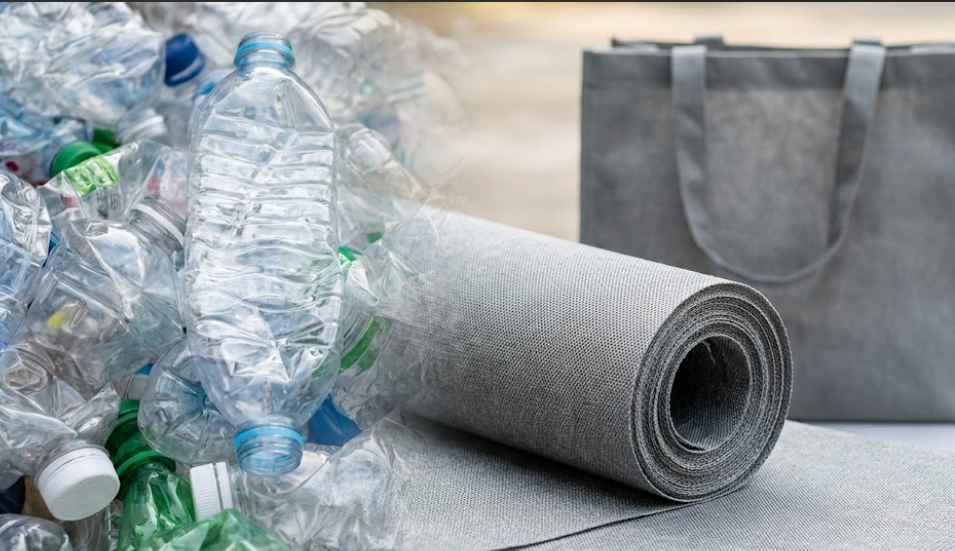
 During the past fifteen years of bag manufacturing, we have observed that more and more customers, when developing new products, not only focus on price and quality, but also start to value the environmental protection value behind the products. From retail brands to corporate gift projects, from exhibition activities to e-commerce packaging, the number of inquiries for RPET bags has continued to increase. It is not only an environmental protection alternative solution, but also gradually becomes an important carrier for brands to convey sustainable concepts.
In this article, we will explore why more and more brands are turning to professional Custom RPET Bag Manufacturers, and how RPET bags can help brands enhance their market competitiveness and meet consumers’ demands for eco-friendly products. At the same time, we will also share several key factors to consider when choosing an RPET bag manufacturer.
What Makes RPET Bags a Popular Choice for Modern Brands?
The Consumer Shift Is Real — and It’s Measurable
Consumer preferences have moved faster than most brands anticipated. Studies now consistently show that a significant portion of shoppers actively seek out products made from recycled or sustainable materials — and a growing number are willing to pay a premium for them. In the bag and accessory category specifically, the numbers are hard to ignore.
Global rPET fiber production exceeded 4 million tons in 2024. The bag and backpack segment alone accounts for over 25% of rPET material demand globally. These are not speculative projections — they reflect actual purchasing patterns already underway.
What’s driving this? A combination of factors: higher environmental awareness among millennials and Gen Z, greater media attention on plastic pollution, and a genuine cultural shift in what “quality” means to consumers. A bag made from recycled plastic bottles now carries a story that resonates. It communicates responsibility.
RPET Has Become a Brand Marketing Asset
Here’s something worth understanding clearly: RPET bags are not just an eco-friendly swap for a regular bag. When positioned correctly, they become a brand communication tool. Every time a customer carries your branded RPET tote, they’re not just carrying your logo — they’re demonstrating alignment with values they care about.
This is especially powerful in retail contexts, corporate gifting, and event merchandise. People keep bags that mean something. A well-made RPET bag with clean branding, comfortable handles, and a durable body gets used repeatedly. That’s repeated brand exposure at essentially zero additional cost after the initial production run.
For brands navigating increasingly competitive markets, that kind of passive marketing value is genuinely hard to replicate with other product categories.
Regulatory Pressure Is Accelerating Adoption
Across Europe, North America, and Asia, single-use plastic regulations are tightening. Businesses that relied on standard plastic bags for retail or promotional purposes are being forced to pivot. Many are discovering that making the switch to RPET bags isn’t just about compliance — it’s also a commercial opportunity to differentiate.
Brands that transition proactively get to own the narrative. Those that wait do so reactively, often under pressure, with less time to develop custom designs that genuinely reflect their identity.
How Do Custom RPET Bags Help Brands Stand Out?
Customization Goes Far Deeper Than a Logo
There’s a common misconception that “custom” just means printing a logo on a stock bag. That’s not customization — that’s labeling. Real custom development with a capable RPET bag manufacturer means you’re involved in decisions about bag shape, fabric weight, handle length, zipper type, interior pockets, color palette, and branding placement. Each of these choices shapes how the bag feels and performs in real use.
When you work with manufacturers that offer genuine OEM and ODM capabilities, you can develop a bag that no competitor carries. The design becomes an extension of your brand’s visual identity and functional promise.
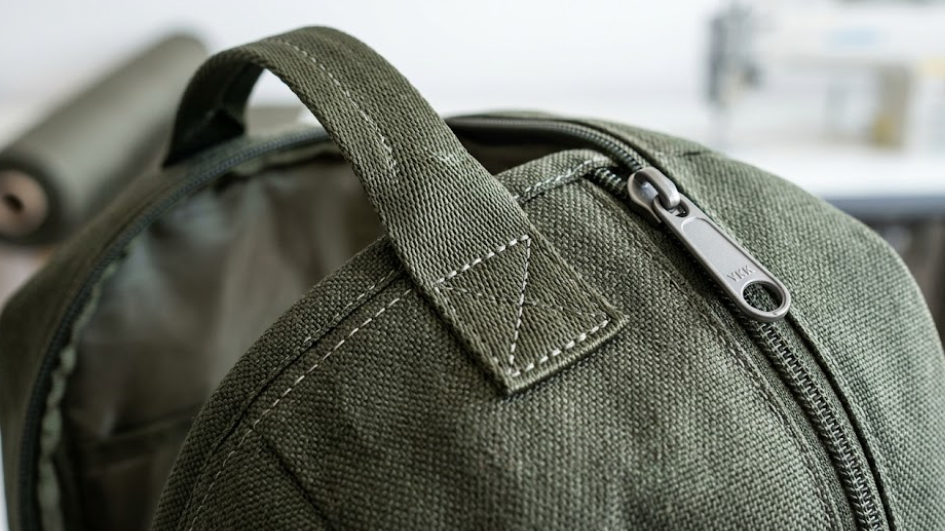
This level of customization matters because differentiation in the product itself creates a stronger impression than price or packaging alone. Customers remember how a bag felt. They notice whether the zipper was smooth, whether the stitching was even, whether the fabric had texture or depth. These details are designed in — they don’t happen by accident.
Proprietary Design Protects Your Brand Position
Working with a manufacturer on original design development (ODM) gives you ownership over the product. That bag exists because of your specifications. It reflects the particular aesthetic your brand has worked to build. Competitors can’t simply order the same thing.
This is especially relevant for brands in categories like wellness, lifestyle, premium retail, or corporate gifting where the unboxing or product experience is part of the brand value. An RPET bag that looks and feels premium signals that your brand takes quality seriously — even in categories like packaging, where many brands still cut corners.
Enhanced Customer Experience Through Thoughtful Design
The best branded RPET bags aren’t just functional — they’re considered. Interior organization features, reinforced base panels, adjustable straps, secondary compartments — each of these elevates daily usability and, by extension, brand perception. When customers use a bag you’ve given them regularly, their relationship with your brand deepens.
This is the kind of brand equity that no digital campaign can replicate. Physical products create physical habits. And RPET bags, by their nature, are built for repeated use.
| Customization Element | Impact on Brand Experience |
|---|---|
| Custom color fabric | Immediate visual brand recognition |
| Embroidered or woven logo | Premium positioning, durability of branding |
| Interior pocket layout | Functional loyalty — customers use it daily |
| Unique bag silhouette | Distinctive shelf presence and gifting appeal |
| GRS-certified RPET fabric | Verified sustainability claim for ESG reporting |
Why Are Retailers and Promotional Brands Switching to RPET Bags?
The Functional Case Is Just as Strong as the Ethical One
Retailers considering RPET bags sometimes assume the switch involves compromise — that recycled materials mean lower performance. That assumption is wrong. Modern RPET fabric achieves the same tensile strength, abrasion resistance, and colorfastness as virgin polyester. In fact, abrasion resistance in high-quality RPET fabrics regularly exceeds industry benchmarks.
This means RPET bags work just as well in demanding retail environments — daily loading, customer handling, exposure to varying temperatures — as traditional alternatives. The material science has matured to the point where performance is no longer a tradeoff.
Replacing Single-Use Plastic Is No Longer Optional for Many Businesses
Supermarkets, pharmacies, fashion retailers, and event organizers have all faced growing pressure — from regulators, shareholders, and customers — to eliminate single-use plastic. RPET reusable bags offer a direct replacement that customers genuinely prefer. Unlike paper bags, which degrade quickly and lack structural integrity for heavier loads, RPET bags are washable, water-resistant, and built to last years.
From a unit economics perspective, this also matters. A single RPET bag replaces dozens or hundreds of single-use plastic bags over its lifetime. The per-use cost drops dramatically. For high-frequency retail environments, this is financially meaningful.
Corporate Gifting and Event Merchandise Have Discovered RPET
The corporate gifting category has undergone a significant shift. Recipients are increasingly critical of gimmicky, wasteful branded merchandise. They want items they’ll actually use. RPET bags — whether totes, backpacks, or cooler bags — check all the relevant boxes: practical, visually branded, sustainable, and durable.
Event organizers have noticed the same dynamic. When attendees receive a well-designed RPET bag as part of a conference or product launch kit, they keep it. It becomes part of their daily carry. The brand follows them everywhere.
What Types of RPET Bags Can Manufacturers Customize?
Understanding the product range available from RPET bag manufacturers helps you make smarter sourcing decisions. The category is broader than many buyers realize.
If you’re evaluating different bag categories before selecting an RPET product, you may also find our guide on what a bag manufacturer does and how to choose one helpful.
RPET Tote Bags
The most widely produced category. RPET totes range from lightweight promotional versions to structured, reinforced bags suitable for daily retail use. Key variables include fabric weight (typically 80–200 GSM), handle drop length, gusset depth, and whether the bag has interior pockets or a zipper closure. For brand-heavy applications, totes offer maximum printable surface area.
RPET Shopping Bags
Designed specifically for retail environments, RPET shopping bags prioritize load capacity and structural integrity. Many feature flat-bottom construction for stability and reinforced side panels. These are widely used by grocery chains, lifestyle retailers, and specialty stores replacing single-use plastic.
RPET Cooler Bags
A rapidly growing subcategory. RPET cooler bags combine recycled outer fabric with insulated inner lining, serving dual functions as branded merchandise and genuinely useful everyday items. Popular in food retail, corporate gifting, and outdoor lifestyle brands.
RPET Cosmetic Bags
Used extensively by beauty brands, hotel suppliers, and personal care companies. RPET cosmetic bags bring sustainability credentials to a category where customers are particularly attuned to brand values. Customization here often focuses on interior organization — custom-sized pockets, mirror panels, and branded liners.
RPET Backpacks
The most complex product in the RPET bag category from a manufacturing standpoint. RPET backpacks require precise construction across multiple panels, hardware integration (buckles, zippers, d-rings), and ergonomic strap design. For brands in travel, education, outdoor, or corporate sectors, a well-executed RPET backpack is one of the highest-value branded product options available.
If backpacks are part of your product strategy, you may also want to explore our list of the top backpack manufacturers in China for additional sourcing insights.
| Bag Type | Primary Market | Key Customization Focus |
|---|---|---|
| RPET Tote Bag | Retail, events, grocery | Print area, handle length, weight |
| RPET Shopping Bag | Supermarket, lifestyle retail | Load capacity, base structure |
| RPET Cooler Bag | Food, corporate gifts | Insulation grade, zipper type |
| RPET Cosmetic Bag | Beauty, hospitality | Interior pockets, mirror, lining |
| RPET Backpack | Corporate, travel, outdoor | Panel structure, hardware, straps |

What Advantages Do Professional RPET Bag Manufacturers Offer?
OEM and ODM Capability Changes What’s Possible
There’s a meaningful difference between a manufacturer who can print your logo on a standard bag and one who can help you develop a product from scratch. OEM (Original Equipment Manufacturing) means producing to your supplied specification. ODM (Original Design Manufacturing) means the factory’s design team works with you to create something new.
Access to both capabilities under one roof accelerates product development considerably. You don’t need to manage multiple parties — a designer, a sample maker, and a production factory separately. A manufacturer with full ODM capability handles the design iteration internally, which reduces communication errors and speeds up sampling timelines.
Rapid Sample Development Reduces Your Risk
Before committing to a full production run, you need to see and handle a physical sample. The best RPET bag manufacturers can develop pre-production samples within two to three weeks. Some produce initial prototypes faster than that for standard bag forms.
Speed here is not trivial. It determines whether you can hit a launch window, respond to a seasonal opportunity, or iterate on a design before committing production budget. Manufacturers with dedicated sample teams and in-house pattern-making capabilities are meaningfully faster than those who outsource sample development.
Quality Control Systems Are Non-Negotiable at Scale
At low quantities, quality issues are manageable. At production quantities — thousands or tens of thousands of units — quality control must be systematic. Professional RPET bag manufacturers run incoming material inspection (verifying fabric weight, color accuracy, and GRS certification), in-line production inspection (checking stitch density, panel alignment, and zipper function), and pre-shipment inspection (sampling finished goods against approved specifications).
ISO 9001 certification, BSCI audits, and third-party inspection reports like SGS or SMETA provide externally verified evidence that a factory’s quality systems meet international standards. These certifications aren’t marketing — they reflect documented processes that get audited regularly.
Global Export Experience Matters More Than You’d Think
A manufacturer with extensive export experience understands documentation requirements, shipping logistics, labeling standards, and the specific expectations of buyers in different markets. An RPET bag destined for a European retailer needs GRS certification documentation. A bag going to a US corporate buyer may need specific testing reports for chemical safety. A manufacturer without export track record may not anticipate these requirements, creating delays and compliance issues at customs.
How to Choose the Right Custom RPET Bag Manufacturer?
GRS Certification Separates Verified Claims from Marketing Language
The Global Recycled Standard (GRS) is the international benchmark for recycled content claims. A GRS-certified RPET manufacturer can provide transaction certificates (TCs) that document the chain of custody from recycled plastic bottles through to finished fabric. Without this documentation, any sustainability claim on your product is unverifiable — and increasingly, retailers and corporate buyers are requiring verified proof.
When evaluating manufacturers, ask specifically for their GRS scope certificate, not just a mention that they “use GRS-certified fabric.” The scope certificate shows what stages of production are covered.
MOQ Requirements Reveal a Manufacturer’s Operational Profile
Minimum Order Quantities (MOQs) vary widely — from 200 units for simple tote bags at small factories to 1,000 or more for complex structured bags at high-volume manufacturers. Your order size should match the manufacturer’s operational profile.
Ordering below a factory’s comfortable MOQ often leads to quality inconsistencies, slower lead times, and reduced priority in their production schedule. Ordering far above your actual needs ties up capital. Understanding a factory’s true MOQ — and how they handle smaller initial orders for new customers — tells you a lot about how the relationship will function.
Production Capacity Determines Whether They Can Grow With You
Today you might need 2,000 bags for a seasonal campaign. In 18 months, you might need 20,000 for a regional rollout. A manufacturer who can support both scenarios is a different proposition than one maxed out at 5,000 units per month.
Ask about monthly production capacity, number of production lines, and whether they have partner factories for overflow capacity. Manufacturers based in established production hubs — like Guangzhou’s Huadu district — often have access to a broader network of subcontractors and material suppliers, giving them more flexibility to scale.
Lead Times Need to Match Your Planning Cycle
Standard production lead time for RPET bags runs 25–45 days after material booking, depending on product complexity and order volume. Manufacturers with established material supplier relationships can often reduce lead time by 5–10 days because they’re not waiting for RPET fabric to arrive from an outside source.
If your product launches are tied to specific retail windows, trade shows, or seasonal calendars, understanding a manufacturer’s lead time guarantees — and their track record on meeting them — is critical.
Balancing Cost and Quality Requires Transparency on Both Sides
The lowest price usually signals compromised material quality, reduced quality control oversight, or both. That’s not a sustainable equation for brand products. At the same time, premium pricing doesn’t automatically guarantee superior output.
The right conversation with a manufacturer focuses on cost breakdown: what’s driving the unit price, where material costs sit relative to labor and overhead, and how those numbers shift with volume. A manufacturer willing to share this level of detail is also signaling that they understand the commercial realities of brand sourcing — which is a good indicator of the working relationship ahead.
| Selection Criterion | What to Look For | Why It Matters |
|---|---|---|
| GRS Certification | Scope certificate + transaction certificates | Verified sustainability claims |
| MOQ | Aligned with your actual order volume | Quality consistency, production priority |
| Lead Time | 25–45 days with documented track record | Launch planning reliability |
| Sample Turnaround | Under 3 weeks for standard products | Faster iteration, lower development risk |
| Export Experience | Active shipping to your target markets | Compliance readiness, documentation accuracy |
Why Is Now the Best Time to Invest in Custom RPET Bags?
The ESG Reporting Window Is Narrowing
Environmental, Social, and Governance (ESG) reporting has moved from voluntary best practice to regulatory requirement across an expanding number of jurisdictions. Brands with documented sustainable procurement practices — including supply chain data on recycled material usage — are better positioned for both investor scrutiny and regulatory compliance.
Developing a custom RPET bag product line creates a concrete, measurable sustainability action that feeds directly into ESG reporting. Every verified RPET unit produced has a quantifiable environmental impact — reduced plastic waste, lower energy consumption versus virgin polyester production, measurable CO₂ savings. These numbers have value beyond marketing.
Consumer Willingness to Pay a Premium Is Growing
Willingness to pay a premium for sustainable products is rising 10–15% annually across major consumer markets. This matters because it reframes the economics of switching to RPET. The incremental cost of RPET fabric over standard polyester is modest. If your market positioning allows you to reflect even part of that in retail pricing, the margin impact is positive.
More practically: brands that establish their sustainable product range now are building consumer trust that compounds over time. The brand that was early on sustainability benefits from years of customer loyalty, earned credibility, and category authority. The brand that follows later inherits a more skeptical audience.
Building a Green Product Line Takes Time — Starting Early Has Compounding Benefits
Custom product development always takes longer than expected. Finding the right manufacturing partner, iterating on samples, refining designs, certifying materials, testing production batches — this process runs 3–6 months for a new product from scratch. Brands that begin this process now have their sustainable product lines ready when demand peaks.
The global sustainability trend is not reversing. GRS-certified suppliers have been growing at 30% annually in Asia and Europe. The infrastructure to produce verified sustainable bags is being built right now. Brands that align with this manufacturing ecosystem early gain access to the best partners, the most attentive service, and the most competitive pricing — before demand fully catches up with supply.
Conclusion
Working through the research, the supplier evaluations, and the sample iterations is a process that rewards patience and specificity. The manufacturers who genuinely excel at custom RPET bags are the ones who have done it long enough to anticipate the problems before they happen.
Hetebag is a bag manufacturer based in Huadu, Guangzhou, China, with over 15 years of manufacturing experience. With an ISO 9001-certified quality management system and certifications including SGS, SMETA, and BSCI, the factory exports to over 70 countries across North America, Europe, the Middle East, Australia, and Asia. The production operation combines CNC cutting, automated stitching systems, and rigorous in-line quality control to maintain consistency at scale.
If you’re building out a custom RPET bag program — whether for retail, corporate gifting, events, or promotional use — and you want to work with a manufacturer who understands both the material and the brand requirements that come with it, you can leave your contact details directly on the website. The team is ready to discuss your project, provide technical guidance, and move quickly on initial samples. Looking forward to hearing from you.
Frequently Asked Questions
What is the difference between RPET and regular polyester bags?
RPET bags are made from recycled plastic bottles, while regular polyester is produced from virgin petroleum-based materials. High-quality RPET fabric offers similar durability, water resistance, and appearance as traditional polyester, but with a significantly lower environmental impact.
How can I verify that an RPET bag is truly made from recycled materials?
The most reliable way is to request a GRS (Global Recycled Standard) certificate and Transaction Certificate (TC) from the manufacturer. These documents verify the recycled content and traceability of the material throughout the supply chain.
What is the typical MOQ for custom RPET bags?
MOQ varies depending on the bag style, material, and customization requirements. Simple RPET tote bags may start from 300–500 pieces, while more complex products such as backpacks or cooler bags often require 500–1,000 pieces or more.
Can RPET bags be fully customized with my brand design?
Yes. Professional RPET bag manufacturers typically offer OEM and ODM services, allowing customization of size, shape, fabric weight, colors, logos, printing methods, pockets, zippers, and packaging to match your brand requirements.


