English
 Italian
 French
 German
 Spanish
 Arabic
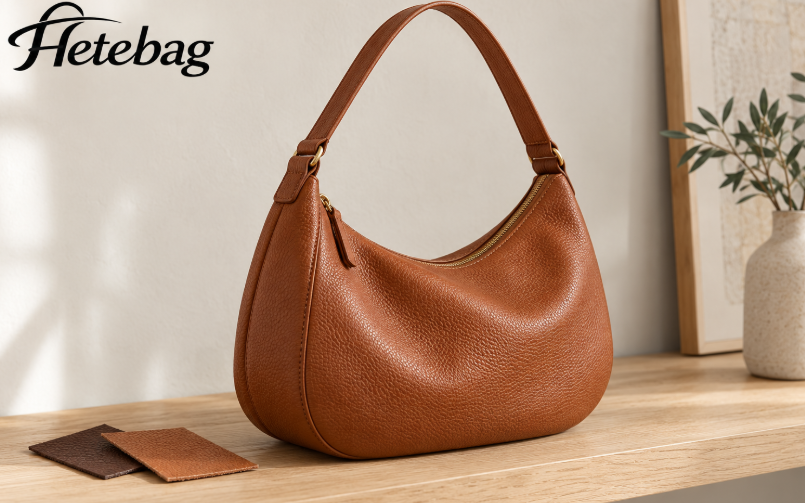
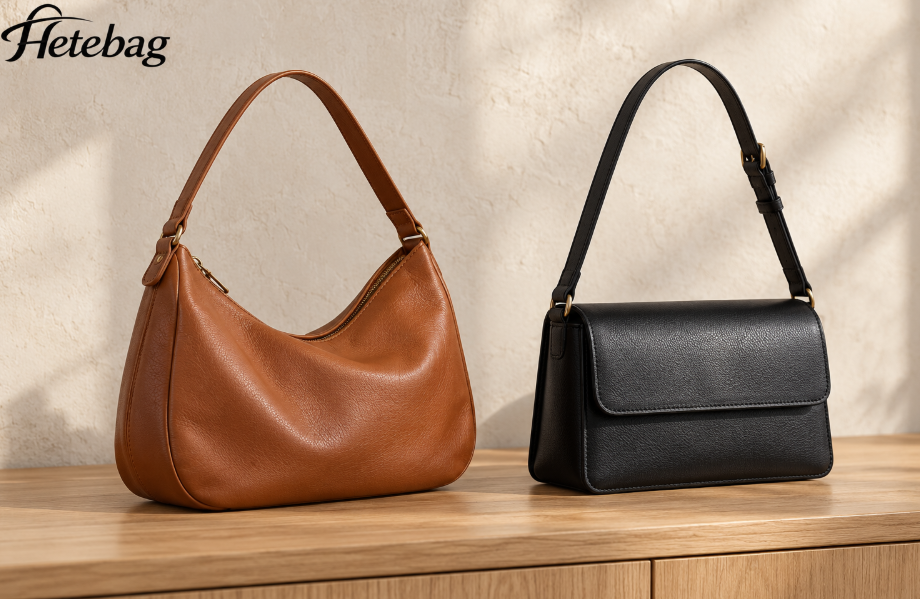
A hobo bag is usually a type of shoulder bag, defined by its curved, often crescent-like shape and relaxed body. A shoulder bag is the broader category: any bag designed to hang from the shoulder, including soft hobos, compact baguettes, and structured flap bags.
That distinction matters when you are developing a collection. Asking a supplier for a “shoulder bag” leaves the silhouette, firmness, opening, and carrying experience largely undefined. In this Hobo Bag vs Shoulder Bag guide, we compare the familiar soft hobo with a more structured shoulder bag while keeping that category overlap clear.
At HeteBag, we support custom handbag development through material selection, structure customization, and sampling. For brands, importers, and wholesale buyers, the useful question is which combination of shape and construction will suit your customers, and how to communicate it before production.
What Is a Hobo Bag?
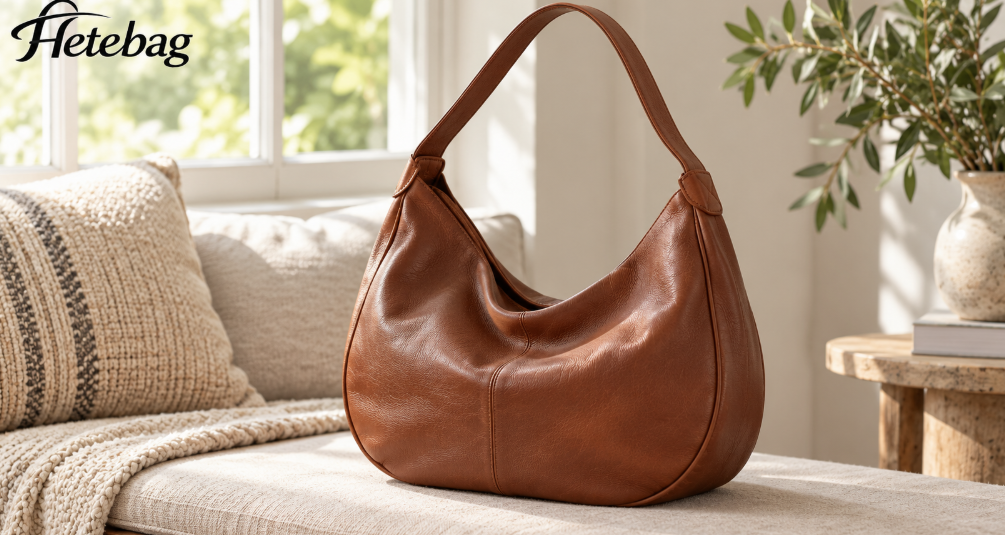
A hobo bag typically has a curved body, a dipped top line, and a strap that connects near the upper sides. Its soft construction lets the body fold and settle against the wearer, although some designs use firmer bases or reinforced openings.
The silhouette can change noticeably between an empty bag, a lightly packed bag, and one filled to capacity. A sample photographed with stuffing may look much fuller than it will during normal use, so product development should include all three conditions.
Hobo bags come in small, medium, and oversized versions. They can have zip closures, magnetic snaps, internal pockets, and adjustable straps; none of those features changes the basic silhouette on its own. Some also support crossbody carrying when the strap has sufficient adjustment, as illustrated by this Coach hobo design.
For a custom project, a front-view reference alone is incomplete. Side views, the intended top curve, and photos of the bag while worn give the pattern maker a much clearer starting point.
What Is a Shoulder Bag?
A shoulder bag has a strap or handles long enough for shoulder carrying. The term describes how the bag is carried rather than one fixed shape, so the category includes both soft and structured designs.
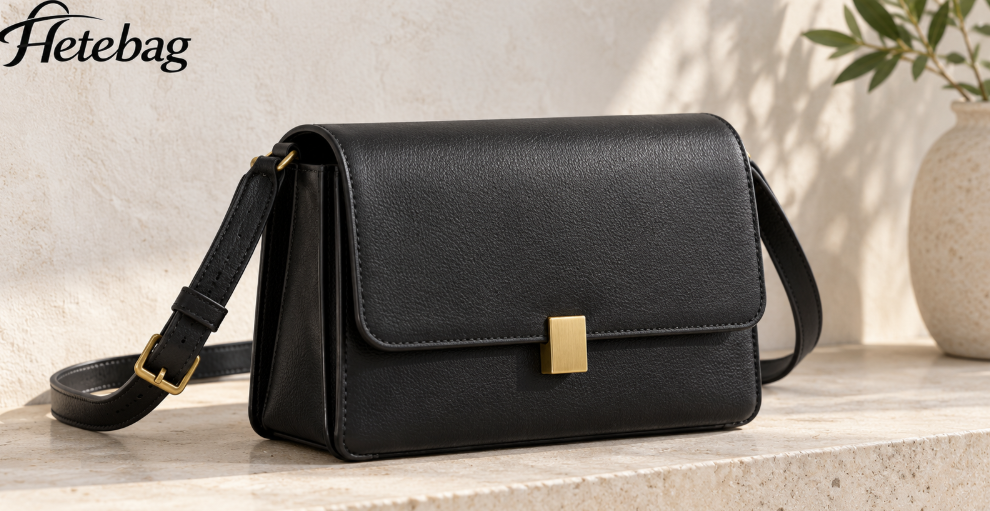
A rectangular leather flap bag, a narrow baguette, and a crescent hobo may all qualify. Strap length, bag depth, body shape, and closure design determine how each performs during daily use.
In everyday comparisons, “shoulder bag” often means a tidier, more structured alternative to a hobo. We use that narrower comparison below for clarity, but buyers should specify “structured shoulder bag” when that is the intended product.
A structured appearance can come from the outer material, lining, reinforcement layers, seam construction, or a combination of them. Choosing a firm-looking surface material does not, by itself, define the finished bag’s structure.
Hobo Bag vs Shoulder Bag: Key Differences
The main differences in a typical comparison are silhouette, firmness, and how the interior behaves when packed. Size, organization, strap adjustment, and security remain design choices rather than automatic features of either style.
| Feature | Typical soft hobo bag | Typical structured shoulder bag |
|---|---|---|
| Shape | Curved body with a relaxed top line | More defined outline; often rectangular, trapezoid, or flap-front |
| Structure | Soft panels that fold during use | Reinforcement helps retain the intended shape |
| Packing behavior | Body adapts around contents; opening may narrow | More predictable shape; rigid walls can limit bulky items |
| Organization | Often one main compartment with smaller pockets | Can support dividers and defined compartments |
| Carrying feel | Can conform to the body; depends on seams and contents | Holds its shape against the body; depth affects comfort |
| Visual character | Relaxed and fluid | More defined and orderly |
| Development priority | Drape, top curve, and loaded shape | Panel alignment, base support, and closure alignment |
These are common design tendencies, not rules. A small hobo can carry less than a large structured bag, and a hobo with a full zipper can offer better containment than an open structured design.
Weight also needs a finished-sample comparison. Thick leather, a heavy chain, metal ornaments, and reinforcement can make either style heavier than expected; the product name tells you little about empty weight.
Which Bag Is Better for Everyday Use?
A soft hobo is a useful starting point for customers who carry a changing mix of everyday items and prefer a relaxed shape. A structured shoulder bag suits customers who want a defined outline and deliberate storage for a smaller, consistent set of essentials.
Match the bag to what customers carry
Pack the sample with the actual objects your customer is likely to use: a phone, wallet, glasses case, keys, and a pouch, for example. Check that the opening accepts each item easily and that the closure still works without forcing the panels together.
Do not assume that a roomy-looking hobo fits a laptop. The opening width, internal shape, device dimensions, and any protective compartment all matter; a curved top can make access tighter than the bag’s widest body measurement suggests.
Check shoulder fit and access
Strap drop is the vertical distance between the top of the strap and the bag’s upper edge in a defined measurement position. It affects underarm clearance, but a single number cannot capture how a soft bag settles when loaded.
Try the bag over the clothing your customers will wear, including outerwear where relevant. Check whether the strap slips, whether the opening presses into the arm, and whether the wearer can reach the closure without removing the bag.
For commuting and travel, evaluate closure coverage separately from style. A zipper, accessible phone pocket, and comfortable strap may influence everyday usefulness more than whether the bag has a curved or rectangular outline.
What Materials Work Best for Hobo Bags and Shoulder Bags?
A hobo needs a material and construction combination that produces the intended drape. A structured shoulder bag needs enough support to maintain its outline without becoming unnecessarily stiff or heavy.
| Material | Hobo bag considerations | Structured shoulder bag considerations | What buyers should approve |
|---|---|---|---|
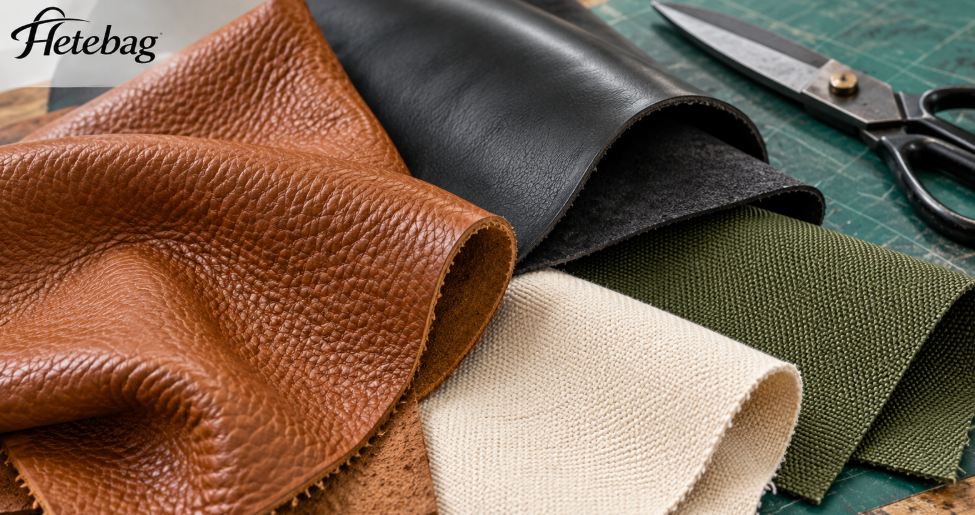
| Leather | Softer selections can produce natural folds | Firmer selections or added reinforcement can hold a defined form | Leather type, thickness range, finish, color variation, and hand feel |
| PU-coated material | Flexible grades can suit curved, soft bodies | Backing and reinforcement influence shape retention | Coating, backing, thickness, flex behavior, and relevant durability evidence |
| Nylon or polyester | Suitable for lightweight, relaxed constructions | May need support to retain sharper edges | Fabric construction, weight, finish, lining, and reinforcement |
| Canvas | Can create a casual silhouette; heavy grades may feel stiff | Heavier constructions can support a defined body | Fabric weight, finish, shrinkage considerations, and final assembled feel |
| Suede | Soft surface and drape can suit relaxed designs | Requires suitable support for defined shapes | Color transfer, surface marking, cleaning guidance, and material consistency |
Approve the assembled material combination
A swatch does not show how the lining, adhesive, reinforcement, and seams will affect the finished bag. A soft outer material combined with a stiff lining can remove the slouch a hobo design needs.
We can discuss options through HeteBag’s custom bag materials service and develop a sample around the intended shape. If the sample looks too rigid, the useful next step is to review which layer creates the stiffness before changing the outer material.

PU materials also vary in construction and performance. Ask the supplier to identify the selected grade and provide relevant evidence for the intended use rather than treating “PU leather” as a complete specification.
Keep material descriptions precise
For US-facing sales, review the FTC Leather Guides when describing leather and imitation-leather products. A marketing term such as “vegan leather” should not replace a clear explanation of the actual material composition.
For European sourcing, confirm the applicable chemical requirements for the selected leather, dyes, coatings, and hardware. ECHA’s information on skin-sensitising chemicals explains why restrictions affecting leather articles deserve attention; the appropriate documentation depends on the materials and product scope.
How Do You Choose Between a Hobo Bag and a Shoulder Bag?
Start with the customer’s carrying routine and the role the product will play in your collection. A bag intended for a compact work wardrobe may need different proportions and storage from a relaxed weekend carryall.
Use the following sequence before committing to a design:
- Define the carrying list. Record the objects the bag must hold and which need separate storage.
- Choose the intended silhouette. Use front, side, and worn references to show the curve, depth, and amount of slouch.
- Set the access requirements. Confirm the opening, closure, pocket positions, and whether one-handed access matters.
- Review the carry fit. Check strap width, adjustment, drop, and clearance with representative clothing.
- Compare physical samples. Review empty weight, packed shape, comfort, and appearance under the same conditions.
For brands testing both styles, use the same contents in each sample. That makes differences in usable space and access easier to assess than comparing catalog dimensions alone.
Treat regional preferences as something to validate with your own sales, feedback, and returns data. There is no useful universal rule that European customers prefer one silhouette and American customers prefer the other.
What Should Brands Consider When Customizing Hobo Bags and Shoulder Bags?
The sample approval should define both what the bag looks like and how it behaves. For a hobo, that includes the intended folds and top-line curve; for a structured shoulder bag, it includes the outline, base, and closure alignment.
Turn references into measurable specifications
HeteBag’s custom handbag development options include dimensions, shape, handles, compartments, and hardware finishes. To make those choices reviewable, provide an annotated drawing and identify which details are fixed and which can be adjusted during sampling.
Your specification should cover:
- Body width, height, depth, and the measurement positions for curved panels.
- Strap width, drop, adjustment range, and attachment details.
- Outer material, lining, reinforcement, and approved color references.
- Opening dimensions, closure type, pocket sizes, and placement.
- Logo artwork, dimensions, method, and distance from a fixed seam or edge.
- Acceptable measurement tolerances, packaging, and required documentation.
For a soft hobo, agree whether measurements apply to the bag laid flat, standing empty, or packed with a defined set of contents. Different measurement conditions can produce different results even when the same bag is checked.
Review branding on the finished shape
A logo that looks centered on a flat panel can shift visually when a hobo folds. A heavy metal plate can also pull on a soft panel, so size and placement need review on the assembled sample.
Through our logo customization options, we can discuss the method, position, and material combination before approval. If branding disappears into a fold or distorts the panel, the sample review can identify whether to move it, reduce its size, or change the application method.
Agree on approval and inspection points
Compare the preproduction sample with the final specification and retain an approved reference. Check the intended shape, lining behavior, zipper operation, seam appearance, hardware finish, pocket access, and strap attachments; define any required performance tests separately with an agreed method and acceptance criteria.
When a sample differs from the approved direction, record the issue with photographs and measurements before requesting a revision. “Too stiff at the top opening” gives the development team a more useful starting point than “does not look right.”
MOQ and timing should also be confirmed for the actual specification. Custom colors, hardware, logo tooling, material availability, and revision rounds can affect the project, so one quoted minimum or lead time should not be assumed to apply to every version.
Plan packaging around the silhouette
Soft bags may crease at strap attachments or reinforced areas if folded badly. Structured bags may lose their presentation if compressed, so agree on stuffing, strap positioning, individual protection, and carton arrangement before shipment.
Review a packed sample and its appearance after unpacking. Flat packing should be an approved decision for the construction, rather than an automatic instruction for every hobo bag.
Conclusion
The Hobo Bag vs Shoulder Bag comparison starts with a category distinction: a hobo is generally a shoulder bag with a curved, relaxed silhouette. A structured shoulder bag offers a more defined form, but either design can be small or roomy, organized or simple, and secure or open.
For brands and procurement teams, the strongest choice comes from checking the material combination, carrying fit, usable space, and sample behavior together. A clear specification makes those decisions easier to carry into production.
If you are developing either style, share your reference images, target dimensions, preferred materials, and planned quantities with HeteBag. We can review the development requirements and help you identify the details that need sample confirmation before bulk production.
Frequently Asked Questions
Is every hobo bag a shoulder bag?
Hobo bags are generally designed for shoulder carrying, so they usually fall within the shoulder bag category. Convertible versions may also work as crossbody bags, while very short handles may limit how a particular design can be carried.
Can a hobo bag have compartments and a full zipper?
Yes, a hobo can include internal pockets, dividers, and a full zipper. Review those features on the sample because a stiff divider or reinforced zipper opening can change the intended drape and access.
What measurements should we include in a custom hobo bag specification?
Include body width, height, depth, opening dimensions, strap width, drop, adjustment range, and pocket positions. Mark the measurement points and conditions on a drawing, especially where a curved or flexible panel makes measurements ambiguous.
Can we use the same material for a hobo and a structured shoulder bag?
Often yes, but the lining, reinforcement, and seam construction may need to differ. Approve a separate assembled sample for each style because the same outer material can behave differently in different constructions.