
 English
  Italian
  French
  German
  Spanish
  Arabic
 Are you looking for ways to develop your own bags? Then you’ve come to the right place. In fact, many people make the mistake of starting by looking for factories when they begin to produce bag products. In reality, the first step should be to find a reliable bag manufacturer. This is not easy and requires a lot of time to evaluate the factories.
So when you come into contact with different bag manufacturers, there will be significant differences in terms of craftsmanship, materials, communication methods, and even delivery schedules. These differences often directly affect the quality of your subsequent products and the overall cooperation experience.
In this article, Hetebag will provide you with some knowledge about bag manufacturers, so that before entering into a formal cooperation, you can first understand “what are bag manufacturers”, what they can offer, and how to judge whether a company is reliable. Once you have these questions clear in your mind, the search process will become much easier.
Let’s delve into this topic together in the following article!
What Is a Bag Manufacturer?
A bag manufacturer is a production facility — or network of facilities — that takes raw materials and transforms them into finished bags. That sounds simple, but there’s a lot happening beneath the surface. A real manufacturer controls the entire process: sourcing fabrics and hardware, cutting and stitching, quality inspection, and final packaging. They’re not reselling someone else’s product. They’re building it.
China has long been the world’s most important hub for bag manufacturing, and within China, Guangzhou Huadu District stands in a category of its own. Known throughout the trade as the “Leather Capital of China,” Huadu is home to hundreds of bag factories operating at every scale — from boutique ateliers producing small runs of premium leather goods to massive facilities turning out millions of units per season. The concentration of specialized suppliers, skilled craftspeople, and logistics infrastructure in this single district is unmatched anywhere on the planet.
When you work with a Huadu bag manufacturer, you’re not just buying bags. You’re tapping into an ecosystem that has been refining its craft for decades. Raw material suppliers, hardware makers, zipper specialists, lining fabric producers — they’re all within a short drive. That proximity compresses lead times, keeps costs competitive, and makes rapid prototyping genuinely possible.
Especially for those of you who purchase in bulk, understanding what your manufacturer actually produces and what makes it different from other manufacturers? This will be the first step for you when making a choice.
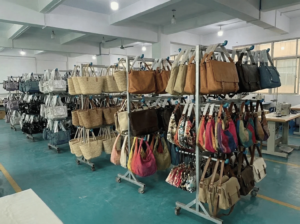
What Services Do Bag Manufacturers Provide?
Do you know? In the bag manufacturing industry, the services, products they offer vary greatly. However, in professional manufacturers, they possess many capabilities, which is why I wrote this article. Here are the service contents you should expect from professional facilities.
OEM (Original Equipment Manufacturing)
OEM means the manufacturer produces bags according to your exact specifications. You own the design. You provide the tech pack — materials, dimensions, hardware placement, stitching details — and the factory executes it. This model gives you full control over the product and is ideal when you’ve already developed a design you want to bring to life at scale.
ODM (Original Design Manufacturing)
ODM Servivce. The manufacturer presents their own existing designs, and you select what fits your brand, sometimes with modifications. This is a faster path to market because the groundwork — pattern development, material sourcing, sample refinement — is already done. For buyers who don’t have an in-house design team, ODM is genuinely valuable.
Customization
Generally, a professional manufacturer (like Hetebags) offers the following customization options:
- Materials — Full-grain leather, PU, canvas, nylon, recycled fabrics, waxed cotton, and more
- Logo application — Embossing, debossing, screen printing, woven labels, metal hardware branding, heat transfer
- Dimensions and structure — Custom sizing, panel configurations, internal organization layouts
- Hardware and trims — Custom zipper pulls, buckles, D-rings, rivets, and feet in various finishes
Sampling and Mass Production
Before any large order, you need a sample. A professional manufacturer provides pre-production samples ( Samples) so you can evaluate materials, construction, and finish before committing. Once approved, they move into mass production with consistent quality controls at each stage. The gap between a good sample and consistent mass production quality is where many factories fall short — it’s one of the most important things to probe in your vetting process.
Types of Bag Manufacturers You Should Know
Different manufacturers specialize in different categories, and the production processes, machinery, and expertise required vary significantly across product types.
| Bag Type | Key Materials | Typical MOQ Range | Common Certifications |
|---|---|---|---|
| Handbag Manufacturers | Leather, PU, canvas, suede | 200–500 pcs | BSCI, ISO 9001 |
| Backpack Manufacturers | Nylon, polyester, canvas, leather trim | 300–1,000 pcs | REACH, OEKO-TEX |
| Travel Bag Manufacturers | Ballistic nylon, ABS, polyester | 500–2,000 pcs | BSCI, SGS |
| Leather Bag Manufacturers | Full-grain, top-grain, genuine leather | 100–500 pcs | ISO 9001, LWG |
| Canvas Bag Manufacturers | Cotton canvas, waxed canvas, jute | 500–2,000 pcs | GOTS, OEKO-TEX |
| Nylon Bag Manufacturers | 420D, 600D, 900D, 1680D nylon | 500–3,000 pcs | REACH, bluesign |
| Duffel Bag Manufacturers | Polyester, nylon, leather | 300–1,000 pcs | BSCI, ISO |
| Tote Bag Manufacturers | Cotton, canvas, non-woven PP | 500–5,000 pcs | GOTS, OEKO-TEX |
| Luggage Manufacturers | ABS, PC, aluminum | 1,000–5,000 pcs | ISO, TSA approved |
| Sport & Gym Bag Manufacturers | Polyester, mesh, TPU | 500–2,000 pcs | REACH, OEKO-TEX |
Understanding which category your product falls into will immediately narrow your supplier search and help you ask the right questions during factory outreach.
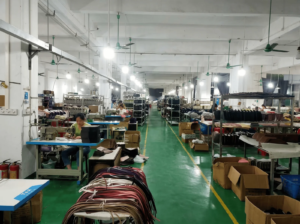
Bag Manufacturer vs Supplier: What’s the Difference?
This is one of the most common points of confusion — and one of the most consequential. Many listings on wholesale platforms present themselves as manufacturers when they’re actually trading companies or middlemen. Knowing the difference protects your margins and your quality.
| Dimension | Bag Manufacturer | Bag Supplier / Trading Company |
|---|---|---|
| Production Control | Owns or directly manages production | Outsources to third-party factories |
| Customization Depth | Full OEM/ODM capability | Limited; depends on what factories allow |
| Pricing | Factory-direct pricing, lower cost | Adds margin on top of factory price |
| Minimum Order Quantity | Set by production economics | Often flexible, but quality control is diluted |
| Quality Oversight | In-house QC at every production stage | Relies on third-party inspection or factory self-reporting |
| Sample Development | In-house pattern makers and sample room | Samples sourced from partner factories |
| Communication | Direct with production team | Intermediary layer; slower feedback loops |
| IP Protection | Stronger — your designs stay in one factory | Higher risk; designs may be shared across clients |
| Lead Time | More predictable | Variable; subject to factory capacity |
| Long-Term Value | Grows with your business; continuous improvement | Transactional relationship by nature |
The clearest way to identify a real manufacturer: ask to visit the factory, ask for photos of their production floor, ask which machines they use, and ask how many workers are on the stitching line. A trading company will struggle to answer these questions specifically.
How to Choose a Reliable Bag Manufacturer
Choosing a manufacturer is not a one-time decision. It’s the beginning of a relationship that will directly shape your product quality, your delivery reliability, and your cost structure for years. Here’s how to evaluate properly.
Production Capability
Don’t just ask “can you make this?” Ask how many units per day, per week, per month. Ask what machinery they run — computerized cutting machines, industrial sewing equipment, automatic riveting and pressing equipment. Ask whether they handle all processes in-house or subcontract embroidery, printing, or hardware attachment. A factory that subcontracts critical steps introduces quality and timing variables you can’t easily control.
Quality Control
This is where you need to dig. Ask for their internal QC process: Do they inspect at the cutting stage? During assembly? At final inspection? What’s their acceptable defect rate? Do they follow AQL (Acceptance Quality Limit) standards? Request their QC checklist. A professional manufacturer will have one. A less experienced one won’t know what you’re asking about.
MOQ (Minimum Order Quantity)
MOQ is not just a number — it reflects the factory’s production economics and their interest in your business. A factory with a 5,000-piece MOQ on a complex leather handbag is signaling something different than one with a 300-piece MOQ. Neither is inherently better, but the number should align with your actual order volume. Beware of factories that quote unrealistically low MOQs — they often compensate by cutting corners on materials or workmanship.
Lead Times
Standard lead times for bag production typically run 30 to 60 days after sample approval and deposit payment, depending on complexity and factory load. Ask what their current capacity utilization is. Ask about peak season delays. Ask what happens if there’s a material shortage — do they have backup suppliers? A factory that can answer these questions concretely has thought about production risk. One that gives vague answers hasn’t.
Communication
This one sounds soft but it’s operationally critical. You need a factory contact who responds within 24 hours, understands your product requirements precisely, and escalates problems immediately when they arise. Time zone differences and language barriers are real factors when working with Chinese manufacturers. A factory with a dedicated English-speaking account manager is worth a meaningful premium because the alternative — miscommunication on a production run — costs far more.
What Factors Should You Consider When Choosing a Bag Manufacturer?
Beyond the operational evaluation above, your sourcing decision also needs to account for product and market fit.
Styles and Design Compatibility
Not every factory can make every style well. A factory that excels at structured leather handbags may not have the right machinery or expertise for technical outdoor backpacks. Review their existing product catalog honestly. If your design is more complex than anything they’ve produced before, you’re taking on development risk that belongs in your project plan.
Price and Total Cost of Ownership
The unit price is just one number. Factor in sampling costs, tooling costs for custom hardware, freight, duties, inspection fees, and the cost of rework if quality falls short. A factory quoting 15% lower than competitors may still be the more expensive choice once you account for rejection rates and delays.
Quality — and What You Actually Need
Quality is relative to your market. A $29 retail tote bag requires different construction standards than a $350 leather shoulder bag. Be explicit with manufacturers about the retail price point you’re targeting and the quality level that corresponds to it. The best manufacturers will tell you honestly whether your target price point and your quality expectations are compatible — or they’ll show you what’s possible at different price levels.
Materials
Material choices drive cost, quality, and brand positioning simultaneously. For leather goods, the difference between split leather, genuine leather, top-grain leather, and full-grain leather is not just technical — it’s a fundamental positioning decision. For synthetic bags, denier count, coating type, and lining quality all matter. A manufacturer who can guide you through material trade-offs has real expertise. One who just quotes whatever you specify is a production house, not a partner.
Sustainability and Compliance
Increasingly, major retail buyers require documentation of environmental and labor compliance. Ask manufacturers about their certifications — BSCI, OEKO-TEX, REACH compliance, recycled material sourcing. If your end customer is in Europe or North America, this is not optional.
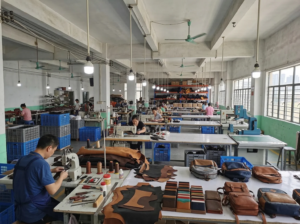
Why Work with a Professional Bag Manufacturer
There’s a meaningful difference between sourcing bags and building a bag business. Professional manufacturers enable the second.
Cost Advantage
Factory-direct pricing removes the margin layer that trading companies add. But cost advantage goes deeper than that. A factory with efficient production processes wastes less material, rejects fewer finished goods, and hits delivery windows more consistently. All of those factors reduce your total landed cost in ways that a simple unit price comparison doesn’t capture.
Stable Quality Control
When you work directly with a manufacturer and build an ongoing relationship, quality becomes a system rather than a gamble. The factory learns your standards. QC procedures get calibrated to your requirements. Problems get identified and corrected at earlier stages of production. Over multiple orders, defect rates drop. That consistency is enormously valuable — both for your own operations and for the customers you serve.
Customization Capability
A professional manufacturer isn’t just executing your specs. They’re contributing expertise. When you describe a function you need a bag to perform, they can recommend materials, construction methods, and hardware that achieve it. That collaborative capability is only available when you’re working directly with a team that actually makes bags — not one that buys and resells them.
Long-Term Partnership Value
The real return on working with a professional manufacturer accumulates over time. They develop institutional knowledge of your product line. They flag material price changes before they hit your cost. They prioritize your orders during busy seasons because you’ve built a track record together. They invest in improving processes that benefit your account specifically. None of this happens in a transactional relationship. It requires commitment from both sides — and it’s worth building.
Conclusion
Finding the right bag manufacturer is one of the highest-leverage decisions in any product business that sells bags. Get it right, and you have a foundation that supports everything else — consistent product quality, reliable delivery, and the flexibility to grow.
The Guangzhou Huadu region remains one of the world’s most capable concentrations of bag manufacturing expertise. Factories there have grown up alongside international brand requirements, and the best of them have developed real sophistication in OEM and ODM production, quality systems, and global logistics.
Hetebag is based in Huadu, Guangzhou — in the heart of China’s leather and bag manufacturing ecosystem. With over a decade of manufacturing experience and partnerships with multiple specialized factories, we work with brands and businesses at various stages of growth to produce handbags, backpacks, travel bags, and more across leather, canvas, and technical fabrics.
If you’re currently searching for a bag manufacturer, we’d be glad to hear from you. Leave your contact information on our website and we’ll get back to you promptly. We look forward to the possibility of working together.
Thank you for reading.
Frequently Asked Questions
What is the primary role of a bag manufacturer?
A bag manufacturer is a production facility that transforms raw materials into finished bags. They control the entire process, including sourcing materials, cutting, stitching, quality inspection, and packaging. They build the product rather than reselling it.
What is the difference between OEM and ODM services offered by manufacturers?
OEM (Original Equipment Manufacturing) means the manufacturer produces bags according to your exact specifications and designs. You provide the tech pack, and they execute it. ODM (Original Design Manufacturing) means the manufacturer offers their existing designs, which you can select and potentially modify. ODM is faster to market as design groundwork is already done.
What customization options can a professional bag manufacturer provide?
Professional manufacturers typically offer customization in materials (e.g., leather, canvas, nylon), logo application (e.g., embossing, screen printing), dimensions and structure (custom sizing, internal layouts), and hardware and trims (custom zipper pulls, buckles).
Why is China, specifically Guangzhou Huadu District, a significant hub for bag manufacturing?
China, particularly Guangzhou Huadu District (known as the “Leather Capital of China”), is a major hub due to its concentration of specialized suppliers, skilled craftspeople, and logistics infrastructure. This ecosystem allows for compressed lead times, competitive costs, and rapid prototyping.
What is the difference between a bag manufacturer and a bag supplier/trading company?
A bag manufacturer owns or directly manages production, offers full OEM/ODM capabilities, provides factory-direct pricing, and has in-house quality control. A bag supplier/trading company outsources production, offers limited customization, adds a margin to factory prices, and relies on third-party inspection. Manufacturers offer stronger IP protection and more predictable lead times.


