
 English
  Italian
  French
  German
  Spanish
  Arabic
 An OEM leather bag buyer may arrive with a finished tech pack, while an ODM buyer still needs patterns, material options, and sample revisions. Comparing their factory quotations without clarifying those responsibilities can hide development costs, approval gaps, and uncertainty over design ownership.
Before contacting factories, define who supplies the design, who owns patterns and tooling, which materials are approved, and what must be confirmed before production. The same written brief makes supplier responses more useful.
This list is a starting point for researching potential suppliers, not a verified ranking or guarantee of current capabilities. Confirm each company’s identity, production location, relevant product experience, and current terms directly.
For the complete purchasing process, use the custom leather handbag sourcing guide to connect material approval with bag construction, supplier selection, sampling, and bulk inspection.
Why Chinese Custom Leather Bag Manufacturers Still Lead the Market
The leather goods industry in China didn’t get to where it is by accident. Decades of production experience, government investment in manufacturing infrastructure, and a deep pool of skilled craftspeople have created an ecosystem that’s genuinely hard to replicate.
Guangzhou has established leather goods and component supply networks. For a particular supplier, confirm the actual leather source, subcontractors, and component availability; geographic proximity does not prove luxury-brand experience or a particular production schedule.
Sample timing depends on design readiness, material availability, tooling, revisions, and approval requirements. Ask each supplier for a project-specific schedule and the conditions that could change it.
Audit and certification claims need individual verification. Request documents tied to the relevant facility, material, or tannery, and confirm scope, current validity, and traceability. A general presentation does not establish compliance of your finished bag.
None of this means every Chinese factory is the right choice. Production quality varies enormously. A factory that excels at high-volume fast-fashion handbags may not have the skill set for a hand-stitched full-grain leather briefcase. That’s why understanding what to look for — before you even start sending inquiries — matters so much.
What to Look for in a Custom Leather Bag Factory
Here’s what actually separates reliable manufacturers from mediocre ones.
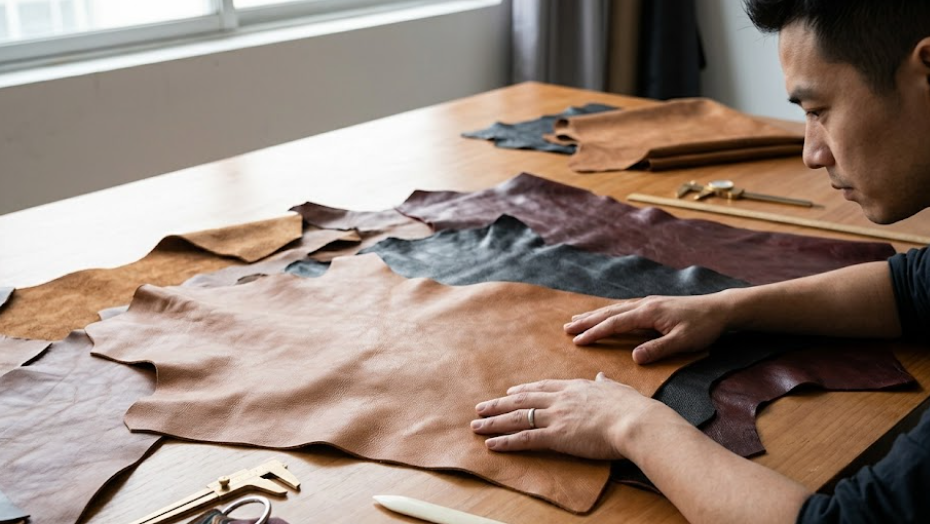
Material sourcing transparency. Ask a factory where their leather comes from. A good supplier can name the tannery and explain the grade. If they can’t answer that question clearly, that’s a significant red flag. Leather quality varies more than almost any other material in bag production, and vague answers about “premium full-grain leather” without a source are meaningless.
Sample quality and turnaround. Request a sample before committing to any production order. The sample tells you everything — how cleanly the edges are finished, whether the hardware feels solid, how consistently the stitching runs. A factory that rushes samples or charges disproportionately for them is often telling you something about how they’ll treat your production run.
Audit and certificate scope. An amfori BSCI social audit concerns working conditions; it is not a product certificate. An ISO 9001 certificate concerns a management system. The LWG Leather Manufacturer Standard assesses leather-processing facilities and does not by itself prove finished-bag performance. Verify each document and its applicability to the order.
Production capacity versus your order size. A factory that typically runs orders of 50,000 units per month doesn’t care much about your 500-unit run. Conversely, a small factory with 20 sewing stations may not be able to hit a 5,000-unit deadline without compromising quality. Ask for their monthly production capacity and typical client order sizes. You want to be a meaningful customer, not an afterthought.
Communication responsiveness. How quickly does the factory respond to your first inquiry? How clearly do they answer technical questions? These early interactions are a genuine preview of what project management will look like during production. A supplier who’s slow and vague before you’ve signed is almost always slower and vaguer after your deposit is in their account.
References and client history. A factory with a verifiable track record of producing for recognized brands — even if those brands are confidential — should be able to show you product photos, certifications, or at minimum describe the types of clients they’ve worked with. Complete opacity about past clients isn’t always a dealbreaker, but it warrants more due diligence.
OEM vs ODM Leather Bag Manufacturing: What’s the Difference?
These two terms get used interchangeably online, but they describe genuinely different production relationships.
OEM (Original Equipment Manufacturing) means the factory produces according to your specifications. You bring the design — the technical drawings, material specs, hardware choices, dimensions — and the factory executes it. You own the design. The factory’s job is accurate, consistent production. OEM works well when you already have a clear product vision and want a manufacturer who can deliver it reliably.
ODM (Original Design Manufacturing) means the factory contributes to the design itself. You might come with a concept, a mood board, or a reference product — and the factory’s design team develops the pattern, selects compatible materials, and produces prototypes for your review. You still own the final product (once you’ve paid for development), but the factory’s design expertise is part of what you’re paying for. ODM is especially valuable for brands entering a new category, expanding a product line quickly, or testing concepts without the overhead of an in-house design team.
In practice, most Chinese factories offer both. The real question is which model fits your situation:
| Factor | OEM | ODM |
|---|---|---|
| Design ownership | Fully yours from day one | Developed jointly; you own the final approved version |
| Upfront investment | Higher (requires complete tech pack) | Lower (factory develops patterns) |
| Customization depth | Unlimited | Limited to factory capabilities and existing patterns |
| Speed to sample | Depends on your tech pack quality | Usually faster — factory knows their own patterns |
| Best for | Established brands with design teams | New brands, product extensions, rapid iteration |
One thing worth understanding: factories that do strong ODM work tend to invest more in their design and development staff, which often correlates with overall production quality. It’s not a hard rule, but it’s a useful proxy.
Top 20 Chinese Custom Leather Bag Factories for OEM & ODM
The factories below represent a range of specializations, price points, and production scales. Each has a track record of working with international clients on custom projects.
| Factory | Est. | Core Products |
|---|---|---|
| Hetebag | 2011 | Handbags, tote bags, crossbody bags, backpacks, wallets, accessories |
| Sitoy Group | 1968 | Premium/luxury handbags, small leather goods, travel accessories |
| Superl Group | 2002 | Accessible luxury handbags, metal hardware, retail fixtures |
| J.D. Handbag Factory | 2000 | Handbags, wallets, belts, backpacks — full OEM/ODM |
| Guangzhou Herder Leather | 2006 | Leather bags, wallets, card holders, passport covers |
| Guangzhou Boshen Leather | 2003 | Genuine leather handbags, briefcases, wallets, backpacks, belts |
| Gionar | 2010 | High-end genuine leather handbags, backpacks, travel bags, briefcases |
| Guangzhou Tiangang Leather | 2010 | Shoulder bags, tote bags, crossbody bags, backpacks, handbags |
| HerminFashion | 2012 | Handbags, tote bags, backpacks, wallets, accessories |
| Sitoy (HK) Handbag Factory | 1982 | Fashion women’s handbags, small leather goods |
| B.S. Bag Factory | 2010s | Leather handbags, canvas bags, custom bag styles |
| Guangzhou Xianglu Leather | 2008 | PU handbags, genuine leather handbags, promotional bags |
| Yee Siang Enterprise | 1990 | High-end leather handbags and accessories |
| TSD Group | 1990 | Fashion, lifestyle, and travel bags |
| Luen Thai Holdings | 1965 | Handbags, supply-chain integrated bag products |
| Sangwoo China | 1994 | Fashion handbags and accessories |
| Kai Yu Bags | 2000 | PU leather and synthetic material bags |
| SL Bag Manufacturer | 2000 | Backpacks, travel bags, briefcases, functional bags |
| Benshine Bag Factory | 2000 | Handbags, promotional bags, OEM custom bags |
| Osgoodway Bag Manufacturing | 2000 | Sports bags, casual bags |
If you are also comparing suppliers across different bag categories beyond leather products, you may also want to explore our guide to the top bag manufacturers in China, which covers factories specializing in tote bags, backpacks, travel bags, and promotional bags for global brands.
Most Popular Types of Custom Leather Bags in 2026
Market demand continues to shift, and understanding which bag categories are growing helps you make smarter product decisions before you commit to tooling.
Structured tote bags remain one of the most-produced categories in Chinese factories — and for good reason. The silhouette translates across price points, works in both genuine and PU leather, and commands solid margins at wholesale. Brands continue to invest in totes because the customer base is wide and repeat purchases are common.
Crossbody bags have maintained strong order volumes for several consecutive seasons. The functional appeal — hands-free carry, compact size, versatile styling — keeps demand steady across age groups and geographies. Factories are seeing particularly strong interest in styles that incorporate structured compartments and magnetic closures.
Backpacks as a fashion category (distinct from pure utility/outdoor packs) have grown meaningfully. Leather and vegan leather backpacks with clean silhouettes and minimal branding are performing well in premium and accessible-luxury segments. Several Chinese factories have developed dedicated backpack production lines as a result.For brands specifically sourcing fashion or travel backpacks, our list of the top backpack manufacturers in China provides additional supplier options and production insights.
Mini bags and micro bags continue to be ordered in significant volumes, particularly for fashion-forward brands. The hardware complexity relative to overall size makes these slightly more technically demanding to produce at high quality — which is worth factoring into factory selection.
Travel and weekender bags are seeing renewed interest as travel spending recovers globally. Structured weekend bags in full-grain or top-grain leather are a category where Chinese factories with genuine leather expertise have a clear advantage over those primarily set up for PU production.
Functional briefcases and laptop bags are growing in the professional accessories segment, with demand concentrated in markets with strong business travel cultures. Brands targeting this segment should prioritize factories with experience in structured interiors and precision hardware.
Leather Materials Commonly Used by Chinese Manufacturers
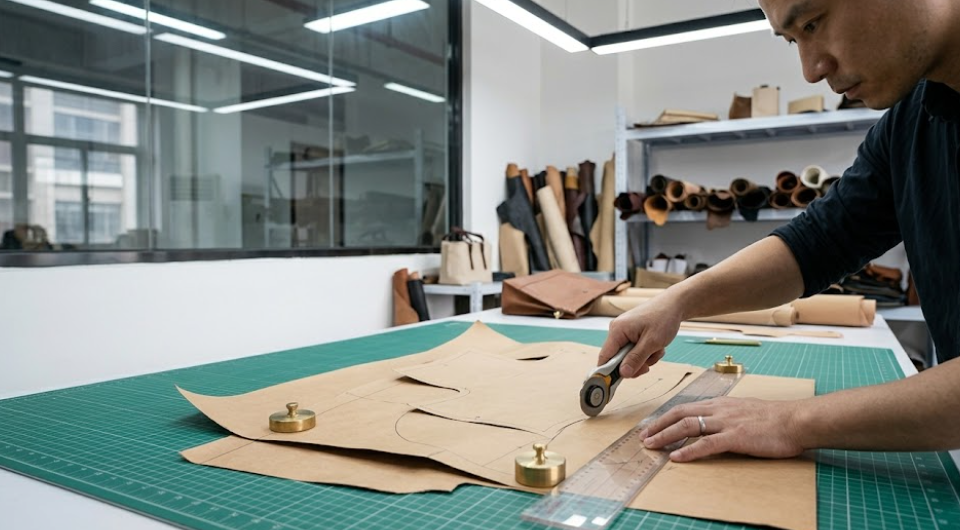
Material selection is where quality and cost intersect most visibly. Here’s a clear breakdown of what each option actually delivers:
| Material | Origin | Durability | Feel & Appearance | Price Range | Best For |
|---|---|---|---|---|---|
| Full-grain leather | Outermost hide layer, natural surface | Highest — develops patina over time | Rich, natural texture, visible grain | Premium | Luxury and premium brands, heirloom goods |
| Top-grain leather | Sanded and refinished outer hide | High — more uniform than full-grain | Smooth, consistent surface | Mid-to-premium | Fashion brands, structured bags |
| Genuine leather | Lower hide layers, bonded | Moderate — less durable over time | Even surface, less character | Mid-range | Accessible price points, promotional items |
| PU leather | Polyurethane-coated fabric | Moderate — depends on coating quality | Wide range of finishes, very consistent | Budget-to-mid | Fast fashion, high-volume programs |
| Vegan leather | Plant-based or synthetic alternatives | Variable by type | Can mimic genuine leather closely | Mid-to-premium | Sustainability-focused brands |
| Recycled leather | Reclaimed leather fibers, rebonded | Similar to genuine leather | Textured, less natural | Mid-range | Eco-conscious positioning, promotional use |
A few practical notes on this:
Full-grain leather is genuinely difficult to source consistently at scale in China. Factories that claim to use it for high-volume orders at low prices are almost always using something different. If full-grain is a brand requirement, request tannery documentation and budget for a higher unit cost.
PU leather quality varies dramatically. The difference between a high-quality PU from a reputable supplier and a cheap PU is immediately visible in finished goods. Ask to see samples made with the specific PU grade your factory plans to use — not just catalog photos.
Vegan leather is a growing category, and Chinese factories have invested meaningfully in materials like Piñatex, apple leather, and mushroom leather alongside more conventional synthetic alternatives. If sustainability positioning matters to your brand, ask specifically about certifications on the raw material, not just the factory.
How Much Does Custom Leather Bag Manufacturing Cost?
Pricing depends on several variables that interact in non-obvious ways. Here’s a realistic framework.
Material cost is the largest single driver. A bag made from full-grain cowhide will cost meaningfully more than the same silhouette in PU leather — not just in the material itself, but in the cutting, waste management, and skilled labor required to work with it properly. Expect material to account for 40–60% of your unit production cost.
Order quantity moves the needle on per-unit cost more than most buyers expect. The jump from 100 units to 500 units typically delivers 20–35% cost reduction. From 500 to 2,000 units, another 15–25% is usually available. Beyond 2,000 units, incremental savings slow down.
Complexity matters too. A simple tote bag with a single compartment and basic hardware is priced differently from a structured bag with multiple internal pockets, reinforced base, metal frame, and custom-embossed logo panel. Count your hardware pieces and seam count — both drive labor time.
Sample costs are typically $50–$200 for a basic handbag style, higher for complex structured bags or styles requiring custom hardware development. Most factories credit sample costs against your first production order if you proceed.
For rough benchmarking purposes:
| Bag Type | Estimated FOB Price Range (USD) |
|---|---|
| Simple PU tote (500+ units) | $8 – $18 |
| Mid-range structured handbag in PU (500+ units) | $18 – $35 |
| Genuine leather handbag (300+ units) | $35 – $80 |
| Full-grain leather briefcase or weekender (200+ units) | $80 – $180+ |
These are directional benchmarks. Actual quotes will vary based on your specific design, hardware selections, and the factory’s overhead structure.
How to Choose the Right OEM & ODM Leather Bag Supplier
The research phase matters, but so does how you evaluate what you find. Here’s a structured approach.If you are new to sourcing bags internationally, you can also read our complete guide on what a bag manufacturer does and how to evaluate suppliers before shortlisting factories.
Request product samples early. Don’t wait until you’re deep into supplier conversations to ask for samples. Request samples from multiple factories simultaneously — ideally the same style or a close equivalent — so you’re comparing production quality directly rather than relying on catalog photos. Pay attention to edge finishing, stitch consistency, hardware feel, and lining quality. These details tell you more than any factory certification.
Verify audit and certification evidence independently. Request the audited site, report date, rating and corrective-action status for social audits. For certificates, confirm the holder, scope, validity, and issuing body. Match tannery records to the leather supply route rather than treating them as a bag-factory certificate.
Understand production capacity relative to your volume. Ask directly: what’s your monthly production capacity for this product category? What’s your typical client order size? A factory that mainly handles 50,000-unit programs may lack the focus and flexibility your 300-unit development order needs. You want to work with a factory where your business genuinely matters.
Evaluate communication quality from the first interaction. Response time, clarity of answers, and how well the factory handles technical questions before you sign anything are all predictive of how production management will go. A factory that answers vague questions with vague answers isn’t going to get more specific when things get complicated.
Compare project schedules across suppliers. Ask for sample and bulk schedules based on the same approved design and material brief. Identify dependencies such as leather dyeing, hardware tooling, sample revisions, and inspection. Confirm when the schedule begins and how changes are approved.
Review production and quality processes. Ask specifically about QC checkpoints — incoming material inspection, in-line production checks, and final pre-shipment inspection. A factory with documented quality checkpoints is meaningfully different from one that inspects finished goods only at the end of production.
Confirm OEM and ODM Ownership Before Sample Development
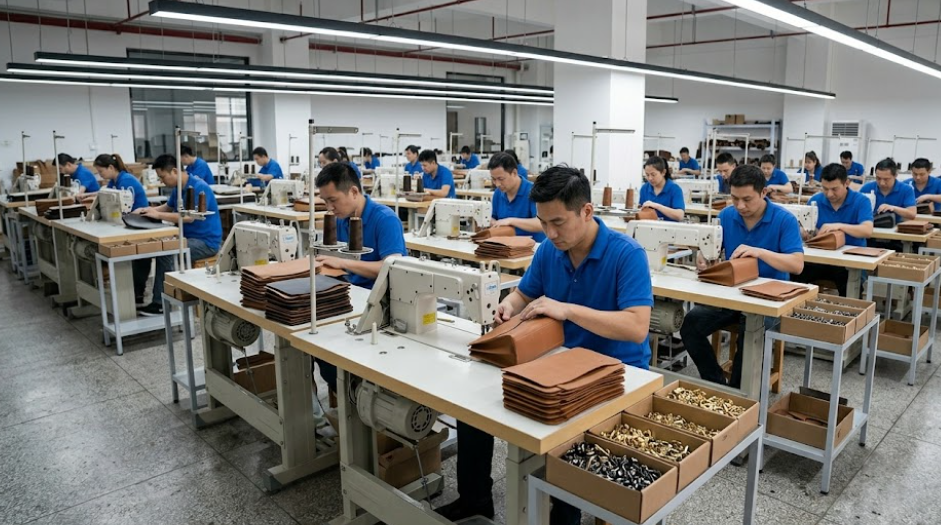
Record who owns the design files, patterns, tooling, and approved material references, and whether the supplier may offer the design to another buyer. Define the included development work, sample revisions, fees, and the files or physical references you receive when changing suppliers. These terms should be agreed in writing rather than inferred from the OEM or ODM label.
Conclusion
China’s position in global leather bag manufacturing is built on decades of accumulated expertise, integrated supply chains, and a manufacturing culture that has genuinely kept pace with evolving quality and sustainability expectations. Whether you’re sourcing a first production run or scaling an existing product line, the right Chinese manufacturer can deliver quality that meets premium market expectations at pricing that makes the economics work.
The factories on this list represent a genuine cross-section of what’s available — from large-scale heritage manufacturers like Sitoy and Luen Thai to more focused specialists like Gionar and J.D. Handbag Factory. The right choice depends on your specific product category, order volumes, quality requirements, and how much design input you need from the manufacturing side.
Before you commit, do the work: get samples, verify certifications, ask direct questions about capacity and quality processes, and compare lead times across at least three suppliers. A manufacturing partner who communicates well, delivers consistent quality, and scales with your brand is worth more than the lowest quoted price.
If you’re currently evaluating options for leather bag production, Hetebag is worth putting on your shortlist. Based in Huadu, Guangzhou, with our own production facility and 15 years of manufacturing experience, we work across OEM and ODM programs — from initial design development through mass production. Our product range covers handbags, tote bags, crossbody bags, backpacks, wallets, and accessories in materials including genuine leather, PU, canvas, nylon, and recycled fabrics. We collaborate with multiple factories to support different production scales and product categories, and we serve brands, wholesalers, and distributors across North America, Europe, and Australia.
If you’re looking for a reliable manufacturing partner, visit our website and leave your contact information — we’re genuinely glad to hear from you, and we look forward to working together.
Frequently Asked Questions
What is the typical MOQ for custom leather bag manufacturing in China?
MOQ depends on the bag construction, materials, colors, hardware, and production route. Request the quantity by style and color and identify any separate component minimums before confirming an order.
How long does it take to develop a custom leather bag sample?
Sample timing must be quoted for the actual design, material availability, tooling, and revision requirements. Confirm the approval steps and when the quoted schedule begins.
Can Chinese factories produce genuine leather bags for premium brands?
Yes. Many experienced Chinese manufacturers specialize in genuine leather production, including full-grain leather, top-grain leather, and luxury handbag manufacturing. Factories in Guangzhou, especially in Huadu and Baiyun districts, have extensive experience working with international fashion brands and premium private label projects.
What is the difference between OEM and ODM leather bag manufacturing?
OEM manufacturing means the factory produces bags according to the buyer’s existing designs and specifications. ODM manufacturing means the factory also assists with product design, pattern development, and material selection. OEM is suitable for established brands with complete tech packs, while ODM works well for brands looking for design support and faster product development.
How can I verify whether a leather bag factory is reliable?
Verify the company identity and production location, review relevant finished samples, clarify subcontracting, and agree on specifications and inspection access. Check audit and certificate scope independently; logos alone do not prove reliability.


