
 English
  Italian
  French
  German
  Spanish
  Arabic
 A leather handbag sample can look ready for launch while its handles stretch under load, its pale lining picks up color, or its edge paint cracks at a fold. Buyers sourcing custom leather handbags need to settle these details before comparing bulk quotations: the actual material, construction, approval sample, inspection rules, and conditions for repeat orders.
I have worked in bag development and manufacturing for more than 15 years. When I inspect a handbag sample, I do not start with the logo. I press the side panels, load the handles, open every zipper, and look inside the seams. Those small checks reveal whether the bag was only made to look good or was built for repeat production.
Use This Leather Bag Purchasing Guide to Resolve the Next Decision
This guide covers the purchasing process from specification to production approval. Use the focused articles below when you need to resolve a material or supplier question; for a wider textile comparison, see the custom bag materials guide.
| Purchasing decision | Focused guide | What to confirm |
|---|---|---|
| Leather grade and hide selection | Which Leather Is Best for Bags? A Guide to Types and Grades | Compare thickness, temper, finish, usable area, shade limits, and panel matching. |
| Genuine leather or PU | Top 7 Differences Between PU Leather and Genuine Leather | Match material composition and care requirements to product positioning and intended use. |
| Microfiber or conventional PU | Microfiber Leather vs PU Leather: What’s the Difference? | Compare backing, coating, edge behavior, and test evidence for the actual specification. |
| Private-label manufacturer shortlist | Top 10 Custom Leather Bag Manufacturers in China for Private Label Brands | Assess sampling, customization, subcontracting, and repeat-order control. |
| OEM or ODM factory sourcing | Top 20 Chinese Custom Leather Bag Factories for OEM & ODM Production | Clarify design responsibility, ownership, documentation, and supplier verification. |
What Are Custom Leather Handbags?
Custom leather handbags are produced to a buyer’s own requirements. A project may begin with a sketch, tech pack, reference sample, or clear product images. The manufacturer turns that information into patterns, a bill of materials, samples, and production specifications.
Customization may cover the bag shape, size, leather, lining, pockets, reinforcement, hardware, colors, logo, labels, packaging, tests, and quality limits. Buyers planning an OEM or ODM project can first review the available custom handbag manufacturing options.
How Are Custom Leather Handbags Different from Ready-Made Handbags?
A ready-made handbag already has a fixed pattern, material, construction, and color range. You may add a label or choose an existing color, but the main product stays unchanged.
A custom handbag starts with your user and product plan. You can change the handle drop, opening width, pocket layout, leather grain, metal finish, logo position, and packaging. The factory must check whether these choices work together.
This matters because a handbag is a connected structure. A heavy chain needs stronger attachment points. Soft leather may need backing to hold a structured shape. A wider opening can improve access but place more stress on the zipper and side panels.
Ready-made products suit buyers who need speed and limited development. Full customization makes more sense when you need brand ownership, repeatable materials, controlled specifications, or a design that cannot be selected from a catalog.
Which Brands Are a Good Fit for Custom Leather Handbags?
Custom development can suit fashion labels, lifestyle brands, boutique retailers, private-label programs, designers, wholesalers, and premium gift buyers.
You are usually ready when you know who will use the bag, what they will carry, where the bag will be sold, its product position, the expected order size, and how reorders will work.
Customization may not fit buyers who need immediate delivery, lack a stable design direction, or want many unrelated styles in very small quantities. Limited private-label changes may carry less risk.
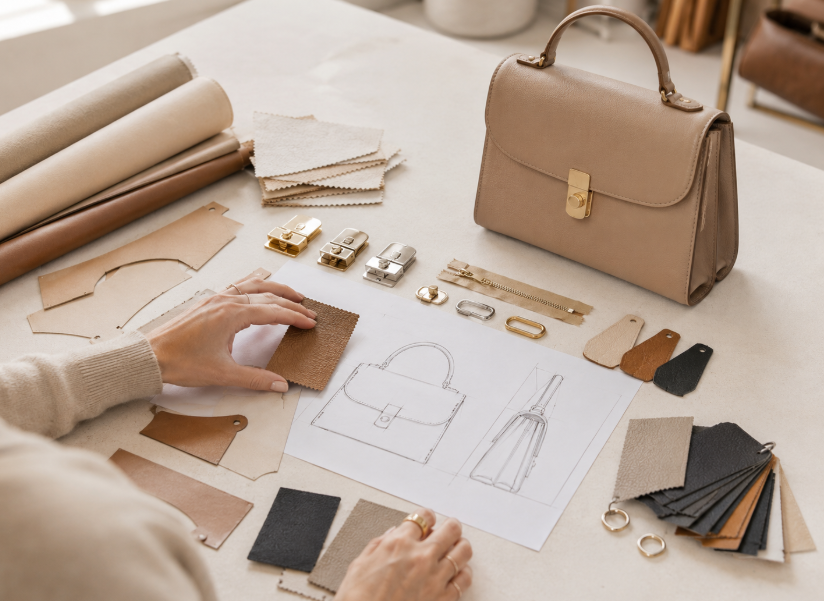
What Leather Materials Are Used for Custom Handbags?
The word “leather” is too broad for purchasing. “Genuine leather” does not tell you the hide layer, animal species, thickness, tanning method, finish, grain correction, colorfastness, or cutting yield.
Ask for a full material description. A clear specification may state cowhide top-grain leather, a thickness range, a semi-aniline finish, a named grain, a color reference, and an approved swatch. You can compare more options in this custom bag materials guide.
| Material | Feel and Appearance | Best Fit | Main Buyer Check |
|---|---|---|---|
| Genuine leather | Natural grain, richer touch, visible variation | Premium, business, heritage, and long-use collections | Grade, thickness, finish, color rub, acceptable natural marks |
| PU leather | Even surface with wide color and texture choices | Fashion, seasonal, promotional, and accessible private-label lines | Backing, coating, peeling risk, flex and aging performance |
| Microfiber leather | Dense, smooth, stable, and leather-like | Mid-to-premium non-animal and structured collections | Fiber base, resin system, thickness, recovery, surface aging |
Genuine Leather
Genuine leather can give a handbag depth, softness, strength, and a surface that develops character with use. It also carries natural variation.
Full-grain leather keeps more of the natural grain. Top-grain leather is corrected or finished for a cleaner surface. Split leather comes from a lower layer and often receives a coating or embossed grain. Each can work when it is described honestly and matched to the product.
Material grading is a major production step. Front panels, flaps, and handles often need cleaner sections. Hidden parts may allow more natural marks. Your approved sample should define acceptable wrinkles, veins, healed marks, grain differences, and shade variation.
Thickness changes construction too. Thick leather can create bulky seams. Thin leather may collapse without reinforcement. Good results depend on pattern making, cutting, skiving, backing, and edge finishing, not only the leather name.
Buyers seeking tannery-level supply-chain information can review the Leather Working Group leather manufacturer standard. Ask for records linked to the actual tannery and leather batch rather than a general sustainability claim.
PU Leather
PU leather gives brands strong control over color, grain, shine, and bulk consistency. “PU” alone is still not a useful specification.
Its backing fabric, polyurethane layer, thickness, surface treatment, adhesion, and aging resistance affect performance. A weak material may look clean during sampling, then crack, peel, or become sticky after heat, humidity, folding, or storage.
Ask how the material is expected to perform in your target climate. Where risk is higher, request flex, adhesion, dry and wet rub, and aging tests with agreed methods and acceptance limits.
Microfiber Leather
Microfiber leather uses a dense synthetic fiber base with a polyurethane system. Better grades can offer strong tear resistance, clean edges, stable color, and good shape recovery.
Some grades are soft enough for slouchy bags; others support structured styles. Confirm the base, thickness, weight, flex behavior, coating, and aging data.
Do not approve microfiber from a flat swatch alone. Curves, folded seams, edge paint, needle holes, and bonded parts may behave differently in a finished bag.
How Should You Match Material to Product Positioning?
Start with how the bag will be used.
A structured work handbag needs shape retention, handle support, and load-bearing hardware. A soft shoulder bag needs drape, comfortable edges, and a body that folds without permanent marks. A light fashion bag may focus on color and surface effect. A long-use premium bag needs materials and construction that age in a controlled way.
The outer leather is only one layer. Reinforcement board, foam, non-woven backing, lining, thread, glue, edge paint, and metal parts shape the final result. Expensive leather placed over weak reinforcement will not create a premium handbag. If your collection also includes textile styles, our guide to materials for custom ladies handbags compares leather with canvas, nylon, polyester, and other options.
How Does Material Choice Affect Cost and Perceived Quality?
Material cost is not only the purchase rate per sheet or meter. Genuine leather has irregular hide shapes and natural defects, so usable cutting yield changes by style. Large clean panels, grain matching, custom colors, and strict shade control use more material and labor.
PU and microfiber often offer better cutting yield and consistency, but their performance range is wide. Stronger backing, thicker coating, custom texture, and improved aging resistance change the quotation.
Perceived quality comes from balance. A rich outer material cannot hide a rough zipper, loose lining, weak handle root, or thin hardware plating.
What Can Be Customized on a Leather Handbag?
A custom leather handbag can be changed in almost every area. Choose details that improve the product rather than add complexity.
| Area | Custom Options | Risk to Check |
|---|---|---|
| Shape and structure | Tote, satchel, hobo, bucket, crossbody, top-handle, clutch; soft or structured | Balance, opening access, panel distortion, base sagging |
| Interior | Pockets, divider, card slot, key hook, padded section | Lining pull, pocket tearing, reduced usable space |
| Hardware | Zipper, hook, buckle, D-ring, feet, chain, snap | Plating wear, sharp edges, weak attachment, color mismatch |
| Branding | Debossing, embossing, foil, metal plate, woven label, printed lining | Poor clarity, uneven pressure, wrong scale, weak fixing |
| Packaging | Dust bag, tissue, shape support, box, hangtag, barcode label | Crushing, moisture, surface marks, wrong labeling |
Bag Shape, Size, and Internal Structure
Specifications should state finished length, height, width, handle drop, strap range, opening width, and pocket position.
Think about real use. A bag may look wide enough from the outside while a narrow zipper blocks access. Thick lining, foam, and dividers also reduce usable space.
Weight balance needs attention. Long handles pull on the upper edge. Chains concentrate force at the attachments. A wide base may sag without the right board and reinforcement. These are engineering decisions, even on a simple-looking handbag.
Color, Lining, Zippers, and Metal Hardware
Approve color with a physical swatch. Screen colors change between devices, and leather batches may have an acceptable shade range.
Lining should match the user. Light lining improves visibility but shows dirt and dye transfer. Dark lining hides marks but makes deep bags harder to search. Pocket tops need reinforcement, and loose lining must not enter the zipper path.
Write the zipper size, element type, tape color, slider, puller, and end finish into the bill of materials. A branded zipper only helps when the exact type and source are controlled. The YKK fastening product library is useful when comparing component options, but the chosen zipper still needs to fit the bag’s curve, load, and appearance.
“Gold hardware” is not a complete specification. Approve the metal finish beside the leather and lining. Ask about base metal, plating, protective coating, corrosion testing, sharp-edge control, and attachment method.
Logo, Labels, and Packaging
Debossing presses a logo into the surface. Embossing raises it. Foil stamping adds color. Metal logos create a stronger focal point but need secure posts, backing washers, and accurate placement.
Fine letters can disappear on deep pebbled leather. A large debossed area may warp a thin panel. The factory should test pressure, temperature, time, and position on the actual material.
Packaging should protect the bag, not only display the brand. State the dust-bag size, tissue method, handle protection, shape support, metal wrapping, barcode format, carton marks, and packing quantity.
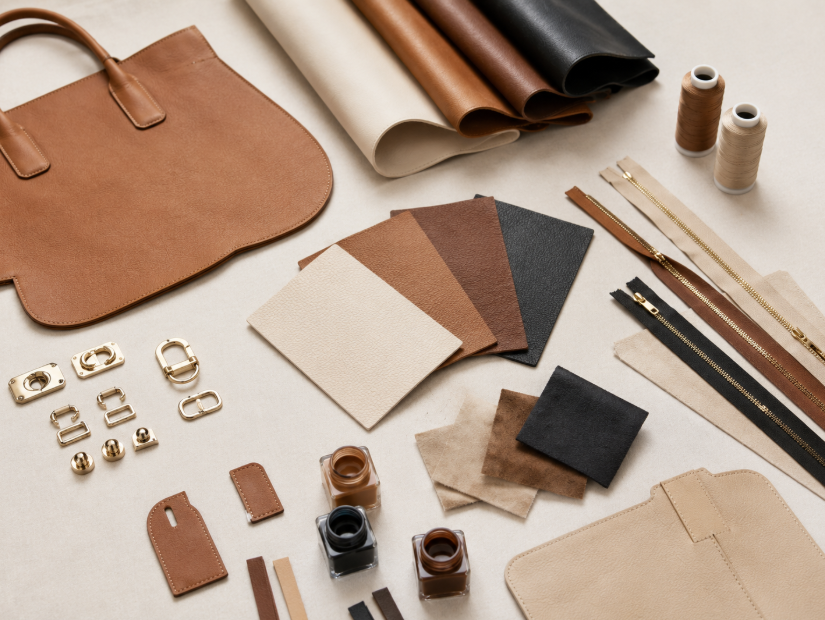
How Are Custom Leather Handbags Manufactured?
A good process removes uncertainty before bulk production. Production should not become another design round.
From Design Brief to Sample Development
Your first brief should cover target user, use case, dimensions, reference images, material direction, color, hardware, logo, packaging, target market, order plan, and testing needs.
The factory reviews feasibility and creates patterns. A skilled developer may adjust seam allowance, reinforcement, corner radius, zipper length, handle construction, or panel division. Each change should be explained and recorded.
The first prototype checks shape and construction. A later sample should use the confirmed leather, lining, hardware, logo, and packaging.
Material Confirmation and Sample Revision
Review the sample in a fixed order:
- Measure the finished dimensions and handle drop.
- Load the bag with the expected contents.
- Test every zipper, snap, hook, and buckle.
- Check the base, balance, and shape recovery.
- Inspect curves, corners, handle roots, edge paint, and hardware.
- Pull out the lining where possible and check pocket reinforcement.
- Compare all parts with the bill of materials.
Mark comments on photos and number each issue. Avoid feedback such as “make it better.” State the required change and how it will be approved.
The final approved unit becomes the golden sample. Keep one with the buyer and one with the manufacturer. Match it with signed material swatches, color references, hardware, measurements, and packing instructions.
Bulk Production and Quality Inspection
Incoming materials should be checked before cutting. Genuine leather needs shade, thickness, grain, surface, odor, and usable-area checks. PU, microfiber, lining, hardware, zippers, labels, and packaging need batch comparison against approved references.
Cutting is a high-risk point. Visible leather panels should be matched for shade and grain. Skiving must reduce bulk without weakening seams.
During assembly, check stitch length, seam distance, panel alignment, reinforcement, zipper movement, handle position, and hardware setting. Edge paint may need several controlled coats with drying and sanding between layers. Rushed edges can wave, crack, stick, or look thick at corners.
Final inspection should cover appearance, measurements, function, quantity, and packing. AQL sampling is useful only when critical, major, and minor defects are defined. Set tolerances and decide what happens after a failed inspection.
An ISO 9001 quality management system can show that a factory follows a management framework. It does not replace your material specifications, approved sample, defect limits, inspection points, or traceable production records.
What Determines the Cost of Custom Leather Handbags?
A useful quotation needs a defined design and material system. Two handbags with the same outer size can require very different materials, tooling, labor, and inspection.
| Cost or Lead-Time Driver | Why It Changes the Project |
|---|---|
| Leather and cutting yield | Natural marks, panel size, grain matching, and cutting loss change material use |
| Construction | Curves, piping, skiving, edge paint, reinforcement, and compartments add operations |
| Custom hardware | Molds, engraving, plating, and setup add suppliers and approvals |
| Branding and packaging | Printed lining, metal logos, dust bags, boxes, and labels add development work |
| Order quantity | Material, hardware, plating, and packaging suppliers may have separate minimums |
| Testing and schedule | Extra tests, custom colors, revisions, capacity, and holiday periods affect timing |
MOQ, Sample Charges, and Tooling
Factory MOQ is only one limit. Leather suppliers, PU mills, lining printers, hardware makers, plating factories, and packaging suppliers may each set their own minimum.
Ask which component controls the practical order quantity. Stock black material with standard hardware may support a smaller run than custom-dyed leather, printed lining, molded logo hardware, and a special box.
Sample charges cover pattern work, sourcing, cutting, machine setup, and sample-room labor. Tooling may include cutting dies, embossing plates, metal-logo molds, zipper-puller molds, and packaging dies.
Confirm who owns each tool, how long it will be stored, whether it can be reused, and what happens if production moves to another supplier.
Production Cycle and Delivery Time
Sampling moves faster with a complete brief. Scattered images and changing instructions create repeated work.
Bulk timing should begin only after the sample, materials, colors, hardware, labels, packaging, and order terms are approved. Custom leather colors and molded hardware usually need more preparation than stock options.
Ask for milestones covering material approval, material arrival, cutting, assembly, inline inspection, final inspection, packing, and dispatch. A milestone plan makes delays easier to identify and manage.
How Do You Choose the Right Leather Handbag Manufacturer?
Judge a factory by the type of product it can repeat. A supplier that mainly makes simple fabric totes may not have the pattern, skiving, edge-painting, and reinforcement skills needed for structured leather handbags.
This guide to what makes a high-quality handbag factory can help you build a stronger supplier checklist.
Check Custom Development and Production Ability
Ask to see the sample room, pattern team, material library, cutting area, sewing lines, edge-finishing stations, hardware setting, inspection area, and packing area. A live video call should show real work, not only a showroom.
Find out which steps are completed in-house and which are subcontracted. Outside suppliers are common for plating, custom hardware, printing, embroidery, and packaging. The main manufacturer should still control specifications, approvals, schedules, and quality.
Ask what share of recent production involved genuine leather, PU, or microfiber handbags. Check whether the factory is strongest in soft bags, structured bags, fashion styles, business bags, or mixed-material products. For the initial verification and shortlisting steps, see how to find a trustworthy handbag manufacturer in China.
Confirm Materials, Workmanship, and Quality Control
Request full material names and supplier information. For genuine leather, confirm species, layer, thickness, finish, tannery, and batch control. For PU and microfiber, confirm backing, coating, thickness, aging performance, and relevant test reports.
Inspect more than one sample when possible. One carefully prepared unit may hide a weak process. Repeated samples show whether stitching, shape, color, hardware position, and edge finish stay stable.
Ask the factory to explain its inspection flow. A useful answer names checkpoints, responsibility, records, defect categories, and corrective action. “We check every bag” tells you very little.
Certificates need context. Verify the holder, factory address, scope, issue date, expiry date, and issuing body. Check whether each document applies to the factory, tannery, material, or finished product.
Questions to Ask Before Placing an Order
- Have you produced this structure and material before?
- Which operations will be completed in-house?
- Who will manage patterns and sample revisions?
- What is the full material specification?
- Can the material and color be repeated for reorders?
- Which components have separate minimums?
- What tooling is required, and who owns it?
- Which tests fit the target market and product use?
- What are the inspection points, tolerances, and defect limits?
- How are changes controlled after sample approval?
- What is the production milestone plan?
- How are failed inspections, rework, and replacements handled?
- Which terms will be written into the purchase order or contract?
A reliable manufacturer will ask detailed questions too. Product risks should be challenged before cutting begins, not after defects appear.
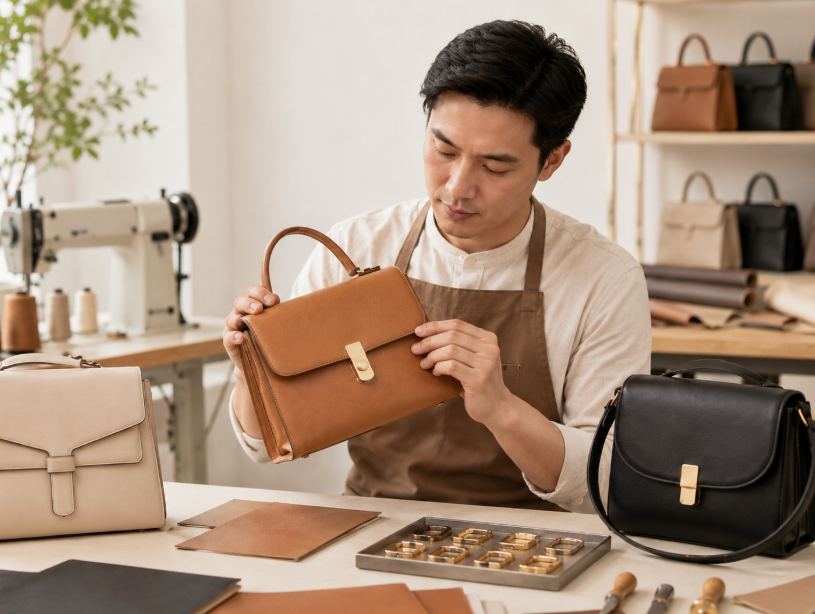
Agree on a Leather Bag Approval Record Before Paying for Bulk Production
A comparable quotation needs a shared brief. Record finished dimensions, intended load, target market, order quantity by style and color, leather or synthetic composition, thickness tolerance, surface finish, lining, reinforcement, hardware, logo, and packaging. Ask the supplier to identify which materials are stocked and which require a separate dyeing, coating, tooling, or supplier minimum. Sample and production schedules should be quoted for this brief rather than borrowed from a previous project.
For genuine leather, retain approved color limits and examples of acceptable natural marks. Define which panels must match and where scars or grain variation may be accepted. For PU or microfiber, retain the backing and coating specification alongside the physical swatch. A material name or small photograph alone does not prevent substitution.
Approve a finished sample using the intended material and components. Review opening access, empty weight, handle attachment, zipper operation, lining color transfer, folded edges, and logo appearance. Agree on the checks, sample quantity, loading conditions, and acceptance criteria relevant to the bag. Material test reports and a management-system certificate do not by themselves establish the performance of the assembled product.
The production record should identify the approved sample, material references, permitted tolerances, defect examples, inspection stages, and written approval required for substitutions. Include packing instructions that protect shape and surfaces, along with your response to rejected materials or failed inspection. Keep a retained sample and the approved specifications for reorders.
To discuss a HeteBag project, send your leather handbag specifications with reference images, dimensions, material preferences, quantities by color, and destination market. Request a project-specific quotation and sample plan before confirming production.
If you want a more detailed view of how a handbag moves through development and production, read our Custom Handbag Manufacturing Process: From Design to Bulk Production. It covers tech packs, material approval, sampling, pre-production references, sewing, inspection, and shipment preparation.
Conclusion
Do not choose a custom leather handbag supplier by comparing quotations alone. Review product experience, material knowledge, customization ability, MOQ structure, quality control, lead time, communication, and after-sales support.
Request a physical sample and a complete quotation covering materials, hardware, logos, packaging, tooling, testing, and order terms. Put every approved requirement into the purchase order or contract. Keep the golden sample, bill of materials, color references, inspection rules, and packing instructions together.
For buyers seeking a custom handbag manufacturer in China, HeteBag is based in Huadu, Guangzhou, an established bag-manufacturing area. We have 15 years of manufacturing experience, our own factory support, and long-term cooperation with specialized partner factories. Our team supports material selection, sample development, OEM and ODM production, and quality control.
If you are developing custom leather handbags or a new handbag collection, you can send us your project details and phone number. We will be glad to review your design, explain the development process, and explore how we can work together.
Frequently Asked Questions
What is a custom leather handbag?
A custom leather handbag is made according to a buyer’s own design, size, material, color, logo, hardware, lining, packaging, and quality requirements. It can be developed from a sketch, reference sample, product photo, or detailed tech pack.
What leather materials can be used for custom handbags?
Common options include full-grain leather, top-grain leather, split leather, PU leather, and microfiber leather. The right choice depends on the handbag structure, target customer, expected use, brand positioning, and required durability.
What is the difference between genuine leather, PU leather, and microfiber leather?
Genuine leather is processed animal hide and may be corrected or embossed. PU leather uses a polyurethane surface system; microfiber leather commonly combines this with a fine-fiber nonwoven base. Compare the actual thickness, backing, finish, and representative samples rather than assuming a material name guarantees strength.
Can I customize the size and internal structure of a leather handbag?
Yes. You can customize the finished dimensions, handle drop, shoulder strap length, opening width, compartments, zipper pockets, card slots, dividers, laptop sections, and lining structure. These details should be confirmed during sample development.
What logo methods are suitable for leather handbags?
Common logo options include debossing, embossing, foil stamping, metal logo plates, woven labels, printed lining, and custom zipper pullers. The best method depends on the leather surface, logo size, handbag style, and the visual effect you want.


