
 English
  Italian
  French
  German
  Spanish
  Arabic
 A PU handbag and a genuine leather handbag can look similar in a product photo yet behave differently at folded seams, handles, and heavily rubbed corners. Buyers comparing PU leather and genuine leather need to decide which construction, maintenance requirements, appearance variation, and production controls fit the intended bag.
The terms can also be misleading. PU leather ranges from thin promotional grades to high-quality microfiber PU. Genuine leather may refer to corrected-grain, split, top-grain, or full-grain leather. Two materials carrying the same general name can perform very differently.
I’m Evan, and I have worked in bag manufacturing for more than 15 years. When comparing PU leather vs genuine leather for a custom bag project, I do not judge the material name alone. I check its construction, thickness, backing, finish, test results, and consistency across the production lot. This guide explains how buyers can use the same approach.
For the complete purchasing process, use the custom leather handbag sourcing guide to connect material approval with bag construction, supplier selection, sampling, and bulk inspection.
1. Material Composition and Manufacturing Process
PU leather is a synthetic material made by applying a polyurethane coating to a fabric base. The backing may be polyester, cotton, nonwoven fabric, or microfiber. The surface can then be embossed to copy natural leather grain.
Its performance depends on several hidden factors:
- The type and thickness of the polyurethane layer
- The strength and density of the backing
- The bond between the coating and backing
- The resin formulation and finishing process
Standard PU can feel light and flexible, while microfiber PU has a denser internal structure and may offer better tear strength and aging performance. A buyer should not approve “PU leather” as a complete specification. The purchase sheet should state the material type, backing, thickness, color, grain, surface finish, and approved supplier reference.
Genuine leather comes from animal hide, usually cowhide, sheepskin, goatskin, or pigskin. The hide is cleaned, tanned, dyed, finished, and sometimes corrected or embossed. Tanning stabilizes the hide so it does not decay. Chrome tanning is common because it produces soft and versatile leather. Vegetable tanning tends to create a firmer material that develops a stronger patina.
| Material | Basic Construction | Main Production Variable | Buyer’s Main Risk |
|---|---|---|---|
| Standard PU leather | PU coating on woven or nonwoven backing | Coating quality and adhesion | Peeling, cracking, or weak backing |
| Microfiber PU | PU resin with a microfiber structure | Fiber density and resin system | Substitution with a lower grade |
| Genuine leather | Tanned and finished animal hide | Hide grade, cut area, and finish | Natural variation or inconsistent grading |
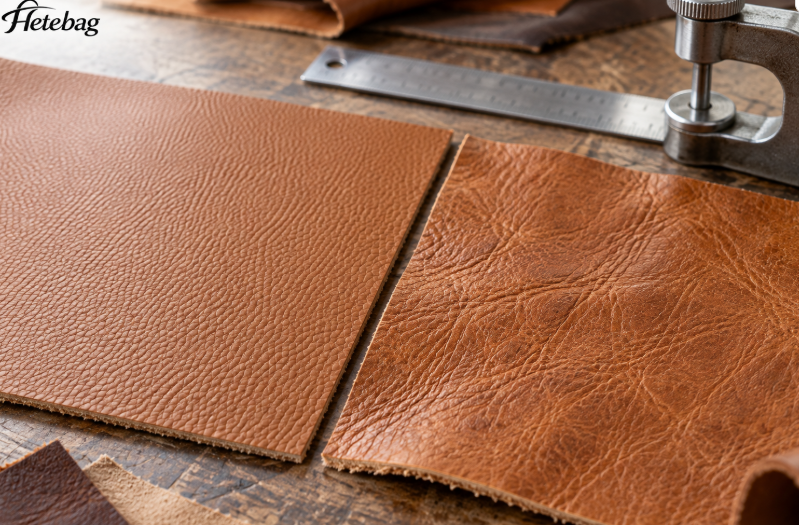
A practical check is to compare the approved swatch with the actual roll or hide lot under the same light source. Record thickness at several points with a thickness gauge. For many handbag panels, a difference greater than about 0.1–0.2 mm may already change folding, skiving, edge painting, and sewing results. The final tolerance should always match the design and approved sample.
2. Appearance, Texture, and Natural Variation
PU leather offers strong visual consistency. Its grain is produced with an embossing roller, so the pattern, gloss, and color can remain stable across large sheets. This makes it useful for seasonal collections, coordinated product sets, and bags that must look almost identical in retail displays.
Look closely at the surface before approval. A low-grade artificial grain may repeat too clearly or appear flat under side lighting. Fold the material gently and watch how the surface changes. Good PU should form smooth wrinkles without showing white stress marks or separating from its backing.
Genuine leather has natural pores, wrinkles, growth marks, and small differences in grain. These features often give a bag a richer appearance, but they also make bulk control more difficult. Even hides from the same dye lot may have slight color and softness differences.
Buyers should define which natural marks are acceptable instead of asking for leather “without defects.” That instruction is too vague and can cause disputes. A better leather approval standard may include:
- An approved color range with light and dark limit samples
- Allowed grain variation shown through physical swatches
- Restricted cutting zones for front panels
- Rules for scars, wrinkles, insect marks, and loose grain
Use a controlled light box when color is important. Visual checks should use the light source required by the target market, such as D65 daylight. If the bag uses several leather panels, place all visible pieces together before sewing. This panel-matching step helps prevent one side of the finished bag from looking darker or softer than the other.
For product development, you can review common applications of both materials on HeteBag’s custom handbag manufacturing page.
3. Durability, Aging, and Expected Lifespan
Material lifespan cannot be predicted from “PU” or “genuine leather” alone. Usage frequency, climate, storage, coating quality, bag structure, and cleaning habits all affect the result.
A thin fashion PU used a few times each season has different requirements from the material used around the opening of a daily commuter bag. Genuine leather also varies: strong top-grain cowhide may perform very differently from heavily corrected split leather.
For bulk purchasing, test the exact production material rather than relying on a general supplier statement. Flex resistance, dry and wet rubbing, coating adhesion, abrasion, hydrolysis resistance, and color transfer are useful test areas. The buyer and supplier should agree on the test method and pass level before production.
How PU Leather Typically Wears
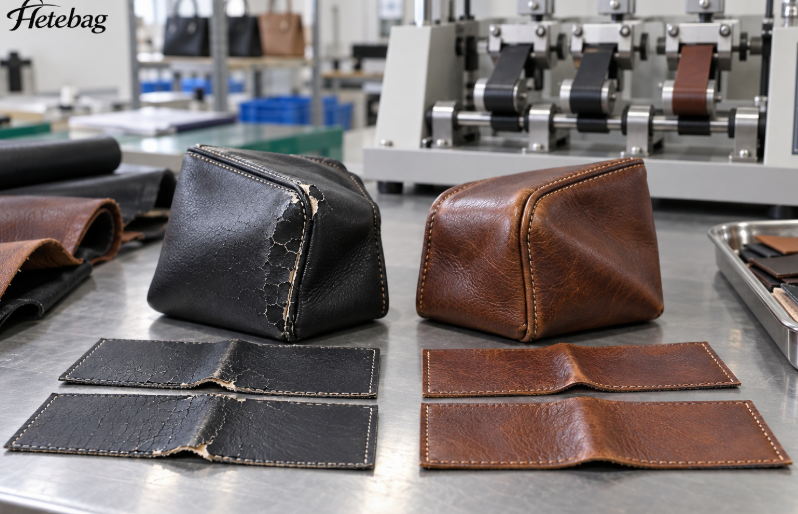
PU leather usually ages at the surface. Common failure modes include cracking at folds, peeling near edges, surface stickiness, and separation between the coating and backing. Handles, zipper openings, strap folds, and corners normally show problems first because they receive repeated bending and friction.
For an internal sample check, bend a test piece repeatedly in both directions and inspect it under strong side lighting. This is only a screening method, not a replacement for laboratory testing. Any whitening, small cracks, bubbling, or layer separation should trigger further investigation.
For products sold into hot or humid regions, ask for hydrolysis-aging data. Moisture and heat can break down some polyurethane systems even when an unused sample initially looks good.
How Genuine Leather Changes Over Time
Good genuine leather tends to soften and develop a patina, which is a natural change in color and surface character. This aging is often valued in premium products. Poorly finished leather may instead show excessive color transfer, loose grain, finish cracking, or permanent water marks.
Rub light-colored dry and damp cloths against the material during sample review. If visible color transfers easily, request a formal rubbing-fastness test. Also flex finished edges and folded seams, since a surface that performs well on a flat piece may fail after skiving, gluing, and folding.
There is no universal cycle count suitable for every bag. The correct acceptance level must reflect the product’s use, target lifespan, and brand claim.
4. Water Resistance, Breathability, and Maintenance
PU leather generally resists light splashes because its surface is coated. It can usually be wiped with a soft damp cloth. This does not make the whole bag waterproof. Water may still enter through stitch holes, zipper gaps, raw edges, linings, and seams.
Genuine leather contains natural fiber structures and is usually more breathable. It can absorb water, oil, or dye if the surface protection is limited. Protective finishes improve stain resistance but may also change the leather’s touch, gloss, and natural appearance.
| Performance Area | PU Leather | Genuine Leather |
|---|---|---|
| Light splash resistance | Usually good on an intact coated surface | Depends heavily on the finish |
| Breathability | Usually low | Generally better |
| Routine cleaning | Damp cloth and mild cleaner | Leather-specific care may be needed |
| Main moisture risk | Coating damage and hydrolysis | Absorption, staining, or loss of shape |
| Storage concern | Heat, humidity, and surface contact | Humidity, mold, dryness, and fading |
A simple water-drop check can show how fast a sample absorbs moisture, but it cannot prove waterproof performance. Place a small drop on an offcut, record the time, wipe it away, and check for darkening after the material dries. Test the full finished bag separately if the product carries any water-resistance claim.
PU works well for many fashion handbags, makeup bags, and easy-clean commuting styles. Genuine leather often suits premium handbags, briefcases, and products designed to age with use. For larger products such as custom travel bags, total weight and repeated folding should also be considered before selecting leather for every panel.
5. Cost, Production Consistency, and Bulk Order Control
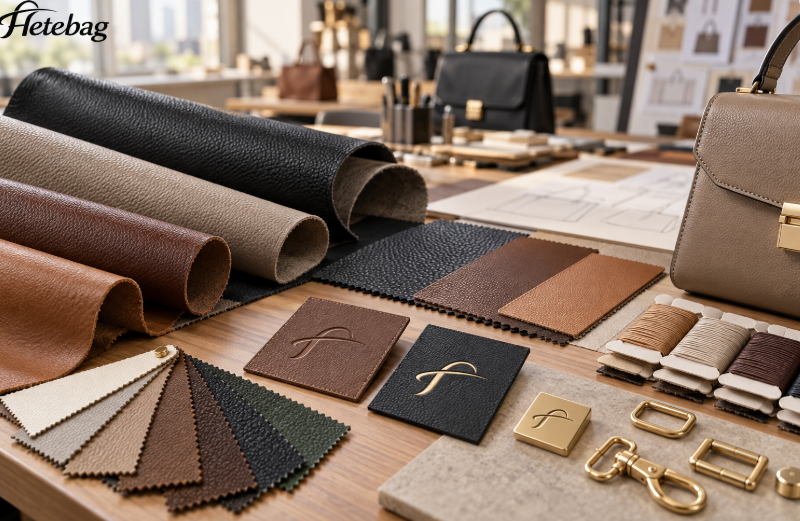
PU leather normally provides better material utilization because it comes in rolls with a stable width. Cutting plans are easier to calculate, and there are fewer natural defects to avoid. Genuine leather is purchased and measured as individual hides. Usable area varies according to shape, scars, wrinkles, softness, and required panel size.
A basic material-consumption calculation is:
Required material = net cutting consumption ÷ expected cutting yield × order quantity
If one bag needs 0.60 square metres of net panel area and the expected cutting yield is 80%, the planning requirement is 0.75 square metres per bag before adding the agreed production allowance. This is only an example; the factory must calculate actual marker efficiency from the finished pattern.
For genuine leather, large uninterrupted panels usually reduce yield more than small panels. A structured tote front may require a clean central cutting area, while zipper pulls can use smaller sections. Ask the factory for a cutting map or consumption record when leather usage has a major effect on the project.
Bulk order control should include three approval points:
- Approve the physical material swatch and limit samples.
- Confirm the actual production lot before all panels are cut.
- Compare finished bags with the sealed pre-production sample.
For PU, inspect roll-to-roll shade, grain direction, coating marks, and usable width. For genuine leather, grade hides by color, thickness, grain, and softness before cutting. Do not mix visibly different hide groups within the same bag.
Random final inspection can follow a sampling plan agreed with your supplier. Buyers can also use the principles behind the ISO 9000 family of quality-management standards to build documented approval, inspection, and corrective-action processes. A management-system certificate does not replace product testing, so check the scope and validity of any certificate presented by a supplier.
6. Customization Options for Logos, Colors, and Finishes
PU leather gives brands broad control over color, grain, gloss, metallic effects, and printed patterns. It is often easier to match several products in one collection because the surface can be manufactured to a stable specification.
Genuine leather supports rich finishing methods, but results change with grain depth, oil content, finish thickness, and hide density. A debossed logo that looks sharp on firm vegetable-tanned leather may look shallow on soft, pebbled leather.
Recommended Branding Methods for PU Leather
Screen printing and heat-transfer printing can work well on suitable PU surfaces, but the ink or adhesive must be compatible with the coating. Foil stamping and embossing are also common. Too much heat can cause gloss changes, deformation, or coating damage.
Ask the factory to make a logo trial on the actual production material. Inspect it after 24 to 48 hours, then perform light rubbing and flexing. The logo should not lift, bleed, crack, or become sticky.
Recommended Branding Methods for Genuine Leather
Debossing, embossing, foil stamping, metal logos, and leather patches are widely used. Debossing usually gives the most natural result, while metal branding provides clearer visibility on heavy-grain leather.
Specify logo dimensions, position tolerance, depth, foil color, and acceptable edge definition. For metal logos, check attachment strength and make sure screws or prongs are protected inside the bag. HeteBag’s guide to custom logo bags shows several branding options used across different bag structures.
For either material, approve the logo on a constructed sample—not only on a flat swatch. Padding, reinforcement, seams, and panel tension can change the final result.
7. How to Choose Between PU Leather and Genuine Leather for Custom Bags
The best material is the one that meets the product brief after production and performance risks have been tested.
| Project Requirement | Better Starting Option | What to Confirm |
|---|---|---|
| Uniform seasonal colors | PU leather | Lot consistency and color limits |
| Vegan or animal-free positioning | PU or another verified non-animal material | Full material composition and claim wording |
| Natural premium character | Genuine leather | Leather grade and acceptable variation |
| Low-maintenance surface | PU leather | Cleaning and hydrolysis performance |
| Long-term patina | Suitable genuine leather | Finish, colorfastness, and care needs |
| Complex embossing or printed effects | PU leather | Logo adhesion and fold performance |
| Firm premium construction | Structured genuine leather or reinforced PU | Thickness, reinforcement, and seam tests |
Begin with the expected use. Record the target customer, selling market, bag load, usage frequency, storage conditions, desired appearance, and expected service life. Turn those points into measurable specifications.
For example, a daily work bag brief may require stable handles under load, limited color transfer onto light clothing, clean corner folding, and no visible surface damage after the agreed flex test. A fashion bag used for one season may place more weight on color matching, surface effects, and production consistency.
Compliance also needs to be confirmed for the destination market. Request the material composition, safety data where relevant, and test reports that match the exact material and color being ordered. The OEKO-TEX LEATHER STANDARD is one reference for leather and leather articles tested for harmful substances. If a supplier claims certification, confirm that the certificate covers the relevant product, production site, and validity period. Do not treat a logo on a presentation as proof.
At HeteBag, material selection can be built into the custom development process. We first confirm the product brief and material specification. A sample is then produced for reviewing touch, structure, color, logo execution, edge finish, and hardware compatibility. After sample approval, the production material lot should be checked again before cutting. In-line inspection and final inspection help identify shade differences, surface damage, weak attachments, and workmanship problems before shipment.
Buyers can start by sharing a reference bag, technical drawing, target dimensions, intended market, expected use, material preference, logo file, and any required tests through the HeteBag contact page. These details allow the factory to recommend a material based on actual product needs rather than appearance alone.
Make the Two Supplier Quotations Comparable
Request the same bag dimensions, lining, reinforcement, hardware, logo method, quantity by color, and packing requirements. Then separate the material specification: hide type and finish for genuine leather; backing, coating, and thickness for PU. Use the leather types and grades guide for hide terminology and the microfiber leather versus PU comparison when a supplier proposes microfiber.
Compare finished samples rather than price per sheet or roll alone. Record the material yield assumptions, empty bag weight, folded-edge appearance, surface rubbing, logo result, and proposed acceptance criteria. Ask which cost changes if the leather shade range, reinforcement, or hardware is revised.
Conclusion
The main difference between PU leather and genuine leather is not simply “synthetic versus natural.” PU offers stable color, efficient cutting, broad surface options, and easier bulk consistency. Genuine leather provides natural variation, a distinctive touch, and the ability to develop character over time.
Neither option is automatically better. High-quality PU can outperform poor split leather in some applications, while suitable top-grain leather may last much longer than fashion-grade PU. The final decision should be based on the exact grade, bag structure, target market, care expectations, and verified test results.
Before placing a bulk order, approve a physical material standard, test the completed sample, confirm the production lot, and write measurable acceptance rules into the specification. That process offers more protection than relying on a material name or small showroom swatch.
Frequently Asked Questions
Is PU leather the same as vegan leather?
PU leather is often marketed as vegan leather because it normally does not use animal hide. Yet “vegan leather” is a broad marketing term rather than one fixed material. It may refer to PU, PVC, plant-based composites, or other coated materials. Ask for a composition declaration and backing details before making an animal-free or environmental claim.
How can I tell whether a supplier has provided real leather?
Visual inspection alone is not always reliable because corrected leather and high-quality PU can look similar. Check the material cross-section, backing structure, grain variation, smell, edge behavior, and supplier documentation. For an important order, send a production-lot sample to a qualified laboratory for composition analysis. Do not use a flame test on finished products because it is unsafe and may give unclear results.
What information should appear on a PU leather specification sheet?
Record the PU type, backing composition, total thickness and tolerance, usable width, color reference, grain code, gloss level, weight if relevant, and required performance tests. Attach a sealed physical swatch. The specification should also prevent substitution without written approval.
Why can genuine leather bags from the same order look slightly different?
Each hide has a different fiber structure, grain, and dye response. Cutting position also affects softness and texture. These differences can be controlled but not fully removed. Approve light and dark color limits, define acceptable natural marks, and require visible panels within each bag to be matched before sewing.
Which material is better for debossed logos?
Firm genuine leather often creates a deep, natural debossed mark. PU can also produce a clean result, especially when its surface and backing have enough body. The factory should test pressure, temperature, dwell time, and logo depth on the actual production lot. Approve the result after it has rested for at least 24 hours because some impressions recover or change.
Can PU leather or genuine leather be called waterproof?
Usually, no. A coated PU surface may resist light water exposure, but the completed bag can still leak through seams, zippers, needle holes, or untreated edges. Genuine leather can receive a water-resistant finish, but prolonged moisture may still cause staining or deformation. Use “water-resistant” only when the whole finished product has passed a defined test that supports the claim.


