



In the bag market, shoulder bags and handbags are often mentioned together. Some buyers even use the two names in the same way. But in real product development, they are not exactly the same.
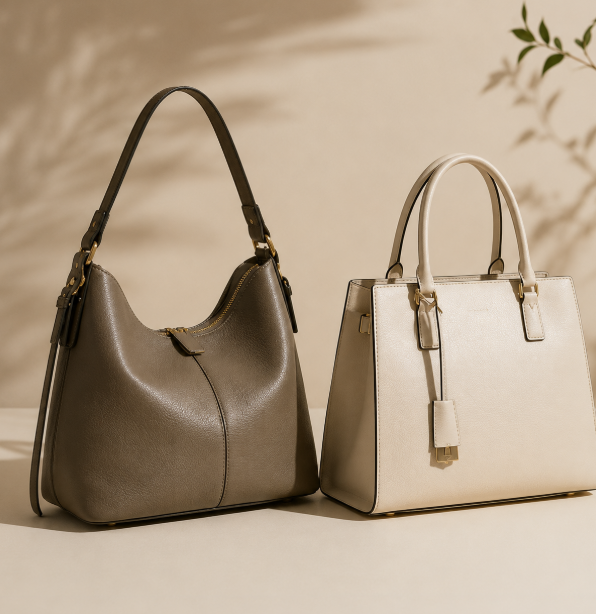
A shoulder bag usually refers to a bag designed to be carried on the shoulder. The strap length, strap width, attachment points, and overall comfort are very important. A handbag is a broader category. It may include top-handle bags, structured bags, clutches, crossbody bags, and sometimes even shoulder bags.
For brands, wholesalers, and custom bag buyers, this difference is more than just wording. It can affect the bag size, strap design, material choice, hardware cost, sample development, and final price. If the product type is not clear at the beginning, it can easily lead to misunderstandings during quotation, sampling, and production.
In this guide, we will explain the difference between shoulder bags and handbags from a practical manufacturing and buying perspective, so you can choose the right style for your market.
What Is a Shoulder Bag?
A shoulder bag is exactly what the name implies: a bag designed to be worn over the shoulder, with a strap long enough to rest on or hang from the shoulder without requiring the hand to support it.
The Basics of Shoulder Bag Design
The easiest way to identify a shoulder bag is to look at how it is carried.A shoulder bag frees up your hands. That’s the core promise. Whether it’s a casual canvas hobo, a structured leather satchel, or a slim nylon everyday bag, if it hangs from your shoulder with a single strap, it qualifies.
Most shoulder bags fall into a medium size range. They’re built to carry daily essentials: a wallet, phone, keys, a small water bottle, and maybe a light jacket if it’s roomy enough. The capacity is functional without being excessive.
Strap Design Details
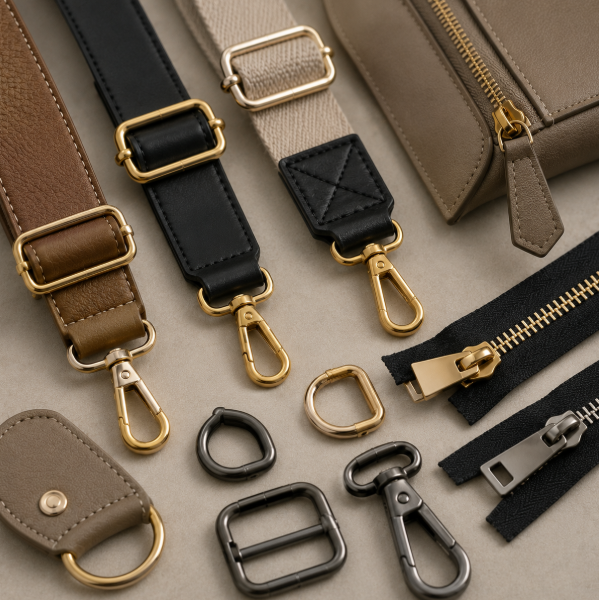
For a shoulder bag, the strap is not only about appearance. It directly affects comfort and durability. Standard shoulder strap lengths typically run between 45 cm and 60 cm (drop length), which positions the bag at the hip or just above. Adjustable straps — usually with a slider buckle or tri-glide hardware — give the wearer more flexibility.
Strap width matters too. Narrower straps (1–2 cm) create a dressier silhouette. Wider straps (2.5–4 cm) distribute weight better and are more comfortable for heavier loads or all-day wear. For customers in active or commuter-focused markets, strap comfort is often as important as the bag’s visual design.
When and Where Shoulder Bags Work Best
Shoulder bags are the everyday workhorse of the accessories category. They work for commuting, casual outings, shopping trips, and low-key social occasions. Their hands-free carry makes them particularly appealing to urban customers, younger demographics, and anyone who needs to stay mobile.
From a retail positioning standpoint, shoulder bags tend to sell well across a wide price range — from high-volume fashion accessories to premium leather goods. The style is versatile enough to serve a broad customer base.
What Is a Handbag?
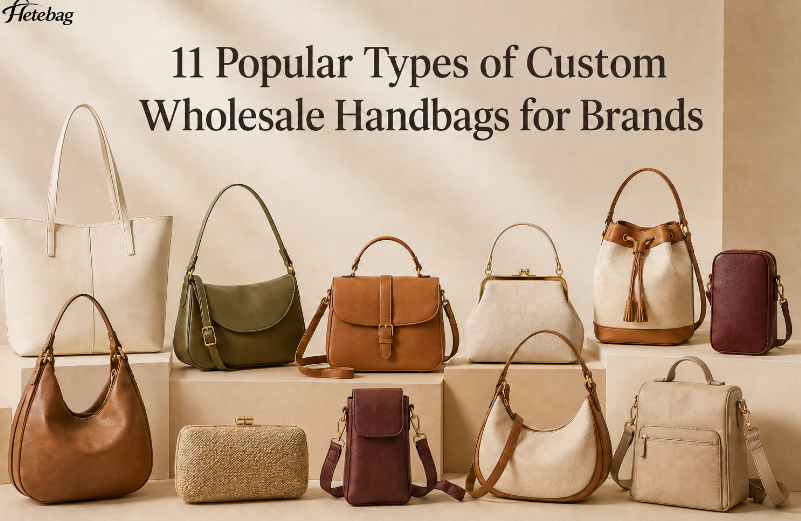
The word ‘handbag’ is a little broader. “Handbag” is a category, not a single style. It’s an umbrella term that covers a wide range of bag types carried by hand, over the shoulder, across the body, or even tucked under the arm.
The Broader Handbag Category
In the strictest traditional sense, a handbag refers to a bag carried in the hand — think top-handle bags, box bags, or structured doctor-style bags that you grip or loop over your wrist. But in modern retail and manufacturing usage, “handbag” has expanded to describe almost any women’s bag that isn’t a backpack, a tote, or a piece of luggage.
That means handbags can include:
- Shoulder bags (yes, shoulder bags are technically a type of handbag)
- Crossbody bags (worn diagonally across the chest or body)
- Top-handle bags (carried by a short handle at the top)
- Clutches (small, handle-free evening bags)
- Underarm bags / baguette bags (tucked between the arm and body)
- Structured satchels (carried by top handle or short shoulder strap)
If you want to explore how these styles break down in more detail, this guide to handbag types covers the full spectrum with practical buying context.
Why This Distinction Matters for Buyers
Understanding that “handbag” is a broader category changes how you approach product development. You’re not choosing between two equal options — you’re deciding whether to focus on one specific carry style (shoulder bag) or whether “handbag” is the product category you’re launching into, which then requires narrowing down to a specific style within that category.
This matters for briefing manufacturers, setting pricing tiers, and aligning your product with your target customer’s lifestyle.
Shoulder Bag vs Handbag: Key Differences Buyers Should Know
Now for the practical comparison. Here’s how shoulder bags and structured handbags (top-handle, box-style, or clutch formats) differ across the factors that matter most in product development and sourcing.
Carrying Style
| Factor | Shoulder Bag | Structured Handbag |
|---|---|---|
| Primary carry method | Shoulder strap, hands-free | Hand grip, wrist loop, or arm tuck |
| Secondary carry option | Sometimes a top handle added | Sometimes a detachable shoulder strap |
| Comfort for long wear | Higher (strap distributes weight) | Lower (arm/hand fatigue over time) |
| Occasions | Casual, commute, everyday | Formal, business, evening events |
Strap Design
Shoulder bags are built around their strap — it’s the most engineered component. You’ll see adjustable sliders, padded strap options, chain-link details, and woven textiles all appearing at different price points. The strap is also a major customization variable for brand differentiation.
Structured handbags often have shorter, fixed top handles — or no strap at all in the case of clutches. When a shoulder strap is added to a structured handbag, it’s usually removable and secondary to the main handle.
Size and Capacity
Shoulder bags typically carry more than a structured handbag at the same visual footprint. Because they hang from the body rather than being gripped, a wider or deeper interior doesn’t affect wearability as significantly. Structured handbags — particularly box bags and top-handle styles — prioritize visual proportion over raw capacity.
Structure and Shape
Structured handbags are designed to keep their shape, even when they are empty. They hold their shape whether empty or full. This requires internal support: cardboard inserts, foam padding, reinforced base boards, or full shell lining. Soft, unstructured bags don’t need these components, which makes them lighter and simpler to manufacture.
Shoulder bags can range from soft and relaxed (hobo, bucket styles) to semi-structured (zip-top shoulder bags with flat bases). Fully structured shoulder bags exist, but they’re less common and more expensive to produce.
Usage Occasion and Customer Profile
| Bag Type | Core Occasion | Typical Customer |
|---|---|---|
| Casual shoulder bag | Daily errands, commute, travel | Urban women, young adults, active lifestyles |
| Designer shoulder bag | Social occasions, daytime events | Fashion-conscious consumers, mid-luxury buyers |
| Top-handle handbag | Office, formal settings, upscale events | Professional women, luxury market |
| Clutch | Evening events, weddings, formals | Occasion-wear buyers, fashion retailers |
| Crossbody handbag | Travel, outdoor, active daily use | Travelers, younger demographics |
Customization Complexity
Shoulder bags are generally easier to customize at the factory level. The core structure is simpler. Changing strap length, width, or attachment hardware is relatively low-cost and doesn’t require new pattern work from scratch.
Structured handbags demand more from the development process. Frame construction, shape retention materials, and precise edge finishing all require additional tooling and expertise. This makes sampling more expensive and development timelines longer. If you’re working with a custom handbag manufacturer, expect structured styles to need two to three rounds of sample revision before the shape is right.
Production Cost
Structured handbags almost always cost more to produce than casual shoulder bags at equivalent size. The cost drivers include: internal support materials, more complex assembly steps, edge oil finishing on structured panels, and higher hardware requirements for the handle attachment points.
Soft shoulder bags in canvas or nylon are among the most cost-effective custom bag formats available. Leather shoulder bags occupy a mid-range, with cost varying significantly based on leather type, hardware, and interior finish.
Which Bag Style Is More Suitable for Your Target Market?
Choosing between a shoulder bag and a structured handbag isn’t about which one is better. It’s about which one serves your customer, your price point, and your sales channel.
Fashion-Forward Younger Brands
If your target audience is women aged 18–35 in urban markets, shoulder bags — particularly mini shoulder bags, bucket bags, and crossbody formats — tend to perform strongly. These styles photograph well for social media, hit accessible price points, and align with the lifestyle priorities of younger buyers who value mobility and everyday functionality.
Professional and Corporate Gifting
Structured handbags and top-handle styles have natural appeal in the professional and corporate segment. They read as polished and intentional. Companies ordering branded merchandise for employees or executives often lean toward structured formats because they project status and quality. Keep in mind that structured styles cost more to develop, so budget accordingly.
Retail and Wholesale Accessories
For multi-brand retailers or wholesale buyers building a broad range, shoulder bags are usually the safer commercial bet. They have wider demographic appeal, lower production cost, and faster turnaround from a manufacturing perspective. A balanced product mix might combine structured handbags as premium SKUs with shoulder bags at the accessible price tier.
Promotional and Brand Activation
When price sensitivity is high — as it is in promotional merchandise, event giveaways, or budget retail — soft shoulder bags or casual totes dominate. If you’re exploring how tote bags fit alongside shoulder bags in your range, this guide on custom tote bag options is worth reviewing for context on materials and MOQ.
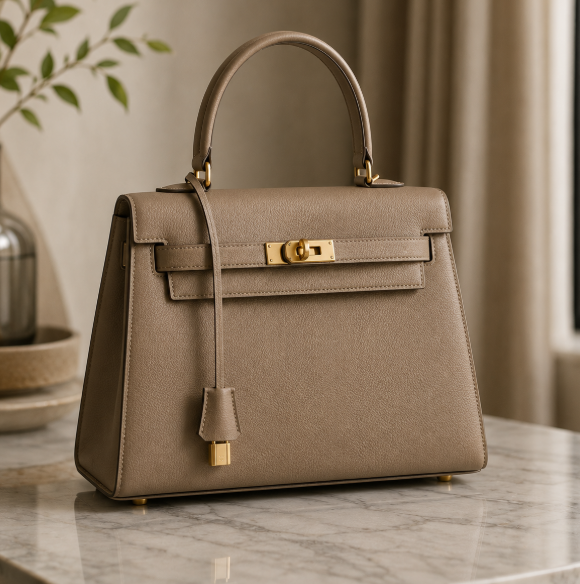
Material and Structure Differences in Manufacturing
This is where factory experience becomes relevant. After over 15 years producing bags for international brands, the manufacturing differences between shoulder bags and structured handbags are significant — and they affect your cost, your lead time, and your sampling process.
What Goes Into a Structured Handbag
A structured handbag has layers. The outer shell is typically a firmer material — full-grain leather, PU leather with a thick backing, or rigid woven fabric — that holds its silhouette under pressure. Behind that shell, there’s usually a cardboard or foam inner board bonded to the material.
The base requires a reinforced insert, often a plastic or rigid board, to prevent sagging. The edges are either turned and stitched (cleaner, more labor-intensive) or finished with edge paint, also called edge oil — a colored coating applied in multiple layers and heat-set. Edge oil finishing alone can add meaningful labor cost to a structured bag.
Handle attachment points are stress-tested during quality control. A top handle that fails at the D-ring or rivet weld point is a product liability issue, not just an aesthetic defect.
What Goes Into a Shoulder Bag
Shoulder bags, particularly soft or semi-structured styles, are more forgiving in construction. The outer material — canvas, nylon, recycled polyester, soft PU — doesn’t require bonded backing to maintain shape. The lining is simpler. The base may have a light insert or none at all.
The manufacturing focus shifts to the strap. Strap attachment points, webbing quality, slider hardware performance, and strap-to-bag junction reinforcement all require careful QC attention. A strap that pulls loose from the body of the bag is the most common failure point in soft shoulder bags — and it’s usually a hardware or stitching issue that proper factory QC can catch early.
For buyers sourcing in eco-conscious markets, materials choice has become increasingly important. Fabrics carrying certification from organizations like OEKO-TEX or Textile Exchange are increasingly expected by retailers in Europe and North America — and they apply equally to shoulder bags and handbags.
Hardware: Where the Two Styles Diverge
Structured handbags tend to use heavier, more decorative hardware — turn-lock closures, frame clasps, kiss-locks, chain handles. These require more lead time on components and add meaningfully to per-unit cost.
Shoulder bags more commonly use functional hardware: zipper pulls, adjustable sliders, magnetic snap closures, and D-rings for strap attachment. Functional doesn’t mean cheap — hardware finish, weight, and consistency are all important factors — but the complexity is lower.
Customization Options for Shoulder Bags and Handbags
Whether you’re developing a shoulder bag or a structured handbag, the customization variables are broadly similar. Here’s what you should expect to specify during the development process:
Dimension and Size
Define the bag’s exterior dimensions (width × height × depth) and interior capacity. For shoulder bags, also specify the strap drop length and whether you want adjustability built in. For structured handbags, include handle length and drop.
If you’re not sure how to set standard dimensions for your product category, this custom bag size reference covers typical size ranges across different styles.
Material Selection
Outer material options include full-grain leather, split leather, PU leather, canvas, waxed canvas, nylon, polyester, recycled PET fabric (RPET), and suede. Each has different cost, durability, and market positioning implications. Lining materials — polyester, cotton, nylon — are selected separately.
Logo Application Method
The most common options are:
- Embossing or debossing (best for leather and PU surfaces)
- Metal plate or badge (premium appearance, higher cost)
- Screen printing (high-volume, cost-effective for fabric)
- Heat transfer (versatile, works on most surfaces)
- Woven label (for interior or exterior brand tags)
Hardware Color and Finish
Gold, silver, antique brass, gunmetal, and rose gold are the most common hardware finish options. Consistency across all hardware pieces — zipper pulls, rings, sliders, buckles, snaps — is critical for a polished final product.
Interior Configuration
Specify the number of interior pockets (zip pocket, slip pocket, phone pocket), whether you want a key clip, card slots, or a structured base insert. Interior design is often under-specified at the brief stage and ends up driving sample revision rounds — build this out in detail upfront.
Closure Type
Zip-top closures are most common for shoulder bags. Structured handbags may use turn-lock, magnetic snap, frame clasp, or flap closure. Closure type affects both the bag’s aesthetic and its security — important for buyers whose customers prioritize personal safety.
Packaging
Dust bag, tissue wrap, branded box, poly bag with hang tag — packaging is part of the product presentation and should be factored into unit cost from the beginning.
How to Choose Between a Shoulder Bag and a Handbag for Your Brand?
By this point, you have a solid picture of what makes each style different in design, production, and market positioning. Here’s how to make the final call for your brand.
Start With Your Customer, Not the Product
The most common sourcing mistake is starting with a style preference rather than a customer insight. Before you decide between a shoulder bag and a structured handbag, answer these questions: Who is your end customer? Where do they use the bag? What do they carry in it? How much will they pay?
Those answers should narrow your choice significantly. A customer who needs a bag for daily commuting and grocery runs will rarely choose a structured top-handle bag. A customer buying for a formal occasion won’t typically reach for a casual nylon shoulder bag.
Factor in Your Price Architecture
Structured handbags require more development investment — higher sampling cost, longer revision cycles, more expensive materials and hardware. If your retail price point doesn’t have room for that, a structured style will compress your margin to an unsustainable level.
Soft shoulder bags are more margin-friendly at most price points. The cost difference between a basic canvas shoulder bag and a structured leather handbag at the same size can be significant, sometimes two to three times.
Consider Your Sales Channel
Direct-to-consumer brands selling through their own website or pop-up stores can often command the premium that structured handbags require. Multi-brand retail and wholesale channels have more price pressure and typically favor styles with broader demographic appeal — which usually means shoulder bags and crossbody formats.
Think About MOQ and Development Risk
Our factory minimum order quantity for custom bags is 300 units per style. For a structured handbag in leather, that MOQ requires significant upfront investment between development cost, sampling, and production. If you’re testing a new market or launching a new product line, a shoulder bag in a fabric material lets you enter at a lower risk level before scaling up to premium structured styles.
If you’re still early in the process and working through supplier evaluation, this guide on finding a trustworthy handbag manufacturer in China covers what to look for and what questions to ask during factory vetting.
Evaluate Customization Goals
If brand differentiation is a priority — unique hardware, unusual closures, signature strap design — assess whether your target style gives you room to customize those elements meaningfully. Structured handbags offer more surface area for hardware statements. Shoulder bags give you more flexibility on strap design and material combination.
Conclusion
Shoulder bags and handbags may look similar at first, but they are different in carrying method, structure, comfort, cost, and market positioning.
A shoulder bag is usually a practical choice for daily use, commuting, travel, and casual fashion markets. It is easier to carry and often easier to customize. A structured handbag is more suitable for formal, business, or premium fashion collections, but it usually requires more detailed development and a higher production budget.
For custom bag buyers, the best choice depends on your customer group, price point, material preference, and sales channel. Before starting a project, it is important to confirm the bag type, size, strap design, hardware, structure, and logo method with your manufacturer.
At Hetebag, we help brands develop custom shoulder bags, handbags, tote bags, backpacks, and other bag styles. Whether you already have a design or only have a basic idea, our team can support you from material selection and sample development to bulk production.
Frequently Asked Questions
What is the main difference between a shoulder bag and a handbag?
A shoulder bag is mainly designed to be carried on the shoulder. A handbag is a broader category and can include many styles, such as top-handle bags, clutches, crossbody bags, and shoulder bags.
Is a shoulder bag a type of handbag?
Yes. A shoulder bag can be considered one type of handbag, but not all handbags are shoulder bags.
Which bag is better for daily use?
A shoulder bag is usually better for daily use because it is easier to carry and keeps your hands free.
Which bag is more expensive to produce?
Structured handbags are usually more expensive to produce because they need more support materials, stronger handles, and more detailed hardware.