English
 Italian
 French
 German
 Spanish
 Arabic
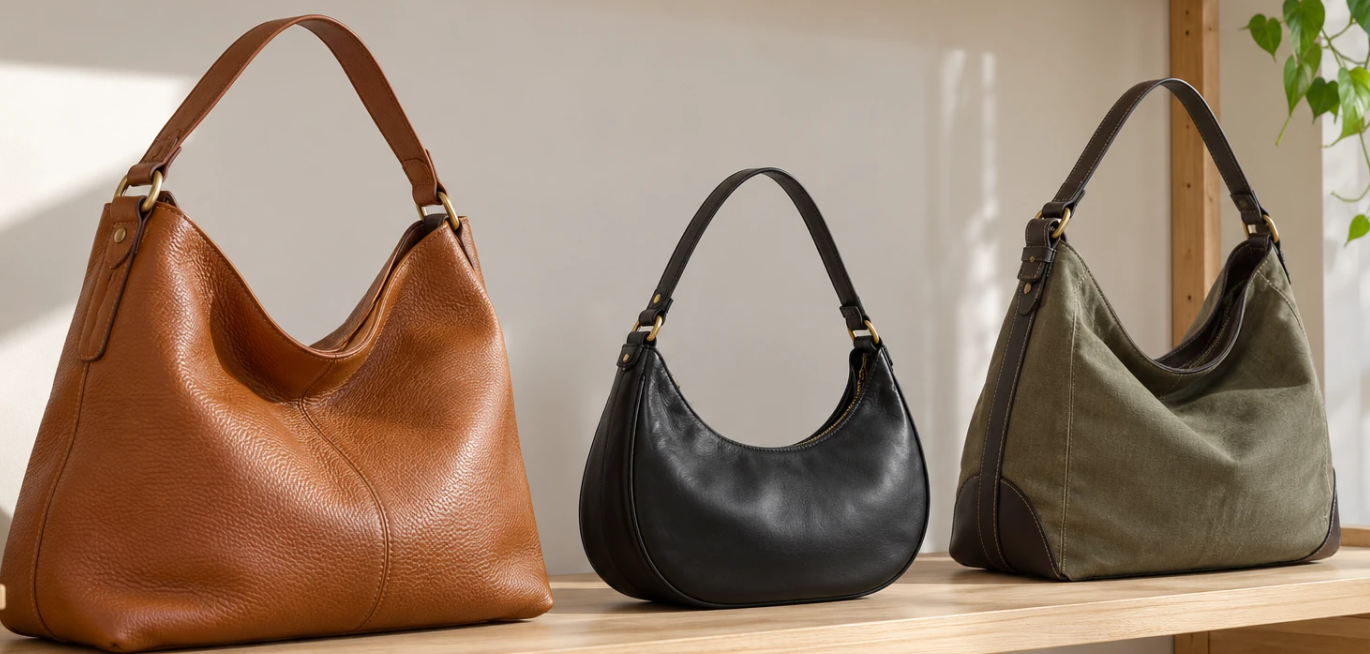
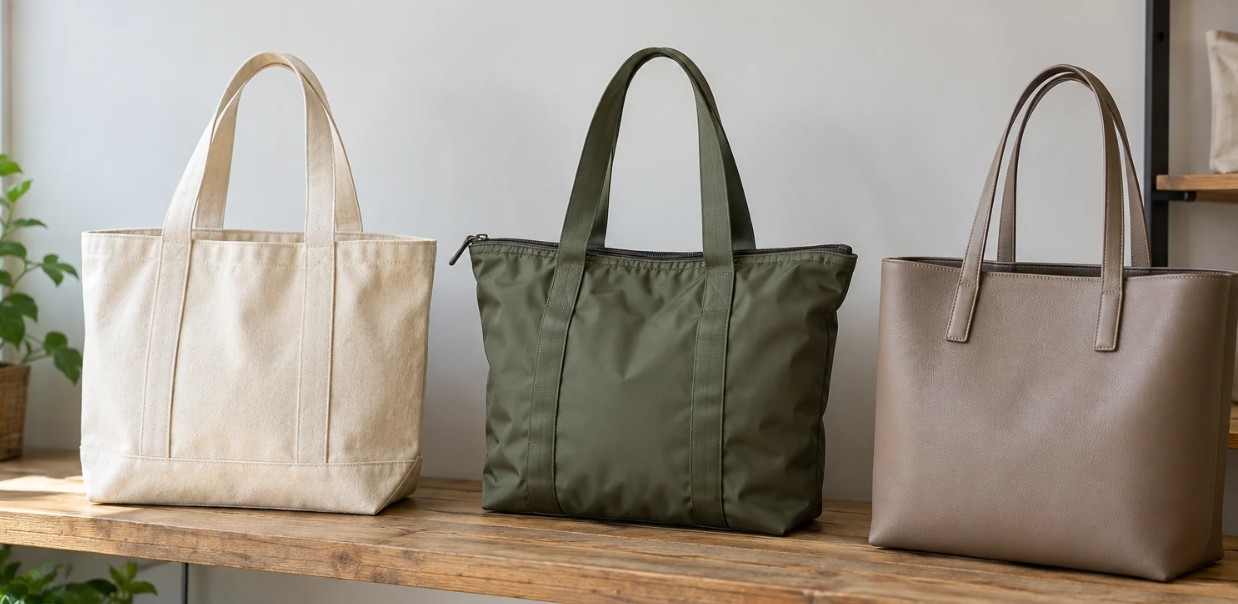
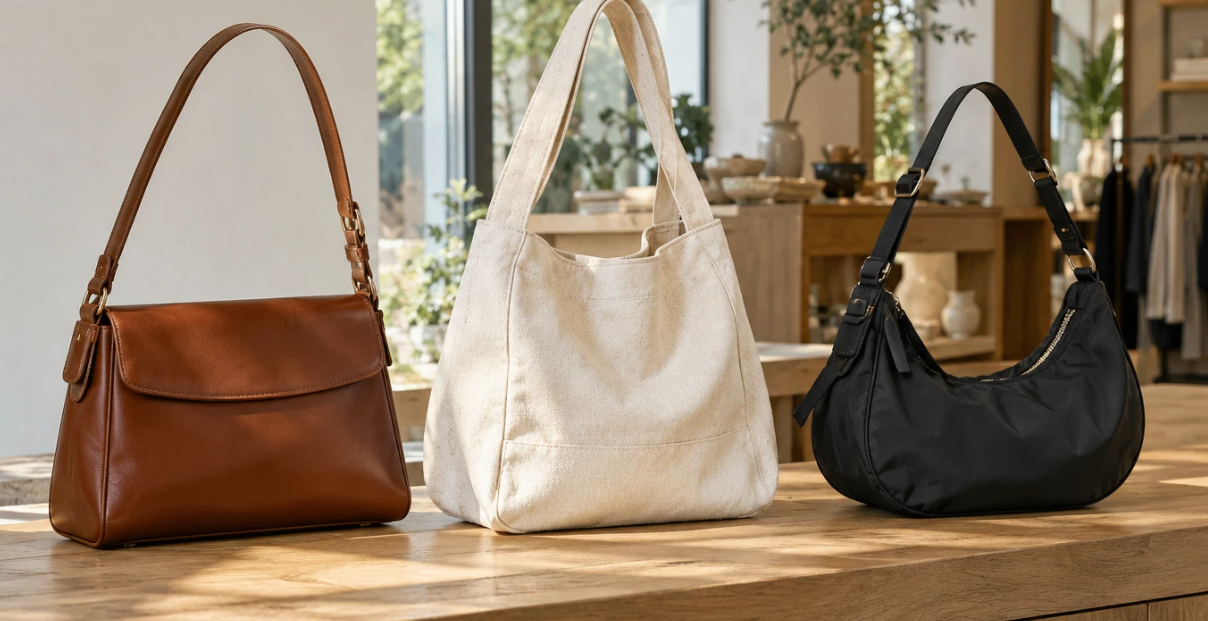
A hobo bag can look right in a product photo and still feel wrong on the shoulder. The body may be too stiff, the opening too narrow, or the strap just short enough to make wearing a coat uncomfortable. When comparing custom hobo bag manufacturers in China, these details deserve as much attention as the supplier’s catalog.
The 15 companies below offer starting points for different projects, including leather fashion bags, PU private-label collections, and casual fabric styles. This is a sourcing shortlist, not an independently audited ranking. We publish it as HeteBag, one of the businesses included, and the order follows our editorial selection rather than a scored factory assessment. Company descriptions draw on public supplier information; project suitability still needs to be established through samples and written specifications.
Before contacting a custom hobo bag factory, decide what “hobo” means for your collection: a compact crescent, a relaxed everyday shoulder bag, or a roomy slouchy design. Send every shortlisted supplier the same brief. You’ll get a much more useful comparison than you would from asking each one for its “best quality.”
1. HeteBag
HeteBag supports custom handbag development for brands, wholesalers, and distributors, with a manufacturing background in Huadu, Guangzhou. Our custom handbag service covers changes to materials, structure, hardware, and finishes, details that directly affect how a hobo bag hangs and feels.
For a custom hobo bag, start with the intended silhouette rather than choosing a material from a photograph. A soft shell paired with a stiff lining can change the whole shape. We can discuss material selection and sample development alongside your dimensions, pocket layout, and branding requirements, so those decisions are considered together.
Bring reference images, a target strap drop, and an explanation of what the bag should carry. During sample review, compare the bag empty and with representative contents; record which folds are intentional and which areas should retain their shape. That gives the production brief a clearer target than “soft but structured.”
2. Guangzhou FY Bag
Guangzhou FY Bag, presented online as FYBagCustom, lists hobo styles within its handbag and shoulder-bag ranges. Its public offering includes PU, genuine leather, nylon, and canvas, giving buyers several material directions to discuss before sampling.
If you are choosing between a fashion handbag and a casual fabric version, FY has relevant categories to review. Ask for examples close to your intended construction, then compare how the lining, seam placement, and strap attachments differ. A photograph of a similar outline is only the beginning; the sample should demonstrate the drape you actually want.
3. LantaoBags
LantaoBags explicitly includes hobo and slouch bags in its custom handbag range. Its website describes OEM and ODM support alongside material, hardware, and production services, Buyers who need help developing the design can ask how that support would work for their project.
The useful question here is how the supplier would translate your reference into a repeatable pattern. Ask which measurements control the curved top, where reinforcement is needed, and how revisions will be recorded. For repeat orders, keep an approved physical sample and a written specification together; either one on its own leaves room for interpretation.
4. Momocolor
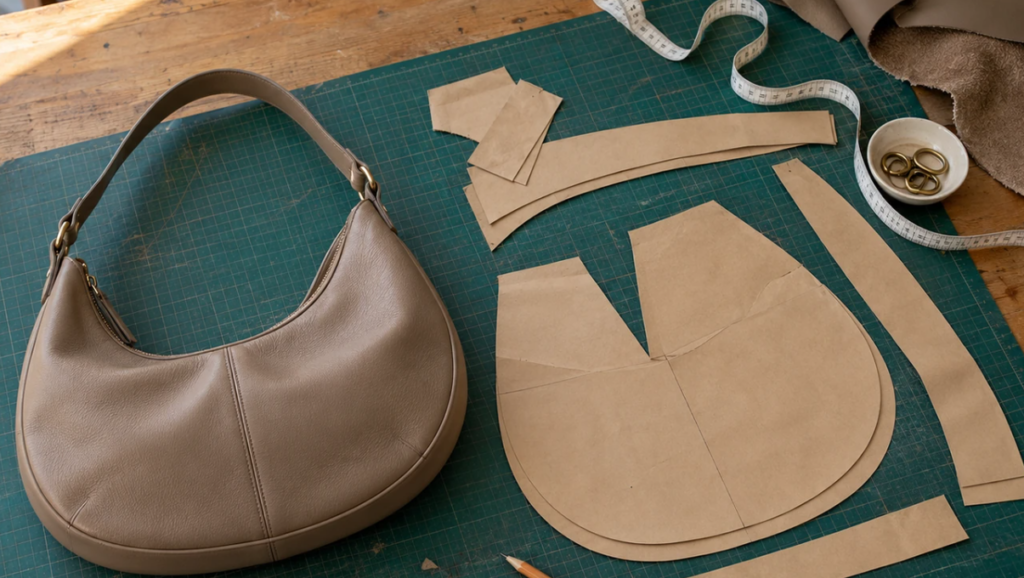
Momocolor’s published services cover women’s bags, custom fabrics, logos, and accessories, with a sample workshop and factory addresses in Shiling, Guangzhou. Its material options include PU, nylon, and canvas, which are relevant starting points for different hobo bag collections.
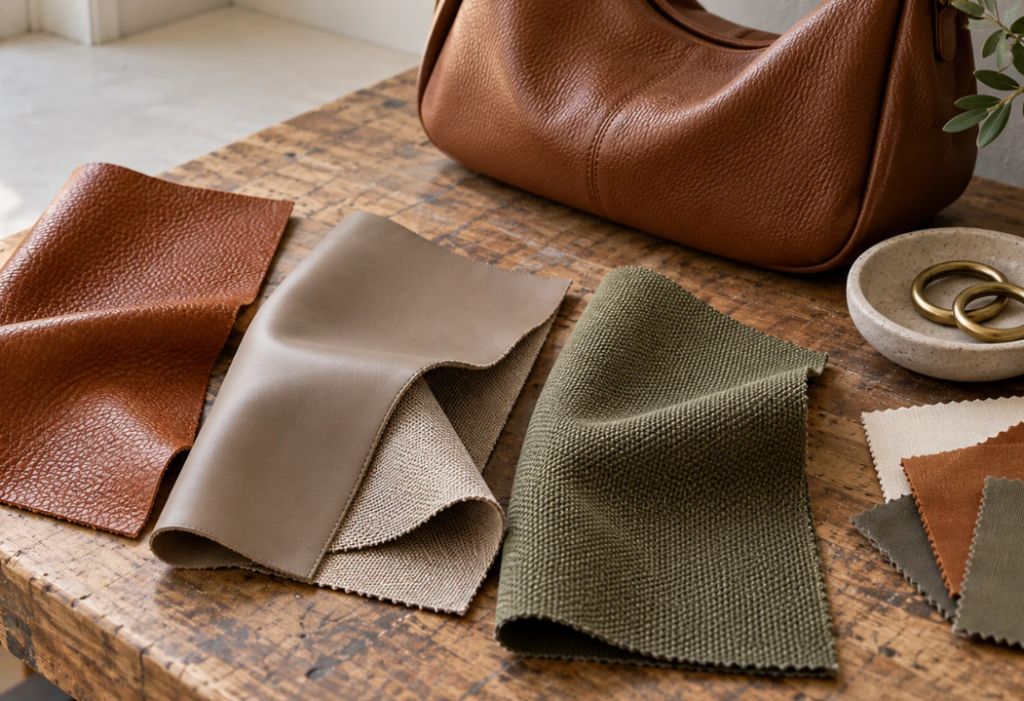
Consider Momocolor when the development work involves coordinating the shell, strap, logo, and hardware as one design. Ask to see a comparable hobo sample before assuming a general shoulder-bag capability will match your shape. For PU versions, approve the actual material article and backing: two swatches with similar grain can bend and recover very differently.
5. Hanlin
Hanlin lists hobo bags as a separate category and describes OEM and ODM handbag development for private-label buyers. Its public information identifies production locations in China and Cambodia, so confirm the location that would handle your particular order.
For a collection with several related shapes, Hanlin is a candidate to discuss consistent materials and hardware across styles. Ask whether a hobo, shoulder bag, and tote can share the same approved material batch and finish specifications. Also confirm where sampling, bulk production, and final inspection will take place; the manufacturing arrangement belongs in the order documents.
6. B.S. Bag Factory
B.S. Bag Factory publishes dedicated hobo bag products, including leather hobo shoulder bags. Its product information describes custom sizes, materials, logos, and packaging, giving buyers specific base models to discuss rather than only a general factory introduction.
If you plan to adapt an existing style, ask what remains unchanged and which alterations require a new pattern. Increasing body width can affect the opening, lining, and strap position together. Confirm the minimum quantity for the exact material and color split in your brief, since a product-page minimum is not automatically available for every customized version.
7. Fiedle
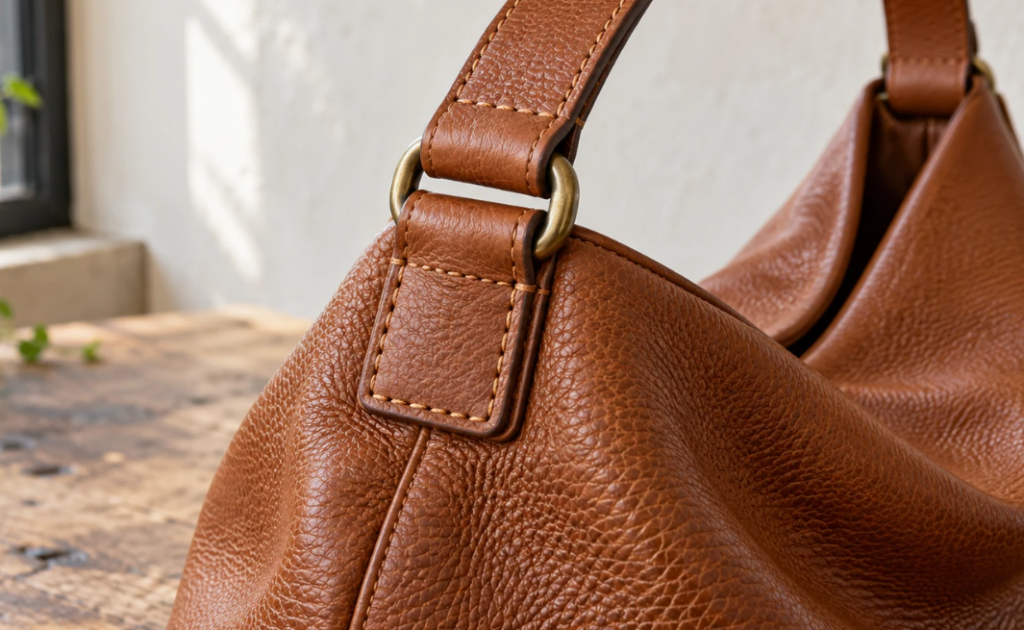
Fiedle has a dedicated hobo category featuring several leather constructions, including pebble-grain and oil-wax styles. Its individual product pages describe OEM and ODM customization, making it a useful candidate for a leather-focused shortlist.
Leather selection needs more detail than a color and the words “genuine leather.” Request the leather specification, finish, thickness range, and agreed limits for visible variation. For a slouchy hobo, examine a finished sample as well as swatches: large panels reveal grain and shading differences that are hard to judge from a small cutting.
8. Katehandbag
Katehandbag presents itself as an OEM handbag factory in Huadu, Guangzhou, producing hobos alongside totes, shoulder bags, and crossbody bags. Its website uses style-coded factory samples and publishes indicative sampling and bulk-production arrangements.
That approach is useful when you want to start with a physical base style. Ask for the style code, the proposed modifications, and a sample schedule tied to confirmed materials and hardware. If the bag has painted strap edges, check the finish around bends and attachment points, then agree how those areas will be inspected before shipment.
9. Handbagio
Handbagio lists hobos among its custom handbag styles and promotes OEM and ODM services with a broad range of conventional and alternative materials. Start a conversation about materials if that is still the unresolved part of your brief.
Look beyond labels such as “plant-based,” “recycled,” or “vegan.” Request the full material composition, coating and backing details, and evidence for the exact claim you intend to make. Textile Exchange’s chain-of-custody guidance explains why traceability matters for fiber-content claims; a supplier’s general sustainability page does not establish the content of your finished bag.
10. YANYAN Bags
YANYAN Bags operates through chinabagsfactory.net, where its shoulder-bag range includes slouchy hobo styles. The website combines wholesale product listings with OEM, ODM, and private-label offers, so buyers should clarify which route applies to their inquiry.
A ready-made bag with a label change and a new custom hobo bag are different projects. Ask whether the proposed order uses stock products, an existing pattern with modifications, or a newly developed pattern. Confirm material availability and reorder arrangements at the same time, especially if you intend to build an ongoing collection around the first style.
11. Guangzhou Lide Leather
Guangzhou Lide Leather’s public company information lists leather and PU women’s handbags, including hobo bags. Its website identifies a Shiling, Guangzhou location and describes OEM and ODM services.
Lide is a candidate to investigate for leather or PU fashion-bag development, provided its current samples match your intended finish. Request recent examples, the proposed production address, and the quality checks available for your order. Older catalog entries can help you find a style, but current material availability and production arrangements need fresh confirmation.
12. Chinee Handbag
Chinee Handbag’s website includes hobo bags within a wider handbag catalog and describes OEM production services. Its product range gives buyers existing shapes to review before deciding whether to adapt a model or commission a new design.
Ask which features are genuinely customizable on the selected base. A change to the opening, strap drop, or pocket position can require more work than a logo addition. Request a development sample that includes those changes, rather than approving an unmodified catalog sample as evidence of the final result.
13. Yeenkran
Wuhan Yeenkran Bag Co., Ltd. describes OEM, ODM, and private-label bag development, and specifically includes hobo constructions in its handbag offering. Its public profile emphasizes pattern development, material sourcing, sampling, and production coordination.
If you have references but no finished tech pack, ask Yeenkran what its development team needs to begin. Ask for a sample with a comparable soft body and carrying system, then check pocket access when the bag is partly filled. A large internal pocket can pull on a flexible lining, so agree its size, position, and attachment before approving the design.
14. Kaishi Bag Factory
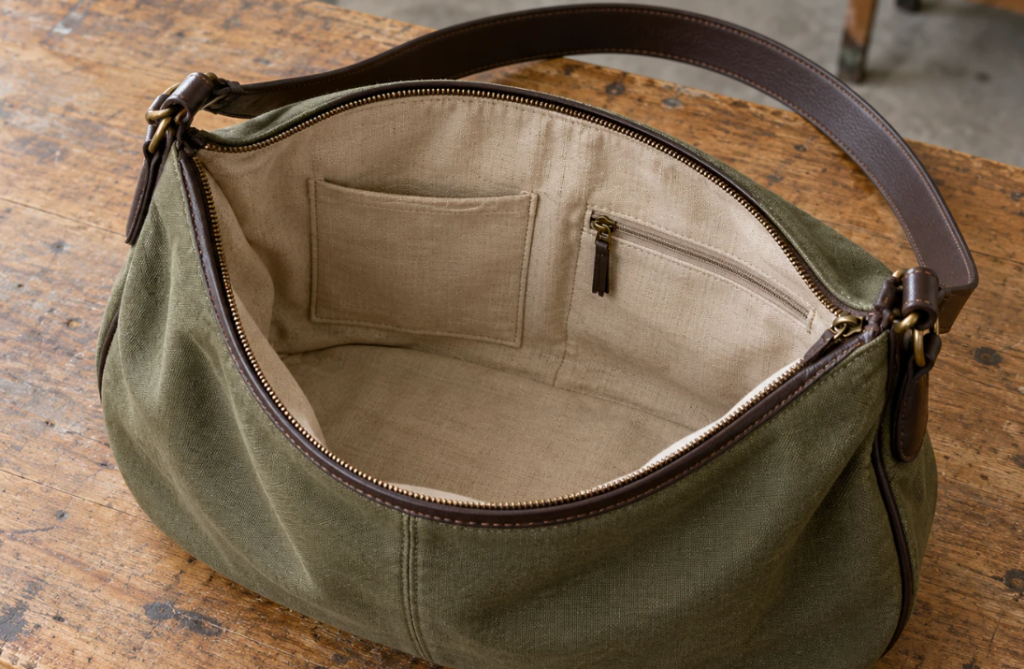
Kaishi Bag Factory publishes canvas and nylon hobo products alongside broader OEM and ODM bag services. Its listed styles include mixed-material constructions, making it a relevant candidate for casual textile bags and fabric designs with PU trim.
Pay attention to how the materials behave together. Canvas, lining, and PU trim may fold differently, affecting the side seams and curved opening. If your design uses a curved zipper, approve its operation on the assembled sample. YKK’s EXCELLA Curve information illustrates how radius and length can be part of zipper development; it does not mean every hobo needs that particular product.
15. Guangzhou Yun Qing Leather Products
Guangzhou Yun Qing Leather Products has supplier-published Made-in-China listings that include hobo bags, including a shoulder style with front laser decoration. Use the listings to identify a model, then contact the company for its current development and production details.
Request the company’s current catalog and a recent sample close to your construction. If decoration is part of the design, ask to approve it on the actual production material because the visible result can change with the surface finish. Confirm the contracting company, manufacturing location, inspection arrangements, and repeat-order specifications before placing an order.
Conclusion
The right custom hobo bag manufacturers for your shortlist will depend on the bag you’re developing. A leather collection calls for a different sample review from a lightweight nylon line, and adapting a factory style needs a different brief from developing a new pattern.
Narrow the list to suppliers with relevant samples, then send them identical requirements. Compare the proposed material, development process, inspection plan, and packing method alongside the finished sample. These checks make supplier responses easier to evaluate and give both sides a written basis for production.
If you’re developing a hobo bag collection, share your project with HeteBag. Send your reference images, dimensions, material direction, quantity per color, and target delivery date. Our team can discuss the development requirements and help you identify what needs to be settled before sampling.
Frequently Asked Questions
What should I send a custom hobo bag manufacturer for a useful quotation?
Send front, back, side, and interior references together with body dimensions, strap drop, shell and lining preferences, closure, pockets, hardware, logo artwork, and quantity per color. Include packaging and destination-market requirements, and mark any details that are still open to supplier suggestions. That helps manufacturers identify assumptions before quoting.
What determines the MOQ for custom hobo bags?
Minimum quantities depend on the style, material availability, color split, hardware, and packaging. An existing material and standard fittings may support a smaller run than custom-dyed material or newly developed metal parts. Ask for the MOQ per style and per color, plus any separate minimums for components.
How do I check whether a hobo sample has the right shape?
Review it empty, lightly filled, and carrying representative contents, then try the intended shoulder position. Check strap drop, opening access, side profile, base sag, and lining movement. Photograph the approved condition and record measurement tolerances so bulk inspection has a defined reference.
Is PU or genuine leather better for a custom hobo bag?
Choose according to the intended feel, weight, appearance, care requirements, and brand position. PU can offer a consistent surface, while genuine leather brings natural variation that needs agreed acceptance limits. Compare finished samples using the proposed materials, and request relevant test evidence rather than assuming either material guarantees durability.