
 English
  Italian
  French
  German
  Spanish
  Arabic
 Backpack design is moving in an interesting direction. Buyers still want useful storage and dependable construction, but they are becoming less interested in bags that look overloaded with pockets, straps, buckles, and decorative features. Recent 2026 product launches already point toward lighter construction, cleaner organization, softer shapes, recycled fabrics, and backpacks that move easily between work, travel, and daily life.
That change matters when you are developing a collection for 2027. A backpack may look good in a rendering, yet fabric thickness, zipper placement, foam density, lining construction, laptop protection, and even the distance between two shoulder-strap anchor points can completely change how the finished product feels.
After working with backpack development and production for many years, I have found that successful collections usually begin with one question: What problem should this backpack solve better than the products already on the shelf? The following 10 Backpack Trends Shaping 2027 can help brands, wholesalers, and sourcing teams answer that question before they move into sampling.
If you are also planning a wider bag collection, our guide to the Top 10 Handbag Styles Trending in 2027 shows how similar changes in shape, structure, and everyday usability are influencing handbag design.
| 2027 Direction | What Users Are Looking For | Main Development Focus |
|---|---|---|
| Minimalist design | Cleaner everyday appearance | Pattern, zipper placement, structure |
| Sustainable materials | Better material traceability | Fabric source, certification, trims |
| Lightweight construction | Less carrying fatigue | Fabric, foam, lining, hardware |
| Modular design | Flexible storage | Attachments, compartments, hardware |
| Tech-friendly design | Device organization | Padding, cable storage, security |
| Travel convenience | Faster packing | Opening structure, dimensions |
| Ergonomic comfort | Better long-term carry | Straps, foam, load distribution |
| Softer silhouettes | Fashion-led appearance | Fabric hand feel, reinforcement |
| Personalization | Stronger brand identity | Logos, colors, trims, hardware |
| Multi-purpose use | Fewer bags for more situations | Layout, capacity, versatility |
1. Minimalist Backpacks with Clean, Structured Silhouettes
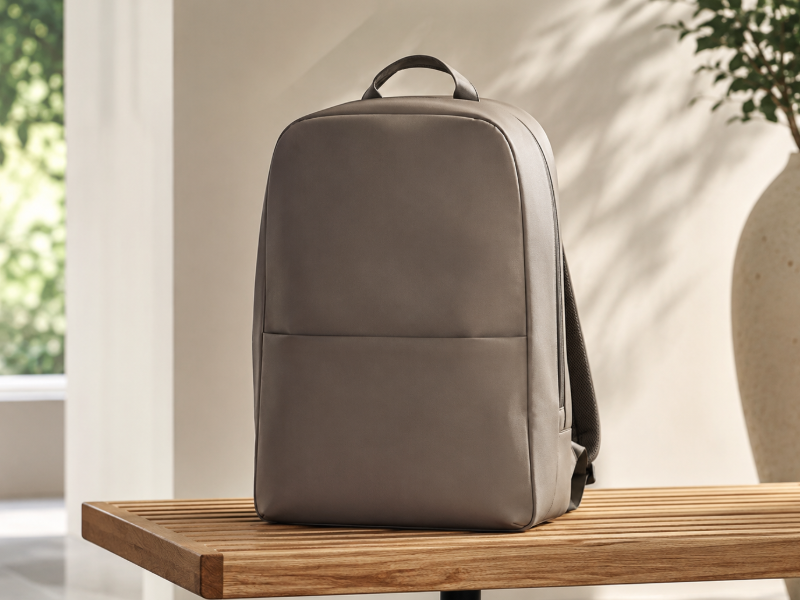
Minimalism in 2027 is less about removing everything and more about hiding complexity. Users may still want a laptop sleeve, passport pocket, bottle storage, key clip, charging cable, and several internal compartments. They simply do not need every feature visible from the outside.
Clean front panels, concealed zipper openings, narrower seams, controlled proportions, and subtle branding can create a backpack that works with office clothing as easily as casual clothing. Recent everyday backpack launches have already moved toward simpler organization and cleaner styling rather than adding more visible features.
Why Simple Backpack Designs Are Returning
One reason is versatility. Highly technical backpacks immediately communicate hiking, gaming, cycling, or travel. A cleaner backpack can enter more situations without looking out of place.
Production becomes more demanding when the design gets simpler. Decorative panels can hide construction variation. A plain front panel cannot. Uneven topstitching, poor reinforcement, puckering around a zipper, or an incorrect foam thickness becomes easier to notice.
Brands planning a minimalist custom backpack should spend more development time on pattern balance and panel stability. Clean design only works when the manufacturing is clean too.
Key Details: Hidden Zippers, Clean Panels, and Subtle Branding
Hidden zippers work well when the opening angle remains practical. We have seen designs where the zipper looked excellent in the sample drawing but became difficult to use once the backpack was filled. Zipper position should follow hand movement, not only the shape of the exterior panel.
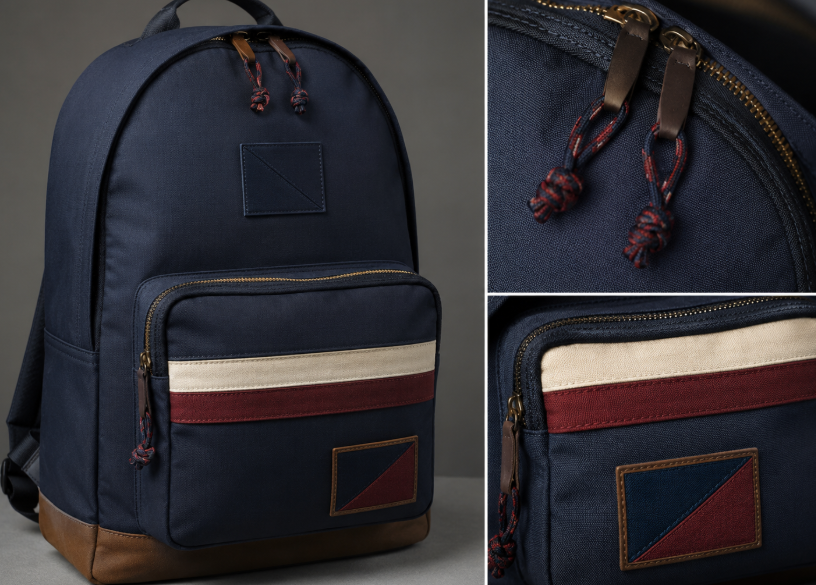
Small woven labels, tonal embroidery, debossed patches, metal badges, and custom zipper pulls can replace oversized logos. You can review more manufacturing options on our custom backpack development page when planning materials, structure, and branding together.
2. Sustainable and Recycled Backpack Materials
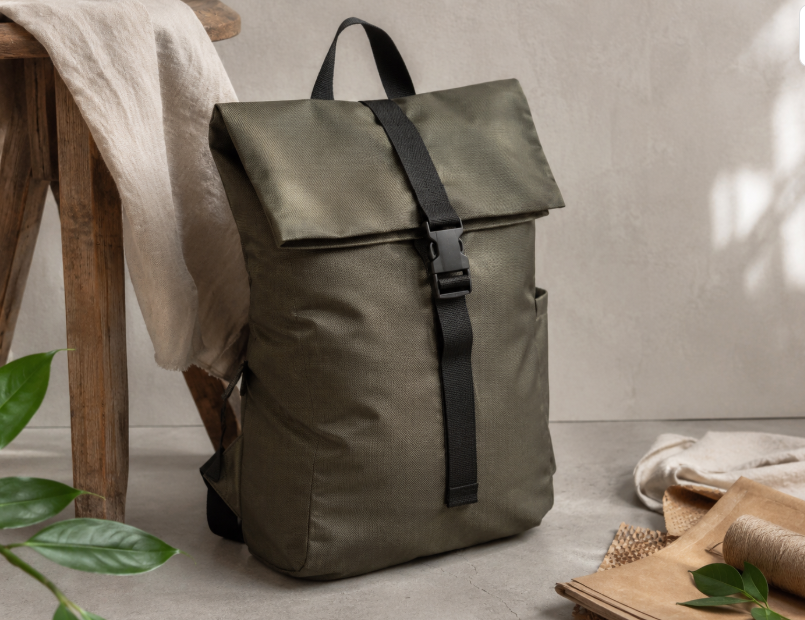
Sustainability is becoming more technical. Saying that a backpack is “eco-friendly” is no longer enough for serious buyers. They increasingly want to know what is recycled, how much recycled content is used, where the material came from, and whether documentation can support the claim.
Recycled polyester and recycled nylon can both work well in backpack production. The right choice depends on abrasion requirements, appearance, coating, weave construction, target weight, and intended use.
Recycled Nylon, Recycled Polyester, and Eco-Friendly Alternatives
RPET polyester remains practical because mills can produce many textures, deniers, colors, and finishes. Recycled nylon is attractive for products where lightweight performance and abrasion resistance have a larger role.
Material selection should cover more than the outer shell. Lining, webbing, zipper tape, labels, mesh, and packaging can all affect how complete the sustainability story feels.
The Global Recycled Standard from Textile Exchange is useful for buyers who need stronger recycled-content traceability. GRS covers third-party verification of recycled materials and chain of custody, while also including processing-related social, environmental, and chemical requirements.
What Brands Should Consider When Choosing Sustainable Materials
Start with documentation before choosing a fabric because of a recycled label printed on a swatch card. Ask what the certification actually covers and whether the supplier can provide valid supporting documents for the material or production chain relevant to your order.
Performance still matters. Recycled fabric with poor coating adhesion, weak colorfastness, or an unsuitable weave does not become a good backpack material simply because its raw material story sounds better.
Hardware can also be reviewed. YKK, for example, offers recycled zipper options such as its NATULON range, showing how brands can extend recycled-material thinking beyond the main fabric.
Brands researching this area can also read our guide to custom RPET bag manufacturing.
3. Lightweight Backpacks for Everyday Mobility
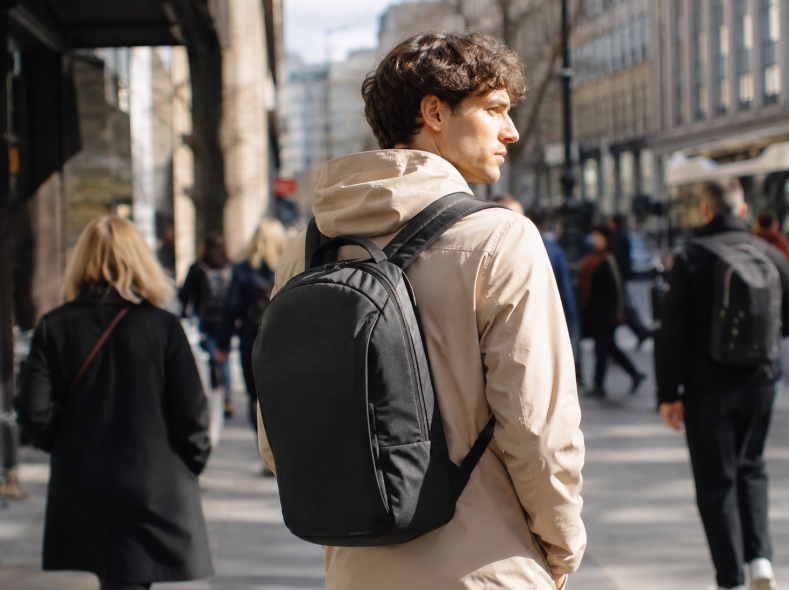
Weight is becoming a design feature, not simply a specification buried in a product sheet. Commuters carry laptops, chargers, water bottles, headphones, personal items, and sometimes gym clothing. Starting with an unnecessarily heavy empty backpack makes that load harder to justify.
Recent 2026 releases have emphasized lightweight daily backpacks while still keeping laptop protection, organization, travel features, and supportive straps.
Why Consumers Are Looking for Lighter Backpack Construction
Reducing weight works best when the whole bag is reviewed as a system. Switching from a heavy outer fabric to a lighter fabric helps, but the improvement can disappear once thick foam, oversized metal hardware, several lining layers, and unnecessary reinforcement pieces are added.
I usually review weight in three groups: parts the user touches, parts that protect the contents, and parts that only exist because of construction. The first two deserve more protection. The third group is where careful pattern engineering can often remove unnecessary material.
How Fabric Weight, Lining, and Hardware Affect the Final Backpack
A lightweight backpack should not feel empty or unstable. Shoulder-strap attachment points, the bottom panel, carry handle, laptop compartment, and major zipper openings still need proper support.
| Component | Poor Weight Reduction | Better Development Approach |
|---|---|---|
| Outer fabric | Choosing fabric that is too thin | Use lighter fabric with suitable weave/coating |
| Foam | Removing padding everywhere | Adjust foam by functional zone |
| Lining | Removing internal protection | Use lighter lining where load is low |
| Hardware | Replacing everything with weak plastic | Reduce size or choose engineered lightweight parts |
| Reinforcement | Removing stress-point backing | Reinforce only where load testing shows it is needed |
4. Modular and Convertible Backpack Designs
People use the same bag in more situations than they did several years ago. That creates demand for products that can change with the day rather than staying locked into one purpose.
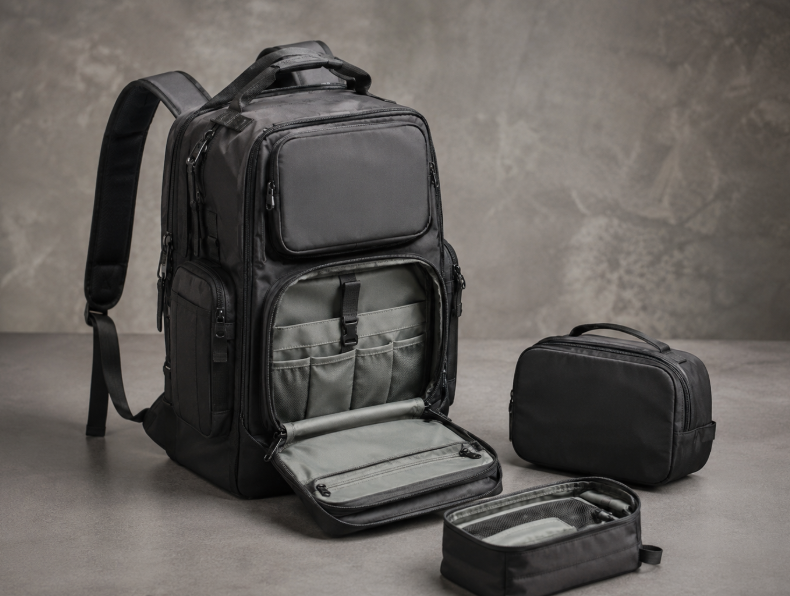
Modular backpacks can include removable organizers, detachable front pouches, adjustable dividers, expandable compartments, removable straps, or small accessory bags that work independently. Current travel-bag development is already exploring systems where larger backpacks separate into smaller daypacks.
Detachable Pouches, Adjustable Compartments, and Modular Storage
Every detachable component needs a reason to exist. Adding five removable pieces may look impressive in a presentation, but users quickly remove features that slow them down.
Attachment hardware should also be tested under repeated use. Snaps, hooks, zipper tracks, buckles, hook-and-loop panels, and magnetic systems behave differently once dust, weight, and daily pulling enter the picture.
A good modular design feels simple even though the construction behind it may be complicated.
Backpack-to-Tote and Multi-Way Carry Designs
Convertible backpack-to-tote designs can work especially well in commuter, lifestyle, and women’s collections. Strap storage becomes the difficult part. Backpack straps that remain hanging outside can make the tote mode feel unfinished.
Handle drop, back-panel appearance, zipper orientation, and bag balance should be tested in every intended carrying position. If the product claims three carrying methods, all three need to feel intentional.
5. Tech-Friendly and Smart Backpacks
The idea of a “tech backpack” is changing. External USB ports alone no longer make a product feel modern. Useful technology starts with protecting and organizing the devices people already carry.
Laptop compartments should fit the intended device rather than using a generic oversized sleeve. A loose laptop moves during walking and receives less protection at the corners.
Laptop Compartments, Cable Management, and Device Organization
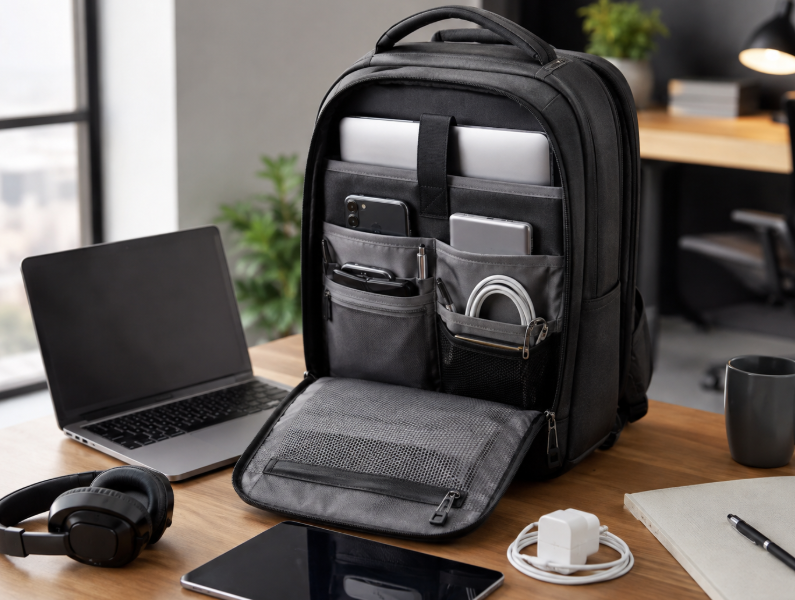
Suspended laptop sleeves remain one of the most useful construction details. Keeping the laptop slightly above the backpack bottom can reduce direct contact with the ground when the bag is placed down hard.
Tablet sleeves, charger pockets, cable loops, power-bank compartments, headphone storage, and quick-access accessory pockets can create a much better system. Pocket dimensions matter here. Small accessories have become compact, while chargers for larger laptops can still be bulky.
Tracking, Security, and Other Smart Backpack Features
Security is moving toward hidden rather than aggressive-looking design. Concealed back pockets, lock-compatible zipper pulls, RFID-blocking compartments, and discreet tracker pockets can fit into an everyday backpack without turning it into a tactical product.
Privacy and anti-theft features have also gained attention in broader fashion and accessory design, especially when they can be integrated without changing the product’s visual identity.
Electronics built permanently into bags need more caution. Repairability, washing, battery rules, component sourcing, and after-sales responsibility can turn a clever feature into a difficult product program. Passive organization and replaceable accessories often age better.
6. Travel Backpacks Designed Around Carry-On Convenience
Travel backpacks continue moving closer to soft luggage. Users want to open them widely, see what is inside, separate clothing from smaller items, carry a laptop securely, and move quickly through airports.
That explains the popularity of clamshell or near-clamshell openings. They turn the backpack from a deep vertical cavity into a packing surface.
Clamshell Openings and Organized Packing Systems
Clamshell construction places more stress on zipper tracks than a short top opening. Zipper gauge, corner radius, stitching allowance, binding, and reinforcement deserve close attention during sampling.
Internal compression panels can control clothing without filling the bag with straps. Mesh dividers work well for visibility, while solid dividers create better separation between shoes, laundry, and clean clothing.
Zippers are one area where buyers should resist choosing by appearance alone. Slider consistency, chain strength, corner movement, and repair availability affect the real user experience.
Compact Backpack Designs for Short Trips and Urban Travel
Carry-on claims should be made carefully because airlines set their own baggage limits. IATA notes that allowances vary by airline, cabin class, and aircraft, while 56 × 45 × 25 cm is a common general reference rather than a universal guarantee. Buyers can check the current IATA passenger baggage guidance when defining a travel collection.
Brands should decide whether they are developing an under-seat personal-item backpack, a compact weekend backpack, or a larger cabin travel pack. Trying to cover all three with one dimension usually creates compromises.
7. Ergonomic Backpacks Focused on Comfort
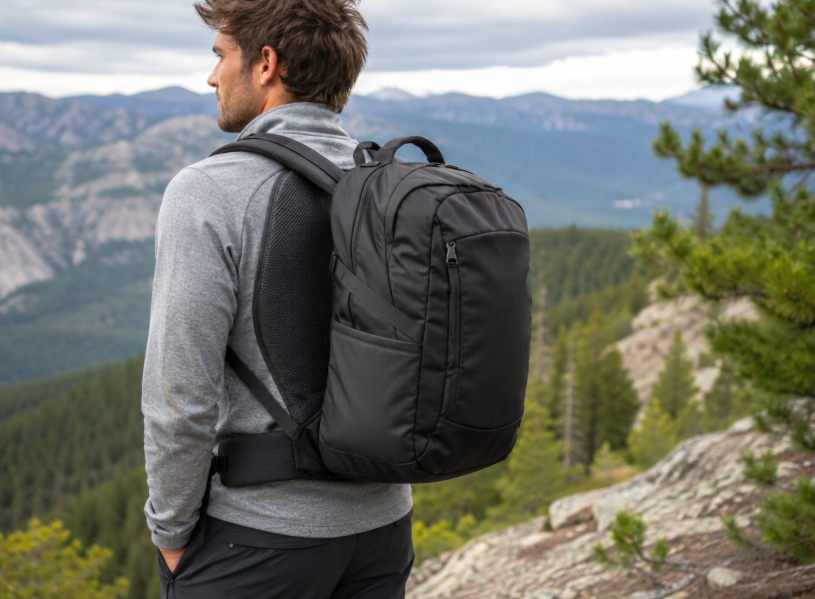
Comfort cannot be fixed by adding thick shoulder padding at the end of development. The complete structure determines how the bag sits against the body.
Strap shape, anchor position, back-panel stiffness, bag depth, center of gravity, foam recovery, and load placement all work together. Two backpacks with the same capacity can feel completely different once loaded.
Padded Shoulder Straps, Back Panels, and Weight Distribution
Shoulder straps should follow the body rather than pulling straight from the top seam. Very wide straps can restrict movement, while narrow straps concentrate pressure. Thick foam can feel soft during a five-minute fitting and become hot during a one-hour commute.
Back panels need the same kind of judgment. Deep molded channels may suit outdoor products but look excessive on a slim office backpack. Lightweight spacer mesh, shaped foam zones, or restrained ventilation channels can provide enough comfort for daily products.
How Backpack Structure Influences Long-Term Comfort
Heavy objects should stay close to the wearer whenever possible. A laptop compartment positioned against the back panel naturally helps with this. Deep front pockets loaded with heavy accessories pull the center of gravity outward and make the same total load feel less stable.
Buyers developing performance products should test backpacks with realistic loads rather than inspecting empty samples on a table. Our guide to backpack size, materials, and features goes deeper into those decisions.
8. Soft Shapes and Fashion-Forward Backpack Silhouettes
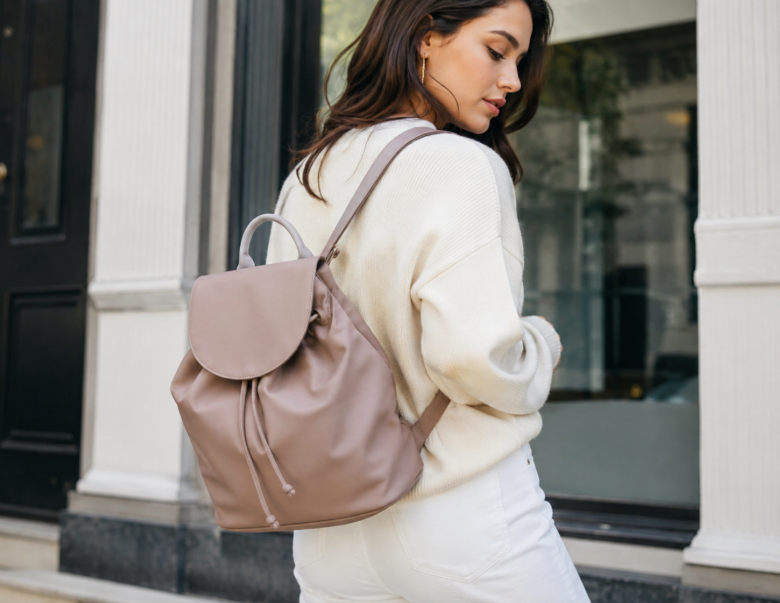
Structured rectangular backpacks are not disappearing, but softer forms are opening another direction for 2027. Rounded shoulders, gathered openings, curved front panels, slouchier bodies, and softer textile surfaces can make backpacks feel closer to fashion accessories.
The challenge is keeping enough structure for the backpack to remain comfortable and usable.
From Traditional Structured Packs to Softer Profiles
Removing stiff reinforcement changes more than appearance. The opening may collapse, the bottom may sag, and pockets can distort once items are added.
Soft designs usually need selective reinforcement rather than no reinforcement. The zipper area may need support while the body remains relaxed. The base can use thin board or higher-density foam without making the whole silhouette rigid.
Fabric hand feel becomes much more visible in these products. Soft nylon, washed canvas, lightweight polyester, quilted fabrics, and smooth recycled textiles can each produce a very different result.
How Fashion Trends Are Influencing Everyday Backpack Design
Backpacks are borrowing details from handbags, crossbody bags, and sportswear. Curved seams, smaller hardware, tonal colors, padded surfaces, decorative cords, and softer handles can reduce the “school bag” feeling that still affects some backpack designs.
Fashion should not erase function. The strongest products keep recognizable backpack comfort while changing the visual language around it.
9. Personalization and Custom Branding Become More Important
Personalization is shifting away from simply placing a large logo on the front panel. Brands now have many more ways to make a backpack recognizable without making it look promotional.
Embroidery, woven labels, rubber patches, custom webbing, zipper pulls, lining prints, molded hardware, color blocking, and small repeat details can build a stronger identity.
Embroidery, Patches, Woven Labels, and Custom Hardware
Each branding method behaves differently during production. Dense embroidery can wrinkle lightweight fabric. Metal badges may need backing material. Rubber patches add thickness. Woven labels are lightweight but need careful placement to feel premium.
Custom hardware can create a strong signature, yet tooling, plating consistency, attachment construction, and long-term finish should be reviewed before it becomes a central design feature.
Branding needs to be designed into the backpack instead of added after the backpack has already been developed.
Colors, Prints, Charms, and Limited-Edition Backpack Collections
Color is becoming useful for collection planning because one construction can support several customer groups through different surface treatments. Neutral core colors can sit beside seasonal tones without requiring a completely new pattern.
Printed lining, removable charms, patches, colored zipper cords, and limited-edition combinations also allow brands to create variation while keeping the basic product architecture stable.
That can make development more efficient and give buyers more room to test new visual directions.
10. Multi-Purpose Backpacks for Work, Travel, and Everyday Life
The strongest direction across these trends may be versatility. Many users no longer want a separate backpack for commuting, a second one for weekend travel, and another one for occasional gym use.
They want one product that handles several parts of their routine without looking wrong in any of them.
One Backpack for Commuting, Gym, Travel, and Daily Carry
The difficulty is organization. A work backpack needs electronics protection. A gym bag needs separation. Travel requires efficient packing and security. Everyday carry needs quick access without excess bulk.
Trying to include every possible feature creates another problem: weight and complexity. Brands should identify two or three primary scenarios instead of promising that one backpack can do everything.
A commuter-travel backpack is a natural combination. Work-gym can also make sense. Office, hiking, photography, gym, and international travel in one small backpack usually does not.
What Brands Should Consider When Developing a 2027 Backpack Collection
Start with the user, then build the specification. Decide the expected load, target capacity, device size, carry duration, weather exposure, visual direction, and primary sales channel before discussing decorative details with your backpack supplier.
Ask your manufacturer what needs reinforcement, where weight can be removed, whether the selected fabric will hold the desired shape, and which details are likely to cause production variation. Good backpack manufacturers should challenge weak design decisions rather than simply reproduce a drawing.
A 2027 collection does not need all ten trends. Two or three directions executed properly will usually create a clearer product than a backpack filled with every popular feature.
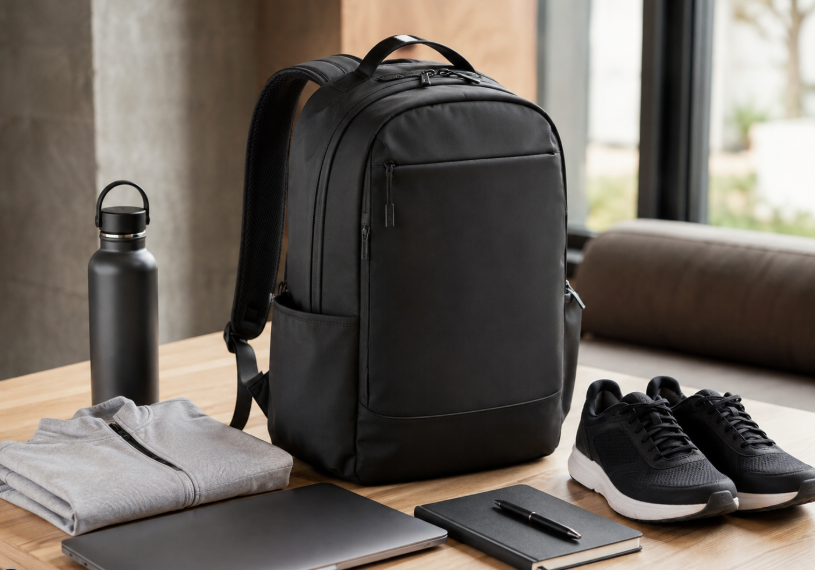
For a comparison with the wider market, explore our guide to bag trends in 2027, including materials, carrying styles, and everyday features.
11. Conclusion
The 10 Backpack Trends Shaping 2027 point toward a market where design and function are becoming harder to separate. Cleaner backpacks still need smart organization. Lightweight backpacks still need durability. Sustainable materials still need reliable performance. Fashion-led shapes still need comfortable straps and stable construction.
Brands that plan early can use these trends as development tools rather than decoration. Build around a clear user, test the sample with realistic loads, check the materials and hardware carefully, and pay close attention to the small construction decisions that customers eventually feel in daily use.
Hetebag is based in Huadu, Guangzhou, one of China’s established bag-manufacturing areas, and our team brings more than 15 years of bag manufacturing and product-development experience. We work with an established manufacturing network and support OEM and ODM development across different backpack categories.
If you are looking for a backpack supplier or comparing backpack manufacturers for a new 2027 collection, you can send us your drawings, reference products, materials, target dimensions, or even an early product idea. We are happy to discuss the project with you and help turn it into a manufacturable custom backpack.
Frequently Asked Questions
What backpack styles are expected to trend in 2027?
Clean minimalist backpacks, lightweight commuter packs, travel-friendly clamshell designs, modular backpacks, recycled-material products, softer fashion silhouettes, and multi-purpose work-and-travel backpacks are strong directions to watch. The best option for a brand depends on its customer group rather than the trend alone.
Which materials should brands consider for a 2027 custom backpack?
Recycled polyester, recycled nylon, standard nylon, polyester, canvas, and selected coated fabrics can all work. Material choice should be based on target weight, abrasion resistance, structure, hand feel, water resistance, color requirements, and intended use. You can compare common options in our backpack material guide.
How can buyers reduce backpack weight without making the product weaker?
Review the entire construction rather than simply choosing thinner fabric. Lining weight, foam thickness, zipper gauge, buckles, metal fittings, reinforcement panels, binding, and compartment count all contribute to finished weight. Stress areas such as strap anchors, handles, laptop bases, and bottom corners should retain proper reinforcement.
What should I check when approving a backpack sample?
Load the sample with the type of items the final customer will actually carry. Check shoulder comfort, zipper movement around corners, laptop protection, pocket access, stitching at load-bearing areas, bag balance, lining movement, handle strength, hardware operation, and whether the backpack keeps the intended shape after loading.
How should a brand choose between a minimalist and a multi-functional backpack?
Look at the main use scenario first. Office and urban lifestyle products often benefit from cleaner exteriors with organization hidden inside. Travel, outdoor, and equipment-oriented backpacks can justify more visible functional elements. Adding features that the target user rarely needs usually increases weight and manufacturing complexity without improving the product.
What information should I send a backpack manufacturer before requesting a sample?
Send the intended backpack size, reference photos or drawings, target capacity, fabric preference, color requirements, laptop size, pocket layout, logo method, hardware preference, expected usage, and any special functions. A clear specification lets the manufacturer identify construction risks before the first sample instead of correcting them after several rounds of development.


