
 English
  Italian
  French
  German
  Spanish
  Arabic
 Italy remains one of the first places buyers consider when developing premium leather bags. The country has a long history of leatherworking, pattern making, hand finishing, and fashion product development. Yet choosing an Italian supplier is not as simple as searching for a “Made in Italy bag factory.”
Some Italian workshops are excellent at complex leather handbags but are not set up for technical backpacks, travel bags, promotional products, or larger production programs. Others can manufacture an existing style under a private label but may not provide original pattern development. A few work mainly with established luxury companies and may not be suitable for a new brand that needs close guidance.
The right supplier depends on your product, target market, materials, order structure, development stage, and quality expectations.
From my experience in bag development and manufacturing, buyers often focus too early on appearance. A beautiful showroom sample tells only part of the story. You must also examine pattern accuracy, reinforcement methods, material control, production consistency, communication speed, quality inspection, and the factory’s ability to repeat an approved sample during bulk production.
This guide reviews 15 custom bag manufacturers and production partners relevant to buyers considering Italy. Fourteen are based in Italy or operate Italian manufacturing services. Hetebag is included as a China-based alternative for buyers who need a wider product range, flexible material sourcing, or scalable OEM and ODM production.
The ranking is not a claim that one factory is universally better than another. It is a sourcing shortlist designed to help you identify which manufacturer may fit your project.
How Good Is the Custom Bag Industry in Italy?
The Development and Advantages of Italian Custom Bag Manufacturing
Italy’s strength comes from a connected leather goods supply chain rather than from one production technique.
In regions such as Tuscany, buyers can find tanneries, material agents, pattern makers, hardware suppliers, sample rooms, sewing workshops, edge-painting specialists, finishing teams, and packaging companies within the same manufacturing ecosystem. Florence and nearby areas such as Scandicci, Sesto Fiorentino, Bagno a Ripoli, Prato, and Fucecchio are particularly active in leather goods.
Other production areas bring different skills. Naples and the surrounding Campania region have deep experience in leatherworking and fashion accessories. Bergamo has manufacturers serving fashion, corporate, and technical bag projects. The Italian Trade Agency maintains a searchable directory for international buyers seeking Italian leather and fashion partners, which reflects the range of specialized businesses operating across the country.
This concentration of skills can improve product development. A workshop does not always need to build every component itself. It may work with specialist partners for metal plating, leather splitting, skiving, embroidery, molding, or surface finishing.
That system is valuable when your bag depends on subtle details.
A soft leather shoulder bag, for example, can fail if the reinforcement is too stiff. A structured top-handle bag can lose its shape if the backing material reacts badly to humidity. Painted edges may crack when the leather, adhesive, primer, and paint system are not compatible. These are not design problems alone. They are engineering and process-control problems.
Experienced Italian leather goods manufacturers often understand how to balance appearance with construction. They know where a panel needs support, where it should remain flexible, how much leather should be skived around a folded edge, and how hardware weight affects the way a finished bag hangs.
The Main Characteristics of Italian Custom Bags
Italian custom bag manufacturing is commonly associated with leather, but “Italian leather bag” is too broad a description for serious sourcing work.
The real differences often appear in the following areas:
Pattern and proportion control
Premium handbags depend on small changes in proportion. A handle drop that is slightly too short can make a bag uncomfortable. A gusset that opens at the wrong angle changes both capacity and appearance. Skilled pattern makers translate a design into parts that can be cut, folded, sewn, turned, reinforced, and assembled without distorting the final shape.
Leather selection
Leather cannot be selected by color alone. Buyers must consider thickness, temper, grain, stretch, finish, cutting yield, scratch sensitivity, color transfer, edge behavior, and batch variation.
A soft calfskin may suit a slouchy shoulder bag but perform poorly in a rigid box shape. Vegetable-tanned leather can develop a rich patina, yet its color and surface may vary more than heavily corrected leather. Suede needs careful handling and packaging because pressure marks can appear before the product reaches the customer.
Hand finishing
Edge painting, leather folding, hand gluing, polishing, stitching preparation, and hardware fitting can strongly affect perceived quality. These operations require time and trained workers. They are difficult to judge from distant product photographs.
Small-batch development
Many Italian workshops are structured for premium collections rather than high-volume promotional orders. This can make them suitable for brands launching a focused range, testing an original design, or developing products that require intensive handwork.
Small-batch capability should not be confused with unlimited flexibility. A workshop may accept fewer finished bags but still require a full hide purchase, a minimum hardware run, or a minimum quantity for custom-dyed lining.
Which Brands Are Best Suited to Custom Bag Manufacturing in Italy?
Italian production is often a strong fit for:
- Premium handbag and leather accessory brands
- Designer labels with original sketches or technical packs
- Boutique retailers developing private-label collections
- Brands that depend on Italian origin as part of their positioning
- Companies developing complex structures or refined leather finishes
- Buyers willing to invest time in sampling and material approval
- Collections where craftsmanship matters more than rapid style turnover
Italy may be less suitable when your program includes many unrelated categories, such as polyester backpacks, insulated lunch bags, promotional totes, sports duffels, makeup bags, and technical travel products in the same order.
A leather workshop that makes a refined handbag is not automatically qualified to make a load-bearing backpack. Backpack production requires experience with foam, mesh, webbing, binding, bartacks, reinforcement panels, zipper curves, shoulder-strap construction, and load distribution.
That distinction matters. Choose a manufacturer because it understands your product, not simply because its address looks attractive on a label.
15 Recommended Custom Bag Manufacturers in Italy
The table below compares the companies by location, services, product focus, and likely buyer fit.
| Rank | Manufacturer | Country and Location | Main Custom Services | Main Products | Best Suited To |
|---|---|---|---|---|---|
| 1 | Hetebag | Guangzhou, China | OEM, ODM, product design, sampling, material selection, logos, packaging, quality control, and bulk production | Handbags, backpacks, tote bags, travel bags, sports bags, laptop bags, cosmetic bags, and promotional bags | Brands, importers, and wholesalers needing broad material choices, cross-category production, and scalable manufacturing. Hetebag is a China-based alternative, not an Italian manufacturer. |
| 2 | Pierotucci | Bagno a Ripoli, Florence, Italy | Private label, custom projects, design modification, leather selection, handmade production, and monogramming | Handbags, wallets, leather cases, belts, jackets, and small leather goods | Brands seeking Florentine leather craftsmanship, handmade products, and focused collection development. |
| 3 | Luxury Leather | Italy | Design development, technical packs, pattern making, material sourcing, sampling, manufacturing, and quality control | Handbags, small leather goods, leather garments, and accessories | Designer brands, premium labels, and companies developing an original collection from an early concept. |
| 4 | G.A.S. Group | Florence, Italy | Private label, white label, design, samples, materials, hardware, production, and packaging | Handbags, leather accessories, and fashion bags | Brands looking for broad private-label support and Made in Italy collection development. |
| 5 | Stefano Bag | Florence area, Italy | Original product development, fast prototyping, logo branding, and lower-minimum production programs | Leather handbags, crossbody bags, tote bags, and leather accessories | Startups, boutiques, and brands testing focused leather collections. |
| 6 | Florence Leather | Sesto Fiorentino, Italy | Private label, third-party production, sample development, branding, and contract manufacturing | Leather handbags and small leather goods | Retailers, designers, and brands building an Italian private-label line from catalog styles or original designs. |
| 7 | Montecapri | Italy and Spain | Feasibility analysis, engineering, material advice, prototypes, private label, and production services | Handbags, custom leather goods, small leather goods, and accessories | Designers with original concepts who need technical development before production. |
| 8 | Stile Firenze | Florence area, Italy | Private label, branded existing designs, production support, and logo customization | Vintage leather bags, backpacks, wallets, and accessories | Retailers seeking a recognizable vintage or soft-leather Italian style with a faster development route. |
| 9 | Loipell – Leather Factory | Scandicci, Italy | Third-party manufacturing, product development, full-cycle production, and quality control | Luxury handbags, backpacks, belt bags, and leather goods | Premium brands requiring complex workmanship and close control of leather construction. |
| 10 | Pelletteria Atena | Florence, Italy | Handmade leather goods manufacturing and third-party production support | Handbags and leather accessories | Buyers looking for a specialized Italian leather workshop and willing to verify project-specific capacity directly. |
| 11 | Pelletteria New Line | Prato and the Florence area, Italy | Handcrafted product development and leather bag manufacturing | Men’s bags, women’s bags, backpacks, belt bags, and handbags | Buyers seeking both men’s and women’s leather bag capabilities from a Tuscan workshop. |
| 12 | Pelletteria 2A | Tuscany, Italy | Production of premium and luxury handbags | Men’s bags, women’s bags, and high-end fashion handbags | Brands prioritizing fine sewing, careful assembly, and luxury handbag specialization. |
| 13 | CAM.PEL. | Naples, Italy | Leather goods development, manufacturing, craftsmanship, and luxury production support | Backpacks, handbags, men’s bags, clutches, wallets, and small leather goods | Brands seeking an experienced Neapolitan manufacturer with a broad leather product range. The company describes about six decades of sector experience. |
| 14 | Masca Progetto Borsa | Treviolo, Bergamo, Italy | Collaborative design, sampling, project-based development, and custom production | Backpacks, men’s and women’s bags, belt bags, clutches, and corporate bags | Companies that want the manufacturer to participate in product refinement and communication-focused bag design. |
| 15 | Bruno Rossi Bags | Fucecchio, Florence, Italy | Design and production of premium genuine leather bags | Soft leather handbags, backpacks, clutches, and men’s and women’s bags | Buyers focused on soft leather, traditional Tuscan production, and an established manufacturing background. The company states that it was founded in 1973. |
1. Hetebag
Hetebag is included as a sourcing alternative rather than as a Made in Italy supplier. It operates from Guangzhou, China, and publicly describes OEM and ODM capabilities covering design development, material selection, sampling, bulk production, and inspection.
Its main advantage is category breadth. A buyer can develop leather or PU handbags while working on backpacks, travel bags, gym bags, promotional bags, or other textile products through the same supplier network. That can reduce communication gaps when a brand has several product categories.
From a manufacturing perspective, this model is most useful when material variety, repeatable bulk production, packaging coordination, and cross-category sourcing carry more weight than Italian origin.
Hetebag states that it has more than 15 years of manufacturing experience, operates its own production facility, and works with specialized partner factories in the Guangzhou area. Buyers should still verify current capacity, audit documents, product test reports, and the exact production site assigned to their order before approval.
2. Pierotucci
Pierotucci is a Florentine leather workshop with roots dating to 1972. Its private-label service covers custom designs and a range of handmade leather products, including handbags, wallets, belts, cases, jackets, and small accessories.
This manufacturer may suit brands that value a visible connection to Florentine leather tradition. Its product scope also allows buyers to build a coordinated leather collection rather than a handbag alone.
During supplier evaluation, ask whether your project will be adapted from an existing pattern or developed from a new pattern. Those routes involve different development work, ownership terms, and production risks.
3. Luxury Leather
Luxury Leather presents itself as a full-service Italian leather goods manufacturer for both emerging designers and established companies. Its services cover the steps that many new buyers struggle to coordinate: design interpretation, pattern development, material sourcing, accessory selection, sampling, production, and quality control.
This broad development service can be valuable when your concept is visually clear but not technically complete.
A sketch does not tell a manufacturer the acceptable leather thickness, reinforcement density, seam allowance, edge construction, lining method, hardware attachment, or tolerance. The factory must either receive these instructions in a technical pack or help define them before sampling.
4. G.A.S. Group
G.A.S. Group is based in Florence and focuses on private-label and white-label bags and accessories. The difference between those two services matters.
White-label production normally starts with an existing manufacturer design that can be branded or adjusted. Private-label development may involve more substantial changes to materials, dimensions, hardware, colors, internal organization, and branding.
Buyers that need speed may benefit from an existing style. Brands seeking stronger product ownership should ask how much of the original pattern can be modified and whether exclusivity is available.
5. Stefano Bag
Stefano Bag promotes full customization, logo branding, rapid prototype development, and lower-minimum production for private-label leather goods.
That combination can appeal to small brands, but buyers should define what “low minimum” means for each component. A factory may accept a small finished order while the tannery, lining supplier, zipper producer, or hardware factory requires a larger material commitment.
Ask whether leftover materials will be stored, returned, reserved for repeat orders, or used in other production. Clear material ownership prevents confusion after the first run.
6. Florence Leather
Florence Leather offers third-party production, private-label services, sample development, and the option to brand selected catalog designs.
This gives buyers two practical entry points. You can begin with an existing style and reduce development work, or you can build a more original product through sampling and contract manufacturing.
Catalog-based private label is useful for market testing, but differentiation may be limited. Check whether competitors can purchase the same base model and whether you can change the lining, closure, handles, logo position, hardware finish, or internal layout.
7. Montecapri
Montecapri operates leather goods services connected to Italy and Spain. Its development approach begins with feasibility analysis, material advice, engineering input, and prototype construction.
This is important for concept-driven products. A designer may draw an unusual shape that looks strong on paper but creates cutting waste, unstable seams, poor opening access, or hardware stress during use.
A good development team does not simply say yes. It explains what must change and why. That technical honesty usually saves more time than a supplier that accepts every request but discovers the problems during production.
8. Stile Firenze
Stile Firenze specializes in vintage-style soft leather bags, backpacks, wallets, and accessories. It offers private-label support and access to established designs.
This supplier is best considered when the desired product language matches its existing strength. Washed surfaces, soft structures, garment-dyed effects, casual silhouettes, and vintage leather finishes require different process knowledge from rigid luxury handbags.
A factory’s signature style can speed up development when it aligns with your brand. It can restrict development when your collection needs a completely different construction system.
9. Loipell – Leather Factory
Loipell is based in Scandicci and describes full-cycle third-party handbag production that combines artisan methods with modern production technology.
Scandicci is closely connected to Florence’s luxury leather goods industry. Loipell’s positioning suggests that it is better suited to brands needing sophisticated leather work than to buyers seeking a simple printed promotional bag.
For high-end projects, ask to review products with a similar construction level rather than products with a similar color or shape. The most useful reference sample uses comparable leather, edge treatment, hardware weight, reinforcement, and assembly methods.
10. Pelletteria Atena
Pelletteria Atena is publicly listed as a Florence-based manufacturer of handmade Italian leather goods and handbags.
Less public detail is available about its current development workflow, minimums, equipment, and production scale. That does not make it unsuitable. It means buyers should conduct more direct verification.
Request a factory presentation, recent product categories, available processes, sample terms, quality procedures, subcontracting policy, and production location. Do not rely on a short directory description when making a supplier decision.
11. Pelletteria New Line
Pelletteria New Line focuses on handcrafted leather products and appears to cover men’s and women’s bag categories.
A manufacturer with experience across both markets may understand a wider range of constructions, from compact women’s handbags to men’s work bags, backpacks, belt bags, and functional leather accessories.
Still, category labels are not enough. A fashion backpack and a travel backpack may share a name while requiring very different materials and tests. Show the factory how the product will be used, what it will carry, and which failure points concern you.
12. Pelletteria 2A
Pelletteria 2A describes itself as a Tuscan company specializing in luxury handbag production.
A specialist factory can be a strong choice when your project matches its core construction methods. Specialized teams often develop better control over repeated operations such as skiving, folding, gluing, stitching, edge finishing, shaping, and final cleaning.
Ask who will develop the pattern and who will manage the production handover. In many factories, the sample maker produces an excellent prototype, but bulk production is transferred to another team. The approved construction details must be documented before that transfer.
13. CAM.PEL.
CAM.PEL. is a Naples-based leather goods manufacturer with around six decades of experience described in its public materials. Its product range includes handbags, backpacks, clutches, wallets, and other leather accessories.
Long operating history can indicate accumulated knowledge, but age alone does not confirm current suitability. Buyers still need to evaluate recent output, equipment, staff, compliance systems, communication, and the ability to meet the project’s technical requirements.
The strongest question is not “How many years have you been in business?” It is “Can you show how you control a product built like ours?”
14. Masca Progetto Borsa
Masca Progetto Borsa is based in Treviolo, Bergamo. It works on custom bag design and production, including products developed for companies and branded projects.
Its collaborative positioning may suit buyers who have a purpose but not a finished bag specification. Corporate bags, presentation products, event pieces, and communication-focused accessories often need a different development approach from seasonal fashion handbags.
The design must reflect the brand while remaining useful. A bag that displays a logo well but feels awkward in daily use will not create the intended brand impression.
15. Bruno Rossi Bags
Bruno Rossi Bags was founded in Fucecchio in 1973 and specializes in genuine leather bags. Its public product positioning emphasizes soft leather, particularly calf and deerskin, along with Italian design and production experience.
Soft leather bags require careful material grading. Variations in grain, stretch, scars, thickness, and color can become visible across large panels.
Buyers should agree on acceptable natural marks, shade variation, panel placement, leather yield, and matching rules before cutting starts. Without an approved leather standard, the factory and buyer may have different definitions of a defect.
What Types of Bags Can Italian Manufacturers Customize?
Common Custom Bag Categories
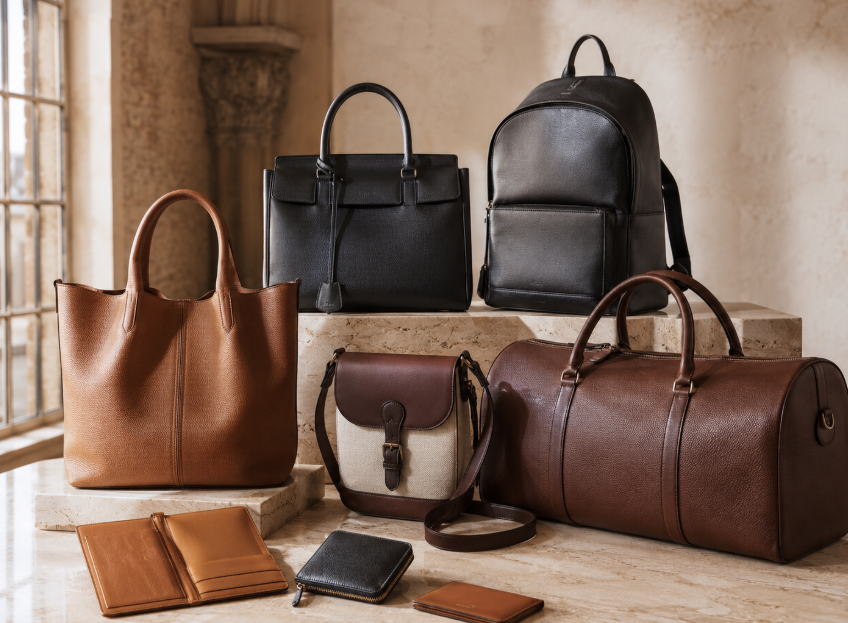
Italian manufacturers are strongest in leather handbags and small leather goods, but their capabilities can extend further depending on the factory.
| Product Type | Common Materials | Critical Production Points | Best Manufacturer Profile |
|---|---|---|---|
| Structured handbags | Calf leather, corrected-grain leather, microfiber, PU | Pattern symmetry, reinforcement, edge paint, hardware alignment, shape retention | Premium handbag specialist |
| Soft handbags and totes | Soft calfskin, deerskin, nappa, suede, canvas | Leather grading, seam stretch, handle reinforcement, lining control | Soft-leather or artisan workshop |
| Crossbody and shoulder bags | Leather, PU, nylon, canvas | Strap strength, buckle position, zipper access, weight balance | Handbag or multi-material factory |
| Backpacks | Nylon, polyester, canvas, leather, mesh, foam | Shoulder straps, bartacks, zipper curves, base strength, load distribution | Technical backpack manufacturer |
| Travel and duffel bags | Nylon, polyester, canvas, leather | Handle loading, bottom panels, zipper strength, internal binding | Travel bag factory |
| Wallets and small leather goods | Calf leather, split leather, microfiber, textile lining | Thin skiving, folding accuracy, card-slot consistency, glue control | Small leather goods specialist |
| Promotional and corporate bags | Cotton, canvas, polyester, nonwoven fabric | Printing, color matching, production consistency, packaging efficiency | Scalable textile bag manufacturer |
For fashion handbag development, you can review Hetebag’s custom handbag manufacturing options to compare structures, materials, and branding methods before preparing your inquiry.
Common Leather and Fabric Options
Italian bag factories commonly work with calfskin, cowhide, nappa, suede, vegetable-tanned leather, corrected-grain leather, split leather, and specialty finishes.
Do not approve leather based only on a small swatch.
A swatch shows color and surface, but it may not reveal how the full hide behaves during cutting. Ask to inspect or approve:
- Average thickness and permitted tolerance
- Softness or stiffness
- Grain consistency
- Surface finish
- Stretch direction
- Color variation between hides
- Scratch sensitivity
- Water-spot sensitivity
- Edge-paint compatibility
- Adhesive compatibility
- Expected natural marks
- Color transfer performance
For textile bags, the specification should include fiber content, fabric construction, weight, coating, backing, water resistance, colorfastness, abrasion performance, and shrinkage.
Buyers comparing leather, PU, nylon, polyester, canvas, Oxford fabric, and recycled textiles can use this custom bag materials guide as a starting point. The final choice should still be confirmed through physical samples and product-specific testing.
When a supplier offers recycled fabric, ask for documentation that connects the material to your order. The Global Recycled Standard from Textile Exchange covers third-party certification of recycled content and chain of custody. A general statement that a fabric is “recycled” is not the same as traceable documentation for the finished product.
Logo, Hardware, and Packaging Customization
A logo should be selected as part of the construction, not placed on the bag at the end.
Common methods include:
- Debossed or embossed leather logos
- Metal logo plates
- Individual metal letters
- Screen printing
- Heat transfer
- Embroidery
- Woven labels
- Printed lining
- Rubber or silicone patches
- Branded zipper pullers
- Custom hangtags
- Dust bags and retail packaging
Each method creates technical limits.
A very small debossed logo may lose detail on heavily grained leather. A large metal plate may pull down a soft front panel. Embroidery can distort lightweight fabric when the backing is too weak. A custom zipper puller may rotate, scratch the bag, or feel heavier than expected.
Hardware should be evaluated for function and finish. Check plating color, corrosion resistance, scratch resistance, pull strength, opening force, edge sharpness, and consistency between batches.
Zippers deserve separate attention because they are one of the most frequently used components. YKK describes global quality standards and zipper strength inspections as part of its quality assurance system. Buyers do not need to choose one brand for every project, but they should require a defined zipper specification and suitable testing from any supplier. You can review the YKK fastening product quality assurance approach when preparing zipper requirements.
Packaging must protect the bag without changing its shape. Confirm whether the product will be folded, stuffed, wrapped, placed in a dust bag, packed with hardware protection, or supported by inserts.
A soft tote and a structured handbag should not use the same packing method.
The Custom Bag Manufacturing Process in Italy
From Design Concept to Sample Development
A reliable development process begins before the first sample is sewn.
The buyer should provide a clear product brief containing:
- Product category and intended user
- Target dimensions
- Reference images or sketches
- Material direction
- Required compartments
- Closure type
- Handle and strap details
- Logo method
- Hardware finish
- Packaging requirements
- Target market
- Compliance needs
- Expected order structure
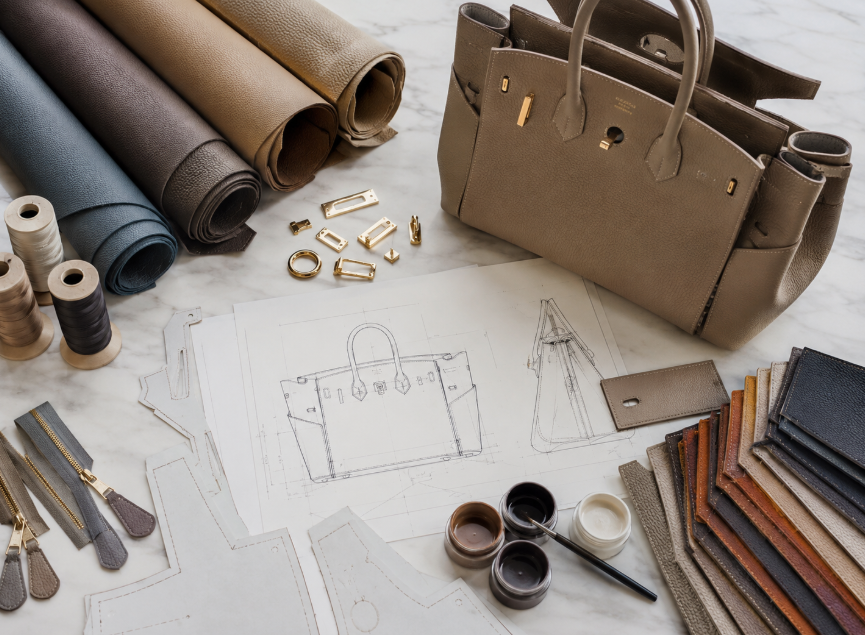
A technical pack is better than a collection of images. It should show measurements, materials, construction details, artwork placement, color references, hardware specifications, stitching requirements, and tolerances.
The manufacturer then reviews feasibility. This stage should identify unclear details, risky construction, unavailable materials, custom tooling, and parts that may create production inconsistency.
Pattern development comes next. The pattern maker converts the design into individual cutting pieces. Early patterns may be tested in substitute material before expensive leather is used.
The first prototype is rarely ready for production. It is used to examine proportion, opening size, carrying comfort, structure, capacity, hardware position, and overall appearance.
After review, the factory creates revisions. Keep one written sample comment sheet for each round. Mark every requested change with photographs, measurements, and clear instructions. Verbal feedback is easy to misunderstand.
Once the design is stable, request a pre-production sample made with the intended materials, colors, hardware, logo, lining, and construction.
The approved sample must become the production reference.
From Bulk Production to Quality Inspection
Bulk production normally includes material purchasing, incoming inspection, cutting, preparation, assembly, sewing, finishing, cleaning, inspection, and packing.
For leather bags, incoming material control is critical. The factory should check color, thickness, grain, finish, visible damage, and usable cutting area. Leather panels may need to be grouped by shade so that one finished bag does not contain visibly different tones.
Cutting plans affect both quality and cost. High-visibility panels should receive better sections of the hide. Reinforcement pieces and hidden components may use areas with minor natural variation when approved.
Preparation can include splitting, skiving, backing, folding, edge preparation, logo stamping, and reinforcement attachment. Mistakes at this stage may not appear until final assembly.
During sewing, inspectors should focus on stitch alignment, skipped stitches, thread tension, seam allowance, reinforcement, and component position. Stress points such as handles, shoulder straps, D-rings, and base corners need defined construction standards.
Final inspection should cover more than appearance. Depending on the product, checks may include:
- Dimensions and tolerances
- Stitch quality
- Edge paint
- Zipper operation
- Snap and lock function
- Hardware alignment
- Strap and handle attachment
- Logo position
- Lining cleanliness
- Pocket construction
- Surface scratches
- Adhesive marks
- Shape and symmetry
- Color consistency
- Packaging accuracy
For bags that contact skin, carry food containers, target children, or use coated textiles, material safety may require closer review. OEKO-TEX STANDARD 100 is one recognized framework for textiles tested for harmful substances. Buyers should confirm whether the exact material or finished component is covered rather than treating a supplier’s general certificate as proof for every product.
Lead Time and International Shipping
Development time and production time should be managed separately.
Sampling may slow down when the project requires custom leather, custom-dyed lining, molded hardware, new logo tools, repeated pattern revisions, or materials sourced from several suppliers.
Bulk production should begin only after the sample, bill of materials, colors, logo artwork, hardware, packaging, and inspection standard are approved.
Ask the manufacturer for a milestone schedule showing:
- Material confirmation
- Material arrival
- Cutting start
- Sewing start
- In-line inspection
- Final assembly
- Final inspection
- Packing
- Shipment readiness
International shipping should be planned around product volume, weight, packaging, delivery urgency, customs documents, and the agreed Incoterm.
Leather products may require accurate material declarations. Wooden packaging can create separate import requirements. Products containing exotic leather need special legal review and may require CITES documentation.
Never assume that “door-to-door” means every customs responsibility has been handled. Confirm who prepares export documents, who acts as importer of record, who pays duties, and who carries risk at each stage.
How to Choose an Italian Custom Bag Manufacturer
Verify Manufacturing Experience and Real Production Capacity
Start by confirming whether the company is a factory, workshop, sourcing office, brand, wholesaler, or project manager.
Each model can work, but you need to know who is making your product.
Request:
- Business registration details
- Factory address
- Production photographs or a video tour
- Main product categories
- Equipment list
- Number and role of production workers
- Sample room information
- Monthly capacity for similar products
- Subcontracting policy
- Recent audit reports where relevant
- Quality-control workflow
- Reference samples with similar construction
A factory visit is useful, but a visit can still be staged. Focus on process evidence. Look for current work orders, pattern files, cutting plans, inspection records, material storage, approved samples, production tracking, and segregated defective goods.
Capacity must be measured by product type. A workshop may make many simple tote bags but only a small number of complex handbags in the same period.
Ask for realistic output based on your construction, not a general factory maximum.
Compare Minimums, Commercial Terms, and Service Scope
- Finished quantity per style
- Quantity per color
- Leather or fabric purchase minimum
- Custom dyeing minimum
- Lining minimum
- Zipper color minimum
- Hardware plating minimum
- Logo tooling minimum
- Packaging minimum
Ask the manufacturer to separate these requirements.
A low finished-product minimum may still require you to purchase unused materials. That is not necessarily a problem, but the agreement should explain how the balance will be stored and used.
Compare service scope carefully. One quotation may include pattern development, material sourcing, inspection, and packaging. Another may cover assembly only.
The lower-looking proposal can become more complicated once missing services are added.
Check Sample Quality and Communication Efficiency
Sample quality should be evaluated through a written checklist.
Inspect:
- Overall proportion
- Symmetry
- Material feel
- Panel matching
- Stitch density
- Thread tension
- Edge finishing
- Hardware operation
- Logo execution
- Handle alignment
- Strap comfort
- Pocket access
- Lining fit
- Shape retention
- Internal cleanliness
- Packaging
Do not approve a sample because it “looks good.” Record measurable acceptance criteria.
Communication is part of manufacturing performance. A supplier should identify risks, confirm changes, ask precise questions, and maintain version control.
Fast replies are helpful, but accurate replies matter more.
A factory that responds immediately with “no problem” to every request may create more risk than a factory that takes time to review the pattern and explains where changes are needed.
Use a Supplier Evaluation Scorecard
A simple scorecard helps your team compare suppliers using the same standard.
- Product-category experience
- Pattern and development ability
- Material knowledge
- Sample accuracy
- Quality system
- Production capacity
- Communication
- Traceability
- Compliance documentation
- Delivery planning
- Packaging control
- Problem-solving ability
Do not let one excellent sample erase weaknesses in communication or documentation. The goal is repeatable production, not one perfect prototype.
Custom Bag Manufacturing Costs in Italy
Understanding the Cost Structure
Italian custom bag manufacturing costs are influenced by material, labor, development work, construction complexity, order structure, and finishing requirements.
Leather is often a major cost driver, but the quoted leather rate does not tell the full story. Cutting yield matters. A bag with large clean panels may consume more usable hide than a design made from small pieces.
Soft leather with natural grain can require careful selection and panel matching. Highly structured products use reinforcement, backing, adhesive systems, edge materials, and more preparation time.
Labor changes with construction. A simple unlined tote and a structured handbag may use the same outer leather while requiring very different production time.
- Multiple painted edges
- Repeated edge sanding and polishing
- Hand folding
- Piping
- Complex gussets
- Curved zipper installation
- Internal dividers
- Leather-covered hardware
- Custom metal parts
- Detailed logo work
- Pattern matching
- Hand stitching
- Special surface protection
- Individual hardware wrapping
- Shape-support packaging
Sample Development, Tooling, and Minimum Quantities
Sample development is production engineering on a small scale. The factory must review the design, create patterns, source materials, build the product, identify problems, and make corrections.
Custom logo dies, cutting dies, molds, engraved hardware, zipper pullers, or packaging tools may require separate setup.
Before paying for tooling, confirm:
- Who owns it
- Where it will be stored
- How long it will be kept
- Whether it can be transferred
- Whether it is exclusive to your brand
- What happens if the supplier relationship ends
Minimum quantities affect material efficiency and production setup. Small runs spread pattern work, line preparation, material handling, and quality setup across fewer products.
That does not mean a larger order is always better.
An untested design should not move into a large production run simply to reduce the unit cost. A smaller controlled launch can be safer when the product, factory, or market is new.
How to Control Procurement Costs Without Weakening the Product
The best cost control starts with design engineering.
Simplify parts that do not improve function or brand value. Use one reliable closure instead of several decorative closures. Reduce unnecessary seam lines. Share hardware across styles. Use the same lining across a collection. Choose stock plating when a custom finish does not create meaningful differentiation.
Material selection should reflect the customer’s real expectations. A premium-looking bag does not always need the most delicate leather. A well-chosen corrected-grain leather may perform better for frequent use, returns, and international shipping.
Do not remove reinforcement from stress points to reduce cost. Failures at handles, straps, zippers, and base corners create returns that cost more than the saved material.
Standardize the bill of materials and inspection criteria. Frequent changes after approval create waste, delays, and inconsistent production.
Cost control is strongest when the factory and buyer solve the construction together, before bulk production begins.
China vs. Italy Custom Bag Manufacturing
China and Italy are both important sourcing options, but they serve different needs.
The comparison should not be reduced to “Italy for quality and China for low cost.” That view ignores the wide range of factory levels in both countries.
A capable Chinese manufacturer can produce premium bags with strict quality control. A weak Italian workshop can still deliver inconsistent products. Country of origin does not replace supplier evaluation.
| Factor | Italy | China |
|---|---|---|
| Core strength | Premium leather goods, fashion development, artisan finishing, Made in Italy positioning | Broad product categories, material variety, integrated supply chains, scalable OEM and ODM production |
| Common product fit | Leather handbags, wallets, small leather goods, designer accessories | Handbags, backpacks, travel bags, sports bags, promotional bags, cooler bags, cosmetic bags, and mixed-material products |
| Development style | Often workshop-led, pattern-maker focused, suitable for refined leather construction | Often engineering and supply-chain focused, suitable for broad customization and production scaling |
| Material network | Strong leather, tanning, fashion hardware, and luxury finishing ecosystem | Strong fabric, PU, leather, webbing, zipper, foam, mesh, molded parts, packaging, and printing ecosystem |
| Order flexibility | Can suit focused premium runs, but material minimums may still apply | Flexible options vary by factory; broader capacity for medium and large programs |
| Production scale | Commonly smaller or more specialized | Wide range from small workshops to large industrial factories |
| Lead-time pressure | Custom materials and artisan processes can extend schedules | Dense supplier networks can support faster sourcing, though complex projects still require realistic planning |
| Best reason to choose | Origin, leather craftsmanship, premium positioning, refined handwork | Product breadth, scalability, material options, technical bags, and supply-chain coordination |
| Main risk | Assuming every Italian supplier has the same quality or full-service ability | Choosing a trading company or general factory without verifying the actual production site |
| Buyer priority | Verify craftsmanship, traceability, and production handover | Verify factory identity, category specialization, process control, and approved material consistency |
Quality, Craftsmanship, and Design Capability
Italian workshops can be especially strong in leather interpretation, pattern balance, hand finishing, and fashion detail. This is valuable when the bag’s appeal depends on subtle proportion, surface feel, and artisan construction.
Chinese manufacturers often have broader experience with mixed materials and technical functions. They may be better equipped for bags combining fabric, foam, mesh, molded components, webbing, electronics pockets, thermal insulation, or complex printed panels.
Design ability also varies by supplier type.
Some Italian manufacturers expect the brand to provide a developed concept. Others can work from a sketch. Some Chinese ODM suppliers maintain internal design teams and material libraries, while OEM factories may focus on executing a completed specification.
Ask what design work is included. Product styling, pattern engineering, material sourcing, and production engineering are different services.
Minimums, Cost Structure, and Lead Time
Italy often carries higher labor input for hand-intensive construction. Material minimums can be challenging when a brand requests a custom leather color or exclusive hardware for a small order.
China usually provides more supplier options across different production scales. The dense manufacturing network around Guangzhou and other bag-production areas can make it easier to source fabrics, webbing, zippers, labels, hardware, foam, and packaging within one region.
Yet faster sourcing does not remove development risk. A custom backpack, structured handbag, or travel bag still requires sampling, testing, material approval, and production planning.
When comparing quotations, make sure both manufacturers are quoting the same specification. Small differences in leather grade, lining, zipper, reinforcement, edge treatment, inspection level, or packaging can create a misleading comparison.
Should You Choose China or Italy?
- Italian origin supports your brand position
- Your collection focuses on premium leather goods
- Hand finishing is a central product feature
- You need close work with an experienced leather pattern maker
- Your volume and schedule fit a specialist workshop
- You can manage material variation and a detailed development process
Choose China when:
- You need several bag categories from one production region
- Your products use nylon, polyester, PU, canvas, foam, mesh, or mixed materials
- You need scalable production
- Your collection includes technical or functional bags
- You require broad logo, printing, packaging, and hardware options
- Supply-chain speed and material variety are major priorities
They may produce a premium leather capsule in Italy and manufacture backpacks, totes, travel bags, or promotional products in China. This approach works only when specifications, colors, branding, and quality expectations are managed across both supply chains.
For buyers researching scalable backpack sourcing, this guide to custom backpack manufacturers in China provides a more category-specific comparison.
Conclusion
Italy remains a strong destination for custom leather bags, private-label handbags, and premium small leather goods. Its main advantage is not a label alone. The value comes from experienced pattern makers, leather knowledge, specialized workshops, refined finishing, and a supply chain built around fashion and leather craftsmanship.
Still, not every Italian factory fits every buyer.
Before selecting one of these custom bag manufacturers, define your product category, material, construction, order structure, compliance needs, quality standard, and expected level of development support. Ask where the product will be made, which processes are completed internally, which parts are subcontracted, and how the approved sample will be transferred into bulk production.
Inspect the details that customers will touch every day: handles, zippers, edges, straps, lining, closures, pockets, and hardware. These parts reveal whether a bag was only designed well or manufactured well.
When Italian origin and refined leather craftsmanship are central to your brand, an experienced Italian workshop may be the right partner. When you need a wider selection of materials, several bag categories, flexible OEM and ODM development, or scalable bulk production, a qualified Chinese manufacturer may offer a better operational fit.
Hetebag is based in Guangzhou’s Huadu bag-manufacturing region and has more than 15 years of industry experience. We operate with our own production capabilities and work with specialized partner factories to support handbags, backpacks, travel bags, sports bags, promotional bags, and other custom products.
Our work covers product development, material selection, sampling, logo application, packaging, production coordination, and quality control. We do not believe that a buyer should choose a factory from a catalog alone. A productive conversation begins with your intended user, product structure, materials, quality target, and order plan.
If you are currently evaluating custom bag manufacturers, you can leave your contact details and project requirements through our website. Our team will review the information and help you identify a practical manufacturing route for your collection.
Buyer Notes: Italy vs China for Custom Bag Production
Italian manufacturers are often attractive for premium leather craftsmanship, local material networks, and fashion-led development. China is usually stronger when buyers need broader material choices, mixed bag categories, more flexible OEM/ODM development, custom packaging, and scalable production. The better sourcing location depends on your product positioning, target quantity, material requirements, and delivery plan.
- Choose suppliers based on the product they manufacture best, not country reputation alone.
- Compare sample quality, MOQ, development support, lead time, and total project cost.
- Verify where cutting, sewing, finishing, and packaging are actually performed.
- For premium leather projects, inspect edge finishing, hardware, lining, and leather consistency carefully.
If you are also comparing China-based OEM/ODM options, HETEBAG supports custom bag development from sampling through bulk production for brands, importers, and retailers.
Frequently Asked Questions
Why choose an Italian custom bag manufacturer?
Italian manufacturers are known for leather craftsmanship, pattern making, hand finishing, and premium-quality production.
What types of bags can Italian factories customize?
They commonly produce handbags, tote bags, crossbody bags, backpacks, travel bags, wallets, and small leather goods.
Do Italian bag manufacturers accept small orders?
Some workshops accept small-batch orders, but minimum quantities may still apply to leather, hardware, lining, and packaging.
What should buyers check before choosing a factory?
Buyers should check product experience, sample quality, production capacity, communication, quality control, minimum order quantity, and delivery time.
Is Italy better than China for custom bag manufacturing?
Italy is often better for premium leather craftsmanship and Made in Italy branding. China may be more suitable for wider product categories, mixed materials, and larger-scale production.


