
 English
  Italian
  French
  German
  Spanish
  Arabic
 A good travel bag rarely gets much attention when it works well. You put your passport back without looking, reach for your phone while walking, and carry it for six hours without thinking about your shoulder. That is exactly what a travel crossbody bag should do.
The problem is that many Crossbody Bags look practical in product photos but behave very differently once they are full. A narrow strap starts digging into your shoulder. A soft front pocket becomes difficult to open with one hand. Too many compartments make a small bag bulky, while heavy metal hardware adds weight before you have packed anything.
After years of developing bags for different markets, I have found that choosing the best travel crossbody bag for women is less about finding the bag with the longest feature list. The better question is whether the size, material, strap, opening and internal layout fit the way you actually travel.
This guide looks at seven useful crossbody bag types and explains where each one works best. I will also cover sizing, materials and construction details that matter when brands develop Custom Crossbody Bags for their own collections.
1. What Makes a Good Travel Crossbody Bag for Women?
Travel changes what you need from a handbag. A bag that feels fine during a short commute may become uncomfortable after a full day of walking through airports, train stations and city streets.
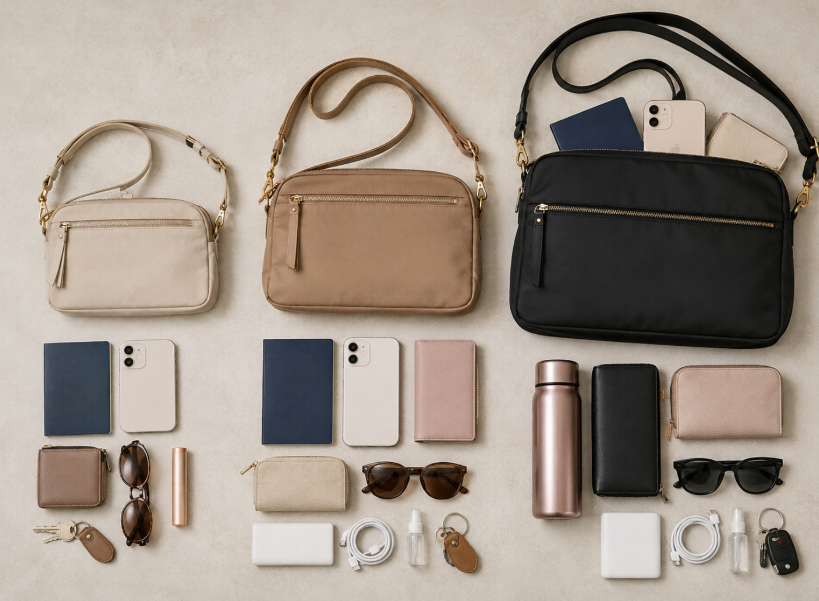
Size and carrying capacity come first. The bag should hold your everyday travel items without forcing everything into one large compartment. A phone, passport, cardholder, sunglasses, small power bank and charging cable already use more space than many people expect. Once you add tissues, keys or a small cosmetic item, very small crossbody bags can become crowded.
The next issue is strap comfort. Strap width, edge finishing and adjustment range all affect how a bag feels. We often see attractive samples with straps that look perfectly proportioned when the bag is empty. Once 1.5 to 2 kg is placed inside, a thin strap may become uncomfortable. A slightly wider webbing or leather strap usually distributes the load better.
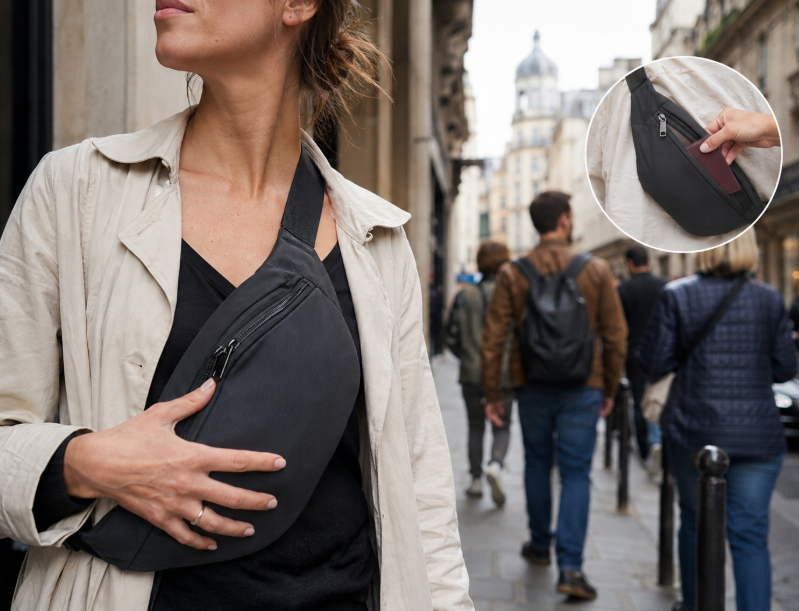
Security also needs practical thinking. You do not necessarily need complicated locks everywhere. A zipper opening facing the body, a discreet rear pocket and an internal passport compartment often give travelers useful protection without making the bag difficult to use. Dedicated anti-theft bags can go further with locking zipper systems, slash-resistant construction or protected straps.
Weight is another detail buyers sometimes underestimate. Heavy buckles, thick leather trim and oversized zipper pullers can make a compact bag surprisingly heavy. When we develop travel styles, I prefer to check the empty bag weight before adding decorative hardware. A lightweight shell gives the customer more usable carrying capacity.
Durability should be judged as a complete system. Strong fabric means little when the strap attachment is weak. A durable travel bag needs suitable face fabric, reinforcement at load-bearing areas, secure stitching and dependable zippers working together.

2. 7 Best Travel Crossbody Bags for Women
There is no single crossbody bag that works best for every trip. The seven designs below solve different travel problems.
| Crossbody Bag Type | Best For | Main Advantage |
|---|---|---|
| Lightweight Nylon Crossbody | General travel | Low weight and easy care |
| Anti-Theft Crossbody | Busy cities | Better security |
| Small Crossbody Purse | Minimal packing | Compact everyday carry |
| Multi-Compartment Crossbody | Airports and long trips | Better organization |
| Waterproof Crossbody | Rain and outdoor travel | Weather protection |
| Leather Crossbody | City and business travel | Refined appearance |
| Convertible Crossbody | Mixed itineraries | Multiple carrying styles |
1. Lightweight Nylon Crossbody Bag — Best Overall for Travel
If I had to choose one structure for general travel, lightweight nylon would be my starting point. Nylon gives manufacturers enough strength to create a relatively light shell, and it works well with soft constructions that sit comfortably against the body.
This type is useful at airports, during city sightseeing and on casual weekend trips. A medium main compartment, one front quick-access pocket and one protected rear pocket are often enough. More pockets do not automatically make the design better.
Fabric density and finishing matter. Thin nylon can feel cheap if the backing, lining and stitching do not support it. Higher-spec nylon combined with a suitable coating can create a much cleaner product while keeping weight controlled.
If you are comparing nylon with other common bag fabrics, our guide to canvas vs. nylon bags explains the difference in structure, weight and typical applications.
2. Anti-Theft Crossbody Bag — Best for Security
An anti-theft crossbody bag makes sense when the traveler expects crowded metro systems, tourist areas or busy transport hubs.
The useful features are usually less dramatic than marketing images suggest. I would first look for a body-side zipper pocket, controlled main opening, sturdy strap attachment and zipper pulls that are difficult to open accidentally. More technical designs may add locking zipper hardware, cut-resistant layers, protected straps or RFID-blocking pockets.
Products from specialist travel brands already use features such as locking zippers, protected straps and RFID compartments, which shows how strongly security has become linked with this category.
One manufacturing detail deserves attention: adding several anti-theft layers can make a small bag stiff and heavy. The development team needs to balance security with comfort. If the bag feels like a protective case against the hip, the traveler may stop using it after the first day.
3. Small Crossbody Purse — Best for Minimalist Travelers
Some travelers really only need a phone, passport, wallet and room key. In that situation, a compact crossbody purse can be better than carrying unused space all day.
Small does not mean every dimension should be reduced. The opening still needs enough width for the hand to enter comfortably. The gusset needs enough depth to accommodate a phone and wallet without creating a hard rectangular shape.
We sometimes increase the bag width slightly while keeping the depth controlled. That gives the user more usable surface area without making the purse project too far from the body.
A small bag also benefits from fewer internal dividers. Three thick pocket layers inside a compact shell can consume a surprising amount of usable volume.
4. Multi-Compartment Crossbody Bag — Best for Organization
This is one of the most practical choices for airport travel. Passports, boarding passes, power banks, charging cables, cash and earphones are easier to manage when they do not share one deep compartment.
The important word here is usable. A pocket that looks impressive in a specification sheet may be too narrow once the bag is assembled.
When we review prototypes, I like to test compartments with real objects. Can a passport slide in without catching the zipper tape? Does a power bank make the front panel bulge? Can the phone be removed with one hand? These simple checks reveal much more than counting pockets.
Try to separate high-frequency items from items you want to protect. The phone can sit in an easy-access section, while the passport and wallet stay closer to the body.
5. Waterproof Crossbody Bag — Best for Outdoor and Rainy Trips
“Waterproof” needs careful wording because material water resistance and complete bag waterproofing are not the same thing.
Nylon or polyester can receive PU, TPU or other water-resistant treatments. That helps the face fabric deal with light rain and splashes. Water can still enter through normal stitching lines, zipper openings and seams.
A truly waterproof construction usually needs more work, such as coated materials, waterproof zippers and seam sealing or welding. That changes the manufacturing process and often changes the appearance of the bag as well.
Most city travelers do not need a fully waterproof crossbody. A water-resistant fabric, protected zipper construction and sensible internal lining are usually more practical.
Brands using recycled polyester or nylon should also verify any environmental claims made for their material. Textile Exchange’s RCS and GRS standards provide third-party frameworks for recycled material content and chain of custody.
6. Leather Crossbody Bag — Best for Stylish City Travel
Leather changes the character of the bag. A nylon design usually feels sporty or casual; leather can move easily between sightseeing, restaurants, business meetings and evening use.
The trade-off is weight. Full-grain or other substantial genuine leather can make even a small crossbody noticeably heavier. Leather thickness should match the structure. Using thick leather everywhere does not automatically create a better bag.
You can combine leather exterior panels with lighter lining and carefully selected reinforcement. The bag keeps its shape without becoming unnecessarily rigid.
PU leather can be useful when consistent color, easier cleaning and controlled production are priorities. Genuine leather offers a different hand feel and aging character, but natural grain and color variation must be accepted during production.
If you are developing this category for a collection, our complete guide to custom leather handbags covers more of the material and construction decisions behind leather products.
7. Convertible Crossbody Bag — Best for Versatile Travel
Convertible styles work well when one trip includes several situations. A traveler may wear the bag crossbody during the day, shorten the strap for shoulder carry at dinner, or change it to a sling configuration during outdoor activities.
The idea sounds easy. The hardware layout is where the design succeeds or fails.
Attachment points need to work in every intended carrying position. A bag that hangs correctly as a shoulder bag may tilt forward when converted to crossbody carry. Detachable hooks can also twist if their size does not match the D-ring.
We normally check each carrying mode with weight inside the bag rather than judging an empty prototype. That exposes balance problems very quickly.
A good convertible bag should feel like two useful bags in one, not one good bag with a second carrying method added for marketing.
3. Which Travel Crossbody Bag Size Is Best?
The correct size depends on what you want close to your body rather than what you pack for the whole trip.
| Size | Typical Items | Good Travel Use |
|---|---|---|
| Small | Phone, passport, cards, keys | Minimal travel and evenings |
| Medium | Phone, passport, wallet, power bank, sunglasses | Most sightseeing and city trips |
| Large | Essentials plus small bottle, compact umbrella or camera | Longer days away from the hotel |
Small Crossbody Bags work well when the bag acts almost like an oversized wallet. The main limitation is depth. Once several rigid objects overlap, the bag becomes difficult to close.
Medium Crossbody Bags are the safest choice for most women. They offer enough room for travel essentials without becoming another piece of luggage. This is also the size range where internal organization becomes genuinely useful.
Large Crossbody Bags can carry much more, but strap design becomes more important. Extra capacity encourages users to add weight. A wider strap, stronger attachment and reinforced base may be needed.
Do not select dimensions from appearance alone. Build your packing list first. If you are developing a product rather than buying one, place those actual objects inside the first prototype before approving the final dimensions.
4. Best Materials for Women’s Travel Crossbody Bags
Material affects weight, appearance, cost structure, durability, cleaning and even what type of hardware feels appropriate.
| Material | Weight | Water Resistance Potential | Appearance | Best Use |
|---|---|---|---|---|
| Nylon | Low | High with coating | Sporty, technical | General travel |
| Polyester | Low–Medium | Good with coating | Versatile | Everyday travel |
| PU Leather | Medium | Good surface resistance | Clean, fashion-focused | City travel |
| Genuine Leather | Medium–High | Varies | Premium, natural | Business and city travel |
Nylon is one of my preferred materials for lightweight travel Crossbody Bags. It can handle regular movement well and works with both soft and more technical constructions.
Polyester gives buyers a wide selection of fabric weights, textures and finishes. It is often chosen for value-focused travel collections and can be developed with water-resistant coatings.
PU leather works when the brand wants a cleaner fashion appearance with relatively predictable surface consistency. Quality varies widely. Buyers should check backing strength, flex performance, surface adhesion and how the material behaves around folded edges.
Genuine leather suits products where touch and appearance carry more weight in the buying decision. Leather selection should account for thickness, temper, grain consistency and finishing rather than relying only on the leather name.
Textile safety can also enter the procurement discussion, especially when a brand has its own restricted-substance requirements. OEKO-TEX® STANDARD 100 covers textiles tested for harmful substances from yarn through finished products. Buyers should request and verify relevant certification rather than assuming a material or supplier is certified.
5. What Features Should You Look for in a Travel Crossbody Bag?
The best features are usually the ones you stop noticing after using the bag for a few days.
Start with the zipper. It may be opened dozens of times every day during a trip. Smooth movement, suitable slider size and correct zipper installation matter more than a decorative puller. Brands developing higher-spec products can review fastening options directly through manufacturers such as YKK, whose product range includes different zipper and fastening systems for travel applications.
Look at strap adjustment next. The adjustment range needs to suit different heights and clothing layers. Winter jackets change the required strap length more than people expect.
Interior compartments should have a job. A passport pocket needs to fit a passport after seam allowance is taken into account. A phone pocket should accommodate current phone dimensions. A tiny decorative pocket that fits almost nothing only adds material and sewing work.
Water resistance is useful, but ask how it is achieved. A coated shell fabric helps. An exposed zipper or unsealed seam can still become an entry point for water.
Pay attention to hardware weight as well. Large metal buckles look premium in isolation but can pull a lightweight bag out of balance. Hardware size should match the scale of the bag.
Reinforcement is the last piece I would check. Strap roots and D-ring tabs carry repeated loads. Inside these areas, reinforcement material and stitch construction are often doing more work than the exterior fabric.
6. How to Choose the Right Crossbody Bag for Different Trips
A bag becomes easier to choose once you start with the trip instead of the product.
During air travel, organization matters most. A medium multi-compartment crossbody gives you one place for documents, phone, charging accessories and cards without forcing you to open your carry-on every time you need something.
For European and city travel, I would give more weight to security and comfort. A close-fitting anti-theft design with a protected rear compartment is useful in busy streets and public transportation.
During walking and sightseeing trips, weight moves higher on the list. A lightweight nylon crossbody with an adjustable strap is often more comfortable than a structured fashion handbag after several hours.
For a business trip, the bag may need to move from the airport to meetings and dinner. A clean leather or high-quality PU crossbody can work better because it does not look overly technical.
Weekend travel sits somewhere between those situations. A medium convertible design gives the user more flexibility without requiring several handbags.
If you are planning a wider luggage or travel collection, you can also look at our custom travel bag development options to see how material, internal layout and branding can be adapted for different markets.
7. Custom Travel Crossbody Bags for Brands and Retailers
Developing Custom Crossbody Bags starts with a question we ask buyers quite often: who will use the bag, and what will they put inside?
That answer affects almost every decision that comes later.
A travel-focused style may need nylon or polyester, lighter hardware, security pockets and a wider adjustable strap. A fashion travel collection may move toward PU or genuine leather, cleaner panels and more refined hardware. Trying to combine every feature into one style usually creates a heavy, expensive-looking product that does no single job particularly well.
The structure should be defined early. Decide whether you want a soft bag that collapses naturally against the body or a semi-structured shape that keeps its silhouette. Reinforcement, foam, lining and edge construction will change accordingly.
Next comes the internal layout. Give each compartment a purpose. Brands can specify passport pockets, phone sleeves, key clips, card sections, removable pouches or protected rear pockets. We normally recommend confirming these functions during sampling rather than leaving them until bulk production.
The strap system deserves its own review. Width, material, buckle position, hook direction and attachment strength influence both comfort and appearance. A removable strap also introduces extra hardware that needs to be tested.
Logo options depend on the material. Embossing works naturally with many leather and PU constructions. Woven labels, rubber patches, embroidery, metal logos and screen printing suit different textile products. The logo method should be chosen with the bag rather than added after the whole design is complete.
Brands making Custom Crossbody Bags should also inspect zipper operation, strap loading, seam strength, hardware finish, color consistency and finished dimensions before approving production. A golden sample gives both the buyer and factory a clear physical reference.
Our Huadu, Guangzhou manufacturing operation has been producing different bag categories since 2011, including handbags, crossbody bags and travel products, with OEM and ODM development available for overseas customers.
The goal is not to add as many features as possible. It is to build a crossbody bag that feels natural when someone actually wears it.
8. Conclusion
The best travel crossbody bag for women depends on the trip. Lightweight nylon is a strong all-around choice. Anti-theft designs fit crowded city travel. Small purses suit minimalist packing, while multi-compartment styles make airport days easier. Water-resistant bags work better around unpredictable weather, leather fits more polished trips, and convertible designs give travelers more flexibility.
When you compare Crossbody Bags, look beyond the outside shape. Check how the bag feels after it is loaded. Open the zipper with one hand. Adjust the strap. Put a passport and phone into the pockets they were designed for. These small tests usually tell you more than a long product description.
For brands, retailers and importers developing Custom Crossbody Bags, material choice is only the beginning. Strap construction, reinforcement, lining, compartments, zipper selection, hardware and real-use testing all affect the finished product.
Hetebag is a bag manufacturer based in Huadu, Guangzhou, China, with more than 15 years of industry experience and cooperation across different manufacturing resources. We support OEM and ODM development for crossbody bags, travel bags and other custom bag categories. If you are looking for a bag manufacturer for a new collection, you can leave your contact information through our website. We are always happy to discuss your idea and see how we can develop it together.
Frequently Asked Questions
What fabric specification should I use for a custom travel crossbody bag?
There is no single specification that suits every product. Lightweight nylon or polyester works well for everyday travel styles, while higher-density fabrics may be better where abrasion resistance and structure matter more. Buyers should define the intended bag weight, hand feel, coating, lining and performance requirements before selecting the final fabric. Denier alone does not tell you the complete quality level.
How can I make a crossbody bag more water resistant?
Start with a coated nylon or polyester shell, then review the zipper and seam construction. Water-resistant fabric cannot stop water entering through exposed zipper teeth or normal needle holes. Higher protection may require water-resistant zippers, storm flaps, seam tape or welded construction. The required solution depends on whether the product needs light-rain resistance or true waterproof performance.
What should buyers test before approving bulk production of Custom Crossbody Bags?
Check finished dimensions, loaded appearance, zipper operation, strap adjustment, strap attachment strength, seam quality, pocket usability, hardware finish, color consistency and logo placement. Put real travel items inside the sample as well. A technically correct pocket can still be inconvenient if the opening is too narrow in actual use.
Which zipper is better for a travel crossbody bag?
Coil zippers are common on lightweight textile travel bags because they are flexible and work well around curved openings. Metal zippers can fit leather and fashion-focused styles where appearance carries more weight. Zipper size, tape, slider, puller and installation method should all match the bag structure. The brand name of the zipper alone does not compensate for poor sewing or an unsuitable specification.
How many compartments should a travel crossbody bag have?
Most designs benefit from a clear main compartment, one or two quick-access areas and a more protected pocket for important items. Adding too many partitions to a small bag reduces usable capacity and increases weight. Define what each pocket should hold before deciding how many pockets to include.
Can a manufacturer customize crossbody bag materials, straps, compartments and logos?
Yes. OEM and ODM Custom Crossbody Bags can usually be developed with different shell materials, linings, dimensions, strap systems, zipper configurations, compartments, hardware, colors and branding methods. A detailed specification or reference sample helps the factory understand the intended structure, while prototype sampling lets both sides correct fit and construction before mass production.


