
 English
  Italian
  French
  German
  Spanish
  Arabic
 Bag development is changing. Brands still follow color and fashion trends, but appearance alone is no longer enough to support a successful product. Buyers also want bags that feel good, carry comfortably, last through regular use, and remain practical after the first season.
The strongest 2027 OEM bag trends point toward longer product lifecycles, tactile materials, lighter construction, flexible storage, and recognizable brand details. These trends affect more than the design sketch. They influence material sourcing, pattern development, sampling time, minimum order quantities, quality control, and production consistency.
I am Evan, and I have worked in the bag manufacturing industry for more than 15 years. From a factory perspective, the best trend is not always the newest idea. It is the idea that can be turned into a stable, manufacturable product for the right customer. This guide explains how brands can make that decision before committing to bulk production.
1. What Is Driving OEM Bag Development in 2027?
From Short-Lived Trends to Longer Product Lifecycles
Many brands are moving away from products designed for one short sales period. A more useful approach is to build a core bag that can stay in the collection while colors, materials, straps, and surface details change.
One way to judge product longevity is to review how much of the design depends on a passing visual trend. If a bag loses its appeal when one decoration is removed, its lifecycle may be limited. If the shape, storage, comfort, and construction still work without that detail, the design has a stronger foundation.
Before sampling, ask three questions:
- Does the bag solve a clear carrying need?
- Can it be updated without changing the complete pattern?
- Will its main material survive the expected use frequency?
A practical target is to keep the main body pattern unchanged for at least two collection updates. New colors, webbing, zipper pulls, or labels can then refresh the product without requiring a complete redevelopment.
Why Material and Construction Matter More to Buyers
Customers often judge quality through touch and use. They notice whether the fabric feels thin, the zipper catches, the base bends, or the shoulder strap twists under load. These details affect returns and reviews more directly than a decorative feature.
Brands should define an expected load before choosing materials. A small handbag may be tested with 2–3 kg, while a commuter backpack may need testing at 8–12 kg, depending on its size and intended use. Load the sample, hang or carry it, and inspect the handles, shoulder strap anchors, zipper ends, base, and seams after repeated use.
The product is not approved simply because the sample looks correct on a table. It should keep its shape and remain comfortable when filled.
Turning Market Trends Into Manufacturable Bag Designs
A trend image is not a technical specification. Factories need dimensions, material thickness, construction lines, hardware sizes, seam types, reinforcement locations, and acceptable tolerances.
Start by separating the design into three groups:
| Design group | Examples | Development risk |
|---|---|---|
| Core construction | Shape, opening, base and strap attachment | High; affects patterns and assembly |
| Functional components | Pockets, laptop sleeve and removable pouch | Medium; affects material use and sewing time |
| Visual identity | Colors, logo, lining and metal finish | Low to high, depending on customization |
Approve the core construction first. Decorative options should be added only after the bag carries its intended load correctly. This prevents brands from approving an attractive sample that later needs major structural changes.
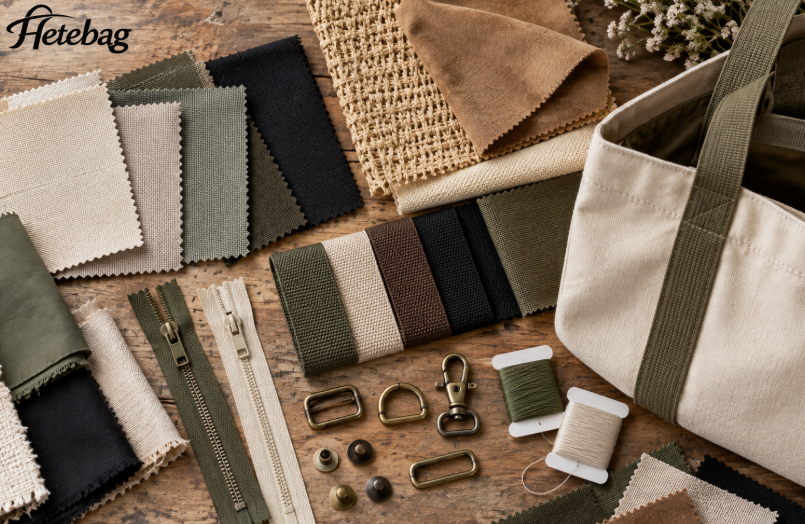
If you are still selecting a direction for your collection, start with our overview of bag styles and materials trending in 2027 before finalizing the production specifications.
2. Key Bag Materials Brands Should Consider for 2027
Recycled Polyester, RPET and Recycled Nylon
Recycled polyester, often called RPET, remains useful for backpacks, totes, travel bags, cosmetic bags, and casual accessories. Recycled nylon can provide a softer hand feel and good tear resistance for lightweight or technical designs.
The word “recycled” does not confirm traceability by itself. If a brand plans to make a certified recycled-content claim, it should check the scope certificate and transaction documentation that applies to the supplier and material. The Global Recycled Standard tracks recycled materials through the supply chain and includes requirements beyond a basic material declaration.
For initial screening, compare the fabric weight, weave density, backing, coating, hand feel, color, and recycled-content documentation. Two fabrics described as “300D RPET” may behave differently because their yarn, weave, coating, and finishing processes are not the same.
Textured Materials: Suede, Woven Fabrics and Raffia Effects
Texture is expected to remain an important part of 2027 bag development. Brushed surfaces, canvas textures, woven panels, soft suede effects, raffia-inspired materials, quilted fabrics, and washed finishes give a bag more visual depth without requiring a complicated shape.
These materials create production risks that are easy to overlook. A brushed surface may show different shades when rubbed in opposite directions. Loosely woven fabric can fray near the seam. Raffia-effect material may crack when folded too tightly.
Cut two sample pieces from different fabric areas and compare them under daylight and indoor lighting. Rub each surface with a clean white cloth, both dry and slightly damp. Check loose fibers, color transfer, surface whitening, and edge damage. The factory should also mark the material direction during cutting so adjacent panels do not appear to have different colors.
Bio-Based and Lower-Impact Material Alternatives
Bio-based coatings, plant-fiber blends, cork, washable paper, and lower-impact synthetic alternatives may support a specific collection story. Their performance still needs to match the product’s real use.
A material should not be approved based only on its composition. Test folding, abrasion, water contact, odor, adhesion, and aging. For coated material, fold the same area repeatedly and inspect it for cracking or whitening. For a washable or natural-fiber surface, check dimensional change and color movement after exposure to moisture.
Brands should also distinguish between material content, chemical safety, and finished-product certification. They are separate claims. The OEKO-TEX STANDARD 100 applies to textiles tested for harmful substances, but a buyer must still verify whether the certificate covers the exact article, component, and current validity period.
You can review common options in HeteBag’s guide to custom bag materials, then request physical swatches before selecting the final construction.
| Material direction | Suitable applications | Checks before approval |
|---|---|---|
| RPET polyester | Totes, backpacks and travel bags | Traceability, abrasion, coating and colorfastness |
| Recycled nylon | Lightweight bags and packable designs | Tear strength, seam slippage and water resistance |
| Canvas or woven fabric | Lifestyle totes and casual handbags | Shrinkage, fraying and batch variation |
| Suede-effect fabric | Fashion handbags and panels | Directional shading, rubbing and stain resistance |
| Bio-based coated material | Fashion and lifestyle collections | Flexing, hydrolysis risk, adhesion and claim evidence |
3. Bag Construction Trends: Soft Shapes, Structure and Everyday Function
Slouchy and Soft-Structured Silhouettes
Soft and relaxed shapes can look simple, but they require controlled construction. If the body fabric, lining, and reinforcement are all too soft, the bag may collapse around the opening. If the interlining is too stiff, the intended drape disappears.
During sampling, place the empty bag upright and observe the opening, side panels, and base. Next, fill it to about 70% of its planned capacity. The bag should show the intended soft shape without twisting, folding sharply, or pulling the zipper into a curve.
Factories can adjust the result through fabric weight, foam thickness, non-woven interlining, binding, seam position, and panel grain direction. These details should be written into the specification instead of left to visual judgment.
Lightweight Construction Without Sacrificing Durability
Reducing weight does not mean removing reinforcement everywhere. A better method is to remove bulk from low-stress areas while keeping support at load-bearing points.
Calculate the weight of the finished sample and compare it with its usable capacity. For example, if two prototypes have the same size and load rating, the lighter version may be better only if it passes the same seam, strap, and shape checks.
Inspect the sample after a loaded hanging test. Watch for stretched needle holes, seam opening, distorted webbing, bent hardware, and fabric tearing around the strap anchors. A lighter lining or thinner foam may be acceptable, but reinforcement should remain under handles, D-rings, buckles, and shoulder strap joints.
Reinforced Bases, Panels and Load-Bearing Areas
The base determines how the bag behaves when placed on a surface. It may need a removable board, foam layer, reinforced fabric, protective feet, or an extra base panel.
Measure base deformation before and after loading. Place the filled bag on a flat surface for 24 hours, unload it, and allow it to recover. If the base remains curved, corners twist, or panels retain deep folds, the reinforcement needs adjustment.
For straps, the stitch pattern should spread the load beyond one short seam. Box stitching, cross stitching, bartacks, folded webbing ends, or internal reinforcement patches may be used according to the material and appearance.
4. Functional Features Shaping 2027 OEM Bag Designs
Modular Compartments and Removable Components
Modern bag organization is becoming more flexible. Removable pouches, dividers, bottle holders, key leashes, and adjustable compartments allow one bag to support several use cases.
Every feature should answer a real need. Before adding an internal component, define what it holds, its approximate dimensions, and how often the user will access it. A removable pouch that blocks the main opening or adds unnecessary weight does not improve the product.
Test the compartment layout with physical objects rather than measurements alone. Load the prototype with a phone, charger, bottle, wallet, keys, and other intended items. Check whether the user can reach them without emptying the bag.
Convertible Straps and Multi-Way Carrying Options
Convertible designs may change between shoulder, crossbody, backpack, and hand-carry modes. The connection points must remain comfortable and balanced in each mode.
Load the bag and test every carrying position. It should not tilt sharply, press hardware against the body, or leave unused straps hanging near the ground. Strap adjusters should hold their position after repeated pulling.
Detachable hooks need enough clearance to rotate without rubbing against nearby seams. The factory should confirm the inside width of the hook and the thickness of the D-ring or webbing loop. A correct-looking combination can still bind during use if the clearance is too small.
Device Protection, Security and Travel-Friendly Details
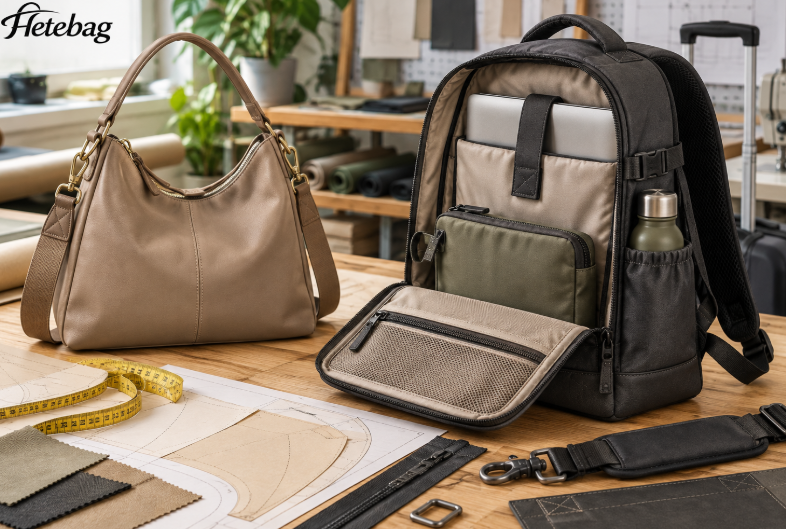
Laptop sleeves, hidden zipper pockets, trolley sleeves, anti-scan pockets, water bottle sections, and covered openings are increasingly common in commuter and travel products.
A laptop compartment should be tested with the actual device size, not only its screen measurement. Allow room for the device body, protective case, seam allowance, and padding. The bottom of the sleeve should sit above the bag base or include impact protection.
For trolley sleeves, measure the usable opening after sewing. Test it on more than one luggage handle if the product is intended for general travel. Hidden pockets should be reachable by the user but difficult to access from behind.
These details are especially relevant when developing custom backpacks and travel-oriented collections.
5. Customization Options That Create Brand Recognition
Custom Hardware, Zippers and Metal Finishes
Hardware can make a standard shape feel specific to one brand. Options include custom zipper pulls, metal badges, buckles, locks, rivets, D-rings, and engraved components.
A new metal part may require a mold. Before authorizing tooling, confirm the drawing, dimensions, attachment method, surface finish, logo direction, edge radius, and material. The approval should cover both appearance and function.
For zippers, test the complete installed opening. Pulling a loose zipper sample is not enough because fabric tension and curves affect performance. Open and close the finished bag repeatedly while loaded. Record catching, slider movement, tooth separation, and tape distortion. YKK notes that zipper quality is managed through defined inspections and uniform standards across its production sites, which shows why component testing should be treated as a measurable process rather than a brand-name assumption (YKK Quality).
Logo Techniques, Linings and Signature Color Systems
The correct logo method depends on the surface, order quantity, level of detail, and expected wear.
| Branding method | Works well for | Main approval check |
|---|---|---|
| Embossing or debossing | PU, leather and patches | Depth, edge clarity and recovery |
| Screen printing | Flat fabric panels | Adhesion, opacity and rubbing |
| Embroidery | Canvas, nylon and woven panels | Stitch density and fabric puckering |
| Metal badge | Handbags and premium collections | Finish, attachment and sharp edges |
| Woven label | Linings, seams and soft bags | Legibility and edge comfort |
| Custom lining print | Strong internal brand identity | Repeat alignment and colorfastness |
Color approval should use a physical standard, such as a Pantone reference or approved swatch. Digital screens are not reliable enough for bulk matching. Define the permitted shade range before production, especially when fabric, webbing, zipper tape, thread, and PU trim must appear in one color family.
Woven Panels, Quilting, Embroidery and Surface Treatments
Surface techniques can create recognition without developing a completely new bag shape. Quilting changes both appearance and stiffness. Embroidery adds thread weight and may pull the panel inward. Woven structures can create irregular edges or different tension across the bag.
Approve a complete decorated panel before making the final sample. A small logo swatch will not reveal how the material behaves across a large area.
Measure embroidery placement from fixed seams rather than from a raw cut edge. For quilting, specify the line spacing and allowed shift. For all-over prints, confirm the repeat size, direction, seam matching expectations, and whether pattern placement is random or controlled.
Brands comparing these options can also review HeteBag’s custom logo bag methods before preparing artwork.
6. How 2027 Trends Affect Sampling, MOQ and Production
Which Customizations Require New Molds or Special Tooling?
Custom metal badges, buckles, locks, rubber patches, shaped zipper pulls, molded handles, and some plastic components may need new tooling. Tooling adds an approval stage because the factory must first confirm a drawing, then a mold sample, finish sample, and production component.
Full-surface printing, complex weaving, shaped body panels, and special quilting may not require a metal mold, but they still need dedicated setup and pre-production testing.
A useful rule is to ask whether the component already exists in the supplier’s standard catalog. If its dimensions, shape, logo, or attachment method change, treat it as a custom part until the supplier confirms otherwise.
How Material Availability Influences MOQ and Lead Time
Material MOQ and bag MOQ are not always the same. A factory may be able to sew a smaller number of bags, but the mill may require more fabric for a custom color, coating, print, or weave.
Ask the supplier to separate four quantities:
- Material minimum
- Component minimum
- Practical production minimum
- Quantity that can be repeated in the next order
For a test collection, stock fabric, existing color cards, standard zipper sizes, and available hardware reduce risk. A custom material becomes more practical after demand is proven.
Allow more development time when several custom processes depend on one another. For example, the body color may need approval before the matching zipper tape, thread, webbing, and metal finish can be finalized.
Preventing Differences Between Samples and Bulk Production
The approved sample must be converted into written production controls. Otherwise, the bulk order may use a visually similar material or construction that behaves differently.
Create a sealed specification pack containing the approved sample, material swatches, color standards, artwork, measurements, hardware references, stitching details, packaging, and acceptable tolerances.
A pre-production sample should use bulk-intended materials whenever possible. During production, check the first completed units before the whole order is assembled. Final inspection should use a sampling plan agreed upon with the buyer, with defects separated into critical, major, and minor groups.
When a material lot changes, repeat color, hand-feel, coating, and performance checks. Previous approval should not automatically cover a new batch.
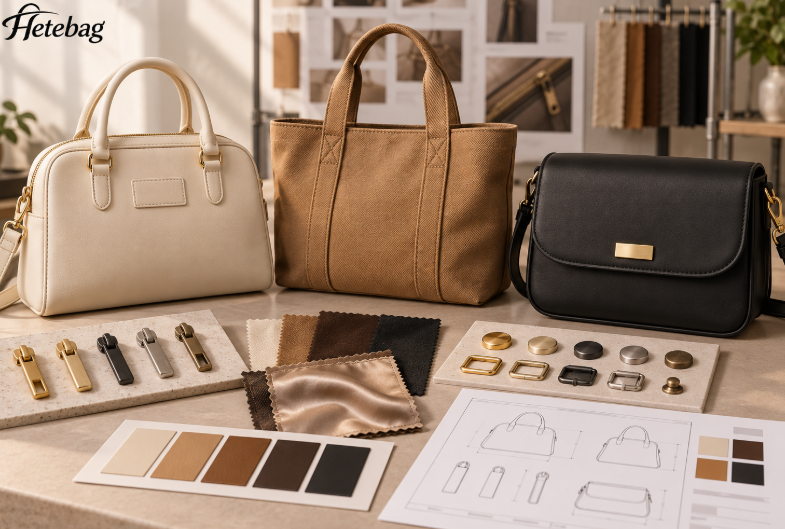
7. How to Build a Production-Ready OEM Bag Collection With HeteBag
Define the Customer, Use Case and Target Positioning
Start with the user, not the decoration. Explain who will carry the bag, what they will place inside it, where they will use it, and how they expect it to feel.
For an initial review, provide reference images, target dimensions, material preferences, colors, logo files, internal layout, hardware details, packaging needs, estimated quantity, and destination market. Reference images should be marked to show what you want to keep and what you want to change.
If you are developing a fashion-led collection, HeteBag’s custom handbag manufacturing page shows the types of design information that can be discussed during an OEM project.
Compare Materials and Approve a Functional Prototype
Ask for swatches when touch, color, thickness, or texture affects the product. Shortlist two or three realistic materials rather than requesting every available option.
The first prototype should confirm size, shape, opening, storage, carrying comfort, and assembly. Load it with the intended items and use it in each planned carrying mode. Record changes in one revision sheet so that comments on dimensions, materials, hardware, and workmanship do not conflict.
If the first sample needs major pattern changes, request another functional sample before approving decoration or packaging.
Confirm Specifications Before Bulk Production
Once the design works, confirm the production details in writing. The final specification should include measurements and tolerances, material codes, approved colors, lining, thread, reinforcement, hardware, logo placement, packaging, labels, and inspection requirements.
The production path normally moves through material confirmation, prototype development, revisions, a pre-production sample, bulk cutting and sewing, in-line checks, and final inspection. The exact timeline depends on material availability and the number of custom processes.
At HeteBag, the purpose of this process is to turn the selected trend into a repeatable product—not merely a good-looking sample. Brands can contact HeteBag with a design pack or reference concept for an initial manufacturability review.
8. Conclusion
The most useful 2027 OEM bag trends combine tactile materials, controlled soft structures, lower weight, adaptable storage, and clear brand identity. A trend only becomes commercially useful when the material, pattern, reinforcement, hardware, and customization can be reproduced in bulk.
Begin with the customer and use case. Test the material beyond its appearance, approve the bag under a realistic load, and document every detail that must remain consistent. Existing materials and standard hardware are often suitable for early market testing. Custom colors, molds, woven structures, and all-over prints make more sense when the design and expected volume justify the added development work.
A production-ready collection is not built through trend selection alone. It comes from combining a relevant idea with clear specifications, physical testing, controlled revisions, and realistic sourcing decisions.
Frequently Asked Questions
What information does a factory need to develop an OEM bag sample?
Provide reference images or drawings, finished dimensions, target material, colors, logo artwork, pocket layout, lining, hardware, strap design, packaging, expected quantity, and destination market. Mark which elements are fixed and which can be adjusted. If the material is undecided, explain the desired hand feel, structure, finish, and use environment.
How can I check whether an RPET or recycled nylon claim is valid?
Request the material composition, supplier documentation, scope certificate, and transaction evidence relevant to the order. Check that the certificate is current and that its product scope covers the material being purchased. A generic certificate from an unrelated supplier or an expired document does not verify your production batch.
How many samples are usually needed before bulk production?
The number depends on complexity. A standard bag made with available materials may move from one corrected prototype to a pre-production sample. A design involving a new pattern, custom hardware, printed lining, special material, or several carrying modes may need additional rounds. Move to production only after function, measurements, materials, colors, branding, and construction are approved together.
How do I prevent a soft bag from collapsing too much?
Test different combinations of shell fabric, backing, foam, non-woven interlining, binding, and base reinforcement. Load the sample to its intended capacity and inspect the opening, side panels, corners, and bottom. The right construction should keep the planned relaxed look without twisting, sharply folding, or making the opening difficult to use.
Which customization options are best for a smaller test order?
Available material colors, standard hardware, woven labels, screen printing, embroidery, and existing zipper pulls are usually easier to test than newly molded metal parts, custom-dyed fabric, special weaving, or all-over printed material. Confirm actual availability with the manufacturer because minimums depend on the selected material and component suppliers.
How should I inspect the bulk order against the approved sample?
Use the approved sample and specification pack as the reference. Check measurements, color, material, stitching, zipper function, hardware finish, logo position, internal layout, reinforcement, cleanliness, and packaging. Define critical, major, and minor defects before inspection. If the bulk material comes from a new lot, repeat shade and performance checks instead of relying only on the original sample approval.


