
 English
  Italian
  French
  German
  Spanish
  Arabic
 Finding a ladies’ bag manufacturer in China is not difficult. Finding one that understands fashion-bag construction, can reproduce an approved sample in bulk, and communicates clearly when something goes wrong takes much more work.
I have worked around bag development and manufacturing for many years, and one thing becomes clear after enough projects: the factory that looks strongest on a supplier list is not always the best factory for your collection. The better question is whether its materials, sample room, production experience, quality system, and order size fit the bags you plan to make.
China has a deep handbag supply chain, especially across Guangdong. Huadu in Guangzhou remains an important suitcase and bag production area, with many producers concentrated around Shiling, according to the Guangzhou municipal government. Dongguan and other nearby manufacturing cities also support leather goods, hardware, packaging, machining, and export production.
This guide looks at ten ladies’ bag manufacturers with visible manufacturing or customization capabilities. Inclusion should not be treated as an independent factory audit or guarantee. You should still check samples, production records, compliance documents, references, and bulk-production standards before choosing any China Bag Manufacturer.
1. Why Source Ladies’ Bags from China?
The biggest advantage of sourcing ladies’ bags from China is not simply manufacturing capacity. The real advantage is the network behind the factory.
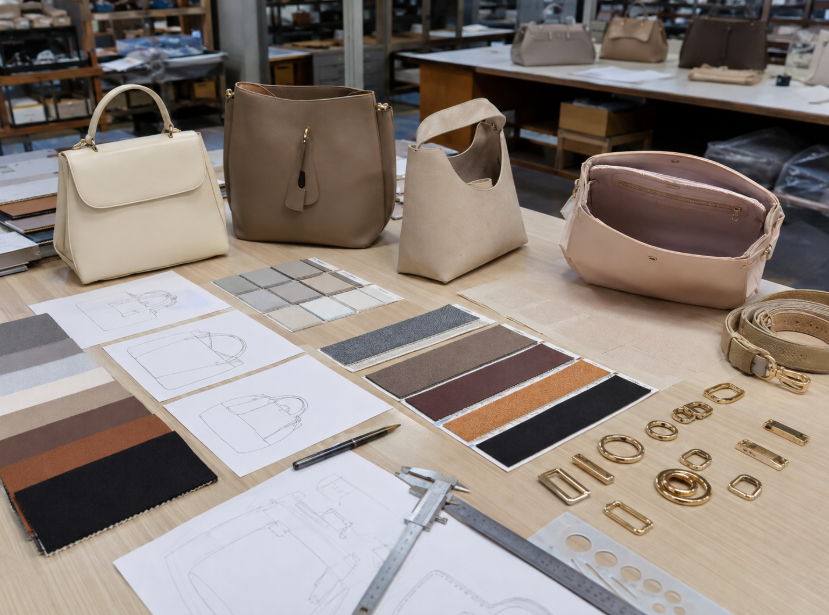
A handbag may require PU or genuine leather, lining fabric, reinforcement board, foam, thread, edge paint, zippers, magnetic closures, buckles, metal logos, chains, shoulder straps, dust bags, boxes, and printed packaging. Each part can come from a different specialist supplier.
When these suppliers are concentrated around major bag-manufacturing areas, samples can be adjusted more efficiently. If a buckle feels too heavy, a different mold or finish can be sourced. If PU grain looks too glossy, the material supplier can provide another surface. If the bag collapses after loading, reinforcement can be changed without redesigning the whole product.
This is one reason Guangzhou has remained attractive to fashion-bag buyers. Public information from the Guangzhou government notes that many suitcase and bag producers in Huadu are concentrated in Shiling.
The same supply-chain depth also supports OEM and ODM development. Brands can start from complete tech packs, reference samples, sketches, existing factory styles, or combinations of these.
That flexibility matters most when you are developing several related products rather than buying one standard bag. A tote, shoulder bag, crossbody bag, and small clutch may share leather, hardware plating, lining, and logo details. One coordinated supply chain makes it easier to keep the collection visually consistent.
2. What Makes a Ladies’ Bag Manufacturer Reputable?
Factory size is easy to show in a presentation. Product understanding is harder to fake.
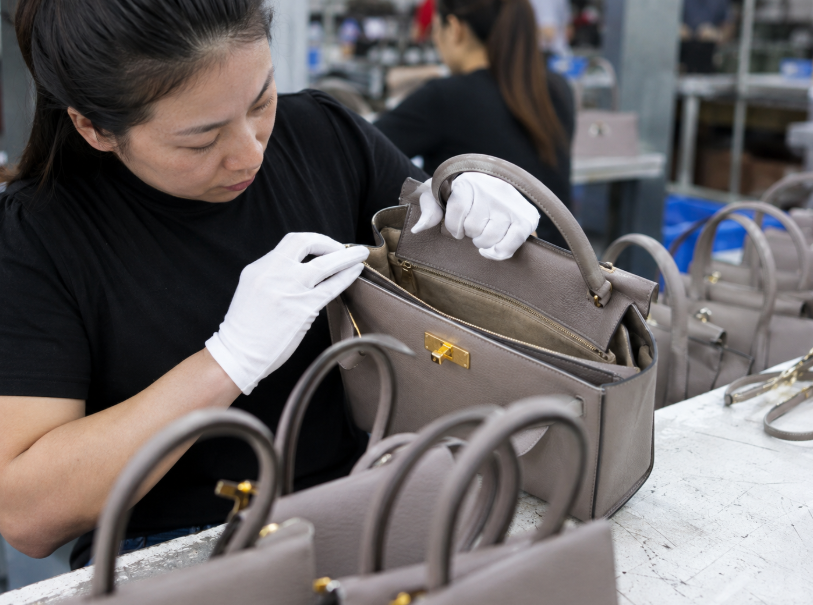
When I evaluate a Bag Manufacturer, I pay much more attention to what the sample room notices, what the merchandiser asks, and how the factory controls repeat production.
Manufacturing Experience and Product Specialization
A factory that mainly makes polyester backpacks may still be able to sew a handbag, but that does not mean it is the right women’s handbag manufacturer for a structured fashion collection.
Ladies’ bags involve different construction details. Edge painting needs clean layers. Handles need the right stiffness. Body panels need balanced reinforcement. Curves must remain symmetrical. Hardware placement needs to stay level. Soft bags need enough flexibility without looking loose.
Ask to see products that use construction similar to yours. If your design is a structured PU crossbody bag with painted edges and plated metal hardware, samples of canvas promotional totes tell you very little.
You can also review this buyer’s guide to high-quality handbag factories before preparing your supplier shortlist.
Sampling, Materials, and Quality Control
Never approve a ladies’ bag sample after checking only its overall appearance.
Run your fingers across the edge paint. Look at the corners under direct light. Open and close every zipper. Compare the left and right handle positions. Check whether the logo sits squarely against the center line.
PU and leather surfaces should also be inspected around folds, handles, zipper ends, and corners. These areas often reveal weaknesses earlier than flat panels.
Hardware needs similar attention. Put matching pieces beside each other and compare plating tone. Gold hardware from two batches can look noticeably different even when the supplier uses the same color name.
Zippers should be specified by type and performance rather than described only as “good quality.” Buyers who require branded fastening components can review the official YKK fastening product range when defining zipper requirements. YKK publishes different zipper and fastening options rather than treating every zipper as one interchangeable component.
The approved sample should become a production reference. Keep the material swatches, Pantone references, hardware finish, measurements, logo position, stitching details, lining, packaging, and acceptable tolerances together.
That reference is far more useful than a message saying, “Please make the bulk goods exactly like the sample.”
OEM, ODM, and Private Label Capabilities
OEM means the factory manufactures according to a design you already control. You may provide drawings, measurements, materials, artwork, construction details, and a reference sample.
ODM gives the manufacturer more involvement in product development. You may arrive with a concept, mood board, target shape, or rough sketch and need the supplier to help turn it into a manufacturable bag.
Private label usually starts closer to an existing product. Colors, logo, lining, hardware, labels, or packaging may be changed while the basic construction remains established.
Before choosing a supplier, confirm what “custom” really includes. Some factories can change only logos and colors. A capable custom handbag manufacturer may also support pattern development, structure changes, custom hardware, material sourcing, lining artwork, edge-paint colors, packaging, and new mold development.
3. 10 Reputable Ladies’ Bag Manufacturers in China
The manufacturers below have publicly visible handbag manufacturing, OEM, ODM, or private-label capabilities. Their suitability still depends on your product, quantity, material, quality level, and development requirements.
| Manufacturer | Main Focus | Useful When You Need |
|---|---|---|
| HeteBag | Custom ladies’ bags and broader bag categories | OEM/ODM development and multi-category collections |
| Hermin Fashion | Women’s fashion bags | PU handbags and fashion-focused development |
| J.D. Handbag Factory | Fashion handbags | Full-package handbag development |
| SLBAG | Ladies’ purses, wallets and handbags | Fashion-driven women’s bags |
| Gionar Leather | Leather goods | Mid-to-high-end leather handbag development |
| RONEER | PU, leather and custom bags | Women’s bags plus wider bag collections |
| Meyzy | Multi-category custom bags | OEM/ODM and structured product development |
| B.S. Bag Factory | Custom handbags | Leather, vegan leather and fashion bags |
| Uncle Nine Leather | Custom women’s bags | Fashion handbags and flexible development |
| Handbagio | Private-label handbags | Sustainable and alternative materials |
1. HeteBag — Custom Ladies’ Bag Manufacturer in Guangzhou
HeteBag is based in Huadu, Guangzhou and has been developing and manufacturing bags since 2011. Its public product range includes handbags, tote bags, travel bags, cosmetic bags, backpacks and related customized products, with OEM and ODM support for brands, distributors and wholesale buyers.
This makes it worth considering when a buyer needs more than one ladies’ bag style or wants a supplier that can coordinate different materials, accessories and product categories. Buyers developing their own collection can review its custom handbag manufacturing capabilities to understand the types of customization available.
2. Hermin Fashion — Women’s Handbag Manufacturer
Hermin Fashion focuses heavily on women’s bags and publicly describes itself as an OEM/ODM manufacturer in Guangzhou. Its sample collection includes PU shoulder bags, crossbody bags, purses and other fashion-oriented designs.
The specialization is useful for buyers who want a women’s handbag manufacturer rather than a general sewn-products supplier. When comparing samples, pay close attention to PU texture, edge finishing, hardware selection and construction because these details have a strong effect on the final appearance of fashion bags.
3. J.D. Handbag Factory — Full-Package Handbag Manufacturing
J.D. Handbag Factory describes itself as a branch of J.D. Leather Goods and supports custom orders including OEM, ODM and private label. Its parent operation publicly lists leather-goods manufacturing facilities in Dongguan, Sichuan and Cambodia.
It may suit brands that want development support rather than purchasing an existing wholesale handbag. Buyers should confirm which facility would actually make their product because production location can affect communication, material sourcing, compliance documentation and shipping arrangements.
4. SLBAG — Fashion Women’s Bag Manufacturer
SLBAG is a Guangzhou-based manufacturer focused on ladies’ purses, wallets and handbags. Its website describes more than 16 years of industry experience and emphasizes custom handbag manufacturing.
Its fashion orientation can be useful for brands working on shoulder bags, crossbody bags or other style-led collections. Buyers should still request comparable production samples rather than judging the supplier by showroom variety alone.
5. Gionar Leather — Leather Handbag Manufacturer
Gionar operates in Baiyun, Guangzhou and focuses on leather goods including handbags, backpacks, travel bags, briefcases and wallets. The company publicly states that it supports OEM and ODM projects, material customization, hardware development, logos and packaging.
This supplier deserves closer examination when genuine leather construction is central to the collection. Leather grading, panel selection, edge treatment, reinforcement and color variation should all be written into the approval standard before bulk production.
6. RONEER — PU and Leather Women’s Bag Manufacturer
RONEER is associated with Jiangmen Baijia Leather Products and produces handbags, crossbody bags, travel bags, backpacks and other customized products. Its current company information describes production support in Guangdong with OEM/ODM and private-label capabilities.
Its wider product range may suit buyers who want women’s handbags and additional categories under one sourcing relationship. Check whether the same production team handles each category, since product range alone does not guarantee equal expertise across every construction type.
7. Meyzy — Custom Handbag and Bag Manufacturer
Meyzy states that it has operated since 2009 and supports OEM/ODM production across handbags, backpacks, canvas bags, travel bags and related categories. Its public information also emphasizes sampling and production-quality control.
The company may fit buyers developing mixed collections rather than only traditional leather handbags. Ask how sample approval data is transferred into production because this handoff is where small measurement, material and construction differences often enter a bulk order.
8. B.S. Bag Factory — OEM/ODM Handbag Manufacturer
B.S. Bag Factory focuses on custom handbags and lists leather, vegan leather, canvas and other materials. It promotes OEM and ODM development from sampling through bulk production.
One detail is worth checking during supplier qualification: its website describes the business as a Guangzhou handbag manufacturer while publicly displayed contact information includes a Dongguan address. This may simply reflect office and production arrangements, but buyers should confirm the actual manufacturing location before an audit or inspection.
9. Uncle Nine Leather — Custom Fashion Handbag Manufacturer
Uncle Nine Leather presents itself as a Guangzhou women’s bag manufacturer supporting OEM and ODM development. Its listed categories include tote bags, crossbody bags, clutches, hobo bags, shoulder bags, wallets and other fashion products.
Its focus makes it relevant to buyers developing fashion collections with several related silhouettes. Request physical material swatches and an approved hardware board when several bags need to share exactly the same color and plating.
10. Handbagio — Private Label Women’s Bag Manufacturer
Handbagio, part of Rivta, focuses on wholesale and private-label handbags and says its manufacturing history dates to 1990. Its current range includes totes, crossbody bags, shoulder bags, clutches and hobo bags, with particular attention to vegan and recycled material options.
Brands exploring recycled fabrics or alternative leather materials should ask for traceability documents rather than relying on material names alone. Textile Exchange explains that the Global Recycled Standard covers recycled-material verification and chain of custody, so a GRS claim should be checked against the actual supplier, material and transaction scope.
4. What Types of Ladies’ Bags Can Chinese Manufacturers Produce?
A capable China Bag Manufacturer can usually work across several women’s bag categories, but each style requires different construction knowledge.
Handbags and structured top-handle bags rely heavily on reinforcement, panel symmetry and handle attachment. Tote bags look simpler, yet bottom structure, handle pull strength and opening shape have a major effect on how the bag performs after loading.
Shoulder bags and crossbody bags add strap hardware, adjusters and attachment points that need proper reinforcement. Clutch bags demand clean edges and accurate closure alignment because the product has fewer visual elements to hide mistakes.
Hobo and bucket bags need a different approach. Soft body construction, drape and opening behavior matter more than rigid panel geometry. Material thickness that works well on a structured tote may make a hobo bag feel stiff and unnatural.
Leather bags add hide selection, thickness variation, surface consistency and edge finishing to the quality equation. PU leather bags can provide more consistent color and grain, yet folding resistance, backing strength and surface adhesion should be checked before production.
Vegan leather covers several very different material families. Buyers should not approve a specification that says only “vegan leather.” Define the base material, backing, thickness, finish, required tests and any sustainability claim that will appear on the final product.
If material choice is still open, this guide to materials for custom ladies’ handbags gives a useful starting point before sampling.
5. How to Choose the Right Ladies’ Bag Manufacturer in China
Start with the product, not the quotation.
Send the same specification to each shortlisted supplier. Include dimensions, reference images, material, lining, hardware finish, logo method, color, packaging, expected quantity and any required testing. Quotes become much easier to compare when everyone is quoting the same product.
Then look at related manufacturing experience. Ask for recent examples using similar materials and construction. You do not need the factory to reveal another customer’s confidential design. You need evidence that its production team understands the processes your product requires.
Sampling tells you much more than a long sales presentation. Track how many questions the supplier asks before making the sample. A good development team often identifies weak points early: strap proportions, zipper openings, logo placement, reinforcement, seam allowance or hardware weight.
Material confirmation needs its own record. Keep approved swatches and codes for outer material, lining, edge paint, thread and hardware. Photos are useful for communication but are weak color standards because screens and lighting change appearance.
Quality requirements should also become measurable. Instead of writing “stitching must be good,” define stitch appearance, skipped-stitch tolerance, loose threads, edge-paint condition, measurement tolerance, hardware scratches, zipper function and packaging condition.
Social-compliance documents need verification if your company requires them. The amfori BSCI system is designed around supply-chain monitoring and due diligence; buyers should check the relevant facility and report rather than treating “BSCI” as a permanent badge that automatically applies to every subcontractor.
Communication is another practical test. Send several technical questions in one message and see whether each one is answered. Missed questions during sampling often become missed requirements during production.
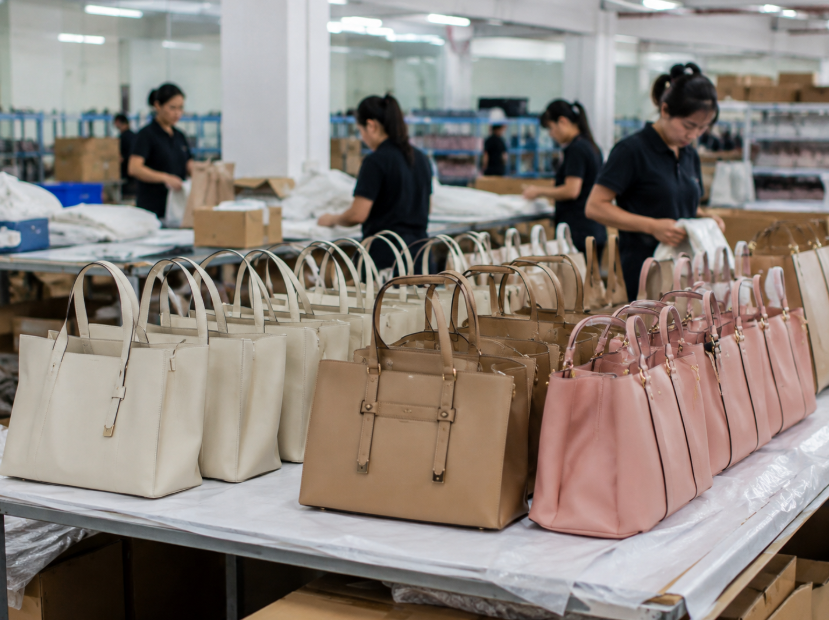
My usual preference for a complicated new ladies’ bag is simple: approve the sample first, lock the material and construction standard, then test a manageable production quantity before scaling. The first bulk run tells you whether the factory can reproduce the sample repeatedly, not just make one beautiful piece.
6. OEM vs ODM vs Private Label Ladies’ Bags
These three models solve different sourcing problems. Choosing the wrong one can create unnecessary sample revisions before production even starts.
| Model | Best Fit | What You Normally Provide | Factory Involvement |
|---|---|---|---|
| OEM | Brands with finished designs | Tech pack, dimensions, artwork, materials and construction requirements | Manufacturing and production engineering |
| ODM | Brands needing development support | Concept, sketches, references, target use and design direction | Design development, materials, sampling and manufacturing |
| Private Label | Brands seeking a faster launch | Brand identity, logo, colors and selected existing style | Existing product adaptation and branding |
OEM gives you the most control when your design is already mature. The factory should focus on converting your technical specification into repeatable production without quietly changing details to simplify manufacturing.
ODM works better when the idea is not yet production-ready. You may know the shape, target customer and material direction but still need help with pattern structure, hardware, reinforcement or production engineering.
Private label is usually the shortest development path because the basic bag already exists. It works well when product speed matters more than creating a completely new structure.
Customization depth still varies between suppliers. One private label handbag manufacturer may offer only logo and packaging changes, while another can modify material, dimensions, lining, straps and hardware.
Define the level of customization before requesting samples. That one step prevents many misunderstandings later.
7. Conclusion
There are many experienced ladies’ bag manufacturers in China, especially around Guangdong, but supplier selection should never end with a company list. The better manufacturer is the one whose product experience, material network, sample process, quality controls and production capacity match your actual bag.
Spend more time checking the sample than comparing sales presentations. Confirm materials, measurements, hardware, logo, packaging and inspection standards in writing. New or technically complicated products deserve a controlled first production run before quantities increase.
HeteBag operates from Huadu, Guangzhou and has been involved in bag development and manufacturing since 2011, with its own manufacturing capabilities and cooperation across the local supply chain. Its work covers custom handbags and other bag categories for brands, wholesalers and distributors.
If you are looking for a Bag Manufacturer in China for a new ladies’ bag collection, you can send your design, reference sample, material requirements or even an early product idea. Leave your phone number or project information through the website, and the team can review the details with you and discuss the next stage of development.
FAQs About Ladies’ Bag Manufacturers in China
How can I tell whether a ladies’ bag factory actually manufactures the products it shows?
Ask for recent factory videos, production-line photos and examples using construction similar to your design. During a video call, ask the supplier to show the sample room, cutting area, sewing lines, edge-paint process, assembly area and finished-goods inspection. If subcontracting is involved, ask which operations are completed outside the main factory and who controls their quality.
What should I approve before a ladies’ handbag enters bulk production?
Approve a physical sample together with material swatches, dimensions, logo position, lining, thread, edge-paint color, hardware finish and packaging. Keep one signed or sealed production sample when possible. Written tolerances should cover measurements and visible defects so inspectors are not forced to make subjective decisions during final inspection.
Should I choose a manufacturer based on its MOQ?
MOQ matters, but it should not be the first filter. A lower quantity offers little benefit if the factory lacks experience with your construction or cannot source the correct material consistently. Check manufacturing fit and sample quality first, then discuss a quantity that works with material MOQs, hardware production and your launch plan.
How do I prevent the bulk order from looking different from the approved sample?
Lock the bill of materials after sample approval and identify every important component by supplier code or approved swatch. Request confirmation before the factory substitutes material, hardware, lining or packaging. Pre-production review and in-line inspection are useful when the design has custom colors, plated hardware or complicated structures.
Can a China Bag Manufacturer make custom hardware for my handbag brand?
Many handbag factories can coordinate custom metal logos, buckles, zipper pulls and other hardware through specialist suppliers. New molds may be needed when the shape is unique. Confirm dimensions, metal type, weight, plating color, logo details and surface finish with a hardware sample before approving the complete handbag.
What documents should I check when a supplier claims BSCI or GRS compliance?
Check the entity name, facility address, scope, issuing organization and validity of the document. BSCI-related information should match the manufacturing site being evaluated. GRS claims require closer attention to certified organizations and chain-of-custody documentation because using a material described as recycled does not automatically make every finished product GRS certified.


