
 English
  Italian
  French
  German
  Spanish
  Arabic
 You can see tote bags everywhere. On your morning commute by subway, being carried on someone’s shoulder in the supermarket, sitting on an office desk, or hanging on a baby carriage in the park. They are so common that most people don’t even notice them. But have you really taken the time to deeply understand how such a simple thing has become so ubiquitous?
If you are engaged in retail, procurement, brand development or product design, understanding tote bags from a structural and functional perspective will give you a real advantage. The selection of appropriate materials, the right size, and the proper structural details – these decisions directly affect customer satisfaction, brand recognition, and product profits. Hetebag has 15 years of experience in the luggage industry. In this guide, I will explain in detail all aspects of tote bags from the origin of tote bags to the specific types and materials you need to know before placing an order for production.
What Is a Tote Bag?
A tote bag is an open-top, unfastened carrying bag with two parallel handles attached to opposite sides of the bag body. The design is intentionally simple: no complex closure systems, no elaborate hardware, no structured framing. What makes a tote bag a tote bag is its accessibility — you can drop items in quickly, pull them out just as fast, and carry everything in one hand or over a shoulder.
The word “tote” comes from an early 17th-century English term meaning “to carry.” That etymology tells you everything about the design philosophy. A tote bag isn’t engineered around a specific product category or a particular lifestyle. It’s engineered around the act of carrying itself.
Structurally, tote bags are defined by their flat or self-standing rectangular body, their parallel handles (which can be short grip handles or long shoulder straps), and their open or minimally closed top. Some tote bags include a simple magnetic snap or a zippered interior pocket, but the core structure remains open and accessible. This distinguishes tote bags from structured tote bags, which prioritize form, and from backpacks, which prioritize load distribution.
What makes tote bags commercially significant is precisely this simplicity. They are one of the easiest bag formats to customize, one of the most cost-effective to produce at scale, and one of the widest-reaching in terms of consumer appeal. A well-made tote bag transcends demographics. It works for a 22-year-old carrying a laptop to a co-working space and a 55-year-old carrying documents to a board meeting.
The History and Evolution of the Tote Bag
The tote bag’s story is a useful reminder that the most enduring products are rarely the most complicated ones.
The modern tote bag as a commercial object traces back to 1944, when L.L. Bean introduced a heavy-duty canvas bag designed to carry blocks of ice. It wasn’t marketed as a fashion item. It wasn’t branded as a lifestyle accessory. It was a utility tool — rugged, wide-mouthed, easy to fill and empty. That original product, the “Boat Bag,” still exists today in essentially the same form.
Through the 1950s and 1960s, the tote format was adopted by institutional buyers: libraries, universities, and museums began producing canvas tote bags with printed text as merchandise. These weren’t promotional items in today’s sense — they were functional objects that happened to carry a name or logo. The Museum of Modern Art in New York helped legitimize the printed tote as a cultural artifact when it began selling them in its gift shop.
The shift toward mass-market adoption happened in the 1980s and accelerated through the 1990s. Grocery chains began replacing single-use plastic bags with reusable canvas alternatives. Corporate clients started ordering tote bags as trade show giveaways. The tote bag moved from niche utility product to everyday commodity.
What happened in the 2000s changed everything. Environmental awareness brought the reusable tote bag into mainstream consumer consciousness. Brands like Anya Hindmarch turned the simple canvas tote into a sought-after fashion object — her “I’m Not a Plastic Bag” tote, launched in 2007, sold out immediately and sparked a cultural conversation about both sustainability and the power of minimalist branding. Suddenly, the tote bag wasn’t just functional. It was a statement.
Today, the tote bag exists across a vast price and quality spectrum — from $0.50 nonwoven polypropylene bags used for single promotions to premium leather tote bags retailing above $1,000. Understanding that spectrum, and where different production decisions place a product within it, is essential for anyone making sourcing or design decisions.
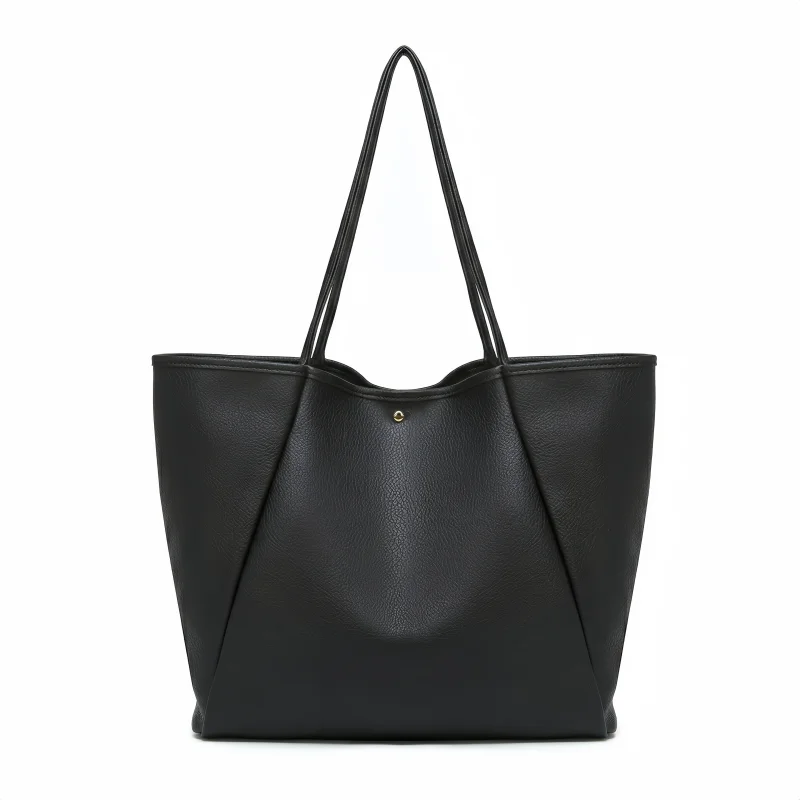
Common Tote Bag Materials: What They Are and How They Perform
Material selection is one of the most consequential decisions in tote bag production. The same design can feel cheap or premium, durable or disposable, depending entirely on fabric choice. Here’s a grounded look at the most common options.
Canvas
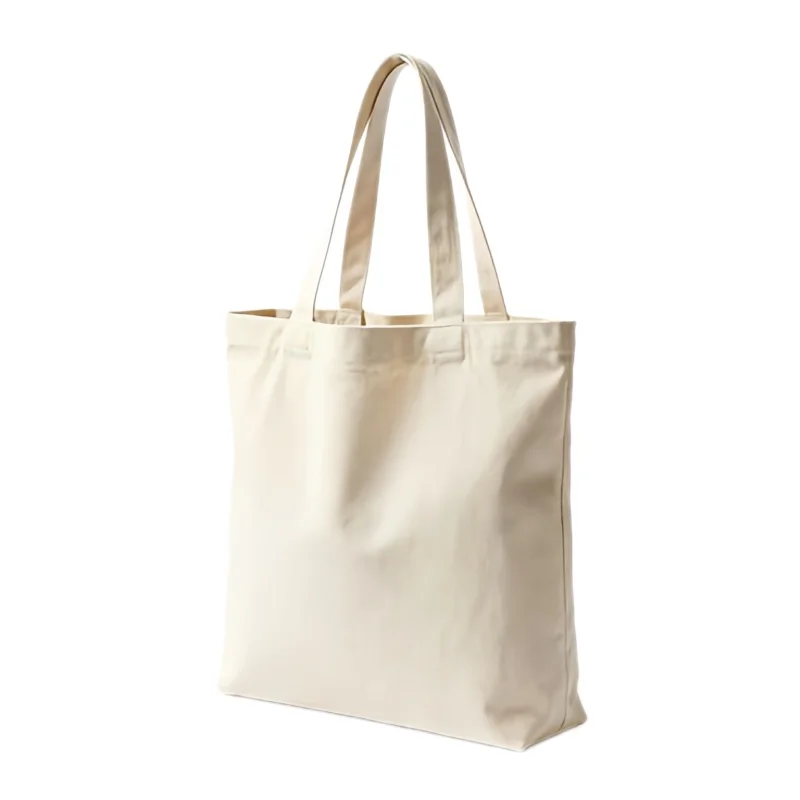
Canvas is the material most people picture when they think “tote bag.” It’s a plain-woven fabric, typically made from cotton or a cotton-polyester blend, known for its weight and durability. Canvas weight is measured in ounces per square yard — a 10 oz canvas is standard for most utility tote bags, while 12 oz and above is considered heavy-duty. Canvas takes screen printing extremely well, which makes it the dominant choice for branded merchandise and promotional bags. Its texture feels natural and substantial in hand. The limitation is moisture: untreated cotton canvas absorbs water and can develop mildew if stored wet.
Cotton
Organic and standard cotton totes sit in a lighter weight category than canvas. They’re softer, more pliable, and typically less structured. This makes them excellent for reusable shopping bags, lightweight promotional items, and eco-focused brand programs. Organic cotton specifically appeals to brands in the wellness, food, and sustainability sectors, where the material story matters as much as the product itself. Certifications like GOTS (Global Organic Textile Standard) add verified credibility for brands that need to back up their sustainability claims.
Nylon
Nylon tote bags occupy a specific performance niche. The material is lightweight, exceptionally strong relative to its weight, and highly water-resistant. It packs flat and recovers its shape well. Ripstop nylon — which uses a reinforcing cross-thread pattern to prevent tears from spreading — is commonly used in travel and outdoor tote bags. Nylon’s main limitation from a branding perspective is that it doesn’t absorb printed graphics as richly as cotton or canvas; it tends to work better with embroidered logos or sublimation printing.
Polyester
Polyester is the workhorse material of the promotional bag industry. It’s inexpensive to produce, easy to dye in a wide range of colors, and reasonably durable for everyday use. Non-woven polypropylene — technically a separate material but often grouped with polyester in the promotional segment — is even cheaper and lighter, though it sacrifices significant durability. Recycled polyester (rPET), made from post-consumer plastic bottles, has grown substantially in demand as brands seek measurable sustainability credentials without the cost premium of organic cotton.
Jute
Jute is a natural plant fiber with a distinctive coarse texture and an earthy appearance. It’s biodegradable, renewable, and carries strong sustainability associations. Jute tote bags are popular in the organic food, artisan retail, and eco-lifestyle segments. The material is less forgiving in production — it frays more easily than canvas, requires careful finishing, and doesn’t take fine-detail printing as cleanly. For the right brand context, though, jute delivers an authenticity that synthetic materials simply can’t replicate.
Leather and Vegan Leather
Leather tote bags — both genuine and vegan alternatives — represent the premium end of the market. Genuine leather develops a patina over time, feels substantial in hand, and signals durability and investment. Vegan leather (typically PU or microfiber) offers a similar visual aesthetic with lower production cost and without animal-derived materials, which matters to an expanding segment of consumers. The construction standards for leather tote bags are significantly higher than for fabric versions: stitching density, edge finishing, and hardware quality all become visible quality signals.
Oxford Fabric
Oxford fabric is a woven textile, typically made from polyester or nylon, with a distinctive basket-weave texture. It’s more rigid and structured than plain-woven fabrics, which makes it useful for tote bags that need to maintain their shape — laptop bags, document carriers, and structured shopping totes. Oxford fabric is easy to clean, resistant to minor abrasion, and takes printed branding cleanly.
The Main Types of Tote Bags
Tote bags are not a monolithic category. Within the basic structural template — open top, two handles, rectangular body — there is substantial variation in design, construction, and intended use.
| Type | Key Characteristics | Best Use Cases | Typical Materials | Handle Style |
|---|---|---|---|---|
| Standard Canvas Tote | Flat body, minimal structure, single main compartment | Promotional merchandise, grocery shopping, casual everyday use | 10–12 oz cotton canvas | Short grip or medium shoulder |
| Structured Tote | Rigid or semi-rigid base and sides, maintains shape when empty | Office use, retail fashion, brand gift programs | Canvas, Oxford, leather | Medium to long shoulder strap |
| Zipper-Top Tote | Full-length or partial zipper closure across the top | Commuting, travel, secure everyday carry | Canvas, nylon, polyester | Long shoulder or crossbody |
| Open-Top Shopper Tote | Wide mouth, generous capacity, often with interior pocket | Retail shopping, market use, lifestyle branding | Cotton, canvas, jute | Braided or flat shoulder strap |
| Leather Tote | Premium materials, detailed stitching and hardware, often structured | Fashion retail, corporate gifting, luxury positioning | Genuine leather, PU leather | Rolled or flat leather handles |
| Foldable/Packable Tote | Lightweight, folds flat for storage, often with carry pouch | Travel accessories, reusable shopping, eco programs | Ripstop nylon, lightweight polyester | Short or medium grip |
| Reversible Tote | Two-sided design, different exterior fabric on each side | Fashion-forward retail, gift products | Canvas, cotton | Medium shoulder |
| Oversized Tote | Extended dimensions, high capacity | Beach bags, gym use, travel as personal item | Canvas, nylon, Oxford | Long shoulder or braided |
| Mini Tote | Compact dimensions, often decorative or semi-functional | Fashion accessories, small-format retail, gift bags | Leather, canvas, cotton | Short grip or chain |
| Woven/Basket Tote | Structural weave construction, three-dimensional texture | Summer/lifestyle retail, artisan and boutique brands | Jute, straw, rattan-look fabric | Leather or rope handles |
Breaking Down What Each Type Is Actually Good For
Standard canvas totes dominate the promotional market because they’re simple to produce, easy to print, and genuinely useful to recipients. They’re not trying to be fashion items, and that’s their strength — a well-made standard canvas tote gets used for years.
Structured totes are where the gap between casual and professional products becomes visible. The base stiffener, the interior organization, the way the bag holds its shape on a desk — these details matter to the end user, and they’re reflected in the production cost. Structured totes work exceptionally well as brand gifts and corporate merchandise because they communicate value in a way that flat canvas bags don’t.
Zipper-top totes solve the security concern that makes some people reluctant to use open-top bags. Adding a zipper increases production cost modestly but expands the use case significantly. For commuter bags, laptop bags, and travel accessories, the zipper is often the deciding feature.
Leather totes operate in a fundamentally different category from fabric totes. They’re not competing on price per unit — they’re competing on longevity, aesthetic, and brand association. A well-constructed leather tote is often carried for five to ten years, which actually makes the cost-per-use equation favorable even at premium price points.
The Multiple Uses and Scenarios for Tote Bags
Understanding where and how tote bags get used is essential for making good product decisions. The same basic design performs very differently across contexts.
| Use Scenario | Key Functional Requirements | Important Design Features | Material Recommendation | Common Customization |
|---|---|---|---|---|
| Corporate Gifting | Professional appearance, durability, perceived value | Structured body, quality hardware, interior pockets | Canvas, Oxford, leather | Logo embossing, debossing, branded lining |
| Trade Show Giveaways | Low unit cost, high volume, portability | Flat-folding, lightweight, clear branding area | Non-woven PP, canvas, lightweight polyester | Screen print, full-color digital print |
| Retail Merchandise | On-brand aesthetics, good in-store presentation | Color variety, consistent quality, distinctive detail | Canvas, cotton, leather | Custom colorways, woven labels, hangtags |
| Grocery/Shopping | Load-bearing capacity, easy cleaning, washability | Reinforced handles, flat bottom, wide mouth | Heavy canvas, cotton, jute | Simple text or logo |
| Office and Commuting | Organization, laptop protection, professional look | Laptop sleeve, zipper top, multiple compartments | Oxford, nylon, structured canvas | Embroidery, metal logo badge |
| Travel | Lightweight, packable, carry-on compliant | Folds flat, reinforced seams, water resistance | Ripstop nylon, lightweight canvas | Minimal branding, functional pockets |
| Beach/Outdoor | Sand and water resistance, easy to clean, roomy | Wide body, wipeable interior, durable handles | Nylon, canvas, mesh panel | Bold graphics, fun colorways |
| Eco/Sustainability Programs | Certified materials, environmental messaging, durability | Visible material story, clean design, certification labeling | Organic cotton, jute, rPET | GOTS certification labels, minimal print |
| Gym and Active Use | Ventilation, moisture management, load capacity | Interior wet pocket, reinforced base, shoulder padding | Nylon, polyester, mesh panel | Brand wordmark, reflective detail |
| Event and Hospitality | Brand consistency, lightweight, cost-effective at volume | Flat printing area, consistent colorway, folding ability | Canvas, non-woven, cotton | Full-color event branding |
Reading the Table Strategically
The use scenario doesn’t just determine what features you need — it determines what your customer will judge the product on. For corporate gifting, the person receiving the bag will form an impression of the brand that gave it to them. That means material quality, handle finish, and interior detail matter more than unit cost.
For trade show giveaways, the reverse is often true. The bag needs to be good enough to be used, but the primary function is carrying the brand message. Cost efficiency and printing clarity take priority.
For retail merchandise, the bag is itself a product — it needs to deserve its retail price, compete with alternatives on the shelf, and hold up to the scrutiny of a consumer who is choosing whether to spend money on it.
These aren’t subtle differences. They drive materially different sourcing decisions.
How to Choose the Right Tote Bag
Choosing the right tote bag starts with being honest about what the bag actually needs to do — and for whom.
Define the primary use first. Before thinking about aesthetics or budget, establish the single most important function the bag needs to perform. Is it carrying a laptop safely? Holding groceries for a weekly shop? Representing a brand at a trade event? The answer to this question should drive every other decision. A bag that tries to do everything usually does nothing particularly well.
Match material to environment. Material performance varies significantly across conditions. A cotton canvas tote that looks beautiful in a photo shoot becomes a liability if the end user carries it in rain three times a week. A nylon packable tote that performs brilliantly for travel might feel too casual for a premium brand gifting program. Think about where the bag will actually be used, not just how it will be photographed.
Take handle construction seriously. Handles are the most mechanically stressed part of a tote bag. They bear the full load of everything inside the bag, repeatedly, over the life of the product. Stitching reinforcement at the attachment points, handle length relative to bag depth, and handle material all affect both comfort and durability. Short handles that don’t fit over a shoulder frustrate users. Long handles that tangle in each other frustrate users differently. Test handle length with actual load and real posture, not just an empty sample.
Think about interior organization. Open-top totes with a single cavernous compartment are fine for light everyday use. For professional contexts — commuting, travel, work use — a zippered interior pocket for valuables, a phone slip pocket, and a flat sleeve for documents or a tablet make the difference between a bag people love and a bag they tolerate.
Consider the brand story the material tells. Materials carry associations that go beyond their functional properties. Canvas reads as casual and approachable. Leather reads as premium and durable. Jute reads as natural and sustainable. Recycled polyester reads as environmentally considered. These associations affect how the bag — and the brand on it — is perceived. Choose materials that are congruent with your positioning.
Evaluate minimum order quantities against your actual sales forecast. One of the most common mistakes in tote bag sourcing is over-ordering based on optimistic projections. Factory minimums exist for production efficiency reasons, and they’re usually non-negotiable on first orders. Understanding the MOQ structure from the beginning helps you design a product you can actually sell through, rather than one that sits in a warehouse depreciating your inventory investment.
Sample before you commit to bulk production. The gap between a rendered design and a physical sample is often surprising. Colors shift between screen and fabric. Handle lengths feel different when you’re actually carrying weight. Interior pocket placement that looked correct in a flat design may be awkward in three dimensions. Sampling adds time and cost to the development process, but it protects your bulk order investment and your customer relationships.
Plan for customization lead time. Custom hardware, woven labels, embossed logos, and specialized printing all add time to the production timeline. If you’re working toward a launch date, trade show, or seasonal window, build customization lead time into your planning from the beginning — not as an afterthought.
If you are interested, please click on our custom tote bag product page.
Conclusion
Tote bags are simple objects, but the decisions behind them are anything but. Material selection, structural design, handle construction, use scenario matching — each of these variables compounds. Get them right and you have a product that gets used, remembered, and associated with your brand for years. Get them wrong and you have a bag that ends up in the back of a drawer after one use.
The best tote bags are the result of thinking clearly about function first and aesthetics second — and then finding a manufacturing partner who can execute both with consistency.
If you’re currently developing a tote bag line or looking for a reliable production source, Hetebag is a tote bag manufacturer based in Huadu, Guangzhou, China, with over 15 years of manufacturing experience. We work with our own production facilities and partner factories to support OEM and ODM orders across a full range of materials and construction types — from lightweight cotton canvas to structured nylon to premium leather. Our products are exported to over 70 countries, and our quality management system is ISO 9001-certified.
Whether you’re developing a new product line, scaling an existing one, or sourcing for a specific project, we’re straightforward to work with. Leave your contact number on our website and our team will reach out directly. We look forward to working with you.
Frequently Asked Questions
What is the difference between a tote bag and tote bag?
A tote bag is typically defined by its open-top structure, parallel handles, and large capacity, making it ideal for carrying multiple items quickly. A tote bag, on the other hand, is often more structured, smaller in size, and designed with fashion and form in mind. Tote bags prioritize functionality, while tote bags often emphasize style and detail.
What is the best material for manufacturing tote bags in bulk?
The best material depends on your target market and budget. Canvas is the most popular choice due to its durability and printability, while non-woven polypropylene is ideal for low-cost, high-volume promotions. For premium markets, leather or high-density nylon offers better perceived value and longer lifespan.
What is the typical MOQ for custom tote bags
MOQ (Minimum Order Quantity) usually ranges from 100 to 1,000 pieces depending on the material, customization complexity, and factory capabilities. Simple canvas tote bags typically have lower MOQs, while custom designs with special materials or hardware may require higher quantities.
What factors affect the cost of a tote bag?
The main cost factors include material type, fabric weight, bag size, printing method, handle construction, and order quantity. Additional features such as zippers, inner pockets, or custom packaging will also increase the total cost.
Can tote bags be fully customized for branding?
Yes, tote bags are one of the most customizable bag types. Brands can customize size, material, color, printing (screen print, embroidery, heat transfer), labels, and packaging. This flexibility makes tote bags highly suitable for retail, promotions, and corporate gifting.


