
 English
  Italian
  French
  German
  Spanish
  Arabic
 As gym attendance rises, the gym bag has evolved beyond a simple sack for clothes and shoes. Details such as capacity, dedicated shoe storage, wet gear management, and carrying comfort significantly impact the user experience. Two gym bags that look similar at first glance can offer vastly different experiences in actual use.
When we manufacture gym bags, clients frequently ask about sizing, material durability, and the inclusion of shoe compartments or wet/dry separation. However, these factors cannot be viewed in isolation; capacity, materials, internal layout, and usage scenarios are all interconnected. A bag ideal for daily workouts may not be suitable for swimming, commuting, or short trips.
This article breaks down the essentials—including bag types, sizes, materials, and structural design—and draws on common manufacturing challenges to highlight what matters most when selecting or developing a custom gym bag. Whether you are looking for a gym bag supplier or planning to create your own product line, we hope you find this information helpful.
1. What Is a Gym Bag?
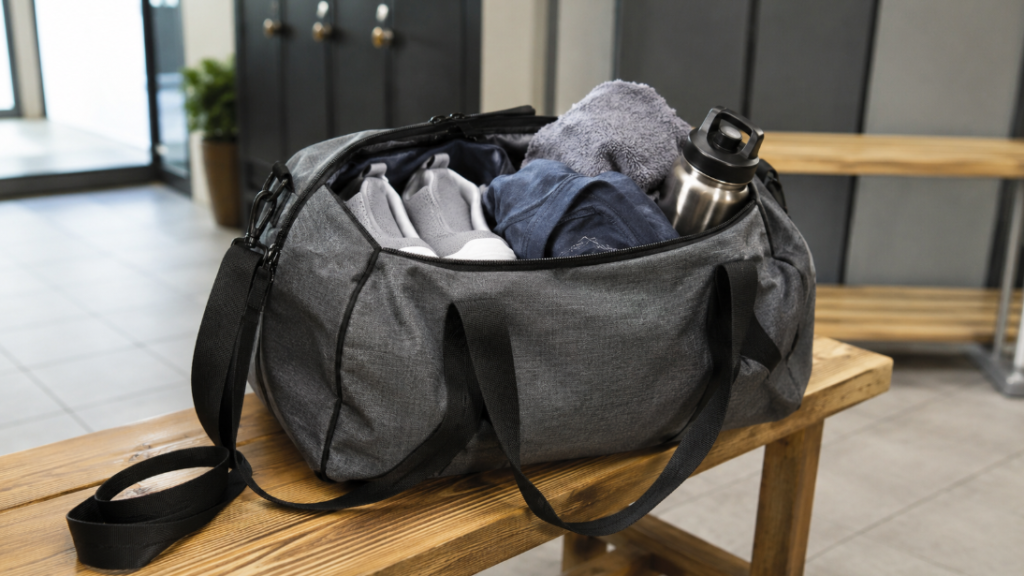
Gym bags are soft-sided bags designed around fitness and sports use. Most have one large main compartment, handles or a shoulder strap, and extra storage for shoes, wet clothing, bottles, or small personal items.
The shape is usually wider than a backpack because users often carry bulky items rather than neatly packed objects. Training shoes, boxing gloves, towels, hoodies, resistance bands, and sports clothing all need space that can be reached quickly.
Construction matters here. The bag does not only need enough liters of capacity. Its opening, side panels, base, lining, partitions, and carrying system must all work together. Poor proportions can make a large bag difficult to pack, while a well-designed smaller bag may feel surprisingly spacious.
What Is a Gym Bag Used For?
Daily workouts are the most obvious use, but gym bags now cover several related situations. People take them to fitness clubs, swimming pools, sports practices, yoga studios, offices, school training sessions, and short weekend trips.
Usage changes the product requirements. Someone carrying only a shirt, shorts, towel, and shoes has very different needs from a football player carrying a full uniform and equipment.
Buyers developing a product should start with the load rather than the outside appearance. Write down what the target customer is likely to carry, how often they use the bag, and how they reach the gym. Those three points already answer many design questions.
Gym Bag vs. Duffle Bag: What Is the Difference?
The terms overlap heavily. Many gym bags use a duffle structure, with a long main body, top zipper, two handles, and detachable shoulder strap.
The difference is mainly in the intended function. General duffle bags may be built around travel or everyday storage. Gym bags tend to include fitness-focused details such as shoe storage, ventilation, bottle pockets, washable lining, or wet/dry separation.
Structure matters more than the name printed on a product listing. If you are deciding between back-carried and duffle-style designs, our guide to gym bags vs. backpacks looks more closely at how carrying habits change product selection.
2. What Are the Main Types of Gym Bags?
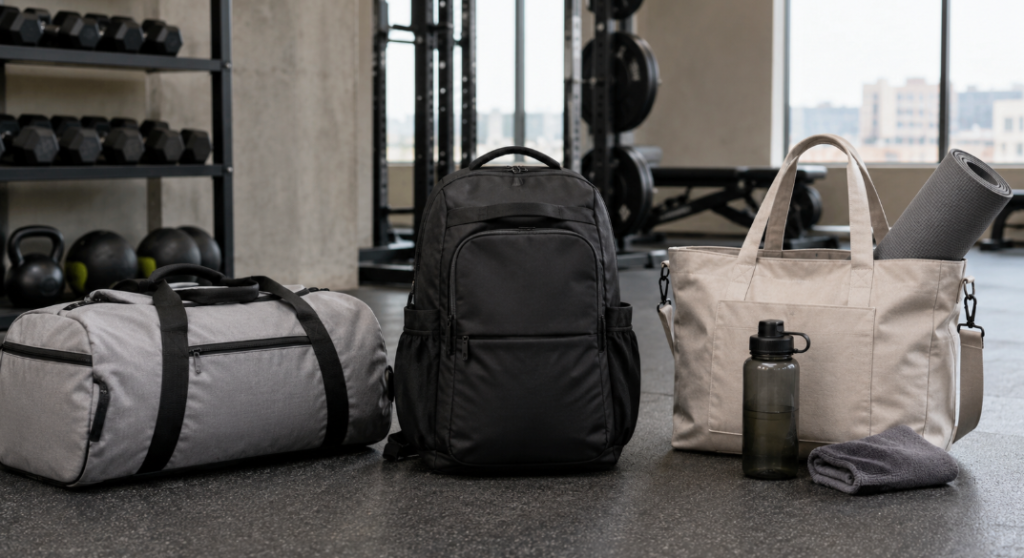
Gym bags are no longer limited to one rectangular duffle shape. Brands now develop different formats for commuters, athletes, fitness studios, travel users, and lifestyle customers.
| Gym Bag Type | Main Strength | Best Fit |
|---|---|---|
| Gym Duffle Bag | Wide opening and flexible capacity | Training, sports, shoes and clothing |
| Gym Backpack | Hands-free carrying | Commuting, cycling, work-to-gym |
| Tote Gym Bag | Fast access and simple structure | Light workouts, studio classes |
| Convertible Gym Bag | Multiple carrying methods | Travel, work and fitness combined |
Gym Duffle Bags
The gym duffle remains the most common format because the main compartment is easy to load. Shoes and clothing can be placed side by side without the narrow vertical packing space found in many backpacks.
When we review this structure during development, I usually look at the relationship between length, height, and depth before focusing on total capacity. Making a bag longer without adding enough depth may produce a slim shape that looks good but does not hold shoes comfortably.
End pockets are useful on this design because they can create dedicated shoe or accessory zones without interfering too much with the main compartment.
Gym Backpacks
Gym backpacks work better when users walk, cycle, take public transport, or carry equipment over longer distances. Weight sits across both shoulders, leaving the hands free.
Storage has to be planned differently. A bottom shoe section may reduce the usable height of the main compartment, while an oversized wet pocket can take space away from a laptop sleeve.
This balance deserves attention during sampling. Buyers considering this format can also review custom backpack structures alongside gym-specific designs.
Tote and Convertible Gym Bags
Tote-style gym bags suit lighter loads. They work well around Pilates, yoga, studio workouts, dance, and casual fitness because users may care more about easy access and appearance than high equipment capacity.
Convertible designs can use hidden backpack straps, detachable shoulder straps, or handles of different lengths. Extra carrying modes sound attractive, but every strap attachment introduces another stress point. Only add a carrying method when the target customer is likely to use it.
3. What Size Gym Bag Should You Choose?
Capacity should be selected around actual contents, not a generic label such as small, medium, or large. Factory specifications should include finished dimensions as well as approximate liters because two bags with the same nominal capacity can pack differently.
A useful starting range for gym bags is roughly 20L to 50L+, depending on the design and application. The manufacturer’s size page also places gym bags within this general range, with adjustments for shoe storage, wet/dry separation, and carrying requirements.
| Approx. Capacity | Typical Use | Design Focus |
|---|---|---|
| 15–25L | Light daily workout | Compact body, basic shoe or clothing storage |
| 25–35L | Regular gym use | Shoes, towel, clothing, bottle, accessories |
| 35–50L | Work, gym, sports | Larger shoe zone, more organization |
| 50L+ | Team sports or short trips | Reinforced base, stronger straps, higher load |
These ranges are not fixed production standards. Fabric thickness, padding, internal walls, shoe compartments, and the shape of the opening all affect usable space.
Small Gym Bags for Daily Workouts
Small models work best when users carry one change of clothing, a towel, small accessories, and perhaps a pair of compact shoes.
The mistake is trying to fit too many features into a small body. Four internal pockets, a large shoe tunnel, padded sections, and thick foam may leave very little usable space. Small bags usually perform better when the structure remains clean.
Medium Gym Bags for Work, Gym, and Everyday Use
Medium sizes are often the most flexible option because they can handle normal training equipment without becoming awkward to carry.
This is also where organization starts to matter more. Separate storage for shoes, keys, bottles, personal items, and used clothing makes sense because the customer may carry the bag for several hours rather than moving directly between home and the gym.
Large Gym Bags for Sports and Short Trips
Large bags need more than extra fabric. Heavier loads put more force on the shoulder strap, handle webbing, zipper ends, side seams, and bottom panel.
Reinforcement should increase together with capacity. Wider webbing, stronger stitching at attachment points, supportive bottom materials, and suitable hardware can make a large bag feel much more stable.
Brands developing their own dimensions can review the custom bag size options before preparing specifications.
4. What Materials Are Best for Gym Bags?
There is no single best gym bag material. The right choice depends on weight, abrasion resistance, moisture exposure, appearance, printing method, cleaning needs, and target positioning.
Material selection also involves more than choosing “nylon” or “polyester.” Denier, weave, backing, coating, lamination, lining, hand feel, colorfastness, and fabric source all affect the finished result.
| Material | Main Advantages | Points to Check |
|---|---|---|
| Polyester | Versatile, printable, stable | Fabric weight, coating, abrasion resistance |
| Nylon | Strong, lightweight, smooth | Surface finish, abrasion grade, coating |
| Canvas | Natural texture, structured look | Weight, shrinkage, water resistance |
| PU Leather | Consistent appearance, easy styling | Surface durability, backing, hydrolysis resistance |
| Genuine Leather | Premium feel and aging character | Weight, color variation, care requirements |
| Coated Fabrics | Better moisture protection | Seams, zipper areas, coating durability |
Polyester and Nylon
Polyester is widely used for everyday gym bags because it balances durability, appearance, print compatibility, and production flexibility. It also accepts coatings that improve resistance to light moisture.
Nylon often feels smoother and can offer very good strength for its weight. Higher-performance fitness or travel designs frequently use nylon when abrasion resistance and a lighter feel matter.
Do not approve a material based only on a small swatch. Fold it, rub it, load the sample, inspect the backing, and see how it behaves around seams. Our custom bag materials guide shows the wider fabric choices commonly used across sports and travel bags.
Canvas and Other Fabric Options
Canvas gives a gym bag a more casual, lifestyle-oriented appearance. It works particularly well where the product needs to look less technical and more suitable for everyday clothing.
The trade-off is weight and moisture performance. Heavy canvas can make an empty bag feel substantial before anything is packed inside. Coated or blended versions may improve performance, but they change the hand feel and appearance.
Oxford fabrics are another useful choice. Their woven surface, durability, and ability to accept coatings make them suitable for many sports and fitness designs.
PU Leather and Genuine Leather
PU leather is often selected when a brand wants a cleaner fashion look without building the entire product around textile fabric. Surface grain, backing fabric, thickness, edge construction, and resistance to repeated bending need to be checked before approval.
Genuine leather creates a different product category. It adds weight and needs more care, yet it can work well for premium lifestyle gym bags that double as work or weekend bags.
Mixed-material construction is often more practical than using leather everywhere. Leather or PU panels can be placed around handles, corners, pocket trims, and logo areas while the main body remains textile.
Waterproof and Water-Resistant Materials
These terms should not be treated as interchangeable. Water-resistant fabric can handle light splashes or short exposure, while a truly waterproof bag also needs the seams, zipper construction, openings, and assembly method to control water entry.
Gym bags with coated nylon or polyester can protect clothing from normal moisture, but water may still enter through stitching and conventional zippers. Buyers should define the level of protection they really need rather than using “waterproof” as a broad marketing term.
Recycled polyester is also appearing more often in fitness collections. When a project requires verified recycled-content claims, procurement teams can refer to the Global Recycled Standard information from Textile Exchange. GRS covers third-party verification of recycled materials and chain of custody, so certificates and transaction documentation should be checked rather than relying only on a fabric label.
5. What Design Features Should a Good Gym Bag Have?
Good design solves how items move in and out of the bag. Features should earn their place through function. Adding pockets everywhere usually makes production more complicated without improving the user experience.
Shoe Compartments and Wet/Dry Separation
The shoe compartment is one of the most useful gym bag features, but its volume has to come from somewhere. Many side-entry shoe tunnels extend into the main compartment when shoes are inserted.
Pattern development should account for this occupied volume. Check the compartment with realistic shoe sizes rather than inspecting it empty.
Wet/dry sections need a lining that handles moisture and is easy to wipe. Seam construction also deserves attention because a waterproof lining material alone does not automatically create a sealed compartment.
Ventilation can help shoe storage, especially when the pocket is used immediately after training. Mesh panels or eyelets are common solutions, though their position should not create an easy path for rain into the main body.
Internal Pockets and Equipment Organization
Small pockets are useful when their purpose is clear. Keys, cards, earbuds, watches, cables, and small toiletries should not disappear into the bottom of a 35-liter compartment.
Bottle pockets should be checked with actual bottle diameters. Flat mesh that looks neat on an empty sample may stretch poorly once a large bottle is inserted.
Work-to-gym designs may need a laptop sleeve, but the laptop should not sit directly against wet clothing. The layout has to create real separation rather than only adding another fabric panel.
Handles, Shoulder Straps, Zippers, and Reinforced Stress Points
Handles take repeated loading every time the user lifts the bag. Webbing should extend far enough into the body, and stitching needs enough surface area to distribute force.
Shoulder straps require the same thinking. Padding improves comfort, but the attachment method matters more than thick foam when the bag carries heavy equipment.
Zippers deserve serious attention during sourcing. Slider movement, chain size, tape, puller construction, zipper ends, and sewing accuracy all affect long-term performance. YKK publishes information on its fastening product quality assurance and zipper strength testing, which is a useful reference when buyers are defining zipper expectations with a Gym Bag supplier.
6. How to Choose the Right Gym Bag for Different Uses
Usage should guide every specification. Start with the customer’s routine and work backward into capacity, structure, material, and hardware.
Everyday Fitness and Weight Training
Regular gym users usually need fast access, shoe storage, a water bottle area, and enough room for changing clothes. Mid-sized duffle structures tend to handle this well.
Weight training users may carry belts, straps, wraps, resistance bands, or other dense equipment. Strong handles and a stable bottom become more important because the load may be heavy even when the bag is not completely full.
Swimming and Outdoor Training
Swimming changes the moisture requirements. Wet towels, swimwear, bottles, and toiletries should not share an untreated fabric compartment with dry clothing.
Outdoor users add another concern: weather exposure. Coated fabrics, protected zipper placement, easy-to-clean bottom panels, and stronger abrasion resistance may offer more value than extra internal organizers.
Materials used close to clothing or skin may also need chemical compliance depending on the buyer’s market and brand requirements. OEKO-TEX STANDARD 100 is one recognized framework covering textiles tested for harmful substances, including components such as threads, buttons, and accessories within the certified article.
Work-to-Gym and Travel Use
This category needs more careful separation. Users may carry a laptop, charger, documents, toiletries, shoes, clothing, and valuables in the same bag.
The result should not feel like several unrelated bags stitched together. Keep office storage structured and clean, then place the gym section where wet or dirty items can be isolated.
Travel-compatible designs also benefit from luggage sleeves, removable straps, easy-access passport pockets, and an opening that remains usable when the bag sits on top of a suitcase.
7. What Should Brands Consider When Designing a Custom Gym Bag?
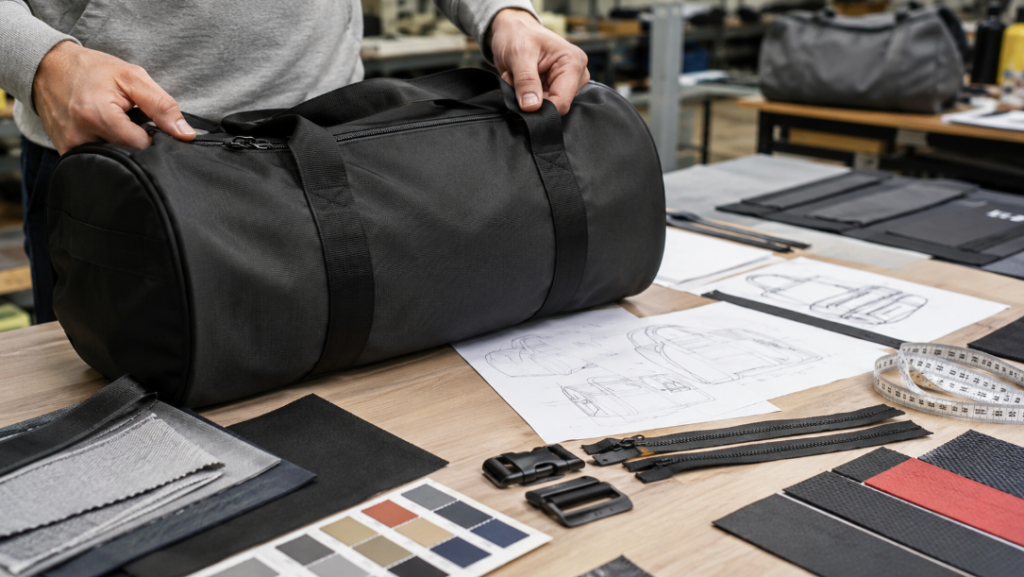
Developing a custom gym bag starts long before the logo is applied. Successful projects usually come from a clear product brief, realistic sample evaluation, and specifications that suppliers can repeat during bulk production.
Define the Target User and Carrying Capacity
Describe the end user first. Age range, activity type, commute method, equipment load, and use frequency all influence the structure.
Next, list the expected contents. This gives your manufacturer a far better starting point than saying, “We need a medium gym bag.”
Dimensions should be confirmed together with usable capacity. Remember that padding and internal compartments consume space, and external measurements do not tell the whole story.
Select Materials Based on Performance Requirements
Create a short requirement list before requesting fabric suggestions. Think about abrasion, water exposure, weight, cleanability, structure, texture, logo method, and any recycled-material requirements.
Ask your supplier to identify the exact material construction, not only the generic fabric family. Fabric composition, denier, backing, coating, lining, and reinforcement should appear in the specification sheet where relevant.
Customize Compartments, Colors, Logos, and Hardware
Start compartment design around the user’s packing order. Shoes, wet clothing, valuables, bottles, and electronics should each have a logical location.
Logo technique needs to match the material. Screen printing, heat transfer, embroidery, woven labels, rubber patches, embossing, and metal branding all produce different results.
Hardware should be selected as part of the overall product level. Zippers, buckles, hooks, adjusters, snaps, and metal parts need compatible sizes and finishes. A premium outer fabric paired with weak hardware will still produce a weak product.
Test Samples Before Bulk Production
Never treat the sample as a display piece. Fill it.
Load the shoes, clothing, bottles, and equipment your customer is expected to carry. Open every zipper repeatedly, lift the bag by each handle, wear the shoulder strap, inspect the lining, check pocket access, and look at how the body changes under weight.
Review measurements after the bag is filled. Some structures collapse or bulge in ways that are difficult to predict from drawings.
Your approved sample should also be supported by written specifications. Record material codes, dimensions, acceptable tolerances, webbing widths, hardware, lining, logo position, stitch details, and packaging requirements. The approved physical sample and the specification sheet should tell the same story.
Most of our customized bag projects are generally planned around an MOQ of about 300 pieces, while the final minimum can change with the fabric, custom-dyed colors, hardware, printing process, construction, and other product requirements. Buyers should confirm this after the design has been reviewed rather than assuming every gym bag uses the same MOQ.
8. Conclusion
Understanding what is a gym bag is only the first step. The useful differences appear when you look at how much the bag carries, where shoes and wet clothing go, how the material performs, how the straps are reinforced, and whether the internal layout makes sense once the bag is actually used.
If you are developing a custom product, spend more time on capacity, fabric construction, compartments, zipper selection, stress points, and sample testing than on decorative details early in the project. Those decisions have a much larger effect on how the finished bag feels and performs.
Hetebag is a bag manufacturer based in Huadu, Guangzhou, China, with its own manufacturing operation and experience dating back to 2011. The company supports OEM and ODM bag development and works with manufacturing and supply-chain partners for different bag projects. If you are looking for an experienced Gym Bag supplier or planning a custom gym bag, you can leave your phone number and project requirements on our website. We would be glad to learn what you are developing and explore the possibility of working together.
Frequently Asked Questions
What MOQ should I expect when ordering custom gym bags?
Many of our custom bag projects are planned around an MOQ of about 300 pieces. The exact quantity depends on the material, structure, custom color requirements, logo method, hardware, and whether special components need to be produced. Confirming the construction first gives a more reliable MOQ than asking for one fixed number before development starts.
What information should I send to a gym bag supplier before requesting a sample?
Send the target dimensions or capacity, reference images or drawings, preferred fabric, colors, logo artwork, compartment requirements, expected contents, hardware preferences, and target market. If some details are still open, explain the intended user and use scenario. An experienced supplier can then recommend workable options instead of guessing from a photo.
How should buyers test a custom gym bag sample before approving bulk production?
Pack the sample with realistic shoes, clothing, bottles, towels, and equipment. Test the handles and shoulder strap under load, operate every zipper repeatedly, inspect seams around stress points, check shoe and wet compartments, compare finished measurements with the specification, and examine the logo after bending or rubbing the fabric.
Is a separate shoe compartment always necessary?
No. It adds value when users regularly carry training shoes, but the compartment also consumes main storage space and adds construction. Compact studio bags may perform better without it. Sports and larger fitness bags usually benefit more because footwear is a regular part of the load.
What should I check when ordering recycled polyester gym bags?
Ask what recycled standard is being claimed, which material components are covered, whether the supplier can provide valid certification documents, and how transaction documentation will be handled if required. Do not assume that calling a fabric “recycled polyester” automatically verifies the complete supply chain.
Can one gym bag be designed for both fitness and short travel?
Yes, but the layout needs careful planning. A 30–45L design can often cover both uses when the shoe section does not consume too much space, the shoulder strap is comfortable, and the bag includes separate organization for travel items. Laptop storage or a luggage sleeve can make the product more useful for work-to-gym and weekend travel customers.


