
 English
  Italian
  French
  German
  Spanish
  Arabic
 Clutch Handbags are quite common in the bag market. But do you know the origin, evolution of handbags, and what kind of handbags are suitable for the market nowadays? Whether you are a consumer deciding what to purchase, or an enterprise deciding to purchase or produce goods.
Whether it’s clutch handbags, crossbody bags, shoulder bags, or travel bags and other products, Hetebag has fifteen years of manufacturing experience. In this guide, we will ask you to provide information about handbags. We hope that it will be truly useful for you at any stage of this category.
What Is a Clutch Handbag?
A clutch handbag is one of the most immediately recognizable accessories in fashion — and yet it is often the least understood in terms of its craftsmanship and commercial range. At its most basic, a clutch is a small, strapless handbag designed to be held in the hand or tucked under the arm. No shoulder strap. No crossbody chain. Just the bag and the hand holding it.
That simplicity is precisely what makes it powerful. The clutch is compact by design, typically carrying only the essentials: a phone, a card holder, a set of keys, perhaps a lipstick. Its restraint is a statement in itself.
What separates a clutch from other small bags is the absence of a carry strap as a primary feature. Some clutch designs include a slim wrist strap as a secondary option, but the defining characteristic remains the same: it is meant to be held, not worn. That physical intimacy between the bag and its carrier gives the clutch a distinctly personal presence that shoulder bags and totes do not replicate.
Clutches serve a wide range of functions. They appear at black-tie events and wedding receptions. They travel to cocktail parties and gallery openings. More recently, they have found their way into daytime dressing and even casual streetwear — particularly as oversized “clutch bags” blurred the line between a small handbag and a fashion-forward folder. The form has proven remarkably adaptable across different silhouettes, materials, and price points.
For anyone sourcing handbags commercially — whether for retail, wholesale distribution, or private label production — the clutch category is among the most varied in terms of construction methods, hardware options, and material choices. Understanding what makes a great clutch starts with understanding its history.
The History of the Clutch Handbag
The modern clutch handbag did not emerge overnight. Its roots go back to the late 19th century, when small decorative bags — then called “reticules” or “pochettes” — became standard accessories for upper-class women at formal events. These early bags were not clutches in the modern sense. They were often drawstring purses made from silk, velvet, or beaded fabric. But they carried the same essential idea: a compact bag with minimal structure, held rather than worn.
The transition toward what we now recognize as the clutch happened gradually through the early 20th century. As women’s fashion simplified — hemlines changed, silhouettes shifted, and the streamlined aesthetic of the 1920s took hold — accessories followed. The decorative excess of Victorian reticules gave way to flatter, sleeker bag designs. The envelope shape, arguably the most iconic clutch silhouette, emerged from this period. Its geometry echoed the clean lines of Art Deco architecture and fashion.
The 1930s and 1940s introduced the hard-case clutch, which eventually became known as the minaudière. Credited to jeweler Charles Arpels (who produced early versions for Van Cleef & Arpels in the 1930s), the minaudière was essentially a decorative metal case small enough to be held in one hand. It blurred the boundary between a handbag and a piece of jewelry, and that dual identity has never quite disappeared from the category.
The postwar era brought clutches into mainstream fashion. The 1950s and 1960s saw structured envelope clutches become everyday accessories for women attending formal luncheons, theater performances, and social events. Influential fashion houses — including Chanel, Gucci, and Hermès — incorporated clutches into their accessory lines, lending the form a sense of luxury and exclusivity that elevated it beyond a functional object.
By the 1970s and 1980s, clutches took on bolder personalities. Disco-era fashion embraced metallic fabrics and embellished designs. Evening clutches became showpieces in their own right. The 1990s brought a more minimal sensibility, with clean leather envelopes gaining ground alongside the decade’s broader aesthetic shift toward simplicity.
What is clear across this entire arc is that the clutch has never been a passive accessory. It has always reflected the cultural and aesthetic priorities of its moment — and that responsiveness to changing tastes is exactly what keeps the form relevant.
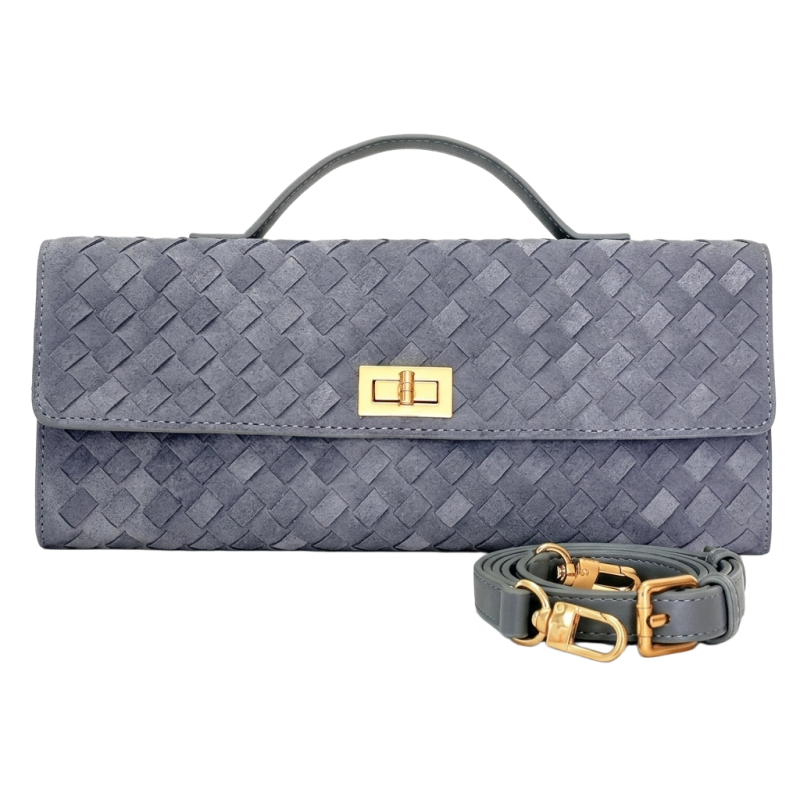
Popular Clutch Handbag Styles
Shapes & Silhouettes
| Style Name | Shape | Best Occasion | Notes |
|---|---|---|---|
| Envelope clutch | Rectangular, flap closure | Formal dinners, galas | Clean lines, easy to tuck under the arm |
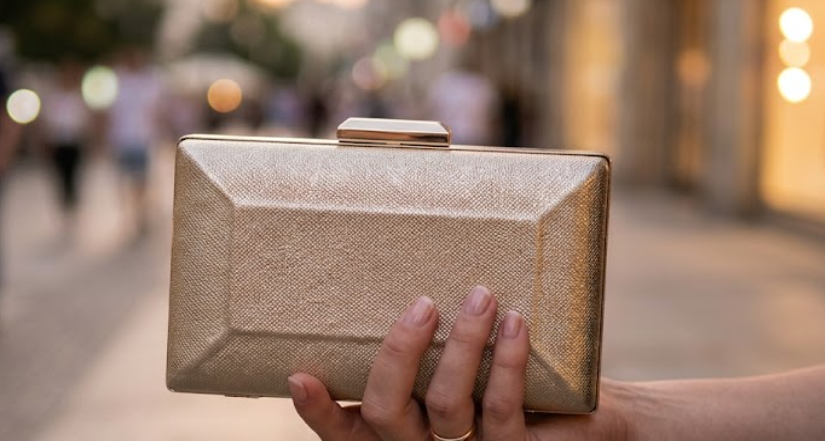
| Minaudière | Hard-case, box-like | Black-tie events, weddings | Often metallic; acts as a jewelry piece itself |
| Wristlet | Small pouch with wrist strap | Cocktail parties, casual evenings | More secure than a traditional clutch |
| Frame clutch | Half-moon or trapezoidal with metal frame closure | Vintage-themed events, evening wear | Opens wide; art-deco appeal |
| Fold-over clutch | Oversized rectangle folded in half | Semi-formal, daytime events | Versatile; can be worn as a clutch or tucked bag |
| Round / disc clutch | Circular or oval | Statement occasions, fashion-forward looks | A sculptural choice that elevates any outfit |
| Pouch clutch | Soft, gathered, drawstring or zip top | Casual evenings, brunches | Lightweight and relaxed in feel |
Materials
| Material | Character | Durability | Best For |
|---|---|---|---|
| Full-grain leather | Structured, polished, develops patina | ★★★★★ | Investment pieces, everyday luxury |
| Satin / silk | Soft sheen, draped elegance | ★★☆☆☆ | One-time events, bridal, eveningwear |
| Metal / minaudière shell | Hard, reflective, sculptural | ★★★★☆ | Black-tie, statement accessories |
| Velvet | Textured, rich, luxurious | ★★★☆☆ | Autumn/winter formal events |
| Woven raffia / straw | Organic, relaxed, artisanal | ★★★☆☆ | Summer occasions, resort wear |
| PU / vegan leather | Smooth, consistent finish | ★★★☆☆ | Budget-conscious or sustainable buyers |
| Transparent PVC / acrylic | Playful, modern, see-through | ★★★☆☆ | Trend-forward, festival, casual events |
| Beaded / embroidered fabric | Decorative, handcrafted appearance | ★★☆☆☆ | Cultural events, bridal, couture |
Design
| Design Feature | Effect | Trend Status |
|---|---|---|
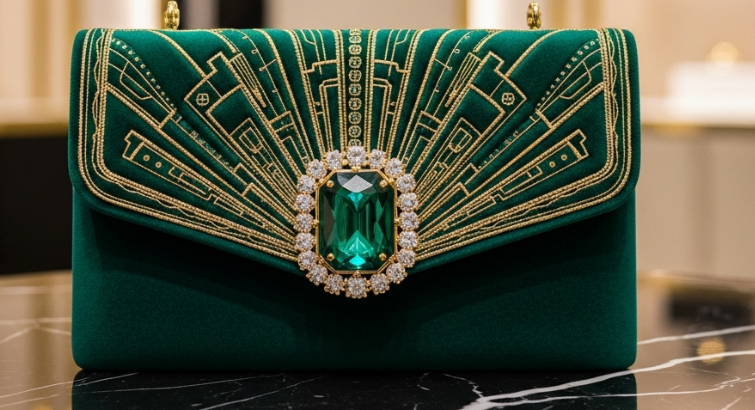
| Crystal / rhinestone embellishment | High-glamour, light-catching sparkle | Evergreen |
| Hand embroidery | Artisanal, unique, cultural storytelling | Rising |
| Laser-cut leather patterns | Geometric, modern, editorial | Trending |
| Mixed-material patchwork | Textural contrast, eclectic feel | Trending |
| Metallic hardware clasps | Polished finishing touch, brand identity | Evergreen |
| Floral 3D appliqué | Romantic, feminine, couture-feel | Seasonal |
| Fringe/tassel trim | Exclusive, collector appeal | Rising |
| Fringe / tassel trim | Movement, bohemian energy | Cyclical |
The envelope clutch remains the best-selling silhouette globally, largely because of its versatility. It sits comfortably across formal and semi-formal occasions, it photographs well for editorial and e-commerce use, and it can be executed across a wide range of price points — from mass-market PU leather to high-end full-grain vegetable-tanned constructions.
The minaudière, by contrast, occupies a more niche position. Its sales volume is lower, but its margin potential is significantly higher. A well-constructed metal-case clutch with quality hardware commands premium pricing and attracts a buyer who prioritizes design over practicality. This is a category where OEM customization and unique hardware sourcing create real differentiation.
The wristlet sits at a different intersection — it appeals to buyers who want the evening aesthetic of a clutch but prefer a secondary carry option. Wristlets are particularly popular in the mid-market segment and are frequently requested for corporate gifting, event merchandise, and wholesale retail programs.
The fold-over clutch has experienced a notable resurgence in recent seasons, partly driven by its adaptability. The larger format allows for a more expressive canvas — embroidery, patchwork, printed leather — while the folded construction conceals the bag’s full size when styled down.
Material choices shift considerably depending on the target market. Genuine leather — particularly full-grain and top-grain constructions — remains the standard for positioning in the premium and luxury-adjacent tiers. Velvet and embroidered fabrics trend seasonally, typically peaking in autumn/winter collections. Transparent PVC and mixed-material designs serve a younger, more fashion-conscious buyer who values novelty over longevity.
Clutch Handbags in Fashion History
Fashion history has a habit of cycling back to the clutch whenever it needs an accessory that can carry maximum visual impact without competing with the clothing itself. That is not a coincidence — it is a structural feature of what a clutch is.
Early 20th Century: Formality and Status
In the early 20th century, the clutch was synonymous with femininity and formality. For women navigating the rigid social codes of the era, choosing the right bag for an occasion was not a trivial decision. The clutch communicated status, taste, and appropriate observance of social norms. The materials — Belgian lace, French silk, hand-beaded fabric — told a story about where something was made and who could afford it.
Mid-Century: The Designer Clutch Takes Shape
The mid-century introduced the designer clutch as a signature piece. Coco Chanel’s contributions to bag design during the 1950s reshaped the accessory market broadly, but her influence on the clutch format — through quilted leather and interlocking hardware — established a visual language for luxury that competitors have been referencing ever since. The idea that a clutch could carry brand identity as much as it carried personal items solidified during this era.
The Bold Decades: 1970s and 1980s
The 1970s and 1980s pushed the clutch in more expressive directions. Bold beading, exotic skins, and oversized metallic finishes reflected broader cultural shifts toward self-expression and spectacle. The clutch became a vehicle for individual personality rather than a marker of conformity.
The Present: Speed, Sustainability, and Scale
What the current era has brought is perhaps the most expansive definition of the clutch yet. The form now spans fast fashion and haute couture, mass retail and limited-edition artisan production. The rise of social media has accelerated trend cycles considerably — a clutch that appears in a viral moment can see production demand spike within weeks. For manufacturers and retailers operating within this landscape, the ability to adapt quickly to emerging silhouettes and materials is a genuine competitive advantage.
The sustainable fashion movement has also reshaped consumer expectations around the clutch. Buyers — particularly in Western European and North American markets — increasingly ask questions about materials sourcing, production practices, and durability. This is shifting demand toward longer-lasting constructions, plant-based leathers, and certified sustainable fabrics, particularly in the premium segment.
Current Trends in Clutch Handbags
Several converging trends are currently defining how clutches are being designed, bought, and styled.
Micro and Nano Sizing
Tiny clutches — sometimes barely large enough to hold a phone — function more as ornamental objects than functional bags. This trend is driven partly by the logic of digital commerce: a visually striking mini-bag performs exceptionally well in editorial photography and short-form video content. For manufacturers, this means clients are increasingly requesting precise structural engineering at very small dimensions, which demands tight tolerances in cut, stitch, and hardware fitting.
Transparency and Visibility
Clear acrylic and PVC clutches, first popularized as a novelty, have matured into a recognized aesthetic category. Hybrid designs — transparent panels set within leather or metal frames — are particularly popular because they combine the visual interest of transparency with the structural integrity of more traditional materials.
Mixed-Material Construction
Mixed-material construction is no longer experimental — it has become an expected feature in trend-driven collections. Leather with woven rattan inserts, velvet with metal chain detailing, satin with printed leather trim. Clients are requesting increasingly complex material combinations, which places higher demands on the technical skill of sourcing and production teams.
Color Direction
Color trends in the current season lean toward rich, saturated jewel tones — deep emerald, cobalt blue, burgundy — alongside the perennial strong performers of black, gold, and nude. Warm metallic finishes (bronze, copper, aged gold) are outperforming the cooler silver tones that dominated a few seasons ago.
Personalization as a Commercial Expectation
Monogramming, color-matched hardware, custom lining fabrics, and bespoke embroidery are increasingly requested at the wholesale and private-label level. Manufacturers who can offer meaningful customization options at commercially viable minimums are positioning themselves well for the next few years of market growth.
Sustainability-Driven Material Innovation
Plant-based leathers derived from cactus, apple, and mushroom fibers are gaining traction in collections targeting environmentally conscious consumers. Recycled hardware and deadstock fabric programs are also emerging as differentiating features in vendor pitches, moving sustainability from a marketing claim toward a verifiable production practice.
How to Choose a Clutch Handbag
Selecting the right clutch comes down to three intersecting considerations: occasion, proportion, and quality. Get all three right, and the bag elevates everything around it.
Match the Occasion First
| Occasion | Recommended Style | Material Suggestion | Color Direction |
|---|---|---|---|
| Black-tie gala | Minaudière or frame clutch | Metal, satin, crystal | Gold, silver, champagne, black |
| Wedding (guest) | Envelope or fold-over | Satin, velvet, embroidered fabric | Nude, ivory, blush, dusty rose |
| Cocktail party | Wristlet or pouch | Leather, PU, velvet | Deep jewel tones, metallic |
| Daytime business event | Structured envelope | Full-grain leather | Tan, camel, navy, black |
| Summer outdoor event | Raffia pouch or round clutch | Woven straw, cotton | Natural, white, warm earth tones |
| Fashion / editorial | Transparent acrylic or disc | PVC, resin, mixed material | Bold primary colors, clear, neon |
A black-tie event calls for something that competes in visual intensity with formal dress — a hard-case minaudière, a heavily embellished envelope, a sculptural frame clutch. A daytime business event demands restraint: structured leather in a neutral tone, clean hardware, no embellishment. A summer outdoor wedding might welcome a woven raffia or cotton pouch that reads as elegant without feeling overdressed.
The mistake most buyers make is treating the clutch as an afterthought — something chosen at the last moment because something must be carried. A clutch selected with intention transforms an outfit. One chosen carelessly undermines it.
Proportion and Visual Weight
A small clutch next to a full skirt disappears. An oversized fold-over against a narrow column dress creates a competing focal point. As a general principle, the clutch should be proportional to the wearer’s frame and complement the visual weight of the outfit rather than compete with it.
Quality Indicators That Actually Matter
The stitching along an envelope’s edges, the weight and click of a frame closure, the alignment of a patchwork pattern across a seam — these are the elements that separate a well-made clutch from a disappointing one. For anyone evaluating clutches in a commercial sourcing context, the most revealing test is always the hardware: the smoothness of a zipper, the firmness of a clasp, the quality of the metal used for a chain wrist strap. Hardware is expensive to do well and easy to cut corners on, which is why it is the most reliable indicator of overall product quality.
Color choice should follow a simple framework: a clutch in the same tonal family as the outfit creates harmony; a clutch in a deliberate contrast creates focal tension. Both are valid strategies. What typically fails is choosing a color that neither harmonizes nor contrasts but simply clashes without intention.
How to Care for Your Clutch Handbag
A well-made clutch is an investment, and like any investment, it rewards attentive care.
Leather Clutches
Leather clutches should be kept away from prolonged exposure to direct sunlight and heat, both of which accelerate fading and drying. A quality leather conditioner applied every few months keeps the material supple and resistant to cracking. Surface dirt is best removed with a dry or slightly damp cloth — avoid any solvent-based cleaners unless specifically formulated for the leather type. Structured leather clutches should be stored with a small amount of stuffing inside (acid-free tissue works well) to maintain their shape when not in use.
Satin and Silk Clutches
Satin and silk clutches are among the most delicate in any wardrobe. They should be stored flat in a dust bag or soft cloth pouch, away from other items that could snag the fabric. Spot-cleaning with a damp cloth is possible for minor marks, but any significant soiling should go to a specialist textile cleaner rather than being treated at home. Heat and moisture are the primary enemies of woven fabrics — avoid storing them in humid environments.
Embellished Clutches
Embellished clutches — particularly those with crystal, bead, or metal decoration — require the most careful handling. Check embellishments periodically for loose stones or threads. Store these pieces individually to prevent hardware from scratching adjacent surfaces. A soft padded pouch is ideal for long-term storage.
Metal and Acrylic Clutches
Metal and acrylic clutches are among the most forgiving to clean: a soft dry cloth removes fingerprints and surface dust from hard cases effectively. Avoid abrasive materials, which can scratch polished metal or clear acrylic surfaces. Metal hardware on any clutch benefits from a light wipe after use — body oils and cosmetics left on metal over time can cause surface tarnishing.
Storage environment matters regardless of material. A cool, dry, dark location — away from radiators, damp walls, and direct light — preserves both the structure and the surface of any clutch significantly longer than casual storage in an open space.
Conclusion
The clutch endures because it solves a problem that fashion keeps returning to: how do you carry what you need without the carrying becoming the dominant visual element? The clutch’s answer — hold it, don’t wear it — turns necessity into a statement. It places the bag in active relationship with the hand, the arm, the posture of the person carrying it, rather than letting it hang passively from a shoulder.
That dynamic relationship between the bag and the body is what gives the clutch its formal power. It demands intention. You have to hold a clutch. That act of holding communicates something — confidence, presence, attention to detail — that a bag on a strap does not.
The future of the clutch category looks genuinely interesting. Micro-sizing will continue to push the limits of construction engineering. Sustainable materials will move from premium positioning into mainstream production. Personalization will shift from optional extra to expected service. And the core silhouettes — envelope, minaudière, frame, fold-over — will keep evolving as designers and manufacturers find new ways to reinterpret forms that have proven themselves across more than a century of fashion.
The clutch handbag is not a relic of formal dressing. It is one of the few accessory forms that has moved forward through every decade without losing its identity — and that staying power is the best argument for taking it seriously, whether you are wearing one or building a business around them.
If you are actively developing a clutch handbag program and looking for a manufacturing partner with genuine depth of experience, our team at Hetebag is based in Huadu, Guangzhou — the recognized production hub for quality handbag manufacturing in China. With 15 years of factory experience and established relationships across multiple specialized production facilities, we work with clients on everything from standard wholesale programs to fully custom private-label collections, including bespoke material sourcing, hardware customization, and branded packaging.
Every client relationship starts with a conversation. If you are at the sourcing stage — whether you have a fully developed brief or are still working through the details — we would welcome hearing from you. Leave your contact information directly on our website and our team will be in touch. We look forward to working with you.
Frequently Asked Questions
What is the difference between a clutch handbag and a regular handbag?
A clutch handbag is specifically designed without a shoulder strap or handle — it is held in the hand or tucked under the arm. Regular handbags typically feature straps or handles for hands-free carrying. The clutch prioritizes elegance and minimalism over practicality, making it the preferred choice for formal and evening occasions.
What can you fit in a clutch handbag?
A clutch is designed to carry only the essentials — typically a smartphone, a slim card holder or small wallet, a set of keys, and a lipstick or compact. Some larger styles like fold-over clutches or oversized envelope clutches can accommodate a few additional items, but the defining character of the clutch is its intentional compactness.
What occasions are clutch handbags appropriate for?
Clutch handbags are most commonly associated with formal and semi-formal occasions — weddings, galas, cocktail parties, and evening dinners. That said, the category has expanded considerably. Structured leather envelopes work well for daytime business events, while woven raffia pouches suit casual summer occasions. The style and material of the clutch determine how formal or relaxed it reads.
What materials are clutch handbags typically made from?
Clutch handbags are produced in a wide range of materials depending on their intended use and price point. Full-grain leather is standard for premium and luxury constructions. Satin and silk are common for bridal and evening styles. Velvet, beaded fabric, metal, transparent PVC, and woven raffia each serve different aesthetic purposes and market segments.
How should I store a clutch handbag when not in use?
Store your clutch in a soft dust bag in a cool, dry location away from direct sunlight and heat. Structured clutches benefit from light stuffing with acid-free tissue to help them hold their shape. Embellished and delicate fabric clutches should be stored individually to prevent scratching or snagging against other items.
Are clutch handbags still in style?
Clutch handbags remain a consistent presence across both runway collections and everyday fashion. Current trends favor micro-sized clutches, transparent acrylic designs, mixed-material constructions, and richly embellished evening styles. The core silhouettes — envelope, minaudière, frame, and fold-over — continue to be reinterpreted each season, which is a strong indicator that the clutch is not a passing trend but a permanent fixture in the accessories market.


