
 English
  Italian
  French
  German
  Spanish
  Arabic
 If you are looking for a Custom Gym Bag supplier for your brand, China remains a highly considerate manufacturing market. Here, not only do you have abundant resources for fabrics, zippers, straps, hardware and packaging, but there are also many luggage factories that have long-term service for overseas customers. Whether it’s a fitness brand, an athletic goods company, a promotional gift purchaser or a private label brand, Chinese manufacturers can offer strong customization flexibility.
However, the large number of suppliers does not mean that the selection process is simple. The capabilities of different factories vary greatly. Some are better suited for producing low-cost promotional fitness bags, some are more proficient in making high-quality private-label sports bags, and some have advantages in material development, logo processing, structural design, or export services. Buyers need to determine which factory is more suitable based on their product positioning, rather than solely relying on the price.
HeteBag has long been involved in the development of customized fitness bags, backpacks, tote bags and travel bags, etc. We are well aware that a good Gym Bag Manufacturer is not only responsible for production, but also should help customers make the products more suitable for the market. I’m Evan. In this article, based on my manufacturing experience in the factory, I will introduce the Top 8 Custom Gym Bag Manufacturers in China for you and share the details that are truly worth paying attention to when selecting factories. I hope it will be helpful to you!
Why China Leads in Custom Gym Bag Manufacturing
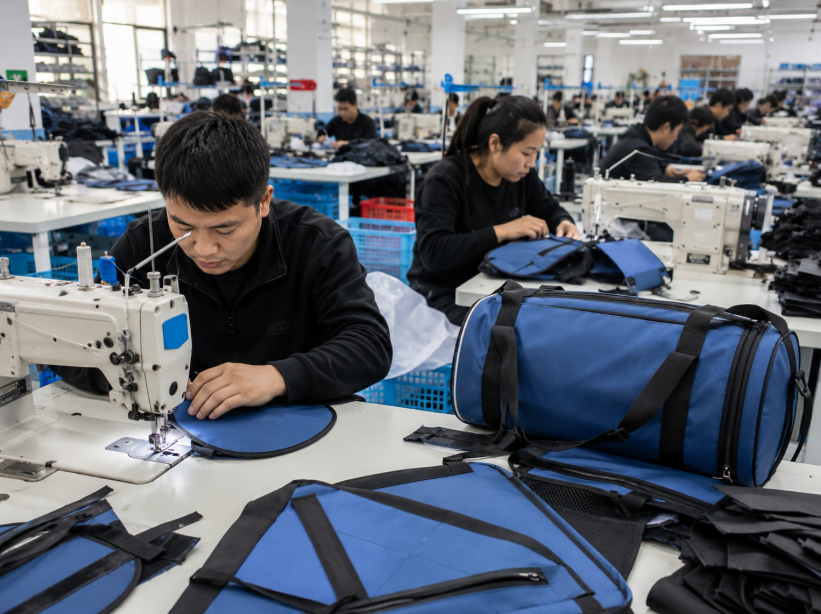
China didn’t become the default sourcing destination for gym bags by accident. Guangdong and Fujian provinces host dense clusters of fabric mills, zipper suppliers, webbing producers, and printing workshops, often within a short drive of each other. When a fabric supplier and a hardware supplier sit thirty minutes apart, sample turnaround drops from weeks to days. That density is hard to replicate anywhere else, and it’s the backbone of every efficient gym bag factory in the region.
Each region tends to specialize slightly differently, too. Guangzhou and Shenzhen factories often lean toward faster design turnaround and branding-heavy work, while Fujian’s cluster around Quanzhou tends to run larger, more standardized production lines built for volume. Knowing which type of cluster a factory sits in can tell you a lot about whether they’re set up for your kind of order before you even ask a single question.
The second advantage is maturity in OEM and ODM work. Chinese bag factories have spent two decades refining private label production, not just stitching bags but managing the full journey from a rough sketch to a production-ready pattern. Many factories now employ in-house designers who can turn a mood board into a technical drawing within a week, something that used to take a month elsewhere.
Global brands keep choosing Chinese suppliers because the real advantage isn’t just labor cost anymore. It’s flexibility. A single custom gym bag manufacturer can often handle a five-hundred-unit trial order and a fifty-thousand-unit reorder using the same production line, just with different scheduling. That range is exactly what a growing fitness brand needs, and it’s the reason this article focuses on helping you screen for suppliers who can actually deliver on that promise rather than just claim it.
Compare that to newer manufacturing hubs in Southeast Asia or South Asia, where fabric and hardware often still ship in from elsewhere before assembly even starts. That extra shipping step adds days to every sample round and every production cycle. It’s not that those regions can’t produce a solid gym bag. It’s that the surrounding supply chain hasn’t matured to the same depth yet, and depth is what shortens your timeline when a design needs three or four rounds of adjustment before it’s ready.
What Makes a Reliable Custom Gym Bag Manufacturer?
Here’s what separates the suppliers worth your time from the ones that will cause headaches later.
OEM and ODM support that goes beyond a catalog. A true custom gym bag manufacturer should be able to build your design from scratch, not just relabel an existing template. Ask to see a development file from a past project, not just finished samples. If a factory can only show you catalog photos, that’s usually a sign their design team is thin.
Stable production capacity and realistic lead times. Ask directly how many gym bag production lines the factory runs and how many are currently booked. A factory that promises a two-week turnaround for five thousand units, when their competitors quote five weeks, is either overstaffed or overpromising. Neither is a great sign.
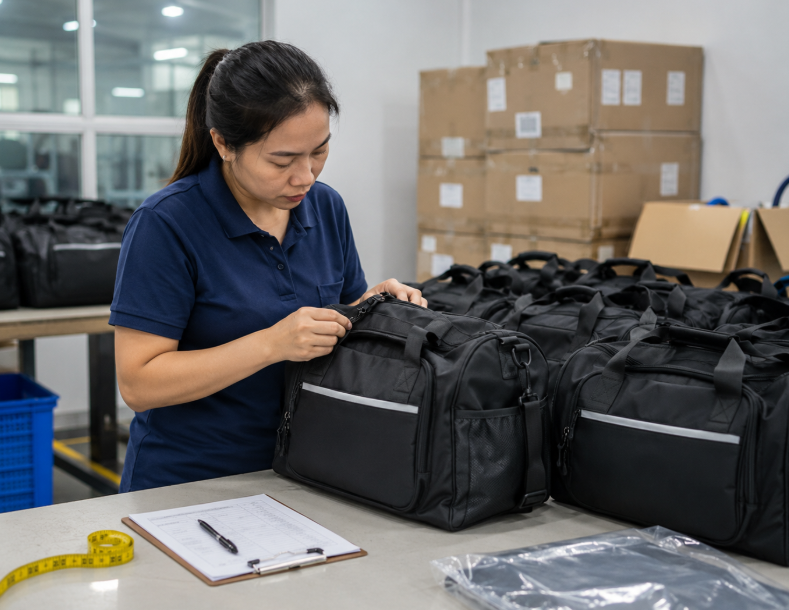
Material selection paired with real quality control. Sourcing the right fabric is only half the job. A reliable gym bag factory tests seam strength, zipper pull cycles, and water resistance before bags ever reach a shipping container. If you want to understand how different fabrics perform under daily gym use, it helps to compare notes with a factory that can walk you through actual bag material options rather than just quoting fabric names.
Export experience with Western markets. A factory that has shipped to the EU or US understands labeling requirements, packaging norms, and the kind of quality tolerances American and European buyers expect. That experience shows up in small ways, like how carefully they check stitching consistency across a batch rather than just the first sample. It also shows up in bigger ways, like knowing which fabric additives or dyes are restricted in certain markets before you find out the hard way at customs.
MOQ and sampling flexibility. If you’re testing a new gym bag line, you don’t want to commit to five thousand units before you know if the design works. Factories confident in their own capability tend to offer lower minimum order quantities for first-time buyers, precisely because they trust the product to sell itself once you see it in person.
Key Materials Used in Custom Gym Bag Production
Material choice shapes everything from durability to how your bag feels when a customer picks it up in a gym locker room. Below is a practical breakdown of the fabrics you’ll run into most often when developing a custom gym bag.
| Material | Key Properties | Best For | Buyer Considerations |
|---|---|---|---|
| Polyester | Lightweight, affordable, holds print colors well | Budget-friendly gym bags, promotional orders | Lower abrasion resistance than nylon over long-term heavy use |
| Nylon | Durable, naturally water-resistant, strong tear strength | Premium gym bags, athletic brand lines | Slightly higher cost, but better long-term value |
| Oxford fabric | Tightly woven, sturdy, resistant to fraying | Everyday gym duffels and mid-range bags | Weight and thread count vary widely between suppliers |
| RPET recycled fabric | Made from recycled plastic bottles, similar feel to polyester | Eco-conscious brands, sustainability-driven positioning | Confirm actual recycled content percentage before committing |
| PU leather details | Adds a polished look to straps, trims, and logo patches | Premium or lifestyle-positioned gym bags | Quality varies significantly; test for cracking after flex testing |
Fabric weight, usually measured in GSM or denier depending on the material, changes how a bag feels and holds shape far more than most buyers expect. A 600D nylon feels noticeably sturdier than a 300D version, but it also weighs more and costs more to ship at scale. Ask your factory to send physical swatches at a few different weights before you lock in a spec sheet, since photos never show the real hand-feel of a fabric.
Sustainability keeps climbing the priority list for gym bag buyers, and RPET fabric is where most of that conversation happens. If you’re building an eco-focused product line, ask your factory whether their recycled fabric carries any third-party verification, since claims about recycled content aren’t worth much without proof behind them. Fabrics used in sportswear-adjacent products are increasingly tested against safety standards like those from OEKO-TEX, which checks for harmful substances in textiles. That kind of verification matters more when your gym bag sits close to skin and sweat all day.
PU leather trims deserve a second look too. Cheap PU cracks within months under gym conditions, especially near handle stress points. A good factory will let you run a flex test on trim samples before locking in a production order.
For any claim that sounds too good to verify, ask for lab test reports. Independent testing bodies such as SGS run standardized checks on fabric strength, colorfastness, and chemical safety, and a factory with nothing to hide will usually already have these reports on file from past orders. If a supplier hesitates or stalls when you ask, treat that as useful information in itself.
Customization Options for Gym Bags
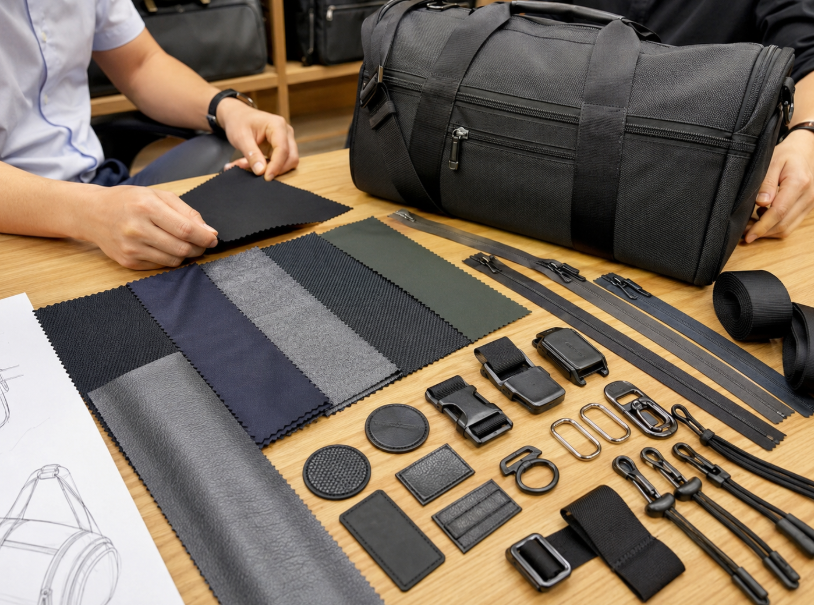
Customization is where a generic bag becomes a branded product. Here’s what typically sits on the table when you start developing a custom gym bag.
Logo printing methods. Screen printing works well for simple, bold logos and keeps costs predictable. Heat transfer suits detailed, multi-color designs but needs careful placement testing on curved surfaces. Embroidery adds a premium texture and holds up longest against washing, which is why many brands reserve it for their main logo mark. If you’re weighing which approach fits your brand identity, it’s worth reviewing how different logo application methods perform across bag types before finalizing artwork.
Structural design choices. A dedicated shoe compartment keeps gym clothes separate from dirty sneakers, and it’s become close to a standard expectation rather than a nice-to-have. Wet-dry separation compartments handle sweaty clothes or a swimsuit without soaking the rest of the bag. Multiple internal dividers help organize smaller items like supplements, headphones, or a phone charger.
Size and capacity customization. Gym bags typically range from compact 20-liter options for quick sessions to 40-liter-plus duffels built for travel and training combined. Getting this right depends on how your target customer actually uses the bag, not just how it photographs.
Hardware selection. Zippers, webbing, and buckles quietly determine how a bag ages. Reputable hardware brands such as YKK are widely used across the industry because their zippers resist jamming and hold up through thousands of open-close cycles, which matters enormously for a bag opened daily. Webbing thickness and buckle strength deserve the same attention, especially on shoulder straps that carry real weight. Ask your factory which zipper brand and grade they plan to use before production starts, not after you receive the first shipment.
Packaging customization. Branded polybags, inserts, and hang tags turn a plain product into a retail-ready one. If your gym bag will sit on a shelf or ship direct to consumers, packaging often shapes the first impression more than the bag itself does in that split-second unboxing moment.
Top 8 Custom Gym Bag Manufacturers in China
Here’s a working shortlist of gym bag manufacturers worth evaluating, based on production scale, customization depth, and export track record.
| Manufacturer | Established | Location | Main Products | Key Strengths |
|---|---|---|---|---|
| HeteBag | 2011 | Guangzhou, Guangdong | Custom gym bags, backpacks, tote bags, travel bags | OEM/ODM customization, export experience, flexible MOQ, full branding solutions |
| Shingrand Bag Manufacturing | 2008 | Quanzhou, Fujian | Gym bags, duffel bags, sports bags | Large-scale production, stable quality, bulk orders |
| Guangzhou Qiyao Bags Co., Ltd. | 2012 | Guangzhou, Guangdong | Fitness bags, sports bags, travel bags | Strong OEM capability, diverse fabric options |
| Quanzhou Goldstar Bags Co., Ltd. | 1993 | Quanzhou, Fujian | Gym bags, backpacks, duffel bags | Long export history, competitive pricing |
| Xiamen LeYoung Industrial Co., Ltd. | 2005 | Xiamen, Fujian | Promotional bags, gym bags, tote bags | Branding and promotional customization strength |
| Shenzhen Winner Bags Co., Ltd. | 2010 | Shenzhen, Guangdong | Sports bags, gym bags, travel bags | Design development, high-quality manufacturing |
| Yangzhou Huicheng Leisure Products Co., Ltd. | 2009 | Yangzhou, Jiangsu | Leisure bags, gym bags, travel bags | Flexible MOQ, small to medium orders |
| Wenzhou Trust Bags Co., Ltd. | 2011 | Wenzhou, Zhejiang | Promotional bags, gym bags, custom bags | Private label focus, global export support |
HeteBag operates out of Guangzhou and has spent over a decade building OEM and ODM programs for gym bags, backpacks, and travel bags. Their flexible MOQ policy makes them a practical starting point for brands testing a new gym bag design before committing to bulk volume.
Shingrand Bag Manufacturing runs larger-scale operations centered in Quanzhou, a good fit if your priority is consistent quality across high-volume bulk orders rather than intricate custom detailing.
Guangzhou Qiyao Bags brings strong OEM development capability and works with a wide range of fabric options, useful if your product line spans several material types.
Quanzhou Goldstar Bags, established back in 1993, carries one of the longest export histories on this list, which often translates into smoother documentation and shipping processes for first-time international buyers.
Xiamen LeYoung Industrial leans into promotional and branded bag work, a natural fit for gym bags tied to corporate gifting or event merchandise programs.
Shenzhen Winner Bags invests heavily in design development, making them worth considering if you need a factory that can co-create a design rather than just execute one you hand over fully finished.
Yangzhou Huicheng Leisure Products caters well to smaller and mid-sized order volumes, a solid option for newer brands not ready to commit to massive production runs.
Wenzhou Trust Bags focuses on private label programs with established global export support, suited to brands prioritizing a hands-off, fully white-labeled sourcing relationship.
How to Choose the Right Gym Bag Supplier for Your Brand
Picking a supplier isn’t just about who quotes the lowest number. It’s about matching factory type to what your brand actually needs.
Match the factory to your brand positioning. A premium fitness brand chasing a boutique retail look needs a different kind of gym bag manufacturer than a fast-growing D2C brand pushing volume through online ads. Ask potential suppliers for photos of past work that matches your positioning, not just their entire catalog. A factory that mainly serves budget promotional buyers may struggle with the finishing details a premium line demands, even if their pricing looks attractive on paper.
Compare sample quality against bulk production consistency. A gorgeous sample means little if batch three looks noticeably different from batch one. Request photos or a sample from an existing bulk order, not just a hand-finished prototype, to see how the factory performs at real production scale.
Check factory audits and certifications. Social compliance certifications like BSCI confirm a factory has passed independent labor and workplace standard audits, which matters increasingly to retailers and consumers alike. Quality management certifications such as ISO 9001 indicate the factory follows documented, repeatable processes rather than relying on informal know-how that varies by shift or supervisor. Neither certification guarantees a perfect product, but both dramatically lower the odds of unpleasant surprises during a large order.
Evaluate communication speed and development ability. How fast does a factory respond to a technical question? Do they push back constructively when a design detail won’t hold up structurally, or do they just agree with everything to close the deal? The second type causes problems down the road. Pay attention to how a factory handles a revision request during sampling. A team that explains why a change might weaken the bag, and offers an alternative, is worth far more than one that silently does whatever you ask.
Think about long-term partnership potential. Switching gym bag factories every year drains time and creates quality inconsistency across your product line. Look for a supplier who can grow with you across seasons and new product categories, not just fill one order and disappear.
If you are comparing production options for your own design, review HeteBag’s custom gym bag manufacturing capabilities, including materials, branding, sampling, and bulk production.
Common Mistakes Buyers Make When Sourcing Gym Bags
Even seasoned buyers fall into a few predictable traps when sourcing gym bags. Watching for these early saves real money later.
Chasing the lowest quote while ignoring quality. A cheaper unit price often hides thinner fabric, weaker zippers, or corners cut on stitching density. Those savings evaporate fast once return rates climb.
Skipping material standard confirmation. “Polyester” can mean a dozen different weights and finishes. Always request the specific denier, GSM, or technical spec sheet rather than accepting a vague material name on a quote.
Underestimating the sampling stage. Rushing through samples to save two weeks often costs a month later when bulk production reveals a fit or durability issue nobody caught early. Treat sampling as a real test phase, not a formality.
Leaving functional requirements unclear. If you don’t specify shoe compartment size, wet-pocket placement, or shoulder strap length, the factory will make its own assumptions. Those assumptions rarely match what you had in mind.
Overlooking lead time against actual production capacity. A factory can quote a fast lead time on paper, but if their production lines are already booked solid, your order slides to the back of the queue. Ask about current line availability, not just theoretical turnaround speed.
Forgetting to plan for peak season delays. Factories across China slow down significantly around the Lunar New Year, and orders placed too close to that window often stall for weeks. Building a buffer into your timeline before that period saves you from an awkward stockout months later.
Conclusion
Sourcing a custom gym bag isn’t complicated once you know what to check for. Look past the sales pitch, ask for real production evidence, confirm material specs in writing, and take sampling seriously before committing to bulk volume. Doing that consistently is what separates buyers who build a reliable supply chain from those who keep restarting the search every year.
HeteBag has spent more than 15 years manufacturing custom bags from our factory base in Huadu, Guangzhou, working alongside a trusted network of specialized production partners to cover everything from gym bags to backpacks and travel bags. That range means we can usually match your design brief to the right production line and fabric source without forcing your gym bag through a factory that’s better suited to something else entirely.
If you’re currently searching for a gym bag manufacturer you can actually rely on, we’d genuinely like to hear from you. Leave your phone number through our contact us, and our team will follow up to talk through your project, your timeline, and what kind of bag you’re trying to build. We look forward to building something great together.
Buyer Checklist for Custom Gym Bag Sourcing
For OEM or private-label gym bags, compare manufacturers on more than price. Check MOQ flexibility, fabric availability, shoe or wet compartments, reinforced handles, zipper quality, logo methods, sample development, QC, and bulk lead time.
- Confirm whether the factory can develop your structure rather than only relabel a stock design.
- Check whether MOQ changes with custom colors, hardware, or packaging.
- Test load-bearing seams, zippers, straps, and high-stress areas on the sample.
- Ask how the approved sample is controlled during bulk production.
For a project-specific quote, see HETEBAG’s custom gym bag manufacturing options for materials, branding, sampling, and OEM/ODM production.
Frequently Asked Questions
How do I choose the right custom gym bag manufacturer in China?
Look for manufacturers with OEM/ODM experience, strong quality control, customization capabilities, and a proven export record. Request samples before placing a bulk order to evaluate product quality and workmanship.
What is the typical MOQ for custom gym bags?
Most Chinese manufacturers require a minimum order quantity between 300 and 500 pieces, although some factories may accept smaller trial orders depending on the bag style and customization requirements.
Can I customize the material, color, and logo of a gym bag?
Yes. Most professional manufacturers offer full customization, including fabric selection, colors, logo printing or embroidery, zipper styles, hardware, and packaging to match your brand requirements.
How long does it take to produce custom gym bags?
Sample production usually takes 7–15 days, while bulk production generally requires 25–45 days, depending on the order quantity and the complexity of the design


