
 English
  Italian
  French
  German
  Spanish
  Arabic
 When you come to China for cosmetic bag suppliers, the first thing you do is to look at the price. But once you start making samples, you will realize that the price is just one part of it. The feel of the fabric, the quality of the zippers, whether the inner lining is easy to clean, the effect of the logo, and whether the final product can match the sample exactly, all these factors will directly affect the final product.
There are many factories in China that produce cosmetic bags, mainly concentrated in Guangdong, Fujian and Zhejiang. Some of these factories have been engaged in promotional gifts for a long time and are good at controlling costs and delivery times; some are more inclined towards brand customization, capable of cooperating in developing sizes, structures and packaging; and some mainly produce eco-friendly materials, PVC transparent bags, PU leather cosmetic bags or travel toiletry bags. The factories may look similar on the surface, but when actually cooperating, the types of orders that are suitable can be completely different.
Therefore, when choosing a supplier, one should not only rely on the product pictures on the website, nor should they only compare the lowest quotations. Issues such as whether the minimum order quantity is appropriate, whether the communication during sample production is smooth, whether there are enough material options, and whether the factory has stable quality control, all need to be confirmed in advance.
Hetebag has extensive experience in the cosmetics bag industry. Our customers come from over fifty countries. In this article, I have compiled information about 11 Chinese cosmetics bag suppliers, including their locations, main products, and prominent advantages. I hope this article is helpful to you!
Why Source Cosmetic Bags from China?
China as the Global Cosmetic Bag Manufacturing Hub
The answer isn’t as simple as “low cost.” Yes, pricing is competitive. But what makes China’s manufacturing base genuinely hard to replace is the density of its supply chain. In the Pearl River Delta alone — covering Guangzhou, Shenzhen, and Dongguan — you have zipper manufacturers, fabric mills, hardware suppliers, printing facilities, and bag factories all within a 100-kilometer radius. That proximity collapses lead times and gives factories the flexibility to prototype quickly.
Cost, Supply Chain, and Production Advantages
Raw material access is a core advantage. Chinese cosmetic bag factories can source PU leather, nylon, canvas, EVA, PVC, and recycled RPET fabrics domestically, often from suppliers they’ve worked with for years. That existing relationship translates to material consistency and better pricing at volume.
Labor costs, while rising over the past decade, are still significantly lower than Europe or North America for sewn goods. More importantly, China’s bag manufacturing workforce carries deep technical expertise — pattern-making, hand-stitching, heat-press application — skills that take years to develop and aren’t easily relocated.
Production capacity is another dimension that rarely gets discussed honestly. When you need 10,000 units in eight weeks, very few countries outside China can realistically deliver. The infrastructure — power, logistics, container access — simply exists here in a way it doesn’t elsewhere.
Evidence note: According to data from the International Trade Centre (ITC), China consistently accounts for over 40% of global bag and luggage exports by value. The country’s position as the world’s leading cosmetic bag manufacturer is supported by decades of trade flow data and buyer-reported supplier concentration.

What Types of Cosmetic Bags Do Chinese Suppliers Offer?
Before shortlisting suppliers, it helps to understand what the market actually produces. Not all factories handle every material well — some are built for PU and PVC work, others specialize in fabric constructions. Matching your product type to the right manufacturer is the first real quality lever you have.
PU Cosmetic Bags
Polyurethane leather is the workhorse of the cosmetic bag category. It mimics genuine leather’s look and feel at a fraction of the cost, and it’s durable enough for daily use. High-quality PU is soft, scratch-resistant, and easy to wipe clean — all useful properties for a bag holding foundation, mascara, and lip gloss. The grade of PU varies enormously; ask for material spec sheets and request an abrasion resistance test if you’re targeting a premium price point.
Canvas Cosmetic Bags
Cotton canvas is the go-to for brands positioning themselves as sustainable or artisan. It takes screen printing and embroidery well, which makes it ideal for logo-forward designs. The trade-off is that canvas is less water-resistant than synthetic alternatives — though wax coating or inner lining can address this. Canvas bags tend to have a slightly longer sampling cycle because fabric shrinkage and color bleeding need to be tested properly before bulk production.
PVC Cosmetic Bags
PVC (polyvinyl chloride) produces the clear, structured bags you often see in travel toiletry sets and GWP (gift-with-purchase) promotions. It’s economical, easy to seal, and visually clean. The main concern for brands targeting eco-conscious markets is that standard PVC is not easily recyclable. Some factories now offer PVC alternatives that pass OEKO-TEX Standard 100 testing, which certifies that textiles and accessories have been tested for harmful substances — worth asking about if your customers care about certifications.
Travel Makeup Bags
Travel makeup bags are a distinct category because the functional requirements are different. They need to handle airport TSA requirements, survive being stuffed into overhead compartments, and keep contents organized through movement. Better-designed travel versions use structured inserts, multi-compartment layouts, and hanging hooks. Chinese factories with experience in this category will already have tested construction solutions — ask to see their existing travel bag line before designing from scratch. You can also explore custom travel bags options to understand what configuration possibilities exist.
Sustainable RPET Cosmetic Bags
Recycled PET (polyester derived from post-consumer plastic bottles) has moved from a niche sustainability play to a mainstream material. RPET fabrics look and behave similarly to standard polyester but carry a recyclability story that resonates with consumers. When sourcing RPET cosmetic bags, ask your supplier about GRS (Global Recycled Standard) certification — this third-party verification from Textile Exchange confirms the recycled content claims in your supply chain and protects your brand from greenwashing accusations.
Top 11 Cosmetic Bag Suppliers in China
The following list is compiled based on publicly available company information, product specializations, and manufacturing location. Each supplier has been selected to represent a different segment of the market — from high-volume Guangdong factories to eco-focused Fujian producers.
| Rank | Company | Location | Est. | Main Products | Key Strengths |
|---|---|---|---|---|---|
| 1 | Hetebag | Guangzhou, Guangdong | 2011 | Custom cosmetic bags, makeup bags, toiletry bags, travel pouches | OEM/ODM development, material selection, logo customization, sampling and bulk manufacturing for brands, wholesalers and distributors |
| 2 | Fuyuan Bag Factory | Shenzhen, Guangdong | 2003 | Cosmetic bags, beauty bags, toiletry bags, PVC pouches, travel makeup bags | Production facilities in Shenzhen and Jiangxi; handles PVC, PU, EVA, nylon, polyester and canvas; MOQ from 500 pcs |
| 3 | Ecorivta | Dongguan, Guangdong | 1990 | Cosmetic bags, beauty accessories, tote bags, GWP products | Focus on sustainable cosmetic bags and promotional beauty products; broad recycled and certified material selection |
| 4 | Kinmart | Quanzhou, Fujian | 1994 | Cosmetic bags, toiletry bags, cosmetic packaging bags, handbags, travel kits | Both custom production and ready-stock wholesale; suitable for beauty brands, promotional projects and retailers |
| 5 | Bearky Bag | Guangzhou, Guangdong | 2004 | Cosmetic bags, backpacks, travel bags, tote bags, promotional bags | OEM/ODM with in-house production lines; supports product development and large-volume manufacturing |
| 6 | Q&N Cosmetic Bag Factory | Guangzhou, Guangdong | 2010 | Cosmetic bags, makeup pouches, quilted bags, beauty cases, cosmetic bag sets | Specialized in cosmetic bag development for beauty brands; structured QC and custom packaging support |
| 7 | SLBAG | Guangzhou, Guangdong | 16+ yrs | Cosmetic bags, leather makeup bags, handbags, wallets, fashion accessories | Suitable for smaller production runs, custom designs, premium leather or fabric cosmetic bags |
| 8 | Biben Bag | Wenzhou, Zhejiang | 2015 | PVC cosmetic bags, cotton pouches, Oxford bags, Tyvek bags, promotional bags | Broad range of reusable and promotional cosmetic bags; eco-friendly and unusual material options |
| 9 | Orient Handbag Manufacture | Quanzhou, Fujian | 1983 | Makeup bags, promotional bags, backpacks, totes, travel bags | Manufacturing in China, Cambodia and Myanmar; suitable for large international orders and diversified sourcing |
| 10 | Xiamen Green Field | Xiamen, Fujian | 2010 | Cosmetic bags, RPET bags, Tyvek bags, cork bags, washable kraft paper bags | Strong sustainable materials focus; customized eco-friendly cosmetic bags for retail and promotional use |
| 11 | Aimazing Bag | Guangzhou, Guangdong | 26+ yrs | Makeup bags, puffy cosmetic bags, eco-friendly bags, smell-proof bags, specialty bags | OEM/ODM across conventional and specialty materials; suitable for brands developing distinctive cosmetic bag concepts |
Evidence note: Company information is drawn from publicly available business profiles, official websites, and verified trade directories. Founding years, production capabilities, and product categories are based on manufacturer self-disclosure and are subject to change. Buyers are advised to independently verify factory credentials — including BSCI audit status (Business Social Compliance Initiative) and factory inspection reports — before placing orders.
How to Evaluate a Cosmetic Bag Supplier Before Ordering?
Factory Qualifications
Start with documentation. A legitimate cosmetic bag manufacturer should be able to produce business registration records, export licenses, and any relevant social compliance or quality certificates without hesitation. Key credentials to look for include ISO 9001 quality management certification, BSCI audit reports for ethical production, and SGS or Intertek inspection history.
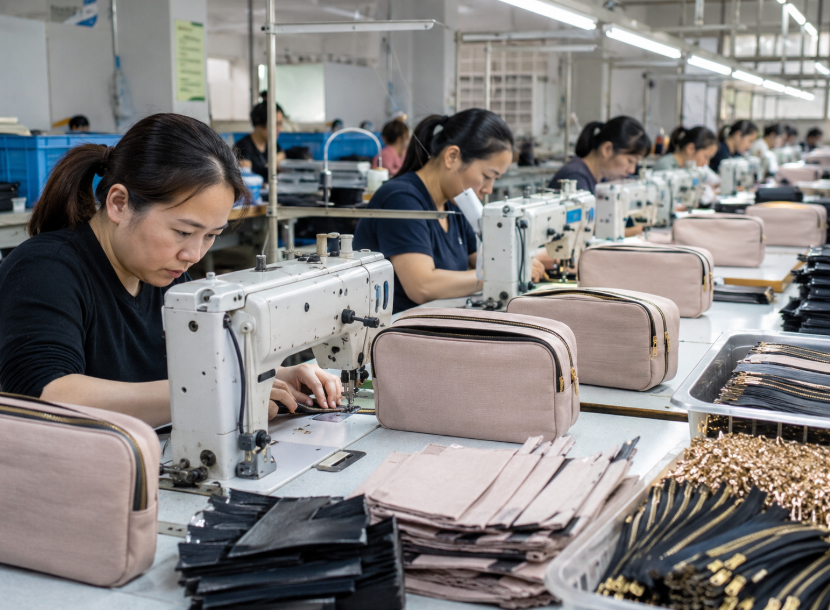
Don’t overlook the physical factory. Photos and video calls are a minimum — a paid factory audit by a third party is significantly more reliable. What you’re looking for is organized production lines, proper material storage (humidity and light matter for fabrics), and visible quality checkpoints at different production stages.
Ask specifically: Do they have their own sewing lines, or do they subcontract cutting and assembly? Subcontracting isn’t inherently bad, but you need to know which parts of your product leave the primary factory’s direct control.
Production Experience
Years in business matter, but type of experience matters more. A factory that has spent 15 years making nylon travel bags has a different skill set than one that specializes in PU cosmetic pouches. Ask to see samples from orders similar to yours — similar material, similar construction, similar volume.
Pay attention to their tooling. Good factories own their own dies, cutting equipment, and zipper sourcing relationships. If a factory has to outsource basic hardware procurement for each new order, lead times become unpredictable.
Quality Control System
Quality control in bag manufacturing operates at three stages: incoming material inspection, in-line production inspection, and final pre-shipment inspection. Ask your supplier to describe their process at each stage. The answers reveal a lot about how seriously they take QC.
For cosmetic bags specifically, the failure points to test are: zipper pull smoothness and cycle durability, stitching density and tension (especially at stress points like handles and corners), seam sealing quality on water-resistant materials, and color consistency across the production batch.
It’s entirely reasonable to request a pre-shipment inspection report before releasing final payment. Reputable factories expect this. You can also engage an independent inspection company for a third-party AQL check.
A Sourcing Scenario to Consider
Imagine you’re a beauty brand ordering 3,000 units of a branded cosmetic pouch for a retail launch. Your design uses a quilted PU outer shell, an interior mirror, and a branded metal zipper pull. How does your supplier handle the metal hardware sourcing — do they use a certified zipper supplier like YKK or their own hardware? What is their defect acceptance threshold? If the first pre-production sample arrives with the mirror positioned 5mm off-center, how quickly can they correct and re-sample?
These aren’t hypothetical edge cases. They’re the actual decisions that determine whether your launch timeline holds.
What Customization Options Are Available?
Logo Printing
Logo application methods carry different quality implications depending on the base material. Screen printing works on canvas and polyester. Debossing and embossing are standard for PU and genuine leather. Heat transfer works well on smooth synthetic surfaces. Metal plate logos add premium appeal but require tooling costs. Woven labels are ideal for interior branding on fabric bags.
The method you choose should match how the bag will be used. A debossed logo on a PU cosmetic bag looks clean and durable; screen print on the same material may crack over time with repeated cleaning.
Material Selection
Material selection is where brand identity begins to take physical form. The choice between matte PU and glossy PU, between 600D polyester and 1680D Oxford nylon, between standard canvas and waxed canvas — each carries a different tactile message to the end user.
For buyers who want to understand the full range of material options before committing to a direction, resources like custom bag materials guides can help map material properties against use cases and price points.
Size & Structure
Size customization is more nuanced than it appears. It’s not just about dimensions — it’s about interior organization, the relationship between compartments, how the bag closes and opens, and how it feels in hand. A 22cm × 15cm pouch with a single zip looks different from one with a front pocket, an elasticated brush holder, and a flat bottom gusset, even at identical outer dimensions.
Structural decisions — whether to use a zipper closure, a snap button, a magnetic clasp, or a roll-top — affect both function and manufacturing cost. Discuss structural details in the sampling stage, before bulk production, not after.
You can also reference custom bag sizes specifications to understand how standard dimensions translate into finished product proportions.
Packaging Customization
Packaging is often an afterthought — which is a mistake. For cosmetic bags, packaging directly affects the unboxing experience and retail shelf appeal. Options include custom polybag with hang tag, individual gift box (rigid or folded), tissue paper wrapping with sticker seal, or retail header card for peg display. Each has cost and MOQ implications that should be factored into your unit economics from the beginning.
How Much Does It Cost to Manufacture Custom Cosmetic Bags?
Factors That Affect Pricing
Material is the biggest cost driver. A PVC pouch in a simple construction might cost $1.20–$2.50 per unit at volume, while a quilted PU cosmetic bag with interior lining, metal zipper pull, and mirror insert can run $4.50–$9.00 per unit depending on complexity and order size.
Secondary factors include: number of compartments (more stitching = more labor time), logo method (metal plate tooling has a one-time fee, often $80–$200), number of colors in the exterior fabric, and zipper quality. Hardware quality — using branded zipper components versus unbranded alternatives — can add $0.30–$0.80 per bag but is often worth it for the durability difference.
Packaging adds $0.20–$1.50 per unit depending on complexity, which can meaningfully shift unit economics for lower-priced SKUs.
MOQ Requirements
Most Chinese cosmetic bag factories operate with MOQs between 300 and 1,000 units per style. Some larger factories set minimums at 500–2,000. Lower MOQs are available but typically come with higher per-unit pricing and longer relative sampling costs.
For brands just starting out, it’s worth discussing mixed-style orders with your factory — some suppliers allow you to meet the MOQ across two or three colorways of the same construction, which lets you test the market without locking all your inventory into one option.
Sampling Costs
Expect to pay $50–$250 per sample, depending on construction complexity. Most factories deduct sample costs from your bulk order payment once you confirm production. If a factory offers “free samples,” the cost is typically absorbed into the bulk pricing — not eliminated. Understand what you’re actually paying before comparing quotes.
The first sample cycle typically takes 10–20 days. If revisions are needed (they usually are), factor in another 7–15 days per revision round. Build this into your product launch timeline.
Bulk Production Costs
Lead time for bulk cosmetic bag orders typically runs 30–45 days from order confirmation, assuming materials are in stock. Orders with custom-dyed fabrics or specialty hardware can extend to 50–60 days. Factor in 3–5 weeks for ocean freight to North America or Europe.
At volume — 3,000 units and above — you can typically negotiate 5–15% off base pricing, depending on your relationship with the factory and whether you’re placing a repeat order. Building a long-term relationship with a single reliable factory almost always yields better pricing and priority scheduling over time.
How to Choose the Right Cosmetic Bag Supplier for Your Brand?
This is where the evaluation moves from checklist to judgment. The “best” cosmetic bag supplier isn’t the cheapest, the largest, or the one with the most certifications. It’s the one that can consistently deliver your specific product, at your required quality level, within your timeline — and communicate clearly when something isn’t going to plan.
Match factory capability to product complexity. If your design uses standard materials and a straightforward construction, almost any mid-sized factory can handle it. But if your concept involves unusual materials, tight structural tolerances, or complex interior fittings, you need a factory with demonstrated experience in that specific construction type. Ask for reference samples.
Assess communication, not just product quality. Response speed during the inquiry phase tells you a lot about how a factory will behave when a production problem arises. A factory that takes four days to answer a basic spec question will take longer to resolve a mid-production defect.
Understand the factory’s actual capacity. A factory quoting a 30-day lead time while handling three other large orders simultaneously may not be giving you a realistic number. Ask directly: what is your current production schedule, and how much capacity do you have allocated for my order?
Verify certifications independently. BSCI, ISO, and social compliance certificates are verifiable — ask for certificate numbers and check them. A factory that presents outdated or unverifiable documentation is a risk, regardless of how good their samples look.
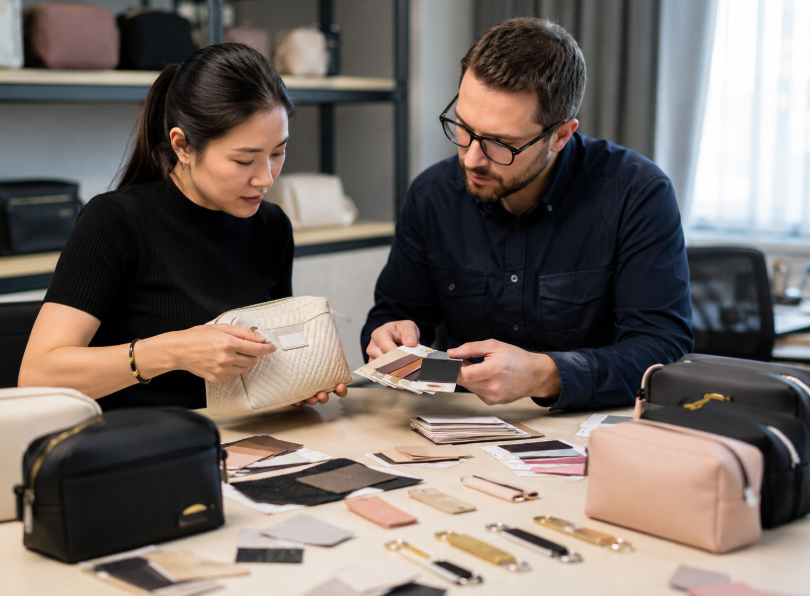
Consider the full relationship, not just the first order. Cosmetic bag development takes time. If you find a factory that understands your aesthetic, handles your material requirements well, and communicates reliably, protect that relationship. The suppliers who perform best long-term are rarely the ones who win on price; they’re the ones who consistently execute without drama. This applies whether you’re sourcing custom makeup bags for a retail line or developing promotional pouches at scale.
Conclusion
Sourcing cosmetic bags from China is a sound strategic decision for most brands and buyers — the supply chain depth, material access, and manufacturing expertise simply don’t exist at the same scale anywhere else. But the difference between a successful sourcing relationship and a costly one comes down to how carefully you evaluate suppliers, how clearly you communicate your requirements, and how honestly you assess whether a factory’s capabilities match your product.
The 11 suppliers listed here cover a range of specializations, locations, and strengths. Your job is to find the one that fits your specific brief.
If you’re looking for a manufacturer based in Huadu, Guangzhou — with 15 years of verified production experience, in-house OEM and ODM capabilities, and a track record across multiple international markets — we’d be glad to hear from you. Hetebag operates its own factory, works with a network of partner facilities, and has supported brands, wholesalers, and distributors across more than 70 countries since 2011. Whether you’re developing a new cosmetic bag line from scratch or need a reliable production partner for an existing design, you’re welcome to leave your contact details directly on our website. We look forward to working with you.
Buyer Checklist for Cosmetic Bag Sourcing
Before asking for a final quote, compare suppliers on the points that usually affect both quality and total cost: MOQ by material and color, sample development time, logo methods, zipper and lining options, packaging, QC checkpoints, bulk lead time, and whether the factory can support OEM/ODM or private label development.
- Confirm whether the quoted MOQ applies per design, color, or material.
- Approve a physical sample before bulk production.
- Ask which materials and hardware are stock items and which require custom sourcing.
- Confirm inspection standards and how defects are handled before shipment.
- Compare total project cost, not only the lowest unit price.
If you are developing a branded cosmetic or makeup bag, you can also review HETEBAG’s custom makeup bag manufacturing options for material selection, logo customization, sampling, and bulk production.
Frequently Asked Questions
What is the typical MOQ for custom cosmetic bags in China?
Most cosmetic bag manufacturers require a minimum order of around 300 to 1,000 pieces per design. The exact MOQ depends on the material, size, logo method, and level of customization.
How long does it take to produce custom cosmetic bags?
Sample production usually takes 10 to 20 days. After the sample is approved, bulk production normally takes around 30 to 45 days, although complex designs or custom materials may require more time.
What materials are commonly used for cosmetic bags?
Common options include PU leather, canvas, polyester, nylon, PVC, EVA, and recycled RPET fabric. The best material depends on your target price, design style, durability requirements, and market positioning.
Can Chinese suppliers add custom logos and packaging?
Yes. Most suppliers offer screen printing, embroidery, heat transfer, debossing, woven labels, metal logos, and rubber patches. Custom packaging such as polybags, hang tags, gift boxes, and tissue wrapping is also available.


