
 English
  Italian
  French
  German
  Spanish
  Arabic
 A logo can look right in an artwork file and still disappoint on a finished bag. Small lettering may lose definition on coarse canvas, a transfer may lift from a coated surface, or a heat press may leave a visible mark around the design.
When comparing screen printing vs heat transfer for custom bags, start with the artwork, the actual bag material, and how the product will be used. Screen printing is often a practical choice for repeated designs with a few solid colors. Digital heat transfers can suit detailed, multicolor artwork and smaller quantities per design. Both require material testing and a clear sample approval process.
1. What Is the Main Difference Between Screen Printing and Heat Transfer?
Direct screen printing pushes ink through a prepared mesh stencil onto the bag fabric. Each spot color normally needs a separate screen, and the printer must dry or cure the ink according to the selected ink system.
Heat transfer applies a prepared design using controlled heat and pressure. The design may consist of cut heat transfer vinyl, a digitally printed transfer, or a screen-printed transfer produced on a carrier before application.
These categories overlap. A screen-printed transfer uses screen printing to create the image and a heat press to apply it. For purchasing purposes, ask whether the quotation covers direct screen printing or a specific transfer process.
In this comparison, heat transfer mainly refers to adhesive-based options such as heat transfer vinyl and direct-to-film transfers, usually called DTF. Dye sublimation is another heat-based process, but its material requirements and dye behavior differ enough to require separate evaluation.
| Decision factor | Direct screen printing | Adhesive-based heat transfer |
|---|---|---|
| Typical artwork fit | Solid logos and repeated spot-color designs | Digital transfers suit detailed, multicolor artwork; cut vinyl suits simpler shapes |
| Setup | Screens and color registration | Transfer preparation and application setup |
| Production economics | Often favorable for repeated designs at volume | Often useful for smaller runs or multiple artwork versions |
| Surface feel | Depends on ink type, coverage, and deposit | Depends on transfer type, thickness, and coverage |
| Main process controls | Ink compatibility, registration, and curing | Adhesive compatibility, heat, pressure, time, and peeling |
| Main approval risk | Assuming the ink suits the fabric and finish | Assuming the transfer suits every material that can enter a heat press |
When reviewing custom logo options for bags, request the process name alongside the visual sample. “Printed logo” alone leaves too much room for differences between sampling and production.
2. Which Printing Method Produces Better Logo Detail and Color?
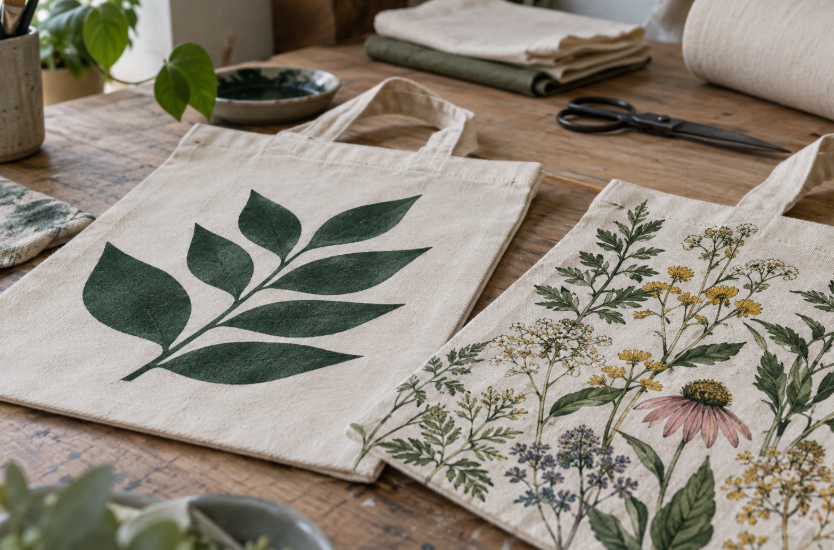
Screen printing is a strong candidate for bold lettering, clean shapes, and solid brand colors. Spot-color inks can be mixed toward a specified reference, although the final appearance still depends on the fabric color, surface texture, ink opacity, and curing conditions.
Digitally printed heat transfers can reproduce multicolor illustrations and shading without preparing a separate screen for every color. For example, Transfer Express’s DTF specifications describe full-color CMYK output and fine-detail capability, while also setting artwork limits. Those limits are product-specific, so buyers should obtain the selected supplier’s requirements.
Neither method guarantees readable small text. A fine line that looks sharp on a monitor may break up on coarse canvas, while tiny isolated transfer details may be difficult to apply consistently.
Send the artwork at its intended print size and identify details that cannot change. Ask the supplier to confirm minimum line thickness, the smallest acceptable lettering, and whether a white underbase is needed on dark fabric.
For brand color approval, compare a physical print on the chosen bag material with the agreed color reference. A phone photograph or digital mockup cannot reliably show subtle color differences, gloss, or print texture.
3. Which Bag Materials Work Better With Screen Printing or Heat Transfer?
The fiber name is only the starting point. Fabric texture, coatings, water-repellent finishes, backing materials, and heat sensitivity can all affect printing results.
Two bags described as “polyester” may need different production settings because their dyes and surface treatments differ. Approve printing on the exact material intended for production, including the correct color and finish.
| Bag material | Screen printing considerations | Heat transfer considerations |
|---|---|---|
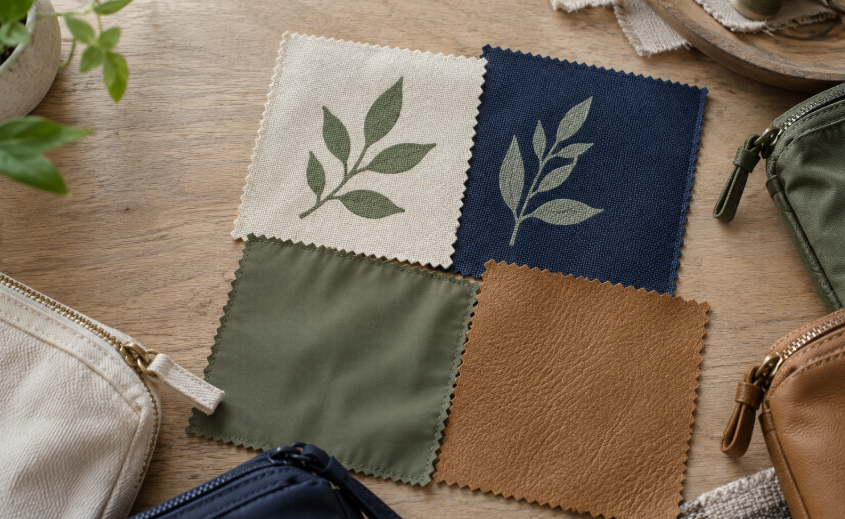
| Cotton and cotton canvas | Often suitable with compatible textile inks; coarse weave can reduce fine detail | Often suitable with a compatible transfer; check texture, adhesion, and heat marks |
| Polyester | Confirm ink compatibility, curing conditions, and dye migration risk | Check heat sensitivity and dye migration; a suitable blocking system may be needed |
| Nylon | Requires an ink system suited to the fabric and its finish | Requires a transfer specifically approved for the substrate; coatings need testing |
| Nonwoven polypropylene | Use a compatible ink and drying or curing process | Heat sensitivity can restrict application; never assume standard settings are safe |
| PU leather and coated fabrics | Test adhesion, flexibility, and interaction with the surface coating | Test for gloss changes, impressions, deformation, and coating damage |
Nylon illustrates why the specific transfer matters. Siser’s EasyWeed Extra is designed to adhere to nylon, but that does not establish that every transfer will bond to every nylon bag.
Polyester requires attention to dye migration, where fabric dye discolors the printed design. Siser’s Sub Block material is designed to block migration on sublimated polyester, showing why a dedicated barrier may be needed. Its suitability still needs checking against the actual project.
Review bag material options before finalizing the decoration method. Changing the fabric or coating after print approval can invalidate the earlier sample results.
4. Screen Printing vs Heat Transfer: Which Is More Durable?
Neither method is automatically more durable. Performance depends on the complete combination of fabric, surface finish, ink or adhesive, production conditions, and everyday use.
A correctly selected and cured screen print can withstand repeated handling. Poor adhesion or incomplete curing can still lead to abrasion, cracking, or color transfer. A thick ink deposit may also behave differently from a thinner print when the bag folds.
A properly applied transfer can also perform well. Edge lifting, separation, or cracking can occur when the adhesive is unsuitable, pressure is uneven, or the application conditions fall outside the material supplier’s requirements.
Bag construction adds another variable. Zippers, seams, pockets, and padding can prevent even contact during pressing. A transfer that bonds well to a flat swatch may behave differently on the assembled bag.
Match the evaluation to the product’s intended use:
- Check rubbing against clothing and adjacent materials.
- Fold and flex the printed area as it would move in use.
- Inspect transfer edges and small isolated details.
- Test cleaning according to the proposed care instructions.
- Evaluate packed samples for sticking, marking, or print damage.
Agree on test conditions and acceptance criteria before production. A casual hand rub is useful for screening obvious problems, but it does not support a quantified durability claim.
Washability also belongs to the finished bag. A washable transfer does not make a bag machine washable if its lining, reinforcement, coating, or hardware cannot tolerate the same treatment.
5. Which Is More Cost-Effective for Custom Bag Production?
Screen printing often becomes more economical when a substantial quantity shares the same artwork, print location, and limited color count. Its setup work can be distributed across more units.
The calculation changes when an order contains many designs. Each new screen, color arrangement, or print position can introduce additional preparation and handling, even when the total bag quantity looks large.
Digital heat transfers can be attractive for smaller quantities per design or artwork with many colors. Cut vinyl has different labor requirements because cutting, removing excess material, and positioning separate elements can take time.
Compare quotations using the same specification:
- Quantity per artwork and bag color.
- Finished print dimensions and number of locations.
- Exact screen-printing or transfer system.
- Required opacity, color matching, and finish.
- Sample development and testing.
- Printing before assembly or on finished bags.
- Packing requirements and expected rework allowance.
There is no universal quantity at which one method becomes cheaper. A small, single-color logo and a large multicolor illustration have different production economics.
The bag’s manufacturing MOQ also remains separate from the printing MOQ. Fabric purchasing, custom hardware, construction, and packaging can determine the minimum order even when the decoration itself supports a short run.
6. What Quality Problems Should Buyers Check Before Mass Production?
Start with a physical sample made from the intended production material. Approve the complete bag as well as the printed surface, since assembly can change print placement, appearance, and access for pressing.
Artwork, color, and placement
Inspect spelling, proportions, small lettering, line definition, and the alignment between colors. Check opacity on dark materials and look for unwanted outlines, gaps, or adhesive residue.
Specify print width and height, then define placement from a repeatable reference such as the finished top edge or a named seam. Agree on a practical tolerance with the supplier; “centered on the bag” is too vague when gussets, panels, and handle positions differ.
Adhesion and material damage
Look for lifting edges, cracks, pinholes, smudges, uneven coverage, and discoloration. Inspect the surrounding fabric for gloss changes, scorching, flattening, or a rectangular press impression.
Review samples after the required conditioning period, not only immediately after printing. Include handling, flexing, cleaning, and storage checks appropriate to the product, and record how each check is performed.
Production consistency and packing
Retain an approved reference sample and identify the artwork revision, material specification, print system, and agreed appearance. Require approval before the supplier changes a relevant material or process.
Check early production samples before the full run progresses. This creates an opportunity to correct positioning, color, curing, or pressing problems while the affected quantity is still limited.
Inspect packed samples too. Printed surfaces can contact one another during folding and compression, so confirm cooling or curing requirements and whether protective separation is necessary.
For European and North American orders, include the destination and brand testing requirements in the purchase specification. Supporting documents should identify the relevant ink, transfer, or printed material; a generic certificate should not be treated as proof that the finished bag meets every requirement.
7. Screen Printing or Heat Transfer: Which Should You Choose for Your Custom Bags?
Start by identifying the requirement that leaves the least room for compromise. That might be a specific brand color, fine illustration detail, a coated nylon surface, or a bag that folds into a compact pouch.
Screen printing is worth sampling first when the project uses a repeated logo with a few solid colors, the fabric accepts a suitable ink system, and the order contains enough identical prints to justify setup.
Digital heat transfer is worth sampling first when the artwork contains many colors or detailed shading, there are several design versions, and the bag material can tolerate the application process. Confirm that the printed area can receive even pressure without interference from construction details.
For coated, padded, or heat-sensitive bags, let compatibility testing lead the decision. If neither process produces an acceptable result, consider changing the print location or reviewing another decoration method.
A useful inquiry should include:
- Bag drawings or reference photographs.
- Fabric composition, color, coating, and backing details.
- Artwork at its intended size.
- Quantity per design and color.
- Print placement and appearance requirements.
- Intended use and cleaning method.
- Target market, testing requirements, and delivery date.
If both processes appear feasible, request comparative samples on the same material with the same artwork. Evaluate them against the same acceptance criteria before choosing the production method.
8. Conclusion
Screen printing vs heat transfer is a decision about the complete bag specification. Direct screen printing often suits repeated solid-color branding, while digital heat transfers can offer flexibility for detailed artwork and multiple designs. Durability and appearance depend on compatibility and process control in both cases.
Confirm the material, approve a physical sample, and document the print requirements before mass production. That gives the supplier a clear production reference and gives your team a practical basis for inspection.
For a HeteBag project, share your artwork, preferred material, quantities, and target market through our custom bag inquiry page. Include any color, care, or testing requirements so they can be considered during sampling.
9. Frequently Asked Questions
Is heat transfer better for small custom bag orders?
Digital transfers can be practical for small quantities per design because they avoid separate screen preparation for every printed color. The finished bag’s minimum order still depends on materials, construction, hardware, and packaging.
Can heat transfer be used on waterproof nylon bags?
Some transfer systems are designed for nylon, but a water-repellent or waterproof treatment can affect adhesion and heat tolerance. Ask for testing on the exact coated material, including checks for changes to the surface and its intended performance.
Can both methods match a Pantone brand color?
Screen-printing inks can be mixed toward a specified spot-color reference. Digital transfers reproduce colors within their printing system’s available range, while cut vinyl may rely on stock colors. Approve a physical sample and agree on acceptable variation for whichever method you choose.
Should bags be printed before or after sewing?
Printing flat panels before sewing can improve access and help avoid seams, pockets, and padding. Printing finished bags may suit certain designs or production arrangements, but the supplier must confirm access, alignment, and pressure where relevant. Specify the approved production route during sampling.
Which printing method is more environmentally friendly?
Neither method earns that description by default. Compare the actual ink or transfer materials, energy use, waste, durability, and supporting documentation. A water-based ink, PVC-free transfer, or certified input alone does not establish the environmental performance of the finished bag.


