
 English
  Italian
  French
  German
  Spanish
  Arabic
 A zipper can look right on a sample card and still feel wrong once it is sewn into a bag. The opening may become stiff, the lining may catch, or the slider may struggle when the compartment is full.
When comparing metal zippers vs nylon zippers, buyers need to consider the complete bag: its material, opening shape, expected load, and intended appearance. Both zipper types can work well, but their construction creates different advantages and limitations.
For brands developing custom bags, the most useful comparison starts with how the zipper will function in the finished product.
1. What Is the Main Difference Between Metal Zippers and Nylon Zippers?
How Metal Zippers Are Constructed
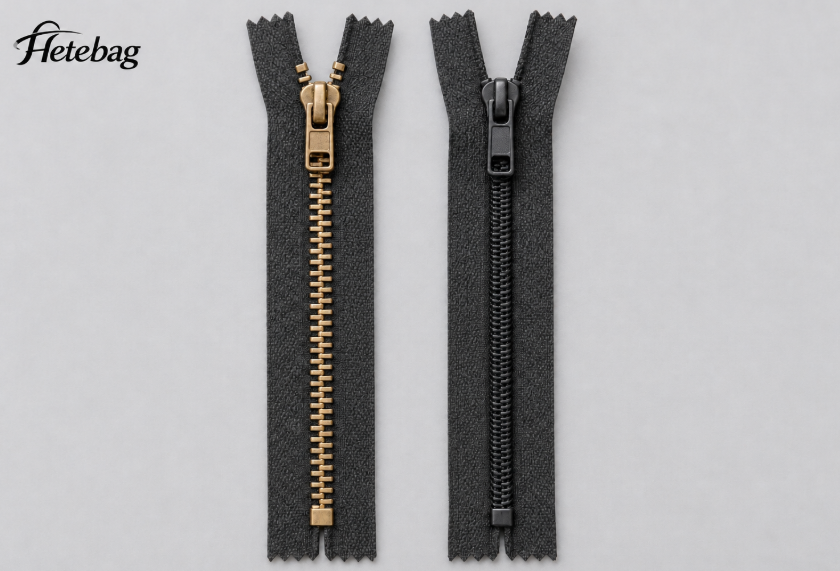
Metal zippers have separate metal teeth attached along two textile tapes. The slider guides these teeth together or apart as the user opens and closes the bag.
The exposed teeth create a distinct hardware detail. Depending on the size and finish, they can give a bag a polished, industrial, or vintage appearance, with a firmer feel along the opening.
How Nylon Coil Zippers Are Constructed
Nylon coil zippers use a continuous spiral element rather than individually attached metal teeth. This construction generally produces a lighter, more flexible closure.
The terminology needs attention when ordering. Suppliers sometimes use “nylon zipper” as a general name for coil zippers, while the actual element may be nylon or polyester. YKK’s standard coil zipper description identifies both materials, so buyers should confirm the element and tape composition separately.
Coil zippers are also different from molded plastic zippers, which have individual plastic teeth. These constructions should not be treated as interchangeable in a specification.
Quick Comparison: Weight, Flexibility, Appearance, and Typical Uses
| Feature | Metal zipper | Nylon coil zipper |
|---|---|---|
| Element construction | Separate metal teeth | Continuous synthetic coil |
| Weight | Generally heavier at comparable dimensions | Generally lighter |
| Flexibility | Usually firmer along the opening | Usually more adaptable to bending |
| Appearance | Visible hardware detail | Subtle, tonal, or technical appearance |
| Typical applications | Handbags, leather goods, fashion bags | Backpacks, travel bags, pouches, sports bags |
| Specification priorities | Tooth finish, slider fit, alignment | Coil construction, slider compatibility, tape stability |
These are starting characteristics rather than performance rankings. The exact zipper model and the way it is installed can change how it behaves.
2. Metal Zippers vs Nylon Zippers: Which Is More Durable?
Strength Under Repeated Opening and Closing
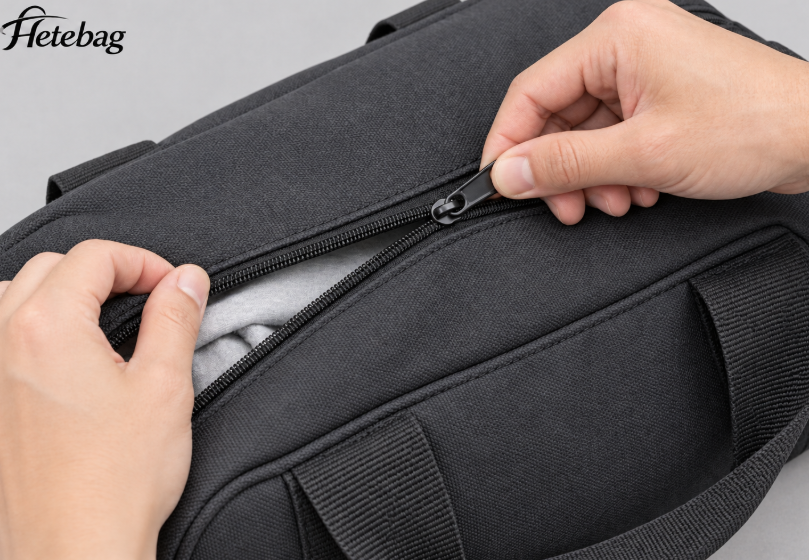
Durability includes several different questions. A zipper must resist separation across the closed chain, tolerate repeated slider movement, and remain securely attached to the bag.
Metal teeth alone do not guarantee better performance. A poorly matched slider, damaged tooth, or weak attachment can cause problems even when the chain feels substantial.
Coil zippers also vary by construction. For example, YKK’s Racquet Coil zipper is specifically designed for luggage applications where abrasion resistance matters. Buyers should compare suitable product grades rather than assuming every coil zipper performs like a lightweight pocket zipper.
Abrasion, Moisture, and Corrosion Resistance
On a travel bag, the zipper may rub against clothing, luggage compartments, and the contents inside. Inspect the tape, coil attachment, slider finish, and surrounding seams as well as the elements themselves.
Humidity, sweat, and salt exposure require extra attention to metal components. Depending on the alloy and surface treatment, these components may tarnish, oxidize, or corrode; different metals do not deteriorate in identical ways.
Synthetic coil elements do not develop metal rust. However, a coil zipper may still have a metal slider, puller, or stops, so selecting a nylon zipper does not make the entire closure corrosion-proof.
Why Zipper Size and Construction Matter Too
Zipper size, often described by a gauge or size number, helps identify the chain category. It does not provide a universal strength rating across suppliers and product families.
Ask for the exact chain code and matching slider specification. Then assess them against the opening length, expected contents, and pressure placed across the closure.
A small internal pocket and the main compartment of a packed travel bag have different demands. If normal packing forces the two sides of the opening apart, the bag pattern may also need adjustment.
3. Which Zipper Works Better for Different Bag Materials and Styles?
Leather and PU Handbags
Metal zippers are a useful starting point when visible hardware is part of the design. Gold, silver-tone, gunmetal, or antique finishes can coordinate with buckles, rings, and other handbag fittings.
The surrounding construction still matters. A soft leather pouch may benefit from a flexible coil zipper, while a structured PU handbag may suit a prominent metal closure.
Review the zipper beside the actual exterior material and lining. HeteBag’s custom bag material options provide a starting point for discussing leather, PU, canvas, nylon, and polyester constructions together with the closure.
Backpacks, Travel Bags, and Sports Bags
Coil zippers are often practical candidates for these categories because they accommodate flexible panels and longer openings. They can also help control weight when a bag has several compartments.
The main opening deserves its own specification. A zipper suitable for a small organizer pocket may be unsuitable for a compartment exposed to repeated packing pressure.
For sports bags, consider damp clothing and frequent handling. For travel bags, examine corner movement, slider access, and whether users can close the bag without pulling hard on the surrounding fabric.
Cosmetic Bags and Lightweight Fabric Bags
A coil zipper often suits compact cosmetic bags and lightweight pouches because it adds relatively little bulk. Matching the tape to the outer fabric can also produce a discreet closure.
Metal remains an option when the zipper is a deliberate decorative feature. Check that its weight and stiffness do not distort the pouch opening or overwhelm a thin fabric.
4. Which Zipper Offers Better Flexibility and Everyday Usability?
Curved Openings and Complex Bag Shapes
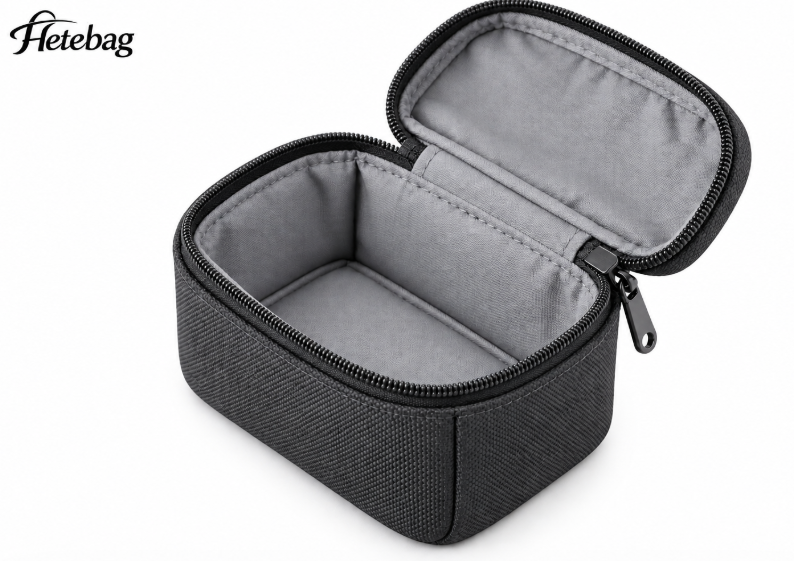
Ordinary coil construction is generally a useful starting point for curved openings. Camera pouches, rounded compartments, and bags with U-shaped access all need the zipper to follow the pattern without excessive resistance.
The curve still needs enough space for the slider to travel. Tight corners, uneven seam allowances, or bulky reinforcement can cause catching even when the zipper is flexible.
Coated products require separate approval. The care instructions for YKK’s AquaGuard coil zipper specifically warn against curved applications because the slider may cut the tape. Confirm the exact product’s application limits before choosing a coated zipper for a rounded opening.
Zipper Smoothness, Weight, and Daily Handling
Smoothness depends on the chain, slider, installation, and access to the puller. A good zipper can feel difficult to use if the lining sits too close to the slider or the tape twists during sewing.
Handle the completed sample as a customer would. Open it while holding the bag by its handle, close it with representative contents inside, and check whether the puller is easy to grasp.
Puller size also affects usability. A large decorative pull can add weight or strike nearby hardware, while a very small pull may be awkward on a frequently used compartment.
5. How Do Metal and Nylon Zippers Affect Bag Cost and Customization?
Zipper Finish, Color, and Custom Pullers
Metal zipper sourcing can involve different alloys, tooth treatments, plating colors, and polishing requirements. Gold, silver-tone, gunmetal, antique brass, and matte effects should be approved against physical samples because finish names alone are imprecise.
Coil zipper options can include different tape and element colors, reverse configurations, and specialized surface treatments. A reverse coil construction changes the visible appearance, but reversing the coil alone does not make the zipper water-resistant.
Customization may include:
- Custom puller shapes and dimensions.
- Engraved or molded logos, where the selected component allows.
- Plating colors coordinated with other hardware.
- Tape and coil color matching.
- Pantone references supported by approved physical samples.
Custom tooling, special dyeing, finish development, and testing can affect minimum quantities and lead times. Ask which requirements apply to each color or component before finalizing the collection.
Matching the Zipper With Your Brand Positioning
Metal can support a collection built around visible hardware. A tonal coil zipper can suit a lighter or more understated product, including a premium bag whose appeal depends on comfort and function.
Compare the complete specification when reviewing quotations. A standard coil zipper and a specialized coated zipper with a custom puller are different sourcing propositions, even if both are described as “nylon.”
HeteBag’s custom bag hardware options include zippers, pullers, and hardware finishes that can be discussed as part of the overall design. Approve these components together so that the zipper does not arrive in a visibly different tone from the bag’s other fittings.
6. What Quality Problems Should Buyers Check Before Mass Production?
Slider Smoothness, Teeth or Coil Alignment, and Stitching
Begin with visual inspection and normal operation. Close the zipper fully, reopen it, and check the entire path rather than testing only the straight middle section.
For metal zippers, inspect for missing, damaged, or uneven teeth and rough edges. For coil zippers, look for distorted elements, damaged attachment stitching, and areas where the coil lifts away from the tape.
The installation needs equal attention. Wrinkled tape, uneven sewing, and loose lining can interfere with an otherwise suitable zipper.
| Check | What buyers should look for |
|---|---|
| Slider movement | Catching, excessive resistance, or inconsistent movement |
| Closed chain | Gaps or separation behind the slider |
| Teeth or coil | Damage, distortion, or irregular alignment |
| Tape and stitching | Puckering, loose stitches, twisting, or tearing |
| Corners | Resistance or distortion as the slider changes direction |
| Puller and stops | Loose attachments, damaged stops, or uncomfortable edges |
| Hardware finish | Scratches, uneven color, or mismatch with approved samples |
Corrosion, Color Consistency, and Repeated Opening Tests
Agree on the test procedure before production approval. The specification should identify the sample quantity, operating conditions, cycle count, and acceptance criteria appropriate to the product.
For corrosion-sensitive applications, request a suitable test plan for the actual metal components and finish. A generic report for another zipper or plating color does not establish how the selected version will perform.
Compare zipper tape and hardware against retained approval samples under consistent lighting. Where relevant, include checks for color transfer to pale linings or surrounding materials.
Testing the Zipper on the Finished Bag, Not Only the Zipper Sample
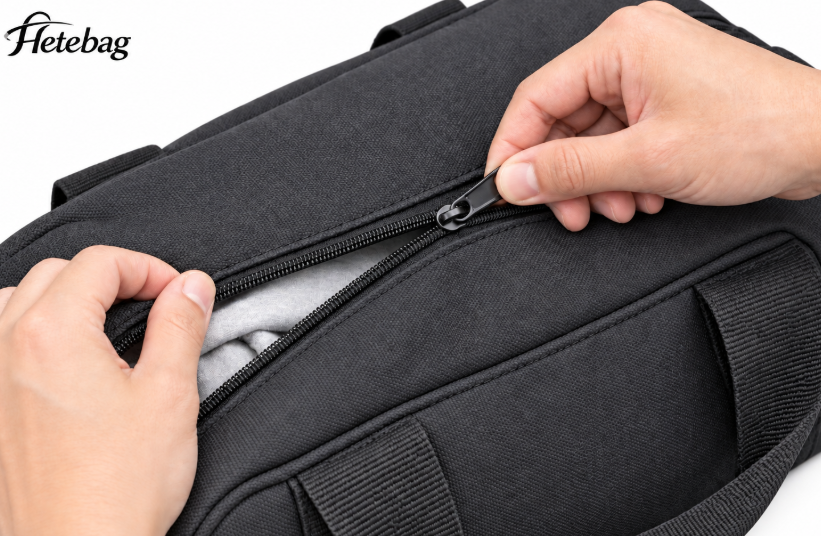
A loose zipper cannot reveal whether the bag’s lining catches or whether a corner becomes difficult to close. Test the installed zipper with the intended fabric, reinforcement, seam construction, and contents.
Pack the bag with representative items within its intended capacity. Open and close each compartment, observe where the fabric pulls, and check for separation, tape distortion, or increased slider resistance.
If the closure works only when the bag is empty, investigate the pattern, usable capacity, and zipper specification together. Approve a finished pre-production sample and retain its component details so that bulk production can be checked against the same construction.
7. Metal or Nylon Zipper: Which Should You Choose for Your Custom Bags?
Use the product requirement to select an initial candidate, then confirm it through sampling. The table below is a purchasing guide rather than a substitute for product testing.
| Requirement | Better starting option | What to confirm |
|---|---|---|
| Premium handbag with visible hardware | Metal zipper | Finish, weight, smoothness, and coordination with fittings |
| Lightweight bag | Nylon coil zipper | Complete zipper weight and suitable chain size |
| Curved zipper opening | Ordinary uncoated coil zipper | Corner geometry and manufacturer application limits |
| Leather or PU fashion bag | Often metal | Material softness, lining clearance, and design intent |
| Backpack or travel bag | Often coil | Main-compartment strength and loaded operation |
| Humid or outdoor environment | Coil worth considering | Slider corrosion resistance and any coating limitations |
| Strong hardware appearance | Metal zipper | Approved plating sample and finish consistency |
| Flexible construction | Coil zipper | Tape stability and installed movement |
One bag does not need the same zipper everywhere. A metal exterior closure and a lighter coil zipper inside may meet different needs within the same design.
For the sourcing brief, record the opening length, chain code, slider type, puller, tape color, finish, and expected use. Include the approved sample reference and agreed tests so that “metal zipper” or “nylon zipper” is not the entire purchasing specification.
8. Conclusion
Choosing between metal zippers vs nylon zippers depends on the bag you are developing. Metal provides a defined hardware appearance, while coil construction often suits lower weight and flexible openings.
Durability requires a closer look at the exact zipper, slider, installation, and use conditions. The final decision should follow testing on a completed bag with representative contents.
For a custom project, contact HeteBag with your bag design, material preference, opening shape, target quantity, and intended market. These details give the team a clearer basis for discussing zipper options and preparing the sample for approval.
9. Frequently Asked Questions
Are nylon zippers strong enough for travel bags?
Suitable coil zippers can be used for travel bags, but the product grade and size must match the application. Ask for the exact chain and slider specification, then test the main opening with representative contents and agreed operating conditions.
Can a nylon zipper have a custom metal puller?
Yes, a coil zipper can use a compatible slider fitted with a custom metal puller. Confirm the attachment design, puller weight, finish, and handling on the sample, because an attractive puller can still be uncomfortable or poorly secured.
Are reverse coil zippers waterproof?
A reverse coil zipper is not automatically waterproof or water-resistant. Water protection depends on the specific product construction, and the finished bag also needs assessment at seams, zipper ends, and other possible entry points.
What should I specify when ordering a zipper for a custom bag?
Provide the zipper location, opening length, chain type and size, slider arrangement, puller design, tape color, and hardware finish. Add the expected contents, use environment, and sample approval requirements so the supplier can assess suitability.
What should buyers approve before bulk production?
Approve the actual zipper model and matching slider, colors, puller, finish, and installation on a completed bag. Keep a reference sample and written inspection criteria, and require approval before the supplier substitutes a component.


