
 Italian
  English
  French
  German
  Spanish
  Arabic
 A makeup bag can look right in a supplier’s photo and still disappoint when you put your products inside. A narrow opening, loose lining, or poorly positioned brush holder can make an otherwise attractive design difficult to use.
Before approving your custom makeup bag sample, check it against your written specifications and the actual cosmetics it will carry. At HeteBag, you can start a custom makeup bag project with your design references, product dimensions, material preferences, and branding requirements, giving the sample review a clear starting point.
By the end of the review, you should know which details are ready for production and which still need work or supporting evidence. A physical sample, a complete specification sheet, and a written approval record give the production team a much clearer reference than a message saying “looks good.”
What to Prepare Before Checking Your Makeup Bag Sample
First, ask which stage the sample represents. A development prototype may use temporary fabric or hardware while you check the shape. For the pre-production sample, ask the supplier to use the agreed materials, construction, decoration, and packaging, and list any substitutions that remain.
Gather the latest specification sheet, approved artwork, physical color references, material swatches, and packaging instructions. Keep the reference version and sample ID together so you do not compare a revised bag with an outdated drawing.
Prepare these items before the review:
- A ruler or tape measure, plus a suitable thickness gauge if film thickness is specified.
- The actual bottles, palettes, brushes, and other products the bag needs to hold.
- A camera for overall views and close-ups of individual defects.
- A sample review sheet with columns for requirement, finding, action, and approval status.
- The intended retail box, insert, hangtag, or shipping arrangement, where available.
Agree on the measurement method and acceptable variation before judging the sample. A soft pouch measured flat can give a different result from the same pouch standing upright, so the specification should identify reference points and the condition in which each measurement is taken.
For the wider sequence from development through production, see HeteBag’s cosmetic bag manufacturing guide. This helps place sample approval alongside material confirmation and production quality checks.
Check the Size, Shape, and Storage Capacity
Measure the Usable Space
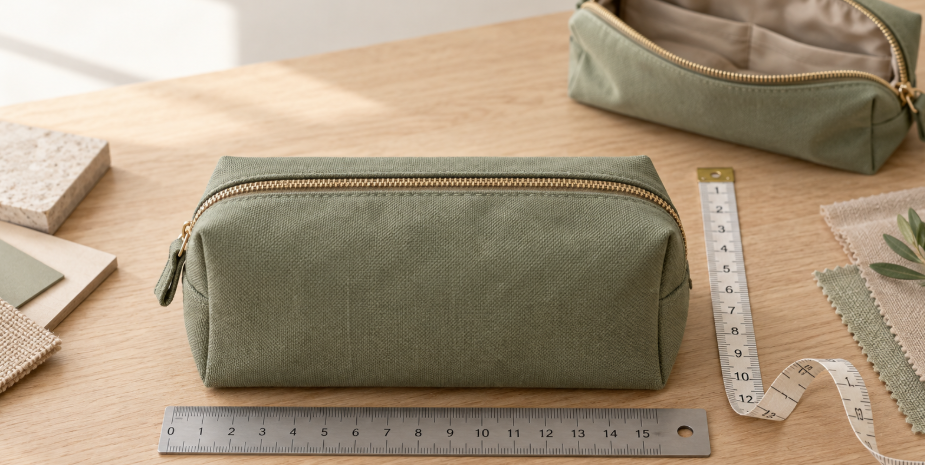
Check length, height, and depth, then measure the opening and any pockets or dividers that affect product fit. Padding, curved corners, seam allowances, and lining can reduce the space available inside even when the external dimensions match the drawing.
Use the following checklist to record findings. Write down the targets for your own design. A general tolerance may not suit its construction or the products it needs to hold.
| Verifica | What to compare | Reason to request a revision |
|---|---|---|
| External dimensions | Agreed reference points and tolerances | Measurements fall outside the agreed range |
| Usable opening | Largest intended item and access needs | A palette fits inside but cannot pass through easily |
| Pocket and divider size | Actual products, including caps and handles | Items snag, slip out, or cannot sit as intended |
| Filled shape | Intended product set and reference appearance | The base twists, panels bulge, or the zipper carries excessive tension |
| Empty shape | Agreed structure and presentation | A structured bag collapses or sits unevenly |
Assess the Shape Empty and Filled
Place the empty bag on a level surface and check the base, side panels, corners, and symmetry. Fill it with the intended product set and look again, because an attractive empty sample may lean or deform once loaded.
Check whether a tall bottle pushes against the zipper or a rigid palette presses into a curved corner. If the assortment only fits when forced, revise the dimensions or layout before approval; adding capacity may require changes to both the pattern and packaging.
HeteBag’s makeup bag design guide covers layout choices that can help resolve fit and access problems. Use it when deciding whether a larger opening, different pocket, or simpler compartment arrangement would work better.
Inspect the Materials, Colors, and Lining
Match the Sample to the Material Specification
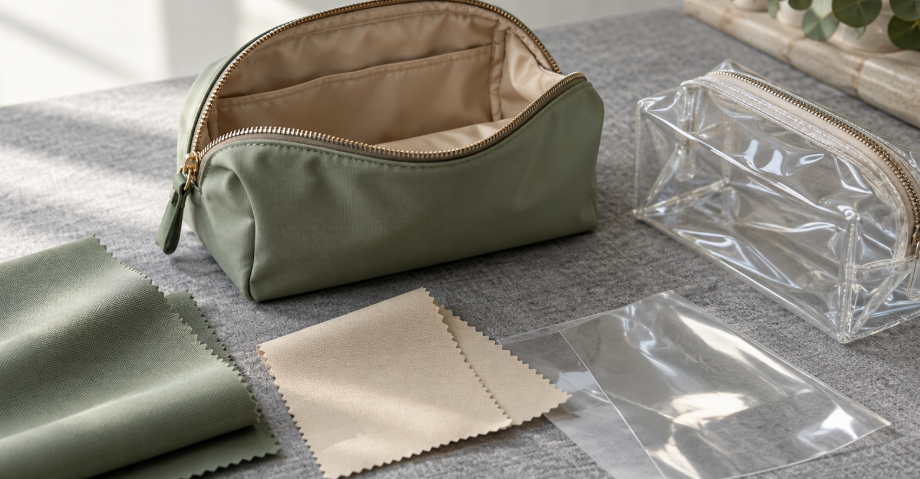
Compare the outer material and lining with the agreed swatches. Record the material code, composition, thickness or weight where relevant, coating, finish, backing, and any padding or reinforcement so that “same material” has a specific meaning.
Feel the sample and flex it gently where normal use would create folds. Look for coating separation, surface cracks, loose backing, or unexpected stiffness, and check that the lining sits securely without restricting access to the pockets.
For comparisons between fabric and coated options, refer to HeteBag’s custom makeup bag materials guide. Material selection should reflect the intended cleaning method, shape, and everyday handling.
Review Color and Clear Panels
Compare the sample with the approved physical color reference under agreed lighting. Review the shell, lining, zipper tape, thread, and logo together, because a matching outer fabric does not guarantee that every component will coordinate.
For clear bags, inspect transparency, surface scratches, haze, film thickness, seams, and any whitening at folds. Ask the supplier to identify the exact film rather than inferring PVC or TPU from its softness; HeteBag’s PVC vs. TPU cosmetic bag comparison provides background for that discussion.
Notice unusual odor and ask for an explanation if it persists after normal unpacking. Smell and appearance cannot confirm chemical compliance, so review documentation that identifies the relevant materials and components.
For EU sales, use ECHA’s guidance on Candidate List substances in articles when discussing applicable information and documentation obligations with your compliance team. For products sold in California, OEHHA’s Proposition 65 business resources explain how businesses assess warning requirements based on exposure; a general “safe material” statement does not settle that assessment.
Check the Stitching, Zippers, and Hardware
Examine the seams along the base, corners, zipper ends, handle attachments, and pocket edges. Look for skipped stitches, loose thread, puckering, exposed raw edges, and seams that start to open during normal handling.
Check both the outside and accessible interior of the bag. Binding and lining can hide construction details, so request close-up production photos or a separate construction sample where you need to verify a covered seam.
Operate the Zipper Under Normal Load
Open and close the zipper with the bag empty, then repeat with the intended contents inside. Pay attention to corners, zipper ends, lining clearance, and whether the pull is easy to hold without catching nearby fabric.
Agree on a repeatable screening procedure and record the number of operations and any failures. A short manual check can reveal immediate snagging or assembly problems, but it cannot establish a long-term durability claim without an appropriate test method and acceptance criteria.
YKK’s zipper handling guidance explains that forcing a zipper on an overfilled bag can damage the elements or tape, and that trapped fabric should be released carefully. If the intended product set creates this problem, review capacity, zipper installation, and lining clearance before approving the design. lyncs.ykkfastening.com
Inspect Hardware and Attachments
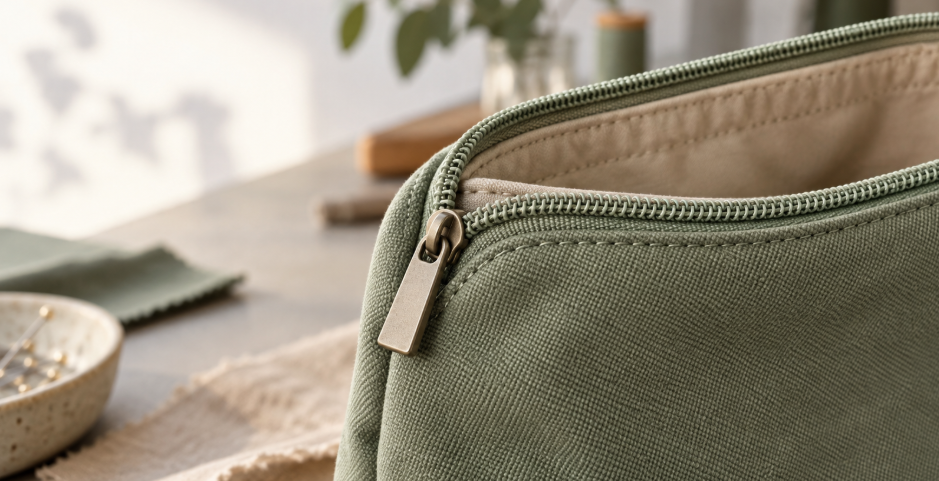
Check zipper pulls, snaps, metal plates, rings, and other fittings for sharp edges, scratches, uneven finish, and loose attachment. Compare each part with its approved reference, including finish and dimensions where specified.
For a bag with a handle, lift and carry it with the intended load as a preliminary functional check. If your specification includes load strength, corrosion resistance, or coating durability, agree on the relevant test conditions and evidence separately.
Review the Logo, Labels, and Packaging
Check the logo against the final artwork file, including spelling, proportions, color, size, placement, and orientation. Measure its position from defined reference points rather than approving it only by eye.
For printed logos, inspect edges, coverage, and any visible cracking when the material bends normally. For embroidery or debossing, check distortion, backing, depth, and the effect on nearby panels; confirm any adhesion or abrasion testing separately from this visual review.
Review every label and packaging component that will accompany the bag:
- Woven labels and care instructions: correct content, position, and attachment.
- Hangtags and inserts: approved artwork, language, and product information.
- Barcodes: correct SKU and a successful scan using the intended system.
- Individual packing: correct bag or box size and protection for the finished surface.
- Master carton instructions: assortment, unit quantity, carton marks, and agreed protection.
Pack and unpack the sample using the proposed method. Check for creases, clear panels sticking together, hardware pressing into the surface, and tags leaving marks; if these are transport concerns, request a separate packing trial under agreed conditions.
Packaging approval should also identify who confirms destination and retailer requirements. Avoid allowing a temporary sample label or unapproved packaging claim to become the production reference.
Test the Sample with Real Makeup Products
Use the exact assortment the customer will receive or is expected to carry. Include the largest palette, tallest bottle, longest brush, and any unusually shaped item, because these often reveal problems that a group of small display products will miss.
Run through normal use: pack the bag, close it, carry it, set it down, reopen it, and remove individual products. Check whether elastic holders retain brushes, dividers stay in place, pockets remain accessible, and bottle caps rub against the lining or closure.
If easy cleaning is part of the product brief, use a spare sample or material swatch for a controlled spot check. Apply a representative cosmetic stain, record the amount and contact time, then clean it using the proposed care instructions and inspect for staining, color transfer, coating damage, or tackiness after drying.
Do not assume that a wipeable lining makes the entire bag washable or leakproof. Seams, zipper openings, foam, adhesives, and decoration may behave differently, so test the assembled construction whenever the claim concerns the finished bag.
Photograph the packed layout and record the product set used. This creates a repeatable reference for later samples and gives the supplier specific evidence if you request a wider opening or revised compartment.
Confirm Revisions and Approve the Final Sample Before Bulk Production
Make Each Revision Specific
Send one consolidated revision sheet with numbered photos and clear actions. Replace vague comments such as “improve the lining” with the observed problem, its location, the required change, and the evidence needed to close it.
The examples below show how to structure feedback; they are not universal specifications.
| Finding | Revision instruction | Evidence needed before approval |
|---|---|---|
| Lining catches near a zipper corner | Revise lining clearance and attachment at the marked location | Revised sample closes normally with the intended contents |
| Tall bottle presses against the closure | Adjust internal height or layout to fit the identified bottle | Physical fit check using that bottle |
| Logo differs from approved placement | Move the logo to the coordinates in the latest artwork specification | Measured photo and revised sample where necessary |
| Packaging leaves a crease in a clear panel | Revise the packing method to protect the panel | Packing trial reviewed after the agreed storage conditions |
Ask the supplier to confirm whether the changes affect materials, tooling, packaging, or the production schedule. Changes to patterns, construction, film, coatings, or branding methods usually deserve another physical review because they may alter more than appearance.
Record the Final Production Reference
Before releasing bulk production, identify the final sample by style number, sample ID, revision, and date. The buyer and supplier should retain matching references where practical, together with the latest specification sheet and written approval.
The approval record should cover:
- Materials, colors, dimensions, and agreed tolerances.
- Construction, lining, compartments, zippers, and hardware.
- Logo artwork, decoration method, labels, and packaging.
- Required test reports and any outstanding evidence.
- Approved exceptions and the exact scope of approval.
- The production inspection plan and how changes require authorization.
If the sample still contains a substitute zipper, temporary fabric, or unfinished packaging, identify that exception clearly and state what remains blocked. Separate permission to purchase materials from permission to start bulk assembly when those milestones have different approval conditions.
A custom makeup bag sample establishes a reference for production. Continue to check incoming materials, work in progress, and finished units against that reference; one approved sample cannot show whether an entire batch is consistent.
Conclusione
Approve your custom makeup bag sample only when its fit, materials, construction, branding, and packaging meet the agreed requirements. Resolve functional problems with a revised sample, and keep performance or compliance claims tied to suitable evidence.
If you are developing a makeup bag with HeteBag, send your design references, intended product set, target market, and sample requirements through the website’s project inquiry. These details give the team a useful basis for discussing the sample and any changes needed before bulk production.
Domande frequenti
Is a prototype enough to approve bulk production?
A prototype may be enough to approve the design direction, but it may contain substitute materials or unfinished details. Before bulk production, review a sample that represents the final specification and document any exceptions that remain.
Should I check a physical sample or approve photos?
Use a physical sample for fit, opening access, material feel, zipper operation, and cleaning checks. Photos help document revisions and measure visible details, but they cannot confirm how the bag behaves in your hands.
What dimension tolerance should I accept?
Agree on tolerances for the specific construction and measurement method. Dimensions affecting rigid product fit may need closer control than a flexible decorative feature, so identify those points before the supplier prepares the final sample.
Do I need to review every color separately?
Approve each color through an appropriate physical reference, and consider separate samples where color changes involve a different coating, print, lining, or material source. A single construction sample may establish the pattern, but it does not confirm every color’s appearance or performance.
Can a sample check confirm that the bag is waterproof or compliant?
Visual inspection and simple handling checks cannot establish those claims. Define the finished-product performance requirement or applicable market requirement, then obtain the relevant testing and documentation before approving the claim.


