
 Italian
  English
  French
  German
  Spanish
  Arabic
 A polished leather bag sample can still leave a buyer uncertain about the bulk order: will the next leather lot match, will the edge finish hold up, and who will approve a hardware substitution? A private-label manufacturer shortlist is useful only when each candidate is assessed against the same design, material, sample, and inspection brief.
Le borse in pelle richiedono una lavorazione più accurata rispetto a molte borse standard in tessuto. Una piccola variazione nella pelle, nei rinforzi, nella tensione del filo o nella finitura dei bordi può influire sull’aspetto dell’intero prodotto. Ecco perché gli acquirenti dovrebbero guardare oltre i cataloghi e concentrarsi sulle reali capacità di sviluppo e produzione del produttore.
La Cina rimane un’importante destinazione per l’approvvigionamento di borse in pelle personalizzate, poiché dispone di distretti produttivi specializzati nella pelletteria, mercati dei materiali, fornitori di accessori metallici, fabbriche di imballaggi, manodopera qualificata e risorse logistiche internazionali.
La domanda fondamentale non è se la Cina sia in grado di produrre la vostra borsa. La vera domanda è: quale produttore sia più adatto al vostro design, al posizionamento del vostro marchio, alle quantità richieste, ai requisiti relativi ai materiali e alle vostre aspettative in termini di qualità.
Questa guida presenta dieci produttori cinesi di borse in pelle personalizzate e spiega quali aspetti è necessario verificare prima di avviare un progetto.
For the complete purchasing process, use the custom leather handbag sourcing guide to connect material approval with bag construction, supplier selection, sampling, and bulk inspection.
Perché acquistare borse in pelle personalizzate dalla Cina?
La Cina vanta diverse aree consolidate nella produzione di articoli in pelle, in particolare a Guangzhou, Dongguan, Shenzhen e Chengdu. I quartieri di Huadu e Baiyun a Guangzhou sono particolarmente noti per la produzione di borse e articoli in pelle.
Un polo produttivo consolidato offre agli acquirenti molto più che semplici stabilimenti. Mette infatti a disposizione anche fornitori di pelle, fornitori di materiale in PU, aziende produttrici di cerniere, officine specializzate in minuteria metallica, tipografie, fornitori di imballaggi, modellisti e servizi di controllo qualità.
Questa catena di approvvigionamento completa può rendere più efficiente lo sviluppo dei prodotti. Quando per un campione occorre una pelle più morbida, una cerniera più resistente, una fibbia diversa o una tracolla modificata, il produttore riesce solitamente a trovare un fornitore adatto nelle vicinanze.
Il vero valore di questa catena di approvvigionamento emerge durante la fase di campionatura. È raro che un prodotto sia pronto per la produzione già dopo il primo campione. Potrebbe essere necessario modificare le dimensioni. La pelle potrebbe risultare troppo rigida al tatto. Il manico potrebbe necessitare di un maggiore rinforzo. Il logo potrebbe essere troppo grande. Una fabbrica situata vicino ai fornitori di materiali e accessori è spesso in grado di risolvere questi problemi più rapidamente.
La Cina è la scelta ideale per marchi di moda, aziende con marchio proprio, grossisti, dettaglianti, stilisti, venditori online e importatori affermati. Alcuni acquirenti hanno bisogno di un produttore in grado di trasformare uno schizzo in un prodotto finito. Altri dispongono già di schede tecniche complete e necessitano solo di una produzione stabile.
Le dimensioni della tua azienda non sono l’unico fattore da considerare. Un marchio di piccole dimensioni può comunque richiedere uno sviluppo complesso, mentre un grande grossista potrebbe ordinare modelli semplici in grandi quantità. Il produttore dovrebbe adattarsi alle modalità operative del tuo progetto.
Le aziende citate in questo articolo sono state selezionate in base alla loro storia produttiva, alla gamma di prodotti, alle capacità di personalizzazione, all’ubicazione degli stabilimenti, all’esperienza nel settore della pelletteria e alle informazioni aziendali disponibili al pubblico. L’elenco non è ordinato in ordine di qualità, dal migliore al peggiore. Ogni produttore ha un proprio focus di prodotto e un proprio tipo di clientela.
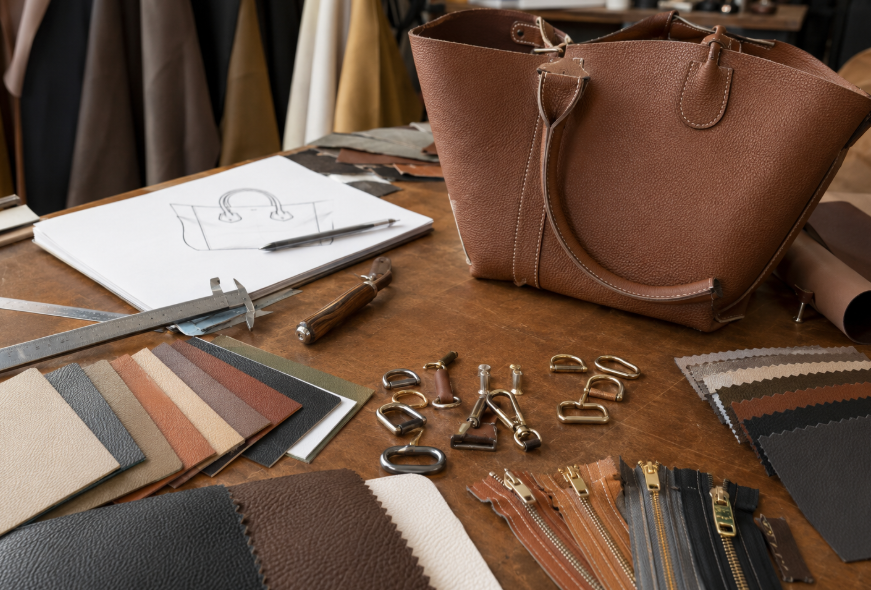
Cosa cercare in un produttore di borse in pelle su misura
Il primo ambito da valutare è la conoscenza delle materie.
Non basta chiedere se una fabbrica offre pelle vera o pelle sintetica. La pelle vera può variare in base alla specie animale di provenienza, alla qualità, alla grana, allo spessore, alla morbidezza, al metodo di concia, al rivestimento e alla stabilità del colore. Due materiali entrambi descritti come pelle bovina possono dare risultati completamente diversi.
Una borsa dalla struttura rigida richiede solitamente una pelle più rigida e rinforzi interni più resistenti. Una borsa a tracolla morbida richiede una pelle più flessibile e che cada bene. Un portafoglio richiede uno spessore ben calibrato, poiché diversi strati piegati possono diventare rapidamente ingombranti.
Anche la pelle PU è disponibile in diverse qualità. Il tessuto di base, il rivestimento superficiale, la flessibilità, la resistenza all’abrasione, l’odore, la resistenza all’idrolisi e la resistenza del supporto possono influire sulla qualità finale.
Un produttore competente dovrebbe essere in grado di spiegare perché un determinato materiale è adatto al vostro progetto. Il fornitore dovrebbe inoltre conservare campioni approvati, in modo che il materiale utilizzato nella produzione in serie possa essere confrontato con il campione.
Puoi consultare questa guida per materiali personalizzati per borse prima di redigere le specifiche del prodotto.
Il prossimo ambito è lo sviluppo dei prodotti.
Un produttore OEM solitamente realizza una borsa sulla base del vostro progetto, campione, disegno tecnico o scheda tecnica. Un produttore ODM può inoltre contribuire a modificare la struttura, suggerire materiali, creare modelli, migliorare le funzionalità e sviluppare nuovi modelli.
Un buon lavoro di sviluppo richiede ben più che la semplice riproduzione di una foto di riferimento. Una foto non mostra l’armatura interna, il margine di cucitura, la lavorazione dei bordi, l’applicazione della cerniera, il fissaggio della fodera né i punti di maggiore sollecitazione.
Un produttore esperto dovrebbe individuare i possibili rischi di produzione durante la fase di campionatura. Ad esempio, un manico sottile potrebbe non reggere il carico previsto. Un angolo molto spigoloso potrebbe risultare difficile da rifinire in modo pulito con la verniciatura dei bordi. Una catena di metallo pesante potrebbe deformare il corpo in pelle morbida.
Un fornitore che accetta ogni richiesta senza discutere questi dettagli potrebbe non aver esaminato attentamente il progetto.
Anche il controllo qualità riveste un ruolo fondamentale nella produzione delle borse in pelle.
La pelle va controllata prima del taglio, poiché le pelli naturali possono presentare cicatrici, rughe, differenze di colore e variazioni di spessore. Gli accessori metallici devono essere ispezionati per verificare la presenza di graffi, segni di placcatura, spigoli vivi, variazioni di colore e problemi di funzionamento.
Durante la produzione, lo stabilimento deve controllare la precisione del taglio, la direzione della grana della pelle, le cuciture, la verniciatura dei bordi, la posizione dei manici, il posizionamento del logo, l’adattamento della fodera, il montaggio delle parti metalliche, le dimensioni e la forma finale.
La pelle naturale non avrà mai un aspetto uniforme come quello di un foglio sintetico. È normale che vi siano alcune variazioni. Lo stabilimento e l’acquirente hanno comunque bisogno di uno standard chiaro che distingua le caratteristiche naturali accettabili dai difetti inaccettabili.
I 10 migliori produttori di borse in pelle personalizzate in Cina
| No. | Produttore | Fondata | Posizione | Prodotti principali |
|---|---|---|---|---|
| 1 | Hetebag | 2011 | Huadu, Guangzhou | Borse in pelle, borse tote, borse a tracolla, zaini, borse da viaggio, trousse e borse OEM/ODM |
| 2 | Gruppo Sitoy | 1968 | Hong Kong e Guangdong | Borse di lusso, piccola pelletteria, articoli da viaggio, valigie e accessori di moda |
| 3 | Boshen Leather Goods | 1993 | Guangzhou | Genuine leather handbags, fashion bags, briefcases, wallets, and private-label leather goods |
| 4 | HongBang Leathers | 2009 | Guangzhou | Handbags, wallets, backpacks, cosmetic bags, watch cases, belts, and leather accessories |
| 5 | Fiedle | 2002 | Baiyun, Guangzhou | Genuine leather handbags, tote bags, crossbody bags, hobo bags, and baguette bags |
| 6 | Mherder | 2006 | Guangzhou | Handbags, shoulder bags, crossbody bags, men’s bags, wallets, and card holders |
| 7 | Pelle Gionar | 2010 | Baiyun, Guangzhou | Handbags, backpacks, travel bags, briefcases, wallets, belts, and leather accessories |
| 8 | HerminFashion | 2018 | Huadu, Guangzhou | Handbags, tote bags, shoulder bags, evening bags, backpacks, and PU leather bags |
| 9 | SLBAG | 2011 | Shiling, Huadu | Leather handbags, wallets, backpacks, laptop bags, cosmetic bags, and canvas bags |
| 10 | XINZIRAIN | 2000 | Chengdu | Custom handbags, fashion bags, vegan leather products, footwear, and accessories |
1. Hetebag
Hetebag is a custom bag manufacturer located in Huadu, Guangzhou. The company has worked in bag manufacturing since 2011 and provides OEM and ODM services for brands, wholesalers, importers, and other business buyers.
Its product range covers leather handbags, tote bags, crossbody bags, backpacks, travel bags, makeup bags, and other custom bag categories.
This wider product range can be useful for buyers who are not developing only one handbag. A brand may start with a leather tote and later add a matching crossbody bag, cosmetic bag, backpack, or travel product.
Hetebag supports material selection, color development, pattern making, sampling, logo customization, hardware selection, bulk production, quality inspection, and packaging.
The company may be suitable for growing brands that need practical product development support and access to the Huadu leather goods supply chain.
Buyers who are developing a handbag collection can review Hetebag’s custom handbag manufacturing service.
2. Gruppo Sitoy
Sitoy Group has one of the longest manufacturing histories on this list. The company was founded in Hong Kong in 1968 and later expanded its manufacturing operations into Guangdong.
Its business covers handbags, small leather goods, travel goods, luggage, footwear, and related fashion accessories. The group has experience working with established fashion and luxury brands.
Sitoy may be more suitable for larger brands with formal product development processes, stable order planning, detailed compliance requirements, and higher production volumes.
Buyers should confirm which production facility will handle the order. Large manufacturing groups may use several factories or production lines. The factory address, production responsibility, inspection process, and subcontracting policy should be clearly documented.
3. Articoli in pelle Boshen
Boshen Leather Goods is a Guangzhou manufacturer established in 1993. Its main focus is genuine leather handbags and other private-label leather goods.
The company’s product range includes fashion handbags, leather briefcases, wallets, and related accessories.
Boshen may be suitable for buyers who want a manufacturer with a strong focus on genuine leather rather than a supplier mainly producing fabric or promotional bags.
When evaluating this manufacturer, buyers should request samples made with a structure similar to their own design. A factory may be good at soft leather totes but have less experience with rigid handbags, woven leather, complex edge painting, or multi-layer construction.
The closer the sample is to your intended product, the more useful it will be during supplier evaluation.
4. HongBang Leathers
HongBang Leathers is based in Guangzhou and manufactures handbags, wallets, backpacks, cosmetic bags, watch cases, belts, and other leather accessories.
The company provides OEM and ODM support, including design development, material sourcing, sampling, production, quality inspection, and export packaging.
Public company information commonly points to 2009 as the establishment year. Its website also refers to more than 30 years of industry experience, which may represent the combined experience of its manufacturing team.
Buyers should distinguish between company age and team experience. Both can be useful, but they are not the same measurement.
Before ordering, request the current business license and confirm the address of the factory that will manufacture the products.
5. Fiedle
Fiedle was established in 2002 and operates as an OEM and ODM leather bag manufacturer in Guangzhou.
Its main products include genuine leather handbags, tote bags, crossbody bags, hobo bags, and other fashion-focused styles.
The company may be suitable for fashion brands that need regular style development and stable manufacturing across several handbag designs.
Buyers should ask whether important production processes are completed inside the factory. These may include cutting, sewing, edge painting, embossing, printing, leather weaving, and final assembly.
Outsourcing is not automatically a problem. The key issue is whether the manufacturer clearly controls the subcontracted process and checks the result before the product moves to the next stage.
6. Mherder
Mherder, operated by Guangzhou Herder Leather Products, has manufactured leather bags and small leather goods since 2006.
Its product range includes handbags, shoulder bags, crossbody bags, men’s bags, backpacks, wallets, card holders, and other leather accessories.
The company works with genuine leather, PU, PVC, canvas, nylon, and other materials.
Mherder may suit private-label buyers who want to develop matching products, such as a handbag with a wallet, card holder, or smaller accessory.
Color control becomes important when several materials are used in one collection. Genuine leather, PU leather, fabric lining, thread, and painted edges may all react differently to the same color reference.
The manufacturer should prepare a shared color standard and check each material under controlled lighting.
7. Pelle Gionar
Gionar Leather was established in 2010 and is located in Baiyun District, Guangzhou.
The company focuses on handbags, backpacks, travel bags, briefcases, wallets, belts, and other higher-end leather goods.
Gionar may be suitable for brands developing structured handbags, business bags, men’s leather products, or coordinated leather collections.
When reviewing its samples, pay close attention to the areas that are difficult to hide. Check the painted edges, corners, handle attachments, hardware installation, lining fit, and internal reinforcement.
A bag may look attractive from the front while still having weak construction in less visible areas. These details usually reveal the real production level of a factory.
8. HerminFashion
HerminFashion is located in Huadu, Guangzhou, and focuses mainly on women’s fashion bags.
The current company was established in 2018, while its published manufacturing history dates back to 2011.
Its products include handbags, tote bags, shoulder bags, crossbody bags, backpacks, evening bags, purses, and vegan PU leather bags.
HerminFashion may be suitable for buyers who need fashion-led designs, frequent style updates, and synthetic leather options.
Buyers looking for genuine leather production should confirm which production line will be used. Fashion bag companies sometimes manufacture PU and genuine leather products through different factories or workshops.
9. SLBAG
SLBAG states that its team has worked in the bag industry since 1991 and that the current company was established in 2011.
The factory is located in Shiling, Huadu, one of the main leather goods manufacturing areas in Guangzhou.
Its product range includes handbags, wallets, backpacks, laptop bags, cosmetic bags, canvas bags, diaper bags, and cooler bags.
The company began with PU, nylon, and fabric bags and later added a genuine leather handbag production line.
SLBAG may suit buyers who need several product categories from one supplier. For leather orders, buyers should request recent samples from the leather production line rather than evaluating only its fabric or PU products.
10. XINZIRAIN
XINZIRAIN began as a women’s footwear manufacturer in Chengdu in 2000 and later expanded into bags and accessories.
The company now offers custom footwear and bag manufacturing services. Its bag range includes leather handbags, fashion bags, private-label products, vegan leather bags, and matching accessories.
XINZIRAIN may be suitable for fashion brands planning coordinated shoes, handbags, and accessories.
A brand developing matching products should confirm how the supplier controls leather color, hardware finish, logo placement, and packaging across different product categories.
It is also useful to confirm whether footwear and bags are produced in the same facility or managed by separate production teams.
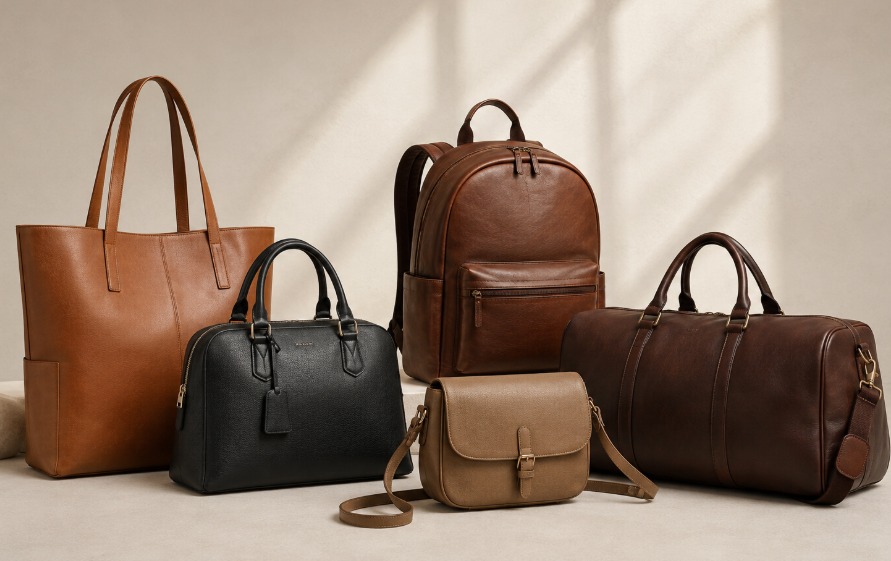
Quali opzioni di personalizzazione offrono i produttori cinesi?
Chinese manufacturers can customize the leather, color, size, shape, internal structure, handle, shoulder strap, opening, pockets, logo, hardware, lining, and packaging.
For genuine leather, common options include cowhide, calfskin, lambskin, suede, split leather, and embossed leather. Synthetic options include PU leather, microfiber leather, PVC, and recycled alternatives.
A physical material swatch is more reliable than a photo. The swatch should show the color, grain, thickness, flexibility, backing, and surface finish.
Bag dimensions should include more than width, height, and depth. Handle drop, opening width, strap length, pocket size, zipper length, base width, and expected carrying load can all affect the product.
The intended use should also be explained. A leather laptop tote requires different reinforcement from a small evening bag. A daily crossbody bag needs reliable strap attachment and hardware. A travel bag must support more weight and repeated handling.
Logo options include embossing, debossing, foil stamping, metal logo plates, printing, embroidery, woven labels, and customized zipper pullers.
You can read this guide to borse con logo personalizzato when choosing a suitable branding method.
Hardware can also be customized. Common options include zippers, buckles, hooks, chains, D-rings, rivets, magnetic closures, feet, and metal frames.
Buyers using branded zippers can review the quality information provided by YKK. The zipper size, tape color, slider finish, puller design, and strength should be confirmed during sampling.
Packaging may include dust bags, tissue paper, shape supports, care cards, branded boxes, protective wrapping, and export cartons.
Pelle vera o pelle sintetica: quale scegliere?
| Fattore | Vera pelle | Pelle PU |
|---|---|---|
| Materiale | Natural animal hide | Synthetic coating on a fabric base |
| Aspetto | Natural grain and variation | More uniform surface and color |
| Feel | Often softer and develops character with use | Can be soft, smooth, firm, or highly structured |
| Positioning | Premium, luxury, heritage, and long-use products | Fashion, vegan, promotional, and color-focused products |
| Production control | Requires careful hide selection and cutting | Easier to control color and surface consistency |
| Common risks | Scars, thickness variation, color differences, and lower cutting yield | Peeling, cracking, odor, hydrolysis, and coating separation |
| Suitable products | Handbags, briefcases, wallets, and premium accessories | Trend-led bags, vegan collections, and high-color designs |
Genuine leather is often selected when natural texture, softness, durability, and aging are important parts of the product.
Its natural appearance also makes production more demanding. The factory needs to classify the hides, avoid major defects, control grain direction, and match visible panels on the same bag.
PU leather gives brands more control over color, grain, surface treatment, and consistency. It can be suitable for bright colors, printed patterns, metallic finishes, or vegan collections.
The name PU leather does not describe the real quality level. Buyers should ask about the base fabric, coating, flexibility, abrasion resistance, aging performance, hydrolysis resistance, and odor.
The final choice should match the product’s use, brand position, expected customer experience, and care requirements.
Come valutare un produttore di borse in pelle prima di effettuare un ordine
A factory should be evaluated through documents, samples, communication, and production details.
Request the business license, factory address, production photos, main equipment information, workforce details, audit documents, and subcontracting policy.
A certification logo on a website is not enough. When a supplier claims BSCI, ISO, GRS, OEKO-TEX, or another certification, ask for the current document, certificate number, facility name, scope, issuing organization, and expiry date.
Il amfori BSCI framework can help buyers understand how social compliance and supply chain monitoring are managed.
Sample development is one of the best ways to evaluate a supplier.
The first sample is rarely the final production standard. A project may pass through an initial sample, a revised sample, an approved sample, and a pre-production sample.
The final approved sample should be supported by a written specification. This document should confirm the leather, lining, reinforcement, thread, edge paint, hardware, logo, dimensions, tolerances, packaging, and labeling.
The supplier should not replace any approved material without written permission.
| Evaluation Area | What You Should Confirm | Possible Warning Sign |
|---|---|---|
| I materiali | Leather type, grade, thickness, color, and supplier | The factory only says the material is high quality |
| Campionamento | Pattern maker, revision records, and sample approval process | Changes are only discussed through scattered messages |
| Produzione | Internal processes and subcontracted processes | The supplier avoids explaining where production happens |
| Quality control | Incoming, in-process, and final inspection | The factory inspects only after packing |
| Comunicazione | Project manager and update process | Different employees provide different answers |
| Documents | License, audit, certification scope, and expiry | Documents are expired or issued to another company |
The questions asked by the manufacturer can also show its level of experience.
A professional supplier normally wants to understand the target market, material, product use, dimensions, logo, packaging, quantity, testing requirements, and delivery schedule.
When a supplier gives a firm production promise before understanding the product, the promise may be based on guessing rather than proper planning.
Come avviare un progetto per la realizzazione di borse in pelle personalizzate in Cina
Begin with a clear product brief.
The brief can include sketches, technical drawings, reference photos, measurements, material preferences, internal structure, logo artwork, hardware finish, lining, packaging, quantity, and intended use.
When using reference photos, explain which feature you want from each image. One photo may show the preferred handle, another may show the closure, and a third may show the internal layout.
This reduces misunderstanding and helps the pattern maker create a more accurate first sample.
Review the sample in a fixed order. Start with the overall shape and size. Check the leather, structure, opening, pockets, handles, straps, hardware, stitching, edge paint, lining, logo, and packaging.
The bag should also be tested in normal use. Fill it with the intended items, carry it by the handle and strap, open every zipper, test every pocket, and place it on a flat surface.
Revision comments should be written in one organized file with numbered notes and marked photos. Feedback spread across email, WhatsApp, voice messages, and video calls is easier to miss.
Before bulk production begins, confirm the final sample, material swatches, specifications, quantity breakdown, packaging, carton marks, production schedule, inspection method, and shipping plan.
Production updates should be provided at meaningful stages, such as material arrival, cutting, sewing, assembly, final inspection, and packing.
The final inspection should compare bulk products with the approved sample and written specifications. The inspection should cover appearance, workmanship, dimensions, function, packaging, labeling, and quantity.
Leather bags also need suitable packaging to protect their shape, hardware, surface, and painted edges during transportation.
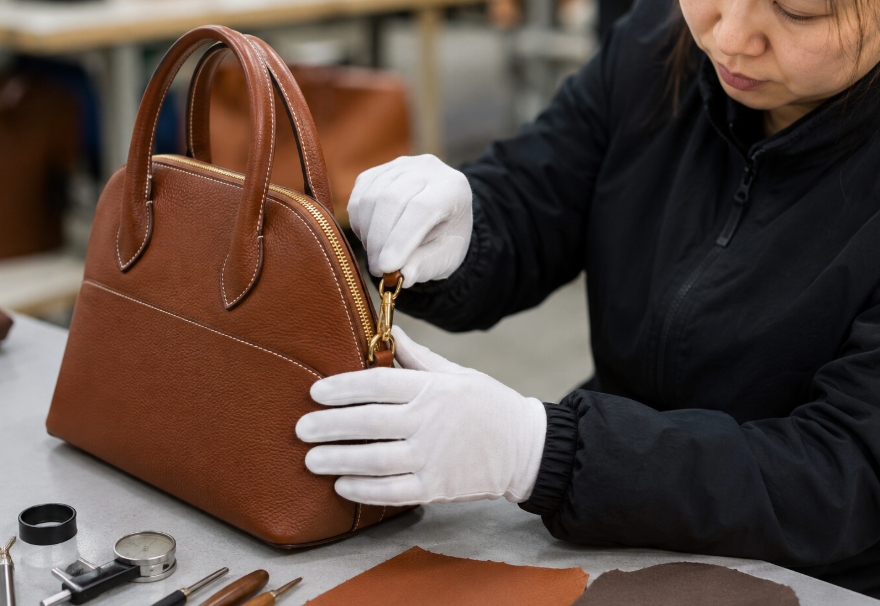
Compare Shortlisted Manufacturers with the Same Evidence
Treat this list as a research starting point, not a verified ranking or guarantee of current capabilities. Request the legal company name, production address, relevant samples, and confirmation of which steps are performed in-house or subcontracted. Use the leather grade selection guide to prepare a common material brief before comparing quotations.
Have each candidate confirm the same quantity by style and color, material reference, hardware, lining, logo, packing, sample revisions, inspection access, and conditions for substitutions. Request a dated project schedule and identify what must be approved before its production clock starts. Evaluate the responses and representative samples rather than relying on a broad capability statement.
Conclusione
The right custom leather bag manufacturer is not always the largest company or the factory with the widest catalog.
Your decision should be based on material knowledge, pattern development, sampling accuracy, quality control, production experience, communication, and experience with similar products.
Take time to check the factory, review recent samples, confirm production details, and record every important requirement in writing.
A carefully managed sample stage can prevent material changes, size differences, weak handles, uneven stitching, poor edge paint, and packaging problems during bulk production.
Hetebag is located in Huadu, Guangzhou, one of China’s main leather goods manufacturing areas. We have worked in bag manufacturing since 2011 and support leather handbags, tote bags, crossbody bags, backpacks, travel bags, makeup bags, and other OEM and ODM projects.
Our team can assist with material selection, sample development, logo customization, production, quality inspection, and packaging.
When you are looking for a custom leather bag manufacturer in China, you can send us your product information. Tell us the bag type, design, material, size, quantity, logo, and expected schedule.
Private Label Buyer Checklist for Custom Leather Bags
For private-label leather bags, the manufacturer should be evaluated on more than sewing capacity. Compare leather or PU sourcing, pattern development, logo and hardware customization, lining, edge finishing, sample revisions, MOQ, packaging, QC, and repeat-order consistency.
- Approve material swatches and hardware finishes before sampling.
- Confirm whether custom molds, metal logos, or Pantone colors change MOQ or lead time.
- Review stitching, edge paint, lining, zipper function, and reinforcement on the sample.
- Ask how bulk production is checked against the approved sample.
HETEBAG supports private-label and OEM/ODM leather bag projects from material selection and sampling through logo, hardware, packaging, and bulk production.
Domande frequenti
Perché i marchi scelgono produttori cinesi di borse in pelle su misura?
Molti marchi scelgono la Cina per la sua solida catena di approvvigionamento, la manodopera esperta, le opzioni di personalizzazione flessibili e le capacità produttive competitive.
Quali tipi di borse in pelle possono produrre i produttori cinesi?
I produttori cinesi sono in grado di realizzare numerosi modelli, tra cui borse a mano, borse tote, borse a tracolla, zaini, borse da viaggio e piccola pelletteria.
Posso personalizzare il materiale, il colore e il logo di una borsa in pelle?
Sì. La maggior parte dei produttori cinesi di borse in pelle su misura offre la possibilità di personalizzare i materiali in pelle, i colori, le dimensioni delle borse, la stampa del logo, le finiture metalliche, la fodera e la confezione.
Qual è la differenza tra le borse in vera pelle e quelle in pelle PU?
La pelle vera è ricavata dalla pelle degli animali e di solito offre un aspetto e una sensazione al tatto più pregiati. La pelle PU è un materiale sintetico più economico e spesso più facile da mantenere.
È necessario richiedere un campione prima di avviare la produzione in serie?
Sì. Un campione consente di verificare il design, il materiale, la lavorazione e la qualità complessiva prima di passare alla produzione in serie.


