
 English
  Italian
  French
  German
  Spanish
  Arabic
 Do you know how tote bags can be customized? What customization options does it offer? Whether you’re building a product line, developing a brand presence, or creating something for a specific market, how you customize a tote bag matters a lot more than most people realize upfront. The material, the technique, the design process — every piece of it affects the final result. Get it right, and you’ve got something people want to carry. Get it wrong, and you’ve got a pile of bags that fade after three washes.
Hetebag is a tote bag manufacturer with 15 years of experience. In this article, I will share with you how tote bags are custom-made.
What Materials Do You Need to Customize a Tote Bag?
Here’s where most people skip ahead too fast. They already have a design in mind, they want to jump straight to printing — and then they’re surprised when the output doesn’t match what they imagined. The materials you start with set the ceiling for everything else.
The bag fabric itself is the most important decision. Canvas is the workhorse of the industry — it’s stiff enough to hold its shape during printing, absorbs ink cleanly, and takes embroidery without distorting. A 10 oz or 12 oz canvas is the sweet spot for most applications. Go lighter and you lose structure; go heavier and the bag becomes stiff in a way that feels cheap rather than durable.
Cotton bags have a softer hand — they feel more premium right out of the bag. Great for embroidery. The tradeoff is that cotton wrinkles easily and can shrink slightly after the first wash, which matters if you’re producing at volume and need consistency.
Synthetic fabrics like nylon and polyester are a different situation entirely. Standard fabric paints don’t stick to them well. You need dye-sublimation or specially formulated synthetic inks. Sublimation on polyester is actually incredible — you can hit photo-realistic detail that’s impossible on natural fibers — but the process is more technical and the margin for error is smaller.
Beyond the bag itself, here’s what you’ll actually need depending on your technique:
- Fabric paint or screen printing ink (acrylic-based for direct application)
- Transfer paper and a heat press if you’re doing heat transfers
- Embroidery thread — polyester thread lasts longer, cotton thread has a softer look
- Stabilizer fabric for embroidery (this gets overlooked constantly and causes a lot of problems)
- Stencils, squeegees, emulsion-coated screens for screen printing
- A good iron or heat press — not negotiable if you want even heat application
One thing that genuinely surprises people: weave density matters for print quality. A tight weave gives you a cleaner printing surface. A looser weave absorbs more ink and bleeds fine details. If you’re printing a logo with small text, a bag with a looser weave will make that text look soft and blurry — even with perfect technique.
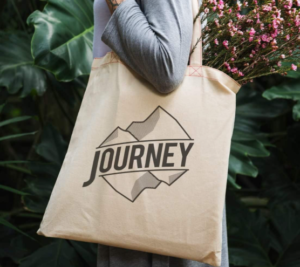
Which Tote Bag Styles Are Best for Customization?
Not all tote bags are created equal when it comes to customization. The material dictates what techniques are even possible, and choosing the wrong combination creates problems that are expensive to fix after the fact.
Canvas is the safest starting point if you’re new to this. It’s forgiving — slight misalignments in screen printing, minor inconsistencies in ink coverage — canvas hides these better than smoother fabrics. It also ages well. A canvas tote that’s been washed a hundred times often looks more interesting than it did new.
Cotton is where you go when you want the bag to feel elevated. Retail brands, gift packaging, fashion-adjacent products — cotton reads as more considered. Just account for potential shrinkage in your sizing.
PU leather totes are a completely different category. The smooth surface is ideal for UV printing and foil stamping — the results are sharp and clean. But embroidery on PU leather is almost always a bad idea. The needle creates perforations that weaken the material over time, and the stitching can pull and distort in ways that are very hard to fix. Stick to surface applications on PU.
Jute bags have a strong sustainability narrative, which resonates in certain markets. They screen print reasonably well, though the rough texture of the weave means ink doesn’t sit perfectly flat — you get a slightly organic, textured result. Some people love that look; others find it inconsistent.
Nonwoven polypropylene is where budget bags usually land. It’s cheap, lightweight, and ubiquitous at trade shows. It doesn’t customize particularly well — ink coverage is uneven, embroidery requires heavy stabilization, and the material degrades faster than woven alternatives. If longevity or premium presentation matters to you, this probably isn’t your bag.
The decision framework is simple: figure out your technique first, then select a material that works with it. Doing it the other way around is how you end up with nonwoven bags and an embroidery order that can’t be executed properly.
What Are the Most Popular Tote Bag Customization Techniques?
There are more options here than most people expect — and each one has a specific use case where it genuinely shines.
Screen printing is the backbone of commercial tote bag production. It’s fast, it’s cost-effective at volume, and the results are vivid and durable. The setup cost is real — you’re paying for screens, and each color in the design requires a separate screen — but that cost gets diluted quickly once you’re producing hundreds or thousands of units. It works best with flat, bold artwork. Logos, wordmarks, graphic shapes — screen printing makes these look excellent.
Embroidery is in a different conversation. It’s not just a decoration method; it’s a signal. Embroidered logos communicate quality in a way that printing doesn’t. The texture, the dimensional quality, the way it catches light — these things register with people even when they can’t articulate why. Setup requires digitizing the design into a stitch file, which adds lead time and cost upfront. Fine details and gradients don’t translate well. But for logos, icons, and clean text, embroidery on a quality canvas bag is hard to beat.
Heat transfer and sublimation open up design possibilities that screen printing can’t match. Full-color photography, complex gradients, illustrations with dozens of colors — all of this is possible. Sublimation on polyester is especially impressive in terms of detail and color vibrancy. The limitation is fabric compatibility: sublimation needs polyester or poly-blend fabrics to work properly. On cotton, the colors come out muted and dull.
Direct-to-garment (DTG) printing has become a serious option for short runs and one-offs. No screens, no setup costs — you send a file and print directly onto the fabric. Color quality has improved dramatically over the past few years. The main limitation is performance on dark base fabrics, which require a white underbase and more production time.
Hand painting is still relevant in contexts where “handmade” is part of the value proposition. No two bags will be identical, which is either a problem or a selling point depending on your market. Artisan brands, limited-edition products, and specialty retail can command premium pricing on hand-painted totes precisely because of the imperfection.
Patches and appliqué deserve more credit than they usually get. A well-executed woven patch on a canvas tote can look incredibly sharp — especially when you’re dealing with complex logos or detailed illustrations that screen printing would flatten. Patches can be sewn on permanently or attached with iron-on backing for simpler application.
How Can You Design Your Tote Bag Pattern or Artwork?
Design is where projects either come together or fall apart. Good execution can’t save a weak design, and a strong design will expose any shortcuts in execution.
Start with who’s carrying this bag. Not in the abstract — actually picture it. Where are they? What are they wearing? What’s around them? A tote used as a retail shopping bag needs to read clearly from across a room. A tote used as a farmers market bag can be more personal and detailed. A corporate giveaway bag needs to be inoffensive enough that people will actually use it publicly. The use context shapes every design decision downstream.
Work in vectors. Seriously — if you’re not building your artwork in Illustrator, CorelDRAW, or Inkscape, you’re creating problems for yourself. Vector files scale without degradation. Most production facilities require them. If you’re doing DTG or sublimation and want to work with raster files, you need a minimum of 300 DPI at final print size — anything less and you’ll see pixelation in the physical output.
Color management is trickier than it looks. What you see on your monitor is RGB. What gets printed on fabric is usually Pantone or a custom ink mix. That vivid teal you designed could come out looking greenish or muted unless you’re specifying Pantone values from the start. For embroidery, thread manufacturers each have their own color numbering systems — Madeira, Isacord, Coats & Clark — and thread colors shift depending on the base fabric and lighting. Always get a physical sample before approving a full production run.
Give your design room. This sounds obvious but it’s the mistake most first-timers make. Filling the entire surface of the bag with artwork seems bold, but in practice it often reads as cluttered — especially once you factor in seams, handles, and the way fabric behaves when the bag is loaded. A design with generous margins usually reads as more intentional and more premium than one that pushes to the edges.
Small text is a frequent problem. Below 10–12 points, embroidery starts losing legibility. Screen printing can hold smaller text, but not indefinitely. Serif fonts with thin strokes are particularly vulnerable — those hairline details disappear in both print and embroidery. When in doubt, go larger and go bolder.
What Are the Step-by-Step Instructions to Customize a Tote Bag?
Here’s how the process actually runs for the two most widely used techniques.
Screen Printing
Finalize your artwork. One color per layer, vector format, sized to your actual print area. Standard tote print areas run roughly 10 × 10 inches, but verify with your specific bag dimensions.
Burn your screens. Each color in the design gets its own screen coated with photosensitive emulsion. Film positives for each color layer are used to expose the screens under UV light, creating the stencil.
Set up the press. Load the bag flat onto the platen — the platform the bag rests on during printing. Taut and aligned. Any slack in the fabric will show in the print.
Run a test print first. Always. Print on scrap fabric before you touch the production bags. Check coverage, check color accuracy, check registration across colors.
Print the run. Pull the squeegee across the screen with consistent pressure. Lift. Remove the bag. Load the next one.
Cure the ink. This step gets rushed more than any other and causes most of the “the ink cracked after two washes” complaints. Heat curing — through a conveyor dryer or heat press — bonds the ink to the fabric fiber. Underdo it and the print fails prematurely.
Embroidery
Digitize the design. Your artwork needs to be converted into a stitch file (.DST, .PES, or similar). This process determines stitch type, density, direction, and pull compensation. A poorly digitized file will produce puckering, loose stitches, and misregistration regardless of how good your machine is.
Hoop the bag with stabilizer. The type of stabilizer matters — cutaway for lightweight or stretchy fabrics, tearaway for stable woven fabrics. The hoop keeps tension consistent across the entire embroidery area.
Run a sample stitch-out. On a similar piece of scrap fabric, not on your actual bags. Check for puckering, thread tension, and whether the design is landing where it should.
Run the production job. Keep an eye on thread breaks, especially during longer runs. Catching a break early saves you from discovering a gap in the middle of a logo halfway through a run.
Finish and trim. Remove the hoop, tear away stabilizer where applicable, trim jump threads on both front and back. A light press with steam flattens any hoop marks.
How Do You Maintain and Care for Your Customized Tote Bag?
A customized tote bag that’s cared for properly can last years. The specific instructions depend on the technique, but these principles hold across most situations.
Washing printed bags: Turn them inside out. Cold water, gentle cycle. Skip detergents with bleach or optical brighteners — both accelerate fading. Line drying is easier on the print than machine drying, especially for DTG, where high heat can cause cracking before the ink has fully cured into the fiber. If you machine dry, use low heat.
Washing embroidered bags: The embroidery itself is durable, but thread snags in aggressive wash conditions. A mesh laundry bag adds protection. Avoid dry cleaning — certain solvents will dull the thread sheen or cause thread colors to bleed into each other.
Storage: Store bags flat or loosely folded. Don’t compress them under heavy items. If the bag has heat-applied patches or HTV, avoid folding directly on top of the transfer — the adhesive can bond to adjacent fabric in warm storage conditions.
UV exposure: Sunlight is the main reason prints fade prematurely. Display samples kept in direct sunlight will show visible color shift faster than bags stored indoors. This is worth accounting for in how you store product inventory and samples.
Minor repairs: Small cracks in screen prints can sometimes be touched up with fabric paint matched to the original color. Embroidery damage — a broken thread, a loose section — is usually repairable by a skilled embroiderer if you catch it early. The key word is early.
What Are Creative Ideas for Personalizing Tote Bags?
The most effective custom tote bags usually do something slightly unexpected. Here are directions worth exploring.
Limited-edition and seasonal designs create a reason to buy multiple. A bag design that rotates quarterly — tied to a season, an event, a collaboration — becomes collectible rather than disposable. People who wouldn’t think twice about a standard design will go out of their way for something they know won’t be around next month.
Hidden interior details reward people who pay attention. Printing a pattern, message, or illustration inside the bag — visible only when it’s open — creates a private moment of discovery. It’s increasingly common in premium retail for exactly this reason.
Tonal embroidery — thread color matched very closely to the bag fabric — produces a subtle, textural result that reads as understated and sophisticated. It’s a strong choice when a bold logo would feel too promotional for the context.
Typography-led design often outperforms complex illustration. Large, well-spaced type across a clean bag — a city name, a phrase, a short statement — can be more striking than artwork that competes with itself. The execution depends heavily on type selection and scale, but when it’s right, it’s very right.
Functional upgrades: Interior pockets, magnetic snap closures, custom strap hardware — these additions differentiate a tote in ways that surface decoration alone can’t. Some markets, particularly grocery and professional carry, respond more to functional details than to visual ones.
Artist collaborations give a tote cultural weight. A limited run featuring work from a local illustrator or regional artist creates a story that a standard branded bag can’t replicate. These releases tend to generate their own attention — people share them, write about them, seek them out.
Conclusion
Customizing a tote bag the right way means making decisions that compound — the right material for your technique, the right technique for your design, the right design for your actual end user. None of those decisions exist in isolation. They all affect each other, and shortcuts in any one area tend to show up in the final product.
If you are currently seriously considering production volume and need a manufacturing partner capable of handling complexity, Hetebag is worth considering. Our headquarters is located in Huadu, Guangzhou – the ‘Leather Capital’. We have 15 years of experience and partnerships with multiple professional factories.
Please leave your contact details on our website. We’d genuinely love to hear about what you’re working on, and we’re looking forward to the possibility of building something together. Thanks for reading.
Frequently Asked Questions
What are the most important material considerations when customizing a tote bag?
The bag fabric itself is the most important decision. Canvas (10-12 oz) is a versatile choice, while cotton offers a softer feel but may wrinkle and shrink. Synthetic fabrics like nylon and polyester require specific printing techniques like dye-sublimation. Weave density also impacts print quality, with tighter weaves yielding cleaner results.
Which tote bag styles are best suited for customization?
Canvas is recommended for beginners due to its forgiving nature. Cotton provides a more premium feel. PU leather is ideal for UV printing and foil stamping but not embroidery. Jute offers a sustainable option with a textured print. Nonwoven polypropylene is budget-friendly but less durable and offers uneven print quality.
What are the most popular customization techniques for tote bags?
Screen printing is cost-effective for volume and vivid designs. Embroidery signals quality but has higher setup costs and is best for logos and clean text. Heat transfer and sublimation allow for full-color photography and complex gradients, especially on synthetic fabrics. Direct-to-garment (DTG) printing is good for short runs, and hand painting offers a unique, artisanal touch. Patches and appliqué are also viable options.
Can I use any material with any customization technique?
No, material compatibility is crucial. For example, sublimation works best on polyester, and embroidery on PU leather is generally not recommended due to material weakening. It’s important to choose the technique first, then select a compatible material.
What is the difference between canvas and cotton tote bags for customization?
Canvas is stiff, holds its shape well, and absorbs ink cleanly, making it excellent for printing and embroidery. Cotton bags have a softer feel, are good for embroidery, but can wrinkle easily and may shrink after washing. The choice depends on the desired feel and print consistency.
What should I consider for detailed designs or logos with small text?
For detailed designs or small text, a tight weave density in the fabric is essential for a clean and sharp print. A looser weave can cause ink to bleed, resulting in blurry details. Screen printing is generally good for bold artwork, while heat transfer/sublimation can handle complex gradients and photo-realistic details.


