French
 English
 Italian
 German
 Spanish
 Arabic
Custom hobo bags can be developed around your preferred silhouette, material, shoulder fit, interior layout, hardware, and branding. For a private label collection, the main development task is to make those choices work together: the bag needs to drape as intended, carry comfortably, and remain consistent when the approved sample moves into production.
A soft leather swatch alone cannot tell you how the finished bag will fall. Lining, reinforcement, seam placement, and strap tension can all change the result. At HeteBag, our custom handbag development includes material, size, construction, hardware, and logo options, with sample making and revisions before bulk production. These are the details to settle when planning a hobo bag collection for retail or wholesale.
What Can You Customize on a Hobo Bag?
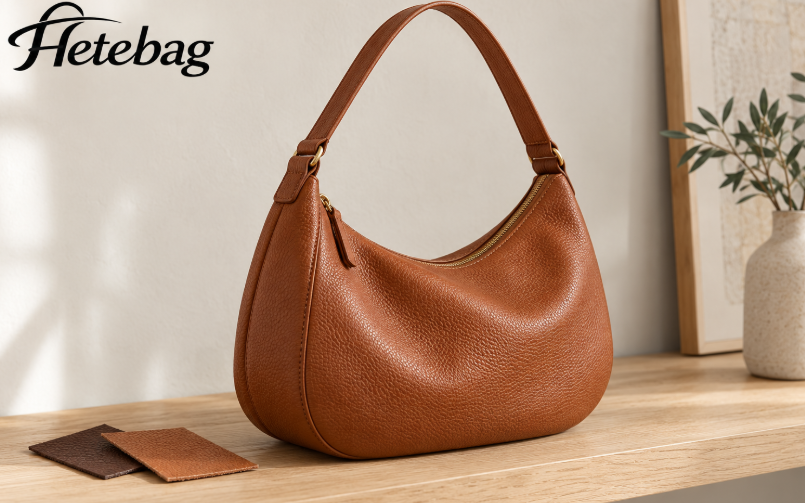
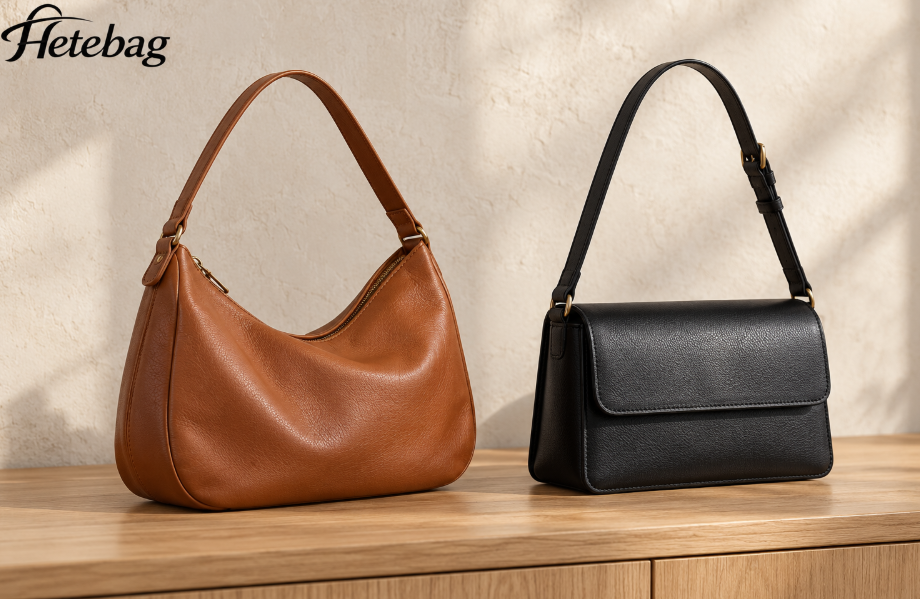
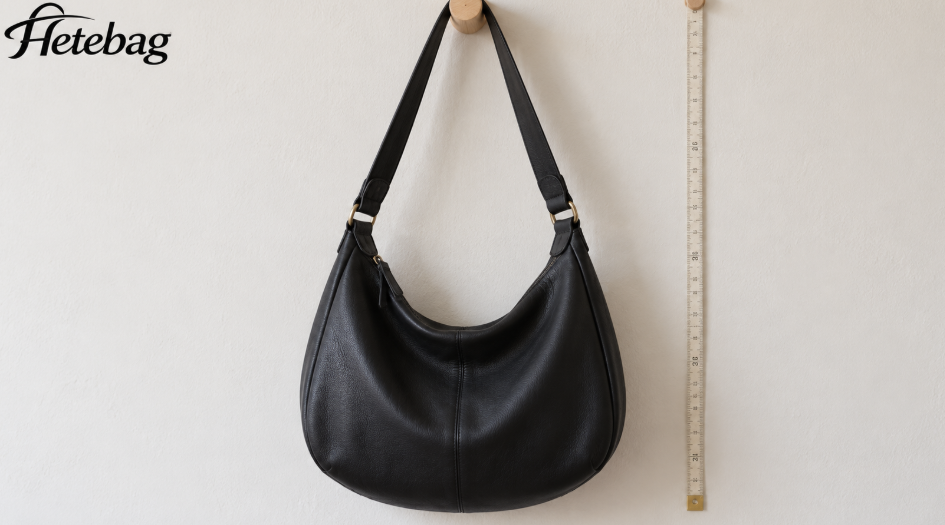
Start with the silhouette you want customers to recognize. A compact crescent worn close under the arm needs a different pattern and opening from an oversized, relaxed hobo designed to hold a full day’s essentials.
The main customization choices include:
- Body shape, dimensions, base depth, and amount of slouch.
- Outer material, texture, color, lining, and internal support.
- Strap length, width, adjustability, and attachment method.
- Zipper, magnetic snap, or another suitable top closure.
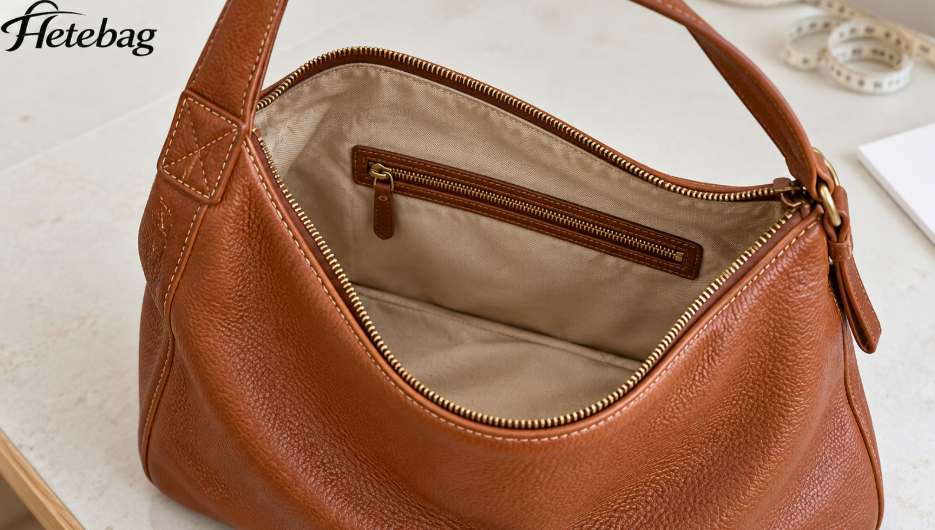
- Interior slip pockets, zipped pockets, and dividers.
- Hardware finish, logo method, labels, and packaging.
Define the drape before adding details
Describe how the bag should look empty, loaded, and worn. A photograph of a stuffed display sample may hide how much the body collapses during normal use, so send references that show more than one condition.
Reinforcement deserves particular attention. Support at the strap roots can help control local distortion, while a large stiff panel across the body can change the whole silhouette. Specify where you want support and where you want the material to fold naturally.
Choose an existing style or develop a new pattern
Adding your label to an existing shape can simplify development when the supplier already has a suitable pattern. Changing the curve of the opening, the strap position, or the body proportions usually requires a new sample review because each change affects how the bag hangs.
For a distinctive collection, send an original sketch or tech pack with front, side, and interior views. Reference photographs can explain a direction, but the final design should respect other brands’ intellectual property.
How Do You Choose the Right Material?
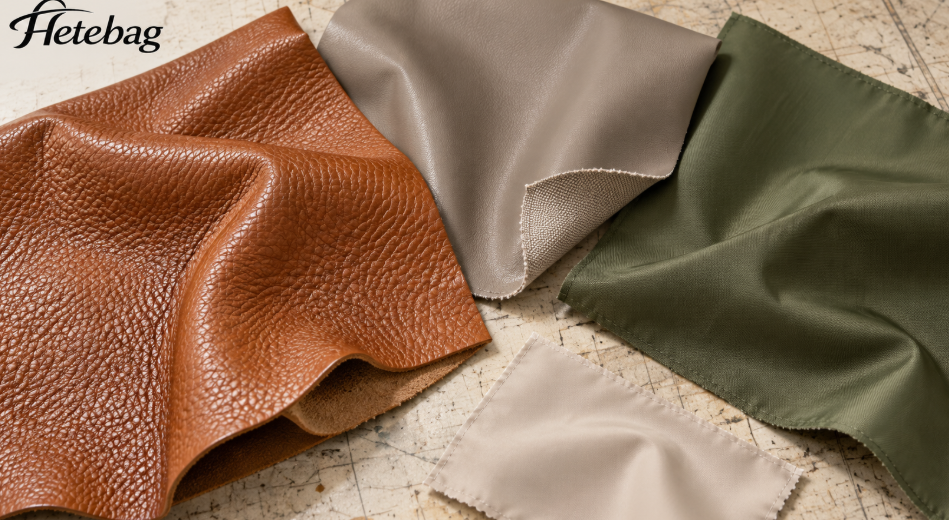
Choose materials against the intended feel, retail positioning, product weight, and care expectations. Material names alone are too broad to serve as a production specification: two versions of PU-coated fabric can behave very differently after folding and sewing.
| Material option | Useful direction for a hobo bag | What to confirm before approval |
|---|---|---|
| Soft genuine leather | Natural grain and a supple body for leather collections | Leather type, thickness, finish, acceptable natural variation, weight, and color transfer |
| PU-coated textile | Leather-look styles with selectable colors and surface textures | Coating and backing composition, thickness, flexibility, peeling risks, and care instructions |
| Toile | Casual collections with a visible textile character | Fabric weight, weave, shrinkage behavior, lining, and how firmly the body stands |
| Nylon | Lightweight everyday styles with a softer textile finish | Fabric construction, coating, surface sheen, seam behavior, and any claimed water resistance |
Compare assembled samples as well as swatches. A heavy lining or bonded backing can make a soft outer material feel unexpectedly rigid, while insufficient support can let the opening stretch out of shape.
HeteBag lists leather, PU, canvas, and nylon among its handbag material options. When discussing your sample with us, identify whether the priority is a relaxed fold, a cleaner crescent outline, or lower finished weight; that gives material selection a clear direction.
Make material claims specific
For US sales, the Guides sur le cuir de la FTC address misleading leather descriptions and disclosure of materials that look like leather but are not. Use a clear composition description for a coated textile rather than leaving customers to infer that it is animal leather.
For EU-bound leather styles, chemical restrictions can also affect sourcing. ECHA notes that chromium VI in leather articles is restricted. Ask your compliance adviser or laboratory to identify the applicable requirements for the finished product, and match supporting reports to the relevant material, color, and components.
If recycled content is part of the collection’s positioning, ask for evidence supporting the specific claim and its scope. A supplier’s general sustainability statement does not establish the recycled content of your selected fabric.
What Size and Strap Length Work Best?
Work backward from what the customer will carry and how the bag should sit against the body. The following dimensions are illustrative starting points for development, not industry standards or HeteBag stock specifications.
| Utilisation prévue | Illustrative body dimensions, width × height × depth | Illustrative shoulder drop |
|---|---|---|
| Compact essentials | 28 × 18 × 8 cm | 18 to 22 cm |
| Everyday shoulder carry | 34 × 26 × 11 cm | 23 to 28 cm |
| Roomier daily carry | 40 × 32 × 14 cm | 27 to 32 cm |
Shoulder drop and total strap length are different measurements. Define shoulder drop as the vertical distance from the top of the strap to an agreed point on the bag opening while the bag hangs, and include a measurement diagram in the specification. A curved hobo opening makes that reference point especially important.
Review shoulder clearance and access
Try the sample with the clothing your customers are likely to wear, including a heavier jacket if relevant to the collection. Check whether the strap clears the shoulder, whether the bag stays in place, and whether the user can reach the closure comfortably.
For an adjustable strap, record the minimum and maximum usable settings and the spacing between adjustment holes. A longer strap does not automatically make a hobo suitable for crossbody carry; the attachment positions and body shape must also work in that position.
Check usable space with actual contents
Place representative items inside the sample, then close and wear it. A body that appears wide in a flat measurement may still have a narrow usable opening, and a long wallet may not pass easily through a curved zipper.
If the product description will mention a tablet or laptop, confirm fit with a named device size or a physical dummy. Record the usable opening and internal space separately from the bag’s maximum external width.
How Can You Add Your Brand’s Logo and Packaging?
Choose the logo method after reviewing the material and the area where it will sit. Debossing can suit some leather and leather-look surfaces, while embroidery or woven labels may fit a textile design; each method needs a physical approval on the selected material.
A large metal logo can add weight or pull a very soft panel forward. A deep impression can also change the surface around a logo, so evaluate its appearance while the bag hangs naturally rather than only while the panel lies flat.
HeteBag’s handbag customization options include debossing, embossing, embroidery, and metal stamping. We can discuss which approach fits the selected construction, then use the sample review to confirm the appearance before you approve production.
Provide the artwork in a suitable vector format and record the logo width, position, color or finish, and distance from agreed reference points. Approve the actual result, including legibility and attachment, rather than relying only on a digital mockup.
Include packaging in the sample brief
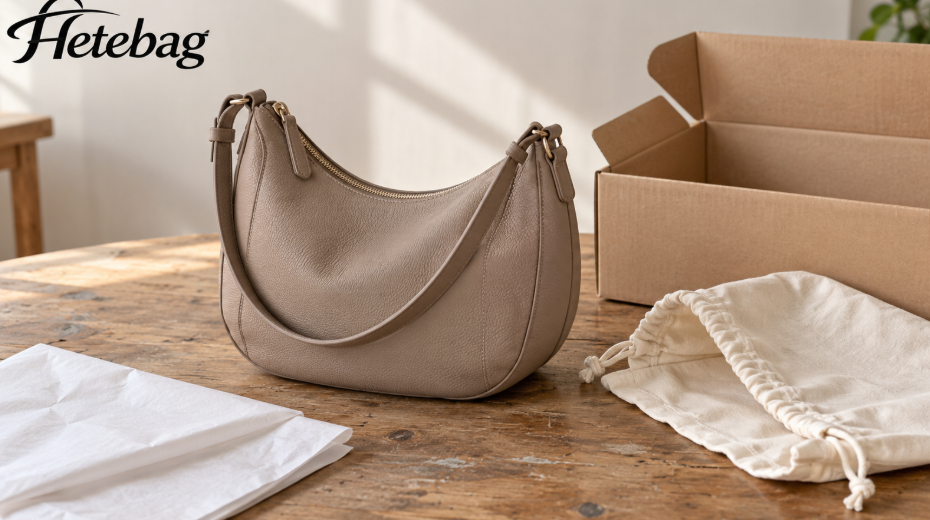
Specify the dust bag, hangtag, tissue, protective wrapping, barcode labels, and outer cartons required by your sales channel. Confirm which items the supplier will provide and whether any packaging component has a separate minimum order.
Soft hobo bags can develop unwanted folds during transport if the packing method compresses the opening or strap. Review one complete packing sample and agree where to use light support, how to protect hardware, and whether the bag should ship flat or partially supported. Packaging choices also affect carton volume and freight cost.
How Much Do Custom Hobo Bags Cost, and What Is the MOQ?
A reliable unit price requires a defined specification and order quantity. Without the material, construction, color split, logo process, and packaging details, a price range can give a purchasing team an inaccurate budget.
Ask suppliers to quote the same specification at your intended launch quantity and at a larger reorder quantity. Request separate figures for sample development, tooling, packaging, and any testing or inspection charges, and confirm the currency and delivery term.
The main cost drivers are:
- Material consumption, grade, finish, and cutting waste.
- Pattern complexity, seam work, lining, pockets, and reinforcement.
- Hardware, custom molds, logo application, and color matching.
- Quantity per style and color, plus packaging requirements.
- Shipment volume, transport method, duties, and other import costs.
HeteBag’s current handbag page lists an MOQ of 100 units per design. Treat that as a starting point for an inquiry: confirm whether your color assortment, custom material, hardware, and packaging can fit that quantity before building a launch budget around it.
Clarify what the minimum covers
Ask whether the quoted MOQ applies to the whole order, each style, each color, or a particular material. An order of 300 bags divided across three colors is different from 300 bags in a single color, especially when the material needs custom dyeing.
For a smaller launch, ask about available material colors, standard hardware, or an existing pattern. The supplier can then confirm which combination works at your intended quantity.
Compare landed cost per saleable bag as well as the factory unit price. Confirm who owns any unused custom components, whether you must pay for surplus material, and whether reorder prices depend on remaining stock.
What Should You Check Before Approving a Sample?
Use a written approval sheet linked to a specific sample and specification revision. Photographs help record the result, but a physical sample is needed to judge touch, shoulder fit, access, and drape.
| Review area | Ce qu'il faut examiner | Ce qu'il faut enregistrer |
|---|---|---|
| Shape and drape | Empty, loaded, worn, front, and side views | Approved reference photographs and support locations |
| Dimensions et coupe | Body measurements, opening, shoulder drop, and strap settings | Measurement method and agreed tolerances |
| Material and color | Outer surface, backing, lining, feel, and variation | Material references and approved physical swatches |
| Construction | Seams, strap roots, edge finish, pocket attachment, and zipper operation | Workmanship criteria and required corrections |
| Image de marque et conditionnement | Logo size and position, labels, hardware protection, and packing method | Artwork revision and approved packing sample |
Open and close the bag with representative contents inside. Check that the lining stays clear of the zipper, pockets remain accessible, and the strap attachments do not visibly distort the opening during ordinary handling.
At HeteBag, sample making and revisions are part of the development support described on our handbag page. If the prototype’s lining changes the intended slouch or the strap position affects access, we can review the requested adjustment with the production team before the next approval stage.
Separate approval of appearance from any performance claims. If your brief requires a defined load capacity, abrasion resistance, or coating durability, agree on a suitable test method and acceptance criteria with the supplier or laboratory. A visual sample review cannot establish those results.
Freeze approved changes before bulk production and keep matching references with both parties. Our guide to the custom handbag manufacturing process explains how design decisions, sample approval, and production checks connect.
How Do You Find the Right Hobo Bag Manufacturer?
Shortlist suppliers that can show relevant soft handbag construction. A catalog containing hobo bags is a starting point; the sample and the supplier’s explanation of its construction provide stronger evidence of suitability.
Ask how the supplier would control the opening shape, reinforce the strap roots, and maintain the approved drape when materials change between development and production. Useful answers refer to your design and explain the tradeoffs, including which details require another sample.
Verify who makes the bag
Confirm whether the company produces directly, coordinates partner factories, or combines both arrangements. Ask who handles pattern making, logo application, assembly, inspection, and packing, and who is responsible for resolving a mismatch with the approved sample.
HeteBag works with partner factories and supports handbag projects through development and production coordination. For your order, confirm the production arrangement, inspection access, and responsibilities in writing rather than inferring them from general factory photographs.
Send an RFQ that suppliers can compare
Include the design references, dimensions and measurement diagram, material preferences, color quantities, closure and interior layout, logo artwork, packaging requirements, destination market, and requested delivery date. Mention any retailer documentation or testing requirements before the supplier confirms the quotation.
Compare how fully each supplier answers the brief. Ask who approves sample corrections, when materials will be ready, how inspection works, and how defects will be resolved. Settle material substitutions and outstanding sample corrections before authorizing bulk production.
Conclusion
Successful custom hobo bags start with clear decisions about drape, shoulder fit, materials, and construction. A useful sample approval records those decisions alongside branding, packing, and acceptance criteria so the production team has a shared reference.
To discuss a private label hobo bag project with HeteBag, send your design references and project requirements. Include the intended quantity by color, material direction, dimensions, logo artwork, destination market, and launch date so we can review the development requirements with you.
Questions fréquemment posées
Can I order custom hobo bags without a complete tech pack?
You can begin an inquiry with sketches, reference photographs, intended contents, approximate dimensions, and material preferences. Before production, turn the agreed design into a written specification with measurements, artwork, and approved sample references so both parties use the same instructions.
Does a 100-piece MOQ allow several colors?
That depends on the supplier’s material and component minimums. HeteBag’s handbag page lists 100 units per design, but you should request written confirmation of the allowed color split and whether custom colors, hardware, or packaging require higher quantities.
How can I make a hobo bag slouchy without making it feel flimsy?
Review the outer material, lining, and reinforcement together in an assembled sample. Targeted support at the strap roots and opening can help maintain function, while the main body remains flexible; approve the result empty and with representative contents inside.
Will my second order match the first batch exactly?
Specify the approved material references, physical color standards, hardware finish, and sample revision when placing a reorder. Ask whether the same materials remain available and require approval of any proposed substitution, since a different backing or lining can change the bag’s feel and drape.