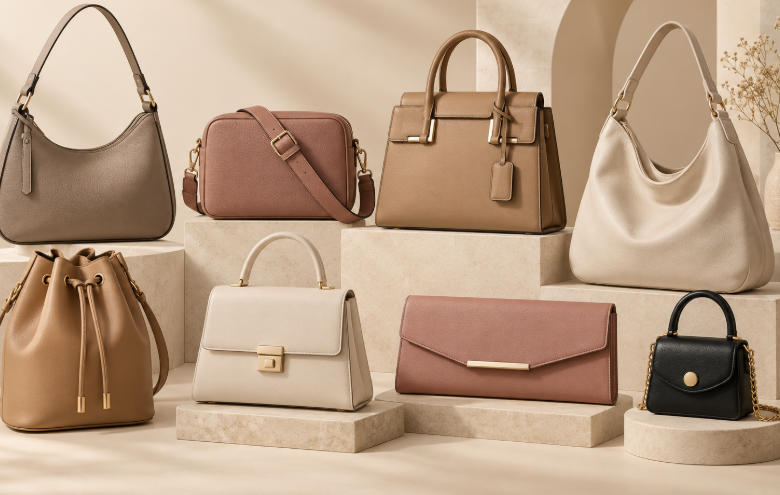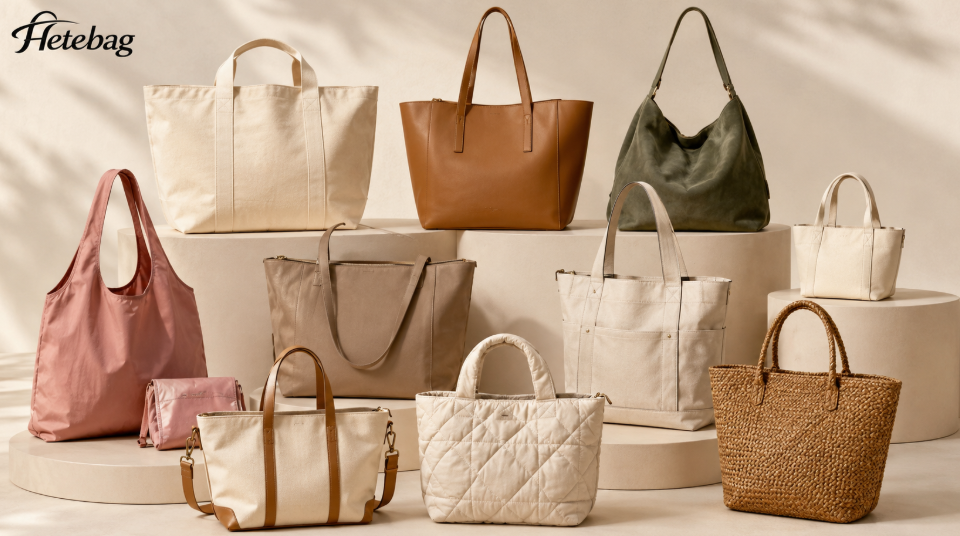



As the fashion industry and consumer demands keep changing, custom women’s handbags are no longer merely a simple storage tool. Nowadays, they represent brand image, product positioning, and consumers’ lifestyles. From luxury brands to fast fashion retail, from eco-friendly shopping bags to high-end designer collections, the choice of handbag materials is directly influencing the market competitiveness of the products.
Hetebag has over ten years of experience in the ladies’ handbag industry. They have noticed that consumers’ demands for ladies’ handbags have become more diverse. Besides paying attention to the appearance design, people are also increasingly emphasizing the durability, environmental friendliness, comfort, and daily practicality of handbags. A high-quality handbag material not only enhances the overall texture but also boosts brand value and consumer experience. Therefore, more and more brands are beginning to pay attention to the performance differences between various materials, hoping to find the best solution that combines beauty and functionality.
Therefore, in this article, we will provide you with a detailed introduction to the 8 most popular custom ladies’ handbag materials for 2026, including their characteristics, advantages, applicable scenarios, and market trends. Whether you are a brand purchaser, wholesaler, retailer, or an enterprise seeking an OEM customization solution, this guide can help you make a better choice of handbag materials that suit your business.
Why Material Selection Matters for Custom Ladies Handbags
How Materials Affect Durability, Appearance, and Pricing
Material choice drives cost structure more directly than almost any other design variable. It determines your MOQ flexibility, your production lead time, your defect rate, and ultimately your margin. A bag designed in full-grain leather and a bag designed in recycled PET fabric occupy entirely different cost brackets — and entirely different customer conversations.
Beyond cost, material affects how a bag wears over time. Some materials develop a patina that customers come to love. Others crack, peel, or pill after six months, which creates returns, complaints, and brand reputation damage that’s hard to recover from.
Then there’s weight. A structured canvas tote and a quilted nylon crossbody may look similar in product photography, but they feel completely different in hand. That tactile experience — the drape, the give, the rigidity — shapes whether a customer reaches for the bag again tomorrow.
Consumer Trends Shaping Handbag Materials in 2026
Three shifts are defining material demand right now.
First, sustainability has moved from a marketing talking point to a purchase criterion. Buyers increasingly ask where materials come from, how they’re processed, and whether they can be recycled at end of life. RPET fabrics and other recycled content materials are growing in specification requests because they answer those questions directly.
Second, the casualization of fashion continues to push demand toward lightweight, functional materials. Nylon, canvas, and technical fabrics are appearing in collections that previously leaned entirely on leather — not because leather lost its appeal, but because the occasions customers dress for have shifted.
Third, value transparency is up. Customers now research materials before purchasing. They know what PU leather is. They compare it consciously to genuine leather. This means material positioning in product copy and on hang tags matters more than it did five years ago.
Luxury vs Affordable Handbag Material Positioning
| Positioning Tier | Primary Materials | Price Signal |
|---|---|---|
| Luxury / Premium | Full-grain leather, suede, exotic leather | High perceived value, aging with character |
| Mid-market | PU leather, canvas, structured nylon | Durability + accessible pricing |
| Value / Trend-driven | Polyester, denim, RPET | Fast fashion cycles, sustainability angle |
| Specialty / Occasion | Velvet, satin, embossed PU | Event-driven, textural differentiation |
The table above is a starting point, not a ceiling. Canvas appears in some of the most expensive bags in the world. The positioning depends as much on execution — hardware quality, lining, construction — as on the material itself.
Cuero genuino
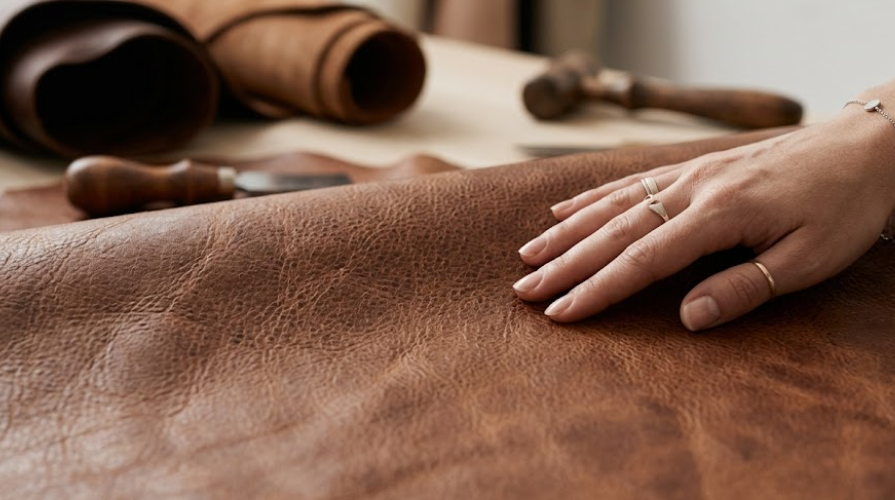
Genuine leather remains the benchmark against which every other handbag material is measured — and for good reason. It’s durable, it’s tactilely satisfying, and it communicates quality in a way that synthetic alternatives continue to struggle to replicate.
Types Used in Custom Ladies Handbags
Cuero de grano completo is the highest grade. It uses the outermost layer of the hide, keeping the natural grain intact. Bags made from full-grain leather develop character over time — slight darkening at stress points, a surface that responds to the oils in human skin. This aging quality is what luxury customers pay for.
Cuero de grano superior is sanded and buffed to remove surface imperfections, then often embossed with a uniform pattern. It’s more consistent in appearance than full-grain and more resistant to staining, which makes it better suited to high-volume production where visual uniformity matters.
Corrected-grain leather (also called genuine leather in some market contexts) undergoes significant surface treatment. It’s more affordable and widely available, but it lacks the longevity of full-grain. The coating tends to crack or peel over years of use.
Split leather comes from the lower layers of the hide and is typically used for linings or less visible structural components rather than outer surfaces.
Ante is split leather that’s been buffed on the flesh side to create a napped surface. It’s soft and visually distinctive, but it requires more care and performs poorly in wet conditions.
What to Know for Production
Leather hides are natural products, which means variability is inherent. Each hide has different grain patterns, natural markings, and slight color variations. For collections requiring tight color consistency across large runs, this can create challenges that require careful sourcing and hide selection.
Leather also responds to the production environment. Humidity and temperature during cutting and stitching affect how the material behaves. Manufacturers with genuine leather experience know how to account for this; those without it often don’t until problems appear mid-production.
Where It Fits in the Market
Full-grain and top-grain leather work best for positioned brands where the material is part of the value proposition — structured totes, professional bags, classic shoulder bags, and heritage-style products. Corrected-grain leather fits mid-range production where margin pressure is real but a leather specification is still required for positioning.
Lona
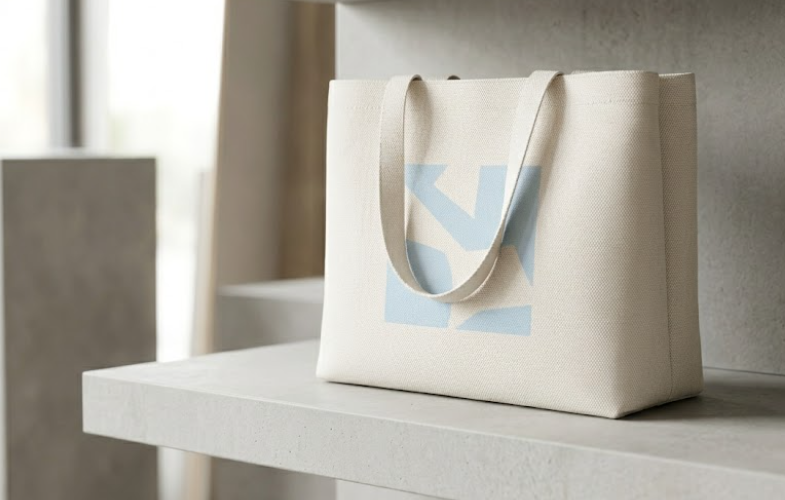
Canvas is one of the oldest materials in bag production, and it’s having a serious moment in 2026. The reasons aren’t hard to find — it’s lightweight, printable, structurally versatile, and responds exceptionally well to both waxing treatments and coating applications.
Canvas Constructions in Handbag Manufacturing
Plain woven canvas is the base structure. It’s made from tightly woven cotton or a cotton-polyester blend. The weave density determines durability — a higher thread count produces a tighter, more resistant fabric.
Waxed canvas applies a paraffin or beeswax coating to plain canvas, creating a surface that repels water, develops a distinctive patina with use, and communicates a heritage or outdoor aesthetic. It’s heavier than uncoated canvas but significantly more weather-resistant.
Coated canvas is distinct from waxed canvas. It typically uses a PVC or polyurethane coating applied to a canvas substrate, which allows the textile structure to show through while creating a protective, easy-clean surface. Several major luxury houses have built signature patterns on coated canvas.
Printed canvas refers to any canvas that’s received surface printing — digital inkjet, screen printing, or heat transfer. It’s the dominant production method for branded totes, novelty bags, and seasonal collections where graphic identity is central to the product.
Practical Considerations
Canvas accepts hardware well, stitches cleanly, and can be cut in large quantities with minimal waste. It’s also one of the more forgiving materials for manufacturers working at the lower end of the MOQ range, which makes it a good starting point for smaller collections or market tests.
The limitation is structural rigidity. Uncoated canvas drapes rather than holds shape. If your design calls for a structured silhouette, the canvas needs either an internal frame, stiffening interlinings, or a reinforcing coating. Canvas bags that haven’t addressed this tend to collapse in use, which customers experience as a quality failure regardless of the outer material.
If you’re considering canvas for your custom handbag collection, you may also want to compare it with nylon in terms of durability, weight, and water resistance. Our detailed guide on Canvas vs Nylon Bags explains the key differences for custom bag manufacturing.
Cuero de PU
PU leather is the most widely used leather alternative in commercial handbag production, and the gap between good PU and poor PU is substantial. Understanding that gap is essential for anyone sourcing or developing custom ladies handbags at scale.
How PU Leather Is Made
PU leather is produced by applying a polyurethane coating to a fabric backing — typically woven polyester or non-woven fiber. The surface can be embossed with virtually any texture: smooth, pebbled, snake, croc, matte, glossy. The backing determines the material’s drape and structural behavior; the coating determines its surface durability.
Higher-quality PU leathers use multi-layer constructions, thicker coating applications, and more sophisticated embossing that better replicates the visual depth of genuine leather grain. Lower-quality versions use thinner coatings over looser base fabrics, which is why they peel — the coating separates from the substrate under repeated flexing.
What Distinguishes Quality PU Leather
The single most reliable indicator of PU leather quality is coating thickness, usually measured in millimeters. For handbag applications, a coating thickness below 0.3mm tends to create durability problems within 12–18 months of regular use. Better specifications run 0.4–0.6mm or higher.
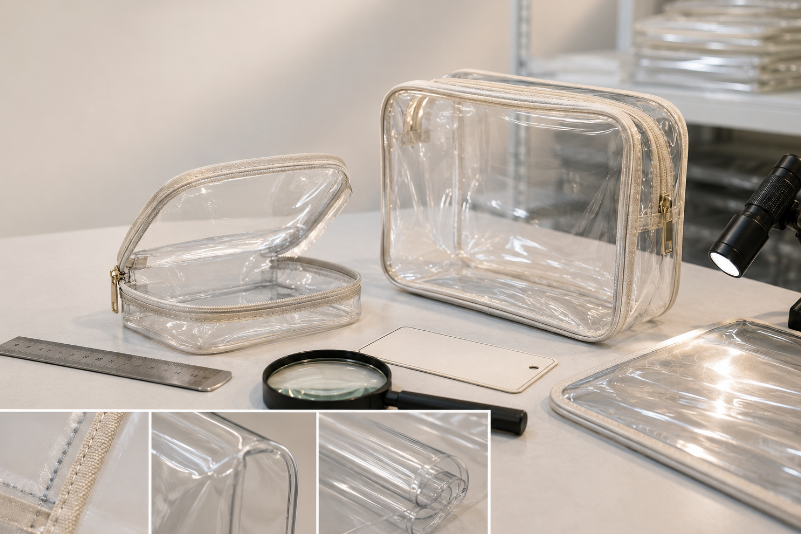
Beyond thickness, look at the cross-section under light. Quality PU has a consistent, even coating without visible voids or bubbles. The backing fabric should be tight and uniform.
Where PU Leather Works
PU leather works well for mid-market and trend-driven collections where price point matters, where frequent style turnover means longevity is less critical, and where the leather aesthetic is needed but leather cost is prohibitive. It also performs well in vegan-positioned product lines.
It doesn’t work well for high-quality positioning claims, for products expected to last many years, or for markets where customers are sophisticated enough to evaluate material quality on inspection.
Nylon & Polyester
Nylon and polyester are the workhorses of functional handbag production. They’re often grouped together in conversation, but they have meaningfully different performance profiles that matter for bag development.
Nylon vs Polyester: The Practical Difference
| Propiedad | Nailon | Poliéster |
|---|---|---|
| Abrasion resistance | Más alto | Moderado |
| Peso | Slightly heavier | Lighter |
| UV resistance | Lower (yellows over time) | Más alto |
| Moisture absorption | Absorbs more, dries slower | Absorbs less, dries faster |
| Costo | Más alto | Inferior |
| Aplicaciones típicas | Premium sports/travel bags | Fashion bags, linings, everyday totes |
Nylon’s strength advantage makes it the preferred choice for bags expected to sustain high physical stress — gym bags, travel duffels, laptop bags. Polyester’s UV stability makes it better for bags that spend time in sunlight, and its lower cost makes it more accessible for high-volume commercial production.
Fabric Constructions to Know
Ballistic nylon was originally developed for military flak jackets. Its multi-ply weave construction creates extraordinary tear resistance. In bags, it’s used for heavy-duty applications where weight isn’t a concern.
Ripstop nylon uses a reinforcing grid woven into the fabric every few millimeters. This prevents tears from propagating across the material. It’s lightweight and commonly used in packable bags, foldable totes, and travel accessories.
Oxford weave (available in both nylon and polyester) produces a visible basket-weave texture and is one of the most common constructions in commercial bag production. 600D and 1680D Oxford are standard specifications you’ll encounter from most manufacturers.
Cordura is a branded high-tenacity nylon fabric with a long track record in luggage and working gear. It’s heavier and more expensive than standard nylon but provides superior durability for products positioned on performance.
For a deeper comparison between nylon, polyester, and canvas materials used in modern bags, check out our complete backpack material guide. It breaks down durability, weight, water resistance, and common manufacturing applications in detail.
Poliéster
Polyester deserves its own section because it functions as more than just a fabric — it’s the backbone of a significant portion of the global handbag supply chain, including linings, structural components, and an increasing range of recycled content materials.
Why Polyester Dominates Volume Production
Polyester’s production cost is low, its availability is nearly unlimited, and it processes reliably through standard bag manufacturing equipment. It accepts dye well, holds color consistently across production runs, and resists the wrinkle and shape distortion that plague natural fibers in commercial use.
For linings specifically, polyester has largely replaced other options across most price tiers. A quality polyester lining with a tight weave and good color fastness is functionally superior to a loosely woven natural fiber lining that fades, pills, or tears within months.
Technical Polyester Fabrics
The category has also generated a range of technical performance fabrics that go well beyond basic fabric construction. Microfiber polyester creates a suede-like surface used extensively in fashion bag applications. Bonded polyester combines a face fabric with a foam or fleece backing for structural weight and padding in bag panels. Woven polyester jacquard allows complex patterns to be integrated directly into the fabric structure rather than printed on the surface.
For custom ladies handbags targeting the mid-to-premium market, technical polyester constructions offer genuine design differentiation while keeping material costs within range.
Denim Fabric
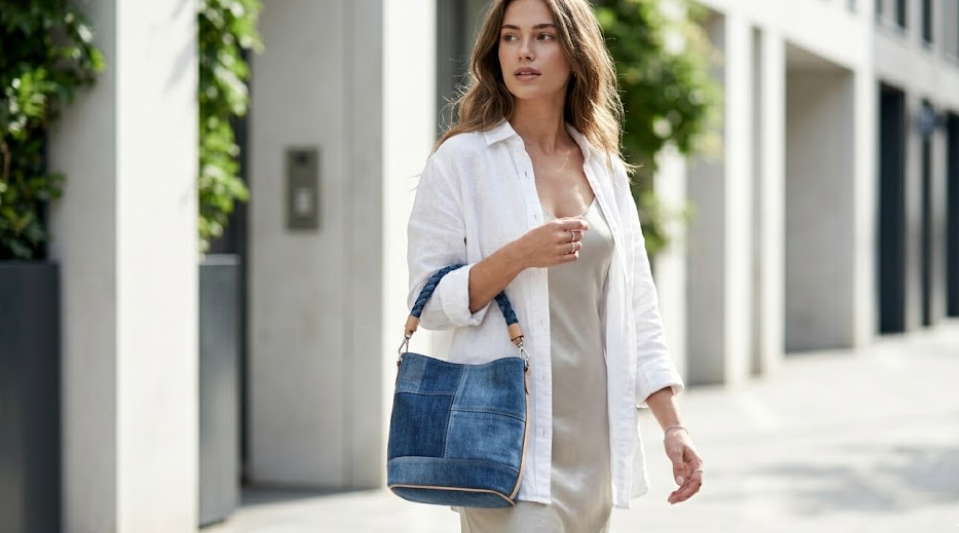
Denim has moved well past its traditional role as trouser fabric. In handbag applications, it’s become a material with genuine design range — capable of reading casual, elevated, or vintage depending on how it’s developed and finished.
Why Denim Works for Custom Ladies Handbags
Denim is tightly woven, structurally rigid, and inherently durable. The diagonal twill weave that defines denim creates a surface that resists tearing along one axis while retaining enough flexibility to be sewn, folded, and shaped in most standard bag constructions.
It also carries strong cultural associations — youth, authenticity, durability — that translate into clear positioning signals in a product line. A denim bag communicates something specific without requiring extensive copy.
Working with Denim in Production
Indigo denim presents a particular challenge: it bleeds. The dye that creates denim’s signature color isn’t fully fixed to the fiber, which means it can transfer to light-colored fabrics, clothing, or linings during manufacturing and in use. For custom handbag production, this typically requires using dark-colored linings, pre-washing the denim to reduce bleed, or using laser-washed or bleached denim variants that have been post-processed for color stability.
Weight matters significantly in denim selection. Lightweight denim works for fashion applications but tends to distort in structured bag panels. Mid-weight provides the structure most bag designs need. Heavy denim (14oz and above) is very rigid and typically reserved for base panels or reinforced structural sections.
Stretch denim — which incorporates elastane — is technically more complex to work with in bag production because it resists maintaining fixed dimensions during cutting. It can be used effectively in soft-structured bags where a degree of dimensional variation is acceptable.
RPET Recycled Fabric
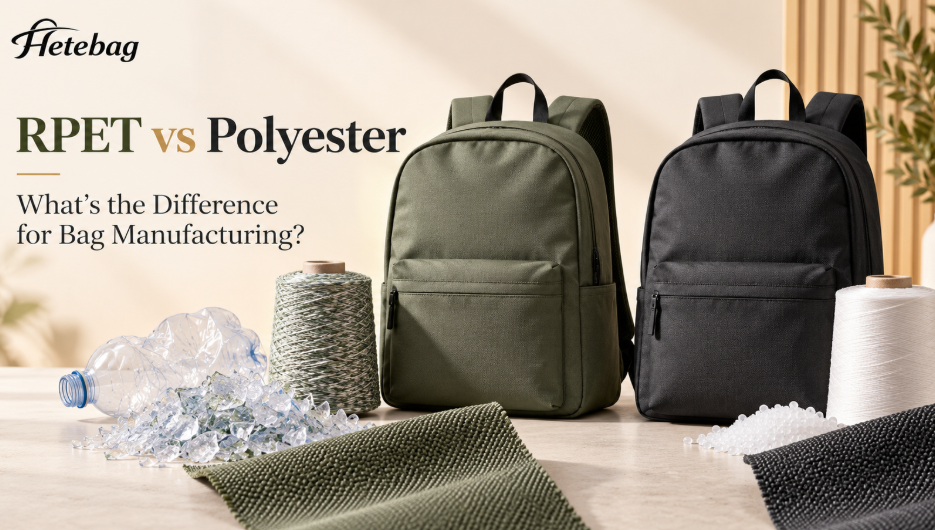
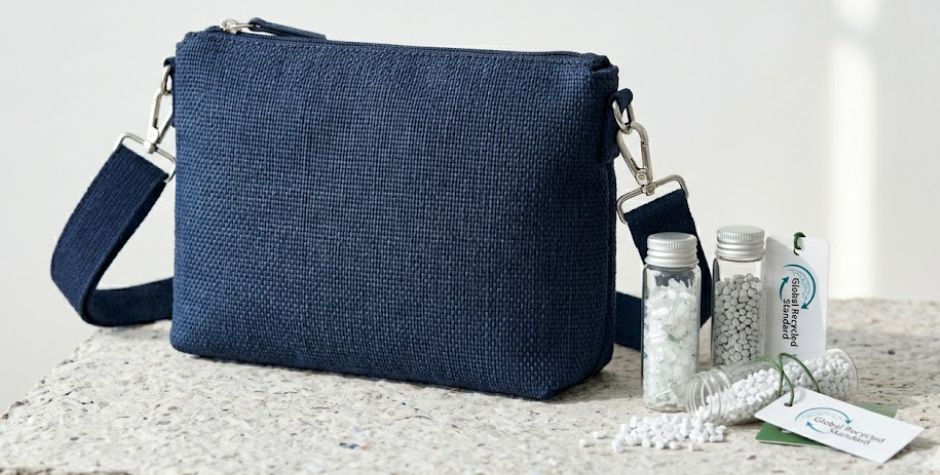
RPET — recycled polyethylene terephthalate — is made from post-consumer plastic, primarily plastic bottles. One 500ml bottle yields roughly 27 grams of fiber. That fiber is spun into yarn, which is then woven into fabric.
Why RPET Is Growing in Handbag Specifications
The growth in RPET specifications reflects a real shift in sourcing priorities. Buyers under sustainability mandates — whether internal targets or supply chain requirements from retail partners — are looking for materials with documented recycled content. RPET provides that documentation through chain-of-custody certification (GRS, Global Recycled Standard, being the most recognized).
Beyond compliance, RPET performs competitively with virgin polyester in most handbag applications. The fiber characteristics are similar, the dyeability is comparable, and the weight range available covers most standard bag constructions. In testing, RPET fabrics made from quality-grade recycled PET perform as well as or better than equivalent virgin constructions in abrasion and colorfastness.
What to Look For in RPET Materials
Certification matters. Anyone can claim a product contains recycled content without verification. GRS certification requires third-party auditing of the entire supply chain from collection through fiber to finished fabric. Requesting GRS certification documentation from your supplier is the standard way to verify RPET content claims.
The percentage of recycled content varies. Fabrics labeled “RPET” may contain anywhere from 30% to 100% recycled content. Higher recycled content typically corresponds to higher cost, but the premium narrows as supply has expanded. For 2026 production, 100% recycled content RPET at commercial volumes is available from established suppliers at price points that work in mid-market bag development.
Aesthetics and Application
RPET is available in woven and knit constructions, can be made to replicate most standard polyester fabric textures, and accepts printing and lamination normally. It works well for totes, backpacks, crossbody bags, and any design where the sustainability story is central to the product positioning.
Terciopelo
Velvet is the outlier on this list — it’s not a volume material, and it doesn’t pretend to be. But in the specific applications where velvet works, nothing else replicates its effect: the depth of color, the way light moves across the surface, the tactile softness that registers immediately on touch.
Velvet Constructions in Handbag Production
Traditional cut pile velvet creates its signature surface by weaving loops into the base fabric and then cutting them. The resulting pile reflects light differently depending on direction, which is the source of velvet’s characteristic shimmering quality.
Crushed velvet is pile velvet that’s been pressed in irregular directions, creating a permanent pattern in the surface that shifts visually with movement. It’s been through several fashion cycles and is currently being used in contemporary evening bag designs.
Velvet with backing — velvet bonded to a woven or non-woven backing material — is the most practical format for handbag production. The backing stabilizes the fabric during cutting and sewing and helps it maintain structure in a bag panel.
Practical Limitations
Velvet marks. Pressure, friction, and moisture all leave visible impressions in the pile. This makes it unsuitable for everyday bags but appropriate for evening bags, clutches, and occasional-use pieces where the customer understands the care requirements.
It’s also more difficult to sew than flat woven materials. The pile direction needs to be consistent across all panels of a bag, which means more careful cutting and layout planning. Manufacturers without specific experience with velvet tend to underestimate the added time this requires.
Velvet works best for limited-run evening and occasion bags, holiday collections, and elevated accessories where the material’s dramatic visual quality justifies the additional production complexity.
How to Choose the Best Material for Your Custom Ladies Handbags
The right material is the one that aligns your production reality with your market positioning — and those two things need to be evaluated together, not separately.
Start with the Customer, Then Work Backward
Who is using this bag, and what are they doing with it? A bag carried daily through a city commute faces different stresses than a bag brought to a wedding. The use context should shape your material specification before you think about aesthetics or price.
From use context, derive your durability requirements. How long is this product expected to perform well? If the honest answer is “one to two seasons,” then premium genuine leather is a mismatch — not because leather is wrong, but because you’re paying for longevity that the market cycle won’t use. Conversely, if you’re positioning on quality and longevity, selecting a thin PU leather to hit a cost target will undermine that positioning within months of the product being in use.
Factor In Minimum Order Quantities and Production Realities
Not every material is available at every volume. Full-grain leather in consistent grades requires sourcing from established tanneries that often work at quantities incompatible with small production runs. RPET certified materials require suppliers with GRS certification on file. Specialty constructions like ballistic nylon or high-denier Cordura have their own supply chain constraints.
Understanding what your manufacturer can source reliably — and at what volume thresholds — shapes which materials are actually available to you, as opposed to theoretically available.
Think About the Full Material Cost, Not Just the Fabric Price
Material cost is more than the per-meter price of the fabric. It includes cutting waste (which varies significantly between shapes and materials), production time per unit (which velvet and leather increase relative to synthetic flat weaves), defect and rejection rates (which raw materials with more variability increase), and durability costs downstream (which cheap PU leather increases through returns and complaints).
A more expensive material that cuts cleanly, stitches fast, and doesn’t generate quality issues at the retail level often produces better total economics than a cheaper material with variable quality.
Match the Material to the Hardware and Lining
A bag is a system. The visual and tactile qualities of the outer material need to be supported by compatible hardware and lining choices. Genuine leather with cheap plastic hardware reads as a downgrade. Technical nylon with high-quality brushed metal hardware reads as intentional and premium. The material combinations you choose create a coherent impression, or they don’t.
| Outer Material | Recommended Lining | Hardware Pairing |
|---|---|---|
| Cuero de grano completo | Suede split or tight-weave polyester | Solid brass or brushed gold |
| Lona | Cotton twill or polyester oxford | Antique brass or matte black |
| Cuero sintético | Polyester satin or microfiber | Gunmetal or silver-tone zinc alloy |
| Nylon / RPET | Polyester ripstop or flat weave | Matte hardware, YKK zippers |
| Terciopelo | Silk-feel polyester or cotton sateen | Gold or rose gold tone |
| Denim | Cotton canvas or polyester lining | Antique brass or matte gold |

Conclusión
Material selection is where manufacturing expertise and market instinct meet. Getting it right means fewer surprises in production, stronger performance in the market, and a product line that holds up to the scrutiny customers increasingly apply. Getting it wrong means quality problems, positioning misalignment, and costs that don’t show up on the initial quote.
The eight materials covered here represent the full working range of what’s being used in custom ladies handbags right now — from the heritage durability of full-grain leather to the sustainability credentials of RPET to the occasion-specific drama of velvet. The best choice depends on your customer, your volume, your price positioning, and the production capabilities of the manufacturer you work with.
Speaking of manufacturers — if you’re in the process of sourcing a production partner for your custom handbag line, Hetebag is worth a conversation. Based in Huadu, Guangzhou — China’s core handbag manufacturing hub — Hetebag has 15 years of manufacturing experience and works with multiple factory partners, which gives them the flexibility to handle a range of material specifications, order volumes, and construction requirements. Whether you’re developing a new collection or scaling an existing line, they’re set up to support that process from sampling through production.
You can reach out directly through the website. Leave your contact number and someone from the team will follow up. The door is open.