
 Arabic
  English
  Italian
  French
  German
  Spanish
 Just because a piece of leather looks good in your hand doesn’t mean it will fit perfectly when made into a bag. Once you start prototyping, you’ll find that the leather’s softness, thickness, surface treatment, and even the condition of different parts of the same piece of leather will affect the final result.
I have seen attractive leather swatches become difficult materials once sample making begins. One may feel excellent in your hand but become too soft around the zipper. Another may look clean on a small cutting yet show large color differences when dozens of hides are placed together. Some thick leathers make a bag feel premium at first, then add more weight than the customer expected.
إذا كنت تعمل على تطوير leather bag أو custom leather bag, the better question is not simply, “What is the best leather?” You need to ask, “Which leather will give this particular bag the right appearance, structure, durability, weight, and production consistency?”
For the complete purchasing process, use the custom leather handbag sourcing guide to connect material approval with bag construction, supplier selection, sampling, and bulk inspection.
1. Which Leather Is Best for Bags?
There is no single leather that is best for every bag. Full-grain cowhide may be an excellent choice for a rugged briefcase, yet the same material can feel too heavy or stiff for a small fashion crossbody bag. Soft calfskin can work beautifully on a refined handbag but may require more care when used on a travel bag that receives frequent rubbing.
In our factory, we normally look at five things before recommending leather: bag structure, expected use, surface appearance, finished weight, and production quantity. These points tell us much more than a simple leather grade.
Brands new to this material may first want to understand what a leather bag is and how different leather materials are commonly used before comparing grades in detail.
What Makes a Good Leather for Bag Making?
Good bag leather needs more than an attractive surface. It must survive cutting, skiving, folding, stitching, edge painting, hardware installation, and normal use without losing the character the designer selected.
The grain should also fit the design. Large natural grain variation may be desirable on a heritage-style tote, while a clean fashion handbag may need a more even surface. Buyers sometimes approve a beautiful swatch without discussing this point, then become concerned when the bulk hides show natural scars, wrinkles, or shade differences.
Thickness matters as well. Leather that is too thin may collapse around handles or hardware. Material that is too thick can create bulky seams and make edge folding difficult. Good leather is the leather that behaves correctly after it becomes a bag, not only when it sits on a material board.
Is Full-Grain Leather Always the Best Choice?
No. Full-grain leather retains its natural grain surface with minimal mechanical correction, which gives it character and allows natural markings to remain visible. The Leather Working Group uses this type of definition in its leather terminology guidance.
That does not mean every brand should automatically select it. Natural scars, grain changes, wrinkles, and shade variation can reduce cutting yield when a project requires a very clean appearance. The factory may have to reject more areas of each hide to keep front panels visually consistent.
Top-grain or corrected leather can sometimes produce a cleaner and more repeatable result across hundreds of bags. This is especially useful when your retail presentation depends on consistent color and texture.
Full-grain leather is a material choice, not a quality shortcut.
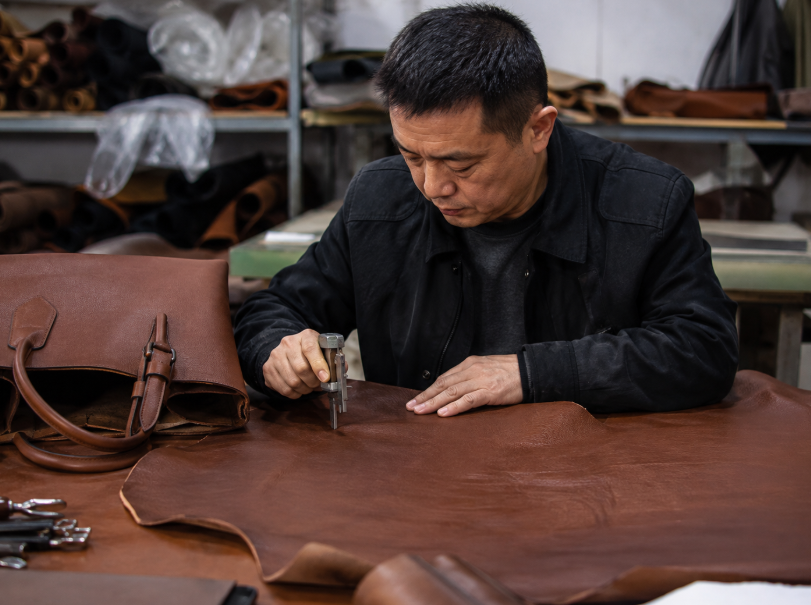
2. Understanding the Main Leather Grades
Leather terms are often used loosely in product descriptions. Buyers should understand what has actually happened to the surface rather than relying on one attractive word.
| Leather Grade | Main Characteristics | Best Used When |
|---|---|---|
| Full-grain | Natural grain remains visible, more natural variation | Heritage, premium, rugged, or character-driven bags |
| Top-grain | Surface may be lightly corrected and finished | Refined handbags and consistent branded collections |
| Genuine / split leather | Lower layers may be finished or embossed | Projects needing real leather with controlled appearance |
| Bonded leather | Leather fibers combined with binders | Limited bag applications and non-critical components |
These categories describe construction and surface treatment. They do not tell you everything about tanning, thickness, finish strength, colorfastness, or how well the leather was processed.
Full-Grain Leather
Full-grain leather works well when the natural surface is part of the design. Over time, many full-grain leathers develop visible wear and color changes that become part of the bag’s character.
The challenge comes during cutting. One hide may contain areas with tighter grain, looser grain, scars, belly wrinkles, or color differences. If the front and back panels must match closely, material utilization can fall.
This is something worth discussing before bulk production. Ask your manufacturer how much natural variation will be accepted and which areas of the hide can be used on visible panels.
Top-Grain Leather
Top-grain leather is often selected when a brand wants real leather but needs a more controlled surface. Light buffing, correction, pigmentation, embossing, or finishing can make appearance more consistent.
That consistency can help when producing repeated styles across different production batches. A clean surface also makes color matching easier when the design uses structured shapes, polished hardware, or sharp edge painting.
It may not have the untouched grain of full-grain leather, yet a well-made top-grain leather can be an excellent choice for commercial handbags.
Genuine and Split Leather
“Genuine leather” tells you that real leather is present, but the term alone does not tell you enough about its construction or quality.
Split leather comes from the lower section of a hide after the grain layer has been separated. Manufacturers may add coatings or embossed patterns to create a more uniform surface. Good split leather can work for certain products, but buyers should ask what layer is being used, what finish has been applied, and how that surface performs after repeated flexing.
The issue is rarely the word “split.” The problem starts when material specifications are vague.
Bonded Leather
Bonded leather uses leather fibers combined with binders and other materials. Its structure differs greatly from full-grain, top-grain, or split leather.
I would not normally select it for a bag that depends heavily on long-term folding, handle strength, or natural leather aging. Some decorative panels or lower-stress components may use it, but the material should be clearly identified during sourcing.
If your brand sells the product as a leather bag, product labeling and material descriptions also need to match the regulations in your target market.
3. Common Types of Leather Used for Bags
Leather grade describes one part of the material. Animal type changes the feel, grain pattern, density, weight, and sewing behavior as well.
| Leather Type | Typical Feel | Common Bag Applications |
|---|---|---|
| Cowhide | Strong, versatile, many structures available | Totes, backpacks, briefcases, travel bags |
| Calfskin | Fine grain, smooth, refined | Luxury handbags, small leather goods |
| Goatskin | Light, flexible, naturally textured | Handbags, crossbody bags, smaller accessories |
| Lambskin | Very soft and smooth | Fashion and luxury handbags |
| Suede | Soft, brushed surface | Fashion bags, panels, casual designs |
| Nubuck | Fine velvety grain surface | Premium casual bags and fashion collections |
Cowhide and Calfskin
Cowhide is one of the most practical materials for bag production because tanneries can produce it in many thicknesses, finishes, colors, and levels of softness.
A structured tote may use firmer cowhide. A softer shoulder bag can use a milled version with more movement. Briefcases and larger bags benefit from its strength, especially around handle attachments and load-bearing panels.
Calfskin normally has a finer surface and a more refined hand feel. It is popular when smooth grain and clean appearance matter. Surface protection still needs attention because very smooth finishes can show scratches more easily than heavily pebbled leather.
Goatskin and Lambskin
Goatskin can give you an interesting balance between low weight and good strength. Its natural grain is easy to recognize, and it works well when the bag needs softness without feeling completely unstructured.
Lambskin moves further toward softness. It can create a rich hand feel on fashion handbags, quilted bags, clutches, and smaller styles. That softness comes with trade-offs. Sharp hardware edges, rough surfaces, fingernails, and repeated abrasion can mark delicate finishes.
Designers should think about the whole construction. A soft leather may need reinforcement behind magnetic buttons, handle bases, corners, or decorative hardware.
Suede and Nubuck Leather
Suede has a brushed surface produced on the flesh side or from split material, while nubuck is created by lightly buffing the grain surface. Both offer a soft, tactile look that is difficult to reproduce with smooth leather.
The surface also deserves more testing. Light colors may pick up dirt quickly, and dark colors can create concerns around rubbing or color transfer if the dye and finish are not stable enough.
When these materials are used on large exterior panels, we normally pay close attention to shade direction during cutting. Panels cut in different directions can reflect light differently and make one section appear darker.
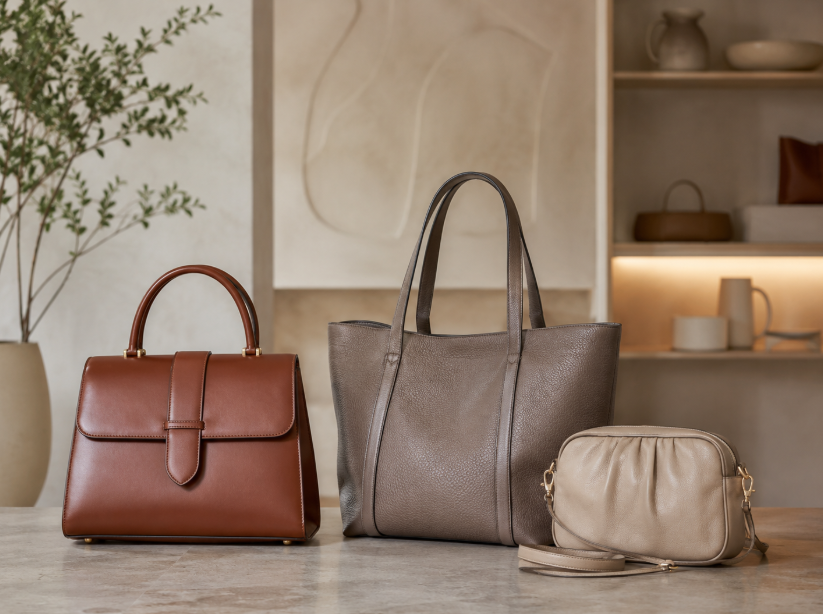
4. Which Leather Is Best for Different Types of Bags?
The bag itself should lead the material decision. Buyers sometimes choose leather first because they like a swatch, then force the design to fit it. Reversing that order usually creates fewer production problems.
| نوع الحقيبة | Practical Leather Options | Typical Thickness Range* | Main Concern |
|---|---|---|---|
| Soft handbag | Calfskin, goatskin, soft cowhide | 0.8–1.2 mm | Drape and reinforcement |
| Structured handbag | Top-grain or firm cowhide | 1.2–1.6 mm | Shape retention |
| حقيبة تُحمل عبر الكتف | Calfskin, cowhide, goatskin | 0.9–1.4 mm | Weight and strap comfort |
| Briefcase | Cowhide, firm full-grain leather | 1.4–2.0 mm | Handle and panel strength |
| حقيبة الظهر | Cowhide or durable top-grain leather | 1.2–1.8 mm | Weight and load areas |
| Travel bag | Durable cowhide | 1.4–2.0 mm | Abrasion and overall weight |
*These ranges are starting references rather than fixed rules. Skiving, reinforcement, leather temper, lining, bag size, and construction can change the final specification.
Handbags, Tote Bags, and Crossbody Bags
Handbags give designers more freedom because leather can be soft, semi-structured, or firm depending on the silhouette.
Soft shoulder bags usually need leather that folds naturally without creating hard creases. Structured handbags need more body, though reinforcement materials often do part of that work. The leather does not always need to be extremely thick.
عند تطوير... حقيبة يد مصنوعة حسب الطلب, consider the weight of handles, locks, chains, metal logos, lining, and internal boards before choosing leather thickness. Heavy leather combined with heavy hardware can make a medium-size bag uncomfortable before anything is placed inside it.
Crossbody bags need even more attention to weight because customers carry them against the body for long periods.
Backpacks, Briefcases, and Travel Bags
Large bags create different stresses. Handles carry more load, bottom panels receive more abrasion, and seams around straps experience repeated pulling.
Durable cowhide is often easier to work with here than very delicate calfskin or lambskin. Full-grain leather can suit rugged briefcases, while finished top-grain cowhide may make more sense when uniform appearance is important.
Travel bags deserve one extra check: total finished weight. A thick leather that feels impressive on a swatch can make a large duffel surprisingly heavy. Sometimes we reduce body-panel thickness and use reinforcement only at the bottom, handle bases, zipper ends, and other load areas.
Luxury and Fashion Bags
Luxury does not automatically mean thicker leather.
Many premium fashion bags depend on fine grain, soft touch, accurate edge painting, controlled stitching, clean corner turning, and well-matched panels. Calfskin and high-quality goatskin are common choices because they can deliver those characteristics without excessive weight.
Fashion collections may need stronger batch consistency than naturally marked full-grain leather can provide. A corrected or semi-aniline surface can make sense when every bag displayed in a retail store needs to look closely matched.
The target customer should decide what “premium” means. Some customers value natural variation. Others expect a nearly perfect surface.
5. How Tanning, Thickness, and Finish Affect Bag Quality
Two leather swatches can come from the same animal and still behave very differently. Tanning method, fatliquoring, milling, drying, finishing, embossing, and coating all affect the final hand feel.
This is why material specifications need more detail than “brown cow leather.”
Vegetable-Tanned vs. Chrome-Tanned Leather
Vegetable tanning uses plant-based tanning agents. It is often associated with firmer leather, natural character, and products designed to develop visible aging.
Chrome tanning uses chromium salts and can produce supple, durable leather with broad options for color, softness, and end use. Leather Working Group describes both processes in its industry terminology and manufacturing guidance.
Neither method should be treated as automatically superior. Your design should decide.
A firm vegetable-tanned leather can work well for a structured briefcase or heritage tote. A soft fashion handbag that needs rich color and easy folding may be better suited to chrome-tanned leather.
Leather Thickness, Softness, and Structure
Thickness should be specified by component rather than using one number for the whole bag.
The front panel may use 1.2 mm leather while the folded edge is skived thinner. Handle pieces may need more thickness or internal reinforcement. Card pockets and zipper tabs often need much less material.
Leather temper matters just as much. Two hides measuring 1.4 mm can behave completely differently if one is firm and the other is soft and stretchy.
This is why I prefer approving both the material swatch and the finished sample. Thickness alone cannot tell you how the bag will stand, fold, or feel.
Smooth, Pebbled, Embossed, and Coated Finishes
Smooth leather gives a clean appearance, but scratches and grain differences are easier to see. Pebbled leather hides small surface variations and often works well for everyday handbags.
Embossing can create very consistent patterns, including fine grain, large grain, or specialty textures. It can also help brands maintain a similar appearance across repeated production batches.
Coatings add another variable. Heavy pigment or surface films can improve uniformity and resistance to stains, yet poor coating adhesion may eventually crack or peel around folds.
Ask what finish is being used rather than judging only by appearance.
6. How to Check Leather Quality Before Bag Production
Material approval should happen before hundreds of pieces are cut. Once cutting starts, changing leather becomes expensive in time and can disrupt the entire production schedule.
The inspection should combine visual review, physical handling, and appropriate laboratory or factory testing.
Grain Consistency, Color, and Surface Defects
Lay several hides together instead of approving one small swatch.
Check shade under the same lighting. Compare the grain across the center, shoulder, and belly areas. Look at scars, veins, wrinkles, loose grain, coating marks, and uneven embossing.
Natural variation is normal in leather. What matters is whether the variation fits your brand standard.
We often define which defects are acceptable on hidden panels, internal pieces, bottoms, or small components. Visible front panels usually receive tighter selection.
Thickness, Flexibility, and Tear Resistance
Thickness should be measured at several points because a hide is not perfectly uniform. ISO maintains established leather test methods covering properties such as thickness, tensile strength, tear load, abrasion, and other physical characteristics. Buyers dealing with technical specifications can review the relevant ISO leather physical and mechanical standards.
Bag construction also requires tests beyond the leather sheet itself. Handle strength, seam strength, abrasion resistance, flex resistance, and attachment strength can matter once components are assembled. Intertek’s leather and leathergoods testing guidance lists several of these performance areas for luggage and small leather goods.
The exact test plan should match the bag and its destination market rather than using the same checklist for every style.
Why Leather Samples Should Be Tested Before Bulk Production
A material swatch tells you color and touch. A finished bag sample tells you much more.
You can see whether corners become too thick, whether the zipper area waves, whether the handle feels stiff, and whether the surface changes after sewing. Edge paint may also react differently depending on the leather’s oil content and edge structure.
I recommend handling the sample like a customer would. Open it repeatedly. Load it. Bend the strap. Rub the corners. Check the hardware attachment points and look at the surface after several days of use.
Independent testing can be added when performance or regulatory requirements call for it. Testing organizations assess materials, components, finished bags, and relevant compliance requirements rather than relying only on visual inspection.
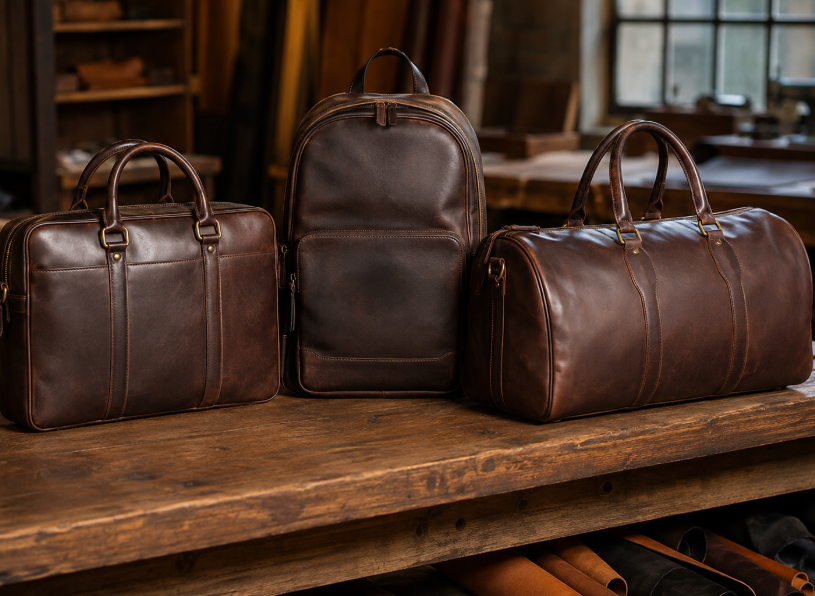
7. How to Choose the Right Leather for a Custom Bag Project
Leather selection should happen early enough that the factory can test construction around it. Waiting until the design is nearly finished often leads to unnecessary sample revisions.
A useful specification includes animal type, grade, tannage where relevant, thickness, temper, finish, grain, color, backing or reinforcement requirements, and acceptable natural variation.
Match the Leather to the Bag Design and Target Market
Start with the customer.
Does the customer expect a soft fashion bag or a stiff business bag? Will the product be carried every day or used occasionally? Does the brand celebrate natural marks, or does it require nearly identical surfaces across every piece?
Those answers quickly narrow the material range.
Your selling channel matters too. Product photography for online retail can make shade variation more noticeable, while customers buying heritage leather goods may actually expect each piece to look slightly different.
If you are still defining the product, our guide to custom leather handbags covers several related decisions around construction, hardware, customization, and production planning.
Balance Appearance, Durability, Weight, and Production Consistency
Every leather choice involves trade-offs.
A thick hide may feel substantial but increase bag weight. Very soft leather may feel luxurious but require more reinforcement. Natural full-grain leather may create beautiful individual pieces but make color and grain matching harder during larger production runs.
Production consistency becomes more important as quantity increases. One approved sample is not enough if the next leather batch looks noticeably different.
Ask the supplier to keep a signed or labeled reference swatch from the approved material. Bulk leather can then be compared against that reference before cutting begins.
Work With Your Manufacturer Before Finalizing the Material
Send the factory more than a picture.
Share the bag dimensions, target weight if known, intended use, desired structure, reference photos, expected quantity, color requirements, hardware, lining, and any market compliance needs. The manufacturer can then recommend leather options that fit the actual construction.
MOQ depends on the selected leather, colors, hardware, construction, packaging, and production route. Ask for a project-specific quantity by style and color, and identify whether leather dyeing or another component sets a separate supplier minimum.
Sample development is where most material questions should be solved. Approve the look, feel, thickness, reinforcement, edge treatment, and workmanship before locking the bulk specification.
Turn the Leather Grade into a Purchasing Specification
A grade name is only the starting point. Record animal species, grain condition, tannage, finish, thickness tolerance, softness, color limits, acceptable marks, and panel-matching rules. Ask how usable cutting area and rejected sections are accounted for in the quotation. If your brief allows a synthetic alternative, review PU leather versus genuine leather before treating those quotations as equivalent.
Retain a swatch and approve a bag sample with the intended hide specification. Check folded seams, skived edges, handle reinforcement, empty weight, and surface rubbing using agreed conditions. Confirm that any substitute hide or finish requires written approval.
After the leather grade and finish are approved, the material still needs to be translated into patterns, samples, production controls, and inspection standards. Our custom handbag manufacturing process guide explains how material decisions carry through to bulk production.
الخلاصة
The best leather for bags is the one that performs correctly in the finished product. Full-grain leather offers natural character, top-grain leather gives brands more control over surface consistency, calfskin works well when refinement matters, and durable cowhide remains a strong choice for many everyday, business, and travel designs.
Look beyond the leather name on a supplier sheet. Check thickness, temper, tannage, finish, cutting yield, color consistency, flex behavior, reinforcement needs, and the way the material works with your bag structure. A good sample should answer these questions before bulk production begins.
هيتباغ is based in Huadu, Guangzhou, China, and focuses on OEM and ODM bag manufacturing for overseas brands, wholesalers, distributors, and sourcing teams. Our manufacturing experience goes back more than 15 years, with our own bag production capabilities and a supporting supply network for materials, hardware, packaging, and other components. The company website also describes material selection, sample development, and production quality control as part of its manufacturing process.
If you are looking for a manufacturer for a custom leather bag project, you can اتصل بفريقنا and leave your phone number, WhatsApp, product drawings, reference images, or basic requirements. We are happy to review your idea, discuss suitable leather options, and explore how we can work together.
الأسئلة الشائعة
What leather specification should I send to a bag manufacturer?
Try to provide more than “genuine leather” or “cow leather.” Include the animal type, preferred grain or grade, thickness range, softness or firmness, surface finish, color reference, bag size, and expected use.
If you already have a physical reference, sending a swatch is even better. The factory can compare hand feel, grain size, gloss level, thickness, and surface treatment much more accurately than it can from photographs alone.
Can the same leather thickness be used for every part of a bag?
Usually not. Large body panels, handles, straps, pockets, zipper tabs, and folded edges often need different effective thicknesses.
Factories commonly skive leather in selected areas to reduce bulk around seams and folds. Handles or load-bearing sections may receive reinforcement instead of simply using much thicker leather everywhere. This approach keeps the bag strong without making it unnecessarily heavy.
How much color variation should I expect between leather production batches?
Some variation is normal, especially with natural, aniline, semi-aniline, and less heavily corrected leather. The amount depends on the hide, dyeing process, finish, and color.
Brands that need tight consistency should approve a physical color standard and discuss an acceptable shade range before production. Checking several bulk hides against the approved standard before cutting is much safer than discovering the difference after bags have been assembled.
What leather tests should overseas buyers request before bulk production?
The test plan depends on the product and destination market. Common performance checks can include thickness, tensile or tear strength, dry and wet rubbing, flex resistance, abrasion, finish adhesion, seam strength, strap or handle strength, and selected chemical compliance tests.
Large travel bags may need more emphasis on handles and load-bearing seams. Soft fashion handbags may require closer attention to rubbing, flexing, surface scratches, and color transfer. ISO publishes standards; it does not act as the testing laboratory for your order. Where independent verification is needed, use a qualified laboratory and confirm that its test scope matches the material and requested methods.
Is a 300-piece MOQ possible for custom leather bags?
A 300-piece order may be evaluated for the proposed design, but availability and minimum quantities must be confirmed for the actual materials, colors, components, and production route.
Stock leather in an existing color may support a straightforward production plan. Custom dyeing, special embossing, exclusive hardware, custom lining, or unique packaging can create separate supplier minimums. Ask which component controls the final MOQ before confirming the order quantity.
Should I approve a leather swatch or a finished bag sample?
Approve both.
The swatch confirms color, grain, thickness, finish, and hand feel. The finished sample shows whether that material works with the actual construction, including folding, stitching, skiving, reinforcement, edge painting, hardware, and final bag weight. Bulk production should ideally follow the approved bag sample and retained material reference rather than a photograph alone.


