
 English
  Italian
  French
  German
  Spanish
  Arabic
 China has always been an important global production base for handbags and luggage. Here, there are not only mature fabric and hardware supply chains, but also many factories that have been engaged in OEM/ODM for a long time. Whether it’s fashionable handbags, tote bags, crossbody bags, or custom-made private brands, many overseas brands will prefer to look for suitable manufacturers in China.
However, when actually starting to search for suppliers, many buyers will find that there are too many options, making it difficult for them to make a judgment. Different manufacturers have different strengths in terms of products they excel in, customization capabilities, production scale, quality control, and export experience. To help brand owners, importers, and purchasing teams find the right partners more quickly, this article has compiled 10 notable handbag manufacturers in China that are worth paying attention to.
Why Source Handbags from China?
The Supply Chain Advantage Is Real — and It’s Deep
China’s dominance in bag manufacturing isn’t just about cheap labor. That’s the shallow version of the story. The deeper truth is that China has built an unmatched vertically integrated supply chain for bags and leather goods over several decades.
Guangzhou, Dongguan, Wenzhou, and Yiwu aren’t just factory towns — they’re ecosystems. Within a 50-kilometer radius of a bag factory in Guangdong, you can typically source PU leather, genuine leather, canvas, nylon webbing, zippers, hardware, lining fabric, thread, tags, and packaging. That density of suppliers creates two significant advantages for buyers: faster sampling turnaround and tighter cost control at every material tier.
When you work with a manufacturer in Guangzhou’s Huadu district, for example, you’re tapping into a network where material lead times are measured in days, not weeks. That changes what’s possible for development cycles.
China also has an established zipper manufacturing base — YKK, the globally trusted zipper standard used across premium and luxury bags, has production facilities in China and maintains relationships with qualified local factories. When a manufacturer tells you they use YKK zippers, it’s a verifiable quality signal, not just marketing language.
According to data from the China Chamber of Commerce for Import and Export of Light Industrial Products and Arts-Crafts (CCCLA), China accounts for more than 70% of the world’s total bag and luggage exports by volume. That market dominance reflects decades of infrastructure investment — not just price competition.
Cost Advantage, But Think Beyond the Unit Price
Yes, manufacturing in China is more cost-effective than Europe, North America, or even much of Southeast Asia for most bag categories. Labor costs in Guangdong’s bag-making clusters remain competitive, and because raw material sourcing is local, manufacturers don’t absorb the kind of import premiums that factories in Vietnam or Bangladesh face for hardware and specialty materials.
But buyers who chase the lowest unit price often miss the bigger picture. Total landed cost — which includes tooling, sampling, shipping, duties, quality inspection, and potential rework — is what actually determines profitability. Chinese manufacturers with established export infrastructure, pre-vetted logistics partnerships, and in-house QC systems consistently deliver lower total landed cost than cheaper factories with weaker processes.
The right Chinese handbag manufacturer saves you money across the entire supply chain, not just on the invoice.
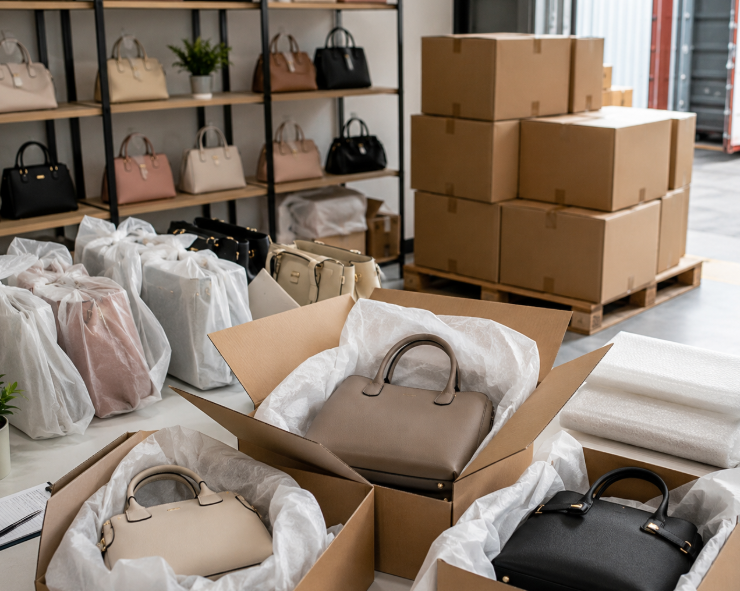
How We Selected the Top Handbag Manufacturers
This list wasn’t assembled by scraping directories or ranking factories by web traffic. The selection criteria reflect what actually matters in a sourcing relationship:
Factory Experience — How long has the manufacturer been operating, and in what product categories? Experience in bag-making specifically — not general sewing or garment work — matters because bag construction involves hardware attachment, structural components, and multi-material assembly that require specialized know-how.
Product Quality — Does the factory demonstrate quality through materials, construction, and finishing standards? Do they have documented QC processes, and do they work with recognized compliance frameworks? Factories aligned with standards like BSCI (Business Social Compliance Initiative) or ISO 9001 quality management systems signal a measurable commitment to production standards.
Customization Capability — Can the factory handle OEM development from a brief or sketch? Can they execute ODM design proposals? Do they offer private label packaging, custom hardware, and material selection support? Genuine customization depth separates real manufacturing partners from trading companies posing as factories.
Export Market Reach — Manufacturers with established export track records to Europe, North America, and Australia have already cleared the compliance hurdles those markets require. That experience matters.
Customer Reviews and Market Reputation — What do buyers actually say about working with these factories? Reputation in the sourcing community is a lagging indicator of real performance.
Top 10 Handbag Manufacturers in China
| # | Manufacturer | Location | Main Products | Key Strength | Best For |
|---|---|---|---|---|---|
| 1 | Hetebag | Guangzhou (Huadu), China | Handbags, backpacks, tote bags, cosmetic bags, custom bags | OEM/ODM since 2011, 70+ country export reach | Brands, wholesalers, private label buyers |
| 2 | J.D. Handbag Factory | China | Handbags, shoulder bags, crossbody bags, vegan handbags, backpacks | OEM/ODM + private label, sample-from-sketch capability | Fashion brands, startup handbag brands |
| 3 | B.S. Bag Factory | Guangzhou, China | Leather handbags, vegan leather bags, canvas bags, nylon bags | Boutique-ready handbags, multi-material expertise | Boutique brands, mid-to-high-end projects |
| 4 | Mherder / BagsPlaza | Guangzhou, China | Leather bags, wallets, small leather goods | 18+ years of OEM/ODM leather goods production | Leather goods brands, private label sellers |
| 5 | Handbagio | China | Custom handbags, fashion accessories, sustainable handbags | 20+ material options, sustainable materials focus | Sustainable brands, fashion accessory buyers |
| 6 | Fiedle | China | Leather bags, handbags, custom leather goods | 20,000㎡ factory, 500+ workers, R&D capability | Scalable brands, larger-volume orders |
| 7 | SLBAG | China | Ladies handbags, purses, wallets, luxury-style bags | 16+ years experience, women’s bag specialization | Women’s handbag brands, wholesale buyers |
| 8 | HongBang Leathers | Guangzhou, China | Women’s leather bags, men’s bags, wallets, backpacks | 30+ years experience, full-service from material to export | Leather bag brands, sourcing teams |
| 9 | Hoayo Handbag | China | Handbags, custom tags, packaging | Full-package production including tags and packaging | Buyers needing one-stop handbag production |
| 10 | Hermin Fashion | China | Women’s bags, tote bags, OEM/ODM handbags | Bulk manufacturer, explicit no-counterfeit policy | Bulk buyers, private label brands |
1. Hetebag — Guangzhou, China
Hetebag operates its own manufacturing facilities in Huadu District, Guangzhou — one of the most active bag-making clusters in southern China. Founded in 2011, Hetebag has spent over a decade building OEM and ODM production capabilities across a wide product range: custom handbags, tote bags, backpacks, cosmetic bags, travel bags, gym bags, and more.
What distinguishes Hetebag from trading companies or sourcing agents is factory-direct production. The development team handles everything from initial sketches and material selection through sampling, bulk production, QC, and export packaging. That integration shortens the feedback loop between your brief and a finished sample — which matters when you’re working to seasonal deadlines or responding to market trends quickly.
Hetebag serves buyers in 70+ countries, which means the factory has real experience navigating the compliance documentation, labeling requirements, and customs classifications that different markets require. For brands sourcing custom handbags for the European or North American market, that export experience reduces friction significantly.
The factory also supports private label branding — custom labels, hang tags, packaging design, and hardware sourcing are all part of the development process, not add-ons you have to manage separately.
If you’re evaluating what makes a genuinely capable handbag factory, this buyer’s guide to handbag factory quality covers the criteria in detail.
2. J.D. Handbag Factory
J.D. Handbag Factory positions itself specifically for fashion brands and startup buyers who need a flexible OEM/ODM partner. Their capability to develop samples from sketches or reference images is a practical advantage for brands that don’t yet have technical flat patterns but have a clear design vision.
Product range includes handbags, shoulder bags, crossbody bags, vegan handbags, and backpacks. The factory supports private label development and batch wholesale, which makes it relevant for early-stage brands that may start small but plan to scale.
3. B.S. Bag Factory — Guangzhou, China
B.S. Bag Factory focuses on boutique-ready handbags, with material options covering genuine leather, vegan leather, canvas, and nylon. That multi-material capability is worth noting — factories that work across material categories tend to have more nuanced knowledge of how different materials behave in construction, which shows up in finished product quality.
The Guangzhou location puts B.S. Bag Factory within the same supply chain ecosystem as most of the top producers on this list, which keeps sampling lead times efficient.
4. Mherder / BagsPlaza — Guangzhou, China
Mherder, operating under the BagsPlaza brand online, brings 18+ years of OEM/ODM experience specifically in leather goods — bags, wallets, and small leather accessories. For buyers whose product line centers on leather, that category depth is meaningful. Generalist factories sometimes underdeliver on leather-specific finishing and edge treatment quality; specialized leather goods manufacturers like Mherder tend to have stronger craft standards in that category.
5. Handbagio
Handbagio has carved out positioning around sustainable and fashion-forward handbags, offering 20+ material choices including options aligned with sustainable sourcing trends. For brands building an eco-conscious product line, the ability to evaluate and select sustainable materials — including RPET fabrics and certified vegan leathers — from a single factory partner simplifies the development process considerably.
Sustainable material sourcing is increasingly governed by standards from organizations like Textile Exchange, whose frameworks (including the Global Recycled Standard and Responsible Wool Standard) are becoming reference points for brands making environmental claims about their products. Buyers should verify which standards a factory’s materials actually align with before making claims in their own marketing.
6. Fiedle
Fiedle’s scale sets it apart. A 20,000-square-meter factory with 500+ workers represents meaningful production capacity — the kind of infrastructure that can absorb large-volume orders without the delivery timeline instability that smaller factories sometimes experience under surge demand.
The R&D capability Fiedle highlights on their website is worth investigating further during factory evaluation. In-house design and development resources can shorten development cycles and provide value-add services for brands without large internal design teams.
7. SLBAG
SLBAG focuses specifically on women’s handbags, purses, and wallets, with 16+ years of industry experience. Category specialization in women’s bags is a genuine advantage — the construction techniques, hardware sourcing, and finishing expectations for women’s fashion bags differ from bags in other categories. Factories that focus on a specific category often have more refined production workflows and deeper material sourcing relationships for that product type.
8. HongBang Leathers — Guangzhou, China
HongBang Leathers brings over 30 years of experience to leather bag manufacturing — one of the longer track records on this list. Their full-service model covers material selection, sampling, bulk production, quality control, and export packaging, which reduces the coordination burden for sourcing teams managing multiple vendor relationships.
Three decades of production experience also means HongBang has navigated multiple market cycles, compliance requirement changes, and export market shifts. That institutional knowledge is difficult to replicate and often shows up in fewer production surprises for buyers.
9. Hoayo Handbag
Hoayo Handbag positions itself as a one-stop production partner — handbags, custom hang tags, packaging, sampling, bulk production, and shipment logistics all handled through a single point of contact. For buyers who don’t have the infrastructure to coordinate multiple suppliers for bag production versus packaging versus branding materials, this integrated service model reduces management complexity.
10. Hermin Fashion
Hermin Fashion operates as a bulk bag manufacturer offering OEM/ODM services for women’s bags, tote bags, and related categories. Their explicit policy against counterfeit and replica goods production is worth noting — it’s a signal of business legitimacy and helps buyers ensure their supply chain doesn’t carry intellectual property risk.
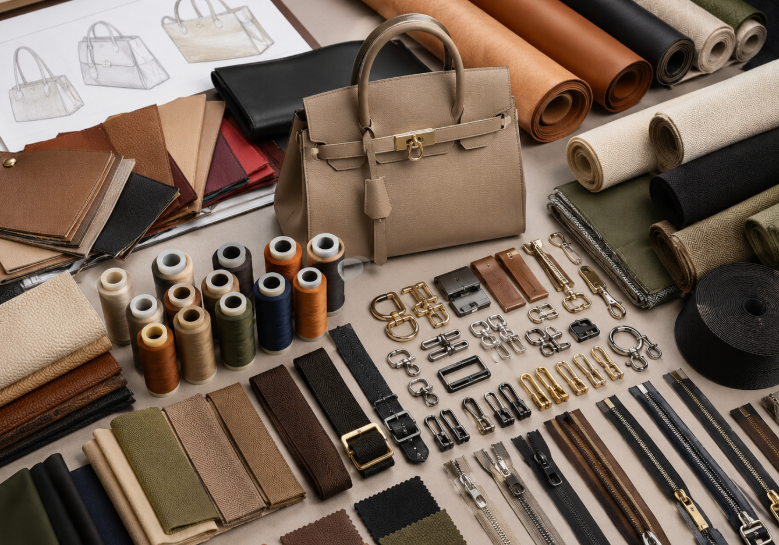
What Services Should a Professional Handbag Manufacturer Offer?
Not every factory that calls itself a handbag manufacturer offers the same depth of service. When you’re evaluating partners, there are four service categories that separate serious production partners from order-takers.
OEM — Original Equipment Manufacturing
OEM means the factory produces bags according to your specifications: your design, your materials, your branding. You provide the direction; they execute. Strong OEM manufacturers have experienced pattern-making staff, material sourcing access, and the sampling discipline to turn your brief into production-ready samples efficiently.
A quality OEM partner won’t just execute blindly — they’ll flag construction challenges, suggest material substitutions that improve durability or reduce cost without compromising your design intent, and document specifications precisely so bulk production matches approved samples.
ODM — Original Design Manufacturing
ODM means the factory develops design proposals that you can adopt, modify, or license for your brand. This is particularly valuable for buyers who want to launch a bag line without the overhead of an internal design team. Good ODM manufacturers maintain active design libraries, track trend directions, and can present seasonal collections or category-specific proposals on request.
The distinction between genuine ODM capability and a catalog-style factory is important. Real ODM involves actual design development and the ability to customize proposed designs meaningfully for your brand. A catalog factory is showing you what they’ve already made — customization is limited to color changes and logo placement.
Private Label
Private label production sits at the intersection of OEM and brand building. The factory produces bags to your specifications and applies your branding — labels, hangtags, packaging, hardware stamps — so the finished product carries your brand identity, not the factory’s.
For brands building market presence, the quality of private label execution matters as much as the bag itself. Poorly finished labels, inconsistent tag placement, or packaging that doesn’t match your brand positioning all undermine the investment in the product. Look for manufacturers who treat packaging and branding finishes with the same quality discipline as the bags.
Packaging Customization
Custom packaging is often underweighted in the sourcing conversation and overweighted in the cost negotiation. The reality is that packaging is the first physical brand touchpoint your customer experiences — and for wholesale buyers, it’s what store teams and distribution centers work with.
Professional handbag manufacturers should be able to support polybag specifications, box construction, tissue paper, ribbon, custom printing, and outer carton configuration. Factories that handle this in-house or through established packaging vendor relationships give you more control and better cost efficiency than sourcing packaging separately.
How to Choose the Right Handbag Manufacturer for Your Business
The table above gives you candidates. This section helps you evaluate them.
Minimum Order Quantities
MOQ is often the first filter buyers apply, and it’s a reasonable one — but it requires context. A factory with a 500-piece MOQ per style might actually be more flexible for a brand with 10 SKUs than a factory with a 200-piece MOQ that requires separate minimums for each colorway, hardware variant, and size. Ask about MOQ at the SKU level and the order level. Those are different numbers, and they both matter.
For brands in early growth stages, MOQ flexibility is often worth paying a modest premium for — the ability to test market response without committing to large inventory positions reduces financial risk significantly.
Production Capacity and Lead Times
Capacity matters most when your business is growing and seasonal demand creates volume spikes. A factory that handles your current volume comfortably might become a bottleneck when you place your holiday order. During factory evaluation, ask specifically: What is your monthly production capacity for our bag category? What’s your current lead time for sampling? What’s your production lead time during your peak season?
The answers reveal more about operational reality than any factory brochure will.
Quality Control Systems
QC is where the difference between a good factory and a great one becomes visible. Ask potential manufacturers specifically about their in-process inspection points — raw material inspection, cut panel inspection, semi-finished product checks, and final pre-shipment inspection. Factories with documented QC protocols at multiple production stages catch problems before they become shipment problems.
Third-party inspection services from organizations like SGS or Intertek can provide additional quality assurance — and professional manufacturers will support, not resist, third-party inspection requests. Resistance to inspection is itself a quality signal.
Development Capability
Your manufacturer’s development capability directly affects how competitive your product line can be. Can they source specific hardware within your budget? Can they execute a construction technique your design requires? Can they sample new materials you want to evaluate? Development capability determines the ceiling on what you can bring to market.
Ask to see samples of development work they’ve done for other clients — not just their standard catalog items, but genuinely customized products that started from a buyer brief. That’s the clearest window into what they can actually build for you.
If you’re still figuring out what material direction suits your product best, this breakdown of custom bag materials covers the practical trade-offs across common options.
Common Mistakes When Sourcing Handbags from China
Even experienced buyers make these mistakes. They’re worth naming directly.
Evaluating on Price Alone
The factory with the lowest unit price rarely delivers the best total outcome. Production quality issues, delayed shipments, rework costs, and the time burden of managing a difficult supplier relationship all have real financial weight. The true cost of a cheap factory is often significantly higher than the cost of a quality manufacturer with a slightly higher unit price.
Price competition is healthy — but the reference point should be value, not just cost.
Ignoring the Quality Management System
A factory that can’t describe their quality control process in specific terms — inspection checkpoints, defect tolerance levels, documentation practices — is a factory that doesn’t have a real QC system. “We check everything before shipping” is not a quality management system. It’s a vague reassurance.
Ask for specifics. How many inspectors do you have? At what production stages do you inspect? What happens when defects are found? How are defect rates tracked and reported? The quality of those answers tells you a great deal about the factory.
Skipping Factory Verification
Virtual suppliers are everywhere. Platforms like Alibaba and Global Sources have made it easy for trading companies to present themselves as factories — with factory-style language, production photos sourced elsewhere, and capability claims that don’t hold up under scrutiny.
Factory verification — either through a physical visit, a video audit, or a credentialed third-party audit — is not optional for any serious sourcing relationship. BSCI audits, factory tour documentation, and production video walkthroughs all provide meaningful verification that the manufacturer you’re considering is who they say they are.
Skipping this step is how sourcing disasters happen.
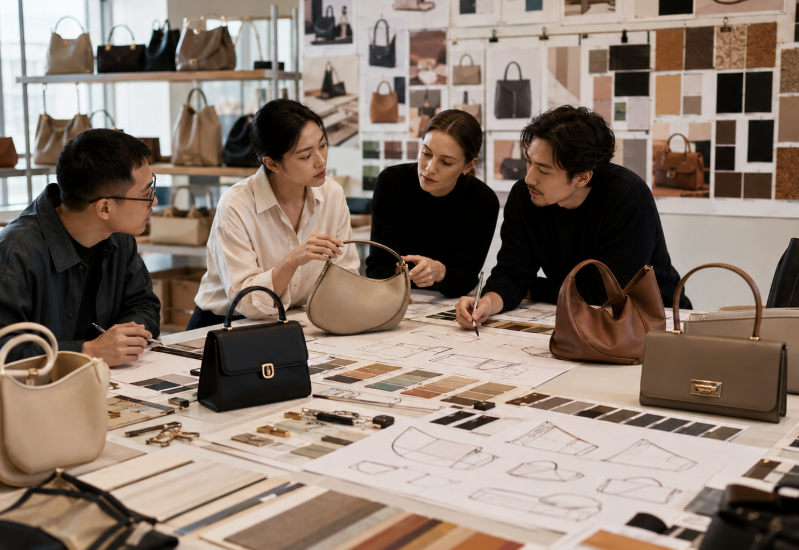
When comparing handbag manufacturers, it also helps to understand the production workflow you are asking them to manage. Our handbag manufacturing process guide covers the journey from design and tech pack through samples, bulk production, inspection, and shipment preparation.
Conclusion
China’s handbag manufacturing industry offers genuine depth — experienced factories, integrated supply chains, material sourcing infrastructure, and the export logistics to reach any market. The challenge is identifying which manufacturers actually deliver on their positioning.
The 10 manufacturers listed here represent a strong starting point for evaluation. Each has a defined capability profile, and matching that profile to your specific product category, volume requirements, and quality standards is how you narrow the field to a short list worth pursuing.
Among the manufacturers on this list, Hetebag stands out as a factory-direct option based in Guangzhou’s Huadu district, with over 15 years of OEM and ODM manufacturing experience and an established track record serving brands across 70+ countries. The team works across a broad product range — from custom handbags and tote bags to backpacks, cosmetic bags, and travel bags — and handles the full development process from initial brief through bulk production and export.
If you’re currently searching for a reliable handbag manufacturer in China to support your brand’s growth, Hetebag’s team is ready to discuss your project. You can reach the team directly through the contact page — leave your details and someone will respond to discuss your specific requirements.
Finding the right factory partner takes diligence. When you find one that fits, it’s worth protecting that relationship.
Buyer Checklist for Handbag OEM and Private Label
When comparing handbag manufacturers, focus on the capabilities that affect product consistency and brand positioning: leather or PU sourcing, pattern development, hardware customization, logo methods, lining, edge finishing, sample revisions, MOQ, quality control, and packaging.
- Ask for examples made with materials and construction similar to your design.
- Confirm whether custom hardware or Pantone colors change the MOQ.
- Approve leather, lining, hardware, and logo samples before bulk production.
- Clarify how color variation, stitching defects, and hardware issues are handled in QC.
If your project requires OEM, ODM, or private-label development, HETEBAG can support custom handbag sampling and production from reference images, sketches, or tech packs.
Frequently Asked Questions
Why should I source handbags from China?
China has a strong handbag manufacturing supply chain, including materials, hardware, zippers, packaging, and experienced factories. This helps buyers get better cost control, faster sampling, and more flexible customization options
How do I choose a reliable handbag manufacturer in China?
Look at the factory’s experience, product quality, OEM/ODM ability, export experience, MOQ, lead time, and quality control process. A reliable manufacturer should be able to show samples, explain production steps, and support factory verification.
What is the usual MOQ for custom handbags?
MOQ depends on the material, design, color, and factory. Some manufacturers may accept lower MOQs for simple designs, while fully customized handbags usually require higher quantities. It is best to confirm MOQ by style, color, and order volume.
Can Chinese handbag manufacturers provide OEM and ODM services?
Yes. Many professional handbag manufacturers in China offer OEM and ODM services. OEM means producing bags based on your design, while ODM means the factory can help develop designs, samples, and product ideas for your brand.
How can I check handbag quality before bulk production?
You should request samples first and check the stitching, material, hardware, lining, structure, and finishing. For larger orders, you can also arrange in-process inspection or third-party quality inspection before shipment.


