
 English
  Italian
  French
  German
  Spanish
  Arabic
 Leather handbags have always been an indispensable part of many people’s daily outfits. They are not only practical but also enhance the overall appearance and texture of the outfit. However, although leather is durable, it requires more daily care than ordinary fabrics. Over time, the surface of the bag is prone to accumulate dust, oil stains, sweat, and even problems such as losing luster, blackening of the edges, and hardening of the leather. If not cleaned and maintained in time, over time, it may cause the leather to crack or fade, affecting the overall lifespan. If you just casually wipe it, it actually cannot truly protect the leather; instead, it may allow the stains to gradually seep in.
Many people have a concern when cleaning leather bags: they are afraid that improper cleaning will damage the leather. In fact, Leather Handbag should not be washed directly with water, nor can it be cleaned with alcohol, wet tissues, or strong cleaners. Otherwise, it is very likely to damage the surface layer of the leather. The correct approach is to use a gentle cleaning method based on the type of leather and combine it with appropriate care steps. Only in this way can stains be removed while maintaining the original softness and sophistication of the leather. If you are handling a leather bag for the first time, you should first test it on an inconspicuous area to avoid irreversible damage.
Hetebag has extensive experience in the luggage industry. In this article, we will guide you step by step on how to properly clean a Leather Handbag, including daily cleaning methods, common stain removal techniques, as well as post-care and storage suggestions. Whether it’s a daily commuting bag, a genuine tote bag, or a high-end custom handbag, as long as you master the correct methods, your leather bag will remain clean, durable, and maintain a good appearance for a long time. By following the steps, you can easily complete the basic care at home without the need for complex tools.
Whether it’s a daily commuting bag, a genuine tote bag, or a high-end custom handbag, proper cleaning methods can help extend its lifespan. If you’re interested in learning more about different handbag styles and their uses, check out our article: What Is a Handbag? The Ten Common Types.
Why Is It Important to Clean a Leather Handbag Regularly?
What happens if leather bags are not cleaned?
Leather is porous. That’s what gives it its breathable, supple quality — but it also means the surface absorbs everything it comes into contact with. Dust settles into the grain. Body oils from your hands transfer to handles every time you carry the bag. Residue from cosmetics, food particles, and environmental pollutants build up in the seams and corners where cleaning is easiest to overlook.
When this buildup goes unaddressed, the surface starts to look dull first. Then the leather begins to stiffen. Eventually it dries out and cracks. What started as a surface-level issue becomes structural damage that even a professional can’t fully reverse.
Aniline leather — one of the most luxurious and natural finishes — is especially vulnerable because it lacks a protective coating. Semi-aniline and pigmented leathers offer more resistance, but no leather is immune to long-term neglect.
How dirt, oil, and moisture damage leather over time
The relationship between leather and moisture is complicated. Too little moisture causes the fibers to dry and crack. Too much — particularly sudden or prolonged exposure — causes the grain to warp, watermarks to form, and mold to develop in humid conditions.
Body oils are a slower threat. They penetrate the surface and, over time, oxidize. This creates dark patches, particularly on handles and flap closures — the areas you touch most. These oil stains become much harder to remove after they’ve set into the fiber structure.
Dirt and grit work like sandpaper at a microscopic level. Every time a dirty bag is flexed, zipped, or picked up, that particulate matter grinds against the leather surface, wearing down the finish gradually.
Can regular maintenance extend the lifespan of a handbag?
Yes — significantly. A leather handbag that receives consistent care can realistically remain in premium condition for 10 to 20 years. Without it, the same bag might show serious wear within two or three years of regular use.
The math is simple for anyone sourcing leather goods commercially: a product that lasts longer generates fewer returns, better reviews, and stronger brand loyalty. Educating your customers on leather care isn’t just helpful — it’s part of the product’s value proposition.
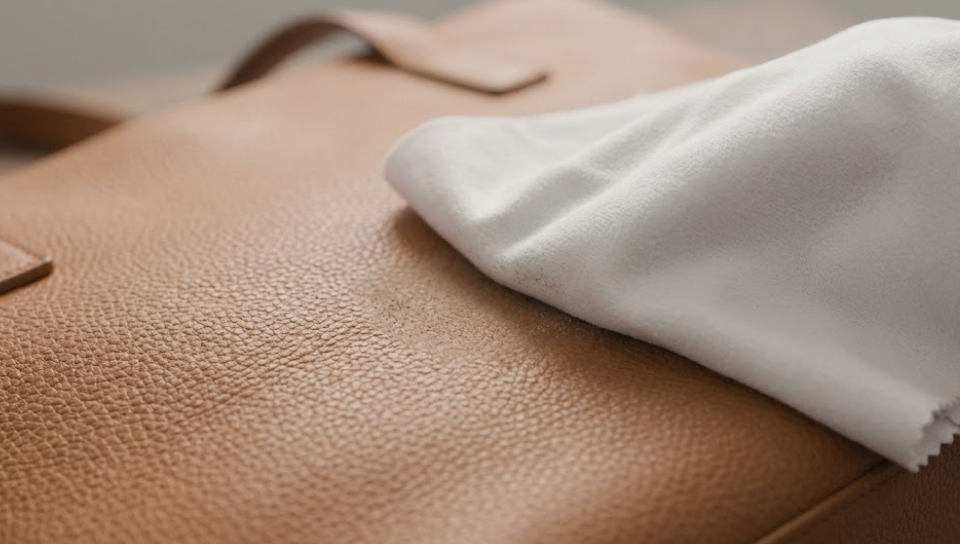
What Should You Prepare Before Cleaning a Leather Handbag?
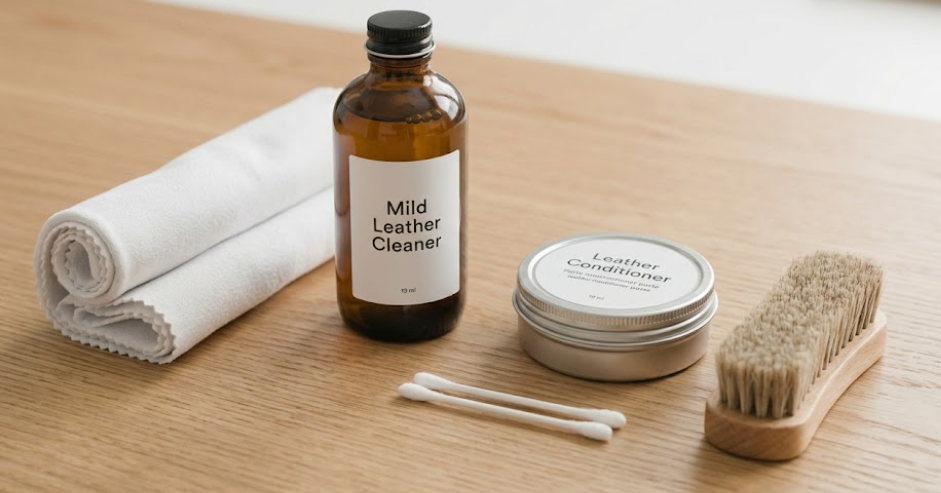
Getting the right tools together before you start makes the entire process faster and safer. Using the wrong materials — even with good intentions — is one of the most common ways people accidentally damage leather.
Soft microfiber cloth
Microfiber is the gold standard for leather cleaning. It’s non-abrasive, highly absorbent, and doesn’t leave behind lint or fibers. Keep at least two on hand: one for applying cleaner, one for wiping it off. White or light-colored cloths are preferable because dyed fabric can transfer color to leather.
Mild leather cleaner or soap
Purpose-formulated leather cleaners are pH-balanced for leather’s natural acidity. Saddle soap is a classic option — effective for conditioning while it cleans. For lighter surface cleaning, a small amount of mild castile soap diluted in warm water works well on most finished leathers.
Leather conditioner
Conditioner restores the oils that cleaning removes. Think of it like moisturizer: after you clean the surface, you replenish what’s been lost. Beeswax-based conditioners are excellent for nourishment and mild water resistance. Mink oil is another traditional option, though it can slightly darken some leathers — worth testing on a hidden area first.
Cotton swabs and soft brush
Cotton swabs give you precision access to stitched seams, zipper edges, and hardware surroundings. A soft-bristled brush — an old toothbrush or a dedicated leather brush — can dislodge compacted dirt from textured grain without scratching.
Things you should never use on leather
| What to Avoid | Why It’s Harmful |
|---|---|
| Baby wipes or wet wipes | Often contain alcohol and fragrance that strip natural oils |
| Rubbing alcohol or hand sanitizer | Dries leather out rapidly and can cause irreversible discoloration |
| Household cleaners (bleach, ammonia, multi-surface sprays) | pH levels far too high; will strip finish and cause cracking |
| Nail polish remover (acetone) | Dissolves the surface finish completely |
| Colored or printed paper towels | Can transfer dye and leave scratches |
| Olive oil or coconut oil | Too heavy; clogs pores and turns rancid over time |
| Hairdryer or direct heat for drying | Causes leather to shrink, crack, and harden |
How to Clean a Leather Handbag Step by Step?
Step 1: Empty the handbag and remove dust
Take everything out — every pocket, every compartment. Turn the bag upside down and shake it gently over a clean surface to dislodge crumbs, lint, and loose debris from the interior. Use a soft brush or a small handheld vacuum on a low setting to clean the lining thoroughly.
If the interior lining is fabric, a lint roller is your best tool here. Don’t skip the inside — interior buildup can transfer odors and stains back to the bag over time.
Step 2: Wipe the surface with a dry soft cloth
Before introducing any moisture, do a dry wipe of the entire exterior. This removes surface dust and prevents it from turning into a muddy smear when you add cleaning solution. Work the cloth in gentle, even strokes following the grain direction of the leather.
Pay attention to the bottom corners and base — these areas collect the most contact grime from being set down on surfaces.
Step 3: Use a leather cleaner gently
Apply a small amount of your chosen cleaner to a microfiber cloth — never directly onto the bag. Rubbing cleaner directly onto the leather makes it very difficult to control how much product you’re using and where it goes.
Work in small sections, using light circular motions. Start at the top of the bag and work downward. On large panels, always clean edge to edge rather than stopping mid-panel, which leaves visible tide marks where the cleaned and uncleaned areas meet.
Use gentle pressure. If you’re working harder than you’d use to wipe a countertop, you’re scrubbing too hard.
Step 4: Clean corners, handles, and hardware
Handles get handled the most — and it shows. These areas accumulate oil and darkening faster than any other part of the bag. Use a slightly damp cloth with a small amount of cleaner and work the handles carefully, spending extra time where the leather meets the hardware attachment points.
For corners, a cotton swab with a tiny amount of cleaner lets you clean precisely without flooding the seam area with moisture.
Hardware — buckles, clasps, rings — can be cleaned with a dry microfiber cloth. Avoid getting cleaner on metal, especially plated hardware, as moisture sitting on metal finishes causes tarnish.
Step 5: Let the bag air dry naturally
This step gets rushed more often than any other. After cleaning, place the bag in a well-ventilated area away from direct sunlight and away from any heat sources. Stuff the interior lightly with clean, unprinted tissue paper or a soft cloth to help the bag maintain its shape as it dries.
Drying time varies: a lightly wiped bag may be ready for conditioning in an hour. A bag that needed heavier cleaning may need several hours. Don’t rush it. The single biggest mistake people make after cleaning leather is applying conditioner while the surface is still slightly damp.
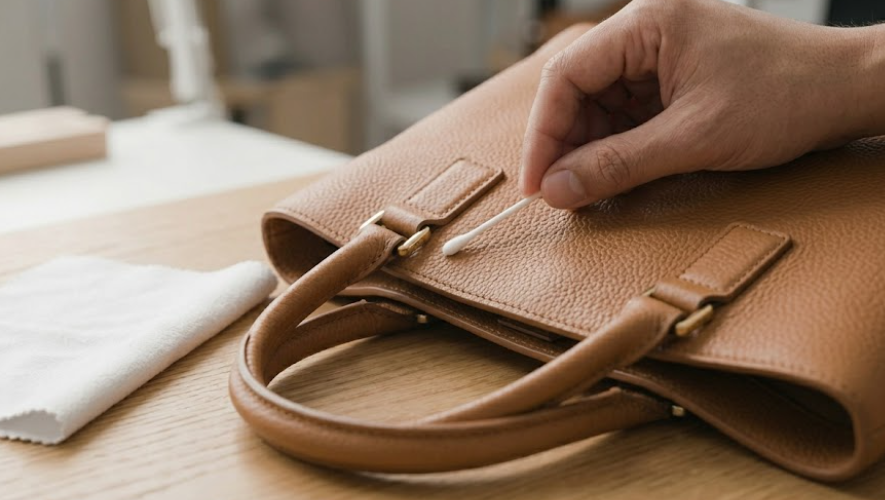
How Do You Remove Common Stains from Leather Handbags?
Stains behave differently on leather depending on their composition. The general principle: act quickly, use as little moisture as possible, and never rub.
How to remove oil stains from leather
Oil stains — from skin contact, food, or cosmetics — are best treated while fresh. Sprinkle a small amount of cornstarch or talcum powder directly onto the stain and leave it undisturbed for several hours, ideally overnight. The powder acts as an absorbent, drawing the oil out of the leather as it sits.
Brush the powder away gently with a soft brush, then assess the stain. Repeat if necessary before moving to cleaning. Applying heat or rubbing an oil stain only drives it deeper.
How to clean ink stains safely
Ink on leather is one of the more challenging stains to address at home. For ballpoint ink on finished leather, a small amount of rubbing alcohol applied with a cotton swab — worked very carefully from the outside of the stain inward — can sometimes lift it. Work in tiny increments. Alcohol dries leather quickly, so follow up with conditioner once the stain is addressed.
For large or deeply set ink stains, professional leather cleaning is the safer path. Attempting aggressive home remedies on a high-value bag risks permanent damage.
What to do about water stains or discoloration
Water stains on leather look counterintuitive to fix, but the most effective method is to dampen the entire affected panel evenly with a clean, barely damp cloth. This equalizes the moisture level across the surface and prevents the ring from setting as the bag dries. Let it dry naturally and evenly.
For persistent water marks, a leather cleaner applied to the whole panel — not just the stain — followed by conditioning usually resolves the discoloration.
Can baking soda or vinegar be used?
| Remedy | Can You Use It? | Notes |
|---|---|---|
| Baking soda | Yes, with caution | Useful as an odor absorber inside the bag (in a pouch); not recommended for direct surface application on finished leather |
| White vinegar (diluted) | Limited use | A 1:1 dilution with water can address mildew or salt stains on tougher leathers; test first and condition immediately after |
| Apple cider vinegar | No | Too acidic and too pigmented for most leather finishes |
| Baking soda paste | No | Abrasive when applied directly to leather; scratches the finish |
Vinegar should be treated as a last resort, not a first response. For most everyday stains, a dedicated leather cleaner outperforms any DIY solution.
How to Condition and Protect Leather After Cleaning?
Why leather conditioner is important
Cleaning, by its nature, removes some of the oils that keep leather supple. Even gentle cleaning with quality products will strip a small amount of the leather’s natural moisture. Without conditioning afterward, the fiber structure gradually dries out — exactly the condition that leads to cracking and premature aging.
Leather conditioner replenishes these oils, keeps the fibers flexible, and creates a mild barrier against future moisture and staining. It’s not optional. Cleaning without conditioning is only doing half the job.
How often should you condition leather handbags?
For a bag in regular daily use, conditioning every two to three months is appropriate. If the bag is stored for extended periods, condition it before storage and once when you bring it back into rotation.
A reliable way to gauge when conditioning is needed: press a clean fingertip against the leather for a moment. If the surface absorbs body heat and moisture quickly and feels slightly rough or dry, it’s time to condition. Well-conditioned leather will feel smooth and have a slight give.
Tips to prevent cracking and fading
- Keep leather away from prolonged direct sunlight. UV exposure fades color and accelerates drying, especially on vegetable-tanned leathers.
- Avoid leaving bags in hot cars. Temperatures in enclosed vehicles can exceed 60°C (140°F) in summer, which is enough to cause rapid moisture loss and warping.
- Rotate bags regularly if you have multiple in your collection. Leather needs to breathe; keeping one bag in constant use creates uneven wear patterns.
- Use a leather protector spray after conditioning for bags that see heavy daily use. These sprays add a thin hydrophobic layer that repels moisture and reduces staining without affecting the leather’s natural appearance.
Best storage methods for leather bags
Store leather handbags upright, stuffed lightly with tissue paper to maintain their shape. Never use newspaper — the ink transfers. Avoid storing bags in plastic bags or airtight containers, which trap moisture and encourage mold growth.
Dust bags — the fabric pouches most quality bags come with — are ideal for storage. They allow airflow while protecting from light and surface abrasion. If a dust bag isn’t available, a clean pillowcase works as a practical alternative.
Keep stored bags away from exterior walls in humid climates, which tend to accumulate condensation. A cool, dry interior shelf or closet is ideal.
What Mistakes Should You Avoid When Cleaning Leather Bags?
Even people with good intentions damage leather by using the wrong approach. These are the most common mistakes worth knowing before you start.
Using alcohol or harsh chemicals
Alcohol is the most frequently misused cleaning agent on leather. It’s found in hand sanitizers, makeup removers, rubbing alcohol, and many wet wipes. On leather, it strips the natural oils almost immediately, leaving the surface dry and discolored. Even a single application can permanently lighten finished leather.
The same applies to ammonia-based products, bleach, and acetone. These are designed for surfaces that can handle aggressive chemistry — leather cannot.
Scrubbing too hard
Vigorous scrubbing doesn’t clean leather faster; it damages the surface finish. Leather has a grain structure that buffs away under repeated harsh friction. Once the top finish is compromised, the leather becomes more porous and far more susceptible to staining. Light, patient circular motions do more in less time.
Drying leather under direct sunlight
Sunlight dries leather quickly, which sounds appealing — but rapid moisture loss causes the fiber structure to contract unevenly. The result is stiffness, potential cracking along fold lines, and accelerated fading. Natural air drying in a shaded, ventilated space is always the correct approach.
Over-wetting the leather surface
Leather and water aren’t enemies — but excess water applied directly to the surface causes irreversible damage. Water forces its way into the grain, disrupts the fiber structure, and leaves watermarks as it evaporates unevenly. A cloth that is damp rather than wet is always the right tool for leather cleaning.
How Often Should You Clean a Leather Handbag?
Daily care vs deep cleaning
Daily care is minimal: wipe the handles and closure area with a dry microfiber cloth at the end of the day, particularly after heavy use. This 30-second habit prevents oil and dirt buildup from accumulating and makes deep cleaning sessions faster and more effective when they’re needed.
Deep cleaning — using leather cleaner, addressing the full exterior, and following with conditioning — is a different process. It doesn’t need to happen every week.
Cleaning frequency based on usage
| Usage Pattern | Recommended Cleaning Frequency |
|---|---|
| Daily carry (work, travel, everyday) | Surface wipe weekly; deep clean monthly |
| Moderate use (several times per week) | Deep clean every 6–8 weeks |
| Occasional use (weekend, events) | Deep clean every 3–4 months |
| Storage only | Clean and condition before storing; inspect quarterly |
Bags used in humid climates or during summer months may need more frequent attention. Sweat and humidity accelerate leather degradation at a faster rate than dry conditions.
Seasonal maintenance tips
Spring: Inspect stored bags for any mold spots or stiffness that developed over winter. Clean and condition before regular use resumes. Check for any hardware tarnish or stitching issues that might need addressing.
Summer: Increase cleaning frequency for actively used bags. Sweat and sun exposure are the dominant threats during warm months. Apply a UV-protective leather spray if bags are used outdoors regularly.
Autumn: A full clean-and-condition routine before the temperature drops prepares leather for the drier air of indoor heating systems, which pull moisture from everything — including your bags.
Winter: Keep leather away from road salt and rain. Salt stains are among the more stubborn challenges on leather; a quick dry wipe after any rain exposure prevents residue from setting. Store seasonal bags properly before putting them away.
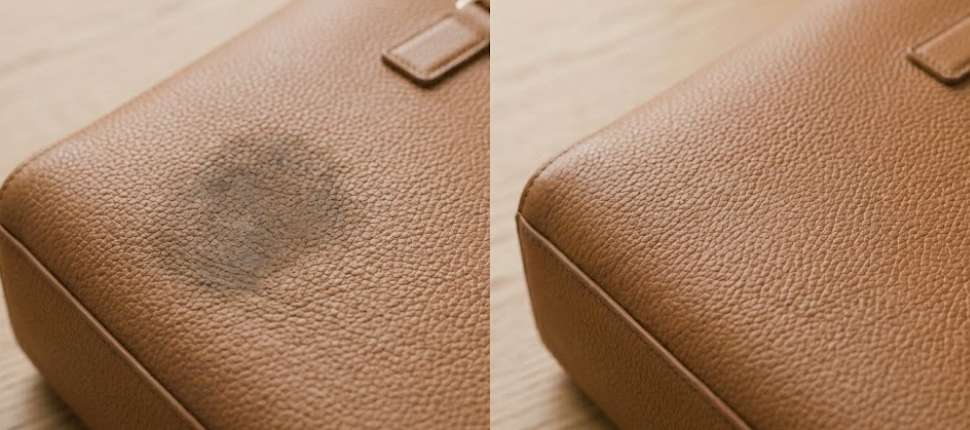
Conclusion
Caring for a leather handbag properly isn’t complicated — it just requires consistency and the right knowledge. A quality leather bag that’s cleaned, conditioned, and stored thoughtfully doesn’t just hold its value; it improves with age. The grain develops character. The leather softens in exactly the right way. That’s something no synthetic material can replicate.
If you’re in the business of sourcing premium leather handbags, the quality of the leather itself is where everything starts. HeteBag, based in Huadu, China, is a leather handbag manufacturer with over 15 years of production experience and partnerships with multiple specialized factories. From material selection to finished product, the manufacturing process directly determines how a bag will perform over years of use — and how well it responds to the kind of care outlined in this guide.
If you’re looking for a reliable leather handbag manufacturer for your product line, you’re welcome to leave your contact information directly on our website. We look forward to hearing from you and exploring what we can build together.
Frequently Asked Questions
Can I clean a leather handbag with water?
Yes, but only with a slightly damp soft cloth. Leather handbags should never be soaked or washed directly with water, as excessive moisture can damage the leather, cause stains, or lead to cracking over time.
What is the best cleaner for leather handbags?
A mild leather cleaner or pH-balanced leather soap is the safest option. Avoid harsh chemicals such as alcohol, bleach, acetone, or household cleaners because they can strip the leather’s natural oils and damage the surface.
How often should I clean my leather handbag?
For daily-use handbags, it’s recommended to wipe the surface weekly and perform a deeper clean with conditioner about once a month. Bags used occasionally can be cleaned every 2–3 months.
Can stains be removed from leather handbags at home?
Some common stains like dust, light oil marks, and water spots can usually be treated at home with gentle cleaning methods. However, deep ink stains or severe discoloration may require professional leather cleaning services.
How can I keep my leather handbag from cracking?
Regular conditioning is the key. Applying a quality leather conditioner every few months helps maintain moisture and flexibility. It’s also important to store the bag away from direct sunlight, heat, and humid environments.


