
 English
  Italian
  French
  German
  Spanish
  Arabic
 When you choosing a backpack, the material is a crucial factor in determining its quality and performance. The most common materials used in the market currently include Nylon, Polyester, and Canvas. Each material has its own advantages and applicable scenarios, such as lightweight, water-repellent, durability, or a vintage appearance.
Hetebag has over ten years of experience in the backpack industry. In this article, we will provide a detailed comparison of these three types of backpack fabrics for you, helping you make the best choice that suits your brand or purpose.
Why Printing Method Matters for Custom Tote Bags
How Printing Affects Branding, Durability, and Cost
A printed tote bag is not just a carrier — it’s a brand touchpoint. Every time someone walks through an airport, a farmers’ market, or a grocery store with your logo on their shoulder, that bag is doing marketing work. But the quality of that impression depends almost entirely on the printing method used to put the design there.
Durability varies dramatically between techniques. Screen printing, done correctly on natural fibers like cotton or canvas, can outlast the bag itself. Heat transfer prints on the same material may start cracking after 30 or 40 washes if the application conditions weren’t optimal. Embroidery, meanwhile, is structurally woven into the fabric — it simply doesn’t fade.
Cost follows a similar logic. Screen printing requires upfront setup costs (screens must be created for each color), but those costs spread thin over large volumes. Digital printing flips this equation — no setup fees, but higher per-unit costs that don’t scale as aggressively. Understanding where your order falls on that cost curve determines which method actually fits your budget.
Why Different Tote Bag Materials Require Different Printing Techniques
Material compatibility is something many buyers overlook until it creates a production problem. Natural fabrics — cotton, canvas, jute — are generally forgiving and work with most printing methods. Synthetic fabrics like polyester and non-woven polypropylene have tighter constraints.
Sublimation printing, for example, is chemically dependent on polyester fibers. The dye bonds with the polymer structure of the fabric; on a 100% cotton bag, the results are disappointing at best. Embroidery, on the other hand, works beautifully on heavier canvas and jute but can distort lightweight or loosely woven fabrics if the design is too dense.
Heat transfer requires a material that can withstand sustained heat pressure — typically 300°F to 350°F depending on the fabric. Canvas and cotton handle this well. Certain synthetic blends are less predictable, and some red-dyed fabrics are known to experience color bleeding under heat exposure.
Common Mistakes Businesses Make When Choosing Printing Methods
The most expensive mistake is choosing a method based on price alone without accounting for the total cost of quality. A heat transfer order priced attractively at small quantities may cost more per impression over the product’s lifetime if the print deteriorates early.
A second common error is supplying raster artwork (JPEGs, PNGs at low resolution) for screen printing jobs that require clean, vector-based files. The result is blurry edges, filled-in letterforms, and a final product that doesn’t reflect the original brand identity.
Another trap: designing across structural zones. Prints that stretch across gussets, seams, or handle attachment points will distort when the bag is loaded. The design should sit flat, within the main panel — not spanning areas where the fabric folds under tension.
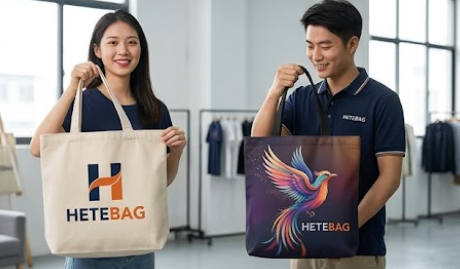
Screen Printing for Tote Bags
How Screen Printing Works
Screen printing — sometimes called silk screen or silkscreen printing — works by pressing ink through a mesh stencil (the “screen”) directly onto the fabric surface. Each color in the design requires its own separate screen. The screens are made from fine nylon mesh stretched over steel frames, and each is coated with a light-sensitive emulsion that hardens into the design shape when exposed to UV light.
During printing, the tote bag is held flat on a platen, screens are aligned precisely over the print area, and ink is pulled across with a rubber squeegee. The ink passes through the open mesh areas and bonds to the fabric. After each color is applied, the bag typically passes through a dryer or curing unit to set the ink permanently.
There are three main variants used at the manufacturing level: rotary screen printing (for pre-made bags, high volume), flat-bed screen printing (for fabric rolls before cutting), and hand-screen printing (for limited artisanal runs). At industrial scale, rotary systems dominate because of their speed and consistency.
Advantages: Cost-Effective for Bulk Orders, Vibrant Colors, Durable Prints
Screen printing delivers some of the most durable prints available for fabric. The ink penetrates the fiber rather than sitting entirely on top, which means it moves with the material instead of cracking when the fabric flexes. On a 12 oz canvas tote, a correctly cured screen print can realistically survive several hundred wash cycles without meaningful degradation.
Color vibrancy is another strength. Plastisol inks — the standard for screen printing — are opaque and rich, even on dark fabrics. Pantone color matching is reliable, which matters when your brand guidelines specify exact hues.
Unit cost drops significantly at volume. Once screens are created (typically a one-time setup cost per design), the per-piece printing cost decreases steadily as order quantities increase. For orders of 500 units or more with designs using 1–4 colors, screen printing is almost always the most cost-efficient option available.
Disadvantages: Limited Color Complexity
The constraint of screen printing is its relationship with color. Each color requires a separate screen, a separate pass, and separate alignment. At 1–3 colors, this is manageable and economical. At 6+ colors, costs climb, registration becomes more complex, and the process slows down.
Gradients and photographic images are difficult. Screen printing achieves gradients through a technique called halftone — breaking continuous tone into a pattern of dots — but this creates a visible dot pattern rather than a smooth transition. For designs that require photo-realistic detail or seamless color blending, screen printing is the wrong tool.
Best Use Cases for Promotional and Wholesale Tote Bags
Screen printing is the default choice for promotional tote bags distributed at trade shows, corporate events, and retail environments. It’s the right call when your order exceeds 300 units, your design uses a defined color palette (not gradients), and your material is cotton or canvas. For wholesale programs supplying retailers or brand partners, the combination of durability and per-unit cost efficiency makes screen printing the backbone of most production runs.
Heat Transfer Printing Explained
What Heat Transfer Printing Is
Heat transfer printing applies a design to fabric using a combination of heat and pressure. The process begins digitally — your artwork is printed onto a specially coated transfer paper or film using high-resolution inkjet or laser printers. That transfer is then pressed against the fabric using a heat press machine, which applies consistent temperature (typically 320°F–375°F) and pressure for a set dwell time. The heat activates the adhesive layer between the transfer and the fabric, bonding the design permanently to the surface.
There are two main variants worth understanding. Vinyl heat transfer cuts shapes from colored vinyl sheets and welds them to the fabric — clean, opaque, ideal for single-color or simple multi-color designs. Digital print heat transfer prints full-color artwork onto transfer film and adheres the entire design in a single press — better for photography-style or gradient-heavy artwork.
Advantages: Detailed Images and Full-Color Designs
Heat transfer’s primary advantage is its ability to reproduce full-color, photo-quality artwork without the color limitations of screen printing. If your design includes a realistic product photograph, a gradient background, or artwork with dozens of colors blending together, heat transfer handles it cleanly.
Setup costs are minimal — no screens, no film separations. This makes it accessible for small batches where screen printing setup costs would represent a disproportionate share of the total order value.
Disadvantages: Less Durable Over Time
The durability limitation is real and worth discussing honestly. A heat transfer print sits on top of the fabric fibers rather than penetrating them. Over repeated washing cycles — especially in warm water or with harsh detergents — the transfer layer can begin to crack, peel at the edges, or lose opacity. The rate of deterioration depends on ink quality, press conditions, and fabric type, but heat transfer generally has a shorter functional life than screen printing on equivalent materials.
Bags decorated with heat transfer should not be ironed over the print area. The heat that bonded the transfer can also reverse it. Care instruction labeling is important for end users of these products.
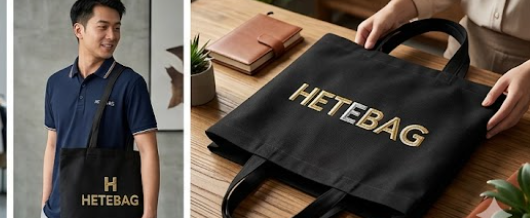
Ideal for Small Batch Custom Tote Bag Orders
Heat transfer makes the most sense when quantities are low and design complexity is high. Orders under 200 units — especially those with multi-color, gradient, or photographic artwork — are well-suited to this method. It’s also the right choice when you need fast turnaround on a limited run, or when you’re producing variable designs (different artwork per bag) within the same order, since there are no screen setup delays.
Digital Printing vs Screen Printing
When buyers compare these two methods, they’re usually trying to solve the same core problem: how do I get high-quality branded bags at a price that makes sense for my volume? The answer depends on which side of a cost crossover point your order falls.
| Factor | DTG (Digital Printing) | Screen Printing |
|---|---|---|
| Setup Cost | None or minimal | Per-screen setup fee (per color) |
| Color Range | Unlimited — full CMYK | Limited by screen count (typically 1–6 spot colors) |
| Print Quality | Photographic, fine detail | Bold, vibrant spot colors; limited gradients |
| Minimum Order | As low as 1 unit | Economical at 100+ units; ideal at 300+ |
| Per-Unit Cost (low qty) | Lower | Higher (setup costs dominate) |
| Per-Unit Cost (high qty) | Higher | Lower (setup amortized) |
| Best Fabric | Cotton, cotton blends | Cotton, canvas, most natural fibers |
| Durability | Good; may fade faster on dark fabrics | Excellent when properly cured |
| Turnaround | Fast — no plate/screen creation | Longer — screens must be made |
Which Option Is Better for Complex Artwork
For complex artwork — photographic imagery, fine gradients, artwork using 10+ colors — DTG is the cleaner solution. The printer works like an industrial inkjet, applying ink directly to the fabric surface without any screen intermediary. Designs with subtle shading, skin tones, or intricate illustrative detail reproduce more faithfully through DTG than through halftone screen printing.
For bold logo work, typographic designs, and brand marks that use a defined set of Pantone colors, screen printing remains superior. The opacity and saturation of screen-printing inks on natural fabrics is difficult to match digitally, particularly on colored or darker bag substrates.
Embroidery vs Printed Logos on Tote Bags
Premium Appearance of Embroidered Logos
Embroidery occupies a different category entirely. Where printing applies color to a surface, embroidery constructs the design using thread stitched directly into the fabric. The result is textured, dimensional, and tactilely distinct from any flat print. Held in hand, an embroidered logo signals craftsmanship in a way that ink cannot replicate.
Machine embroidery — using computer-controlled embroidery digitizing — achieves the detailed look of hand-embroidery at production scale. The design file specifies every needle path, stitch type, and thread color. A well-digitized embroidered logo on a canvas tote reads as a premium product before anyone even looks at the brand name.
Durability Comparison
Embroidery is the most durable decoration method available for tote bags. The thread is structurally integrated into the fabric — it cannot peel, crack, or wash off. As long as the bag itself holds up, the embroidery holds up with it. Color retention over decades of use remains consistent, since thread color is inherent to the yarn rather than applied to a surface.
Printed methods, even the most durable, have theoretical lifespans tied to ink adhesion and wash frequency. Embroidery has no such limitation.
Cost and Production Differences
Embroidery carries higher production costs. Digitizing the design is a one-time fee, but machine time per unit is longer than printing — each stitch is placed individually at a rate of 800 to 1,000 stitches per minute. A medium-complexity logo might require 8,000 to 15,000 stitches, which takes several minutes per bag. At scale, this time cost accumulates.
There are design constraints as well. Very fine lines, small text below a certain point size, and highly detailed gradients don’t translate well to embroidery — the stitch structure can’t capture that resolution. A skilled embroidery digitizer will simplify and adapt your artwork to work within these physical limits.
Which Branding Style Fits Fashion and Luxury Tote Bags
For bags positioned in the fashion, luxury, or premium gifting space, embroidery is the obvious choice. It elevates perceived value in a way that flat printing cannot, and it signals durability — buyers understand intuitively that stitched designs don’t fade. Retail products in the mid-to-luxury segment, corporate gifts for premium clients, and fashion-forward branded merchandise all benefit from embroidery’s crafted aesthetic.
Printed logos make more sense for high-volume promotional distribution where per-unit cost drives the decision, or when the design includes photographic or gradient elements that embroidery can’t reproduce faithfully.
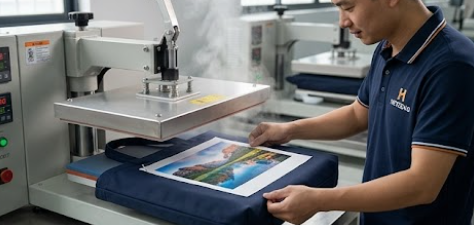
How to Choose the Right Printing Method
Based on Bag Material (Canvas, Cotton, Polyester, Jute)
Material drives method compatibility more than most buyers realize.
Canvas and cotton are the most versatile substrates — screen printing, heat transfer, DTG, and embroidery all perform well on these fabrics. Canvas’s tight, smooth weave is particularly well-suited to screen printing’s ink penetration and to embroidery’s structural stitching.
Polyester works best with sublimation printing, which chemically bonds dye to the polymer fibers. DTG is possible but results vary significantly. Screen printing on polyester requires specialty inks and careful dye migration management. Embroidery works, but polyester’s lighter weight can cause puckering under heavy stitch counts.
Jute (burlap) is a popular eco-friendly substrate with a distinctive texture. Screen printing and embroidery both work well on jute. Heat transfer is more limited — the uneven surface texture can create adhesion inconsistencies. Jute’s natural color variation also affects how ink colors read on the finished product.
Non-woven polypropylene — common in trade show and grocery promotional bags — is generally limited to screen printing with specialty inks. Its heat sensitivity makes heat transfer risky. Embroidery is possible but the material’s open structure requires careful backing.
If you’re also comparing backpack functionality, sizing, and material performance for different use cases, you can also read our detailed guide on how to choose a backpack size, material, and features.
Based on Order Quantity
Order volume is the second major filter.
Under 100 units: DTG or heat transfer. No screen setup costs, fast turnaround, small-batch friendly.
100–500 units: The crossover zone. Screen printing becomes competitive at the higher end of this range. Heat transfer remains valid for complex artwork.
500+ units: Screen printing takes over as the cost leader for designs with 1–4 colors. At 1,000+ units, the per-unit cost advantage of screen printing is substantial.
Embroidery follows its own logic — it’s a function of stitch count and machine time, not batch size economies. Per-unit cost is relatively stable across volumes, making it accessible at any quantity as long as the budget per unit supports the higher production cost.
Based on Budget and Branding Goals
Budget and brand positioning work together.
Promotional budgets: Screen printing on cotton or canvas totes. Maximum quantity per dollar, durable enough for sustained brand impression.
Mid-range branded products: Consider heat transfer for designs that require more color complexity than screen printing allows economically. DTG for flexibility on shorter runs.
Premium and luxury positioning: Embroidery is non-negotiable if you want the product to signal quality. The per-unit cost premium is part of what the product communicates.
Choosing Between Promotional, Retail, and Premium Markets
Promotional tote bags are working tools — they need to be durable, well-printed, and cost-efficient at volume. Screen printing at 500+ units is the industry standard for this segment.
Retail tote bags face consumer scrutiny in ways that promotional bags don’t — buyers are choosing them rather than receiving them. Print quality, construction, and material quality all matter. Screen printing for bold branded designs, DTG for artist collaborations or limited editions with complex artwork.
Premium and luxury tote bags are judged as finished goods, not promotional vehicles. The standards are higher, the details matter more, and the decoration method should reinforce the product’s positioning. Embroidery, quality canvas construction, and thoughtful design decisions across all touchpoints are what separate premium from everything else.
Material is only one part of backpack quality. Features like storage layout, comfort, durability, and carrying support also play an important role when selecting the right backpack. You can also explore our guide on the key features to consider when buying a backpack for a more complete buying perspective.
Conclusion
Every printing method covered here has a legitimate place in the custom tote bag supply chain — the question is always whether that method matches your specific combination of material, volume, artwork complexity, and positioning. Screen printing remains the workhorse of bulk promotional production. Heat transfer and DTG serve smaller runs and complex designs well. Embroidery elevates any product it touches. Knowing the tradeoffs lets you make a deliberate decision rather than defaulting to whatever’s most familiar.
If you’re sourcing custom backpack bags and want a manufacturing partner who can advise across all of these methods, Hetebag is based in Huadu, China — a region recognized globally for its concentration of bag manufacturing expertise. With 15 years of production experience and established partnerships across multiple factories, the team works with clients across the full spectrum: from high-volume promotional runs to premium branded products requiring more specialized techniques.
If you’re in the process of planning a tote bag program and want to discuss which method fits your specifications, you can leave your contact information directly on the website. The team will be in touch promptly — and they genuinely enjoy working through the details of a new project.
Frequently Asked Questions
What is the best printing method for custom tote bags?
The best printing method depends on your design, order quantity, and bag material. Screen printing is ideal for bulk orders with simple logos, DTG and heat transfer work better for full-color or detailed artwork, while embroidery is best for premium branding and luxury-style tote bags.
Which tote bag materials work best with screen printing?
Cotton and canvas tote bags are the most suitable materials for screen printing because they absorb ink well and produce vibrant, long-lasting results. Jute bags can also work well, while polyester may require specialty inks.
Is embroidery more durable than printing on tote bags?
Yes. Embroidery is generally the most durable decoration method because the logo is stitched directly into the fabric rather than printed on the surface. It does not crack, peel, or fade easily over time.
What is the minimum order quantity for custom printed tote bags?
Minimum order quantities vary depending on the printing method. Heat transfer and DTG printing can support very small orders, even under 300 pieces, while screen printing is usually more cost-effective for orders above 300-1000 units.
How do I choose the right printing method for my custom tote bags?
You should consider four main factors: bag material, artwork complexity, order quantity, and branding goals. Promotional giveaways usually use screen printing, retail products may use DTG or heat transfer, and premium brands often choose embroidery for a more upscale appearance.


