
 English
  Italian
  French
  German
  Spanish
  Arabic
 The custom bag industry in Australia has grown far beyond simple promotional giveaways. Today, it sits at the intersection of brand identity, sustainability mandates, and retail packaging strategy. Whether you’re sourcing canvas totes for a retail chain, branded backpacks for a corporate event, or reusable bags for a supermarket rollout, the manufacturer you choose shapes the entire outcome — from material feel to delivery timeline.
This guide covers 15 manufacturers worth knowing, including both Australian-based suppliers and proven overseas factories that actively serve the Australian market. You’ll find their product strengths, customization capabilities, and the types of partnerships where each one fits best. The goal is straightforward: give you enough depth to make a smart sourcing decision, not just a list of names.
Why Choose Custom Bag Manufacturers in Australia?
The Bag Market in Australia Is Shifting
Australia’s bag market isn’t what it was a decade ago. Two forces are reshaping sourcing decisions: environmental policy and brand differentiation pressure.
Since the major supermarket chains phased out single-use plastic bags, demand for reusable alternatives has surged. Retailers, event organizers, and corporate buyers are all looking for bags that carry a message — literally and figuratively. Custom bags have become a branded communication tool, not just a carrying vessel.
At the same time, the rise of e-commerce has pushed brands toward more polished, premium packaging. A plain brown mailer no longer says “we care about quality.” A well-crafted tote or branded drawstring bag does.
Local Manufacturing vs. Overseas Production
Both options have genuine merit. The right choice depends on your order size, timeline, and product complexity.
| Factor | Local Australian Factory | Overseas Factory (e.g., China) |
|---|---|---|
| Unit Cost | Higher | Significantly lower |
| Lead Time | Shorter (1–3 weeks typical) | Longer (4–10 weeks with shipping) |
| MOQ | Lower (some start at 50–100 units) | Generally higher (200–500+ units) |
| Communication | Same time zone, easier | Time differences exist; manageable with good partners |
| Customization Depth | Good for simpler designs | Excellent for complex OEM/ODM projects |
| Eco-Material Access | Growing options | Wide selection, including RPET, jute, organic cotton |
| Quality Control | Easier to visit and inspect | Requires clear specs + third-party audits |
For small runs, rush orders, or products needing hands-on local coordination, domestic sourcing makes sense. For larger orders — especially those with specific material requirements, embroidery, or multi-component designs — overseas factories often deliver better value and more flexibility.
China remains one of the most mature custom bag manufacturing hubs globally. If you want a deeper comparison of experienced OEM and ODM suppliers, you can also explore our guide to the Top 15 Bag Manufacturers in China.
Why Custom Bags Matter for Brand Strategy
Think about the last conference bag you kept using for months. Or the canvas tote from a local cafe that became your go-to grocery bag. Custom bags have a shelf life that outlasts nearly every other branded item. Unlike brochures or digital ads, a well-made bag continues delivering impressions long after the initial event or purchase.
That durability is exactly why more brands are treating bag procurement the same way they treat product development — with attention to material, finish, and functional design.
The Sustainability Factor
Australia’s green consumer sentiment is among the strongest in the Asia-Pacific region. Buyers in retail, food service, and corporate gifting are increasingly asking their suppliers for documented eco-credentials — whether that’s recycled fabric content, biodegradable packaging, or fair labor certifications.
Organic cotton, RPET (recycled PET plastic), jute, and non-woven polypropylene now appear regularly in sourcing briefs that would have specified plain polyester just five years ago. Any manufacturer worth considering should be able to answer questions about material sourcing with specifics, not vague reassurances.
What Types of Custom Bags Are Most Popular in Australia?
Custom Tote Bags
The tote bag remains the workhorse of promotional merchandise in Australia. Simple, reusable, and highly printable, canvas and non-woven totes are standard for retail stores, cafes, bookshops, wellness brands, and corporate events. Flat-bottom versions are gaining ground in grocery retail, where capacity and structure matter.
Industries: Retail, hospitality, wellness, conferences, real estate agencies
Promotional Bags
Promotional bags serve a specific purpose: to carry your brand into places advertising can’t reach. They’re produced in higher volumes, at lower per-unit costs, and are designed to be given away. Quality matters even here — a bag that falls apart after one use reflects poorly on the brand it carries.
Industries: Events, trade shows, franchise promotions, community programs
Canvas Bags
Canvas occupies a premium position in the reusable bag market. Its natural texture reads as quality, it takes screen printing and embroidery well, and it ages gracefully. Australian retailers and boutique brands often choose canvas when they want their bag to feel like a product, not packaging.
Industries: Boutique retail, fashion brands, artisan food and beverage, bookstores
Custom Backpacks
Corporate backpacks have evolved from basic zippered bags into structured, laptop-compatible carries that people use daily. For university partnerships, tech companies, or outdoor-oriented brands, a well-designed custom backpack builds awareness organically — it travels everywhere the user does.
Industries: Technology companies, universities, outdoor and fitness brands, corporate gifting
Cooler Bags
Cooler bags are a staple in Australian promotional markets, especially for food brands, supermarkets, and lifestyle companies. Insulated construction with custom branding works particularly well for product launches, food service promotions, and sports sponsorships.
Industries: Food and beverage, supermarkets, fitness and sports, event sponsorship
Drawstring Bags
Lightweight, low-cost, and easy to pack in bulk, drawstring bags are a reliable choice for events, school campaigns, and branded giveaways. They ship flat, which keeps freight costs down, and they’re highly customizable with full-color prints.
Industries: Schools, sports clubs, gyms, community events
Reusable Shopping Bags
Australia’s plastic bag ban has made the reusable shopping bag a necessity rather than a novelty. Non-woven polypropylene and laminated options dominate this segment for supermarkets and grocery retailers, while cotton and jute versions serve premium food and lifestyle brands.
Industries: Supermarkets, grocery stores, pharmacy chains, zero-waste retailers
Corporate Gift Bags
Gift bags for corporate use occupy the premium end of the market. These bags often combine structural design, quality materials (leather accents, woven canvas, RPET), and subtle branding. They’re used for client appreciation, employee onboarding, event VIP packages, and trade delegation kits.
Industries: Finance and professional services, luxury hospitality, event management, government
Top 15 Custom Bags Manufacturers in Australia
The following manufacturers serve the Australian market through a mix of local production, warehousing, and direct export from overseas facilities. Each has distinct strengths.
| Company | Year Founded | Country | Main Products |
|---|---|---|---|
| Hetebag | 2011 | China | Custom bags, promotional bags, cosmetic bags, canvas bags, backpacks, OEM/ODM services |
| Harcor Australia | 1969 | Australia | Custom backpacks, medical bags, insulated bags, security bags, retail totes |
| Bags Plus | 1985 | Australia | Custom printed bags, paper bags, cotton bags, eco non-woven bags |
| RollsPack | 1985 | Australia | Custom retail packaging bags, kraft paper bags, carry bags |
| Crumpler Australia | 1995 | Australia | Messenger bags, sports bags, waterproof functional bags, high-quality custom backpacks |
| Promotion Products | 1999 | Australia | Branded canvas bags, jute bags, corporate travel bags, drawstring bags |
| JEM Promotional Products | 2001 | Australia | Corporate promotional totes, custom conference bags, business laptop bags |
| Hunter Promotional Products | 2003 | Australia | Promotional totes, corporate event bags, drawstring bags |
| Oasis Bags | 2004 | USA / Global | Wholesale custom fashion bags, luggage, custom backpacks, waterproof outdoor bags |
| GetBranded | 2005 | Australia | Branded custom totes, corporate marketing gift bags |
| All Branded Group | 2006 | Australia | High-quality promotional bags, event totes, non-woven eco bags |
| The Packaging People | 2008 | Australia | Custom printed packaging bags, coffee bags, stand-up pouches, eco flexible packaging |
| Bellroy | 2010 | Australia | Premium everyday backpacks, high-end corporate custom bags, leather accessories |
| Good Things Australia | 2010 | Australia | Promotional totes, branded cooler bags, canvas bags, sports gear bags |
| Cup & Carry | 2017 | Australia | Custom printed paper bags, takeaway carry bags, recyclable/biodegradable packaging bags |
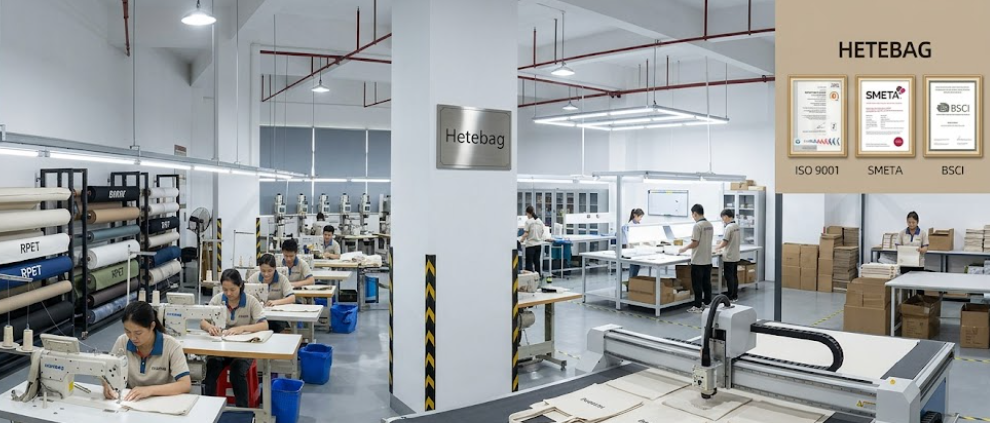
Hetebag Hetebag is a China-based custom bag manufacturer headquartered in Huadu, Guangzhou, with over 15 years of factory experience. The company holds ISO 9001 certification and has completed audits including SGS, SMETA, and BSCI. Its product range spans tote bags, backpacks, cosmetic bags, corporate bags, promotional bags, and OEM/ODM projects for global brands. With CNC cutting equipment and in-house design capability, Hetebag handles both development and production under one roof. Australian clients benefit from established sea freight logistics, full sample service, and a dedicated export team. The factory exports to over 70 countries, with Australia being a consistent market.
Harcor Australia Founded in 1969, Harcor is one of Australia’s longest-operating bag suppliers. The company has deep roots in the security and medical equipment bag sector, making it a reliable partner for specialized bag categories. Their standard product range includes backpacks, insulated bags, custom carry solutions, and retail bags. For clients needing Australian-compliant products with local quality oversight, Harcor offers consistent performance.
Bags Plus Bags Plus has been producing custom printed bags in Australia since 1985. Their specialty lies in promotional bags — particularly cotton, non-woven, and paper options. Their turnaround times are competitive for Australian clients, and their minimum order quantities lean lower than many overseas alternatives, making them practical for campaigns requiring smaller runs.
RollsPack RollsPack focuses primarily on retail packaging bags, kraft paper carry bags, and branded packaging solutions. They serve retailers, food businesses, and e-commerce brands that need packaging with a custom look. Their experience in paper-based packaging is particularly strong, and they work with sustainable kraft materials as standard.
Crumpler Australia Crumpler built its reputation on functional, durable bags designed for everyday serious use. Their custom offer includes messenger bags, backpacks, and padded laptop bags with clean, modern aesthetics. For brands that want a bag with genuine product value rather than a simple promotional item, Crumpler is a credible option with strong brand equity in the Australian market.
Promotion Products This Melbourne-based supplier focuses on branded promotional merchandise, with bags forming a central part of their catalog. Their canvas, jute, and travel bag options are competitively priced and regularly used for trade show giveaways and loyalty campaigns. They offer branding through screen printing and embroidery.
JEM Promotional Products JEM specializes in the corporate procurement market. Their bag offerings skew toward conference bags, laptop totes, and business-function bags designed for professional environments. They bring decoration and finishing options suited to premium brand requirements.
Hunter Promotional Products Hunter operates within the promotional bag market with an emphasis on fast turnaround and competitive pricing. They handle drawstring bags, event totes, and corporate carry bags across various print methods. They’re a practical choice for volume requirements tied to event calendars.
Oasis Bags Based in the USA with global distribution, Oasis Bags serves wholesale buyers looking for fashion-forward custom bags. Their range includes trend-driven totes, weekenders, and structured backpacks. For Australian brands seeking contemporary design aesthetics with scalable production, Oasis connects global sourcing to local delivery.
GetBranded GetBranded positions itself as a marketing merchandise partner, with custom bags serving as a core product category. Their emphasis is on branded totes and gift bags for corporate marketing programs. They handle the decoration and sourcing coordination for clients who need end-to-end simplicity.
All Branded Group All Branded Group serves businesses across Australia that need branded promotional products at competitive price points. Their bag range includes non-woven eco bags, event totes, and promotional carry bags suitable for large campaign runs.
The Packaging People The Packaging People focuses on food-grade and retail packaging, making them particularly relevant for coffee roasters, specialty food brands, and retail chains. Custom stand-up pouches, flat-bottom bags, and paper carry bags are their strengths. If your requirement sits at the intersection of packaging and branding, they offer useful specialization.
Bellroy Bellroy occupies the premium end of the Australian bag market. Known for high-quality leather accessories and thoughtful everyday bags, they’ve developed corporate customization programs for brands that want to gift products with genuine perceived value. Their price point reflects the material quality, making them best suited to executive gifting and high-end brand experiences.
Good Things Australia Good Things Australia operates in the promotional products space, with cooler bags and branded canvas bags forming a distinctive part of their lineup. Their cooler bag offering is well-suited to food, beverage, and lifestyle brands that want seasonal promotional items with lasting utility.
Cup & Carry Cup & Carry is a younger entrant, founded in 2017, focused on sustainable food service packaging. Custom printed paper carry bags and biodegradable options are their primary products. For cafes, restaurants, and food delivery brands in Australia, they offer a practical combination of branding and environmental credentials.
How to Choose the Right Custom Bag Manufacturer
Product Quality and Materials
Start here, because everything else builds on it. Ask for physical samples before committing to production. Examine stitching at stress points, zipper smoothness, print clarity, and handle attachment strength. A good manufacturer will send samples without hesitation — a reluctant one is telling you something.
Material spec sheets should be standard documentation for any reputable factory. If a supplier can’t tell you the denier count of their nylon or the GSM weight of their canvas, that’s a gap worth addressing before production begins.
Printing and Decoration Methods
Different print methods serve different needs. Screen printing is cost-effective for flat surfaces and large runs. Embroidery adds tactile quality to backpacks and canvas bags but costs more per unit. Heat transfer works on complex color designs. Digital printing allows short runs with full-color accuracy. Understanding what method fits your design — and asking whether the factory does it in-house or subcontracts it — gives you clearer control over quality outcomes.
MOQ Requirements
Minimum order quantities shape what’s possible. Local Australian manufacturers often work with lower MOQs (sometimes 50–200 units), which suits campaign-specific requirements and smaller brands. Overseas factories typically require higher minimums, though many experienced exporters like Hetebag offer flexible starting points for new clients and sample orders.
Sampling Capability
A manufacturer’s sampling speed and accuracy reveals their operational quality. Request a pre-production sample on every new design. Review it carefully: color matching, hardware function, structural integrity, and print placement all need evaluation before bulk production is approved. Strong manufacturers provide samples within 7–14 days and address feedback revisions quickly.
Lead Times
Be realistic about production windows. Standard overseas production lead times run 30–45 days after sample approval, with shipping adding another 2–4 weeks by sea. Local manufacturers can often compress the timeline to 2–3 weeks for standard products. Build your procurement calendar around accurate lead times, not optimistic ones.
OEM and ODM Services
OEM means the manufacturer produces your design to your specifications. ODM means they develop the design with you from a concept brief. Both require factories with genuine design and development resources — not just assembly capabilities. If you’re bringing a finished tech pack, OEM is straightforward. If you’re starting from a concept, ODM capability determines how useful the manufacturer can be during development.
| Comparison Factor | Local Factory | Overseas Factory |
|---|---|---|
| Unit Cost | Higher | Lower |
| Lead Time | Faster | Slower |
| Communication | Same time zone | Time zone gap, manageable |
| MOQ | Lower | Typically higher |
| Customization Depth | Good | Excellent for complex ODM |
| Certification Support | Standard | ISO, BSCI, SMETA available |
Quality Control and Certifications
Ask specifically about the quality inspection process — not just “we have QC” but where in the production flow inspections occur, what defect standards they use, and whether they allow third-party audits. For regulated markets or clients with corporate responsibility requirements, certifications like ISO 9001, BSCI, and SMETA matter. These aren’t just paperwork — they reflect consistent process management.
Custom Bag Printing Methods Explained
Choosing the right print method isn’t a minor decision. It affects cost, quality, durability, and which materials work at all.
Screen Printing
Screen printing applies ink through a mesh screen onto the bag surface. Each color requires a separate screen. It’s cost-efficient at scale (500+ units), produces vivid, consistent results on cotton and canvas, and holds up well to repeated washing. Best for simple logos and designs with defined color blocks. Not ideal for photographic or gradient-heavy artwork.
Heat Transfer Printing
Heat transfer uses heat and pressure to bond a printed film onto the bag surface. It handles more complex designs and color gradients than screen printing, works on a wider range of materials including polyester and nylon, and is practical for short runs. The trade-off is durability — heat transfer prints can peel or crack over time, particularly on bags subjected to heavy use or frequent washing.
Embroidery
Embroidery stitches your design directly into the fabric. It adds physical texture and a premium quality signal that printing methods can’t replicate. It performs best on canvas, cotton, denim, and structured non-woven materials. Logos with fine lines or complex gradients don’t translate well to embroidery — the method favors clean, bold designs. Per-unit cost is higher, but the perceived value often justifies it for corporate gifts and premium branded items.
Digital Printing
Digital printing works like a high-resolution inkjet process applied directly to the bag surface. It supports full-color artwork with no screen setup costs, making it the right choice for short runs or designs with photographic complexity. Cotton and canvas accept digital printing well. The durability depends heavily on the ink type and the finishing process used after printing.
Sublimation Printing
Sublimation converts ink into gas under heat and bonds it into polyester fibers at the molecular level. The result is a print that won’t fade, crack, or peel — because it’s embedded in the material rather than sitting on top of it. It only works on light-colored, high-polyester-content fabrics, which limits material options. For all-over prints and complex patterns on polyester bags, sublimation delivers results that other methods can’t match.
Quick Reference: Print Method Comparison
| Method | Best For | Material Compatibility | Durability | Cost at Scale |
|---|---|---|---|---|
| Screen Printing | Logos, bold designs, large runs | Cotton, canvas, non-woven | High | Low |
| Heat Transfer | Complex designs, short runs | Polyester, nylon, canvas | Medium | Medium |
| Embroidery | Premium logos, structured bags | Canvas, cotton, denim | Very High | Medium-High |
| Digital Printing | Full-color artwork, short runs | Cotton, canvas | Medium | Medium |
| Sublimation | All-over prints, polyester bags | Polyester only | Very High | Medium |
Sustainable & Eco-Friendly Bag Trends in Australia
The Regulatory Backdrop
Australia’s environmental policy has had a direct impact on bag manufacturing decisions. The 2018 phase-out of single-use plastic bags by major retailers was a tipping point. Since then, state-level regulations have progressively tightened, and consumer preference has moved in the same direction. Brands that can demonstrate genuine environmental responsibility now carry a measurable market advantage.
The Reusable Bag Market Is Still Growing
What started as compliance has become preference. Australian consumers are using reusable bags not because legislation mandates it but because the behavior has become habitual. That’s a different kind of demand — one that values quality, durability, and design in the reusable bag itself. Cheap non-woven bags given away at checkout are losing ground to canvas, cotton, and structured RPET alternatives that people actively choose to carry.
Common Eco-Friendly Materials
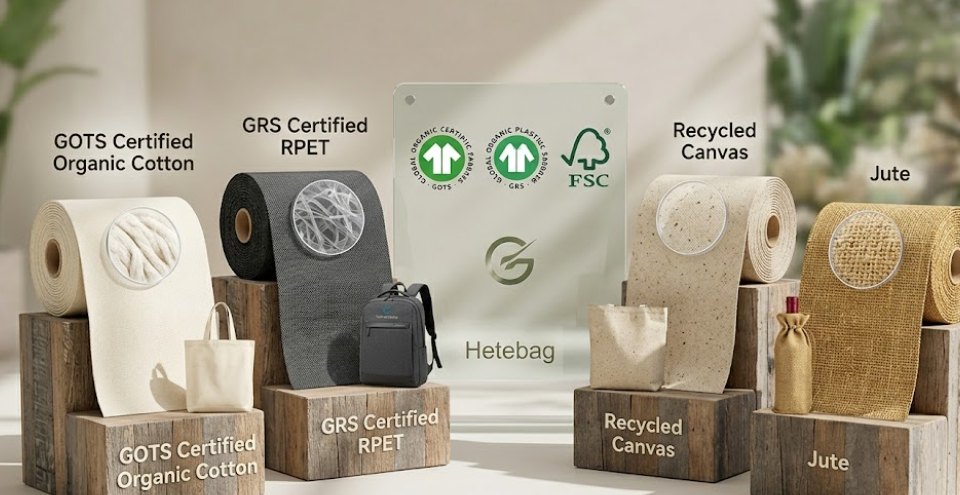
Organic Cotton Organic cotton is grown without synthetic pesticides or fertilizers. It’s certified through bodies like GOTS (Global Organic Textile Standard), which gives brands documented evidence to share with consumers. The material takes printing and embroidery well, ages naturally, and biodegrades at end of life. Per-unit costs are higher than conventional cotton, but the certification value supports premium positioning.
RPET (Recycled PET) RPET is polyester fiber made from recycled plastic bottles. Each bag diverts plastic from landfill or ocean pathways. RPET has become a mainstream material in the corporate gifting and reusable bag sectors because it combines environmental credentials with familiar performance — it’s durable, printable, and available in a wide color range. Many manufacturers now provide GRS (Global Recycled Standard) certificates for RPET products.
Recycled Canvas Recycled canvas uses post-consumer or post-industrial cotton waste to create new fabric. It carries a natural aesthetic similar to virgin canvas while reducing the resource intensity of production. It’s particularly well-suited to lifestyle brands and retailers that want a sustainable material with visual and tactile appeal.
Jute Jute is a naturally biodegradable fiber with a distinctive organic texture. It’s fast-growing, requires minimal pesticides, and decomposes at end of life without leaving synthetic residue. Jute bags are popular with food retailers, farmers’ markets, and wellness brands. The material has a visual identity that signals natural and artisan values effectively.
Non-Woven Fabric Non-woven polypropylene is the most common material in volume promotional bags. When made from recycled polypropylene or designed for reuse over many cycles, it can be a responsible choice. Look for PP non-woven with documented recycled content if sustainability claims are important to your brand positioning.
Why Environmental Credentials Matter for Brand Marketing
Sustainability isn’t just about material choices — it’s about what those choices communicate. When a brand invests in organic cotton or RPET bags, it’s sending a signal about values. That signal is increasingly important to Australian consumers, particularly in the 25–45 demographic. Research consistently shows that consumers are willing to pay more for products from brands they perceive as environmentally responsible.
For corporate procurement teams, ESG (Environmental, Social, and Governance) reporting requirements are making sustainable sourcing a documented obligation rather than an optional extra. A bag manufactured with certified eco-materials, produced in a facility with social compliance audits, can contribute directly to the buyer’s own sustainability reporting.
ESG and Responsible Sourcing
Australian companies operating under ESG frameworks are asking harder questions about their entire supply chain — including promotional merchandise. The days of sourcing bags purely on price are fading for any organization that takes its sustainability commitments seriously. Manufacturers that can provide material certifications, factory audit reports, and transparent production documentation will be far easier to work with for buyers navigating internal compliance requirements.
Conclusion
Australia’s custom bag market rewards sourcing decisions that are made thoughtfully, not reactively. The gap between a bag that builds brand recognition and one that gets thrown away after a single use comes down to material quality, design execution, and the manufacturing relationship behind it.
Local Australian manufacturers offer accessibility, lower MOQs, and easier communication — real advantages for campaign-specific requirements or when speed matters most. Overseas factories, particularly established Chinese manufacturers with direct export experience and quality certifications, offer production depth, material flexibility, and cost structures that scale efficiently for higher-volume programs.
The 15 manufacturers in this guide represent a range of positions across that spectrum. Matching your specific requirement — product type, order volume, timeline, sustainability criteria — to the right supplier is what efficient sourcing looks like in practice.
If you’re in the process of evaluating custom bag suppliers and want to explore what a China-based factory with 15 years of manufacturing experience can offer, Hetebag is worth a conversation. With our own factory in Huadu, Guangzhou, we handle OEM and ODM production across a wide range of bag categories — totes, backpacks, promotional bags, cosmetic bags, corporate gifts, and more. We work directly with brands, wholesalers, and distributors across Australia and over 70 countries worldwide.
Samples, pricing, and production timelines are straightforward to discuss. If you’re ready to start, you can leave your contact details on our website and our team will follow up promptly. We’re genuinely looking forward to working with you.
Frequently Asked Questions
Are Chinese custom bag manufacturers reliable for Australian businesses?
Yes — many Australian brands work directly with experienced Chinese bag manufacturers because of their competitive pricing, broader material selection, and stronger OEM/ODM capabilities. The key is choosing factories with certifications such as ISO 9001, BSCI, or SMETA, along with proven export experience and clear communication processes.
What materials are most commonly used for custom reusable bags?
The most popular materials include canvas, cotton, RPET (recycled PET), non-woven polypropylene, polyester, nylon, and jute. Premium retail brands often prefer canvas or organic cotton, while supermarkets and promotional campaigns commonly use non-woven or RPET materials for cost efficiency and sustainability.
Which printing method is best for custom bags?
It depends on your design and budget. Screen printing is ideal for simple logos and large-volume orders, embroidery works best for premium branding, digital printing suits full-color artwork, and sublimation is excellent for polyester bags with all-over designs. A good manufacturer should recommend the most suitable method based on your artwork and bag material.
How long does custom bag production usually take?
Production timelines vary by order size and supplier location. Australian manufacturers may complete standard orders within 1–3 weeks, while overseas factories generally require 30–45 days for production plus shipping time. Sampling and approval stages should also be included in your procurement timeline.
What certifications should I look for when choosing a custom bag manufacturer?
Reliable manufacturers should be able to provide certifications and audit reports related to quality management and ethical production. Common certifications include ISO 9001 for quality control, BSCI and SMETA for social compliance, and GRS or GOTS certifications for sustainable materials such as RPET and organic cotton.


