
 English
  Italian
  French
  German
  Spanish
  Arabic
 Two quotations can both say 600D polyester and still produce fabrics with different weight, stiffness, coating, and wear behavior. If you are comparing 420D vs 600D for a bag, the purchasing problem is defining the complete fabric specification and matching it to the panels that carry load or face abrasion.
When we select polyester for a bag project, denier is never the only specification we check. Fabric weight, yarn density, weave structure, coating, backing, surface finish, sewing construction, and the actual way the bag will be used all influence performance.
A good 420D polyester can sometimes be more suitable than a basic 600D fabric, especially when the product needs to stay lightweight, flexible, and easy to fold. A properly constructed 600D polyester usually performs better when abrasion resistance and structure matter more.
The real question is not simply which fabric is stronger. You need to know which fabric works better for your bag design, expected load, usage environment, and quality target.
For a broader comparison of textiles, leather, and recycled options, read our materials for custom bags guide. Review the Custom Bag Materials page when requesting candidate swatches; this article focuses specifically on polyester denier and construction.
1. What Do 420D and 600D Mean in Polyester Fabric?
What Does “D” Stand for in Fabric?
The letter “D” stands for denier. Denier is a unit used to describe the linear density of yarn. One denier means that 9,000 meters of yarn weighs one gram.
In practical bag manufacturing, a higher denier usually means a thicker yarn. This is why 600D polyester generally feels heavier and more substantial than 420D polyester when the two fabrics use similar weaving and finishing methods.
The important thing here is that denier measures the yarn rather than the complete finished fabric.
A buyer may see “600D polyester” on two quotations and assume both materials are almost identical. Once the samples arrive, one may feel stiff and dense while the other feels noticeably softer. Different yarn quality, weave density, coating weight, and fabric construction can create that difference.
Does a Higher Denier Always Mean Better Quality?
Higher denier does not automatically mean better quality.
600D polyester normally has an advantage in material thickness and can provide stronger resistance to wear when compared with a similar 420D construction. Quality still depends on much more than the number printed on the fabric specification.
When we review polyester for a production project, we normally examine the yarn consistency, weave density, finished fabric weight, coating condition, surface appearance, color stability, tensile strength, tear strength, abrasion performance, and how the material behaves around stitched areas.
This matters because fabric failures in bags are not always caused by the yarn being too thin. Loose weaving, weak backing, poor coating adhesion, or bad reinforcement can create problems even when the fabric is technically 600D.
Polyester Denier vs Fabric Weight (GSM)
Denier and GSM describe different things.
Denier describes the linear density of the yarn, while GSM describes the weight of the finished fabric per square meter. Buyers sometimes treat these two specifications as if they mean the same thing, but they should be checked separately.
| Specification | What It Measures | Why It Matters |
|---|---|---|
| Denier | Yarn linear density | Helps indicate yarn thickness |
| GSM | Finished fabric weight | Helps compare actual material weight |
| Weave Density | Yarn concentration in the fabric | Influences strength and stability |
| Coating | PU, PVC, TPU or similar backing | Influences stiffness, water resistance and hand feel |
A tightly woven 420D fabric can sometimes feel more substantial than a loosely woven 600D fabric. A heavy PVC backing can also make 600D considerably thicker and heavier than a lightly PU-coated version.
When comparing 420D vs 600D, checking the denier alone is not enough.
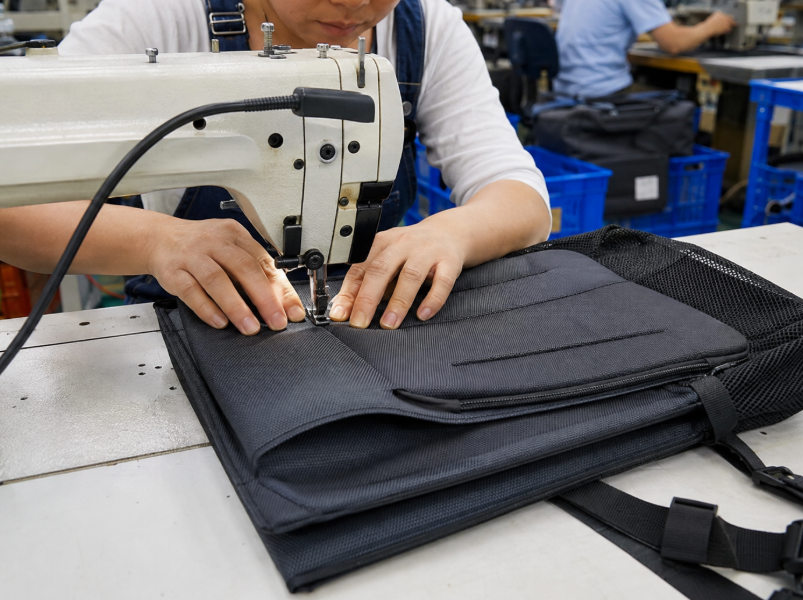
2. 420D vs 600D Polyester: Key Differences at a Glance
If yarn quality, weaving method, and finishing are reasonably similar, 420D and 600D polyester show some predictable differences.
| Factor | 420D Polyester | 600D Polyester |
|---|---|---|
| Yarn Structure | Finer | Thicker |
| Typical Feel | Softer and more flexible | Firmer and more substantial |
| Weight | Usually lighter | Usually heavier |
| Abrasion Resistance | Good | Usually stronger |
| Tear Resistance | Good | Usually stronger |
| Packability | Better | Moderate |
| Shape Retention | Softer structure | Better structure |
| Common Applications | Lightweight bags | Everyday and higher-wear bags |
Weight and Thickness
420D polyester is often selected when the product needs a lighter shell or softer body. It works well when the bag needs to fold, compress, or bend naturally.
600D polyester tends to provide more structure. Buyers can usually feel the difference when placing both swatches in their hands. The 600D sample often feels firmer and more substantial.
The total weight of the finished bag is still affected by much more than the exterior fabric. Foam, lining, webbing, zippers, reinforcement boards, hardware, padding, and internal compartments can add a considerable amount of weight.
This means replacing 420D with 600D does not automatically tell you how heavy the finished bag will become.
Strength and Tear Resistance
When the fabric construction is similar, 600D polyester normally offers better tear resistance because the yarn is thicker.
In actual bag production, the shell fabric is only one part of the strength system.
We often see stress concentrated around shoulder strap attachment points, handle bases, zipper ends, corners, and the bottom panel. A strong 600D fabric cannot solve a weak sewing structure by itself.
This is why a reliable bag specification should connect fabric choice with reinforcement design.
Abrasion Resistance
Abrasion resistance becomes particularly important when the bag frequently touches floors, luggage racks, benches, vehicle interiors, or rough outdoor surfaces.
600D normally performs better in these situations because the thicker construction can tolerate repeated surface wear for longer.
If abrasion is an important purchasing requirement, buyers can request measurable testing rather than simply accepting descriptions such as “heavy duty.” The ISO textile testing system includes recognized abrasion testing methods that can be used when a project requires more objective quality control.
Flexibility and Hand Feel
420D usually feels more flexible than 600D.
That can be an advantage for foldable bags, soft travel products, lightweight backpacks, drawstring products, and designs where the fabric needs to move easily around curved panels.
600D usually produces a firmer shell. This can help a backpack, gym bag, duffel, or equipment bag hold its shape more effectively.
Neither feel is inherently better. The right choice depends on how you want the finished product to look and behave in the customer’s hands.
Water Resistance and Coating Options
Neither 420D nor 600D should automatically be described as waterproof simply because the base fabric is polyester.
PU coating, PVC backing, TPU lamination, surface water-repellent treatments, seam design, zipper construction, and stitching holes all affect how the finished bag handles water.
PU-coated polyester is commonly used when the buyer wants a flexible backing and reasonable water resistance without making the material too heavy.
PVC-backed polyester usually feels heavier and firmer. It can work well for certain cooler bags, equipment bags, and structured products.
If the product requires a specific level of water resistance, it is better to define the performance requirement rather than only asking for “waterproof 600D polyester.”
3. What Is 420D Polyester?
Key Characteristics of 420D Polyester
420D polyester sits between very lightweight fabrics and heavier bag materials.
It gives a bag enough structure for many everyday applications while keeping the fabric relatively light and flexible. This makes it useful for products that need a softer silhouette or lower overall weight.
During sampling, 420D can also be easier to work with around folded edges and multi-layer seams because the material creates less bulk than heavier constructions.
Its balance of flexibility and strength is one of the main reasons it continues to be used across many commercial bag categories.
Advantages and Limitations
The main advantage of 420D polyester is that it offers practical durability without making the bag unnecessarily heavy.
It also works with many common branding methods, including screen printing, embroidery, heat transfer, patches, and selected digital printing processes, depending on the coating and surface finish.
The limitation usually becomes more noticeable in high-abrasion areas. A 420D fabric used on the bottom of a frequently loaded travel bag will normally face more wear than the same fabric used on an upper side panel.
This does not mean you need to replace the entire shell with heavier polyester. Sometimes strengthening only the areas that receive the highest wear produces a better product.
What Types of Bags Use 420D Polyester?
420D polyester is commonly considered for lightweight backpacks, foldable travel bags, promotional totes, drawstring bags, lightweight sports bags, organizer bags, compact lunch bags, and some cosmetic or accessory products.
Its suitability still depends on construction.
A lightweight commuter backpack and a heavy school backpack may both be called backpacks, but the fabric requirements can be very different. That is why product use should always come before category name when selecting materials.
4. What Is 600D Polyester?
Key Characteristics of 600D Polyester
600D polyester is one of the most widely recognized material specifications in commercial bag manufacturing.
It offers a good balance between durability, structure, production efficiency, and customization flexibility. The material is substantial enough for many everyday-use products without becoming as heavy as 900D, 1200D, or 1680D fabrics.
This balance makes 600D especially useful for products where buyers want a stronger visual and physical feel.
Advantages and Limitations
600D normally offers better everyday abrasion resistance than a comparable 420D construction.
It also provides more body, which can help backpacks, sports bags, travel bags, and equipment bags maintain a structured appearance.
The downside appears when the design is supposed to be lightweight or highly foldable. A heavier shell can create unnecessary bulk, especially in small products or promotional bags where the extra durability may never actually be used.
I would not automatically replace 420D with 600D and call it an upgrade. Material selection should support the design rather than simply increase the specification number.
What Types of Bags Use 600D Polyester?
600D polyester is frequently used for school backpacks, laptop backpacks, travel backpacks, sports bags, gym bags, duffels, cooler bags, structured promotional products, equipment bags, and similar everyday-use products.
When developing a custom backpack, the bottom panel, shoulder strap roots, zipper openings, and handle connection areas deserve the same attention as the shell fabric.
A backpack built with high-quality 600D polyester can still fail early when these stress areas are poorly reinforced.
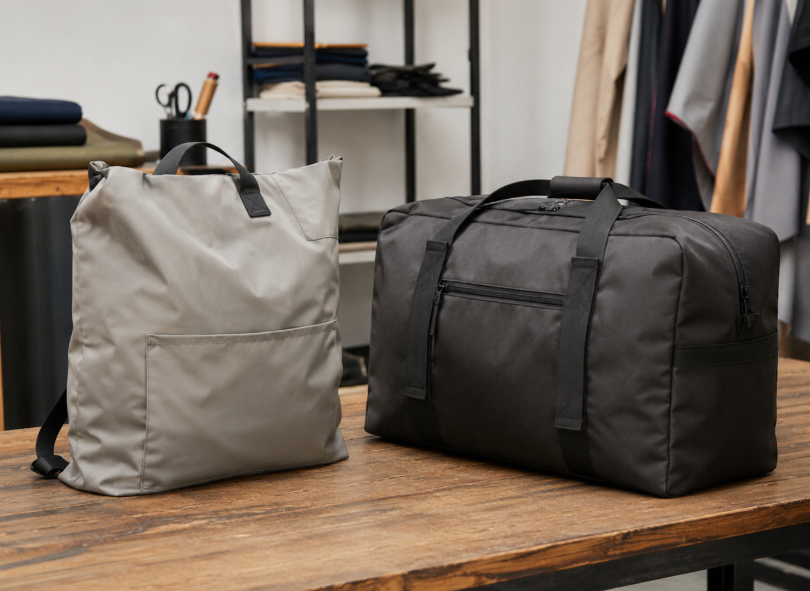
5. Is 600D Polyester More Durable Than 420D for Bags?
In most comparable constructions, 600D polyester is more durable than 420D polyester.
The key word is comparable.
A densely woven and well-coated 420D polyester can outperform a poorly woven 600D material in certain applications. This is why experienced buyers normally compare actual fabric construction instead of using denier as the only decision point.
Abrasion Resistance in Daily Use
600D usually performs better when the bag experiences regular rubbing against hard surfaces.
A school backpack placed on concrete every day, a duffel repeatedly pushed into luggage compartments, and an equipment bag dragged across a work area all create repeated abrasion.
Those products generally benefit from the added body of 600D.
A promotional tote that is used occasionally has a very different wear pattern. Using heavier material there may add weight without producing a meaningful benefit.
The expected frequency of use should influence the material decision.
Tear and Puncture Resistance
600D normally handles tearing better than comparable 420D because the thicker yarn provides more material to resist stress.
Puncture performance is more complicated.
A sharp tool, metal edge, bottle corner, or hard internal object can focus force onto one small area. Ordinary polyester fabrics should not be treated as puncture-proof, regardless of whether they are 420D or 600D.
If the bag will carry tools or objects with hard edges, the manufacturer may need to add reinforcement panels, protective lining, foam, board, or heavier fabric in selected zones.
Why Weave Density and Coating Matter as Much as Denier
This is one of the most important points in the entire 420D vs 600D comparison.
If a quotation only says “600D polyester,” the buyer still does not know enough about the material.
The weave may be dense or relatively loose. The PU coating may be light or heavy. The GSM may differ. The surface texture can change. Different mills can also produce noticeably different hand feel under the same basic denier description.
This is why an approved fabric swatch or detailed material specification is useful when moving from sampling to bulk production.
The sample gives both sides a physical reference. The specification gives the factory measurable production requirements.
PU, PVC, and Other Backing Options
PU backing is commonly selected when flexibility, moderate water resistance, and manageable weight are important.
PVC backing produces a firmer and often heavier fabric. It may suit certain cooler bags, tool-style bags, and products that benefit from additional structure.
TPU laminations and other technical coatings can also be considered for special performance requirements.
Chemical safety should be treated separately from mechanical strength. If a buyer needs textile testing related to harmful substances, standards such as OEKO-TEX STANDARD 100 can be discussed with the supplier based on the destination market and product requirements. Requesting such documentation does not mean every polyester fabric automatically carries this certification.
6. Which Is Better for Different Types of Bags: 420D or 600D?
There is no universal winner when comparing 420D and 600D polyester.
The most useful choice comes from matching the fabric to the bag’s stress level, desired weight, structure, and end use.
| Bag Type | Common Starting Choice | Main Reason |
|---|---|---|
| Lightweight Backpack | 420D | Lower weight and flexibility |
| Everyday Backpack | 600D | Better structure and wear resistance |
| Travel Duffel | 600D | Handles frequent abrasion better |
| Promotional Tote | 420D | Flexible and easy to carry |
| Gym Bag | 420D or 600D | Depends on load and usage frequency |
| Lunch or Cooler Bag | 420D or 600D | Insulation structure also matters |
| Outdoor or Equipment Bag | 600D or heavier | Higher wear requirement |
Backpacks
600D is a practical starting point for school, commuter, laptop, and everyday backpacks.
420D becomes useful when reducing weight is a priority. Lightweight hiking-style packs, packable backpacks, and flexible commuter designs can benefit from the softer construction.
You can also combine the two fabrics. A backpack may use 420D on the upper panels and 600D on the base where abrasion is more likely.
This often produces a better balance than increasing the weight of every panel.
Travel and Duffel Bags
Travel bags usually experience more surface contact than lightweight everyday bags.
They are placed on airport floors, car trunks, luggage racks, hotel floors, and storage shelves. The load is also often heavier.
A 600D construction can be a candidate for a travel bag, but the actual weave, coating, reinforcement, and sample performance should determine approval.
Buyers developing custom travel bags should also inspect the handle reinforcement, shoulder strap attachment, zipper size, base structure, and seam construction. These areas may determine product life more directly than the difference between two shell fabrics.
Tote and Promotional Bags
420D is often suitable when a tote should feel flexible and easy to fold.
This can work well for reusable promotional bags, event products, lightweight shopping bags, and branded carry bags.
600D makes more sense when the tote needs a structured body or is expected to carry heavier items repeatedly.
The end-user experience should guide the selection. A heavier material is useful only when the design actually benefits from it.
Gym Bags
Both 420D and 600D work for gym bags.
420D suits lighter products intended mainly for clothing, towels, and smaller personal items.
600D is usually more appropriate when users will carry shoes, bottles, heavier sports accessories, or equipment. These bags also spend more time on locker room floors and benches, which increases abrasion.
When developing a custom gym bag, check the shoe compartment, bottom panel, handles, shoulder strap connection, and ventilation structure before deciding that the whole shell needs heavier polyester.
Cooler and Lunch Bags
The exterior shell is only one part of a lunch or cooler bag.
Foam thickness, reflective lining, PEVA-type lining, zipper construction, seam design, internal cleaning requirements, and insulation structure all affect the finished product.
420D can create a lighter exterior. 600D offers a more substantial shell and may be preferable for reusable products that are carried frequently.
If you are developing custom lunch bags, the insulation structure should be reviewed together with the outer polyester rather than treating them as separate decisions.
Outdoor and Heavy-Duty Bags
Between these two choices, 600D is normally better for outdoor or higher-wear applications.
There are also many projects where 600D is still not enough.
Heavy equipment bags, tool bags, rugged travel products, tactical-style bags, or frequently dragged bottom panels may require 900D, 1200D, 1680D, reinforced polyester, high-tenacity nylon, or another material entirely.
The correct decision is not always choosing the stronger option from two available fabrics. Sometimes the application requires moving to a different specification.
7. How to Choose Between 420D and 600D Polyester for Custom Bags
Choose 420D When Weight and Flexibility Matter
420D is a good choice when the shell needs to remain light, soft, foldable, and comfortable to handle.
It is particularly suitable for products where moderate durability is enough and keeping the bag compact matters more than maximum abrasion resistance.
The core question is whether the additional weight and structure of 600D will improve the user’s experience. If the answer is no, moving to a heavier fabric may have little value.
Choose 600D When Durability Is the Priority
600D becomes more attractive when the bag will be used frequently, carried with heavier contents, placed on rough surfaces, or expected to maintain a firmer shape.
School backpacks, sports bags, travel products, equipment carriers, and durable promotional bags often fall into this group.
Even with 600D, the manufacturer should still reinforce stress areas separately.
A thicker fabric cannot replace proper pattern engineering, seam allowance, reinforcement stitching, webbing support, or strong hardware.
What Specifications Should Buyers Confirm With a Bag Manufacturer?
A complete polyester specification should contain more information than the words “420D polyester” or “600D polyester.”
The buyer should confirm the polyester type, exact denier, fabric weight, warp and weft construction, weave density, coating type, backing type, surface finish, color requirement, colorfastness target, water-resistance expectation, and any required tensile, tear, or abrasion performance.
If recycled polyester is required, agree on the material content scope and supporting records before sampling. Our eco-friendly materials for custom bags guide explains how sourcing evidence and completed-bag performance should be reviewed separately.
When chemical compliance matters, the destination market and testing requirement should be discussed early instead of waiting until bulk production.
An approved physical swatch is especially useful. Once the buyer approves the material, that sample can become part of the production reference and reduce disagreements later.
Can 420D and 600D Be Combined in One Bag?
Yes. In many cases, combining different fabrics is better than choosing only one denier.
A backpack may use 420D on the front and side panels to reduce weight, with 600D on the bottom for better abrasion resistance.
A travel bag may use 600D across the main body but move to an even stronger material on the base.
This type of construction is based on stress zones.
When we look at a bag during development, we do not see every panel as having the same job. Some panels mainly create appearance. Others carry weight. Some touch the ground. Others bend repeatedly.
Once the material is selected according to those functions, the 420D vs 600D decision becomes much more practical.
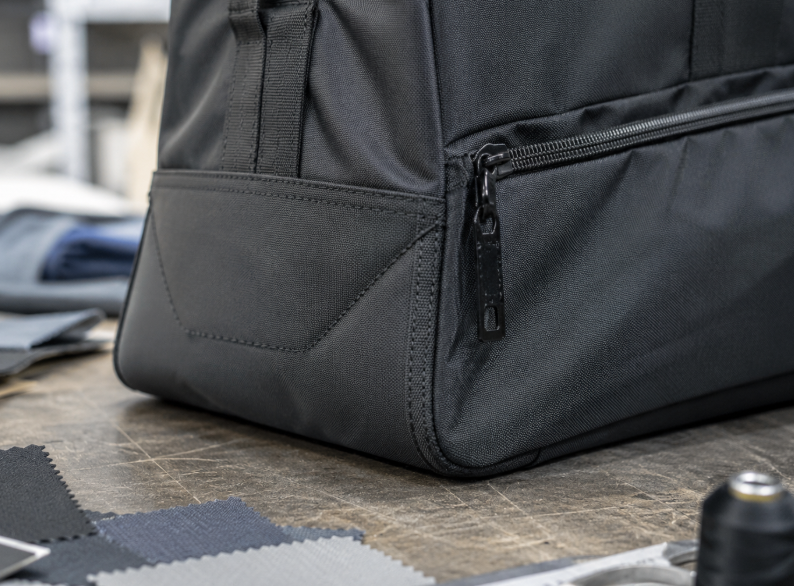
8. Conclusion
420D polyester is usually better when you want a lighter, softer, and more flexible bag. It works well for many lightweight backpacks, promotional bags, foldable products, and moderate-use applications.
600D polyester is normally the stronger option when greater abrasion resistance, structure, and frequent daily use are expected. It is widely used for backpacks, sports bags, travel bags, cooler bags, and equipment-style products.
The denier number should not make the final decision by itself.
Fabric weight, weave density, yarn quality, PU or PVC backing, stitching, reinforcement, lining, and actual product use all affect durability. A carefully specified 420D fabric can be a better material than a poorly controlled 600D fabric.
Hetebag is a bag manufacturer based in Huadu, Guangzhou, China. Our team has more than 15 years of bag manufacturing experience and works with multiple production partners across different bag categories. We support OEM and ODM projects covering material selection, product development, sampling, production, and quality control.
To compare suitable polyester constructions, send your material and sample requirements with the bag type, expected load, dimensions, target GSM, coating, color, quantity, and destination market. Include an approved swatch or reference sample where available so the quotation is based on a defined construction.
Frequently Asked Questions
Is 600D Polyester Always Thicker Than 420D Polyester?
600D uses a higher-denier yarn than 420D, but the finished fabric is not always proportionally thicker.
Weave density, coating weight, backing type, yarn construction, and finishing can change the final thickness. When comparing fabrics from different mills, it is better to review the physical sample and GSM instead of using denier alone.
Can I Specify Only 600D Polyester on My Tech Pack?
You can write 600D polyester as the basic material description, but it is not detailed enough for controlled production.
A stronger specification should also define the coating, fabric weight or approved material reference, color, surface finish, water-resistance requirement, and any relevant mechanical test requirements. This helps the supplier reproduce the approved sample during bulk production.
Is 420D Polyester Strong Enough for a Backpack?
Yes, 420D polyester can be strong enough for many backpacks, especially lightweight commuter bags, foldable backpacks, promotional backpacks, and products designed for moderate loads.
The shoulder strap roots, top handle, zipper ends, and base should still be checked carefully. If those areas need extra durability, 600D or another stronger material can be used only where necessary.
Does PU-Coated 600D Polyester Make a Bag Waterproof?
PU coating can improve water resistance, but it does not automatically make the finished bag waterproof.
Water may still enter through stitching holes, seams, zipper openings, and poorly sealed construction areas. Buyers who need reliable water protection should define a finished-product performance requirement rather than judging the bag only by the shell fabric.
Should I Request Abrasion and Tensile Testing for 420D or 600D Polyester?
Testing becomes more useful when the bag is expected to face frequent use, heavier loads, or demanding environments.
School bags, travel products, outdoor bags, equipment bags, and heavily used sports bags benefit more from measurable physical requirements. ISO textile test methods can provide a clearer reference than subjective terms such as strong, durable, or heavy duty.
Can Recycled Polyester Be Made in 420D and 600D?
Yes. Recycled polyester can be produced in 420D, 600D, and many other denier constructions.
If recycled content is part of your purchasing requirement, confirm the recycled material claim, supporting documentation, fabric performance, coating, and final product construction separately. Recycled content alone does not tell you whether the finished fabric will meet your durability target.


