
 English
  Italian
  French
  German
  Spanish
  Arabic
 If you are developing a backpack, drawstring bag, travel accessory, or lightweight pouch, you will probably see fabric specifications such as 210D nylon, 210D polyester, 420D nylon, or 420D polyester. The numbers look easy to compare, so many buyers assume 420D is simply a thicker and better version of 210D. That comparison misses quite a lot.
We see this during bag development all the time. Two fabrics carrying the same 420D label can feel different in the hand, weigh differently, resist abrasion differently, and behave very differently after a coating is applied. A well-made 210D fabric may even be the better material for a certain bag because it folds more easily, reduces weight, and gives the product the right hand feel.
The useful way to compare 210D vs 420D is to look at the complete fabric specification: yarn size, fiber type, weave, fabric weight, coating, finishing, intended load, and bag construction. Once you look at those details together, choosing between the two becomes much easier.
1. What Do 210D and 420D Mean in Fabric?
What Does “D” (Denier) Measure?
The “D” stands for denier, a unit used to describe the linear density of a fiber or yarn. One denier represents one gram per 9,000 meters of material. The U.S. Electronic Code of Federal Regulations also defines denier based on the number of grams in a 9,000-meter length of yarn.
That means a nominal 210D yarn is finer than a nominal 420D yarn. In simple terms, 420D uses a heavier yarn size.
This point matters because denier describes the yarn, not the final weight of the finished fabric. A buyer should not read “420D” and assume that every 420D fabric has the same grams per square meter, thickness, or mechanical strength.
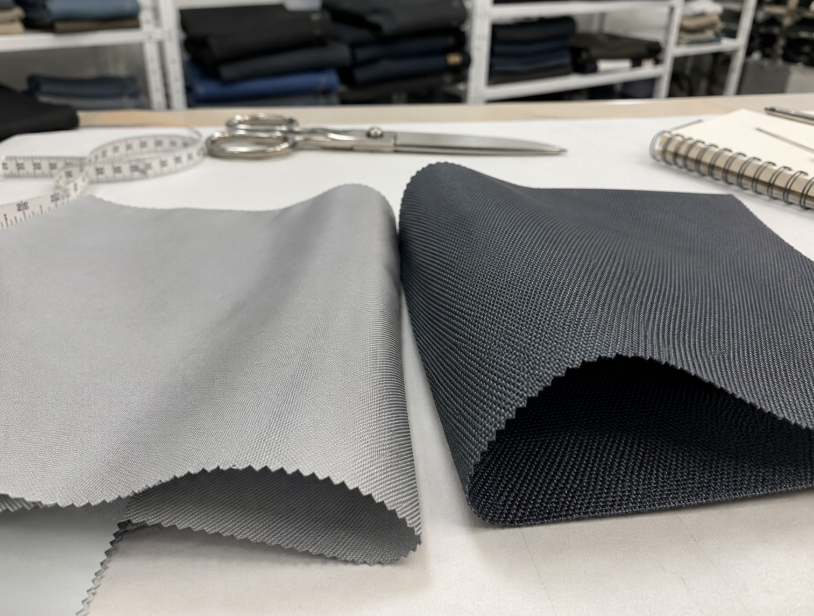
Fabric weight is affected by warp and weft density, yarn construction, coating amount, weave pattern, calendaring, backing, and other finishing processes. Two mills can both supply “420D polyester” while producing materials that feel noticeably different when you place the swatches side by side.
Does a Higher Denier Always Mean Better Fabric?
No. Higher denier usually gives you a coarser yarn and often supports a heavier or tougher fabric construction, but “higher” does not automatically mean “better.”
Think about a lightweight foldable shopping bag. Using a stiff 600D fabric would make little sense even if 600D offers greater body and abrasion resistance. The bag needs to fold into a small pouch, so low bulk is part of its performance.
The same logic applies when comparing 210D vs 420D fabric. A 420D shell may work well on a daypack, while 210D may work better as its lining. Neither material is universally superior. The correct specification depends on what that section of the bag needs to do.
2. 210D vs 420D Fabric: Key Differences at a Glance
The table below is a useful starting point. Treat it as a development guide rather than a fixed material standard because coating and construction can change the final result.
| Property | 210D Fabric | 420D Fabric |
|---|---|---|
| Yarn size | Finer | Coarser |
| Typical feel | Light and flexible | Fuller and more substantial |
| Packability | Very good | Moderate to good |
| Structure | Low to moderate | Moderate |
| Abrasion potential | Suitable for lighter use | Better suited to repeated external wear |
| Common bag position | Lining or lightweight shell | Main body or reinforced shell |
| Typical applications | Linings, pouches, drawstring bags, foldables | Backpacks, sports bags, travel accessories |
| Printing | Good with the right surface finish | Good, depending on texture and coating |
Weight, Thickness, and Hand Feel
420D normally feels more substantial than 210D when the fiber type and construction are comparable. The difference becomes easy to notice when you bend, fold, or scrunch both materials by hand.
Still, denier should never replace a fabric weight specification. Ask your supplier for GSM, coating specification, finished width, and fabric construction together with denier. That gives you a much clearer picture of what you are actually purchasing.
Hand feel deserves attention as well. Some bags need a crisp body. Others need softness. Excess stiffness can make a small drawstring bag awkward, while a fabric that is too soft can make a larger backpack look collapsed before anything is placed inside it.
Strength, Tear Resistance, and Abrasion Resistance
When the construction and fiber quality are comparable, 420D usually gives the designer more room to build an exterior fabric for repeated use. This is one reason 420D appears frequently in backpacks and performance-oriented bag designs. Hetebag’s existing backpack material content also lists 210D and 420D among commonly used nylon specifications.
Still, abrasion resistance cannot be predicted from denier alone. High-tenacity yarn, weave density, yarn treatment, surface texture, and coating all affect wear performance.
This is where sourcing teams sometimes make a mistake. They approve “420D nylon” on a specification sheet without approving an actual fabric quality. Production then uses another 420D construction that technically matches the wording but does not match the approved hand feel or performance.
Lock your bulk fabric against an approved swatch or clearly documented technical specification.
Flexibility and Bag Structure
210D usually bends and folds more easily. This makes it useful in areas where the fabric needs to move freely, turn neatly during sewing, or add very little bulk.
420D brings more body. It can help a backpack panel, travel organizer, or sports bag hold its shape, though the structure of a finished bag still comes heavily from foam, PE board, lining, piping, binding, reinforcement, and seam construction.
A designer should never expect the shell fabric to solve every structural problem. We have seen projects move from 210D to much heavier fabric when the real problem was missing reinforcement inside the bag.
3. 210D vs 420D Nylon and Polyester: Does Fiber Type Matter?
Yes. Comparing only the number leaves half of the material specification missing.
A 420D nylon and a 420D polyester use yarns with the same nominal denier category, yet their fiber properties, appearance, hand feel, abrasion behavior, moisture response, and finishing possibilities can differ.
If you are still deciding between the main fibers used in backpacks, our guide to nylon vs polyester vs canvas backpack materials goes deeper into those material families.
210D vs 420D Nylon
210D nylon is a useful choice when low weight, flexibility, and good strength for its weight matter. You will see it used for linings, lightweight outdoor products, packable designs, small accessories, and some technical bags.
420D nylon has a more substantial construction and is widely suited to backpack shells, outdoor bags, travel accessories, and other areas exposed to repeated handling. Nylon is commonly selected for performance-oriented bags where abrasion resistance and a lightweight feel are important.
You should also ask whether the nylon is standard filament, high-tenacity nylon, ripstop, Oxford construction, or another variation. Saying “420D nylon” alone still leaves too much room for interpretation.
210D vs 420D Polyester
210D polyester is common in lightweight bags, linings, promotional products, simple organizers, and foldable designs. It is easy to handle in production and can support a wide range of colors and printing methods.
420D polyester gives the product more body while retaining the production flexibility that makes polyester popular in bag manufacturing. It can work well in school bags, sports bags, everyday backpacks, and travel accessories where extreme technical performance is not the main requirement.
Polyester is also widely selected when consistent colors, printable surfaces, and broad material availability matter. Hetebag uses both polyester and nylon across multiple custom bag categories for this reason.
Why You Should Compare More Than Just Denier
A useful fabric specification may look closer to this:
420D polyester Oxford, target GSM range, PU backing, required color standard, specified water-resistance performance, approved hand feel, and approved reference swatch.
That description gives a factory something meaningful to control.
Compare that with simply writing “420D polyester.” There is still no agreed weave density, coating weight, finished weight, surface appearance, water resistance, or acceptable variation. That gap is where sampling disputes often begin.
4. How Coatings and Fabric Construction Affect Performance
PU, PVC, and Other Common Coatings
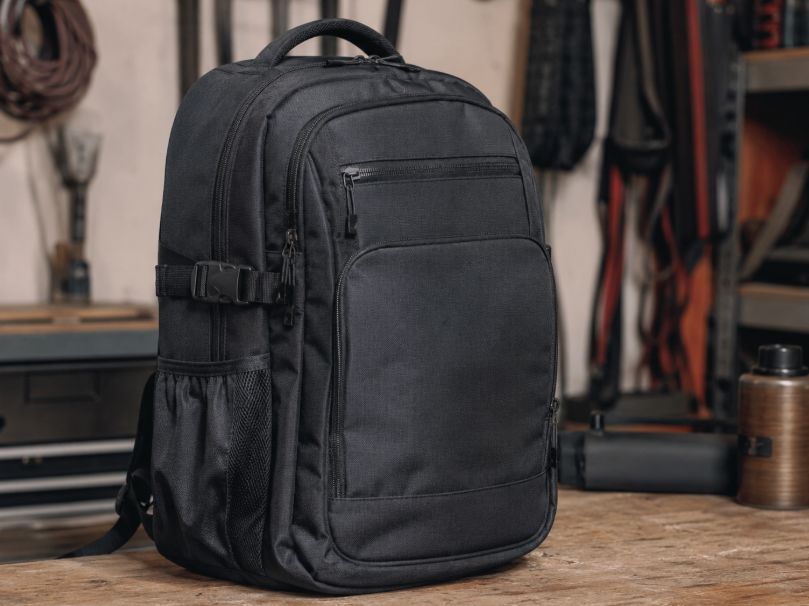
A coating can change how 210D or 420D behaves almost as much as the base fabric itself.
PU coating is widely used when buyers want added water resistance without making the textile excessively bulky. The coating can be adjusted by formulation and application level, so “PU coated” is still not a complete performance specification.
PVC coating or backing can create a heavier, firmer material and provide a strong moisture barrier. The added weight and stiffness may work for some travel, utility, or equipment bags but feel excessive in lightweight designs.
TPU films and laminations are used in products where a different balance of flexibility, sealing, and moisture protection is required. Material selection should follow the product’s real environment rather than a coating name alone.
Water Resistance vs Waterproof Performance
One of the most common specification problems we see is the word waterproof.
A coated 420D fabric may resist water penetration very well while the finished bag still allows water through needle holes, zipper openings, binding seams, or unsealed construction. Calling the whole bag waterproof based only on the fabric can create a claim the final product cannot support.
If moisture protection matters, define a test method and target instead. Professional textile laboratories such as Intertek test properties including strength and abrasion as well as textile performance characteristics.
Finished-bag testing should also be considered because fabric strength alone does not tell you whether handles, straps, seams, and attachment points will survive actual use. Intertek lists seam strength, abrasion resistance, strap/handle strength, and other luggage-related evaluations among its testing capabilities.
Weave Density, Backing, and Finishing
Look closely at the fabric rather than reading only the specification label.
A tighter weave can change appearance, dimensional stability, tear behavior, and coating coverage. Ripstop construction adds reinforcing yarns that help control the spread of small tears. Oxford construction creates another surface character and structure.
Backing also changes sewing behavior. Too much coating around seam areas may make certain fabrics harder to turn or create visible needle marks. Very soft fabric can shift during sewing and make panel alignment less stable.
Those details become visible during sampling, which is why a physical swatch and finished prototype are much more useful than approving fabric from a supplier’s written description alone.
5. What Is 210D Fabric Best Used For?
Bag Linings, Drawstring Bags, and Lightweight Pouches
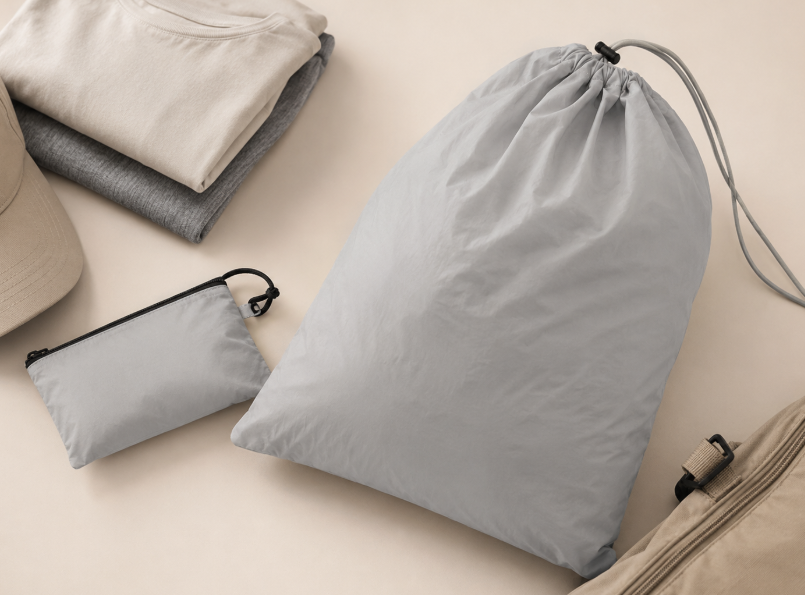
210D is one of the materials I would look at when a project needs flexibility without unnecessary bulk.
It can work well for:
- Backpack and travel-bag linings
- Lightweight drawstring bags
- Shoe or accessory pouches
- Storage bags
- Packing organizers
- Promotional bags
- Internal pockets and dividers
The material is especially useful when the bag has a simple construction and the expected load is moderate.
If you are developing this type of product, our custom drawstring bag manufacturing page shows how polyester, nylon, Oxford, and other fabric choices can be matched with different cinch-bag applications.
Foldable and Lightweight Bag Designs
Packability changes the material decision.
A foldable bag needs to compress cleanly, recover after storage, and avoid creating a bulky folded package. Moving from 210D to 420D may add more material than the product really needs.
We usually check the finished sample rather than the fabric swatch alone. Fold the complete bag several times, place it into its storage pouch, reopen it, and see how the coating and fabric recover. That tells you much more about the user experience.
When 210D Is Not Strong Enough
Start questioning 210D when the fabric becomes the main exterior shell of a larger bag carrying significant weight or experiencing repeated ground contact.
Laptop backpacks, equipment bags, loaded gym bags, travel duffels, and heavily used outdoor products may need more abrasion resistance, stronger reinforcement, or both.
The answer does not always have to be heavier fabric across the entire product. A designer can keep a lightweight main body and place stronger material on the bottom, corners, shoulder-strap anchors, or other wear zones.
That approach often creates a better bag than simply making every panel heavier.
6. What Is 420D Fabric Best Used For?
Backpacks, Travel Bags, and Sports Bags
420D sits in a useful middle range for many custom bag projects. It gives the product more substance than lightweight constructions while staying considerably more flexible than many heavy-duty fabrics.
Common applications include:
- Everyday backpacks
- Lightweight travel bags
- Sports bags
- Outdoor accessories
- Laptop bag panels
- Equipment organizers
- Reinforced pockets and bottom panels
When developing a custom backpack, the 420D specification can be a good starting point, but the finished construction still needs to match the intended load, padding system, strap design, and reinforcement layout.
Outdoor and Medium-Duty Applications
420D is especially useful when the product needs a balance between portability and durability.
A daypack, for example, does not need to feel like heavy luggage. It still needs enough resistance to rubbing against seats, floors, walls, outdoor surfaces, and clothing during repeated use.
Look at the entire wear map of the bag. Bottom panels and lower corners usually receive different abuse from top pockets. Strap anchors receive concentrated load rather than broad abrasion. Choosing materials by zone can improve performance without making the product unnecessarily heavy.
When You Should Consider 600D or a Heavier Fabric
A move to 600D can make sense when the product needs more body, repeated abrasion resistance, or a more substantial commercial feel.
Large school backpacks, tool bags, utility bags, some travel duffels, and promotional backpacks often use heavier polyester constructions. 600D polyester is also widely found in the backpack market.
More denier still does not eliminate the need for reinforcement. If a shoulder strap pulls away because the anchoring area has too little stitching or reinforcement, changing the shell from 420D to 600D will not fix the engineering problem by itself.
7. How to Choose Between 210D and 420D for Custom Bags
Consider Bag Type, Load, and Expected Usage
Start with what the customer will actually put inside.
A drawstring bag carrying a T-shirt and water bottle has different material requirements from a backpack carrying a laptop, charger, books, and accessories every day. Usage frequency matters too. A promotional bag used occasionally is different from a commuter product expected to survive years of repeated handling.
You should define these conditions before asking the supplier to recommend a denier.
| Development Question | What You Need to Decide |
|---|---|
| Expected load | Light, medium, or repeated heavy loading |
| Usage frequency | Occasional or daily |
| Main wear zones | Bottom, corners, straps, zipper area |
| Required structure | Soft, semi-structured, or firm |
| Moisture exposure | Indoor, light rain, or demanding outdoor use |
| Branding method | Screen print, heat transfer, embroidery, other |
| Sustainability requirement | Virgin or verified recycled material |
Match Fabric Weight With Bag Structure
Think about fabric and structure as one system.
Foam can create body. PE board can support a bottom panel. Binding stabilizes edges. Lining changes hand feel. Reinforcement patches distribute loads. Webbing and bartacks help manage stress at attachment points.
This is why copying the fabric specification from another successful bag does not guarantee the same result. The internal construction may be completely different.
Check Coating, Color, Printing, and Branding Requirements
Branding can change the material choice.
Screen printing often prefers a stable, reasonably smooth surface. Heat transfer needs compatible coatings and temperature tolerance. Embroidery introduces needle penetration and local tension. Full-surface printing may require a completely different fabric preparation.
Color also needs control. Ask your supplier how color will be approved and whether the shade is stock-dyed or custom-produced. Dark coatings or backing can sometimes influence the visual appearance of lighter face colors.
Chemical requirements should be discussed before bulk fabric is ordered as well. If your market or brand requires textile testing for harmful substances, OEKO-TEX STANDARD 100 is one recognized framework covering textile articles from yarn through finished products.
If you are sourcing recycled 210D or 420D polyester, asking only for “RPET” is not enough when verified recycled claims matter. The Global Recycled Standard from Textile Exchange covers third-party certification of recycled content and chain of custody.
Request Fabric Samples and Performance Testing Before Bulk Production
This is the step I would never skip on a serious custom project.
Ask for several swatches when you are deciding between 210D and 420D. Touch them. Fold them. Rub the surfaces. Compare coating thickness, shine, stiffness, texture, and recovery. Then make the actual bag sample.
Your approval sheet can include:
- Fiber composition
- Denier
- Fabric construction
- Finished GSM tolerance
- Coating type
- Color reference
- Approved physical swatch
- Tensile or tear requirements where needed
- Abrasion requirement where needed
- Water-resistance requirement where needed
- Colorfastness requirement
- Finished-bag seam and load requirements
A sourcing team that controls these details is buying a defined material. A sourcing team that approves only “420D polyester” is largely buying a name.
8. Conclusion
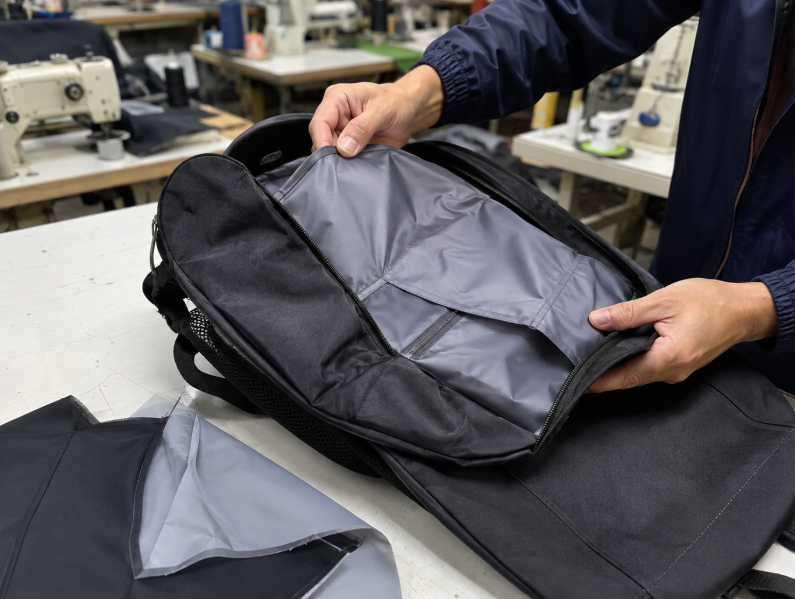
The main difference in 210D vs 420D starts with yarn size: 210D uses a finer yarn while 420D uses a coarser one. That difference influences weight, hand feel, structure, and the type of bag each material can support. It should never be treated as a complete measure of fabric quality.
210D makes sense when flexibility, low weight, lining performance, or packability matters. 420D is often better suited to backpack shells, travel products, sports bags, and medium-duty applications that need more body. Fiber type, weave density, coatings, GSM, reinforcement, and finished-bag construction still decide how well the product performs.
At Hetebag, we are based in Huadu, Guangzhou, China, with our own manufacturing capability and more than 15 years of bag development and OEM/ODM experience. We also work with multiple production partners, which allows us to support different bag categories, materials, structures, and order requirements. These details are consistent with the company’s published manufacturing information.
If you are comparing 210D, 420D, 600D, nylon, polyester, coated fabrics, or another material for a new bag project, you can contact our team and leave your phone or WhatsApp details. We will be glad to review your design, material requirements, intended use, and production needs with you. We look forward to working together.
Frequently Asked Questions
Is 420D twice as strong as 210D?
No. The number refers to yarn linear density, so 420D represents a heavier yarn size than 210D, but it does not mean the finished fabric has exactly twice the tensile strength, tear strength, or abrasion resistance.
Fiber type, yarn tenacity, weave density, finishing, coating, and fabric construction all influence mechanical performance. If strength matters to your product specification, compare laboratory test results rather than calculating performance from denier alone.
Can 210D fabric be used as the outside material of a backpack?
Yes, if the backpack is designed for lightweight use and the selected 210D fabric has suitable construction and finishing. Some lightweight or packable backpacks use relatively light nylon or polyester shells successfully.
A backpack carrying heavier items every day may benefit from 420D, 600D, reinforced panels, or a combination of different fabrics. Strap anchors, bottom panels, seams, and reinforcement often matter as much as the shell material.
Is 420D nylon stronger than 420D polyester?
It can be, especially when abrasion resistance and strength-to-weight performance are priorities, but denier alone cannot confirm the result. The exact yarn quality, weave, coating, and finishing need to be compared.
Ask suppliers to provide actual fabric specifications or test reports when the performance difference matters. Comparing two approved swatches and finished prototypes is more reliable than selecting fabric based only on “nylon” or “polyester.”
Is 420D fabric waterproof?
The term 420D does not describe waterproof performance. It only describes the yarn’s linear density.
A 420D fabric can be uncoated, PU coated, PVC backed, laminated, or treated in another way. Even when the fabric itself resists water penetration, seams and zippers can allow moisture into the finished bag. Waterproof claims should be based on the complete material and bag construction together.
Should I choose 420D or 600D for a custom backpack?
420D works well when you want to balance durability, flexibility, and lower bulk. It can be a strong choice for daypacks, lightweight travel backpacks, sports backpacks, and outdoor accessories.
600D may suit products that need more structure, a heavier hand feel, or greater resistance to repeated exterior wear. The better choice depends on load, bag size, reinforcement design, coating, target weight, and expected use rather than denier alone.
What should I ask a factory before approving 210D or 420D fabric?
Ask for more than the denier name. Request fiber composition, fabric construction, GSM, coating type, color standard, surface finish, approved swatch, and any performance requirements that matter to your product.
Once the sample is made, check seam areas, strap attachments, printing, bending, folding, abrasion zones, coating behavior, and finished-bag structure. If your order has defined performance claims, arrange relevant fabric or finished-product testing before bulk production.


