Italian
 English
 French
 German
 Spanish
 Arabic
Selecting the right handbag style affects much more than the appearance of a collection. It determines which materials can be used, how the bag should be reinforced, what kind of packaging it needs, and whether future orders can maintain the same quality.
Many buyers begin with a reference image. Once the intended customer, carrying capacity, sales channel, material, and construction are discussed, the design often needs adjustment. A visually appealing bag may be uncomfortable to carry, difficult to pack, or unstable during production.
This guide introduces 11 popular types of custom wholesale handbags and explains their materials, construction requirements, suitable markets, and common production risks.
What Are Custom Wholesale Handbags?
Custom wholesale handbags are made or modified for brands, wholesalers, retailers, importers, gift companies, and ecommerce businesses. Instead of purchasing an unchanged stock product, the buyer can control selected parts of the design.
Customization may begin with an existing factory pattern or an original design. Depending on the project, you can change the dimensions, materials, colors, lining, pockets, straps, hardware, logo, labels, and packaging.
An existing design usually requires fewer development steps because the pattern and construction have already been tested. A fully custom handbag gives you greater control over the appearance and function, but it needs clearer specifications and more careful sample evaluation.
Different buyers also have different priorities. Fashion brands care about silhouette, color coordination, and brand identity. Wholesalers usually focus on commercial styles, stable production, and repeat-order availability. Retail chains may require barcode labels, testing documents, carton markings, and specific packaging.
Ecommerce sellers have another set of concerns. Product weight, parcel size, photography, customer expectations, and return risks can directly affect whether a handbag performs well online.
Le opzioni di personalizzazione più comuni includono:
- Outer materials and surface finishes
- Dimensions and internal capacity
- Handles and adjustable straps
- Lining, pockets, and compartments
- Zippers, buckles, chains, and closures
- Printed, embossed, woven, or metal logos
- Hang tags, dust bags, and retail packaging
Each feature should support the intended customer. Adding unnecessary components can increase weight, complicate inspection, and make repeat production less stable.
Why Handbag Style Matters
Handbag style influences how the product will be used and manufactured. A work tote needs a stable base and reinforced handles. A hobo bag needs controlled drape. A clutch depends heavily on frame alignment and surface finishing.
The sales channel matters as well. Handbags sold online need proportions and features that customers can understand through photos. Department-store products may require better hand feel, cleaner edge finishing, coordinated hardware, and more refined packaging.
Production feasibility should be considered before approving a design. Curved frames, molded bodies, custom hardware, multiple layers, and repeated edge painting add more production steps. Each extra step creates another place where variation may appear.
Repeat orders bring another concern: material continuity. Ask whether the selected outer material, lining, zipper tape, and hardware finish will remain available. A successful first order will be difficult to build on if the second batch looks noticeably different.
| Design feature | Production effect | Cosa controllare |
|---|---|---|
| Rigid structure | Requires reinforcement and accurate shaping | Shape recovery after packing |
| Soft structure | Depends on material drape and lining | Twisting, sagging, and uneven folds |
| Heavy hardware | Adds stress to attachment points | Backing patches and pull strength |
| Wide opening | May weaken the upper structure | Opening alignment when loaded |
| Multiple pockets | Adds sewing and measurement risks | Pocket size and placement |
| Custom colors | Requires several components to match | Approved physical color standards |
1. Tote Bags
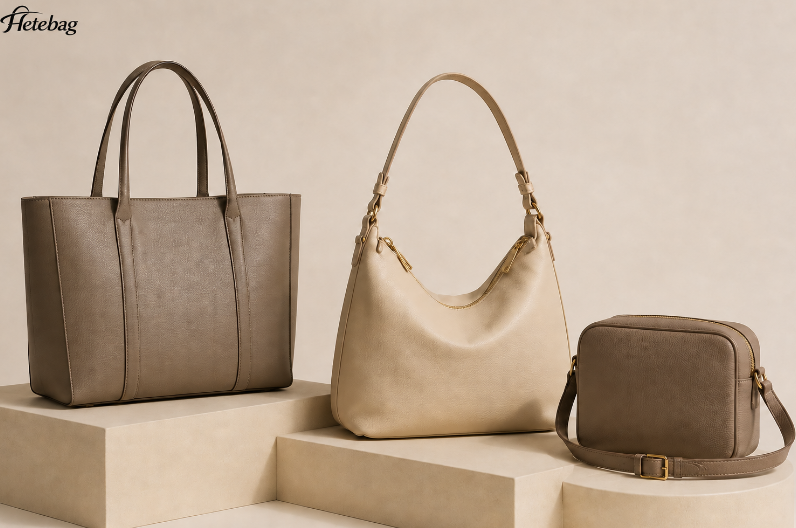
Tote bags include shopping bags, office totes, fashion totes, beach bags, and large-capacity carryalls. Their appearance may look simple, but the handles, base, opening, and interior structure require careful planning.
Structured totes commonly use PU, microfiber, coated canvas, or genuine leather. Reinforcement may be added between the outer material and lining to support the front, back, sides, and base.
Soft totes work well with canvas, cotton, nylon, recycled polyester, and flexible synthetic leather. Fabric weight is only one factor. Coating, backing, interlining, seam construction, and washing treatment can also change the final hand feel.
Interior construction should follow the intended use. A laptop tote may need foam padding, a suspended laptop sleeve, reinforced handles, and a stable base. A shopping tote can use fewer layers and an easy-to-clean material. Fashion totes may include removable pouches or divided compartments.
Handle attachment is one of the most common failure points. Reinforcement needs to extend beyond the visible stitch line so the load is distributed across a larger area.
Brands developing this category can review the material and construction options offered by a custom tote bag manufacturer.
2. Shoulder Bags
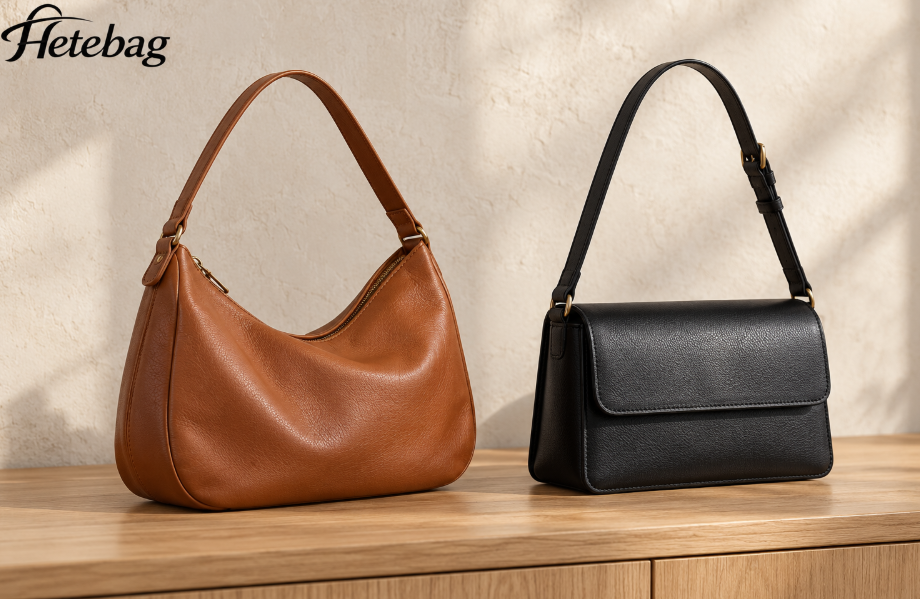
Shoulder bags are useful for fashion collections because one basic shape can be developed in several colors, materials, and hardware combinations. Short straps create a compact appearance, while longer straps make the bag more practical for daily use.
Structured shoulder bags need stable side panels and a supported top opening. Slouchy versions use softer materials, but the shoulder attachment still carries concentrated weight.
Strap width should match the size and expected load of the bag. A narrow strap may look elegant on a small handbag but become uncomfortable on a larger design. Thick straps need hardware with enough internal space to prevent rubbing and edge damage.
The sample should be tested while filled. Check whether the strap twists, whether the bag leans forward, and whether the opening changes shape on the shoulder.
Hardware color also needs a physical reference. Descriptions such as light gold, antique gold, or gunmetal can vary between suppliers. Keep an approved component or plated color chip for bulk-production comparison.
3. Crossbody Bags
Crossbody bags are popular in casual, travel, lifestyle, and ecommerce collections because they provide hands-free carrying. Compact versions hold phones, cards, and small personal items. Larger designs may include tablet sleeves, expandable gussets, and several compartments.
Strap construction is a major part of the design. Webbing straps offer strength and a casual look. PU, microfiber, and genuine leather straps create a more refined appearance. Detachable straps give the customer more options but introduce additional hooks, rings, and attachment points that need inspection.
Travel-oriented crossbody bags may include a rear zip pocket, internal key clip, controlled opening, and compartments that can be reached easily. Too many pockets can reduce usable space, especially in a compact body.
Test the bag with real items rather than judging the layout from a drawing. Phones, cardholders, sunglasses, passports, and power banks can reveal problems that measurements alone may not show.
Zipper direction also affects usability. The opening should feel natural when the bag is worn on the intended side of the body.
4. Satchel Bags
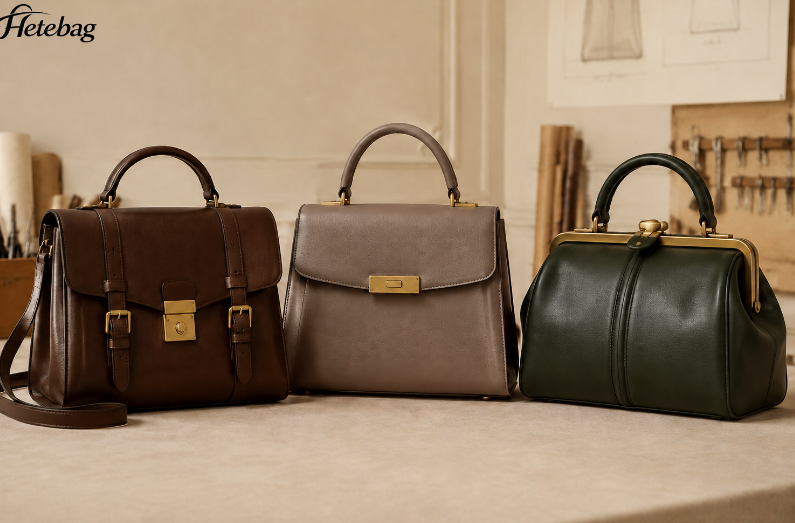
Satchel bags usually combine a structured body, top handle, flap, and optional shoulder strap. They work well for office, business-casual, school-inspired, and premium fashion collections.
Flap alignment is one of the main production challenges. Material thickness, reinforcement, edge paint, and sewing tolerances can shift the closure position. A flap that closes correctly on an empty bag may pull unevenly when the bag is filled.
The bottom and side panels must also support the intended capacity. If the reinforcement is too soft, the bag loses its profile. Excessively rigid reinforcement can make the corners bulky and increase product weight.
Closures should be easy to operate without looking loose. Magnetic buttons need accurate positioning, while turn locks require proper reinforcement behind the front panel.
5. Top-Handle Bags
Top-handle handbags often rely on clean proportions and a controlled structure. Since the handle is positioned near the visual center, uneven placement is easy to notice.
Reinforcement beneath the handle base should spread the load across a wider section of the body. Rivets or stitching alone cannot protect a weak outer material from tearing.
The body may use board, foam, nonwoven reinforcement, or bonded materials to maintain its shape. The right combination depends on the desired hand feel. Too much support makes the bag heavy and rigid. Too little support allows the front and side panels to collapse.
Handle drop should be checked with the target customer in mind. Some designs are intended only for hand carrying, while others need enough room to sit comfortably on the forearm.
6. Doctor and Frame Bags
Doctor bags and frame bags use a rigid opening system to create a distinctive shape. The frame, hinges, lining, upper panels, and closure must work together accurately.
Small measurement differences can cause wrinkled corners, exposed lining, or an opening that does not close evenly. The frame also needs the correct resistance. If it is too tight, the customer will struggle to open the bag. If it is too loose, the opening may not stay closed.
Ask whether the frame is a standard component or requires a custom mold. Standard frames are usually easier to replace during repeat production. Custom frames offer more design control but need better planning for molds, spare components, and future orders.
Frame attachment should be inspected from both the outside and inside. Adhesive alone may not provide enough long-term security for a frequently used bag.
7. Hobo Bags
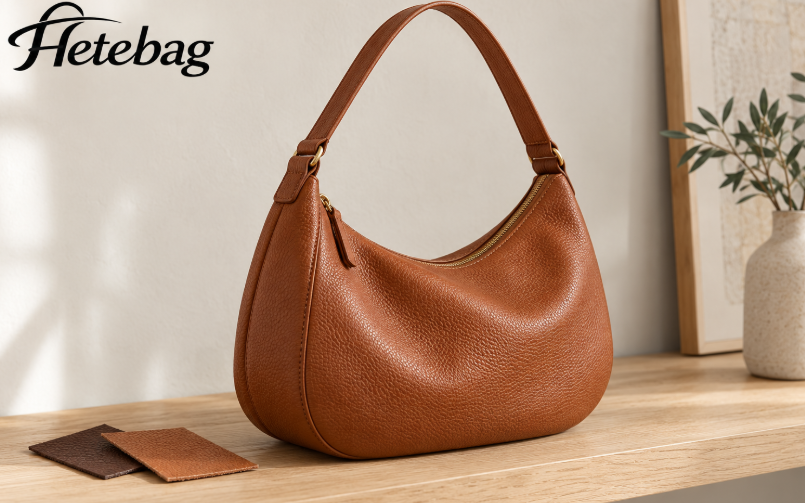
Hobo bags have a curved upper line and a relaxed body that drapes when carried. Their quality depends on how the outer material, backing, lining, and strap respond together.
Soft PU, washed leather, suede-like microfiber, flexible canvas, and nylon can produce a natural shape. The material should bend smoothly without creating sharp or permanent creases.
Lining size is particularly important. A lining that is too small pulls the outer body inward. An oversized lining creates folds at the bottom and can interfere with pockets or zippers.
The opening may stretch or roll outward if it lacks support. Shoulder connections also carry considerable force because the strap and body often form one continuous curve.
Load testing provides more useful information than inspecting the bag flat. Fill the sample with a realistic weight, hang it for a set period, and check the strap roots, opening, lining, seams, and overall shape afterward.
8. Bucket Bags
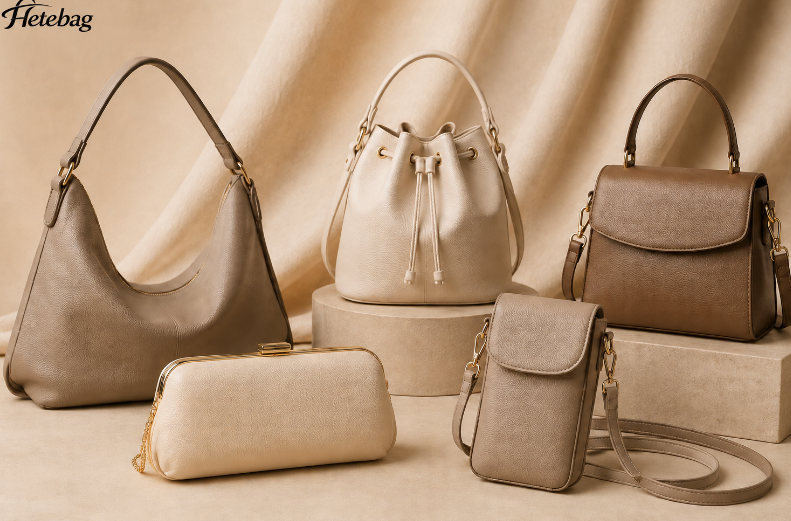
Bucket bags have a recognizable shape and offer plenty of room for color blocking, tassels, embroidery, metal logos, and contrasting straps. The body can be soft, semi-structured, or rigid.
Drawstring systems need smooth movement and properly reinforced eyelets. Weak backing around an eyelet may allow it to pull through the outer material. A stiff drawstring channel makes the bag difficult to close.
Magnetic tabs provide quicker access but leave a wider opening. Some brands use both a drawstring and a magnetic closure to balance appearance and security.
Round bases create a cylindrical body, while oval bases usually sit closer to the wearer. The seam connecting the body to the base must remain smooth. Puckering around this area is a common production defect.
Logo placement should be checked with the bag closed and filled. A logo that appears centered on a flat pattern may look too low after the upper body gathers.
9. Clutch and Evening Bags
Envelope clutches use folded panels and a flap. They can be made from PU, genuine leather, satin, velvet, microfiber, or embellished textiles.
Their slim construction leaves little space to hide bulky magnets, uneven seams, or poorly finished edges. The flap needs to sit flat, and the corners should remain symmetrical.
Frame and box clutches require rigid shells, accurate covering, and well-fitted hardware. Decorative stones, chains, clasps, and metal ornaments create more inspection points. Attachment methods should be approved before production, particularly when both adhesive and mechanical fixing are used.
Surface protection needs to be planned early. Satin, patent finishes, acrylic shells, polished metal, and decorative pieces can scratch when products touch each other during assembly or shipping.
Protective film, tissue paper, individual bags, and carton arrangement should be included in the packaging specification.
10. Mini and Phone Bags
Mini bags can introduce seasonal colors or complete a larger handbag collection. Their smaller dimensions do not always make them easier to manufacture.
Tight curves, narrow seam allowances, miniature gussets, and small hardware require accurate cutting and sewing. Standard machines or components may be too large for certain constructions.
Phone bags should be tested using current phone sizes, protective cases, cards, keys, and charging cables. Internal dimensions are more helpful than external dimensions when evaluating capacity.
The opening must also be wide enough for convenient access. A phone may technically fit inside the body but still be difficult to insert through a narrow zipper opening.
Mini bags work well as controlled market tests, but the material and hardware should still be available if the style develops into a repeat product.
11. Convertible Handbags
Convertible handbags include wallet-on-chain designs, detachable pouches, backpack-to-shoulder bags, and styles with interchangeable handles.
These products can create strong selling points, though each conversion point adds another component that may rotate, loosen, or break. The bag should feel natural in every advertised configuration.
Strap positions need to remain balanced. Unused rings should not interfere with the appearance or scratch the body. Detachable parts also need a practical storage method.
Instructions may be required when the conversion is not immediately clear. A small printed insert can reduce customer confusion and prevent the straps from being attached incorrectly.
Convertible styles are useful for testing trends, but core products should use components that can be reproduced across several seasons.
Customization Options
A clear product brief is the starting point for any custom handbag. Include the target dimensions, intended use, preferred material, colors, compartments, strap length, hardware finish, logo method, packaging, and destination market.
Reference images communicate the visual direction, but they cannot replace measurements and written requirements. The factory needs to know which details must be copied, which can be adjusted, and which features are only visual inspiration.
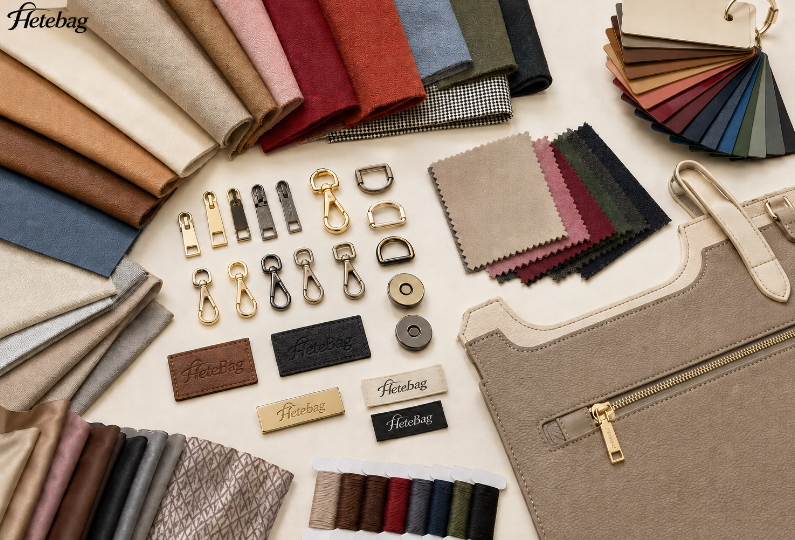
Common materials include genuine leather, PU, microfiber, canvas, nylon, cotton, and recycled polyester. Each material requires a more detailed specification.
Genuine leather varies by hide type, grade, thickness, tanning method, and surface treatment. PU should be defined by its backing, thickness, texture, coating, and performance requirements. Canvas and nylon need specifications for fabric weight, weave, density, coating, and colorfastness.
You can compare these options in this guide to materials for custom bags.
Recycled-content claims need supporting documents. The Global Recycled Standard uses third-party certification and chain-of-custody requirements to track recycled materials. If your product will carry a certified claim, request the relevant scope and transaction documents rather than relying only on a material supplier’s statement.
Logo methods should match the material. Debossing works when the surface can hold a clean impression. Printing depends on coating, texture, ink compatibility, and abrasion resistance. Metal logos need reinforcement behind the attachment points. Woven labels are practical for textile linings and internal branding.
Hardware specifications should cover the base material, plating color, dimensions, weight, function, pull strength, and surface protection. The guide to ferramenta per borse personalizzata explains common options for rings, buckles, locks, zipper pullers, and metal logos.
Products sold in overseas markets may also need chemical testing. The European Commission explains that certain textile products and related articles can fall under restrictions within the EU REACH framework. Testing requirements should be confirmed according to the materials, product type, buyer requirements, and destination market.
Choosing a Handbag Manufacturer
Begin by defining the customer and use scenario. Consider what the customer will carry, how frequently the bag will be used, where it will be sold, and which feature distinguishes it from similar products.
A factory catalogue can show production capabilities, but it should not make the product decision for you. The chosen style still needs to match your market, collection, retail channel, and repeat-order plan.
Evaluate samples through a written checklist. Carry the bag with a realistic load, open every pocket, adjust the straps, operate the closures, and place it on a flat surface. Compare the measurements and materials against the approved specification.
| Inspection area | Cosa controllare |
|---|---|
| Forma | Symmetry, panel alignment, base stability, and shape recovery |
| Materiale | Color, texture, thickness, backing, smell, and surface quality |
| Stitching | Density, straightness, seam security, and skipped stitches |
| Maniglie | Length, reinforcement, edge finish, and load resistance |
| Hardware | Color, scratches, function, pull strength, and orientation |
| Fodera | Size, pocket placement, clean corners, and seam quality |
| Closures | Zipper movement, magnetic alignment, and flap position |
| Imballaggio | Shape support, moisture control, labels, and carton fit |
Material availability should be discussed before the first order. Ask whether the selected material is a regular stock item, a supplier stock material, or a custom production. Keep signed samples, color standards, approved hardware, and packaging references for future comparison.
The bulk-production sample should use the same materials and construction planned for the order. If any component will be replaced, the factory should identify it before sample approval.
A capable handbag factory should also explain acceptable production tolerances. Leather grain, washed fabrics, and handmade finishes naturally show some variation. Synthetic materials, machine-cut panels, and plated hardware should remain within tighter standards.
HeteBag is based in Huadu, Guangzhou, and has provided OEM and ODM handbag manufacturing services since 2011. Our team supports material sourcing, pattern development, sampling, production coordination, quality inspection, and export preparation for brands and wholesale buyers.
If you are planning a custom wholesale handbag collection, send us your reference images, dimensions, materials, functions, estimated quantity, and destination market. You can leave your project information and phone number through our pagina dei contatti. We would be pleased to review your requirements and discuss the next development steps.
Conclusione
Each handbag type serves a different customer and requires a different production approach. Tote bags and crossbody bags offer broad everyday use. Top-handle bags, satchels, and frame bags depend more heavily on reinforcement and accurate shaping. Hobo and bucket bags require careful control of drape, openings, and strap strength.
Look beyond the reference image before choosing a style. Check material availability, internal capacity, carrying comfort, structural support, hardware consistency, packaging, and repeat-production feasibility.
A detailed sample and a complete specification sheet give both the buyer and manufacturer a clear standard. They also make it easier to identify problems before bulk production begins.
FAQs
What should I send to a handbag factory?
Send reference images or drawings, dimensions, outer and lining materials, color references, logo artwork, compartment requirements, strap details, hardware finish, packaging needs, estimated quantity, and destination market. Mention required testing or retailer standards at the beginning of the project.
Can the approved sample represent bulk production?
Yes, if the sample uses the same materials, hardware, construction, and finishing methods planned for bulk production. Any temporary or substitute component should be identified before approval. Keep a signed sample and written specification as the production standard.
How should handbag handles be tested?
Fill the bag with a realistic load and test repeated lifting as well as static hanging. Inspect the handle bases, stitches, rivets, outer material, and internal reinforcement. Stretching, cracking, loose stitches, or distorted hardware indicate that the attachment requires improvement.
How can hardware colors remain consistent?
Keep approved physical hardware samples and record the selected plating finish. Coordinated components should come from the same plating batch when possible. New hardware needs to be compared with the approved reference under consistent lighting before assembly.
Why does bulk production sometimes differ from the sample?
Common causes include material substitutions, different material batches, undocumented pattern changes, new component suppliers, uncontrolled sewing tolerances, and unclear quality standards. A complete bill of materials, measurement chart, color reference, and pre-production sample can reduce these differences.
Should I modify an existing design or create a new handbag?
An existing design is useful when its basic size and structure already fit your customer. Materials, colors, straps, lining, hardware, and logos can create differentiation. Full custom development is more suitable when the silhouette, function, or compartment design is central to your brand.