
 Spanish
  English
  Italian
  French
  German
  Arabic
 Your team has a backpack sketch with a defined pocket layout. Another brand has a mood board and an existing tote it wants to adapt. Both can ask a manufacturer for help, though each will need a different kind of development support. OEM vs ODM bag manufacturing is a useful way to describe that difference, provided you ask what each supplier actually includes in its service.
The practical choice is about who leads bag product development, what you can specify, and how you will approve the result. Ownership, price, and delivery time depend on the design, the supplier’s scope, and the written agreement.
What Do OEM and ODM Mean in Bag Manufacturing?
En OEM bag manufacturing (original equipment manufacturing), the brand usually brings a design or defined specifications, and the manufacturer develops samples and produces the bag against that brief. Your input might be a tech pack, detailed drawings, or a reference sample with marked changes. The manufacturer may still suggest construction or material adjustments. “OEM” does not mean the factory has no development role.
En ODM bag manufacturing (original design manufacturing), the manufacturer takes a larger role in shaping the product design. You might start with a use case, a style direction, reference images, or a base design the supplier can adapt. Some ODM projects begin with an existing manufacturer style; others involve more original development. Ask what design work, sample revisions, and specification documents are included rather than assuming every factory uses the same definition.
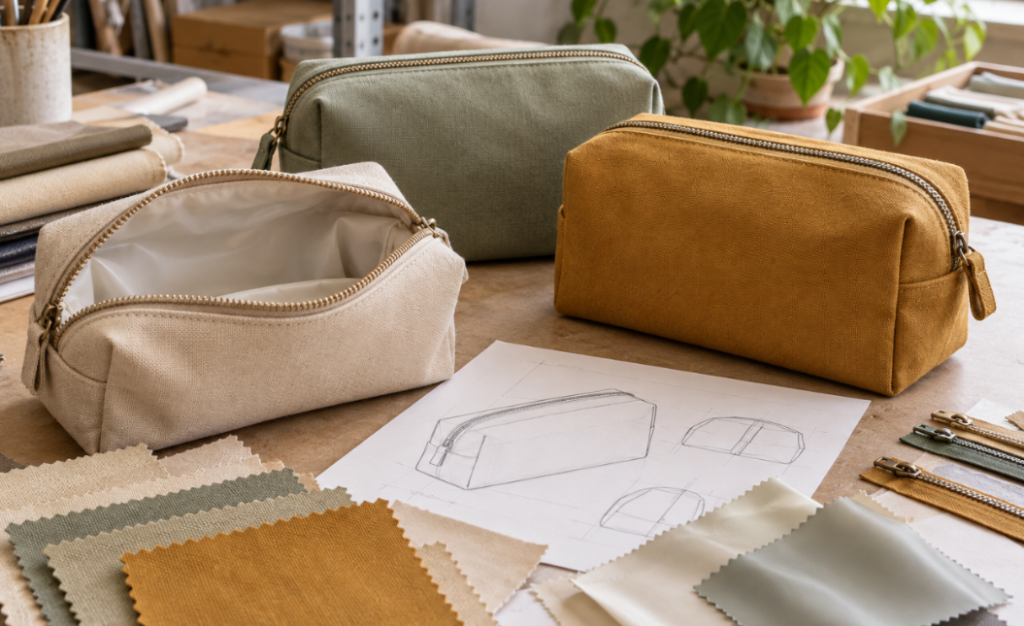
Private label bag manufacturing can overlap with either route. Adding your label to an existing cosmetic pouch is a narrow form of customization. Developing a new pouch opening and interior around your brand’s brief is a broader product development task, even if you also call it private label.
OEM vs ODM Bag Manufacturing: Key Differences
| Decision point | Typical OEM project | Typical ODM project |
|---|---|---|
| Design input | Brand supplies a defined design, technical brief, or marked reference sample | Brand supplies a concept, use case, style direction, or base style to adapt |
| Manufacturer involvement | Reviews feasibility, develops patterns and samples, and proposes production adjustments | Helps define or adapt the design as well as developing patterns and samples |
| Muestreo | Tests the supplied specification and resolves construction details | Tests both the emerging design direction and its construction |
| Customization scope | Set by the brand brief and technical feasibility | Set by the agreed design scope, base style limitations, and technical feasibility |
| Main communication | Confirm exact specifications, approved substitutions, and deviations | Agree on design options, decision owners, revisions, and the final specification |
| Best-fit project | A brand with a clear product design or repeatable specification | A brand seeking design input or adaptation of an existing direction |
These are working descriptions. Service packages vary by manufacturer. Your brand might provide a defined handbag silhouette while asking a custom bag manufacturer to propose a lining, closure, and reinforcement. Request a project-specific scope of work before comparing offers.
When Does OEM Bag Manufacturing Make Sense?
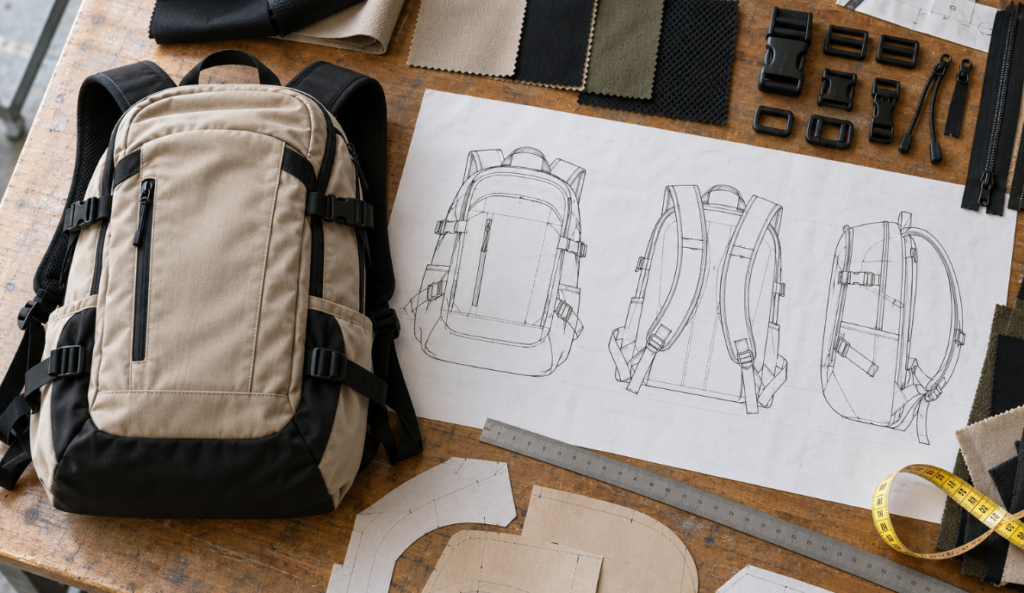
OEM is a sensible starting point when you need a bag to follow a distinct, controlled design. Imagine a backpack brand that has defined its compartment dimensions, strap adjustment, access points, fabrics, and logo placement. It wants the sample evaluated against those requirements and any proposed change approved before production. A clear specification makes that review possible.
The same applies to a handbag with an established silhouette that must be repeated across colors or seasons. You can carry forward an approved sample and revision history, then define what may change in the next order. This is useful when the brand plans to manage a long-term product line, although it does not remove the need to recheck changed materials or components.
A complete professional tech pack helps, but it is not always necessary at first contact. If you have sketches and a physical reference, ask which measurements, material details, and artwork the manufacturer needs for an initial assessment. Mark unresolved points openly. OEM describes the brand-led design direction; it does not forbid the factory from helping finalize the specifications.
When Does ODM Bag Manufacturing Make Sense?
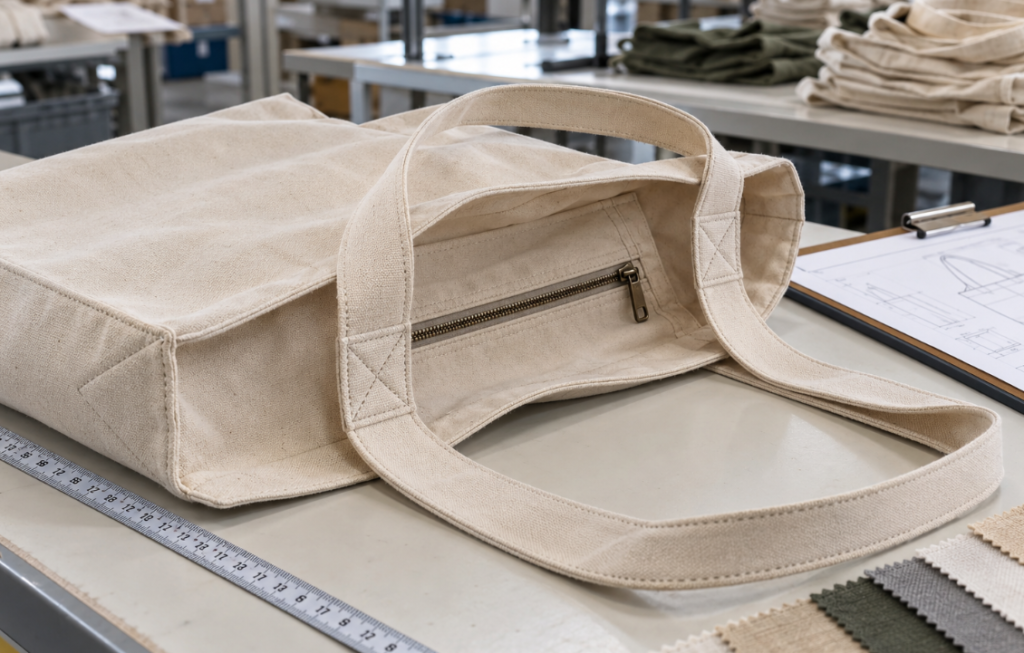
ODM may fit when the product idea is clear but the construction is not. A buyer planning a travel tote might know the intended contents, preferred look, target market, and price position, yet still need options for the opening, handle attachment, interior layout, and material combination. The supplier can propose a design route for the buyer to evaluate through drawings and samples.
Another case is adapting a manufacturer-led base style. A beauty brand may like an existing cosmetic bag’s general shape but want a different opening, wipeable lining, custom colors, and a specific logo position. Ask which features can change without rebuilding the pattern and which changes make it a new development project. A catalog photograph alone will not answer that.
ODM may still involve substantial development when you need a new structure, custom hardware, material sourcing, or several sample rounds. Timing and cost depend on that work. If the base style or a new design should be reserved for your brand, describe the scope and rights in the agreement.
How to Choose the Right Model for Your Bag Project
Start with the work you can already provide, then ask the manufacturer what it would need to supply. The label can follow the agreed scope.
- Assess design readiness. Do you have a bag-specific drawing, dimensions, construction notes, and material references? Or do you mainly have a customer need and visual examples?
- Identify decisions you want to own. A backpack pocket position or a tote handle drop may be non-negotiable. Other details, such as lining or zipper construction, may be open to supplier proposals.
- Define the development deliverables. Ask who prepares drawings, patterns, component lists, sample notes, and the final production specification. Name the person who approves each revision.
- Compare sample plans. Ask what the first sample is meant to prove, how feedback is recorded, and what changes trigger another sample. Review actual material and construction choices, not only exterior appearance.
- Plan for repeat orders. Decide how the approved sample, versioned specification, patterns, material references, and change history will be used when you reorder or extend the line.
For either route, request a written quotation that states its assumptions. Selección de material affects the look and construction of the bag, and may also change the scope of development. Our guide to custom bag manufacturing cost factors explains why two proposals need the same specification before they can be compared fairly.
If you also need to evaluate who makes the bag and who coordinates production, read custom bag supplier vs manufacturer. The OEM/ODM choice concerns the agreed design and development work for your project.
What to Confirm Before Starting OEM or ODM Development
Specifications, sample approval, and changes
Agree on the current drawing or specification version, measurement points, materials, hardware, artwork, packing, and any open decisions. Set a process for sample comments: who sends a consolidated change list, who updates the master file, and how the next sample is identified. Keep the approved physical sample alongside the written approval and final specification. If they disagree, resolve the difference before mass production.
Patterns, tooling, and design-file use
Ask whether new patterns, custom dies, molds, or hardware tooling are needed, who creates them, how they are stored, and whether your brand can access or reuse them. Separately identify rights to the original drawings, revised files, base style, and finished design. Neither the word OEM nor ODM automatically assigns ownership or exclusivity. Put permitted use, confidentiality, reuse, and any transfer or licensing terms in the cooperation documents. WIPO’s explanation of IP assignment and licensing is a useful starting point for understanding why these are distinct rights; obtain appropriate advice for your contract and market.
If you show a third-party bag as a reference, explain the features you want to study rather than asking for an unexamined copy. Confirm that you have permission to use any supplied artwork, brand marks, or protected design files.
Quality standards and production responsibility
Define measurable acceptance points for the bag’s use: finished dimensions and tolerances, strap or handle attachment, zipper operation, pocket placement, appearance, color, logo application, packing, and any relevant test method. State who approves substitutions and who manages production checks, defect reporting, corrective action, and release of the order. Ask the manufacturer to identify any process carried out by a partner and the party responsible for the final result.
Your destination market and sales channel may add product, labeling, documentation, or testing requirements. Tell the supplier where and to whom the bag will be sold, then verify applicable rules rather than treating OEM or ODM as a compliance guarantee. For example, the European Commission’s import guide directs importers to check product conditions and compliance for their goods.
How HeteBag Supports Custom Bag Projects
HeteBag can discuss custom bag development with brands that bring a defined design as well as buyers who are still shaping a concept. Share the bag type, intended use, drawings or reference images, desired materials, logo requirements, estimated quantity, and destination market. The first discussion should identify which details are settled, which need a proposal, and what information is required for a meaningful quotation and sample plan.
For a structured OEM brief, the next step may be to review specifications and flag feasibility questions. For an ODM discussion, it may be to compare design directions and agree on the work needed to reach an approvable sample. In both cases, confirm the scope, revisions, files, and production responsibilities in writing before relying on the OEM or ODM label. You can Ponte en contacto con HeteBag to discuss the project materials you already have.
Whether you choose OEM or ODM, the development model still needs to move through clear design, sampling, approval, bulk production, and quality-control stages. Our handbag manufacturing process guide shows how those stages fit together in a real custom handbag project.
Conclusión
Choose the development route according to your design readiness and the work you want the manufacturer to take on. OEM vs ODM bag manufacturing is most useful when it leads to a clear scope, an approved sample, controlled revisions, and written responsibilities. Price, timing, customization, and design rights still need project-specific confirmation.
To discuss a suitable process with HeteBag, send the bag type, design drawings or reference images, material requirements, estimated quantity, and target market. The team can then identify the next specifications and development decisions to settle.
Preguntas frecuentes
Can I start an ODM bag project with only reference images?
You can start a discussion with reference images. Explain which features you like, the bag’s intended use, preferred materials, and the changes you need. The manufacturer will still need to turn the chosen direction into drawings, specifications, and a sample before production approval. Do not assume a reference image gives permission to reproduce someone else’s protected design.
Does an OEM bag project require a complete tech pack?
No. A detailed tech pack makes quotation and sample review easier, but a sketch, annotated reference sample, and known specifications can begin the conversation. Ask what information is missing and who will document it before the sample and production are approved.
How far can I modify an existing ODM bag pattern?
That depends on the base construction and the supplier’s development scope. A color or logo change differs from moving a zipper, changing dimensions, or rebuilding compartments. Ask which proposed changes use the existing pattern, which require a new one, and what rights apply to the resulting files.
Who owns a custom pattern, mold, or final bag design?
The OEM or ODM label alone does not answer that. Specify the original and newly created files, any tooling, payment and storage arrangements, access, reuse, exclusivity, and rights after the relationship ends in a written agreement.
How do I control differences between an approved sample and bulk bags?
Approve a clearly identified physical sample and matching specification version. Set inspection points, tolerances, material and component references, and rules for substitutions. Record any deviation or later change in writing and confirm who can approve it before production continues.


