
 Spanish
  English
  Italian
  French
  German
  Arabic
 You have a tote bag sketch, a backpack you like, or a cosmetic pouch in mind. A factory asks for specifications, and suddenly “something like this” feels too vague. A bag tech pack turns the idea into a shared working document: what the bag should look like, how it should be built, and which details still need a decision.
You do not need a polished design department file before contacting a manufacturer. A reference image, a few measurements, and a list of open questions can be enough to start a useful conversation. The goal is to make the next decision clear, then keep the document current as you quote, sample, and revise.
What Is a Bag Tech Pack?
A bag tech pack is the collection of drawings, specifications, material choices, artwork, and instructions that describes a bag for development and production. It may be a spreadsheet and annotated photos rather than one elaborate PDF. For a simple tote, a short specification sheet and clear images may suffice; a backpack with several compartments and adjustable straps will need more detail.
It is a written reference for both sides. A physical approved sample shows the actual result, while the tech pack records the intended specifications. Written change notes explain what changed between versions. Keep all three together so an older sample or email does not become the production instruction by accident.
What Should a Custom Bag Tech Pack Include?
Start with the details that affect construction, material sourcing, and your quote. Mark unresolved items as “to confirm” instead of guessing.
| Specification item | What to provide | Why it matters |
|---|---|---|
| Producto y uso | Bag type, intended contents, target user, sketches, and reference photos | Helps the factory assess structure and suggest questions |
| Size and fit | Finished dimensions, measurement points, strap or handle measurements, and any agreed tolerance | Prevents two teams from measuring different parts of the same bag |
| Materials and parts | Outer fabric, lining, reinforcement, zipper, webbing, hardware, and preferred alternatives | Changes appearance, function, sourcing, and quotation |
| Construcción | Pocket layout, seam and stitching details, closures, and reinforcement points | Shows how the bag should be assembled |
| Branding and pack-out | Logo artwork and placement, colors, labels, tags, and packaging | Avoids artwork and packing assumptions during sampling |
Product overview and reference images
Identify the style and intended use. Show front, back, side, bottom, and interior views where relevant. Circle the feature you want from each reference image: one photo may show a silhouette, another a zipper opening. If a reference product contains someone else’s logo or distinctive design, state which general feature you mean and provide your own artwork and design direction.
For a cosmetic bag, an image of the bag closed cannot explain how wide its opening should be when in use. Add an open view or a note about access to the contents. For a backpack, show the interior organization as well as the outside shape.
Dimensions, measurement points, and tolerances
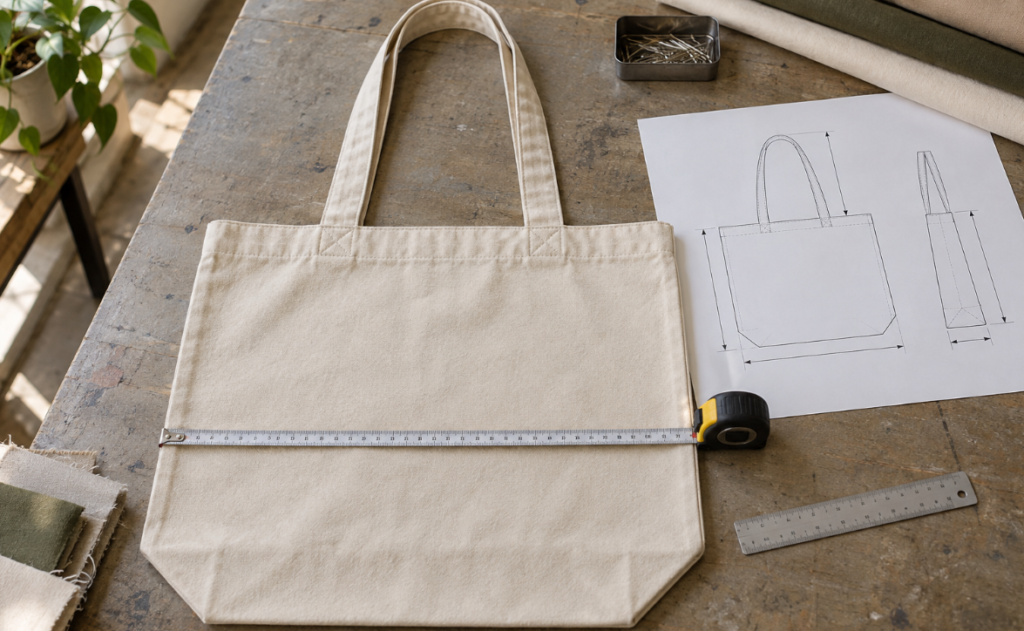
List finished dimensions and show exactly where each is taken on a diagram or annotated photo. Note whether a tote’s width is measured across the top opening or the base. Define handle drop separately from total handle length; the two answer different questions about how it carries. For a backpack, include shoulder strap length or adjustment range and the intended compartment layout. For a cosmetic pouch, specify opening width and the shape when closed and opened.
Do not copy a tolerance from another project. Ask the factory how it measures the chosen material and construction, agree on realistic tolerances for critical points, and record the agreed method. Our guide to tamaños de bolsas personalizados can help you frame the size discussion.
Materials, lining, and components
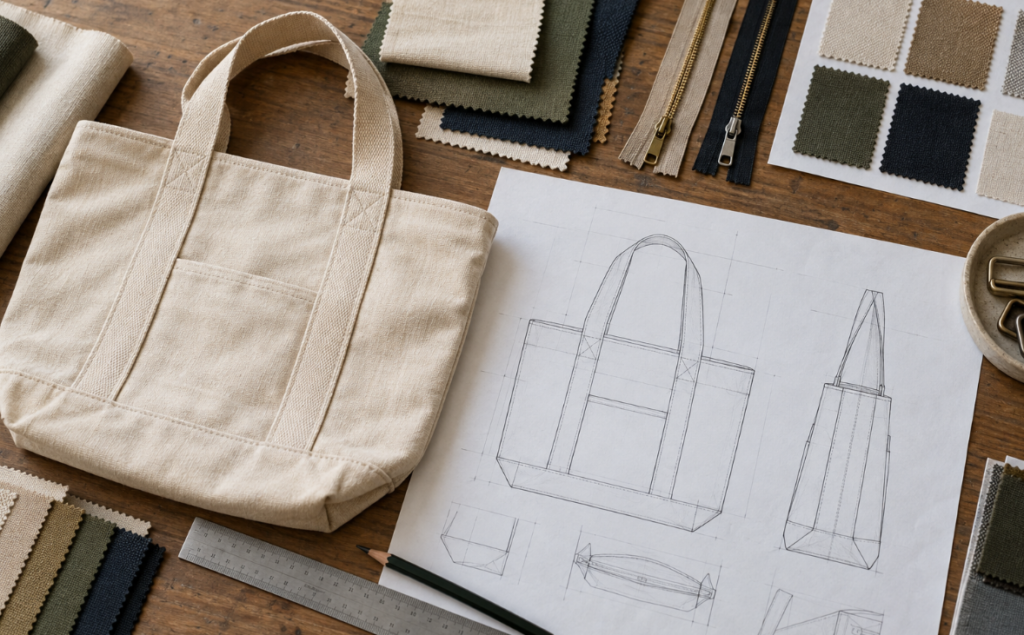
Describe the outer material, lining, interlining or reinforcement, webbing, zippers, pulls, buckles, and other hardware. A swatch, supplier reference, composition, finish, or close-up photo can be more useful than “premium fabric.” If the precise material is undecided, describe the look and performance you need and ask for options. Record which substitutions require your approval.
For a tote, discuss reinforcement where the handles meet the body. On a backpack, inspect shoulder strap attachments and the laptop compartment. A cosmetic bag may call for a lining that can be wiped clean. The right construction depends on the design and intended use. See our guía de materiales para bolsas personalizadas, for material questions to raise with a supplier.
Construction, stitching, and reinforcement
Show pocket count and position, closure type, seam appearance, edge finish, and areas that need reinforcement. Mark the load-bearing points of a tote, such as handle attachments. For a backpack, identify which interior dividers are padded, where straps attach, and whether a pocket must fit a particular item. Annotated photos often communicate these details better than a long paragraph. Leave stitch specifications open for factory input if you have not yet validated a construction method.
Logo placement, colors, and packaging
Provide a usable logo file and show placement, orientation, approximate size, and the decoration method you prefer. State whether colors refer to a supplied swatch or a named color reference; screen appearance alone is unreliable. Specify the lining, zipper, webbing, and hardware colors separately if they differ. Include label text and placement, hangtags, folding or stuffing instructions, and any individual or carton packing needs you already know. Our guide to Bolsas con logotipo personalizado covers branding options to discuss before artwork approval.
How to Prepare a Bag Tech Pack Step by Step
- Define the product. Write a one-paragraph use case and name the bag type, intended contents, and must-have features. Separate requirements from preferences.
- Collect visual references. Add a sketch and photos of the outside, inside, closures, and construction details. Annotate exactly what each image is meant to show.
- Make a bag specification sheet. Put finished dimensions and measurement points on a drawing. Add handle drop, strap adjustment, pocket sizes, and opening dimensions where relevant. Mark unknowns for discussion.
- Build a component list. Include outer material, lining, reinforcement, webbing, zipper, hardware, labels, artwork, and packing. Attach swatches or references where available.
- Describe construction and branding. Identify attachment points, pocket arrangement, seam finish, logo placement, and color references. Specify what the factory may propose as an alternative.
- Add commercial context. Share the estimated order quantity, desired color or style variants, destination market, and target use. Ask which details are needed for a firm quotation versus an initial estimate. Do not treat an estimate as a confirmed production price.
- Give the file a version and decision log. Name it with the style, date, and revision. Assign each open question an owner, then send one consolidated version rather than several conflicting attachments.
If you only have a reference picture, send it with the questions you can answer. A manufacturer can help turn that starting point into workable OEM bag specifications through discussion and sampling. The more clearly you identify assumptions, the easier it is to compare proposals.
How Manufacturers Use the Tech Pack for Quoting and Sampling
For a quote, the manufacturer reviews the design, material and component choices, construction, decoration, quantities, and packaging. If a detail is missing, different assumptions can produce quotes that appear comparable but describe different bags. Ask the supplier to list assumptions and alternatives alongside the quotation, especially for material grades, hardware, and packing.
For sampling, the bag manufacturing tech pack becomes a reference for pattern development and sample review. The first sample tests whether the written instructions produce the intended shape and function. It may reveal that a tote handle feels too short, a backpack pocket is hard to reach, or a cosmetic bag opening needs a different construction. Record the finding and the agreed correction before the next sample.
A sample shows what was made. When you approve it, note its identification and approval date in the current tech pack. If production instructions differ from the physical sample, resolve the discrepancy in writing before proceeding.
Common Tech Pack Mistakes That Delay Bag Development
- Only one attractive reference photo. It leaves the interior, bottom, opening, and construction to interpretation. Add views and label the features you mean.
- Measurements without measurement points. “Bag width” can mean top, base, or widest point. Draw the line between the two points being measured.
- Vague materials or components. “Waterproof fabric” or “good zipper” does not identify a material, construction, or verification method. Describe the intended use and agree on the actual specification or approved option.
- Missing carry and access details. Handle drop, shoulder strap adjustment, pocket access, and opening width are easy to overlook in a flat drawing.
- Artwork supplied too late. Logo method, placement, and size can affect material and construction choices. Include the artwork and approve a placement proof or sample.
- Conflicting revisions in email threads. A changed pocket size in one message and an old drawing in another create ambiguity. Update the master file and change log, then label the superseded version.
How to Review and Update the Tech Pack After Sampling
Review the sample against the current specification sheet, not just your memory of the original idea. Check size at the stated points, carry comfort, access, material and color, pocket placement, closure operation, stitching, logo, and packaging. Photograph the sample from the same views used in the tech pack. Mark each issue as approved, change requested, or still open.
Write revisions as precise instructions: which feature changes, what the new intended result is, and which photo or drawing shows it. Replace the affected drawing and component entry, increment the version, date it, and keep a short change log. Ask the manufacturer to confirm the revised instruction and identify the next sample against that version. Retain the approved physical sample and its written approval as the comparison reference. If the approved sample and the latest file disagree, agree on the governing instruction in writing.
A Practical Custom Bag Tech Pack Checklist
Before sending the file for quotation or sampling, check:
- The style name, intended use, estimated quantity, and contact person are clear.
- Exterior and interior images or sketches are annotated, with reference features identified.
- Finished dimensions, measurement points, and critical carry or opening measurements are shown.
- Materials, lining, reinforcement, components, and acceptable alternatives are listed or marked to confirm.
- Pockets, closures, stitching appearance, and load-bearing attachment areas are identified.
- Color references, logo artwork, placement, labels, and packaging instructions are included where decided.
- Open questions are visible, rather than hidden behind guessed specifications.
- The file has a version/date, and older versions are clearly superseded.
- Any approved sample and written changes are referenced in the current version.
How HeteBag Supports Custom Bag Development
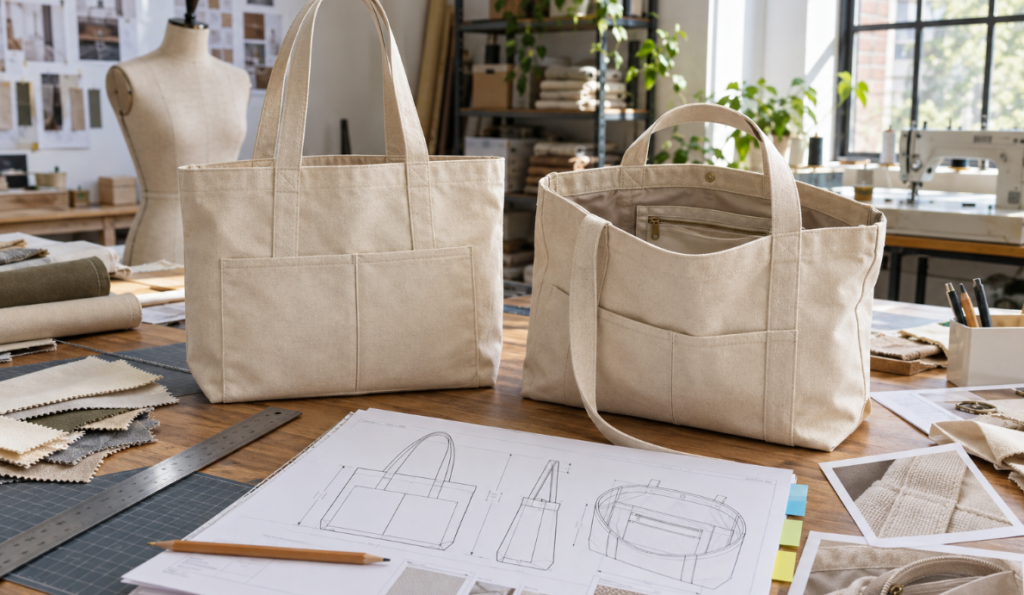
HeteBag works with brands on custom bag projects from an initial idea through specification discussion and sampling. You can start with a sketch, reference images, or an existing sample and explain what you want to change. Share the intended use, dimensions you know, material preferences, logo files, and estimated quantity. The team can discuss missing details and available options with you as the design is clarified; a fully finished professional tech pack is not a prerequisite for the first conversation.
The practical next step is to agree on a written specification, review the sample against it, and document any changes before moving forward. If you have a question about a particular style or requirement, contact HeteBag with the materials you already have.
Once the tech pack and sample requirements are clear, the next step is turning those specifications into a repeatable production process. See our custom handbag manufacturing process guide for the full path from design and sampling to bulk production and inspection.
Conclusión
Start with the information you can verify, flag what remains open, and use each sample to improve the document. Keep the approved physical sample, written change record, and latest tech pack aligned so the factory knows which details have actually been approved.
To discuss a custom bag project with HeteBag, send your sketches or reference photos, known dimensions, material preferences, logo files, and estimated quantity. The team can help identify the next specifications to settle.
Preguntas frecuentes
Can I ask for a quote if I only have reference images?
Yes. Explain which features you want from each image and provide your intended use and estimated quantity. A supplier may offer an initial estimate or ask for more information before confirming a quote. The images should start a specification discussion, not stand in for your own artwork or every construction detail.
How should I confirm size tolerances for a custom bag?
First agree on finished measurement points and methods. Then discuss which dimensions are critical to fit or function and ask the manufacturer to propose tolerances appropriate to the chosen material and construction. Record the agreed tolerances in the current file and check samples by the same method.
What should happen to the tech pack after a sample change?
Update the affected measurements, drawings, materials, or construction notes; add a dated change-log entry; and issue a new version. Link the next sample to that version. Keep the previous version for reference but make the current approved instruction unambiguous.
Can several bag styles share one tech pack?
They can share a template or common material and branding specifications. Each style needs its own dimensions, construction, component list, and revision history. A tote and a backpack should not rely on one undifferentiated drawing or sample approval.
Is a physical approved sample enough for bulk production?
It is an important reference, but record the sample identification, approval, and any accepted deviations in writing. The current tech pack and written change record should match the sample so production teams can identify exactly what was approved.


