
 Spanish
  English
  Italian
  French
  German
  Arabic
 A laptop backpack can look right in a supplier’s catalog and still disappoint your customers. A tight computer sleeve, an uncomfortable back panel, or a weak handle may only become apparent when someone carries a fully packed bag.
Choosing a custom laptop backpack manufacturer starts with a clear product brief and a sample you can evaluate against it. For European and North American brands, the decision also involves repeatable construction, documented material choices, realistic delivery planning, and requirements for the destination market.
What Do You Need from a Custom Laptop Backpack?
Define the customer and the daily load before choosing fabrics or adding pockets. An office commuter carrying a slim computer and charger needs a different layout from a traveler carrying a larger laptop, headphones, clothing, and a water bottle.
Write down which requirements are essential and which can change during development. This gives the manufacturer room to suggest alternatives without weakening the purpose of the product. Use our custom laptop backpack design guide to turn those requirements into compartment, padding, and carrying specifications before comparing manufacturers.
| Requisito | What to specify | What to check in the sample |
|---|---|---|
| Laptop fit | Device width, height, thickness, and whether a protective case is used | Insertion, removal, closure, and clearance with the bag packed |
| Carrying load | Typical contents and intended maximum load | Strap adjustment, balance, handle behavior, and back-panel pressure |
| Organización | Required pockets, opening style, and access sequence | Whether items remain accessible when other compartments are full |
| Aspecto | Shape, color references, logo position, and surface finish | Shape when empty and loaded; consistency with the approved design |
| Transport | Requisitos relativos al embalaje individual y a las cajas de cartón | Creasing, compression, and recovery after unpacking |
Screen size alone is an incomplete specification. Two computers sold as the same screen size can have different external dimensions, and a separate protective case adds bulk. Record usable internal sleeve dimensions rather than relying on the backpack’s overall measurements.
For an initial style reference, explore HeteBag’s custom backpack options, then explain which dimensions and features your project needs. Treat a reference design as a starting point for development rather than proof that every detail suits your customer.
Does the Manufacturer Have Experience Making Laptop Backpacks?
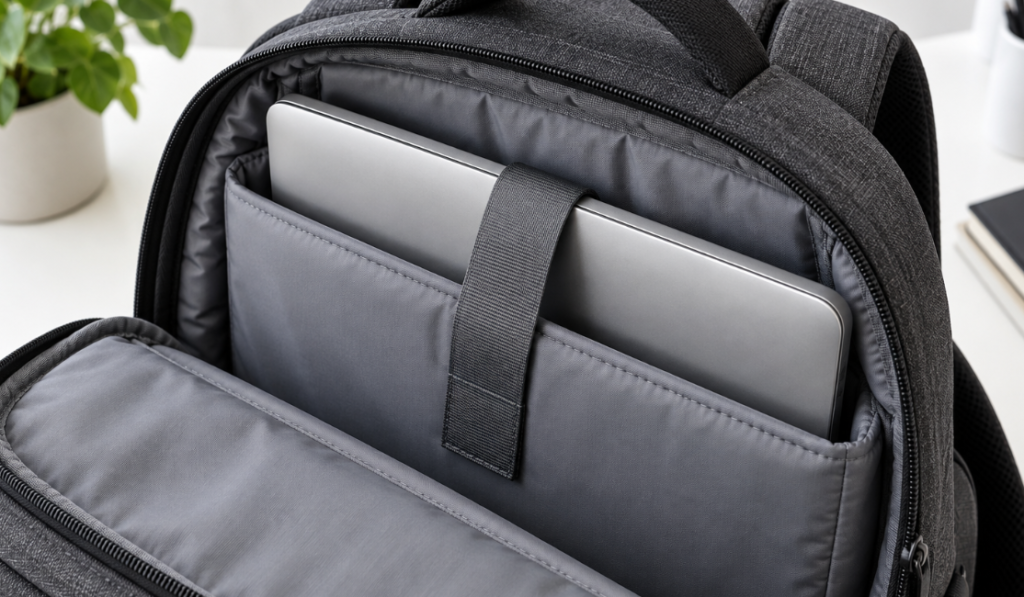
Ask a prospective laptop backpack manufacturer for close-up photos or samples that show how its bags are constructed. Useful evidence includes an open laptop sleeve, the base padding, shoulder-strap attachments, handle reinforcement, and the inside finish around the main opening.
The supplier should be able to explain how these details affect fit, comfort, sewing, and inspection. Ask how they would change a sleeve for a thicker device, what happens to pocket space when the main compartment is full, and how they prevent a zipper from catching the lining.
Clarify the development route as well. An OEM laptop backpack manufacturer may work from your drawings and specifications, while an ODM project may start with an existing pattern that is adapted for your brand. Suppliers use these terms differently, so confirm who develops the pattern, what you can change, and who retains the approved files.
You should also know where sampling and bulk assembly take place, and which processes are subcontracted. Working with a production partner can work well when responsibility for materials, inspections, corrections, and delivery is clear. Ask who will approve changes and who will respond if the shipped goods differ from the sample.
How Do You Check Materials, Laptop Protection, and Comfort?
Evaluate the backpack as an assembled product. A fabric description cannot tell you whether the laptop sleeve will hold its shape or whether the back panel will press the computer’s corners into the wearer’s back.
Specify the materials beyond their names
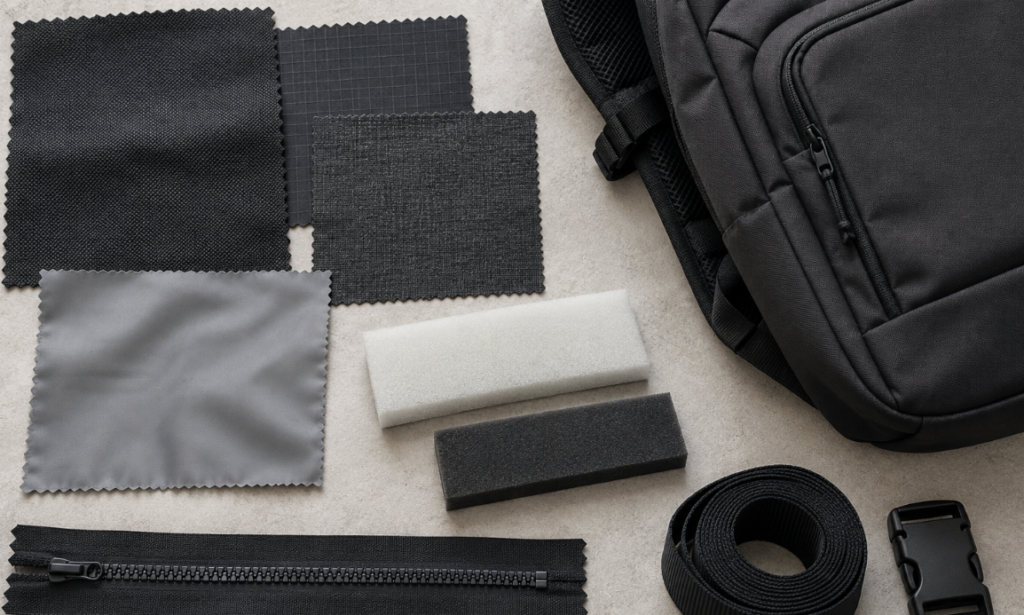
For the outer fabric, request fiber composition, weave, weight or denier where relevant, coating, and color reference. Denier describes yarn linear density; it does not establish the durability of the finished fabric on its own. Compare swatches and agree on performance checks suitable for the intended use.
Record the lining, foam, webbing, buckles, zipper components, and reinforcement materials too. Confirm foam thickness and type, where padding is placed, and whether a substitute material requires your approval. A similar-looking replacement can change the feel and shape of the bag.
Water-resistant fabric does not automatically make the whole backpack waterproof. Stitch holes, seams, and zipper openings may allow water through, so define the exposure you expect and the test needed to support any claim. Avoid approving product-page wording before the finished construction has been evaluated.
Check the sleeve and base together
Inspect padding at the base, sides, and surfaces that could contact hardware. If the design uses a suspended sleeve, often called a false bottom, measure its clearance from the backpack base under the intended load. That gap needs to remain useful when the bag is packed.
Test device retention and removal with other compartments full. The computer should not be forced against a zipper, buckle, or rigid seam, and its retention strap should close without excessive pressure. Use a dimensionally representative dummy for handling trials that could damage a real device; a simple fit check does not establish an impact-protection rating.
Assess comfort with a realistic load
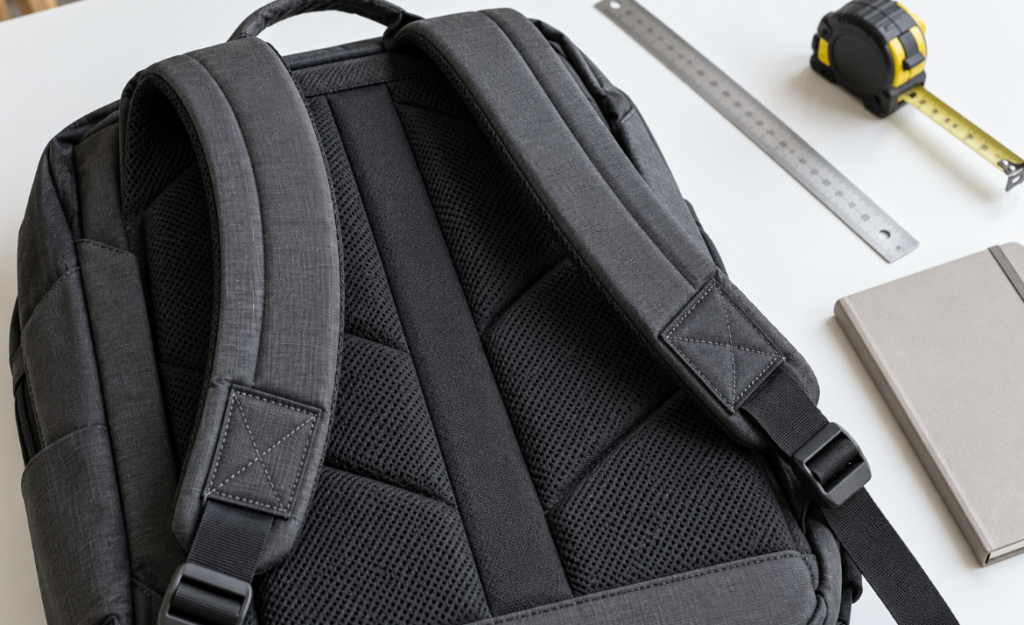
Load the sample with representative contents and have users with different body sizes adjust and wear it. Check strap spacing, adjustment range, bag position, and pressure from the laptop compartment. Thick padding alone does not establish comfort if the strap shape or back-panel structure creates pressure points.
For EU sales, identify relevant chemical requirements using the European Commission’s REACH overview as a starting point, then agree on a product-specific test scope with your compliance adviser or laboratory. Ask whether supporting reports cover the actual fabrics, coatings, prints, and hardware being ordered rather than an unrelated previous product.
What Should You Look for in a Backpack Sample?
A sample should answer specific approval questions. An early prototype can establish the layout and shape, while a pre-production sample should confirm the materials, branding, construction, and packing intended for bulk production.
Evaluate it against a written checklist and keep photographs of any corrections. Comments such as “make the straps stronger” leave too much room for interpretation; identify the attachment point and agree on a construction change and an appropriate verification method.
| Sample check | Practical review | Qué hay que registrar antes de la aprobación |
|---|---|---|
| Computer compartment | Fit the target device or dummy with the main compartment packed | Internal dimensions, opening clearance, retention, and padding placement |
| Zippers and lining | Open and close each compartment in realistic loaded conditions | Component specification, snagging, slider behavior, and agreed cycling checks |
| Straps and handle | Examine attachments and perform agreed load checks | Reinforcement details, load, duration, and acceptance criteria |
| Aplicación de logotipo | Compare placement and inspect the surface after appropriate handling | Artwork version, dimensions, position, color, and adhesion or stitching criteria |
| Shape and packing | Pack, unpack, and reload the bag | Carton arrangement, creasing, deformation, and recovery requirements |
Check the logo on the actual production material. Embroidery may affect a thin panel, while a transfer or printed mark needs an adhesion and wear check suited to its surface. HeteBag’s Opciones de logotipos personalizados can help you discuss the method before artwork and placement are approved.
Keep a dated reference sample with a version number, and ask the supplier to retain a matching copy. Any temporary fabric, zipper, or logo used in development should be identified before approval. If a production component changes later, agree on whether a revised sample or additional testing is needed before cutting begins.
How Do MOQ, Pricing, and Lead Times Compare?
Send each supplier the same specification, order quantity, color split, branding requirements, and packaging details. Otherwise, you may be comparing different products under the same description, with one quote including a reinforced sleeve and another using a simpler construction.
Ask what determines the minimum order quantity. The constraint may come from a custom fabric color, zipper tape, a branded component, or printed packaging rather than final assembly. Confirm whether MOQ applies per style, per color, or to the total order, and whether stock materials could support a smaller first run. Our custom laptop backpack MOQ guide explains how to compare these commitments and discuss a smaller initial order.
Compare what each quotation includes: sample development, artwork setup, tooling where relevant, testing, inspection, individual packing, and cartons. Record the currency, quotation validity, payment milestones, and agreed Incoterm with its named location. Shipping and import responsibilities should be explicit so your landed-cost comparison uses the same assumptions.
A credible schedule separates development, revisions, material preparation, production, inspection, and shipping. Ask what starts the production clock: payment alone, or payment plus written approval of the sample and all components? Work backward from the required arrival date and allow time for corrections, transport, and customs rather than treating the factory completion date as the delivery date.
For a repeat program, confirm how fabric availability, color matching, and reorder quantities will be managed. An attractive first quotation is less useful if the supplier cannot explain what will stay consistent on the next order.
Can the Manufacturer Deliver Consistent Quality?
A good sample provides a reference, but bulk consistency depends on the controls used during production. Ask how the custom laptop backpack factory checks incoming materials, monitors sewing, and compares finished bags with the approved specification.
Request an inspection sheet that covers dimensions, laptop fit, strap and handle attachments, zipper operation, logo position, and packing. Agree on measurement tolerances and classify defects before production. A missing reinforcement, incorrect computer sleeve, and loose thread should not be left to subjective judgment at shipment time.
If you use acceptance sampling, ISO 2859-1 provides an AQL-based framework for inspection by attributes. Agree on the applicable edition, inspection level, defect categories, and acceptance rules with the inspection provider. Sampling supports a shipment decision; it does not demonstrate that every bag is defect-free.
Ask what happens when a lot fails inspection. The supplier should identify the cause, correct the affected goods, and arrange the agreed reinspection before shipment release. Keep material and order records so a repeat issue can be traced to the relevant batch or process.
Market requirements also depend on the intended user. In the US, a product intended primarily for children aged 12 or younger and subject to applicable children’s product safety rules requires the testing and certification described in the CPSC’s Children’s Product Certificate guidance. Confirm the product’s classification and applicable rules; adult commuter backpacks should not automatically be assigned the same requirements.
What Should You Prepare Before Asking for a Quote?
Your request for quotation should let the manufacturer assess the design and quote against a defined specification. You can begin without a complete tech pack, but mark unresolved details so the supplier can state its assumptions clearly.
Prepare the following information:
- Customer and market: destination countries, intended user age, sales channel, and daily use.
- Size and contents: external bag dimensions, actual laptop dimensions, capacity target, and expected load.
- Design references: sketches or photos showing front, back, interior, openings, and pocket layout.
- Material preferences: outer fabric, lining, padding, webbing, zipper, hardware, and color references.
- Marca: vector artwork, logo size and position, preferred application method, and label requirements.
- Order plan: initial quantity, quantity per color, reorder expectations, and required arrival date.
- Quality requirements: sample stages, measurable acceptance criteria, inspection arrangements, and required documentation.
- Packaging and delivery: individual packing, barcodes, carton requirements, destination, and preferred shipping terms.
Ask the supplier to list exclusions and proposed substitutions in its reply. A useful quotation might identify an available fabric alternative or a pocket construction that needs revision; those comments help you assess the supplier’s technical understanding.
For a private label laptop backpack, also clarify whether branding an existing model meets your brief or whether you need a new pattern. That choice affects the development work, sample process, material commitments, and information needed for the quotation.
Conclusión
Choose a custom laptop backpack manufacturer by checking how well the supplier turns your brief into a usable sample and a controlled production plan. Actual device fit, loaded comfort, material specifications, sample approval, and consistent inspection criteria give you a stronger basis for the decision than catalog images alone.
HeteBag works with partner factories and draws on more than 15 years of bag-manufacturing experience in Huadu, China. To discuss your project, send HeteBag your design references and order requirements, including target laptop dimensions, quantities, branding, and delivery destination. With that information, the discussion can focus on your sample and production requirements.
Preguntas frecuentes
Can I customize an existing laptop backpack instead of developing a new design?
Yes, adapting an existing model may reduce pattern-development work. Confirm which features can change and test the resulting sample against your laptop dimensions, load, and branding requirements; an existing design still needs project-specific approval.
What MOQ should I expect for a custom laptop backpack?
There is no universal MOQ because fabric, color, branding, hardware, and packaging commitments differ between projects. Ask for the minimum per style and color, and request an alternative using stock components if your first order is smaller.
Is a 15.6-inch laptop compartment enough to confirm compatibility?
No, the screen-size label does not define the computer’s external dimensions. Provide width, height, and thickness, include any protective case, and check insertion and closure with the backpack fully packed.
Which logo method is best for a private label laptop backpack?
The appropriate method depends on the material, artwork, position, and expected wear. Compare embroidery, printing, transfers, labels, or patches on the actual fabric, then approve appearance and relevant durability checks before production.
Should I approve bulk production from photos of the sample?
Photos help confirm appearance and document revisions, but they cannot establish fit, comfort, or zipper behavior under load. Evaluate a physical pre-production sample and retain a dated reference with the agreed specification before authorizing bulk production.


