
 Arabic
  English
  Italian
  French
  German
  Spanish
 Customized tote bags have become an important product for retailers, fashion brands, supermarkets and promotional activities. They are practical, fashionable and highly effective for brand promotion. However, behind every successful tote bag project, there is a reliable manufacturing partner.
A professional tote bag manufacturer (similar to the manufacturer with 15 years of experience in Hetebag) helps enterprises achieve better quality, faster production, and more personalized solutions. From small start-ups to international brands, companies tend to choose experienced manufacturers because they provide consistency, scalability, and professional support throughout the production process.
In this article, we will explain to you why brands choose custom tote bag manufacturers. We hope this article will be helpful to you!
Why Do Brands Choose Custom Tote Bag Manufacturers?
The market for branded tote bags has grown well beyond promotional giveaways and trade show freebies. Tote bags have become a legitimate product category — one that signals a brand’s values, aesthetics, and commitment to quality. Walk into any major grocery chain, lifestyle boutique, or yoga studio, and you will find tote bags functioning as walking advertisements, carrying a brand’s identity into homes, offices, and public spaces every single day.
That shift in perception has changed what brands actually need from their manufacturing partners.
When a tote bag is just a throwaway item, a generic supplier with low prices might be enough. But when that bag sits next to your core products on a retail shelf, when your customers post it on social media, when it is handed to a client at an important meeting — quality becomes non-negotiable. Every detail tells a story: how the logo prints, whether the stitching holds after six months of daily use, how the fabric feels in hand, whether the handles sit comfortably on a shoulder.
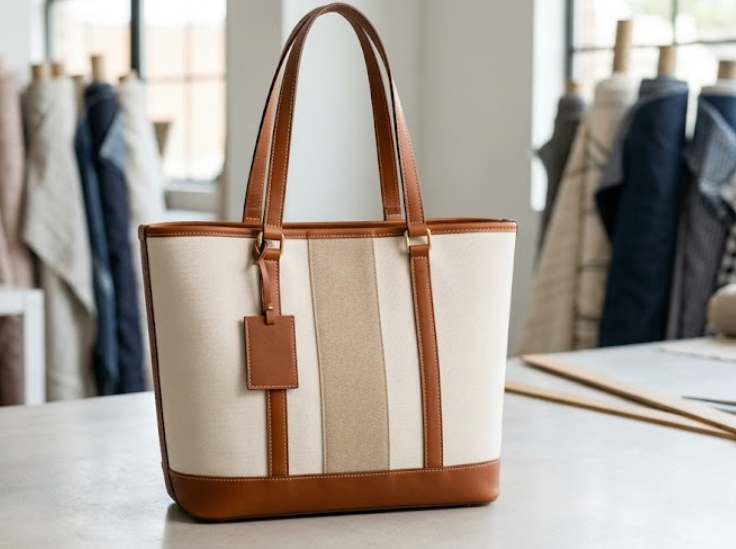
Custom tote bag manufacturers give brands control over all of those details. You are not choosing from a catalog of existing bags and applying a logo. You are specifying materials, dimensions, hardware, inner lining, printing technique, and packaging — all aligned with your brand’s standards.
Working directly with manufacturers also removes a costly middle layer. When a trading company sits between you and the factory, information gets filtered and pricing gets marked up. Direct factory relationships mean you are talking to the people who actually build the bags. Questions get answered faster. Samples reflect actual production capability. When adjustments are needed — a color that does not match, a handle that needs reinforcing — the feedback loop is short and direct.
The Real Long-Term Benefit
The long-term benefit goes beyond any single order. Brands that build strong manufacturer relationships develop partners who understand their standards, anticipate their needs, and can scale alongside them as order volumes grow. That kind of consistency is hard to quantify, but it shows up every time a bag lands in a customer’s hands.
Consider the difference between two tote bags sitting side by side. One is a standard canvas bag with a screen-printed logo. The other uses heavier organic cotton, a debossed leather patch for the logo, reinforced side seams, and a branded inner label. Both are technically custom tote bags. The difference in what they communicate about the brand behind them is immediate and unmistakable.
Professional manufacturers understand this. They offer more than printing — they offer material sourcing, structural design input, hardware selection, and finishing options that translate brand guidelines into physical products. That level of service requires experience, equipment, and a team that has worked through the variables many times before.
What Makes Professional Tote Bag Manufacturers More Reliable?
Reliability in manufacturing is a specific thing. It does not mean a supplier who has never made a mistake. It means a supplier whose systems catch problems before they leave the factory, who communicates proactively when issues arise, and whose production capacity can handle your actual volume — not just your sample order.
Professional tote bag manufacturers build reliability into their operations in ways that smaller or less experienced suppliers simply cannot replicate.
Stable production capacity is the foundation. When your brand places an order for 10,000 tote bags to coincide with a product launch, you need certainty those bags will be ready on time. A manufacturer with dedicated production lines, trained workers, and established material supply chains can commit to that timeline with confidence. A supplier patching together capacity from subcontractors cannot.
Delivery schedules are where many brand-supplier relationships break down. A bag that arrives two weeks after a campaign launch is nearly useless. Professional manufacturers build delivery reliability through buffer inventory management, proactive communication about potential delays, and experience navigating the logistical complexities of international shipping. They know which port procedures to expect, which documentation is required, and how to route shipments efficiently for different destination markets.
Handling Seasonal Surges and Urgent Timelines
Seasonal demand is genuinely difficult to manage. A retail brand might need 5,000 units in March and 25,000 in October. A manufacturer without flexible production planning cannot accommodate that swing without either holding excess inventory or missing the delivery window entirely.
Experienced tote bag manufacturers plan for variability. They maintain relationships with secondary production facilities, manage material lead times proactively, and build seasonal schedules that account for peak periods across multiple clients. When you need to scale quickly — a partnership opportunity, a larger-than-expected retail order, an event deadline — that planning infrastructure is what makes it possible.
International shipping experience is also more complex than it appears on the surface. Tariff classifications, material certifications required by destination countries, packaging standards for different retail environments — these are details that experienced exporters handle routinely and that inexperienced suppliers discover at the worst possible time.
How Can Professional Tote Bag Manufacturers Improve Brand Image?
Your tote bag is a brand touchpoint. Every time it is used — at a farmer’s market, in an airport, on a college campus — it represents your brand in public. The quality of that impression depends directly on the quality of the manufacturing behind it.
Professional tote bag manufacturers approach this differently than commodity suppliers. They understand that the end goal is not just a bag that holds things. It is a bag that makes the person carrying it feel good about the brand they are associated with.
Logo presentation is often the clearest signal of manufacturing quality. Screen printing on thin cotton canvas behaves differently than on a heavier woven poly-cotton blend. Embroidery on structured canvas looks different than on unstructured nylon. Professional manufacturers know these relationships and can guide you toward techniques that serve your logo design best — rather than defaulting to whatever is easiest for their production line.
Premium material selection is another area where professional manufacturers add real value. The feel of a bag in hand communicates quality before a customer even looks at the logo. The difference between a stiff, scratchy canvas and a soft, durable woven cotton is felt immediately and associated with your brand. Manufacturers with extensive material libraries and sourcing relationships can match materials to brand positioning in ways that commodity suppliers simply cannot offer.
Packaging as Brand Extension
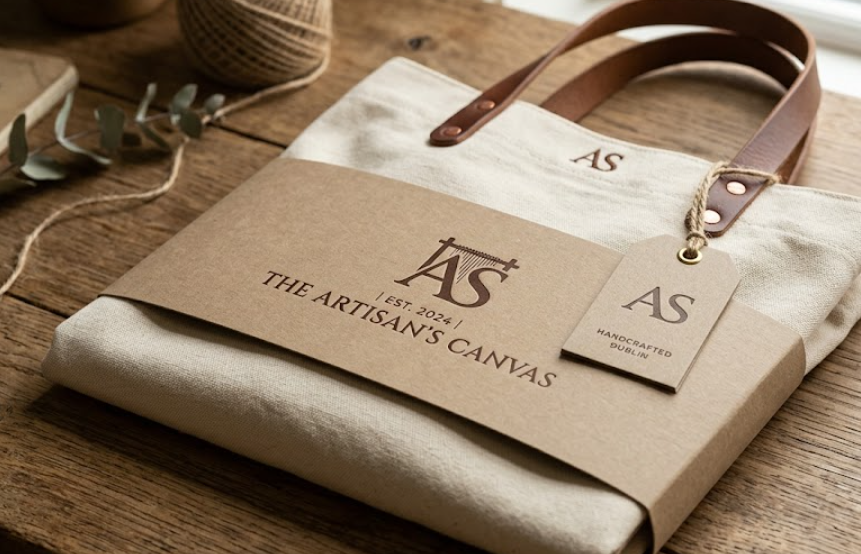
Packaging is often overlooked but matters significantly for brand impression at retail and in e-commerce. How a tote bag arrives — folded or stuffed, in a branded poly bag or a recycled paper sleeve, with a hang tag or without — affects how it is perceived and how it photographs for online listings.
Professional manufacturers offer branded packaging solutions that extend your visual identity through the entire customer experience. A well-presented bag in branded packaging communicates attention to detail that resonates with buyers and end customers alike. That level of polish is part of what separates a brand that looks established from one that assembled its supply chain overnight.
Why Is Product Quality Better with Experienced Tote Bag Manufacturers?
Quality in bag manufacturing is not one thing. It is a collection of decisions made across material sourcing, pattern-cutting, stitching, finishing, and inspection — each of which creates an opportunity for either consistency or failure.
Experienced tote bag manufacturers have built quality into their processes because they have seen what happens when it breaks down. Returns, reorders, damaged client relationships, reputational risk — all of it traces back to quality failures that better systems would have caught.
Advanced production equipment plays a real role here. CNC cutting machines ensure fabric pieces are cut to precise tolerances, so handles are the same length across every unit and seam allowances are consistent throughout a production run. Automated stitching systems maintain stitch density and tension, reducing the variation that leads to uneven seams. Heat transfer and screen printing equipment with calibrated color matching produces logos that look identical on unit 1 and unit 10,000.
The human side matters equally. Skilled workers who have spent years on specific production tasks — cutting, sewing, finishing, quality checking — bring craft knowledge that training manuals cannot fully capture. An experienced sewer knows how a fabric behaves at stress points. An experienced quality inspector knows exactly where problems tend to hide.
What a Genuine Quality System Actually Looks Like
“We inspect every bag” is not a quality system. A genuine quality system involves defined inspection criteria, in-process checks at multiple production stages, a statistical sampling protocol for final inspection, and clear documentation of pass and fail rates by production batch.
Professional manufacturers typically conduct at least three inspection points: incoming material inspection, in-process checks during production, and final pre-shipment inspection. Some also support third-party audit access, allowing clients or independent inspectors to verify quality standards directly.
Defect rates in bag manufacturing vary widely across suppliers. Experienced manufacturers with disciplined quality systems consistently achieve lower defect rates — which translates directly into fewer returns, fewer reorders, and lower total cost of supply. The price per unit from a high-quality manufacturer may be marginally higher, but the total landed cost — accounting for defects, shipping delays, and customer service overhead — is typically lower.
Durable stitching at stress points deserves specific attention. The handle attachment points, corner seams, and zipper attachments on a tote bag are where structural failures occur first. Professional manufacturers reinforce these points with bar tacking, box stitching, or reinforced seam techniques that extend the bag’s useful life significantly. A bag that holds up for two years generates far more brand impressions per unit than one that fails in three months.
Why Are Sustainable Brands Working with Eco-Friendly Tote Bag Manufacturers?
Sustainability in product development has moved from differentiator to baseline expectation. For a growing segment of consumers — and increasingly for regulatory frameworks in key markets — it is no longer optional.
Brands that have built their identity around environmental responsibility face a specific challenge: their supply chain has to match their values. A brand that markets itself as sustainable cannot ship products made from virgin synthetic materials, produced in factories with no environmental management systems, and packaged in non-recyclable plastic. The inconsistency erodes trust faster than any sustainability marketing can rebuild it.
Eco-friendly tote bag manufacturers help brands close that gap. They offer materials certified to recognized environmental standards — GOTS certification for organic cotton, the Global Recycled Standard for recycled content materials, and OEKO-TEX Standard 100 for products tested against harmful substances. These certifications are not just marketing language. They represent third-party verification of material origins and production practices that give your sustainability claims documented backing.
Recycled polyester made from post-consumer plastic bottles has become one of the most widely used sustainable materials in tote bag production. Durability, color consistency, and printing compatibility are all comparable to virgin polyester, while the material diverts plastic from landfills and reduces demand for petroleum-based raw materials. Organic cotton serves brands whose identity is more closely aligned with natural materials and traceable agricultural practices.
Regulatory Pressure Is Accelerating the Shift
Beyond consumer preference, regulatory pressure on single-use plastics and non-recyclable packaging has accelerated the shift toward reusable tote bags across Europe, North America, and increasingly Asia-Pacific. Brands supplying into regulated retail channels need manufacturing partners who understand these requirements and can produce compliant products without requiring extra guidance from the buyer.
Working with manufacturers who have established environmental compliance systems — documented waste management, restricted substance compliance, energy management — also reduces the risk of supply chain audits uncovering problems at a critical moment. As ESG reporting becomes more standardized for brands and their retail partners, detailed supply chain documentation is increasingly a competitive requirement rather than a nice-to-have.
The reputational dimension cannot be overstated. A well-made tote bag from certified eco-friendly materials, carried by customers for years, reinforces your sustainability story every day it is in use. A poorly made bag that degrades quickly undermines it. Professional eco-friendly manufacturers understand that sustainability and durability are not competing priorities — they support each other.
What Should Brands Look for When Choosing a Professional Tote Bag Manufacturer?
Choosing a tote bag manufacturer is a strategic decision, not just a purchasing transaction. The manufacturer you select will affect your product quality, delivery reliability, sustainability claims, and ability to scale. Getting it right requires evaluating several dimensions at once.
Manufacturing experience and industry reputation are the foundation. How long has the manufacturer been producing tote bags specifically? Focused product-range experience produces deeper expertise than broad experience spread thinly across many categories. Asking for references, understanding their largest client relationships, and reviewing their export history all provide useful signal before you commit to a production run.
Customization depth and OEM/ODM capabilities determine how much creative control you actually have. OEM production means the factory produces to your specifications and designs. ODM means the factory can develop designs from your brief, offering both design development and manufacturing support. Most professional tote bag manufacturers offer both, but the depth of their design and development resources varies considerably. If you need a manufacturer who can help develop new styles from scratch, look specifically for one with dedicated product development staff and a structured sampling process.
MOQ flexibility matters most for brands at earlier stages of growth or testing new products. Minimum order quantities vary widely — from a few hundred units for simple designs to several thousand for complex custom styles. Understanding a manufacturer’s MOQ structure upfront tells you whether they are a realistic partner at your current volume and whether pricing scales reasonably as your volumes increase.
Communication, Lead Time, and Certification
Communication efficiency deserves more weight than it typically receives in supplier evaluation. A technically excellent manufacturer who responds to emails three days late, provides unclear sample feedback, or cannot give precise production status updates creates operational risk that affects your planning at every stage. Professional manufacturers invest in dedicated customer service staff, clear sample approval processes, and proactive order status communication — because they understand that their clients are running businesses that depend on reliable information flow.
Production lead time for standard canvas tote bags with basic printing typically runs 30–45 days after sample approval. Complex styles with multiple materials, hardware components, or sophisticated printing techniques may require 60–75 days. Seasonal demand periods can extend these timelines further. Understanding realistic lead times — not optimistic estimates — is essential for accurate planning on your end.
Certifications and audit credentials provide objective evidence of a manufacturer’s operational standards. ISO 9001 certification indicates a documented quality management system. BSCI, SMETA, and similar social compliance audits assess labor practices and factory working conditions. These credentials matter both for your own due diligence and for meeting the supply chain requirements of larger retail partners who conduct supplier audits as a condition of doing business.
Third-party audit access — the ability for you or an independent inspector to visit the factory or review current audit reports — is one of the strongest signals of a manufacturer’s confidence in their own operations. Manufacturers who welcome external visibility are typically proud of what they have built. Those who resist it often have a reason.
الخلاصة
The tote bag manufacturer you choose shapes more than your product. It shapes your brand’s reliability, your sustainability credibility, your ability to deliver on time, and the daily impression your bags make on the people who carry them. Professional manufacturers bring the experience, systems, and capabilities that make those outcomes consistently positive — and that is exactly why established brands return to them order after order.
If you are evaluating manufacturing partners for custom tote bags, هيتباغ is a factory-based manufacturer located in Huadu, Guangzhou — one of China’s most established bag production regions. With over 15 years of manufacturing experience, Hetebag operates its own production facility and collaborates with multiple partner factories to support a wide range of order sizes and product categories. Full OEM and ODM services, sustainable material options, ISO 9001 quality management, and compliance with BSCI, SMETA، و SGS audit standards are all part of how they work. Products are exported to over 70 countries across North America, Europe, Australia, the Middle East, and Asia.
If you are currently looking for a reliable tote bag manufacturing partner, visit the website and leave your contact information directly. We are genuinely glad to hear about your project — and we look forward to working together.
الأسئلة الشائعة
Why should brands work with a professional tote bag manufacturer instead of a trading company?
Professional manufacturers usually offer better pricing, direct communication, faster problem-solving, and more control over product quality. Since you work directly with the factory, sampling, production adjustments, and delivery timelines are often more efficient.
What is the typical MOQ for custom tote bag orders?
MOQ (Minimum Order Quantity) depends on the bag style, material, and customization level. Simple canvas tote bags may start from 300–500 pieces, while fully customized premium designs may require 1,000 pieces or more.
How long does it take to produce custom tote bags?
Production lead time usually ranges from 30 to 45 days after sample approval for standard tote bags. More complex designs with multiple materials, zippers, or custom hardware may take 60–75 days.
Can tote bag manufacturers provide eco-friendly materials?
Yes. Many professional manufacturers offer sustainable options such as organic cotton, recycled polyester (RPET), jute, hemp, and biodegradable packaging. Some can also provide certifications like GOTS, GRS, or OEKO-TEX.
How can I check the quality of a tote bag manufacturer?
You can evaluate quality by requesting samples, reviewing stitching details, checking print quality, asking about quality control systems, and verifying certifications such as ISO 9001, BSCI, or SMETA.
What customization options are available for tote bags?
Most professional manufacturers offer full OEM/ODM services, including custom size, fabric, color, logo printing, embroidery, lining, pockets, zippers, handles, labels, and packaging design.


