
 Arabic
  English
  Italian
  French
  German
  Spanish
 Sometimes our clients send us a picture of a shoulder bag and ask, “Can this style be made?” In most cases, of course it can. But usually, we won’t immediately discuss the color. Instead, we first look at how the shoulder strap is connected, what the structure of the bag is, how much space is needed inside, and what the final use of this bag will be.
For the same type of shoulder bag, the requirements for materials and structure are completely different for daily commuting, traveling, dinner parties, or brand retail. A small and delicate shoulder strap that looks nice may not be comfortable to use in reality if the bag needs to hold a lot of things; a very soft bag shape may also easily deform after being filled with items if the internal support is not handled properly.
So this article won’t just tell you about the types of shoulder bags. I’d rather take a look at the structure, materials, uses, and the issues that brands need to focus on when customizing shoulder bags from the perspective of the product and manufacturing.
1. What Is a Shoulder Bag?
A shoulder bag is designed to hang from one shoulder by one or more straps. The body usually sits between the underarm and hip, depending on strap drop, bag size, and design. Some styles use a fixed strap, while others use adjustable or detachable straps.
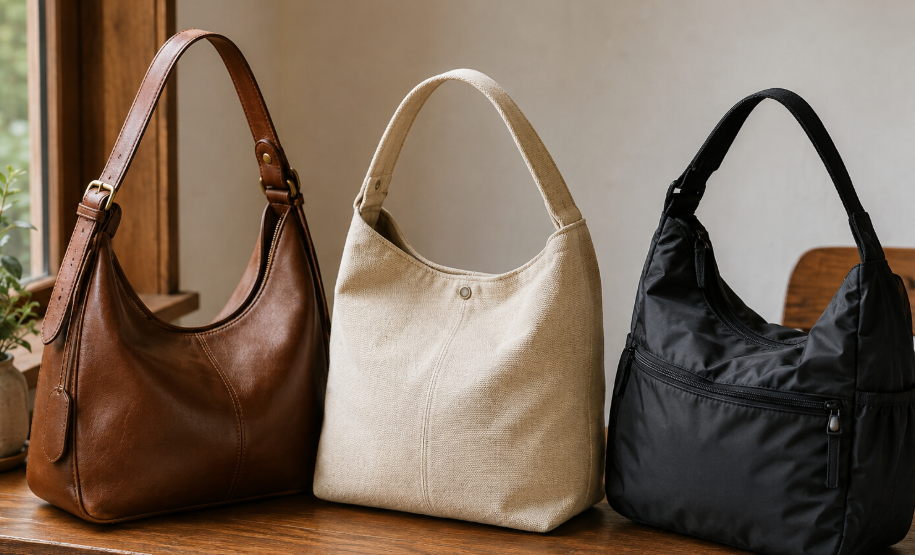
The category is broad. Baguette, hobo, saddle, bucket, crescent, and structured work bags can all be shoulder bags when the main carrying method is over one shoulder.
How a Shoulder Bag Is Designed to Be Carried
Strap drop matters as much as total strap length. It is the vertical distance from the top center of the hanging strap to the top edge of the bag. Shorter drops keep compact bags close to the underarm. Longer drops give more clearance and may support convertible shoulder-to-crossbody use.
Clothing changes the fit too. A strap that works over a T-shirt can feel tight over a coat. During development, we also pay close attention to the strap attachment area because load is concentrated where the strap meets the body. Extra backing, webbing, leather tabs, stronger stitching, or metal rings may be needed depending on the construction.
Shoulder Bag vs. Crossbody Bag
A shoulder bag normally hangs from one shoulder on the same side of the body. A crossbody bag uses a longer strap that runs diagonally across the torso. Crossbody designs usually need a wider adjustment range and attachment points that remain stable while the bag moves.
Convertible designs can do both, but strap length, swivel hooks, D-rings, and attachment position have to work together or the bag may twist when carried.
Shoulder Bag vs. Handbag
“Handbag” is a broader category that can include top-handle, shoulder, crossbody, clutch, satchel, and other styles. A shoulder bag is more clearly defined by its carrying method.
دليلنا إلى Shoulder Bag vs. Handbag explains this distinction in more detail.
2. What Are the Most Common Types of Shoulder Bags?
Buyers do not need dozens of style names. The useful question is how each shape affects capacity, structure, hardware, sewing difficulty, and target use.
| النوع | Typical Structure | Main Development Focus |
|---|---|---|
| Hobo | Soft, curved, slouchy | Drape, lining, strap reinforcement |
| Baguette | Small and horizontal | Shape accuracy, zipper or flap alignment |
| Structured shoulder bag | Firm panels and defined edges | Reinforcement, edge finish, hardware placement |
| Bucket | Tall body, open or drawstring top | Base stability, drawcord, eyelets |
| Saddle | Curved base with front flap | Flap symmetry, closure position |
| Camera-style | Boxy and compact | Zipper access, pockets, corner construction |
| Crescent | Curved body | Pattern accuracy, zipper curve |
| Convertible | Adjustable or detachable straps | Hardware strength, strap range, balance |
Hobo and Slouchy Shoulder Bags
Hobo bags rely on controlled softness. The outer material needs enough drape, while the lining should move with the shell instead of bunching inside. Too little support makes the base collapse; too much removes the relaxed shape. Sampling is where interfacing, base support, and lining weight should be adjusted.
Baguette and Structured Shoulder Bags
These styles depend more heavily on shape control. Small differences in panel dimensions, foam thickness, edge paint, piping, or reinforcement can change the silhouette.
Hardware is also more exposed visually. A magnetic snap, logo plate, zipper end, or strap tab that sits slightly off center may be obvious on a clean structured design, so sample approval needs careful measurement and symmetry checks.
Bucket, Saddle, and Convertible Shoulder Bags
Bucket bags need a stable base and a top opening that remains usable after tightening. Saddle bags need a flap that follows the body evenly. Convertible bags need to hang correctly in more than one position.
We normally check a convertible sample at both the shortest and longest strap settings, then load it. This quickly shows whether the body tilts or the attachment points are poorly positioned.
3. What Are the Key Features of a Shoulder Bag?
Good shoulder bag design depends on how the parts work together. Strong fabric cannot compensate for a weak strap joint, and premium hardware cannot fix an opening that is too narrow.
Shoulder Straps and Attachment Points
Strap width affects comfort and appearance. Narrow straps suit compact fashion bags; wider straps spread weight better on medium or larger styles. Leather, webbing, chain, and mixed-material straps each behave differently.
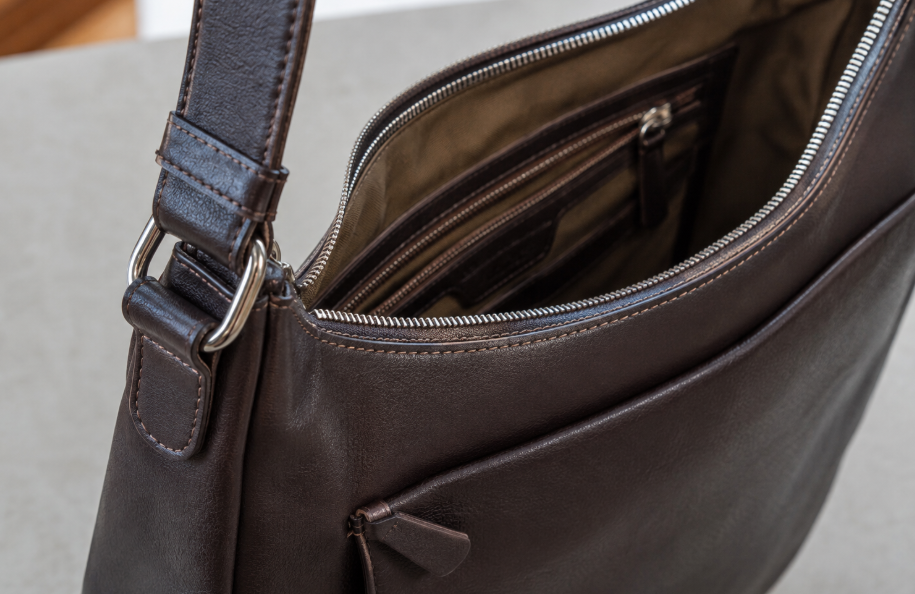
Common attachment methods include stitched tabs, D-rings, O-rings, swivel hooks, buckles, rivets, and integrated straps. The connection should be reinforced inside the bag rather than relying only on the visible outer layer.
This area is one of the first places I check on a sample. Stitching, backing material, seam allowance, hardware edges, and the direction of pull all affect long-term performance.
Compartments, Pockets, and Closures
Pocket layout should follow use. A small fashion bag may need one slip pocket, while a commuting bag may need a zip pocket, phone section, and enough opening width to reach items without removing the bag from the shoulder.
Zippers give better containment, magnetic snaps give quick access, drawstrings suit softer shapes, and flaps support many structured designs. When zipper performance matters, buyers can compare product specifications from established fastening suppliers such as YKK. Brand name alone is not the goal; the zipper type, size, slider, puller, tape color, and opening length still need to be defined.
Size, Shape, and Carrying Comfort
External dimensions do not always equal usable capacity. Foam, gussets, internal dividers, curved panels, and thick reinforcement can reduce the space inside.
Strap drop should be checked on a person or dress form and then tested with realistic weight. An empty sample can feel fine while a loaded bag pulls at the shoulder or leans outward. Brands planning several sizes can use a حجم الحقيبة حسب الطلب framework to keep proportions consistent.
4. What Materials Are Commonly Used for Shoulder Bags?
Material affects weight, structure, sewing behavior, edge finishing, printing, cleaning, and internal reinforcement. The outer layer should never be selected in isolation.
| المواد | الهيكل | الخيار الأنسب |
|---|---|---|
| جلد طبيعي | Soft to firm | Premium fashion, work, lifestyle |
| جلد PU | Soft to structured | Fashion and private label |
| قماش | Medium to firm | Casual, shopping, lifestyle |
| النايلون | Soft to structured | Travel, casual, utility |
| البوليستر | Flexible | Daily and promotional |
| RPET fabric | Varies by weave | Sustainability-focused collections |
Genuine Leather and PU Leather
Genuine leather brings natural grain and a distinctive hand feel. Buyers should define leather type, thickness, finish, color tolerance, and edge treatment. Thick intersections also need attention because straps, piping, and folded seams can become bulky.
PU leather offers wider control over color and texture, but quality varies. Face appearance is only part of the decision. Backing fabric, coating quality, flexibility, edge performance, and any required aging or hydrolysis testing also matter.
Canvas, Nylon, and Fabric
Canvas gives a casual look and can provide useful body without a glossy surface. Nylon suits lighter travel or utility styles. Polyester gives broad flexibility in weave, coating, print, and color.
“Canvas” or “nylon” is not a complete production specification. Weight or denier, weave, coating, finish, color standard, and performance requirements may also need to be recorded. Our مواد تصنيع الحقائب المخصصة page compares common leather, PU, canvas, nylon, polyester, and recycled options.
How Material Affects Structure and Durability
Two bags using the same outer fabric can feel very different because of foam, nonwoven reinforcement, bonded layers, base boards, lining, piping, or panel construction. Material approval should cover the full system rather than the shell alone.
Brands requesting recycled fabric should ask which recycled claim can be supported and what documentation applies to the supply chain. Textile Exchange’s Global Recycled Standard is a useful reference when a certified recycled-material claim is part of the purchase specification.
5. What Are Shoulder Bags Used For?
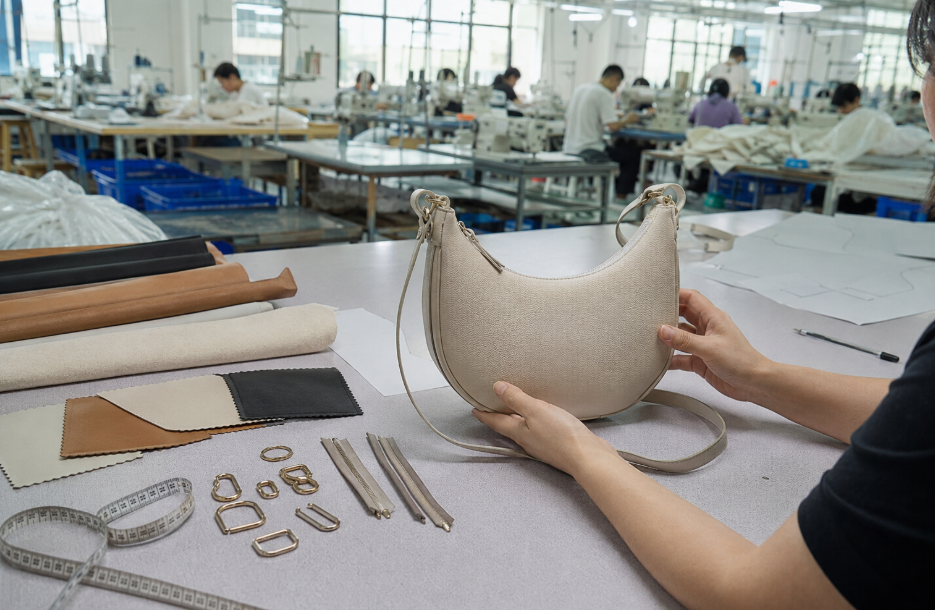
The same carrying format can serve very different markets. Usage should guide size, organization, material, closure, and strap construction.
Everyday and Casual Use
Daily shoulder bags usually benefit from moderate capacity, comfortable straps, quick access, and a secure main compartment. Hobo, crescent, camera, and bucket shapes often fit this role.
Daily wear puts repeated stress on strap edges, zipper openings, corners, and bottom panels. Those areas deserve close attention during development because they often reveal construction weakness earlier than the main body fabric.
Work, Travel, and Shopping
Work bags normally need clearer organization and more structure. Tablet space, internal zip pockets, stable bases, and reinforced straps may be useful. Travel versions benefit from lighter materials, adjustable straps, secure zippers, and pockets that remain accessible while moving.
Shopping shoulder bags need capacity and a wide opening, but the strap still has to remain comfortable when the bag is full.
| Intended Use | Useful Design Direction | Features to Check |
|---|---|---|
| Daily carry | Medium capacity, easy access | Zip top, inner pocket, comfortable strap |
| Work | Semi-structured or structured | Organization, stable base, reinforcement |
| السفر | Lightweight and secure | Adjustable strap, zipper, hidden pocket |
| Shopping | Wider opening, flexible body | Seam strength, strap width, capacity |
| Evening | Compact and refined | Hardware finish, lining, closure |
| Promotional | Simple repeatable build | Logo area, material consistency |
Fashion, Evening, and Promotional Collections
Fashion shoulder bags place more emphasis on silhouette, texture, proportion, and hardware finish. Evening styles may use chains, satin, velvet, leather, PU, metal frames, or decorative closures.
Promotional designs usually need a clear branding area and consistent construction across the order. Logo method should match the material. Screen printing, embroidery, woven labels, metal plates, debossing, and heat transfer behave differently, which is why our حقائب بشعار مخصص guide compares the main options.
6. How Do You Choose the Right Shoulder Bag?
Start with use rather than color or trend. Once the carrying scenario is clear, size, strap, material, closure, pockets, and structure are easier to define.
Choose the Right Size and Capacity
List what the bag needs to carry: phone and wallet, tablet and notebook, cosmetics, travel documents, or a water bottle. This gives dimensions a practical purpose.
Review opening size along with internal volume. A bag may hold enough on paper but still be frustrating if the zipper opening is too short or the gusset does not open far enough.
Consider Strap Length and Comfort
Confirm fixed or adjustable construction, then define width, drop range, hardware, edge finish, and attachment position. Wider straps can improve comfort but may look heavy on a compact bag. Long detachable straps add flexibility but also place more demand on hooks and rings.
Ask how the strap joint is reinforced if the bag will carry meaningful weight. Photos of the outside are not enough to judge this point.
Match the Material and Structure to the Intended Use
Soft leather and flexible PU suit many slouchy fashion designs. Canvas gives a casual, stable feel. Nylon is useful where lower weight matters. Structured bags often need hidden support even when the outer material already feels firm.
Material swatches should be reviewed before sampling when texture, coating, or color is important. Buyers with textile safety requirements can also review معيار OEKO-TEX 100, which covers textiles tested for harmful substances. Any certification claim should only be used when the relevant material or finished product documentation actually supports it.
7. What Should Brands Consider When Customizing Shoulder Bags?
أ Custom Shoulder Bag project is easier to control when the specification is settled before bulk production. Development should move from use and dimensions to materials, structure, hardware, logo, sample approval, and QC checkpoints.
Material, Size, Hardware, and Logo Options
Build one specification sheet covering outer material, lining, dimensions, strap width and drop, hardware finish, zipper, closure, pockets, reinforcement, logo method, packaging, and color references.
Hardware should be checked for more than finish. Surface scratches, sharp edges, hook movement, buckle fit, magnet strength, and plating consistency all affect the result. Logo placement also needs physical testing because metal plates can pull down soft panels, embroidery can distort thin fabric, and debossing needs suitable material thickness.
Sampling and Quality Control
The sample should answer structural questions, not just show the design. Check measurements, shape, strap position, pocket access, closure alignment, lining fit, stitching, edge finish, logo position, and loaded carrying performance.
Once approved, the sample and final specification should become the bulk-production reference. QC can then focus on repeatability: strap attachment, zipper function, seam security, symmetry, hardware finish, logo placement, stains, loose threads, lining fit, and packing.
Certification documents should also be tied to the actual requirement. If a retailer asks for recycled-content, textile safety, social-compliance, or other documentation, confirm which factory, material, product, and order the document covers rather than accepting a certificate logo in a presentation.
Choosing the Right Shoulder Bag Manufacturer
When comparing Shoulder Bag Manufacturers, look beyond a product gallery. Ask whether the supplier can explain construction choices, identify weak points, control substitutions, record revisions, and keep bulk production aligned with the approved sample.
Most of our custom bag projects start at around 300 قطعة. The actual MOQ can change with material availability, custom colors, hardware molds, logo process, and construction complexity. Special fabrics or custom metal fittings may require a higher practical minimum.
Communication during sampling tells you a lot. A capable manufacturer should explain what still needs confirmation before production, not simply say every request is possible. When a change is suggested, ask what problem it solves and whether it affects appearance, durability, production, or MOQ.
8. الخاتمة
A shoulder bag is defined by how it is carried, but its quality comes from the interaction between strap drop, reinforcement, opening design, pockets, material, hardware, lining, and internal support.
العلامات التجارية التي تعمل على تطوير Custom Shoulder Bag should start with the user and carrying scenario, then turn those needs into measurable specifications. That gives the sample a clear job: finding and fixing product issues before bulk production.
هيتباغ is based in Huadu, Guangzhou, China. Our team has more than 15 years of bag manufacturing experience and works with a wider factory supply network to support OEM and ODM projects. If you are comparing Shoulder Bag Manufacturers and want to discuss materials, structure, logo options, sampling, MOQ, or production requirements, you can leave your phone number or project details on our website. We would be glad to hear about your product and explore working together.
Frequently Asked Questions About Shoulder Bags
What information should I send before requesting a shoulder bag sample?
Send a reference image or technical drawing, target dimensions, material preference, strap requirements, hardware finish, closure, pocket layout, logo artwork, target market, expected quantity, and any testing requirements. Mark any undecided items clearly so the manufacturer knows where you need recommendations.
What is a typical MOQ for a Custom Shoulder Bag?
Our MOQ for many custom projects is around 300 pieces, but the final quantity depends on the design. Custom-dyed material, special hardware, molded logo parts, uncommon colors, and supplier material minimums may raise it. Ask which component is driving the MOQ rather than treating the number as fixed.
How should buyers test shoulder strap strength during sampling?
Inspect stitching and reinforcement first, then load the bag to a realistic use weight. Watch for seam movement, fabric distortion, loose rivets, ring deformation, strap stretching, and changes in balance. Retailer or market performance tests should be written into the specification before bulk production.
Which closure is better: zipper, magnetic snap, or flap?
The use decides it. Zippers give stronger containment, magnetic snaps give quick access, and flaps can add security and structure. Some shoulder bags combine two closure types when the design needs both easy access and better containment.
Can shoulder bags be made with recycled materials?
Yes. RPET polyester and other recycled textiles can work in many designs, depending on the required structure and finish. If you plan to make a certified recycled-content claim, confirm certification scope and chain-of-custody documentation for the material and order.
What should I check before approving bulk production?
Approve dimensions, material, color, strap drop, hardware, zipper, pockets, lining, logo, reinforcement, stitching, edge finish, packaging, and loaded carrying performance. Keep the approved sample and final written specification as the production reference, and record every later revision in writing.


