
 Arabic
  English
  Italian
  French
  German
  Spanish
 In this fast-paced and mobile lifestyle, the way people carry their belongings has also undergone significant changes. Do you consider convenience, safety and multi-functionality when purchasing bags? But with the passage of time, these have become basic requirements.
Among various types of bags, the crossbody bag has gradually become the ideal choice that combines practicality and fashion. Whether it is for commuting in a busy city or traveling across countries, it can well balance functionality and style, which is something that many other bag types cannot achieve.
هيتباغ is a company specializing in customizing various types of bags. With over a decade of production experience, our products have been exported to dozens of countries. For instance, we offer حقائب اليد, حقائب الظهر, حقائب السفر, makeup bags and other types of products. You can simply visit our website.
In this article, as a manufacturer, I will introduce to you the features, history, etc. of Crossbody Handbags. I hope this article will be helpful to you.
Why Crossbody Handbags Are So Popular Right Now
Demand for crossbody handbags hasn’t just grown — it’s shifted in character. Consumers used to see crossbody styles as a casual, secondary option. Now they’re reaching for them as a first choice, across age groups, price points, and lifestyles.
Here I have listed several factors that contributed to its popularity. Urban mobility is one. As more people navigate cities on foot, using public transit, or splitting their day between multiple locations, the appeal of a hands-free bag that stays secure is hard to compete with. Shoulder bags slip. Totes require constant adjustment. Backpacks feel too bulky for anything other than commuting. The crossbody solves all three problems at once.
There’s also a broader cultural shift at play. The “overstuffed handbag” era has largely passed. People are carrying less, deliberately. A smaller, well-organized crossbody fits that mindset perfectly — it encourages intentional packing while keeping everything accessible. That’s not just a consumer attitude. It affects what moves at retail, what buyers want to stock, and what manufacturers are being asked to produce in volume.
Search interest in crossbody handbags has remained consistently strong across markets, and wholesale buyers in North America, Europe, and Southeast Asia continue to expand their crossbody assortments year over year. The data reflects a product category with staying power, not a seasonal spike.

What Is a Crossbody Handbag?
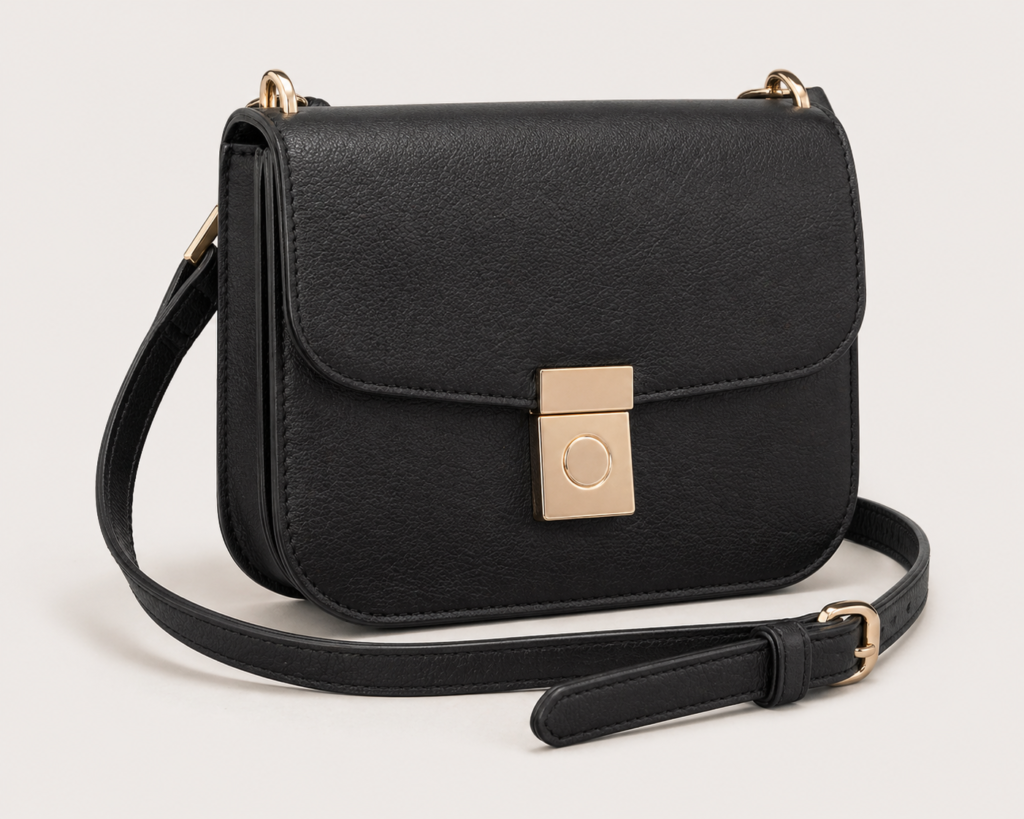
A crossbody handbag is defined by a single long strap — long enough to wear diagonally across the torso, with the bag resting on the opposite hip from where the strap meets the shoulder. That diagonal positioning is the defining feature. It’s not just aesthetic. It distributes weight differently than a shoulder bag, reduces strain on a single side of the body, and keeps the bag positioned against the body rather than dangling freely.
This is what separates a true crossbody from a shoulder bag. A shoulder bag rides on one shoulder, often at arm level, and shifts position with movement. A crossbody is anchored. You can run for a train, reach into a crowded market stall, or navigate a busy trade floor without the bag moving out of place.
The distinction from a tote or handbag is even clearer. Totes and structured handbags typically lack long straps altogether — they’re carried in hand or crook of elbow. That requires continuous attention. A crossbody eliminates that entirely. Both hands stay free, and the bag stays in a predictable position throughout the day.
Some styles blur these lines by including both a short handle and a long crossbody strap. Those are technically convertible bags — functional in multiple configurations. For sourcing purposes, the crossbody strap and its length are what define the category.
Key Features of a Crossbody Handbag
Design decisions matter more in crossbody bags than most people recognize. When you’re evaluating samples, working with a manufacturer, or reviewing wholesale specs, these are the structural elements that separate a quality crossbody from one that will underperform in the market.
Adjustable Strap Length
This is non-negotiable. A fixed strap limits who can wear the bag comfortably and how it can be styled. Adjustable straps — typically through a sliding buckle or loop system — allow the bag to sit at different heights on the body, accommodate different body proportions, and transition between casual and more polished looks simply by changing the drop length.
The quality of strap hardware matters as much as adjustability. Cheap buckles wear out, loosen under tension, or break at the slider point. In leather styles, the strap attachment points — where hardware connects to the body of the bag — are stress points that should be reinforced with rivets or bar tacks. When reviewing manufacturing specs, this is worth examining closely.
Compact, Structured Silhouette
Most crossbody handbags fall in a compact size range — roughly 7 to 11 inches wide and 5 to 8 inches tall. That’s not a limitation. It’s a design intention. The bag needs to stay close to the body and move with the wearer without bulk. Too large and it loses the hands-free advantage; it starts to feel unwieldy.
Within that compact footprint, structure matters. An unstructured bag sags, loses shape over time, and can look sloppy in polished contexts. A well-made crossbody uses internal lining, interfacing, or a firm base to hold its shape through daily use.
Interior Organization
Buyers and end consumers consistently rate interior organization as a deciding factor in repeat purchases. A single open compartment is rarely enough. The most functional crossbody designs include a main zippered compartment, at least one interior slip pocket for flat items like cards and cash, and often a back exterior pocket for frequently accessed items.
RFID-blocking pockets have become a common value-add, particularly in styles marketed toward travelers. For brands targeting security-conscious demographics, this feature commands attention and can justify a higher price point.
Hardware and Closure Quality
Zippers, snaps, magnetic closures, and turn-lock hardware all affect how a crossbody feels in daily use — and how it holds up over time. YKK zippers remain the benchmark for longevity. Magnetic snap closures are convenient but should be backed with interfacing to prevent distortion of the bag’s exterior. Turn-lock closures are stylish and durable when properly seated in reinforced leather or faux leather.
From a manufacturing standpoint, hardware sourcing and consistent quality control here are areas where brands frequently encounter problems. Misaligned zippers, loose snaps, and tarnishing hardware are among the most common quality complaints in this product category.
Material Selection
Material choice defines both the aesthetic and the functional life of a crossbody bag. Genuine leather offers longevity and develops character with age. It appeals to premium and mid-market positioning. PU leather and other vegan alternatives have improved significantly in recent years — modern high-quality PU materials are visually close to genuine leather and can withstand reasonable daily use, though long-term durability remains a distinction.
Nylon and polyester crossbodies serve the functional end of the market: lightweight, water-resistant, easy to clean. Canvas works well for casual and lifestyle-oriented styles. Technical fabrics with water-resistant coatings are increasingly popular for travel and outdoor-adjacent crossbody designs.
Key Benefits of Using a Crossbody Handbag
Understanding the benefits consumers care about helps you make better sourcing and product development decisions. These aren’t abstract selling points — they’re the reasons people replace their shoulder bags with crossbodies and don’t go back.
التنقل بدون استخدام اليدين
The core benefit. Wearing a bag diagonally across the body frees both hands for everything else — holding a coffee, using a phone, managing bags from a shopping trip, navigating public transport. This freedom has real daily value, and it’s the feature consumers most frequently cite when explaining why they prefer crossbodies.
For retailers, this is an easy conversation to have. The value is immediate and concrete. Shoppers don’t need to be convinced. They experience the difference the first time they wear the bag.
Even Weight Distribution
A properly fitted crossbody distributes the bag’s weight across the torso rather than concentrating it on one shoulder. Over the course of a full day, this is a meaningful difference. Shoulder strain from heavy or improperly carried bags is a common complaint — particularly for people who carry consistently throughout the day for work or travel.
The key word is “properly fitted.” An adjustable strap worn at the right length positions the bag against the hip, where the body bears weight most efficiently. Too long and the bag swings; too short and it rides up near the armpit. Strap adjustability, again, is central to this benefit actually being realized.
Security and Theft Resistance
A crossbody worn against the front of the body is significantly harder to access without the wearer’s knowledge than a shoulder bag or backpack. In crowded environments — markets, transit hubs, tourist areas — this matters. The bag stays in the wearer’s field of vision and physical contact, reducing the opportunity for opportunistic theft.
Features that enhance security include exterior zippers that face inward when worn, anti-slash strap materials (steel cable reinforcement within fabric or leather straps), RFID-blocking pockets, and low-profile hardware that doesn’t broadcast the bag’s contents or value. Travel-oriented brands have built strong market positions around these security features.
Styling Versatility
A well-designed crossbody crosses dress codes. The same leather crossbody can work with a professional outfit during the workday and transition to evening wear without looking out of place. That versatility is part of the category’s broad appeal — it eliminates the need for multiple bags for different occasions.
This versatility has a wholesale implication. Buyers who stock crossbodies can serve a broader range of consumer use cases with fewer SKUs than if they were stocking bags designed for single occasions.
Lifestyle Compatibility
Crossbody handbags fit the way people actually move through their days. Whether the use case is commuting, travel, running errands, attending events, or navigating work environments, the crossbody adapts. That adaptability is relatively rare in the accessories category — most bag silhouettes serve a narrower range of contexts.
Different Types of Crossbody Handbags
The crossbody category is broad. Understanding the distinctions between types helps with range planning, buyer conversations, and manufacturing specifications.
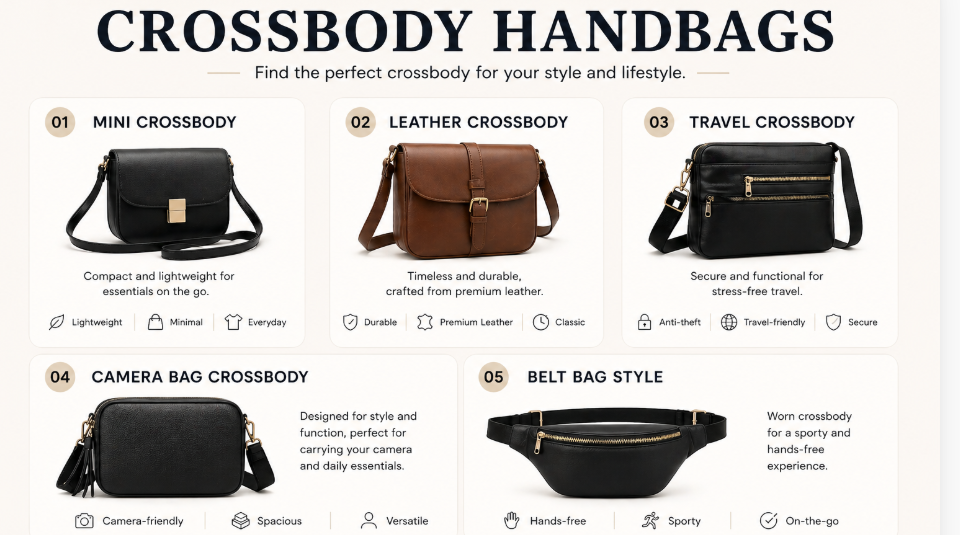
| النوع | Size Range | الميزات الرئيسية | Primary Use Case |
|---|---|---|---|
| Mini Crossbody | 5–7″ wide | Minimal compartments, card/phone/keys capacity | Evening, casual outings |
| Standard Crossbody | 8–11″ wide | Main compartment, interior pockets, adjustable strap | Everyday wear, commuting |
| Leather Crossbody | يختلف | Full-grain or PU leather construction, structured silhouette | Professional, dressy |
| Travel Crossbody | 9–12″ wide | Anti-theft features, RFID pockets, water-resistant material | Travel, outdoor use |
| Designer / Fashion Crossbody | يختلف | Logo hardware, premium materials, trend-driven detailing | Fashion-forward, premium market |
| Saddle Crossbody | 8–10″ wide | Curved flap closure, equestrian-inspired hardware | Casual to smart casual |
| Belt Bag / Fanny Pack Crossbody | 6–10″ wide | Wide adjustable strap, can convert to waist wear | Active lifestyle, festivals |
| Camera Bag Crossbody | 7–9″ wide | Box-shaped, protective padding, side-entry | Tech carry, everyday utility |
Each type has distinct manufacturing requirements. Mini crossbodies demand precision in small-scale hardware and fine stitching work. Travel crossbodies require specific material sourcing to meet functional standards. Leather styles carry significant variation in cost depending on hide sourcing and treatment. When working with a manufacturer, knowing which category you’re producing for shapes every downstream decision.
Here I have compiled a list. In this “Top 13 Custom Bags Manufacturers in China“, you can click to learn more.
How to Choose the Right Crossbody Handbag
Whether you’re making a sourcing decision, advising a retail buyer, or developing a new style, these selection criteria are the ones that actually move product and drive satisfaction.
Match Size to Intended Use
Ask what the bag needs to carry. A crossbody for daily commuting needs to hold a phone, wallet, keys, earbuds, and potentially a compact charger. A travel crossbody might need to accommodate a passport, boarding pass wallet, and a small tablet. An evening bag needs only essentials. Getting the size wrong in either direction creates a product that doesn’t meet its core promise.
When evaluating samples, physically load the bag with the target contents. Does it close cleanly? Does the strap sit properly once the bag has weight in it? Does the structure hold? These tests reveal what spec sheets don’t.
Material and Durability Alignment
Match material to expected use intensity. Genuine leather handles daily use over years with proper care. PU alternatives are viable for moderate-use products in the mid-market. Nylon and polyester are the right choices when weight, weather resistance, or wash-ability are priorities. Canvas suits casual and seasonal styles.
Be realistic about shelf life. A product positioned as everyday carry but constructed with materials that will show wear within six months creates returns and damages brand reputation. The material-to-positioning alignment needs to be honest.
Hardware Quality and Finish Consistency
Buyers and consumers notice hardware. A bag with beautiful construction and poor-quality zippers communicates carelessness. Hardware finish should be consistent across all metal elements — buckles, zippers, D-rings, and closure hardware should match in color, sheen, and weight.
Plating durability is a frequent issue with electroplated hardware. Gold-tone and silver-tone finishes that wear through quickly or develop uneven patina are a common complaint. If premium hardware appearance is part of the product’s appeal, the sourcing and quality verification process for hardware deserves dedicated attention.
Occasion and Positioning Clarity
A crossbody that tries to be everything often succeeds at nothing in particular. The most commercially successful crossbody styles have clear positioning: this is a travel bag, or this is an everyday leather bag for professionals, or this is a fashion-forward mini for weekend wear. That clarity guides design decisions, materials selection, and how the product is merchandised.
Undefined positioning leads to muddled product development and makes it harder for buyers to understand where the bag fits in their assortment.
Strap System Evaluation
Beyond adjustability, evaluate the full strap system: attachment hardware, strap width (narrower straps concentrate weight; wider straps distribute it), strap material durability, and the quality of padding or lining if present. A bag that looks correct on spec but has a strap that fails under load — or develops twisting, wear, or stretching with regular use — creates satisfaction problems at retail.
For styles with detachable straps or convertible configurations, test the detachment and reattachment mechanism repeatedly. Hardware that loosens or becomes difficult to use after repeated cycles is a common failure point.
Interior Layout and Pocket Placement
Interior organization should be designed for how people actually access their belongings. Phones are retrieved dozens of times per day — they benefit from an exterior or easily accessible interior pocket. Cards and cash should have dedicated flat pockets, not float in the main compartment. Frequently accessed items shouldn’t require opening and navigating multiple zippers.
Walk through the use sequence: user approaches a point of sale, needs card and phone. Can they access both without putting the bag down or fully opening it? That’s the standard a well-designed crossbody should meet.
الخلاصة
The crossbody handbag is one of the most consistently performed categories in the accessories market — and for reasons that go deeper than trend cycles. The design solves real problems: hands-free carry, weight distribution, security, and versatile styling across occasions. When those functional benefits are built into a well-manufactured product with appropriate materials, quality hardware, and thoughtful interior design, you have something that consumers buy, repeat, and recommend.
Getting the sourcing right matters just as much as getting the design right. Manufacturing quality varies significantly in this category, and the details — hardware consistency, strap construction, interior finishing — are what separate products that perform well long-term from those that generate complaints.
Hetebag is a bag manufacturer based in Huadu, China, with 15 years of manufacturing experience and partnerships with multiple factories. If you’re currently sourcing crossbody handbags or planning to expand your range, working with a manufacturer who understands the category at this level makes a genuine difference. You’re welcome to leave your contact information directly on the website — the team is ready to discuss your requirements and looks forward to working with you.
الأسئلة الشائعة
What is a crossbody handbag?
A crossbody handbag is a bag designed with a long strap that allows it to be worn diagonally across the body, keeping it secure and hands-free during daily use.
What is the main benefit of using a crossbody bag?
The biggest benefit is hands-free convenience, allowing users to carry essentials while keeping both hands free for other activities like commuting, shopping, or traveling.
Are crossbody handbags good for travel?
Yes, crossbody handbags are ideal for travel because they are secure, lightweight, and keep belongings close to the body, reducing the risk of theft.
What size crossbody handbag should I choose?
It depends on your needs. Small crossbody bags are suitable for essentials like phone and keys, while medium sizes are better for daily use or commuting.
What materials are commonly used for crossbody handbags?
Common materials include genuine leather, PU leather, nylon, polyester, and canvas, each offering different levels of durability and style.
How should a crossbody bag fit?
A crossbody bag should sit comfortably at the hip or waist level, with the strap adjusted so it does not swing or sit too high on the body.
Are crossbody handbags still in fashion?
Yes, crossbody handbags remain highly popular due to their practicality, minimal design trend, and suitability for modern urban lifestyles.


