
 Arabic
  English
  Italian
  French
  German
  Spanish
 أ حقيبة الظهر can make your daily life easier, but it might also quietly become a daily source of trouble. The shoulder straps that are too wide, the easily damaged zippers, the chaotic storage design, or the insufficient protection for the computer – these are often the problems that users only realize after buying the wrong backpack. The real challenge is not finding a backpack, but finding one that truly meets the needs of modern life and work.
Whether you are a personal consumer, a brand purchaser, or an enterprise developing its own product line, when choosing a backpack, you need to pay close attention to core factors such as capacity, comfort, material durability, storage structure, and functional design. An excellent backpack should not only meet the daily carrying needs, but also continuously provide comfort, practicality and reliability during long-term use. This article will guide you to understand the most important key features to consider when purchasing a backpack, helping you find the products that are truly suitable for different usage scenarios.
Capacity and Size
The most common sizing mistake isn’t going too small. It’s going too large and assuming more volume equals more value. It doesn’t.
Backpack capacity is measured in liters, and that number should always align with the intended use case:
- 10L–20L — Day trips, commuting, light school use. Compact, fast, and easy to carry.
- 20L–35L — The everyday workhorse range. Covers laptops, gym gear, short travel, and office loads.
- 35L and above — Hiking, multi-day trips, or users who carry significant equipment.
Here’s what often gets overlooked: packing efficiency matters just as much as raw volume. A 30L backpack with smart internal structure can carry more usable gear than a poorly organized 40L bag. Dead space — corners, awkward pockets, wasted depth — is the enemy of a well-designed pack.
For bulk buyers and custom backpack manufacturers, getting the capacity right for a specific target audience is one of the first decisions that shapes every other design element that follows.
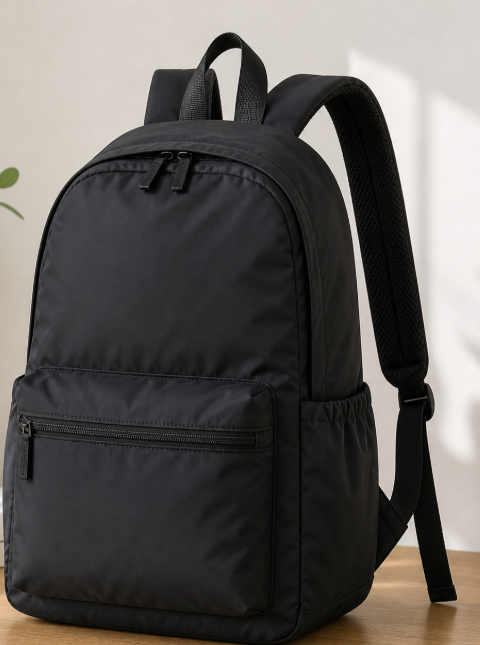
Comfort and Ergonomic Design
A backpack that hurts is a backpack people stop using. That’s a reality worth taking seriously — especially when the bags you’re sourcing or manufacturing will be carried for hours at a time.
Comfort isn’t just about padding. It’s a system:
- أحزمة الكتف need to be contoured and padded without being so thick they trap heat. Flat, rigid straps cause pressure points within the first 30 minutes.
- Sternum and chest straps distribute load across the torso instead of concentrating it on the shoulders alone. They’re non-negotiable for any pack above 25L.
- Back panels are where breathability becomes relevant. Mesh-suspended panels create airflow between the bag and your back — a small feature that makes a significant difference during commutes or warm climates.
- توزيع الوزن is a design choice, not just a function of how the user packs. Bags engineered with the center of gravity close to the body feel lighter than bags of identical weight that hold load away from the spine.
- Frame or framesheet support in larger packs transfers weight to the hips, dramatically reducing shoulder fatigue. For hiking or travel-focused designs, this is worth including even in mid-volume bags.
Ergonomic design isn’t cosmetic. It’s what keeps someone loyal to a specific backpack brand over years of use.
Material and Durability
Material selection is where long-term value gets decided — not at the sales counter, but six months into daily use.
The most common materials in quality backpacks:
البوليستر is the most widely used fabric in the industry. It’s cost-effective, lightweight, and holds color well. For everyday bags and fashion-forward designs, it performs reliably. The tradeoff is that lower-denier polyester wears faster under abrasion.
النايلون — particularly ballistic nylon or high-denier ripstop — is used in premium travel and work bags because of its superior tear resistance and inherent water repellency. It costs more to source, but it earns its place in bags built for longevity.
قماش brings a heritage aesthetic that’s popular in casual and vintage-inspired designs. It’s robust, develops character over time, but adds weight. Not ideal for lightweight or technical applications.
الجلد (full-grain or PU) signals a premium positioning. It works in business and fashion categories where appearance matters as much as function.
Beyond fabric, three things separate durable bags from disposable ones:
- Zipper quality. YKK or equivalent — coil gauge, slider smoothness, and pull durability are all indicators of overall build quality.
- Stitching density. Look at the seams under stress points — shoulder strap attachment, base corners, handle stitching. Double or triple stitching in these areas is not optional.
- Reinforced base panels. The bottom of a backpack absorbs the most abuse. An unlined, single-layer base will show failure first.
For custom backpack manufacturers, material specification is one of the most influential levers in both product quality and final pricing.
Storage Compartments and Organization
Ask someone what they dislike about their current backpack. Nine times out of ten, it’s not the material or the color — it’s that they can’t find anything.
Organization is one of the most underrated features in backpack design, and one of the most requested modifications in custom projects.
A well-organized backpack typically includes:
- A primary main compartment — deep enough to fit folded clothing, documents, or larger items without forcing a compromising pack.
- A dedicated laptop sleeve — suspended off the base, padded on all sides, ideally with a hook-and-loop closure that holds the device in place during transit.
- A front organization panel — a secondary compartment opened flat to reveal pen loops, key clips, card slots, and small-item pockets. This single panel can replace four separate accessories for most users.
- Quick-access front pocket — for items that need to be retrieved without opening the main bag: transit cards, earphones, small snacks.
- Side pockets — at minimum, one water bottle holder with elastic retention. On larger bags, dual side pockets for bottles and an umbrella.
- Hidden rear pocket — flush against the back panel, useful for passports, wallets, and items that benefit from being inaccessible to others in crowded environments.
The architecture of compartments affects not just convenience but perceived value. Buyers notice when a bag opens intelligently.
Laptop and Tech Protection
The laptop compartment is often the deciding feature for professional and student users — and it’s frequently the area where budget bags cut corners most visibly.
What proper laptop protection actually requires:
Suspended compartment design — the laptop sleeve should “float” above the base, so if the bag is dropped, the device doesn’t absorb the full impact against a hard floor. This is sometimes called a “safe drop” or “suspended” panel and is standard in quality work bags.
Padding thickness and coverage — padding on the back panel of the laptop sleeve isn’t enough. Side panels and the base insert all need protection for a device that retails at $1,000 or more.
Size specificity — a 13″ sleeve in a 17″ compartment is useless. Quality backpacks specify sleeve dimensions for 13″, 14″, 15.6″, and 17″ devices, and the padding is scaled accordingly.
Tablet or secondary device sleeve — many users carry both a laptop and a tablet. A dedicated secondary sleeve prevents screen-on-screen abrasion.
Cable management — a small detail that matters: internal routing for charging cables, with a port or cutout for external USB access, keeps cords from becoming a tangled problem at the bottom of the bag.
USB charging ports are now expected on travel and commuter-focused backpacks. The pass-through port itself is a minor hardware addition, but the internal cable routing and the placement of the exterior port are design decisions worth getting right.

Weather Resistance and Security
Weather and security features often go unnoticed — until the moment they’re needed. By then, it’s too late.
Water resistance vs. waterproofing — these are different things, and the distinction matters. Water-resistant fabric (typically DWR-coated polyester or nylon) repels light rain and splashes. Fully waterproof bags use sealed seams and waterproof zippers to withstand sustained exposure. Most users need the former; buyers sourcing for outdoor or hiking categories often need the latter.
Waterproof zippers use a molded or coated construction that prevents water ingress at the zipper track. They’re more expensive and slightly stiffer than standard coil zippers, but critical for exposed-use applications.
Rain covers are included in many hiking and travel backpacks as a secondary line of defense. A compact integrated cover stored in the base of the bag adds minimal bulk and significant peace of mind.
Lockable zipper pulls — rings or loops that accept a TSA-approved lock. This feature is increasingly expected on travel bags.
RFID-blocking pockets — integrated into a dedicated sleeve, typically in the front or hidden compartment. Relevant for users in high-density urban environments or frequent travelers.
Hidden pocket placement — pockets positioned against the back panel or along concealed side seams are difficult to access without the wearer’s knowledge. This is a passive security feature that requires no behavioral change from the user.
These features add cost, but they add retention. Users who have experienced bag theft or a rain-soaked laptop don’t compromise on these details when buying again.
Style and Intended Use
Functionality without alignment to lifestyle is just a bag. The best backpack is one the user actually chooses every day.
Style and use-case alignment breaks down into several clear categories:
Minimalist commuter backpacks — clean exterior, slim profile, professional colorways. Suited for urban professionals who value discretion. Typically 20L–28L.
Casual and school backpacks — expressive design, multiple color options, sturdy construction for daily use. Often 20L–30L with print or embroidery customization potential.
Travel backpacks — clamshell opening for TSA screening, carry-on compliant dimensions (typically under 40L), compression straps, and hip belt capability. Designed for frequent flyers.
Hiking and technical backpacks — hip belt with load lifters, hydration reservoir compatibility, trekking pole attachments, and materials rated for weather exposure. Volume ranges from 25L day packs to 70L+ expedition packs.
Fashion and lifestyle backpacks — prioritize visual identity. Materials, hardware finish, logo placement, and color story drive purchase decisions more than technical specifications.
Understanding which category a backpack belongs to shapes every other decision in the design process — materials, hardware, compartment layout, and price positioning. Misalignment between style category and functional features is one of the most common reasons custom backpack projects require revision.
الخلاصة
A backpack that gets all seven of these features right is rare. Most products on the market make compromises — usually in comfort, material durability, or organizational depth — in order to hit a price point.
That’s precisely why understanding these features matters, whether you’re selecting a design for a private label program, evaluating samples from a factory, or advising buyers on what to look for.
The best backpack for any use case is the one that solves the right problems without introducing new ones. Size that matches actual needs. Materials built for the intended environment. Organization that reflects how people actually move through their day. Comfort that holds up past the first hour of use.
If you’re looking for a manufacturer who understands these details from the inside out — هيتباغ is based in Huadu, China, with over 15 years of manufacturing experience and partnerships across multiple production facilities. From material selection to final stitching inspection, the process is built around getting these features right at scale.
If you’re currently sourcing or developing a backpack line and want to explore what’s possible, you’re welcome to leave your contact information directly on the website. We look forward to hearing from you — and to building something worth carrying.


