
 Arabic
  English
  Italian
  French
  German
  Spanish
 If you are looking for a custom travel bag manufacturer in China, you may have visited many suppliers’ websites. They all have attractive product pictures and claim to be able to customize. But the real question is: Does this factory truly understand your requirements? Can it deliver on time? And when problems arise, does it have the ability to solve them?
These issues are usually only discovered after the start of cooperation. A good travel bag manufacturer is not only responsible for producing products, but should also be able to provide professional suggestions in terms of design, material selection, process optimization, and the production process.
هيتباغ has been engaged in custom luggage production for a long time. We have dealt with various types of customer demands, including brand customization, bulk purchases, and functional travel bag projects. To help purchasers more conveniently screen suppliers, we have compiled this list of 20 Chinese custom travel bag manufacturers. At the same time, we also introduce what aspects should be focused on when choosing a manufacturer.
Why Choose a Custom Travel Bag Manufacturer in China?
China remains the center of gravity for soft luggage and travel bag production. Three decades of infrastructure investment, skilled labor pools, and material supply chains have turned regions like Guangdong and Fujian into ecosystems built specifically for bag manufacturing. Buyers who source elsewhere often discover that smaller manufacturing hubs simply lack the depth of specialized suppliers needed to keep a travel bag program running smoothly at scale.
Cost-Effective Manufacturing
Factories here benefit from dense clusters of fabric mills, hardware suppliers, and trim vendors sitting within a short drive of the sewing floor. A factory in Huadu, Guangzhou, for example, can source zippers, webbing, and buckles from neighboring workshops the same afternoon an order is confirmed. This proximity trims lead times and removes the freight markups that buyers often absorb when sourcing components from overseas. Lower input costs do not have to mean lower standards; the best manufacturers reinvest that efficiency into stronger quality control rather than cutting corners.
Scale plays a role too. Because so many factories compete within the same cluster, raw material suppliers keep their pricing sharp and their delivery windows tight. A fabric mill that misses deadlines loses business quickly when three competitors sit within walking distance. That competitive pressure benefits every buyer sourcing from the region, even those placing modest first orders.
Strong OEM & ODM Capabilities
Most experienced factories operate both OEM (original equipment manufacturer) and ODM (original design manufacturer) tracks. Under OEM, you bring your own tech pack and the factory builds to your exact specification, matching stitch counts, hardware placement, and compartment dimensions to the letter. Under ODM, the factory’s design team develops a bag concept based on your brief, which is useful for brands that want a market-ready product without running an in-house design cycle from scratch.
A capable travel bag manufacturer will move fluidly between the two, adjusting pattern grading, hardware placement, and compartment layouts without treating your project like a one-size-fits-all template. This flexibility matters most during the first year of a new product line, when brands are still testing which features their customers actually value versus which ones sound good on paper. A factory experienced in both models can pivot your second production run based on real sales feedback instead of locking you into the original design forever.
Flexible Production Capacity and Global Export Experience
A factory that has shipped to the EU, North America, and Australia understands documentation requirements, customs classification, and packaging standards that a domestic-only workshop simply has not encountered. Export-seasoned manufacturers also tend to carry more flexible capacity, since they are used to juggling container bookings across multiple markets and multiple time zones.
That flexibility matters when your launch date shifts or your first order needs to scale quickly after a strong pre-sale. Factories that have handled sudden demand spikes for other clients usually have contingency plans, whether that means shifting a second production line onto your order or calling in overflow capacity from a trusted subcontractor. Ask any shortlisted factory how they handled a demand spike in the past twelve months. Their answer will tell you a great deal about how they will handle yours.
How We Selected the Top 20 Manufacturers
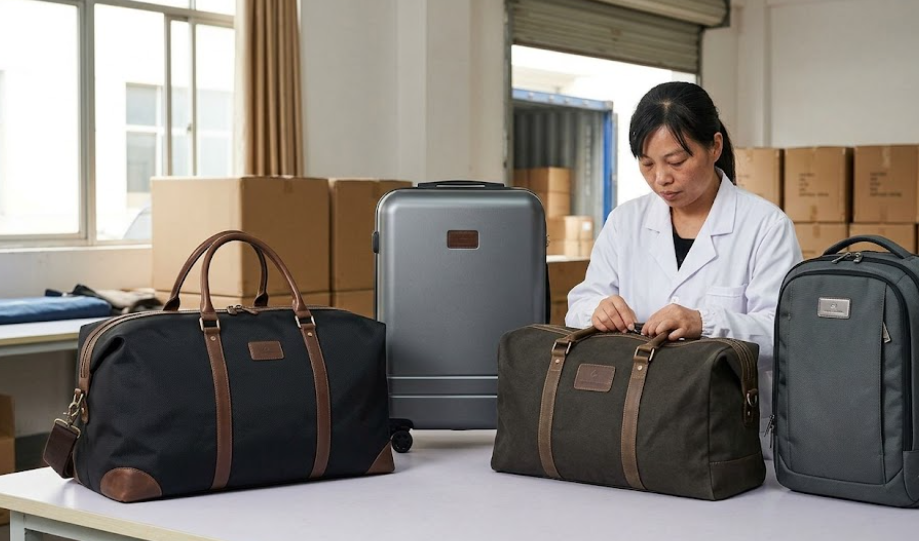
Ranking travel bag factories is not a popularity contest. The list below was built against criteria that procurement teams actually rely on when they qualify a new supplier, drawn from years of sitting across the negotiating table from both factory owners and international buyers.
Manufacturing Experience and Reputation
Years in business tell part of the story, but what matters more is what a factory has produced during that time. We prioritized manufacturers with a documented history of travel bags, duffel bags, and related soft luggage categories, rather than general contract sewing shops that occasionally accept bag orders as filler work between larger contracts.
A factory that has survived multiple economic cycles and retained long-term clients usually has the operational discipline buyers need. Reputation also shows up in smaller signals: whether former clients are willing to serve as references, whether the factory has any documented history of shipment disputes, and whether their management team has stayed stable or turned over repeatedly. High staff turnover at the management level is often an early warning sign of internal instability that eventually affects order fulfillment.
Longevity also correlates with something less obvious: pattern library depth. A factory that has produced travel bags for fifteen years has likely developed dozens of proven base patterns for handles, wheel housings, and telescoping straps. When you bring them a new design, they can draw on that library to flag structural weaknesses early, rather than discovering them after your first sample falls apart during testing. Newer workshops without that accumulated pattern knowledge tend to learn these lessons on your production run instead of before it.
Product Quality and Certifications
Certifications are not decoration. A factory holding BSCI social compliance audits or working toward ISO 9001 quality management standards has already built the internal systems that catch defects before they reach your container. These frameworks force factories to document their processes, which means fewer surprises when your quality inspector arrives for a pre-shipment check.
We also gave weight to manufacturers who can produce test reports from recognized labs such as SGS, since third-party verification carries far more credibility than a factory’s internal claims. A factory willing to pay for independent testing on tensile strength, colorfastness, or zipper cycle life is a factory confident enough in its own output to invite scrutiny. That confidence is worth noticing, because it rarely exists at facilities cutting corners on materials.
Customization Services and Customer Support
A manufacturer’s website can promise anything. What separates a genuine customization partner is whether they can walk you through pattern-making decisions, recommend hardware alternatives when your first choice is backordered, and respond to sample feedback within a reasonable window.
We weighted responsiveness and technical fluency heavily, because a factory that communicates poorly during sampling will communicate poorly during a production crisis too. The best manufacturers assign a dedicated merchandiser to mid-size and larger accounts, someone who understands your brand’s specific requirements well enough to flag potential issues before they become expensive mistakes. If a factory cannot commit to a single point of contact during your evaluation calls, expect that same disorganization to follow you into production.
أفضل 20 شركة مصنعة لحقائب السفر المخصصة في الصين
| الرتبة | الشركة | الموقع | المنتجات الرئيسية | OEM/ODM |
|---|---|---|---|---|
| 1 | هيتباغ | قوانغتشو، قوانغدونغ | Travel Bags, Gym Bags, Backpacks, Tote Bags | ✔ |
| 2 | Quanzhou Hengxing Bags Co., Ltd. | تشوانتشو، فوجيان | Travel Bags, Hiking Bags, Backpacks | ✔ |
| 3 | Xiamen Benshine Co., Ltd. | Xiamen, Fujian | Travel Bags, Duffel Bags, Sports Bags | ✔ |
| 4 | Kingstar Bag & Case Co., Ltd. | شينزين، قوانغدونغ | Travel Bags, Laptop Bags, Business Bags | ✔ |
| 5 | Quanzhou Dason Bags Co., Ltd. | تشوانتشو، فوجيان | Travel Bags, Cooler Bags, Duffel Bags | ✔ |
| 6 | Fuzhou Ivy Deco Co., Ltd. | Fuzhou, Fujian | Travel Bags, Promotional Bags | ✔ |
| 7 | Fujian Top Trade Co., Ltd. | تشوانتشو، فوجيان | Travel Bags, Outdoor Bags | ✔ |
| 8 | Yiwu LeYoung Import & Export Co., Ltd. | Yiwu, Zhejiang | Travel Bags, Luggage Bags | ✔ |
| 9 | Guangzhou Yakeda Outdoor Travel Products Co., Ltd. | قوانغتشو، قوانغدونغ | Tactical & Travel Bags | ✔ |
| 10 | Guangzhou Mingxin Bags Manufacturing Co., Ltd. | قوانغتشو، قوانغدونغ | Travel Bags, Fashion Bags | ✔ |
| 11 | Quanzhou Golden Nonwoven Products Co., Ltd. | تشوانتشو، فوجيان | Travel Bags, Promotional Bags | ✔ |
| 12 | Dongguan Hengsheng Bags Co., Ltd. | Dongguan, Guangdong | Duffel Bags, Travel Bags | ✔ |
| 13 | Shenzhen Zhengrong Sporting Goods Co., Ltd. | شينزين، قوانغدونغ | Sports & Travel Bags | ✔ |
| 14 | Dongguan Jiayu Luggage Co., Ltd. | Dongguan, Guangdong | Travel Bags, Luggage | ✔ |
| 15 | Quanzhou Kingdo Bag Co., Ltd. | تشوانتشو، فوجيان | Duffel Bags, Backpacks, Travel Bags | ✔ |
| 16 | Xiamen Novel Bag Co., Ltd. | Xiamen, Fujian | Travel Bags, Cooler Bags | ✔ |
| 17 | Fujian Xinlong Bags Co., Ltd. | تشوانتشو، فوجيان | Travel Bags, Outdoor Bags | ✔ |
| 18 | Guangzhou Huaxin Bags Co., Ltd. | قوانغتشو، قوانغدونغ | Travel Bags, Sports Bags | ✔ |
| 19 | Dongguan Pinzhi Bags Co., Ltd. | Dongguan, Guangdong | Travel Bags, Cosmetic Bags | ✔ |
| 20 | Ningbo Best Travel Products Co., Ltd. | Ningbo, Zhejiang | Travel Bags, Luggage Accessories | ✔ |
Guangdong and Fujian dominate this list for good reason. Both provinces have decades of accumulated expertise in soft-sided luggage, dense supplier networks for zippers and webbing, and direct access to major export ports at Shenzhen, Guangzhou, and Xiamen. Buyers researching this space often start with our breakdown of custom backpack manufacturers in China, since backpack and travel bag production frequently overlap within the same facilities, and factories that excel at one category usually carry transferable skill into the other.
Zhejiang factories, represented here by entries in Yiwu and Ningbo, tend to specialize in high-volume, price-sensitive production runs, which makes them a strong fit for brands prioritizing large batch orders over intricate customization. Guangdong-based manufacturers, by contrast, often lean toward more technical construction, multi-compartment designs, and closer collaboration during the design phase. Neither approach is inherently better; the right fit depends entirely on what your specific product line demands.
It also helps to understand how these regions differ in workforce composition. Fujian’s bag clusters grew heavily around export-oriented family businesses, which means many mid-sized factories there still operate with founder-level involvement in day-to-day decisions. That can translate into faster approvals on design changes, since you are often negotiating directly with someone who has authority to say yes without escalating through several layers of management. Guangzhou’s larger industrial parks, by comparison, often separate design, production, and merchandising into distinct departments, which brings more structured process control at the cost of slightly slower internal communication on smaller change requests.
How to Choose the Right Travel Bag Manufacturer
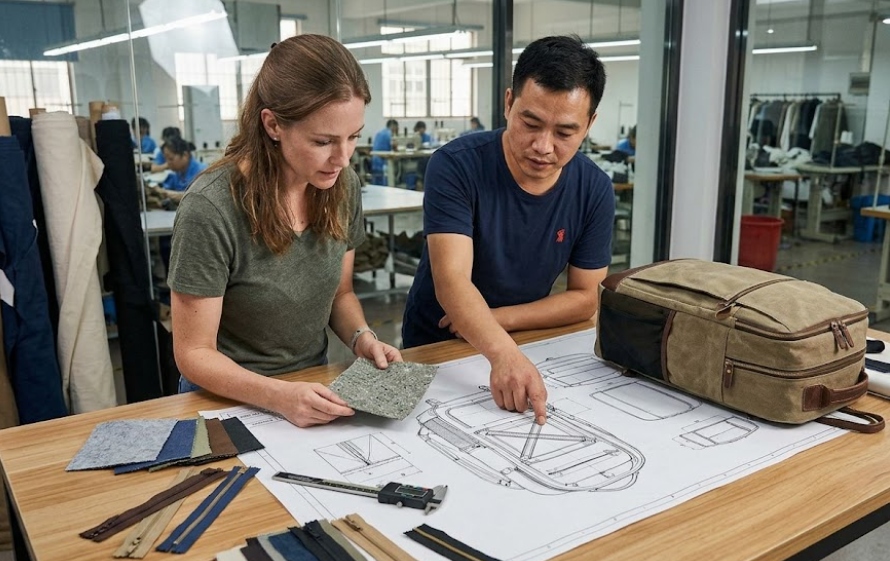
A ranked list is a starting point, not a final answer. Your next step is running each shortlisted factory through a structured evaluation before you commit to a purchase order. Skipping this stage is the single most common reason first-time buyers end up disappointed with their initial shipment.
Evaluate Factory Experience and Production Capacity
Ask directly how many production lines are dedicated to soft luggage, and how many units per day those lines can output. A factory that quotes vague numbers or dodges the question is signaling that their real capacity may not match what their sales team promised during your initial inquiry.
Request photos or a video walkthrough of the cutting room and sewing floor if an in-person visit is not possible yet. You want evidence, not assurances. Pay attention to how organized the cutting tables look and whether finished goods are stored properly before shipment, since a chaotic production floor often produces chaotic output. Experienced buyers also ask to see the factory’s current order book, which reveals whether your production slot might get pushed back by a larger client with more negotiating leverage.
Compare Material Quality and Customization Options
Travel bags face harsher wear than most soft goods categories. Airport handling, weather exposure, and repeated packing cycles all stress the fabric, zippers, and seams differently than a handbag or tote would experience. Ask what fabric weights the factory typically works with, and whether they can source recycled or certified materials if your brand needs that positioning.
دليلنا إلى مواد تصنيع الحقائب المخصصة breaks down how fabric choice affects durability and cost, which is worth reviewing before your first sourcing call. Zipper quality deserves particular attention here; factories using branded components such as YKK zippers tend to see fewer field failures than those relying on unbranded hardware, and that single component choice often determines whether a customer’s first negative review is about a broken zipper pull rather than anything related to design.
Beyond zippers, look closely at how a factory handles reinforcement points. Travel bags take repeated stress at the base, at handle attachment points, and along wheel housings if the design includes them. A factory with genuine travel bag experience will proactively suggest bar-tacking or box-stitch reinforcement at these stress points without being asked, because they have already seen what happens to bags that skip this step.
Review Lead Times, MOQ, and Quality Control
| Evaluation Factor | What to Ask the Factory | لماذا هذا مهم؟ |
|---|---|---|
| Minimum Order Quantity | What is the MOQ per style and per color? | Determines whether a small-batch launch is feasible |
| Sample Lead Time | How many days from confirmation to sample delivery? | Signals workshop scheduling discipline |
| Mass Production Lead Time | What is the standard timeline once samples are approved? | Affects your retail or launch calendar |
| Quality Control Process | Is inspection done in-house, third-party, or both? | Reduces the risk of receiving defective stock |
A factory that answers these questions clearly, with specific numbers rather than ranges padded for safety, is usually a factory that has been through this conversation many times before with serious buyers. Vague answers to any single row in that table should prompt a follow-up question rather than a shrug. Precision here is a leading indicator of precision on the sewing floor.
Tips for Sourcing Custom Travel Bags from China
Even the best manufacturer cannot produce a great bag from a vague brief. The sourcing process works both ways, and your preparation directly affects the outcome you get back. Buyers who treat sourcing as a genuine partnership, rather than a one-directional instruction, consistently end up with better first samples.
Prepare Cl#ear Product Specifications
Before reaching out to any factory, put together a tech pack that includes dimensions, fabric type, hardware specifications, and any functional requirements like laptop compartments or expandable panels. Vague requests such as “something durable and stylish” force a factory to guess, and guesses rarely match what you had in mind.
Include reference images alongside written measurements whenever possible, since visual references remove ambiguity that text alone cannot fully capture. If you have not developed a formal tech pack before, our article on how to find a trustworthy handbag manufacturer covers documentation standards that apply equally well to travel bag sourcing, including the level of detail a factory expects before quoting accurately.
Request Samples Before Mass Production
Never skip the sampling stage, even under deadline pressure. A physical sample reveals stitching quality, zipper action, and structural balance in ways that a rendering or spec sheet cannot. Test the sample under real conditions: pack it, carry it, and check how the seams hold up after repeated use.
Compare it against your original tech pack line by line, and flag every deviation before authorizing mass production. Small discrepancies at the sample stage, like a strap that sits half an inch off center, tend to multiply across a full production run if left uncorrected. Photograph every issue you find and send annotated images back to the factory rather than describing problems in text alone, since visual feedback closes the loop faster than written notes ever will.
Communicate Branding and Packaging Requirements
Logo placement, hang tag design, and polybag or gift-box specifications should be finalized before production starts, not adjusted mid-run. Factories often charge rework fees for branding changes discovered after cutting has begun, and those delays can push your delivery window past a critical sales date.
Confirm packaging dimensions early too, since box sizing affects container loading efficiency and your final freight cost. Ask your factory whether they have handled retail-ready packaging before, including barcode placement and any compliance labeling your target market requires. A factory experienced with certifications like OEKO-TEX for material safety, or familiar with GRS documentation for recycled content claims, will already understand how to align packaging language with what your compliance team needs downstream.
الخلاصة
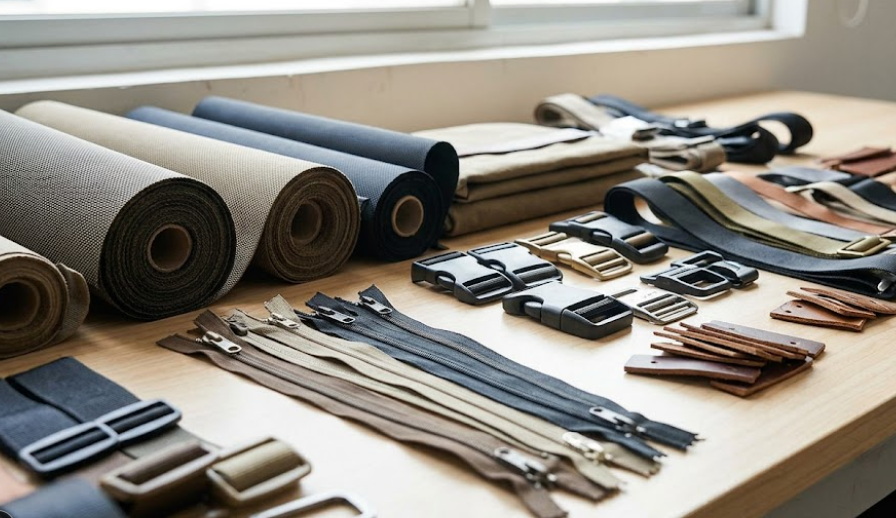
Choosing among the manufacturers on this list comes down to matching your product complexity, order volume, and certification requirements against what each factory does best. Some of these companies specialize in high-volume basics, while others are built for intricate, multi-compartment designs that demand tighter tolerances and more skilled labor. Take the time to request samples from two or three finalists rather than committing to the first factory that responds quickly, since responsiveness during a sales inquiry does not always predict responsiveness during production.
هيتباغ operates from our own factory in Huadu, Guangzhou, and we have spent 15 years building relationships across a network of specialized partner facilities throughout the region. That combination lets us handle everything from small-batch travel bag launches to large-volume programs, while keeping the same production team accountable from first sample to final shipment. If you are currently evaluating travel bag manufacturers and want a partner who can walk you through material selection, MOQ planning, and realistic lead times, leave your contact number on our website. We read every inquiry personally, and we would be glad to talk through your project and see where we can help.
Buyer Checklist for Custom Travel Bag OEM/ODM
For travel bags, supplier capability should be matched to the structure and use case. Compare factories on duffel and weekender experience, fabric sourcing, load-bearing reinforcement, zipper and hardware quality, trolley sleeves, compartments, branding, MOQ, sampling, QC, and repeat-order capacity.
- Confirm target size, carrying method, and expected load before sampling.
- Check whether the factory has experience with your chosen material and reinforcement method.
- Test handles, shoulder straps, zippers, base panels, and high-stress seams.
- Clarify how custom colors, hardware, lining, and packaging affect MOQ and lead time.
For project development, see HETEBAG’s custom travel bag manufacturing options for materials, branding, sampling, OEM/ODM, and bulk production.
الأسئلة الشائعة
How do I choose the best custom travel bag manufacturer in China?
Start by evaluating the manufacturer’s experience, production capacity, quality control system, and OEM/ODM capabilities. It’s also important to request samples, review previous export experience, and confirm certifications before placing a bulk order. Choosing a supplier with strong communication and reliable after-sales support can help reduce sourcing risks.
What is the typical MOQ for custom travel bags?
The minimum order quantity (MOQ) varies depending on the manufacturer, bag style, and level of customization. Many Chinese travel bag manufacturers offer flexible MOQs for standard designs, while fully customized products may require a higher minimum order. It’s best to discuss your project requirements directly with the supplier.
Can Chinese travel bag manufacturers produce bags with my own logo and design?
Yes. Most professional manufacturers provide OEM and ODM services, allowing you to customize logos, colors, materials, sizes, hardware, packaging, and other design details. Supplying a detailed tech pack or design drawing will help ensure your requirements are accurately understood.
How long does it take to manufacture custom travel bags?
Production time depends on the order quantity and product complexity. Sample development usually takes a few weeks, while mass production often requires several additional weeks after sample approval. Planning ahead and confirming the production schedule early can help avoid delays.
What should I ask a travel bag manufacturer before placing an order?
Before placing an order, ask about their manufacturing experience, quality inspection process, lead times, MOQ, material options, export markets, certifications, and customization capabilities. You should also request samples and clarify packaging, shipping, and payment terms to ensure a smooth production process.


