
 Arabic
  English
  Italian
  French
  German
  Spanish
 A recycled fabric can meet the color brief and still fail at the handles, carry an undocumented coating, or support a claim that does not cover the finished bag. Buyers comparing eco-friendly materials for custom bags need to connect sourcing evidence with the product’s intended load, cleaning routine, and repeated use.
Material selection needs to begin with the way the finished bag will be used. What will it carry? How often will customers reuse it? Will it face moisture, abrasion, washing, or heavy loads? Which environmental claim will appear on the label? The answers help you choose a material that performs properly and can be supported by credible documentation.
During material reviews, I look at three things before appearance: whether the claim can be verified, whether the fabric suits the bag construction, and whether the finished product will remain useful for a reasonable period. That approach gives buyers a stronger foundation for comparing suppliers, approving samples, and communicating sustainability without overstating it.
For the full range of textile and leather choices, use our guide to materials for custom bags. This article focuses on environmental claims and traceability; our مواد تصنيع الحقائب حسب الطلب page supports discussion of available material directions.
1. What Makes a Bag Material Eco-Friendly?
An eco-friendly bag material should reduce one or more environmental impacts across its life cycle without creating an unacceptable loss of performance. Relevant factors include raw material origin, recycled content, energy and water use, chemical processing, durability, repairability, packaging, and end-of-life options.
No single material performs best in every category. Organic cotton may use renewable fiber, while recycled polyester can divert plastic waste and offer better moisture resistance. Hemp is strong and requires relatively little reinforcement, while a lightweight rPET fabric may use less material per bag. The right choice depends on the product rather than the popularity of a sustainability label.
Recycled, Renewable, and Biodegradable Materials
These terms describe different material characteristics and should not be treated as interchangeable.
| Material claim | What it usually means | What a buyer should verify |
|---|---|---|
| Recycled | Part or all of the material comes from recovered pre-consumer or post-consumer inputs | Recycled percentage, source type, scope certificate, and transaction documentation |
| Renewable | The raw material can be naturally replenished, such as cotton, hemp, jute, or cork | Farming practices, processing methods, origin, and relevant certification |
| Biodegradable | The material can break down through biological activity under defined conditions | Test method, disposal environment, time frame, and whether coatings or trims affect the claim |
| Compostable | The material meets specified decomposition requirements in industrial or home-composting conditions | Applicable standard, test certificate, facility requirements, and coverage of the complete product |
A fabric described as “plant-based” is not automatically biodegradable. Some plant-based leather alternatives contain polyurethane binders or synthetic backing fabrics. A cotton bag may also use polyester sewing thread, foam reinforcement, plastic-coated labels, and metal hardware. Ask the supplier what percentage of the material is plant-derived and request a component breakdown before using a broad claim.
Why Durability and Reusability Also Matter
A reusable bag needs to survive repeated use. If handles tear, colors bleed, or the zipper fails early, customers may replace the product long before the fabric reaches its expected service life. A lighter environmental claim cannot compensate for poor construction.
I normally examine fabric weight, tensile strength, seam slippage, handle attachment, abrasion resistance, and colorfastness together. Heavy fabric is not always more durable; weave structure, yarn quality, coating, stitching, and reinforcement placement can make a greater difference. The goal is to use enough material to achieve the required performance without adding unnecessary layers.
Reusable bag claims also need a realistic use scenario. A promotional tote carrying brochures has different requirements from a grocery bag carrying canned food. Buyers developing حقائب حمل مخصصة should define the expected load, carrying frequency, handle style, and washing method before selecting fabric weight.
2. Common Eco-Friendly Materials for Custom Bags
Material names alone do not tell you how a bag will perform. Recycled polyester can be knitted or woven, light or heavy, coated or uncoated. Recycled cotton may contain short fibers that need blending for strength. You need to review the actual specification rather than approve a material from a small color card.
Recycled Fabrics: rPET, Recycled Nylon, and Recycled Cotton
rPET is commonly produced from recycled polyethylene terephthalate and can be made into lightweight linings, woven shells, felt, mesh, and webbing. It offers stable color, print compatibility, and useful resistance to wrinkles and moisture. It works well for promotional bags, backpacks, travel organizers, and cosmetic pouches.
Recycled nylon suits products that need high abrasion resistance at a relatively low weight. It is often considered for performance backpacks, foldable travel bags, and outdoor accessories. Check denier, weave, tear strength, coating type, and recycled content because these details influence performance more than the word “nylon.”
Recycled cotton gives bags a soft, natural surface, though its shorter recovered fibers may reduce strength. Many commercially practical fabrics blend recycled cotton with virgin cotton or recycled polyester. Ask for the exact fiber composition and test the final blend rather than assuming a 100% recycled option will deliver the best product.
Buyers who want a deeper review of rPET sourcing and production can read this guide to working with custom rPET bag manufacturers.
Natural Fibers: Organic Cotton, Hemp, Jute, and Cork
Organic cotton is widely used for totes, drawstring bags, pouches, and soft cosmetic bags. It provides a familiar hand feel and accepts screen printing, embroidery, and many water-based inks. Fabric shrinkage, color variation, and dyeing performance still need to be controlled during sampling.
Hemp fibers are strong and create a textured, natural appearance. Pure hemp can feel firm, so hemp-cotton blends are often easier to sew and more comfortable to carry. Jute delivers a coarser look suited to shopping bags, gift packaging, and agricultural or lifestyle brands. Loose fibers and uneven weaving may affect fine logo work.
Cork fabric uses a thin cork layer attached to a backing. It can create distinctive panels, trims, or fashion details without requiring a full cork structure. Ask what the backing and adhesive contain, since the visible cork layer represents only part of the composite.
Alternative Materials: Washable Paper and Plant-Based Leather
Washable paper usually combines cellulose fibers with binders that improve flexibility and wet strength. It can develop an aged, leather-like surface after use. Fold resistance, edge cracking, washing instructions, and stitching performance should be tested on the selected grade.
Plant-based leather covers a broad group of materials made with inputs such as cactus, apple residue, grape waste, or other biomass. The plant content may vary greatly, and synthetic resins are often needed to create strength and flexibility. Request the full composition, backing specification, restricted-substance reports, and evidence supporting any biodegradability or bio-based content claim.

3. How to Match the Material to Your Bag Type
The bag’s intended use should narrow the material list. Starting with a fashionable fabric and forcing it into an unsuitable structure often leads to added coatings, thicker linings, and extra reinforcement. Those additions can increase material consumption and make recycling more difficult.
| نوع الحقيبة | Suitable options | Performance points to confirm |
|---|---|---|
| حقائب التسوق والحقائب الترويجية | Organic cotton, recycled cotton blend, rPET, hemp, or jute | Carrying load, handle strength, print quality, shrinkage, and repeated-use potential |
| Cosmetic or toiletry bag | rPET, recycled nylon, organic cotton canvas, or verified alternative leather | Wipeability, leakage control, lining compatibility, odor, and zipper performance |
| حقيبة ظهر أو حقيبة سفر | Recycled polyester, recycled nylon, or durable blended fabric | Tear strength, abrasion, water resistance, strap security, and dimensional stability |
| Drawstring bag | Lightweight rPET, recycled cotton blend, or organic cotton | Cord abrasion, eyelet strength, seam slippage, and print coverage |
حقائب التوت وحقائب الترويجية
A cotton tote is suitable when the brand wants a soft, natural appearance and the bag will be reused. Recycled polyester may work better when low weight, bright printing, or moisture resistance matters. Jute is visually distinctive but can be uncomfortable against the skin and less suitable for fine artwork.
Pay close attention to the handles. Using the same certified fabric for the body and handles can simplify sourcing, yet the handle width, fold construction, and attachment stitching still determine carrying strength. A sustainable fabric paired with weak handle stitching creates a short-life product.
Cosmetic Bags and Toiletry Bags
Cosmetic bags face spills, powders, oils, and frequent opening. Untreated natural fabric may absorb stains, while a heavy plastic coating can weaken the environmental positioning. One practical option is a durable recycled shell with a removable or easily cleaned lining.
The internal structure needs equal attention. Elastic loops, foam, mesh pockets, piping, and laminated layers can introduce several different materials. When developing custom makeup bags, decide which features users genuinely need and remove decorative layers that add little function.
Backpacks, Travel Bags, and Outdoor Bags
Backpacks place higher stress on fabric, seams, zippers, buckles, and webbing. Recycled nylon or high-density rPET is often more suitable than a low-strength natural fabric. Abrasion zones at the bottom, shoulder strap joints, and zipper openings may need targeted reinforcement.
Water resistance should match the application. A light water-repellent finish may be enough for an urban backpack, while a travel or outdoor bag may need a coated fabric and protected seams. Buyers comparing materials for حقائب ظهر مخصصة should request test results for both the original fabric and the finished construction.
4. Compare Performance Before Choosing a Material
A useful material comparison includes measurable properties and sensory qualities. Lab results show whether the fabric reaches a defined standard. Handling the material reveals whether it feels appropriate for your retail position and customer expectations.
Strength, Weight, and Water Resistance
Ask the manufacturer to state fabric composition, construction, width, weight, denier where applicable, coating, and expected tolerances. Two materials carrying the same commercial name can behave very differently during cutting and sewing.
Relevant tests may include tensile strength, tear strength, abrasion resistance, seam slippage, hydrostatic pressure, spray rating, shrinkage, and colorfastness. Select tests according to the bag type. A light drawstring pouch does not need the same test plan as a load-bearing travel backpack.
Waterproof and water-resistant should not be used as synonyms. Waterproof performance depends on the fabric, seams, zipper construction, and openings. If only the surface fabric passes a water test, describe the finished bag as water-resistant unless the complete construction supports a stronger claim.
Texture, Appearance, and Customer Experience
Sustainable materials often have natural slubs, recycled-fiber specks, or minor shade variation. These characteristics can support an authentic material story, though buyers should define acceptable limits. Uncontrolled variation may cause mismatched panels within the same bag.
Check hand feel, odor, drape, noise, surface recovery, and crease marks. A fabric may pass strength tests but feel too rigid for a cosmetic pouch or too soft for a structured tote. Review the material under the lighting used in stores and product photography because texture and color can change noticeably.
Printing, Embroidery, and Color Compatibility
Logo technique must be tested on the selected fabric. Water-based screen printing can work well on cotton, while sublimation is suitable for certain light-colored polyester fabrics. Embroidery adds texture but may pucker lightweight material. Heat transfer can affect coated fabrics or leave a visible press mark.
Request strike-offs or logo samples using the production fabric and approved color reference. Check adhesion, cracking, rubbing, color migration, wash resistance, and the appearance of the reverse side. A logo that needs repeated rework creates waste, so decoration testing belongs in the environmental review.
5. Check Environmental Certifications and Traceability
Certification helps buyers verify defined claims, but a logo on a material card is not enough. The supplier, fabric mill, processing facility, and exact material may need to fall within the relevant certification scope.
GRS and RCS for Recycled Materials
The Global Recycled Standard and Recycled Claim Standard are managed by Textile Exchange. RCS verifies recycled material and chain of custody, while GRS includes additional requirements related to processing practices. You can review the current framework through the official Textile Exchange standards library.
Ask for the scope certificate of the certified organization and check its validity, product category, process, and facility address. Transaction certificates may also be required to trace certified material through a particular shipment. A fabric supplier’s certificate does not automatically make the completed bag certified.
GOTS and OCS for Organic Textiles
GOTS covers certified organic fibers along with processing criteria across the textile supply chain. The official Global Organic Textile Standard overview explains its scope and labeling framework. OCS focuses on verifying organically grown material and maintaining chain of custody.
Buyers should distinguish “made with organic cotton” from a certified finished product. The percentage of organic fiber, certification status of each processing stage, approved inputs, and labeling rules can affect which statement you may legally and accurately use.
How to Verify Certificates and Material Claims
Request clear, current documents rather than cropped certificate images. Match the legal company name and address against the organization supplying the material. Confirm that the certificate covers the claimed fiber, product category, and processing activity.
A practical document set may include:
- Fiber composition report and material specification
- Valid scope certificate from the relevant certification body
- Transaction certificate when required
- Restricted-substance or chemical test report
- Purchase records linking the approved material to production
- Written confirmation of the claim permitted on packaging and labels
Reports should identify the tested material accurately and show the issue date, test method, laboratory, and results. If the report covers a different color, coating, or construction, ask whether the difference could affect compliance.
6. Evaluate the Complete Bag, Not Just the Main Fabric
The finished bag is a system of connected components. Outer fabric may carry the strongest environmental story, but users interact with the zipper, lining, handles, buckles, labels, and packaging throughout the product’s life.
Linings, Zippers, Webbing, and Reinforcement Materials
Ask for a bill of materials showing every major component. Recycled lining and webbing may be available, while zipper tape, sewing thread, labels, and padding need separate confirmation. Recycled-content claims should state which parts they cover.
Durability can justify a small amount of reinforcement in high-stress areas. The better approach is targeted use: strengthen handle joints, base corners, zipper ends, and strap anchors rather than laminating the entire bag. Repairable or replaceable hardware may also extend service life.
Coatings, Inks, Labels, and Packaging
Coatings affect water resistance, hand feel, recyclability, and chemical compliance. Ask whether the fabric uses PU, acrylic, PVC, silicone, or another treatment. “PFC-free” also needs a clear definition and supporting documentation because fluorinated-chemical terminology continues to change.
Printing inks, adhesives, edge paint, and heat-transfer films should enter the chemical compliance review. Product labels need accurate fiber and care information. Packaging can often be reduced through efficient carton packing, right-sized polybags, recycled paper inserts, or consolidated inner packs, subject to moisture and transport protection needs.
Avoiding Misleading “Eco-Friendly” Claims
Broad claims such as “100% sustainable,” “zero impact,” and “completely biodegradable” are difficult to substantiate. Use narrow language that identifies the component and attribute: “outer fabric made with 70% certified recycled polyester” is more useful than “green backpack.”
Do not place a certification logo on the product until eligibility and labeling rules have been confirmed. Keep the evidence behind each claim in your product file. This protects the buyer, the manufacturer, and the final customer when a retailer, marketplace, or regulator requests documentation.
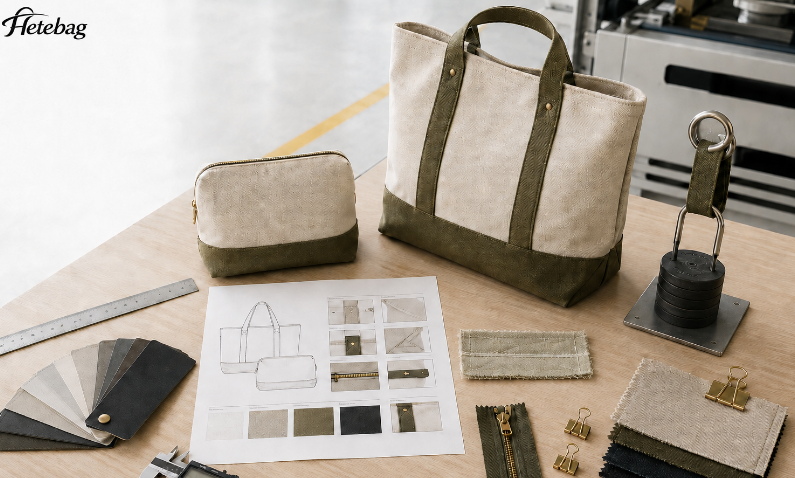
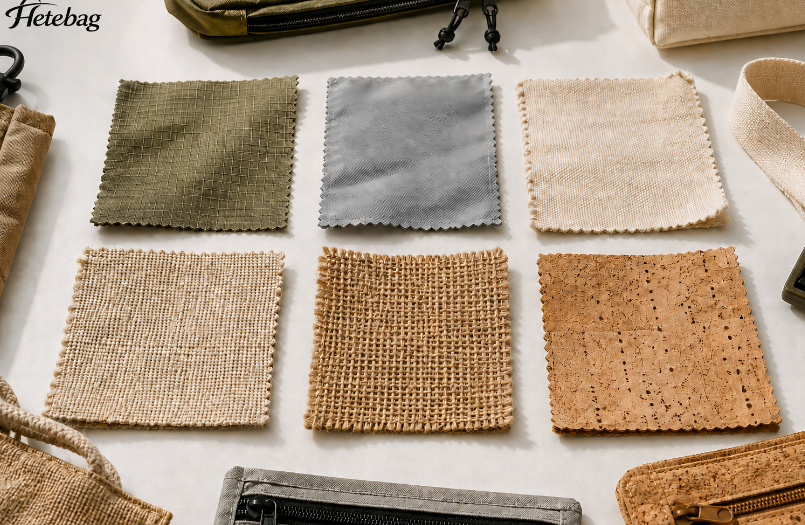
7. Test the Material Before Bulk Production
Material approval should pass through swatches, development samples, and a pre-production sample. Skipping one stage may save a few days early in development but can create shade, sewing, coating, or logo problems across the full order.
Request Material Swatches and Certification Documents
Ask for swatches large enough to assess thickness, weave, recovery, opacity, and print behavior. Label each swatch with the supplier code, composition, weight, color, finish, and certification status. Small unlabeled pieces become difficult to trace after several rounds of development.
Review documents at the same time as the swatches. If a certified option has a different hand feel or color range from the standard version, that difference should be visible before the design is approved.
Produce and Evaluate a Pre-Production Sample
The pre-production sample should use the confirmed bulk fabric, lining, trims, thread, logo process, reinforcement, and packaging method. A development sample made with substitute material cannot serve as the final production reference.
Evaluate the sample under realistic conditions. Load it to the expected weight, operate the zipper repeatedly, rub printed areas, expose it to light moisture, and check whether seams distort. Measure key dimensions before and after any required cleaning test. Record approved tolerances instead of relying on comments such as “make it stronger.”
Confirm Quality Standards with Your Custom Bag Manufacturer
Create a specification sheet that links each requirement to an inspection method. It should cover material codes, approved colors, dimensions, stitch density, seam allowance, logo placement, loading expectations, workmanship limits, packaging, and required documents.
Keep one signed sample with the buyer and one with the manufacturer when possible. Bulk fabric should be checked before cutting, followed by in-line inspection and final random inspection. Certificate verification does not replace quality control; the two processes answer different questions.
8. الخاتمة
Learning how to choose eco-friendly materials for custom bags starts with a clear use case and ends with documented, repeatable production. Look beyond the fiber name. Review construction, coatings, trims, printing, packaging, certification scope, and product lifespan as one connected decision.
HeteBag is a factory-based custom bag manufacturer in Huadu, Guangzhou, China. We bring 15 years of manufacturing experience and work with a network of factories and material partners to support bag development, sampling, production, and quality control. If you are looking for a bag manufacturer, you can leave your phone number through our صفحة الاتصال. We would be glad to learn about your project and explore how we can work together.
الأسئلة الشائعة
Is recycled polyester always a better choice than virgin polyester?
Not in every bag design. Recycled polyester can reduce dependence on virgin feedstock, but its suitability still depends on recycled content, traceability, coating, strength, color consistency, and expected product life. Compare equivalent fabric specifications and request documentation for the exact production material.
Can my brand use a GRS logo if the outer fabric is GRS-certified?
A certified outer fabric alone does not automatically authorize the finished bag or your brand to carry the GRS logo. Certification scope, chain-of-custody requirements, certified content, transaction records, and labeling rules must be checked with the certification body before artwork approval.
Which eco-friendly material works best for a waterproof bag?
No natural or recycled fabric becomes a waterproof bag on its own. Waterproof performance may require a coated or laminated fabric, seam sealing, protected zippers, and a construction that limits entry points. Define the required water test first, then assess whether the added treatment is consistent with your environmental goals.
How can I confirm that bulk production uses the approved sustainable fabric?
Assign a unique material code to the approved swatch and include it in the specification sheet, purchase order, and bill of materials. Review incoming-fabric records, certification documents, lot numbers, and pre-cutting inspection results. A retained production sample also helps identify substitutions or unapproved changes.
What should be tested before ordering eco-friendly custom bags in bulk?
The test plan should reflect the bag’s use. Common checks include fiber composition, colorfastness, abrasion, tensile and tear strength, seam slippage, zipper operation, handle loading, logo adhesion, odor, restricted substances, shrinkage, and water resistance. Test the completed bag where construction affects the result.
Can a custom bag be completely biodegradable?
It is possible only when every relevant component and treatment meets the intended biodegradation conditions. Fabric, thread, zipper, labels, inks, adhesives, coatings, and reinforcement all matter. Claims should identify the test standard, environment, and time conditions instead of using “biodegradable” without qualification.


