
 Arabic
  English
  Italian
  French
  German
  Spanish
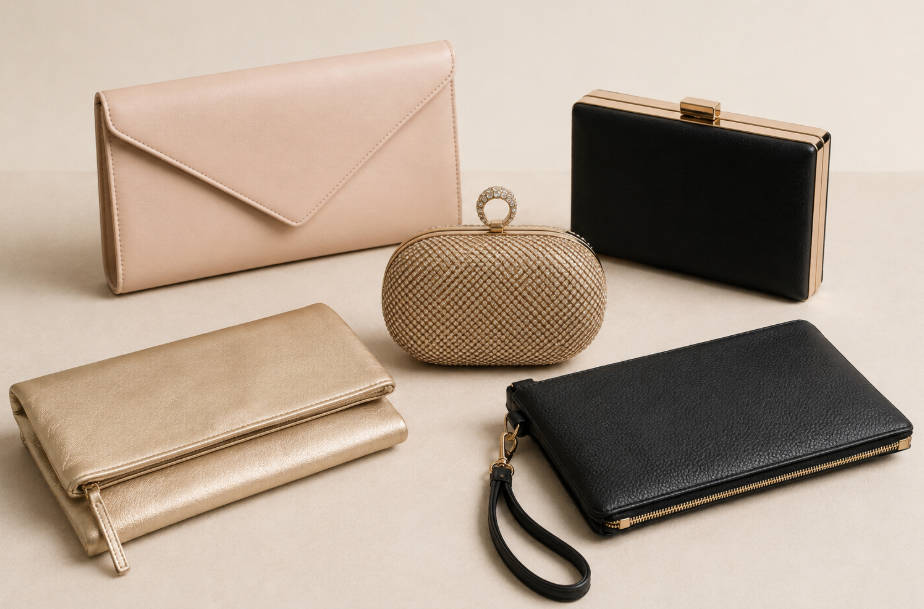
 Take a look at the common clutches around you: some are slim, designed to hold only a phone and a few cards; others feature metal frames, making them feel more like exquisite little boxes; and some come with detachable chains, allowing them to double as shoulder bags when needed. While they all fall under the category of “clutch bags,” there are significant differences in their actual construction and usage.
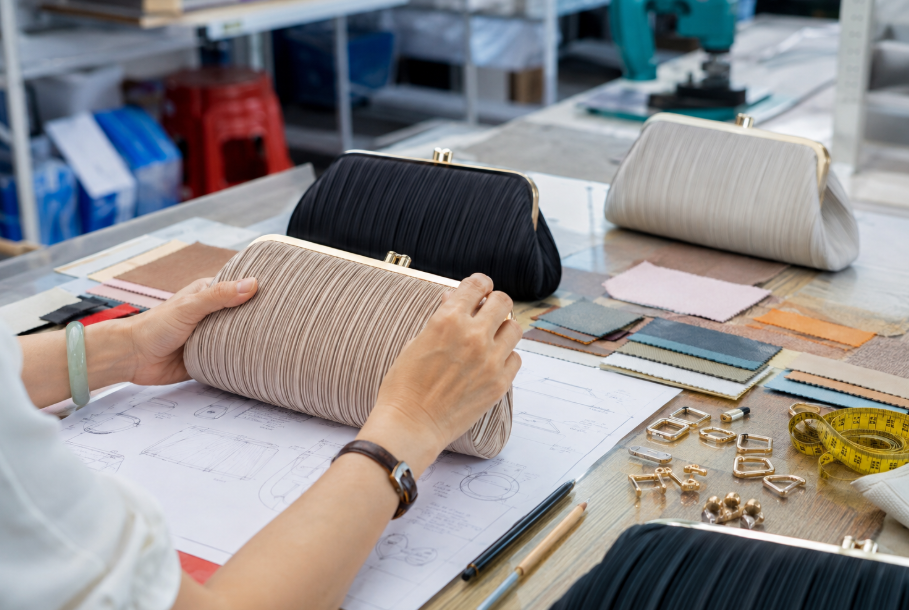
This is a crucial point: a smaller clutch doesn’t necessarily mean a simpler design. Since interior space is inherently limited, every millimeter of thickness, every piece of hardware, and even the placement of an internal pocket can alter the bag’s capacity. During product development, we often have to repeatedly tweak patterns and prototypes to achieve a clean aesthetic while ensuring the bag can actually accommodate the items a user carries daily.
Therefore, to truly understand what a clutch bag is, you need to look beyond the dictionary definition. This article explores everything from styles, history, materials, dimensions, and construction to customization and quality control. If you are considering developing a custom clutch bag, this information can help you avoid common pitfalls before you even reach the prototyping stage.
1. What Is a Clutch Bag?
What Defines a Clutch Bag?
A clutch bag is a small handbag designed mainly to be carried in the hand or held under the arm. Unlike many shoulder bags or crossbody bags, the body usually has no permanent long carrying strap, although removable chains, wrist straps, or hidden shoulder straps are common.
Size matters, but construction matters just as much. Soft pouch clutches may use very little reinforcement, while structured styles can contain cardboard, EVA, plastic sheets, bonded leather board, molded shells, or metal frames between the outer material and lining.
Most clutch bags also have a relatively clean exterior. Large side pockets and bulky compartments are uncommon because they break the compact silhouette. Designers normally work with a main compartment, a flat inner pocket, card slots, or a slim zipper pocket.
Why Is It Called a Clutch Bag?
The name comes from the way the bag is carried. You hold, grip, or “clutch” it rather than hanging it from a long strap.
Handheld evening bags existed before the modern clutch became a familiar fashion category. Decorative minaudières became especially notable during the early twentieth century, with the Victoria and Albert Museum documenting the introduction of the small decorative vanity-bag style in the 1920s.
Modern designs have moved far beyond evening wear. Clutches now appear in bridal collections, casual fashion ranges, leather goods, promotional collections, resort lines, and private-label handbag programs.
What Can You Usually Carry in a Clutch?
Capacity depends more on usable internal dimensions than the outside measurements printed in a specification sheet. A clutch that measures 25 cm wide can still have limited space when thick foam, a rigid frame, folded gussets, or a heavy magnetic closure takes up the interior.
Most everyday clutches are designed around a phone, cards, keys, a small wallet, lipstick, and a few personal items. Evening versions may hold less because appearance and slimness take priority.
When developing a product, we normally suggest deciding what the customer needs to carry before finalizing the pattern. Building the bag first and trying to fit the contents later often leads to a clutch that looks good but feels awkward in real use.
2. A Brief History of the Clutch Bag
From Traditional Evening Bags to Modern Clutches
Small decorative bags have been part of formal dress for generations. Early evening styles often used satin, silk, beadwork, embroidery, metal frames, and decorative clasps because the bag was treated as part of the outfit rather than simply as storage.
The minaudière pushed this idea even further. Its rigid shell created a jewelry-like appearance, and the limited interior was accepted because visual impact mattered more than capacity. Museum records place the introduction of this decorative vanity-bag style in the 1920s.
Later clutch designs became more practical. Leather envelopes, zip pouches, foldover styles, and removable-chain bags allowed the category to move from formal occasions into daily fashion.
How Clutch Bag Designs Have Changed Over Time
Earlier formal clutches often relied on rigid frames and ornamental surfaces. Modern development gives brands far more freedom.
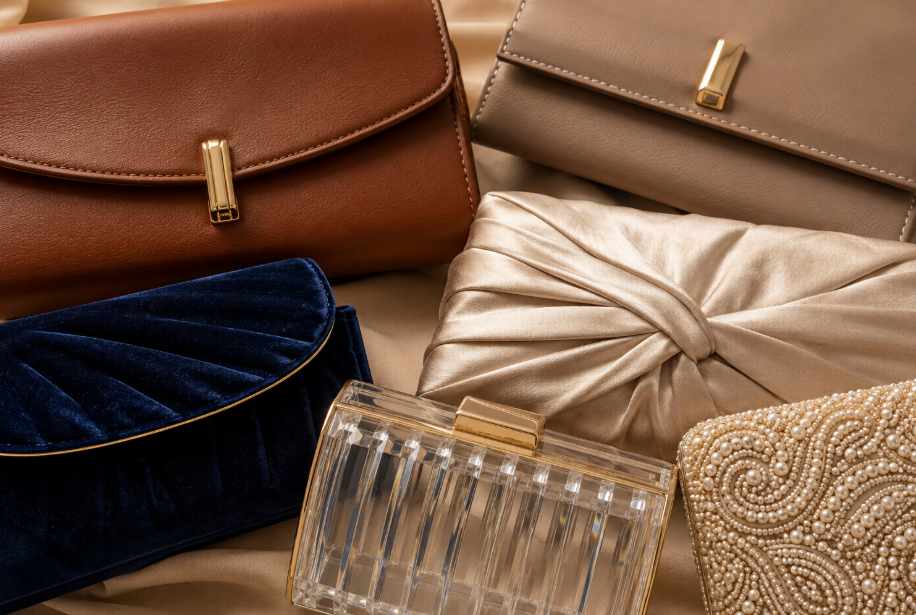
You can now build a clutch from PU leather, genuine leather, recycled fabrics, canvas, satin, acrylic, molded materials, metallic textiles, velvet, or combinations of several materials. Hidden magnetic closures, detachable straps, slim card pockets, custom hardware, and branded lining also make the bag easier to use without changing its compact appearance.
The biggest change we see is that the clutch no longer has one fixed identity. It can be soft and casual, sharp and minimal, heavily decorated, or almost architectural. This flexibility is one reason custom clutch bag development needs a clear technical specification before sampling begins.
3. What Are the Different Types of Clutch Bags?
Clutch styles are usually identified by both shape and opening method. Those two points affect production more than the marketing name alone.
| Clutch Type | Typical Structure | Common Closure | Main Characteristics |
|---|---|---|---|
| Envelope Clutch | Flat or lightly structured | Magnetic snap | Wide flap, slim profile |
| Box Clutch | Rigid | Frame or clasp | Strong shape, compact capacity |
| Minaudière | Very rigid | Decorative clasp | Jewelry-like, formal appearance |
| Foldover Clutch | Soft to semi-structured | Zipper or magnet | Upper section folds over |
| Pouch Clutch | ناعم | Zipper or draw closure | Flexible, simple construction |
| Wristlet Clutch | مرنة أم منظمة | Usually zipper | Small detachable or fixed wrist strap |
Envelope Clutch Bags
Envelope clutches use a broad flap that folds over the front panel. Their clean shape makes them suitable for PU leather, genuine leather, microfiber leather, suede-like materials, and structured fabrics.
This style looks simple on paper, but flap symmetry matters a lot. The point of the envelope, edge stitching, magnet position, and left-to-right balance are easy to notice.
Material thickness also changes how the flap sits. Thick leather may need skiving around folded edges, while soft PU may need reinforcement so the flap does not curl.
Box Clutches and Minaudières
Box clutches use a rigid body that keeps its shape even when empty. Construction may involve a molded shell, metal frame, acrylic body, rigid board, or another supporting structure.
The shell has to match the outer covering very closely. Poor bonding can create bubbles, wrinkles, lifted corners, or visible glue marks.
Minaudières are usually more decorative. Beads, crystals, metal ornaments, embroidery, molded surfaces, or special clasps may become part of the main design. Decoration must be planned with production in mind because weight and attachment methods can affect both durability and opening performance.
Foldover, Pouch, and Wristlet Clutches
Foldover clutches offer more flexibility because the upper part of the bag folds down when carried. The pattern needs enough softness to fold naturally without creating uncontrolled wrinkles.
Pouch clutches are even less structured. They work well when the material itself provides the desired hand feel.
Wristlets sit between a small pouch and a traditional clutch. The wrist loop adds carrying security, yet the bag still stays compact. Strap attachment should be reinforced from inside because the small connection point carries most of the pulling force.
4. What Materials Are Clutch Bags Made From?
Material choice affects much more than appearance. It changes edge construction, reinforcement, logo methods, stitching, weight, shape retention, and even the closure you can use.
Brands still comparing options can review a broader guide to مواد تصنيع الحقائب المخصصة before choosing the final surface material.
Genuine Leather and PU Leather
Genuine leather is widely used for premium clutch bags because it offers natural texture and good long-term wear. Different leather grades, thicknesses, grains, finishes, and backing treatments can produce very different results.
Thin leather may need backing to hold a clean shape. Thick leather can create bulky folded edges unless areas around seams are skived correctly.
PU leather gives designers more control over color, grain, surface finish, and consistency between production batches. The backing fabric and coating quality deserve attention because two PU materials with a similar surface can perform very differently during folding and repeated opening.
Chemical requirements should also be confirmed before bulk material is ordered when the target market or buyer has restricted-substance requirements. Buyers working with textile or leather components can use the معيار OEKO-TEX للجلود as one reference when discussing harmful-substance testing with suppliers; the standard covers leather and leather articles tested for harmful substances.
Satin, Velvet, Canvas, and Other Fabrics
Satin works well for bridal and evening collections because of its smooth surface and soft shine. Production requires careful handling since needle marks, pulls, glue stains, and uneven tension are easier to see than on many heavier fabrics.
Velvet offers depth and a soft hand feel but has a directional pile. Panels should normally be cut in a controlled direction so the finished bags do not appear to have different shades.
Canvas creates a more casual clutch. It can support embroidery, printing, patches, leather trims, and other branding methods, though raw edges and fabric thickness need to be managed around narrow seams.
Acrylic, Metal, Beaded, and Decorative Materials
Rigid acrylic and metal designs require a different production approach from sewn fabric clutches. Dimensions have less tolerance because shells, hinges, clasps, frames, and decorative parts need to align correctly.
Beading creates another challenge. Decoration cannot be treated as a surface detail only. Thread strength, backing, bead spacing, edge finishing, and areas that receive hand contact all affect durability.
| المواد | الهيكل | Main Production Concern | التحديد النموذجي للموقع |
|---|---|---|---|
| جلد طبيعي | Soft to rigid | Thickness and edge finishing | Premium fashion |
| جلد PU | Soft to rigid | Coating and backing stability | Fashion/private label |
| Satin | ناعم | Snags and surface marks | Evening/bridal |
| Velvet | ناعم | Pile direction | Fashion/evening |
| قماش | Soft to semi-rigid | Edge and seam bulk | Casual/lifestyle |
| Acrylic/Metal | Rigid | Shell and hardware alignment | Statement/evening |
| Beaded Fabric | Soft to rigid | Decoration attachment | Decorative/formal |
5. Clutch Bag vs. Other Small Handbags: What’s the Difference?
The names used in retail can overlap, so classification is not always exact. Looking at the carrying method, strap design, structure, and intended use usually gives a clearer answer.
If you are comparing clutch styles with wider handbag categories, our صفحة تصنيع الحقائب اليدوية حسب الطلب shows how materials, structure, colors, logos, and hardware can change across handbag development.
Clutch Bag vs. Purse
“Purse” is a broad term in some markets, especially in North America. It may describe almost any women’s handbag.
A clutch is more specific. It usually refers to a compact bag designed primarily for hand carrying, even if a detachable strap is supplied.
That distinction matters in product development. Calling something a purse tells the factory very little. Calling it an envelope clutch with a detachable chain, magnetic closure, internal card pocket, and semi-rigid body gives the development team useful information.
Clutch Bag vs. Wristlet
The key difference is the wrist strap. Wristlets are designed to hang securely from the wrist, while a classic clutch is held directly in the hand.
Some products fit both categories. A zip clutch with a removable wrist loop can be marketed as either style depending on how the brand wants customers to use it.
The attachment method should not be ignored. When the wrist loop carries the full weight of the bag, the anchor usually needs internal reinforcement rather than being stitched only into a thin outer panel.
Clutch Bag vs. Evening Bag
Evening bag describes usage more than construction. It refers to a small bag intended for formal or evening occasions.
Many evening bags are clutches, but not every clutch is an evening bag. Leather envelope clutches, canvas foldovers, and minimalist zip pouches can easily be used during the day.
| مقال مميز | حقيبة يد صغيرة | Wristlet | حقيبة المساء |
|---|---|---|---|
| Main Carrying Method | Hand | Wrist | Hand, wrist, or shoulder |
| Strap | Optional | Wrist strap | Optional |
| الهيكل | Soft to rigid | Usually soft/semi-rigid | Often decorative |
| Main Definition | Bag style | Carrying method | Occasion |
6. How to Choose the Right Clutch Bag
Choose the Right Size and Capacity
Start with what the user needs to carry. Phone dimensions are especially useful because modern smartphones can determine the minimum internal width and opening size of a compact bag.
Do not rely only on finished outer dimensions. Gusset depth, lining, foam, board, zipper tape, folded seams, and internal pockets all reduce usable space.
Brands developing exact dimensions can use our دليل أحجام الحقائب المخصصة to understand how finished measurements, capacity, structure, and pattern development connect.
Match the Clutch to the Occasion
Formal products usually place more weight on silhouette, surface decoration, hardware, and finish. Daily-use designs need greater attention to access, capacity, abrasion, and comfort.
Retail position matters too. A slim luxury leather clutch needs a different construction standard from a casual canvas pouch, even when both products have similar dimensions.
Think about how often the customer will open the bag. Repeated daily opening puts more stress on magnets, zippers, frames, edge paint, corners, and wrist-strap attachments than occasional evening use.
Consider Closures, Straps, Hardware, and Interior Design
Closures should be selected as part of the structure rather than added near the end of sampling. Magnetic snaps need enough holding force without making the flap difficult to open. Frame closures require accurate alignment. Zippers need the correct gauge, tape width, slider, end construction, and opening length.
Buyers specifying branded zipper systems can review the مجموعة منتجات الإغلاق من YKK when discussing zipper types with a supplier. YKK’s product library includes fastening options designed for different applications, including bags and handbags.
Interior design should stay proportional to the bag. Too many pockets make a small clutch bulky. One flat pocket or card section is often more useful than several layered compartments that reduce the main storage area.
7. What Should Buyers Consider When Customizing Clutch Bags?
Material, Structure, and Construction
أ custom clutch bag project should begin with the relationship between material and structure. Choosing leather first and construction later can create problems because not every material behaves well in every shape.
Structured envelope designs may need board, foam, bonded reinforcement, or another stabilizer. Soft pouch clutches may need only lining and light backing. Box clutches require much tighter control over shell dimensions and bonding.
Edge construction also changes the appearance. Turned edges look different from painted raw edges. Piping gives another finish. Each method affects labor, material thickness, seam allowance, and the final silhouette.
Our normal MOQ for many custom bag projects starts around 300 pieces per style, though the actual quantity depends on the product requirements. Special materials, custom-dyed colors, molded hardware, unique plating, or complex decoration may have different supplier minimums. This matches the MOQ guidance already used across the site’s custom evening-bag content.
Logo, Hardware, Colors, and Custom Details
Logo selection should come after the material has been confirmed. Metal logos, debossing, foil stamping, embroidery, screen printing, woven labels, and heat-transfer methods do not behave the same way on leather, PU, satin, velvet, or canvas.
You can review our custom logo bag options when comparing processes such as metal logos, debossing, embroidery, printing, and woven labels.
Hardware needs the same level of control. Gold is not simply “gold.” Light gold, pale gold, brushed gold, antique gold, and high-shine gold can look very different under retail lighting.
Ask the supplier to confirm plating finish across clasps, chains, D-rings, zipper pulls, logo plates, and other exposed parts. Mixing hardware from several suppliers without a common approved reference can create visible color differences.
Sampling, Quality Control, and Choosing a Reliable Manufacturer
The first sample should be treated as a technical product review, not only as a visual approval. Check dimensions, opening width, balance, magnet position, zipper movement, lining tension, stitching, corner shape, edge finishing, strap attachment, and hardware color.
Load the clutch with the items it is expected to carry. Open and close it repeatedly. Hold it from different points and watch how the body reacts.
This is where many problems appear. A beautiful empty sample may bend once a phone is placed inside. A magnet can feel strong on the table but become difficult to align after the bag is filled.
Pre-production approval should lock the main specifications before bulk cutting starts. Keep approved material swatches, color references, hardware samples, logo position, dimensions, stitching details, and packaging requirements together rather than approving each item through separate messages.
Bulk inspection should compare production against the approved sample and specification. Dimensions, workmanship, function, appearance, and packing all need to be checked. Buyers evaluating a supplier’s quality-management approach can also review the ISO 9000 family as a general reference for quality-management systems, while remembering that an ISO certificate should always be verified by its actual scope and issuing information rather than assumed from a supplier’s marketing language.
A reliable clutch manufacturer should also be able to tell you when a design detail creates risk. If a factory agrees to every request without discussing material thickness, seam construction, hardware MOQ, reinforcement, or production tolerance, you may only discover those limits after the sample is made.
8. الخاتمة
الفهم what is a clutch bag becomes easier once you stop looking only at size. A good clutch is a combination of carrying style, shape, material, internal construction, closure, hardware, and intended use.
The same thinking applies when developing a custom clutch bag. Start with how the customer will use it, confirm the right dimensions, match the structure to the material, and then build the branding and hardware around that foundation. Sampling should answer technical questions before bulk production starts, not simply show you what the bag looks like.
هيتباغ is based in Huadu, Guangzhou, one of China’s major bag-manufacturing areas. Our team has been involved in bag manufacturing since 2011 and supports OEM and ODM development across materials, sizes, colors, logos, hardware, samples, and bulk production.
We also work with manufacturing and supply-chain partners when different production capabilities are needed. If you are looking for a bag manufacturer in China or developing a new clutch collection, you can leave your contact information through our website. We are happy to learn about your project and look forward to exploring how we can work together.
Frequently Asked Questions About Clutch Bags
What is the typical MOQ for a custom clutch bag?
Many of our projects start from around 300 pieces per style, but MOQ depends on the construction and materials. Custom hardware, special plating, molded shells, exclusive colors, beadwork, or custom-developed fabrics can affect the final minimum because component suppliers may have their own production requirements.
Confirm the material, color quantity, hardware, logo, and packaging before treating the MOQ as fixed. Splitting one order into many colors may also create separate minimum requirements.
How long should a clutch bag sample be tested before bulk production?
There is no useful answer based only on a number of days. The sample should be tested until the important construction points have been confirmed.
Check dimensions, capacity, closure alignment, zipper movement, edge paint, stitching, logo position, strap attachment, hardware finish, lining, and shape retention. Repeated opening and loading are especially helpful because some problems do not appear when the bag is empty.
What information should I send a manufacturer when requesting a custom clutch bag?
Send a reference drawing or image, target dimensions, preferred material, color requirements, logo artwork, closure type, hardware finish, lining details, interior layout, strap requirements, packaging needs, and estimated quantity.
Vector logo files such as AI, EPS, or editable PDF are useful when custom branding is required. A clear technical specification reduces guessing during sampling and makes later revisions easier to control.
Can I customize the hardware and metal color on clutch bags?
Yes. Clasps, chains, zipper pulls, logo plates, magnetic closures, D-rings, frames, and other components can often be customized.
The important part is matching them as one hardware set. Ask the manufacturer to use an approved plating reference because components described with the same color name can still show visible differences when sourced from different suppliers.
How do I prevent color differences between the sample and bulk order?
Approve physical material swatches whenever color accuracy matters. Digital screens and photographs are not reliable enough for final color approval.
Bulk material should be compared with the approved reference before cutting. Fabric dye lots, PU production lots, leather hides, velvet pile, printing, and hardware plating can each introduce variation, so acceptable color tolerance should be discussed before production.
What should I inspect before accepting a bulk clutch bag order?
Inspect appearance and function together. Check finished dimensions, symmetry, stitching, edge finishing, zipper or clasp operation, magnet alignment, reinforcement, lining, logo position, hardware finish, surface defects, color consistency, and packaging.
Random pieces should also be opened, loaded, and handled rather than inspected only while lying flat. A clutch is a small product, so buyers notice details quickly; functional testing helps catch issues that a simple visual inspection may miss.


