
 Arabic
  English
  Italian
  French
  German
  Spanish
 With the increasing demand from global consumers for travel, beauty and lifestyle products, cosmetic bags have gradually become a popular category in the global market. From high-end cosmetic brands to cross-border e-commerce sellers, more and more enterprises are seeking professional cosmetic bag manufacturers to meet the diverse market demands for design, functionality and quality.
However, behind a successful cosmetic bag product, it is far more than just simple sewing production. It involves multiple steps such as fabric selection, logo design, sample development, production management, and quality inspection. Hetebag has over ten years of experience in the luggage industry. In this article, we will take you through the entire process of تصنيع حقائب مستحضرات التجميل and help you gain a clearer understanding of this industry.
What Is Cosmetic Bag Manufacturing?
Cosmetic bag manufacturing refers to the design, material sourcing, cutting, stitching, finishing, and quality inspection of bags specifically made to store, organize, or transport beauty and personal care products. These bags serve a wide range of industries — from cosmetics retailers and beauty subscription brands to hotels, airlines, promotional product companies, and wellness brands.
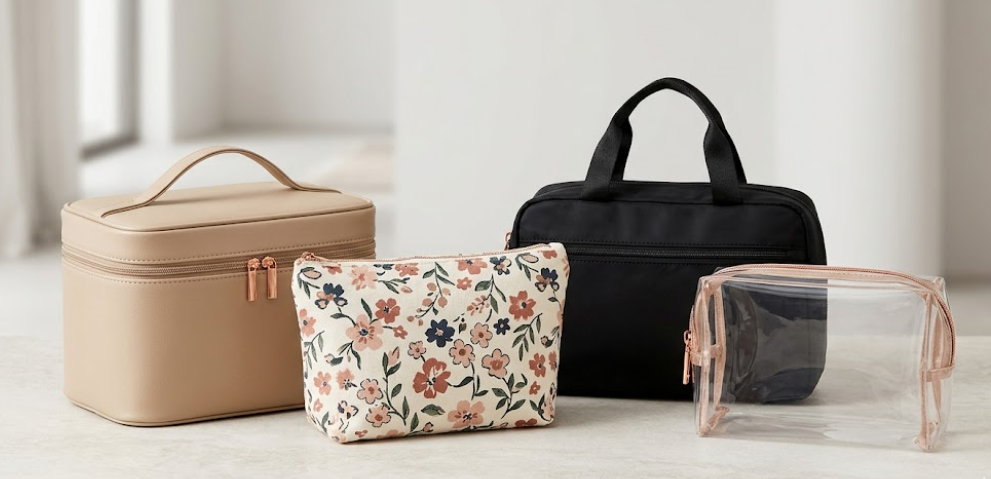
The term “cosmetic bag” covers far more ground than most people expect. It’s not just the classic zippered pouch. It includes everything from structured train cases with mirror inserts to flat travel pouches, hanging organizers, roll-up brush holders, and eco-friendly tote-style bags. The breadth of the category is part of what makes sourcing so nuanced.
التطبيقات الشائعة
- Beauty and skincare brands: Custom-branded cosmetic bags are often sold as standalone products or bundled with product purchases.
- Subscription box companies: Monthly beauty boxes frequently include a cosmetic bag as part of their packaging strategy.
- Hotel and hospitality: Amenity kits and in-room toiletry bags require durable, cost-effective cosmetic bags at high volumes.
- Corporate gifting and promotions: Logo-printed cosmetic bags are a popular promotional item across industries.
- Airlines and travel retail: Compact, lightweight bags with practical interiors are a staple in travel categories.
Types of Cosmetic Bags
| النوع | Primary Use | الميزات الرئيسية |
|---|---|---|
| Travel Pouch | On-the-go essentials | Compact, lightweight, zipper closure |
| Organizer Bag | Multi-product storage | Multiple compartments, structured interior |
| Promotional Bag | Brand marketing | Logo-forward design, high-volume pricing |
| Luxury Cosmetic Case | High-end retail | Premium materials, hardware accents |
| Transparent/PVC Bag | TSA compliance, retail display | Clear panels, waterproof |
| Waterproof Bag | Active or travel use | Sealed seams, moisture-resistant lining |
| Hanging Organizer | Bathroom travel | Hook closure, vertical layout |
| Eco-Friendly Bag | Sustainable brands | RPET, organic cotton, biodegradable materials |
The global beauty packaging market — which includes cosmetic bags — has seen sustained growth over the past decade. The rise of direct-to-consumer beauty brands, increased travel activity post-pandemic, and growing consumer interest in organized beauty routines have all pushed demand higher. For anyone sourcing at scale, this isn’t just a trend. It’s a structural shift in how beauty products are purchased, gifted, and experienced.

Popular Materials Used in Cosmetic Bags
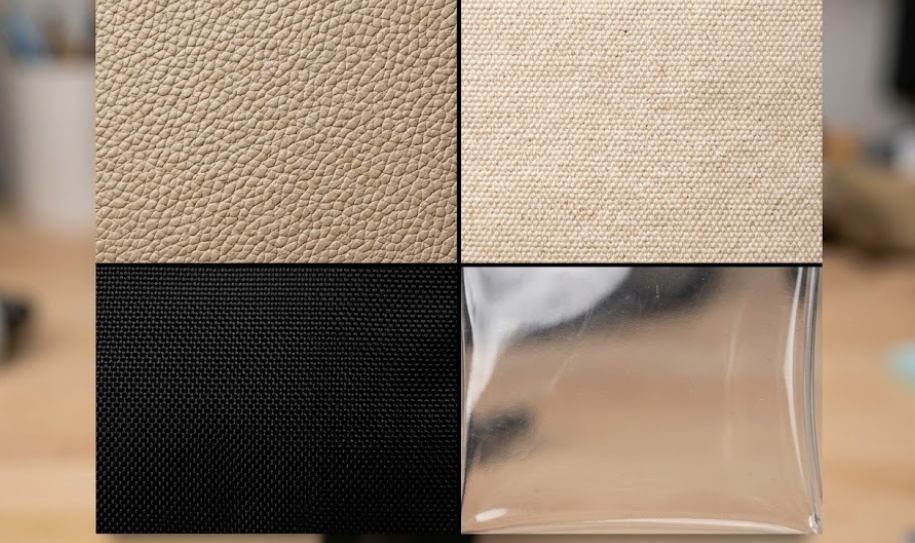
Material selection is one of the most important decisions in the entire manufacturing process. It affects durability, price point, feel, appearance, and how well the bag aligns with your brand identity. Each material has genuine strengths — and real limitations. Understanding both helps you match the right material to the right product. For a closer comparison of outer fabrics, linings, and sample checks, see our custom makeup bag materials guide.
جلد PU
PU (polyurethane) leather is one of the most widely used materials in cosmetic bag manufacturing. It mimics the look and texture of genuine leather at a fraction of the cost, which makes it popular for mid-range retail and branded merchandise. PU leather is easy to clean, relatively water-resistant, and comes in a wide range of colors and textures — including smooth, pebbled, matte, and glossy finishes.
The trade-off is longevity. PU leather doesn’t age as gracefully as genuine leather and can crack or peel under prolonged stress or heat. For products designed for frequent, heavy use, this is worth factoring into your material decision.
قماش
Canvas cosmetic bags have a more casual, lifestyle-oriented aesthetic. Cotton canvas is breathable, durable, and takes dye and print well — making it an excellent choice for brands that want bold graphics, artistic prints, or a natural, tactile feel. Canvas holds up well over time and is often more forgiving than synthetic materials when it comes to wear and tear.
Waxed canvas offers additional water resistance while keeping the natural appearance intact. For eco-conscious brands, canvas (especially organic cotton canvas) is a credible and marketable material choice.
البوليستر والنايلون
Polyester and nylon dominate the functional end of the cosmetic bag market. Both are lightweight, strong, affordable, and available in a huge variety of weaves and finishes — from ripstop nylon to dobby polyester. They’re easy to clean, colorfast, and hold up well across a wide range of temperature and humidity conditions.
Nylon tends to have a slightly silkier, more premium feel compared to polyester, which is why it often appears in travel accessories and mid-tier cosmetic bags. Polyester is the more cost-effective choice for high-volume, price-sensitive orders.
PVC and Transparent Materials
Transparent cosmetic bags — typically made from PVC or EVA — have surged in popularity. TSA liquid rules at airports made the clear bag a travel staple, and the trend has carried over into retail and beauty gifting categories. Transparent bags are also popular for retail display purposes, where customers benefit from seeing the product inside. If you are considering TPU as another clear-film option, our PVC vs TPU cosmetic bag comparison explains the material and sampling differences to review.
PVC is heavier and stiffer than EVA, which is softer and more flexible. For bags that need to hold their shape, PVC works well. For bags that need to fold or pack flat, EVA is often the better choice. Both materials are cost-effective and widely available.
Eco-Friendly and Recycled Materials
RPET (recycled polyester made from post-consumer plastic bottles), organic cotton, jute, and biodegradable fabrics have moved from niche to mainstream in cosmetic bag manufacturing. Sustainability-focused brands are actively requesting these materials — and with good reason. Certifications like GRS (Global Recycled Standard) and GOTS (Global Organic Textile Standard) are increasingly becoming purchase criteria for retail buyers, especially in European and North American markets.
Working with eco-friendly materials does require more planning. Lead times can be longer, MOQs may be higher for specialty fabrics, and certifications need to be verified carefully. But for brands where sustainability is central to their identity, this investment in materials pays off in customer trust and retail positioning.Related reading:
– Backpack Materials Explained: Nylon vs Polyester vs Canvas
Common Material Combinations for Cosmetic Bags
Many cosmetic bag manufacturers combine different materials to balance appearance, durability, and cost. For example, PU leather with polyester lining is popular for premium retail bags, while canvas with waterproof lining is often used for travel or eco-friendly cosmetic bags.
Cosmetic Bag Manufacturing Process Step by Step
Understanding how a cosmetic bag goes from concept to finished product helps you communicate more effectively with manufacturers, set realistic timelines, and catch potential quality issues before they become expensive problems.
Step 1: Design and Tech Pack Development
Every cosmetic bag starts with a design. For custom orders, this typically means developing a tech pack — a detailed document that includes dimensions, material specifications, color references (Pantone codes), hardware details, logo placement, lining material, zipper type, and any special features like mirror inserts or elastic loops. Use our custom makeup bag design guide to plan the size, opening, compartments, and branding around the products the bag needs to hold.
A well-developed tech pack reduces back-and-forth with the factory, minimizes sampling errors, and protects you if disputes arise later. If you’re working from a rough concept rather than a finished tech pack, a good manufacturer will help you develop it — but expect this to add time to the process.
Step 2: Material Sourcing and Inspection
Once the design is confirmed, the factory sources the specified materials. For experienced manufacturers with established supplier relationships, this step is typically seamless. Materials arrive at the factory and undergo incoming quality control — checking for color consistency, weight, texture, and any defects before production begins.
Step 3: Cutting
Material is spread in layers and cut according to pattern pieces. High-volume factories use die-cutting machines for precision and efficiency. Cutting accuracy directly affects how cleanly pieces align during stitching, which in turn affects the finished bag’s appearance and structure.
Step 4: Printing and Hardware Application
If the bag includes printed elements — logo, pattern, text — this step happens before assembly. Silk screening, digital printing, heat transfer, and embroidery are all applied to the cut fabric or panels at this stage. Hardware components like zipper pulls, D-rings, and rivets are also prepared.
Step 5: Stitching and Assembly
Skilled operators stitch the cut panels together according to the construction sequence. Seam allowances, stitch density, and tension all affect the bag’s durability. Stress points — handles, zipper ends, corners — receive reinforced stitching. Linings are inserted and joined to the exterior shell during this phase.
Step 6: Finishing and Trimming
Loose threads are trimmed, edges are bound or turned, and any final hardware — zippers, clasps, feet — is attached. For bags with structured interiors, foam or board inserts are added at this stage.
Step 7: Quality Inspection
Finished bags go through inspection before packing. This includes checking dimensions, logo placement, stitching consistency, zipper function, hardware security, and overall appearance. Depending on the quality control protocol, this may be a 100% inspection or an AQL (Acceptable Quality Level) statistical sampling process.
Step 8: Packing and Shipping
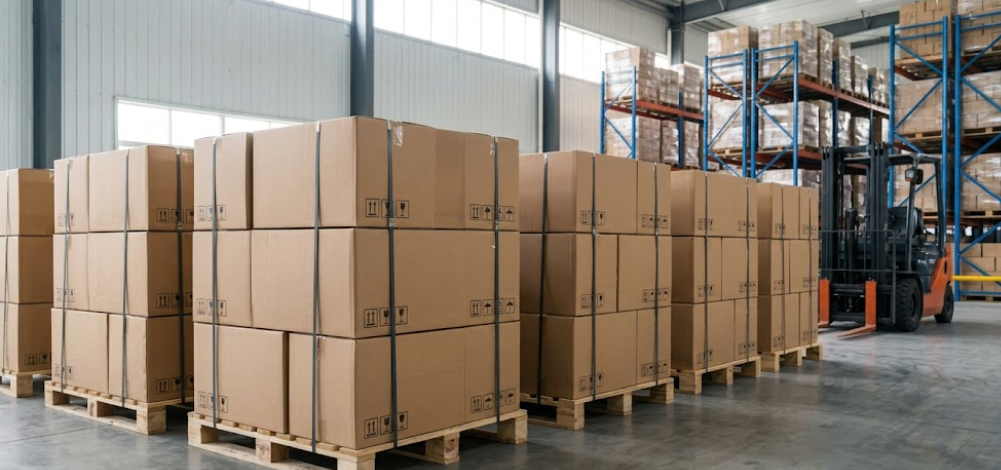
Bags are folded, stuffed with tissue if required, inserted into polybags or boxes, and packed into cartons. Shipping marks are applied, and the order is prepared for freight.
Customization Options for Cosmetic Bags
Customization is where cosmetic bag manufacturing becomes genuinely strategic. A well-executed custom cosmetic bag does more than hold products — it communicates your brand’s identity, creates a premium unboxing experience, and builds the kind of visual consistency that customers recognize across touchpoints.
Logo Printing Methods
| الطريقة | الأفضل لـ | المتانة | التكلفة |
|---|---|---|---|
| Silk Screen | Simple logos, solid colors | مرتفع | Low–Medium |
| التطريز | Premium, textured look | مرتفع جدًّا | Medium–High |
| نقل الحرارة | Full-color artwork, complex designs | متوسط | متوسط |
| Digital Printing | Photographic or gradient designs | متوسط | متوسط |
| Debossing/Embossing | Leather or PU surfaces | مرتفع جدًّا | متوسط |
Each method has an ideal application. Embroidery communicates quality and is well-suited to canvas or heavier fabrics. Silk screen is efficient and cost-effective for large runs with simple artwork. Digital printing opens up complex, full-color design possibilities. The right choice depends on your material, order volume, design complexity, and target price point.
Zippers, Handles, and Hardware
Hardware selection has a significant impact on perceived quality. A smooth, heavy-gauge zipper with a branded pull communicates premium. A flimsy zipper that catches or feels lightweight undermines even excellent fabric and construction. Common hardware options include:
- Zipper types: YKK, SBS, or factory-brand zippers in nylon coil, metal, or molded plastic
- Zipper pulls: Standard, custom-shaped, tassel, or leather tab
- المقابض: Webbing, leather wrap, rope, or chain
- Feet: Protective metal feet for structured base bags
- D-rings and snap hooks: For detachable straps or bag charms
For premium products, specifying YKK zippers is worth the cost. For promotional or mid-range items, quality factory-brand zippers perform well and reduce unit cost.
Size, Shape, and Compartment Design
Cosmetic bags work hardest when their interior layout matches how the user actually stores and retrieves products. A brush roll needs long, narrow pockets. A travel toiletry bag benefits from a waterproof interior and a wide-mouth opening. A luxury train case may need a mirror, tiered trays, and a secure closure.
When customizing the interior, think about: the size of the products going inside, how the user will access them, whether the bag needs to stand up or lay flat, and whether compartmentalization is a priority. These functional decisions should drive size and shape before aesthetics are applied.
Custom Lining and Interior Design
Interior lining is often underestimated as a branding element. A bag that looks modest on the outside but reveals a vibrant, branded lining creates a memorable moment. Lining options include:
- Printed polyester or cotton lining (custom patterns or solid colors)
- Satin or sateen for a luxurious feel
- Wipe-clean PVC or nylon lining for practical bags
- Metallic or foil-finish lining for premium and holiday gifting items
Packaging and Private Label Solutions
Many cosmetic bag factories offer OEM and ODM services — meaning they’ll either produce bags to your exact specifications (OEM) or help you develop new designs from their existing templates (ODM). Private label options typically include custom hang tags, branded packaging boxes, tissue paper, polybag printing, and shipping carton customization.
If brand presentation is important — and for retail products, it almost always is — invest time in packaging specification. The moment a customer opens the carton or unboxes the product is a brand touchpoint that matters.
How to Choose a Reliable Cosmetic Bag Manufacturer
Finding the right manufacturer is not just about price. It’s about finding a partner with the production capability, quality culture, and communication standards to execute your product at scale — consistently, across multiple orders. Once your product requirements are clear, use our cosmetic bag supplier comparison to build a shortlist, then verify each supplier against the checks below.
Factory Experience and Production Capacity
Years in business matter, but so does specialization. A factory that has spent a decade producing cosmetic bags has accumulated process knowledge, material sourcing relationships, and problem-solving experience that a general bag factory simply doesn’t have. Ask about their core product categories, their largest order volumes, and the range of materials and processes they handle in-house versus outsourcing.
Production capacity affects lead times and your ability to scale. If you’re starting with a 500-unit order but plan to grow to 10,000 units within two years, make sure your manufacturer can support that growth without switching partners mid-journey.
متطلبات الحد الأدنى للطلب
Minimum order quantities vary widely across the industry. High-end factories with premium machinery and skilled operators tend to set higher MOQs to justify setup costs. More flexible manufacturers may accept lower minimums, especially for standard or semi-custom designs.
Be honest about your volume when evaluating MOQs. Ordering far below a factory’s MOQ to save money often results in being deprioritized in the production queue, longer lead times, and inconsistent quality.
Certifications and Quality Standards
Relevant certifications to look for include:
- ISO 9001: Quality management systems
- BSCI or SEDEX: Social compliance and ethical manufacturing audits
- GRS: Global Recycled Standard (for RPET and recycled materials)
- REACH / OEKO-TEX: Chemical safety standards (important for EU and US markets)
Certifications don’t guarantee quality, but they do indicate that a factory has invested in process documentation and external audits — both of which are associated with more consistent output.
Sample Policies and Lead Times
Always request samples before committing to a production order. A responsible cosmetic bag supplier will provide pre-production samples for your approval and will be transparent about sample lead times (typically 7–15 days for standard samples, 15–25 days for custom).
Red flags in the sampling process: a factory that rushes samples without asking clarifying questions, refuses to make revisions, or sends samples that don’t match your tech pack specifications without explanation.
Communication and OEM/ODM Capabilities
Strong communication is a predictor of production quality. A manufacturer who asks good questions early — about end use, target markets, material preferences, packaging requirements — is a manufacturer who understands their role in your supply chain. One who only talks about price is optimizing for the wrong thing.
OEM capability means the manufacturer can execute your design precisely. ODM capability means they can contribute to the design process, which is valuable if you’re developing new products rather than replicating existing ones. The best manufacturers offer both.
Red Flags to Avoid When Sourcing Suppliers
- No factory audit willingness: A legitimate cosmetic bag factory welcomes facility visits or third-party audits.
- Vague answers about subcontracting: If a supplier is outsourcing production without disclosing it, quality control becomes opaque.
- Unusually low pricing: Prices significantly below market average usually indicate compromised materials, labor shortcuts, or hidden fees.
- Slow or inconsistent communication: Response patterns before the order reflect responsiveness during production.
- No sample revision process: A factory that ships samples and immediately pushes for deposit without a revision round is prioritizing throughput over quality.
Quality Control in Cosmetic Bag Manufacturing
Quality control is not a single step at the end of the production line. In professional manufacturing environments, it’s a system built into every stage of the process — from incoming material inspection through final pre-shipment checking.
فحص المواد الواردة
Before production begins, all incoming materials — fabric, zippers, hardware, lining — should be inspected for defects, color accuracy, and specification compliance. Catching a material issue before cutting eliminates the risk of producing an entire order in a non-conforming material.
In-Line Quality Checks
During stitching and assembly, supervisors or dedicated QC staff conduct in-line inspections. They check stitch consistency, seam alignment, hardware attachment, and construction at key assembly stages. Problems caught in-line cost far less to fix than problems caught at the end.
Final Inspection
Pre-shipment final inspection evaluates finished goods against your approved sample and purchase order specifications. This includes:
- المظهر: Color, print placement, hardware finish, lining condition
- الأبعاد: Width, height, depth within tolerance
- Function: Zipper operation, closure security, strap attachment strength
- جودة الصنعة: Seam integrity, thread trimming, edge finishing
For larger orders, third-party inspection services (such as SGS, Bureau Veritas, or Intertek) can conduct independent pre-shipment inspection at the factory before goods are loaded. This is a worthwhile investment for first-time orders with a new supplier.
AQL Standards
Most professional manufacturers and buyers use AQL (Acceptable Quality Level) sampling tables to determine how many units to inspect from a given production lot. The most common AQL levels for cosmetic bags are:
| Defect Type | Typical AQL Level |
|---|---|
| Critical (safety hazard) | 0 — zero tolerance |
| Major (functional or visible) | 2.5 |
| Minor (cosmetic, non-functional) | 4.0 |
Understanding AQL levels lets you set clear expectations with your manufacturer about what inspection standards apply to your order.
Packaging Inspection
Packing inspection ensures that the correct product, quantity, and labeling are in each carton. Barcode scanning, carton weight checks, and label accuracy review are standard components of a complete packing inspection. Shipping the wrong product in a carton — even with correct manufacturing quality — creates receiving and logistics problems that are entirely avoidable.
الخلاصة
The cosmetic bag manufacturing industry is large, global, and varied. Manufacturers range from small workshops to large-scale factories with hundreds of machines and dedicated QC teams. Knowing what you need — in terms of volume, quality tier, customization complexity, and budget — is the starting point for finding a partner who genuinely fits your business.
The right manufacturer is transparent about their capabilities and honest about their limitations. They invest in sampling, answer your questions thoroughly, and treat your order with the same care whether it’s 500 units or 50,000.
If you’re actively sourcing a reliable cosmetic bag manufacturer, هيتباغ is based in Huadu, Guangzhou, China — one of the most established bag manufacturing regions in the world. With over 15 years of manufacturing experience and collaboration with multiple production facilities, we support OEM و ODM projects across a wide range of materials, styles, and customization requirements. Whether you’re developing a new product line or scaling an existing one, you’re welcome to connect directly through our website — simply leave your contact information, and our team will be in touch to discuss your needs. We look forward to working with you.
الأسئلة الشائعة
What materials are commonly used for cosmetic bags?
The most common materials used in cosmetic bag manufacturing include PU leather, canvas, polyester, nylon, PVC, EVA, and eco-friendly fabrics such as RPET and organic cotton.
What is the typical MOQ for custom cosmetic bags?
MOQ requirements vary by manufacturer and material, but most cosmetic bag factories start from 300–1000 pieces for custom orders.
How long does cosmetic bag production usually take?
Sample production typically takes 7–15 days, while bulk production usually requires 25–45 days depending on order quantity and customization complexity.
Can cosmetic bags be made with eco-friendly materials?
Yes. Many manufacturers now offer sustainable options such as recycled polyester (RPET), organic cotton, biodegradable fabrics, and GRS-certified materials.


