
 Arabic
  English
  Italian
  French
  German
  Spanish
 Are you looking to learn about handbags? Whenever you enter any exhibition, consult any purchasing catalogue, or browse any fashion wholesale platform, you will see thousands of styles grouped under one term: handbags. When your job is to find suitable products, develop new product lines, or position products for a specific market, this becomes a problem.
هيتباغ is a handbag manufacturer based in Huadu, China, with 15 years of factory experience. Whether you are evaluating what to manufacture, what to stock, or how to provide customers with selection suggestions, gaining a deep understanding of the handbag category can give you a real advantage. Let’s get started.
What Is a Handbag?
A handbag is a structured or semi-structured bag designed to be carried by hand or over the shoulder. Unlike backpacks, which distribute weight across both shoulders, or tote bags, which prioritize open-access volume, handbags are defined by their shape retention, closure systems, and the balance between form and function.
The term “handbag” technically refers to bags carried in the hand — hence the name. Over decades, the definition has expanded to include shoulder bags and crossbody styles, largely because consumer behavior evolved alongside design innovation. Today, the word functions more as a category marker than a strict description of how it’s held.
What distinguishes a handbag from a generic bag is structure. A handbag typically has:
- A defined silhouette that holds its shape even when empty
- An intentional closure — zipper, magnetic snap, flap, turn-lock, or clasp
- Interior organization: lined compartments, card slots, zip pockets, key hooks
- Carry options: top handles, detachable straps, or both
The construction behind a well-made handbag is more complex than it looks. Frame boards or interfacing are sewn inside the body to provide rigidity. Hardware is riveted or stitched in reinforced zones to prevent tearing under load. The lining isn’t decorative — it protects the bag’s structure from the inside out. Every element serves a purpose.

What Is the Difference Between a Handbag and Other Bags?
People often use “handbag,” “purse,” and “bag” interchangeably. In practice, they’re not the same. Here’s a clear breakdown:
| المصطلح | Primary Carry Method | Structure Level | Primary Function |
|---|---|---|---|
| حقيبة يد | Hand or shoulder | متوسطة إلى عالية | Everyday carry, fashion, organization |
| Purse | Hand (historically) | منخفض إلى متوسط | Small items: wallet, phone, essentials |
| حقيبة يد كبيرة | Shoulder or hand | منخفض | Open storage, shopping, casual use |
| حقيبة الظهر | Dual shoulder | متوسطة إلى عالية | Ergonomic carry, volume, commuting |
| Clutch | Hand (no handle) | متوسط | Evening events, minimal carry |
| Satchel | Shoulder or hand | مرتفع | Work and document carry |
| Crossbody | Single shoulder strap | منخفض إلى متوسط | Hands-free, light everyday use |
| Belt Bag | Waist-mounted | منخفض إلى متوسط | Active use, compact storage |
The key differentiators come down to three things: carry method, structure, and intended use. A tote bag prioritizes volume and open access. A purse prioritizes compactness. A handbag sits in the middle, emphasizing organization, durability, and aesthetic — which is precisely why it’s so commercially relevant across multiple market segments.
What Are the Ten Most Common Types of Handbags?
Understanding handbag types isn’t just useful for styling advice. It’s foundational for product development, market positioning, and sourcing decisions. Each type has a distinct silhouette, hardware requirement, and manufacturing complexity.
1. Tote Bag
الـ حقيبة يد كبيرة is open-top, wide-bodied, and carried by two parallel handles that sit over the shoulder. It’s the most straightforward structure to manufacture and the most versatile in terms of material application — canvas, nylon, leather, and recycled fabrics all work well.
What many people overlook is that tote bags span an enormous quality range. A basic promotional tote and a structured leather tote both fall under the same category but involve radically different production processes. The structured version requires interfacing, reinforced stitching at handle attachment points, and often a magnetic or zip closure. The difference in price and perceived value is significant.
2. Shoulder Bag
Shoulder bags are carried on one shoulder via a single strap, which may be fixed or adjustable. The body shape varies — slouchy, structured, envelope, hobo — but the carry method is consistent.
From a design standpoint, the strap attachment is where most quality problems appear. Poorly reinforced D-ring connections or weak stitch lines at the strap base are common failure points. High-quality shoulder bags use riveted or box-stitched attachment points to distribute the load.
3. Crossbody Bag
The crossbody is essentially a shoulder bag with a longer, often adjustable strap designed to be worn diagonally across the body. The format became dominant in urban markets because it’s hands-free and more secure than a traditional shoulder bag.
From a manufacturing perspective, the adjustable strap mechanism — typically a slider buckle or a hook-and-loop system — adds hardware cost but is expected at any serious price point. Magnetic closure on the main compartment is standard, with a back zip pocket becoming increasingly common as a market expectation rather than a premium feature.
4. Clutch
A clutch is a handleless bag designed to be held in the hand or tucked under the arm. It’s the most formal handbag category and the one where exterior material has the highest visual impact — satin, velvet, metallic leather, and embellished fabrics are all common.
The clutch frame construction is the critical variable. A rigid frame clutch uses an internal metal frame with a kiss-lock or snap closure. A soft clutch uses a zipper or an envelope flap. The rigid frame version is more complex to produce but commands a higher retail price and reads as more premium.
5. Satchel
The satchel is a structured, often flat-bodied bag with a double top handle and a flap or zipper closure. It’s historically associated with work and academic use — document-friendly, with a flat base that allows it to stand upright.
The satchel’s defining characteristic is its ability to hold flat items without distortion. This requires a firm base insert and structured side panels. Shoulder strap attachment is typically via D-rings on both sides, allowing the bag to convert between hand-carry and shoulder-carry — a feature that matters in the commuter and professional segments.
6. Hobo Bag
The hobo is a crescent-shaped, slouchy shoulder bag with a single strap. Unlike the satchel or structured tote, the hobo is intentionally soft and relaxed in silhouette. It typically uses softer leathers or washed canvas that drape rather than hold a rigid form.
What makes the hobo commercially interesting is that it appeals across a wide age range and is relatively forgiving in terms of material imperfection. The relaxed silhouette means minor leather variations or slight stitching inconsistencies are far less visible than they would be on a structured bag.
7. Bucket Bag
The bucket bag is cylindrical or tapered, with a drawstring or flap closure and typically a single shoulder strap. The silhouette is distinctive and immediately recognizable, which makes it easier to differentiate in a crowded market.
The bottom construction is what separates a well-made bucket bag from a cheap one. A solid base panel — whether leather, suede, or stiff fabric — is essential. Without it, the bag collapses and loses its defining shape. The interior organization is also a common pain point: the open cylindrical body is great for volume but poor for organization unless interior pockets are added.
8. Backpack Purse (Mini Backpack)
The backpack purse is a hybrid form — backpack carry mechanics (dual shoulder straps) with handbag aesthetics and scale. It sits smaller than a functional daypack and prioritizes visual appeal over volume.
This category grew substantially alongside the casualization of fashion and the rise of commuter culture. From a sourcing perspective, it occupies an interesting middle ground: it uses backpack hardware (strap connectors, back panel stitching) but handbag materials and finishing (leather, suede, metal hardware). The combination affects production cost and minimum order quantity in ways that aren’t always intuitive.
9. Wristlet
The wristlet is a small, compact bag with a short loop handle designed to be worn around the wrist. It sits between a wallet and a clutch in terms of function — large enough for a phone and a few cards, small enough to slip inside a larger bag.
The wristlet’s commercial value is often in its role as a secondary product — a lower-cost companion to a larger bag, or a standalone product in a gift-friendly price range. The manufacturing is relatively straightforward, but quality expectations focus heavily on the zipper (must operate smoothly under repeated use) and the wrist loop attachment (must not tear under weight).
10. Doctor Bag (Boston Bag)
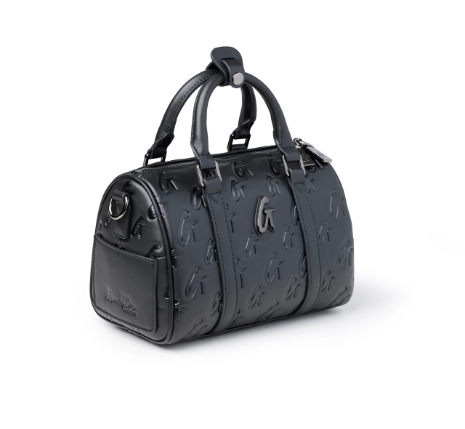
The doctor bag, also called a Boston bag, is a wide-mouthed, structured bag with a rigid frame and two top handles. The frame construction — typically metal or resin — allows the bag to open fully flat, which is its defining functional advantage.
The manufacturing complexity is higher than most handbag categories. The frame must be precisely shaped, the hinge mechanism must operate smoothly over thousands of uses, and the fabric must be cut and assembled to conform exactly to the frame dimensions. It’s a demanding production process, but the result is a bag with a distinctive, premium silhouette that has remained relevant across decades.
How Do You Choose the Right Handbag Type for Different Occasions?
Occasion matching is one of the most practical frameworks for handbag selection — and one of the most overlooked in product development conversations.
Professional environments favor structure. The satchel, structured tote, and doctor bag all read as polished in office contexts. The key variables are size (large enough for a laptop or documents), closure type (secure but easy to access repeatedly), and color (neutrals or deep tones perform across a wider range of professional settings).
Casual daily use rewards versatility. The crossbody and hobo are the dominant categories here — hands-free carry, relaxed silhouette, and enough interior volume for the essentials. The shoulder bag with an adjustable strap is another strong performer because it adapts across body types and outfit styles.
Evening and event settings call for compact, high-finish pieces. The clutch and wristlet lead this space. Volume isn’t the priority — the bag’s visual contribution to an outfit is. Material selection and hardware finish matter enormously in this category. A well-finished metallic clutch or a velvet envelope clutch outperforms a purely functional piece every time.
Travel contexts prioritize security and access control. The crossbody with a zipper closure, the bucket bag with a drawstring, and the backpack purse all serve this market well. Anti-theft features — RFID-blocking pockets, hidden zippers, slash-resistant straps — have become meaningful differentiators in this segment.
Active and outdoor contexts push the handbag category toward nylon, recycled fabrics, and weather-resistant treatments. A shoulder bag in waterproof nylon serves this market better than the same silhouette in genuine leather.
The selection logic isn’t complicated once you frame it correctly: identify the end user’s primary context, then match structure, closure, carry method, and material to that context. The mistake most sourcing decisions make is prioritizing silhouette aesthetics without accounting for the functional demands of the end use.
What Materials Are Commonly Used in Handbags and Why Do They Matter?
Material selection is arguably the single most important production decision in handbag manufacturing. It determines durability, cost, appearance, maintenance requirements, and market positioning.
جلد طبيعي
Full-grain and top-grain leather remain the benchmark for premium handbags. Full-grain leather retains the natural surface of the hide, which means it develops a patina over time and improves with age. Top-grain leather has the surface sanded to remove imperfections, then treated — it’s more uniform but doesn’t develop the same character.
The sourcing of leather is where quality diverges dramatically. Thickness (measured in millimeters), tanning method (chrome-tanned vs. vegetable-tanned), and country of origin all affect the final product. A 1.2mm chrome-tanned cowhide and a 1.8mm vegetable-tanned cowhide will produce radically different bags even if the silhouette is identical.
PU Leather (Vegan Leather)
Polyurethane leather is the dominant material in the mid-market and fast-fashion handbag segment. It mimics the appearance of genuine leather at a significantly lower cost and can be produced in a far wider range of colors, textures, and finishes.
The quality range within PU is enormous. Low-grade PU peels and cracks within months of regular use. High-grade microfiber PU — sometimes marketed as “vegan leather” — is durable, breathable, and in some tests outperforms genuine leather in abrasion resistance. The distinction matters when sourcing, because the category label alone tells you almost nothing about actual quality.
قماش
Waxed canvas, cotton canvas, and coated canvas are all common in handbag production. Canvas performs well in casual and tote-style silhouettes, is relatively easy to print and dye, and is more sustainable than many synthetic alternatives.
Coated canvas — where a cotton base is laminated with a PVC or polyurethane coating — is the basis for many designer brand signatures. The coating provides water resistance and durability while allowing for complex pattern printing. It’s also significantly more affordable than leather while retaining a structured appearance.
النايلون والبوليستر
Technical fabrics — particularly ballistic nylon, ripstop nylon, and recycled polyester — dominate the functional and travel handbag segment. These materials are lightweight, water-resistant, and exceptionally durable under repeated use.
Recycled polyester (rPET), made from post-consumer plastic bottles, has become a serious market differentiator as sustainability commitments drive purchasing decisions across retail and wholesale channels. The material performs comparably to virgin polyester while supporting environmental credentials that resonate with end consumers.
Exotic and Specialty Materials
Python, crocodile, ostrich, and stingray are genuine exotic leathers used in luxury handbag production. These materials are subject to significant import/export regulation under CITES (Convention on International Trade in Endangered Species) and require full documentation in cross-border commerce.
Vegan alternatives — pineapple leather (Piñatex), apple leather, cactus leather, and mushroom leather — are an emerging material category with growing market relevance. These bio-based materials are at varying stages of commercial readiness, but several have already been adopted by established brands at scale.
What Features Should You Look for When Buying a Handbag?
For anyone evaluating handbags from a production or procurement perspective, the feature checklist is different from the consumer checklist. You’re not just asking “does this work for me?” — you’re asking “will this hold up across thousands of units and months of end-user testing?”
Closure system reliability is the first test. Zipper quality is assessed by the smoothness of the pull, the alignment of the teeth, and the weight of the zipper tape. YKK is the benchmark brand in zipper manufacturing for a reason — their quality control is exceptionally consistent. Magnetic closures should snap cleanly with a defined force and stay securely closed under moderate agitation. Turn-locks and twist-lock clasps must operate without binding.
Handle and strap construction is where handbags most commonly fail in use. Stitching at handle attachment points should use reinforced box stitching or riveted backing. Strap sliders on adjustable straps must grip securely without slipping during carry. The handle drop length — the distance from the top of the bag to the base of the handle — affects ergonomics significantly and should be evaluated in relation to the intended carry position.
Interior organization is frequently underspecified at the sourcing stage and overidentified as a problem at the consumer feedback stage. A well-organized interior includes a zipper pocket large enough for a phone, flat pockets for cards and documents, and a key clip. The lining material should be smooth enough to allow items to slide in and out easily while being sturdy enough to resist tearing along seam lines.
Hardware finish durability is assessed by its resistance to oxidation, scratching, and plating wear. Gold-tone hardware is particularly vulnerable to surface wear if the base metal is low-quality or the plating thickness is insufficient. Brushed nickel and antique brass finishes tend to be more durable in daily use because surface variation is part of the aesthetic and wear is less visible.
Base protection is often overlooked but consistently cited in user reviews. Metal feet on the base of a structured handbag prevent surface wear and protect the bag when set down on uneven surfaces. The number of feet (typically four), their placement, and their attachment method (screwed through the base vs. glued) all affect durability.
Stitching density and consistency is the clearest indicator of manufacturing quality. Higher stitch density means stronger seams. Consistent stitch spacing means the sewing machine was properly calibrated and the operator was skilled. Irregular stitching — wide gaps, overlapping passes, or skipped stitches — indicates production quality control issues.
How Have Handbag Trends Evolved in 2026?
The handbag market in 2026 looks meaningfully different from where it was five years ago, and several of the shifts are structural rather than cyclical.
Quiet luxury has become an established category, not a trend. The preference for understated, logo-minimal, high-quality handbags that signal taste rather than brand affiliation has moved from a niche aesthetic position to a mainstream market segment. This has practical implications for product development: construction quality, material choice, and hardware refinement are now the primary differentiators in a segment that once leaned heavily on logo placement.
Sustainability is no longer optional messaging. Recycled materials, traceable supply chains, and reduced chemical processing are now buyer expectations in the mid-to-upper market range. This is reflected in sourcing conversations — not just in marketing copy. Manufacturers who can provide material certifications (GRS, OEKO-TEX, Bluesign) and supply chain transparency documentation have a measurable advantage in procurement discussions.
Micro bags and oversized bags coexist at opposite ends of the market. The micro bag trend — driven heavily by social media — prioritizes visual impact over utility and uses premium materials in small quantities, making it an accessible entry point for higher material grades. The oversized tote and work bag, driven by remote work normalization and the return-to-office cycle, prioritizes volume, organization, and durability.
Hardware has become a primary design signal. Oversized clasps, sculptural buckles, and distinctive closure mechanisms are being used as design signatures in the way that logo prints were used a decade ago. This shifts manufacturing complexity toward hardware sourcing and assembly rather than material cutting and stitching.
Convertible functionality is increasingly expected. Bags that transition between carry modes — top handle to crossbody, backpack to shoulder bag — have moved from premium differentiation to standard expectation in the mid-market. The engineering behind clean conversion mechanisms (hidden strap clips, recessed hardware, magnetic strap mounts) requires upfront development investment but creates meaningful product longevity.
The resale market is actively shaping new product development. As secondary market platforms have matured, durability and brand legibility have become purchasing criteria at the point of original sale. Buyers are increasingly asking “will this hold its value?” — which places new emphasis on construction quality, material authenticity, and design longevity.
The brands and manufacturers that are navigating 2026 successfully are the ones that treated these shifts as durable market movements rather than trends to wait out. Quiet luxury, sustainability infrastructure, and convertible functionality aren’t returning to their previous states — they’re the new baseline.
الخلاصة
The handbag market is broad, technically complex, and highly sensitive to the details that separate a good product from a forgettable one. Understanding the ten core types, the materials that define quality at each price point, the features that determine durability, and the trends shaping purchasing decisions in 2026 gives you a meaningful foundation for smarter sourcing and product development decisions.
If you’re actively developing a handbag line or need a manufacturing partner who understands these nuances at the production level, Hetebag is worth a conversation. Based in Huadu, Guangzhou — the heart of China’s bag manufacturing region — we’ve been producing handbags and custom bags since 2011, working with brand owners, wholesalers, and distributors across more than 70 countries. Our facility handles everything from initial design and sampling through bulk production and export logistics.
Fifteen years of manufacturing experience means we’ve seen what works and what doesn’t — across materials, silhouettes, hardware systems, and quality tiers. If you have a project in mind and want direct factory support from a team that speaks the language of both product development and production reality, leave your contact details on our website. We’ll get back to you quickly — and the first conversation is always straightforward.
Welcome to view our حقيبة يد مصنوعة حسب الطلب page.
الأسئلة الشائعة
What is the main difference between a handbag and a tote bag?
A handbag usually has a defined structure, closures, and organized compartments, while a tote bag prioritizes volume and open access. Handbags focus on durability, aesthetics, and functionality, whereas tote bags are simpler and more casual.
Which handbag materials are best for long-lasting durability?
Full-grain leather, high-grade PU leather, coated canvas, and technical fabrics like ballistic nylon offer superior durability. Material selection affects price, lifespan, and the bag’s overall quality perception.
How do I choose the right handbag type for different occasions?
Professional settings favor structured bags like satchels, structured totes, and doctor bags. Casual daily use suits crossbody and hobo bags. Evening events require clutches or wristlets, and travel or active contexts call for secure, functional bags like crossbody, bucket, or backpack purses.
What handbag features should I check for when sourcing or buying?
Key features include closure reliability (zippers, magnetic snaps, turn-locks), handle and strap construction, interior organization, hardware finish, base protection, and consistent stitching. These determine durability across repeated use.
How should I care for handbags made from mixed materials?
Use material-specific cleaning methods for leather, canvas, or synthetic fabrics, and store in dust bags to prevent scratches, deformation, and color transfer.
Why should I consider working with an experienced handbag manufacturer?
A manufacturer with deep expertise, like Hetebag, ensures proper material selection, hardware integration, structured design, and quality control, reducing production risk and supporting smarter product development for global markets.


