
 Arabic
  English
  Italian
  French
  German
  Spanish
 If you have been looking for a custom bag manufacturing company recently, you might have contacted quite a few suppliers. Each factory will tell you that their products are of high quality, have a short delivery time, and offer competitive prices. But only after starting the cooperation will you realize that what determines whether a cooperation goes smoothly is not these promotional statements.
A Custom Bag Manufacturer that is worthy of long-term cooperation not only has production capabilities, but more importantly, it can understand your needs, maintain stable quality, and provide solutions promptly when problems arise. These details are often something that only those who have actually cooperated would pay special attention to.
في هيتباغ, we have been collaborating with brand clients from markets such as Europe, America, and Australia for a long time, and have also accumulated a considerable amount of practical production and procurement experience. Next, we have compiled 10 key points that you must know before choosing a bag manufacturing company, hoping to help you find a more suitable partner for yourself.
Start by Knowing Exactly What You Want to Make
Define Your Bag Type and Intended Use
Before you contact a single factory, get specific about what you’re building. A gym duffel and a laptop backpack are engineered differently, use different fabric weights, and often come from different production lines even within the same factory. If you’re not sure yet, browsing a few bag categories can help you settle on a direction before you start requesting quotes. Vague briefs lead to vague quotes, and vague quotes lead to disappointment once samples arrive.
Decide on Materials, Size, and Custom Features
Once the bag type is locked in, think through materials, dimensions, and the features that make your product stand out. Do you need water-resistant coating, a padded laptop sleeve, or a specific hardware finish? Reviewing the range of available مواد تصنيع الحقائب المخصصة before your first call gives you a vocabulary that manufacturers respect, and it signals that you’ve done your homework. Factories move faster and quote more accurately when your specs are already organized.
Estimate Your Order Quantity and Target Market
Quantity shapes almost every decision that follows, from which factory will even talk to you to how your unit cost gets calculated. Small brands testing a new product line have different needs than established retailers placing bulk seasonal orders. Be honest with yourself about your target market and realistic order volume. A factory that’s a great fit for a 500-unit test run might not be the right partner once you’re ordering 50,000 units a season, and that’s fine to plan for early.
Don’t Choose a Factory Without Looking at Their Experience
Have They Made Similar Bags Before?
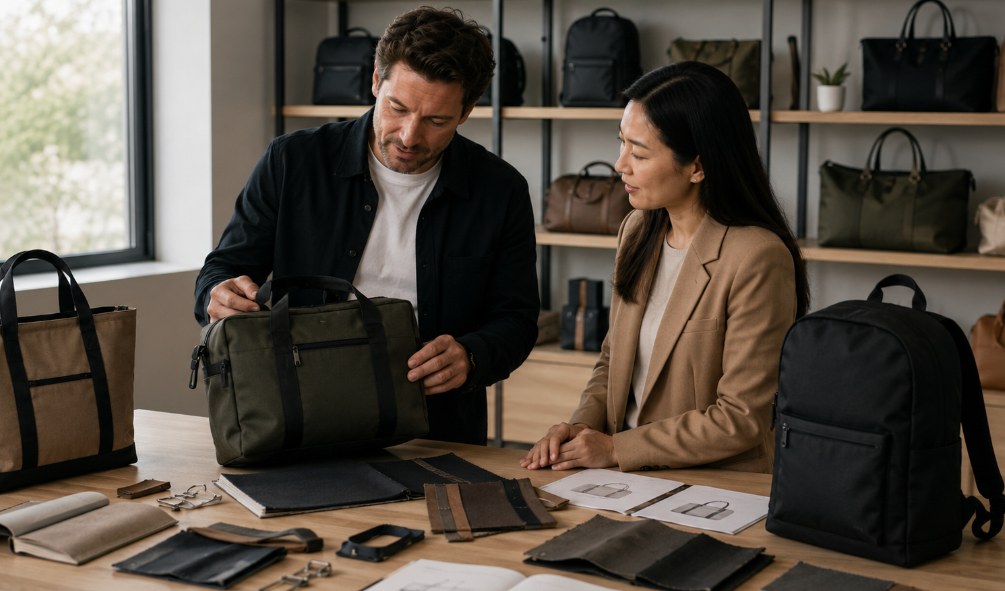
Experience with your exact product category matters more than general bag-making experience. A factory that’s spent years perfecting backpacks may struggle with the specialized stitching a structured handbag requires. Ask directly: how many years have they produced bags in your specific category, and can they show you finished units, not just renders or mockups?
Review Their Previous Projects and Customer Cases
Ask to see past projects, ideally ones close to your product type. A manufacturer with a genuine portfolio will show you real photos, sometimes even client names or industries they’ve served, without hesitation. If a factory is cagey about sharing past work, that’s worth noting. Reputable manufacturers are usually proud of what they’ve built and happy to walk you through it.
Check Whether They Focus on OEM or ODM Services
OEM factories build to your exact specifications and drawings. ODM factories offer their own designs that you can customize and brand. Some manufacturers, including operations like ours at Hetebag, handle both depending on how developed your product concept already is. Knowing which service you actually need before you start requesting quotes saves everyone time and prevents mismatched expectations later in the process.
This distinction matters more than most first-time buyers realize. A brand with a fully developed technical package, complete with measurements, material callouts, and construction notes, generally gets better results from an OEM-focused factory that specializes in precise execution. A brand still shaping its product concept often benefits more from an ODM partner willing to suggest existing patterns and adapt them, since that path is usually faster and less expensive than developing everything from a blank page. Ask each factory which model they’re actually built around, because a factory that claims to do everything equally well sometimes does neither particularly well.
Take a Closer Look at How the Factory Actually Operates
Production Equipment and Workshop Conditions
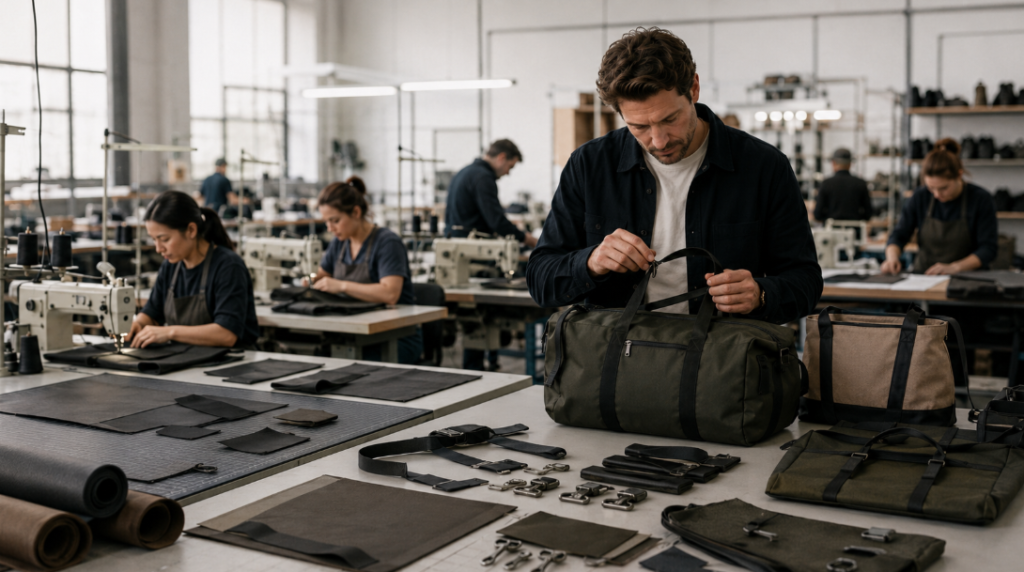
Machinery age and workshop organization tell you a lot about consistency. A factory running well-maintained cutting, sewing, and printing equipment produces more uniform results across a large order than one relying on outdated or poorly serviced machines. If a factory tour or video walkthrough is possible, take it. What you see on the floor usually matches what you’ll get in your finished bags.
Monthly Production Capacity
Capacity numbers matter because they set the ceiling on what a factory can realistically deliver without cutting corners or outsourcing to subcontractors you never agreed to. A rough comparison of typical monthly output by factory size looks like this:
| Factory Size | Typical Monthly Capacity | Best Fit For |
|---|---|---|
| Small workshop | 2,000–8,000 units | Startups, sample runs, niche products |
| Mid-size factory | 8,000–30,000 units | Growing brands, seasonal collections |
| Large-scale factory | 30,000+ units | Retail chains, bulk B2B contracts |
Can They Handle Large or Urgent Orders?
Even if your current order is modest, ask how the factory handles a sudden spike in demand or a rush deadline. Their answer reveals whether they have flexible staffing, backup material suppliers, and contingency planning, or whether they’re operating so close to full capacity that any surprise throws production off schedule.
Seasonal demand is worth asking about specifically. Bag manufacturers often see order volume climb sharply ahead of major retail seasons, and a factory that’s comfortable during a quiet month can behave very differently once every client on their books wants delivery in the same six-week window. Ask how they prioritize orders when everyone wants to be first in line, and whether existing long-term clients get preference over new ones during those peak periods. Honest answers here tell you more than any capacity number on its own.
Product Quality Matters More Than the Price Tag
Fabric, Hardware, and Accessory Quality
The materials inside a bag matter as much as what’s visible on the outside. Zippers, buckles, and webbing take the most physical stress over a bag’s lifespan, so cheap hardware is usually the first thing to fail. Brands like YKK have built a global reputation specifically because zipper durability affects how a bag performs after months of daily use, and experienced manufacturers know which hardware suppliers are worth specifying.
Stitching, Printing, and Finishing Details
Run your eyes and hands over the small things: stitch density, thread tension, seam alignment, and how cleanly a logo is printed or embroidered. These finishing touches are where rushed factories cut corners, because they’re less visible in a quick photo but very visible once a customer is holding the bag. If you’re exploring branded features, looking into logo customization options early helps you understand what finishing quality should look like at your price point.
Quality Control Throughout Production
Ask when quality checks happen, not just whether they happen. Inspecting only the final shipment misses defects that could have been caught and corrected earlier, wasting materials and time. A factory with checkpoints at incoming materials, mid-production, and pre-shipment stages catches problems while they’re still cheap to fix.
Understand the Sampling Process Before You Commit
How Custom Samples Are Developed
Sampling is where your idea becomes something physical for the first time, and it’s your best opportunity to catch design issues before committing to a full production run. A good factory will walk you through pattern-making, material selection, and construction choices during this stage rather than just handing you a finished sample with no explanation of the decisions behind it.
Typical Sample Lead Times
Sample timelines vary depending on complexity, but a factory that can’t give you a clear estimate upfront is one to watch closely. Simple bags with standard materials often sample faster than structured pieces with multiple compartments or specialized hardware, so ask for a timeline specific to your design rather than a generic answer.
What Changes Can Be Made Before Mass Production
Clarify how many rounds of revisions are included and what happens if you want to adjust the design after seeing the first sample. Some factories charge for every revision; others build a reasonable number of rounds into the sampling fee. Understanding this upfront avoids awkward conversations once you’re already deep into the process.
Make Sure the Factory Meets Your Market’s Standards
Factory Certifications and Audits
Certifications are one of the clearest signals of how seriously a factory takes compliance and worker welfare. Look for evidence of ISO 9001 quality management systems, and for social compliance audits like BSCI, which assess labor conditions and factory practices against internationally recognized benchmarks. A factory that can produce current audit documentation on request, rather than vague claims, is one worth taking seriously.
Product Compliance for Different Countries
Different markets enforce different rules around chemical content, labeling, and material safety. What passes easily in one country can get rejected at customs in another. Testing bodies such as SGS provide independent verification that materials meet the specific regulatory requirements of your target market, which matters enormously if you’re shipping internationally. Requirements around lead content in hardware, phthalates in coatings, and azo dyes in fabric all vary by destination, so a factory experienced in your specific market will already know which tests apply and won’t need you to explain the rules to them.
Sustainable and Eco-Friendly Material Options
Buyer interest in recycled and lower-impact materials keeps growing, and factories that can offer verified sustainable options have an edge. If eco-conscious sourcing matters to your brand, ask about recycled fabric certifications, or explore what’s currently available in RPET bag manufacturing, which covers how recycled materials perform compared to virgin fabrics.
Here’s a quick reference for the kinds of certifications worth asking about:
| Certification | What It Covers |
|---|---|
| ISO 9001 | Quality management systems |
| BSCI | Social and labor compliance |
| SGS / Intertek | Material and product safety testing |
| GRS | Recycled material content verification |
Good Communication Can Save You a Lot of Trouble
How Quickly They Respond
Response time during the sourcing stage is a preview of what communication will look like once you’ve placed a deposit. A factory that takes days to answer a simple pre-order question is unlikely to speed up once your money is already committed. Fast, clear responses early on are a good sign of how a partnership will run.
Whether They Understand Your Requirements
Pay attention to whether their answers actually address what you asked, or whether they send generic replies that could apply to any inquiry. A manufacturer that asks thoughtful follow-up questions about your design, market, or intended use is engaging with your project, not just processing another order.
How They Handle Problems and Revisions
Every production run runs into some kind of hiccup eventually, whether it’s a material shortage or a shipping delay. What separates strong manufacturers isn’t the absence of problems, it’s how transparently and quickly they communicate when something goes wrong, and how proactively they offer solutions instead of excuses.
Ask About Lead Times Before You Place an Order
Material Sourcing and Inventory
Ask whether the fabrics and hardware for your order are already in stock or need to be sourced and produced first. Factories with strong supplier relationships and inventory on hand can often start production faster, while custom materials requiring their own manufacturing lead time will push your overall schedule back.
Production Schedule and Delivery Timeline
Get a written production timeline that breaks down each stage: cutting, sewing, quality inspection, and packing. A factory willing to share this level of detail is generally more organized and more likely to hit the dates they’ve committed to.
How They Deal with Unexpected Delays
Delays happen even at well-run factories, so the more useful question is how a factory handles them when they do. Do they notify you proactively, or do you find out only after your expected ship date has already passed? Their answer tells you a lot about how they’ll treat you during a real disruption.
Don’t Let the Lowest Quote Make the Decision for You
Compare Overall Value, Not Just Price
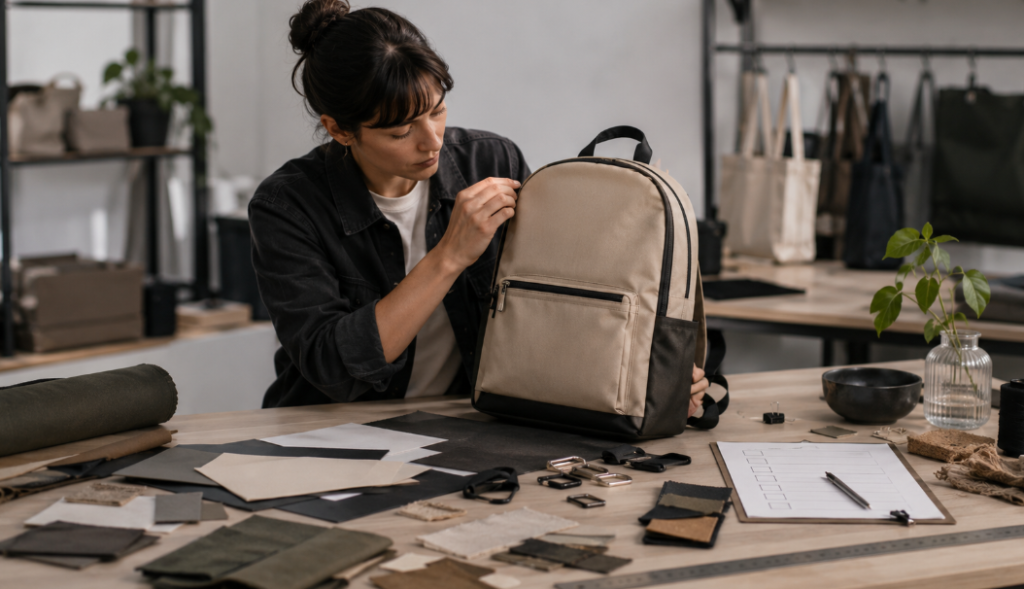
The cheapest quote on your spreadsheet isn’t automatically the best deal once you factor in material quality, defect rates, and how reliably the factory delivers on schedule. A slightly higher unit cost from a manufacturer with strong quality control often works out cheaper overall, because you avoid reorders, returns, and damaged customer relationships.
Watch Out for Hidden Costs
Some quotes look attractive because they leave out costs that show up later: tooling fees, sample charges, packaging, or express shipping surcharges. Ask for a fully itemized quote before comparing factories side by side, so you’re comparing complete pictures rather than partial numbers.
| ما الذي يجب مقارنته | لماذا هذا مهم؟ |
|---|---|
| Unit price | Baseline cost, but incomplete alone |
| Defect and reorder rate | Hidden cost of poor quality control |
| Sample and tooling fees | Often left out of initial quotes |
| Communication reliability | Affects delays and rework costs |
Consider Long-Term Reliability and Consistency
A factory that delivers excellent quality once but can’t repeat it consistently across future orders creates ongoing risk for your business. Ask about their track record with repeat clients, and whether they can maintain the same standard across a second, third, and tenth order, not just the first.
Consistency problems often trace back to staff turnover or informal production processes that depend on one skilled worker rather than a documented system. A factory that trains multiple team members on the same techniques, and keeps written specifications for each product it makes, is far less likely to produce a batch that suddenly looks or feels different from the one before it. This is one of the harder things to evaluate from outside, but asking directly about how they document specifications usually gets you an honest answer.
Think Beyond the First Order
Can They Grow with Your Business?
Your first order with a manufacturer is really a trial for a longer relationship. Ask whether the factory has the equipment, staffing, and material sourcing capacity to scale with you if your order sizes grow significantly over the next year or two. A factory that’s already stretched thin at your current volume may not be able to support your growth.
Ongoing Product Development and Support
Strong manufacturing partners contribute more than production labor. They offer input on material alternatives, flag design issues before they become costly mistakes, and help you refine products across seasons. That kind of support is harder to find and worth prioritizing over a marginally lower price.
Building a Long-Term Manufacturing Partnership
The most successful buyer-manufacturer relationships function less like one-off transactions and more like ongoing collaborations. Over time, a factory that knows your standards, your brand voice, and your quality expectations will consistently move faster and catch problems earlier than a new partner would on every single order.
A reliable manufacturer should be able to explain what happens after the supplier is selected, including pattern development, sampling, pre-production approval, bulk production, and final inspection. You can review the full custom handbag manufacturing process from design to bulk production before placing an order.
الخلاصة
Choosing a custom bag manufacturer is rarely about finding the cheapest quote in your inbox. It’s about finding a factory whose experience, capacity, quality standards, and communication style actually match what your business needs, both right now and as you grow. Take the time to ask the right questions upfront, request real evidence instead of promises, and treat the sampling stage as the test run it’s meant to be. The extra effort at the sourcing stage pays off every time a shipment arrives on schedule and in the quality your customers expect.
Nothing on this list is complicated on its own. What makes it valuable is doing all ten checks together, before you sign anything, rather than discovering the gaps one at a time after production has already started. Buyers who take shortcuts at the sourcing stage almost always end up spending more time fixing problems later than they would have spent asking a few extra questions upfront.
إذا كنت تبحث حالياً عن شركة متخصصة في تصنيع الحقائب حسب الطلب في الصين, we’d love to talk. Hetebag is based in Huadu, Guangzhou, with more than 15 years of manufacturing experience and established partnerships across a wide network of specialized factories covering different bag categories and materials. We hold ISO 9001, SGS, BSCI, and SMETA certifications, and we’ve exported to more than 70 countries, working with brands at every stage from first sample to ongoing bulk production. Whether you’re developing a custom handbag, exploring حقائب سفر مخصصة for your next collection, or just starting to sort out your specifications, you can leave your contact number on our website and we’ll get back to you. We’d genuinely welcome the chance to work with you and talk through what you’re building.
الأسئلة الشائعة
How do I know if a custom bag manufacturer is reliable?
A reliable custom bag manufacturer should have proven experience, a transparent production process, consistent quality control, and positive customer feedback. Before placing an order, ask for samples, review previous projects, verify certifications, and evaluate how they communicate throughout the inquiry process.
What questions should I ask before choosing a bag manufacturer?
Some of the most important questions include:
What is your minimum order quantity (MOQ)?
Can you produce similar bags to my design?
What certifications does your factory have?
How long does sampling and production take?
How do you handle quality inspections?
Can you provide references or previous case studies?
These questions help you understand whether the manufacturer is a good fit for your business.
Is the cheapest custom bag manufacturer always the best choice?
Not necessarily. A lower price may come with lower-quality materials, inconsistent workmanship, longer lead times, or hidden costs. It’s usually better to compare overall value, including product quality, communication, production capacity, and after-sales support.
What certifications should a professional bag manufacturer have?
Depending on your market, common certifications include:
ISO 9001 for quality management
BSCI or SMETA for social compliance
SGS or Intertek testing reports
GRS certification for recycled materials
What is the typical MOQ for custom bag manufacturing?
MOQ varies by manufacturer and product type. Many factories require between 300 and 1,000 pieces per design, while some offer lower MOQs for startups or sample orders. Always discuss your expected order volume before requesting a quotation.


