
 Arabic
  English
  Italian
  French
  German
  Spanish
 A makeup bag is an essential item for girls when going out, but for beauty brands, it can have various different functions. It can be paired with a skincare gift set, support new product launches, be offered as a gift when purchasing, or even develop into an independent retail accessory.
Therefore, the best creative idea for a customized makeup bag does not merely follow visual trends. The material, capacity, opening method, lining, compartment design, and brand logo method all must match the internal products and the customers who use the bag.
Before choosing a design, first clarify the goal that the bag wants to achieve. A compact lipstick storage bag and a travel storage bag for storing glass skincare bottles require completely different requirements. Similarly, packaging designed for seasonal promotions should not automatically adopt the same specifications as high-end retail cosmetic boxes.
We have over ten years of experience in the makeup bag industry. The following ten ideas aim to help beauty and cosmetics brands combine creative direction with actual product development.
Custom Makeup Bag Ideas at a Glance
| Idea | Best suited for | Useful design features | Branding direction |
|---|---|---|---|
| Minimalist everyday pouch | Skincare, makeup and DTC brands | Simple compartment, compact shape | Screen print, heat transfer or woven label |
| Structured vanity case | Premium and luxury collections | Wide opening, padding and internal pockets | Debossed logo or metal plate |
| Lay-flat drawstring bag | Fast routines and younger consumers | Full-access opening and raised edge | Printed pattern or rubber patch |
| Clear travel pouch | Travel kits and product discovery sets | Transparent panel and compact capacity | Printed logo or colored trim |
| Double-compartment organizer | Makeup and skincare bundles | Separate wet/dry or product sections | Embroidery, patch or zipper pull |
| Hanging toiletry bag | Travel, wellness and hospitality | Hook, mesh pockets and vertical layout | Woven label or subtle print |
| Brush organizer bag | Makeup artists and brush brands | Brush loops and protective flap | Embroidery or heat-transfer logo |
| Quilted or puffy makeup bag | Fashion-led and seasonal collections | Soft padding and tactile exterior | Embroidery or woven badge |
| Natural-fabric beauty pouch | Botanical and minimal brands | Cotton or canvas exterior | Screen print or woven label |
| Coordinated makeup bag set | Gift sets and product families | Multiple sizes with a shared design | Consistent logo and color system |
1. The Minimalist Everyday Makeup Pouch
A compact zippered pouch is one of the most adaptable designs for a beauty brand. It can hold lipstick, pressed powder, concealer and other daily essentials without taking up much room in a handbag.
The simplicity is useful commercially. Brands can use it as a gift with purchase, include it in a subscription box, bundle it with a small product collection or sell it as an entry-level accessory. The design also leaves plenty of visual space for color and branding.
Simple, however, should not mean generic. Small decisions make a noticeable difference: a curved top can soften the silhouette, a gusset can add capacity, and a contrasting zipper can connect the bag with a campaign color.
For the interior, one open compartment is often enough, although a small slip pocket can separate items such as cotton pads or hair accessories. A light-colored lining makes the contents easier to see, while a darker or printed lining may conceal cosmetic marks more effectively.
Best suited for: Everyday cosmetic collections, promotional campaigns, subscription boxes and gift-with-purchase programs.
Development point: Test the pouch with the actual products it is expected to carry. A visually attractive sample may still be too shallow for a compact powder case or too short for a mascara tube.
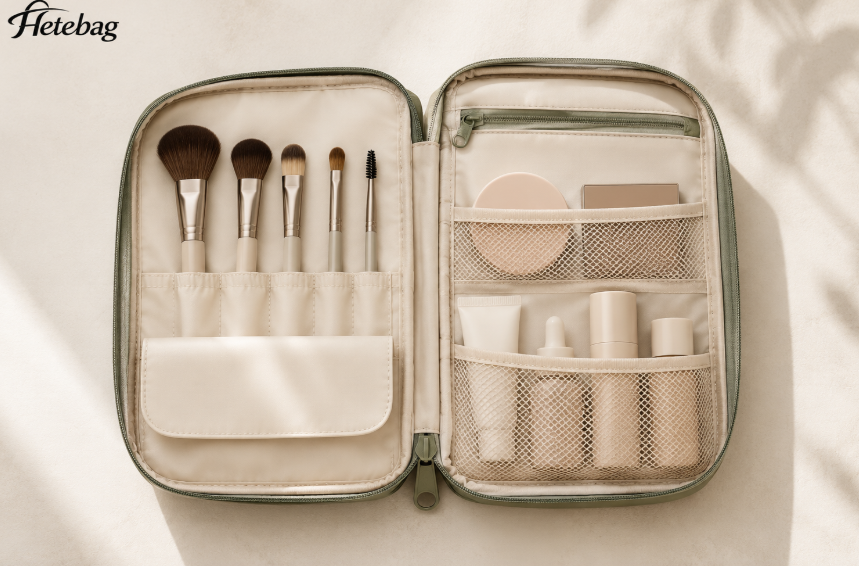
2. A Structured Vanity Case for Premium Collections
A structured vanity case creates a more substantial impression than a soft pouch. It can be developed with a rectangular, dome-shaped or rounded profile and may include padding, a top handle, internal pockets or removable dividers.
This concept works well for premium skincare collections, fragrance gift sets and holiday launches because the bag can feel like part of the presentation rather than an incidental free item. PU, textured synthetic materials and tightly woven fabrics can all create different visual effects, but the reinforcement underneath the exterior material is just as important as the surface itself.
The development challenge is balance. Too little reinforcement can cause the case to collapse, while excessive padding can make it bulky and reduce usable interior space. Rounded corners, piping and a wide zipper opening also require careful sample evaluation.
A debossed logo, small metal plate or custom zipper pull can suit a premium direction. The most elaborate branding method is not always the best one; hardware finish, stitching color and zipper tape should support the same visual language.
Best suited for: Prestige beauty products, seasonal gift sets, premium skincare and retail accessory collections.
Development point: Ask the manufacturer to confirm the reinforcement material, finished weight, usable internal dimensions and how the case retains its shape after packing.
3. A Lay-Flat Drawstring Makeup Bag
A lay-flat makeup bag opens into a wide surface, allowing users to see multiple products at once. Pulling the drawstring closes the sides around the contents. This format can make a morning routine or travel setup feel faster and less organized around individual pockets.
The concept is especially suitable for younger, trend-oriented brands and colorful product collections. It offers generous space for printed patterns, contrasting bindings and playful cords. Depending on the construction, brands may also add an internal zip pocket or elastic loops near the edge.
The main production issue is controlling the opening. If the edge is too low or the closure is weak, small items may slip out. If the material is too rigid, the bag may not gather neatly. Cord thickness, eyelets, stoppers and edge reinforcement should therefore be evaluated together.
Best suited for: Gen Z beauty brands, colorful makeup collections, influencer collaborations and casual travel products.
Development point: During sampling, open and close the bag repeatedly with realistic contents inside. Check whether it closes securely and whether the cord remains comfortable to handle.
4. A Clear Travel Makeup Pouch
Transparent pouches allow customers to identify products without opening the bag. They work particularly well for travel-size skincare, discovery kits, minis and sets in which the products themselves are part of the visual presentation.
Clear TPU or PVC-style constructions can be combined with fabric binding, colored zipper tape or solid side panels. A frosted panel provides a softer visual effect, while a completely clear body places more emphasis on the products inside.
Brands sometimes describe any transparent pouch as “TSA approved,” but the wording should be used carefully. In the United States, the TSA liquids rule refers to the permitted container size and a quart-sized bag; a pouch is not automatically compliant simply because it is transparent. Confirm the intended dimensions and market before making a travel-compliance claim. The current requirements are available from the Transportation Security Administration.
Clear materials require particularly careful sampling. Buyers should inspect transparency, odor, surface marks, edge finishing, seam construction and the way the material behaves when folded. Claims concerning material safety, chemical restrictions or environmental performance should be supported by documentation relevant to the destination market.
Best suited for: Travel-size product kits, airport retail, beauty minis, sampling campaigns and clinical-looking skincare ranges.
Development point: Give the manufacturer the intended product list and required finished dimensions instead of asking only for a “standard clear makeup bag.”
5. A Double-Compartment Cosmetic Organizer
A double-compartment makeup bag gives the customer two separate storage areas. One side might hold skincare bottles while the other holds makeup, brushes or tools. It can also separate frequently used products from backup items or potentially damp items from dry accessories.
The two sections may be stacked vertically, positioned back to back or opened from opposite sides. A central divider can include mesh pockets, elastic loops or a clear window.
This design is more functional than a basic pouch, but added compartments introduce additional seams, zipper tracks and alignment requirements. They can also increase external size without increasing useful capacity as much as expected. A prototype should therefore be packed with real products before the dimensions are approved.
A double-compartment bag can carry stronger branding through an embroidered logo, rubber patch, woven badge or custom zipper pull. However, the selected method must suit the exterior fabric and the thickness of the panel to which it is applied.
Best suited for: Full makeup routines, skincare and cosmetics bundles, travel collections and mid- to premium-positioned accessories.
Development point: Ask for both external and usable internal measurements. Dividers, padding and seam allowances can make the actual storage space smaller than the drawing suggests.
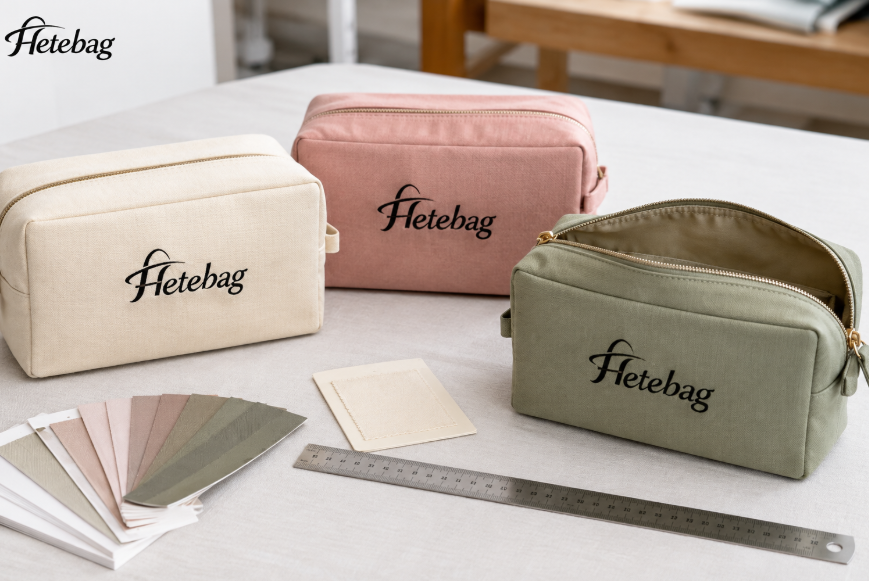
6. A Hanging Toiletry and Beauty Bag
A hanging cosmetic bag unfolds vertically and uses a hook to attach to a rail, door or bathroom fixture. It is useful in hotel rooms and compact bathrooms because products remain visible without occupying the entire counter.
Typical features include mesh pockets, clear compartments, elastic bottle holders and a deeper lower section. Brands can adjust the layout according to whether the bag is meant for skincare, hair care, cosmetics or a combination of products.
The hook and its attachment point deserve particular attention. The fabric surrounding the hook may need reinforcement, especially if the finished bag is expected to carry full-size bottles. Pocket openings must also prevent products from falling when the organizer is hanging.
This design offers a practical product story for travel, wellness and hospitality brands. Instead of presenting it simply as another pouch, marketing can demonstrate how it organizes a complete routine in a small space.
Best suited for: Travel beauty ranges, hotel amenity programs, wellness brands and multi-product toiletry collections.
Development point: Define the expected loaded weight and evaluate the sample while hanging. Do not assess the bag only when it is lying flat on a table.
7. A Makeup Bag with a Dedicated Brush Section
Brush-focused organization is valuable for cosmetic tool brands, makeup artists and customers who carry a more complete routine. A brush section can be incorporated into a regular makeup bag or developed as a removable insert or separate roll.
Elastic loops should be sized for the intended brush handles rather than applied at one uniform width. A protective flap can keep residual pigment away from the bag’s other contents and help protect the bristles.
The flap material needs to be considered carefully. A wipeable surface may be practical, but the manufacturer should avoid unsupported claims such as “antibacterial” unless the relevant treatment and test evidence are available.
For branding, embroidery works well on many woven exteriors, while heat transfer can reproduce finer artwork. If the bag is sold with a brush collection, the logo position should remain visible after the brushes are inserted and the bag is closed.
Best suited for: Makeup brush brands, professional product lines, beauty schools, artist collaborations and premium tool sets.
Development point: Supply several real brush samples or precise handle diameters. Generic elastic loops may be too loose for detail brushes and too tight for larger face brushes.
8. A Quilted or Puffy Makeup Bag
A quilted makeup bag adds texture and softness without relying on complex printed graphics. The exterior can be developed with straight channels, diamond quilting, waves or a custom stitch pattern.
This concept is well suited to seasonal collections, fashion-led beauty brands and gift sets. Nylon, polyester, velvet-like fabrics and other textiles can produce very different results even when the same silhouette is used.
Quilting requires attention to stitch spacing, padding thickness and panel alignment. A thick padded panel can interfere with zipper installation or create uneven corners. It can also make a small bag look larger externally while leaving less room inside.
Embroidery and woven labels often complement a textile surface, but the logo should be tested on the finished material combination. Embroidery that looks clean on flat fabric can pull or distort a highly padded panel.
Best suited for: Holiday collections, fashion and lifestyle collaborations, soft-color beauty brands and retail accessories.
Development point: Approve a finished quilted panel rather than selecting the outer fabric and padding independently. Their combined appearance determines the final result.
9. A Natural-Fabric Beauty Pouch
Cotton, canvas and similar natural-looking fabrics can support botanical, craft-inspired and minimal brand identities. They also provide a familiar surface for screen printing, embroidery and woven labels.
This style can work for facial tools, soap sets, dry beauty accessories and cosmetic gift collections. If the bag will hold liquid products, the interior may need a separate lining selected for cleanability and the intended level of moisture exposure.
Brands should be precise with environmental language. A natural appearance does not automatically make a finished product sustainable, biodegradable or lower impact. Fibers, coatings, dyes, linings, zippers and packaging all affect the final claim. In the United States, the FTC advises marketers to make specific, substantiated environmental claims rather than broad, potentially misleading ones. Its Green Guides provide relevant guidance.
If recycled content or certified fiber is important to the project, request supply-chain documentation and define whether the claim applies to the exterior fabric, lining, entire bag or packaging.
Best suited for: Botanical skincare, minimalist brands, bath and body gift sets and nature-inspired campaigns.
Development point: Decide whether the natural appearance or a verified material claim is the priority. These are related, but they are not the same specification.
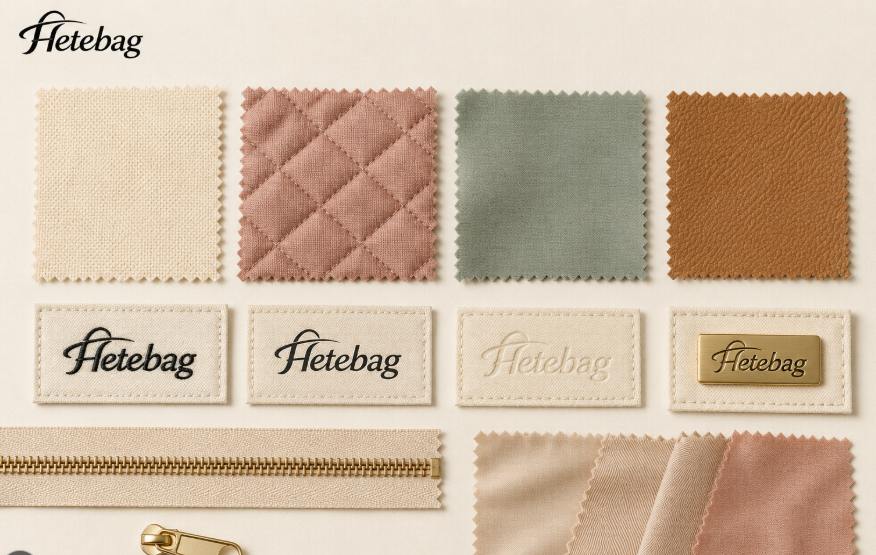
10. A Coordinated Custom Makeup Bag Set
Instead of developing one bag, a beauty brand can create a coordinated set containing two or three sizes. For example, a small pouch may hold daily essentials, a medium version can organize makeup, and a larger case can carry skincare or toiletries.
A set increases the number of ways the product can be marketed. It can become a holiday gift, a travel collection, a loyalty reward or a standalone accessory bundle. The sizes may nest inside one another to reduce packaging volume and improve presentation.
Consistency is the primary development challenge. Material shade, logo scale, zipper finish, lining and stitching should look intentional across all sizes. Simply enlarging one pattern may not work because proportions, zipper openings and handle placement often need to change.
The set can use one color across all pieces or a coordinated palette. If different colors are used, establish how each color will be approved and whether custom-dyed materials or available stock shades will be used.
Best suited for: Holiday gifting, complete beauty routines, travel collections, loyalty programs and premium product families.
Development point: Evaluate the set both individually and as a group. Confirm whether the bags nest correctly and how they will be packed for shipment and retail presentation.
How to Choose the Right Idea for Your Brand
The best design is not necessarily the most complex one. Start by connecting the bag with a specific commercial role.
| Project goal | More suitable direction | Main questions to answer |
|---|---|---|
| Gift with purchase | Minimal pouch or clear pouch | What products must fit, and how visible should the logo be? |
| Premium retail accessory | Structured case or coordinated set | What details create the required perceived value? |
| Travel collection | Clear, hanging or double-compartment bag | What products, markets and travel scenarios are involved? |
| Professional beauty tools | Brush organizer or structured case | Which brushes, palettes and bottles need protection? |
| Seasonal campaign | Quilted bag, drawstring bag or set | Can the colors and materials be reproduced consistently? |
| Botanical or minimal positioning | Natural-fabric pouch | Which material and environmental claims can be supported? |
It is helpful to review HeteBag’s guide to designing custom makeup bags for a beauty brand after selecting a broad concept. Buyers who are still comparing fabrics can also consult the نظرة عامة على مواد تصنيع الحقائب المخصصة.
Turn the Idea into a Production Brief
A reference image is a useful starting point, but it is not a complete manufacturing specification. Before requesting a sample or quotation, prepare the information that determines how the bag will actually be built.
Include:
- The intended use and target customer
- Reference images, sketches or an existing sample
- The products the bag must hold
- Required finished dimensions
- Exterior and lining material preferences
- Color references or Pantone codes when applicable
- Pocket, divider, brush-loop and handle requirements
- Logo artwork and preferred application method
- Zipper, puller, hardware and trim preferences
- Retail packaging, labels and barcode requirements
- Target market and any applicable testing requirements
- Estimated order quantity and desired delivery window
If exact dimensions are not yet available, send the product measurements or physical samples. The manufacturer can then help determine the internal volume and opening required. HeteBag’s custom bag size guide provides additional points to consider.
What to Check During Sampling
Sampling is where the attractive concept must prove that it works as a real product. Review more than the overall appearance.
First, pack the intended cosmetics inside. Check whether the zipper opens far enough, bottles remain upright and small items are easy to retrieve. Then inspect the stitching, edge binding, piping, zipper movement, lining attachment, symmetry and logo position.
Color should be evaluated under consistent lighting and against an approved reference. When a bag combines fabric, zipper tape, lining and painted hardware, a perfect match across every material may not be realistic. Decide in advance which components must match and which may use coordinated shades.
The approved sample should also define the standard for bulk production. Record the confirmed dimensions, material references, logo size, colors, hardware finish and packaging instead of relying only on photographs.
Quality Control for Bulk Custom Makeup Bags
Quality consistency begins before sewing. Materials and components should be checked against the approved specification before they are used. During production, inspections can identify issues such as incorrect seam alignment, puckering, inconsistent logo placement or poorly operating zippers before the entire quantity is completed.
Final inspection should be based on agreed requirements rather than a general statement that the bags “look good.” Depending on the design, useful checks may include:
- Finished dimensions and shape
- Exterior and lining color
- Logo position, size and appearance
- Stitching, binding and loose threads
- Zipper operation and puller attachment
- Pocket and divider placement
- Handle or hook attachment
- Surface marks, odor and cleanliness
- Packaging, labels and carton information
Testing requirements should be defined according to the material, target market, intended claims and end use. A supplier’s general material description should not be treated as proof of waterproof performance, recycled content, chemical compliance or another regulated claim.
Work with HeteBag on Your Makeup Bag Project
A strong custom makeup bag begins with a clear purpose, not with a long list of features. Once you know who will use the bag, what it must hold and how it fits into your product strategy, the material and construction decisions become much easier.
HeteBag supports custom makeup bag development for brands, wholesalers and other B2B buyers, including material selection, dimensions, colors, internal structures, logos, hardware and packaging.
When contacting the team, you can provide your product links or reference images, sketches, target market, expected quantity, dimensions, material preferences, logo file, Pantone colors, internal layout and packaging requirements. If you already have a sample or have experienced problems with another supplier, describe those issues as well. This gives the team a clearer basis for discussing a practical customization and sampling plan.
You can submit the project information through the HeteBag contact .
الأسئلة الشائعة
What is the best custom makeup bag idea for a beauty startup?
A compact zippered pouch is often a practical starting point because the structure is straightforward and it can support product bundles, gifts with purchase or standalone sales. The decision should still be based on the products it must hold and the brand’s positioning.
Can a makeup bag be customized with a logo?
Yes. Common options include screen printing, heat transfer, embroidery, woven labels, rubber patches, debossing and metal plates. The best method depends on the exterior material, artwork, desired appearance and project quantity.
Which materials are commonly used for custom makeup bags?
Common options include polyester, nylon, cotton, canvas, PU, clear TPU or PVC-style materials and quilted textiles. Materials may also be combined, such as a fabric exterior with a separate wipe-clean lining. Suitability depends on the use, structure, branding process and required testing.
What information does a manufacturer need before making a sample?
Provide reference images or a drawing, dimensions, intended contents, exterior and lining materials, colors, internal structure, logo artwork, hardware preferences and packaging requirements. The target market and estimated order quantity are also important.
Can HeteBag make custom makeup bag sets?
Coordinated sets can be discussed as an OEM/ODM project. Buyers should specify the number of pieces, individual dimensions, whether the bags need to nest, and how materials, logos and colors should remain consistent across the set.
How can buyers avoid quality differences between the sample and bulk order?
Approve a clearly documented sample and retain the confirmed specifications for materials, colors, dimensions, branding, hardware and packaging. Agree on inspection criteria and production checkpoints before bulk manufacturing begins.


